







High MOQs for fireplace colored pine cones scare off many first-time buyers. I see it weekly on our production floor: great products, hesitant importers, stalled deals over quantity.
To negotiate a lower MOQ for fireplace colored pine cones, offer trade-offs that reduce supplier risk: accept a 10–25% higher unit price, propose a trial order with a written reorder plan, use stock packaging and colors, bundle SKUs under one total quantity, and pay a larger deposit upfront.
That is the short answer. Now let me walk you through how this actually plays out at the factory level, and how you can use it to your advantage.
What MOQ Should I Realistically Expect from a Colored Pine Cone Manufacturer?
Last winter, our QC team rejected a full batch of purple cones because the metallic gold tips faded unevenly. That rework cost is exactly why factories like ours set MOQs in the first place.
Most colored pine cone manufacturers set MOQs between 500 and 5,000 units per SKU, or an order value of roughly $1,000–$5,000. Custom private label packaging, non-standard flame colors, and special sizes push MOQs higher because they add manufacturing setup costs and material batching requirements.
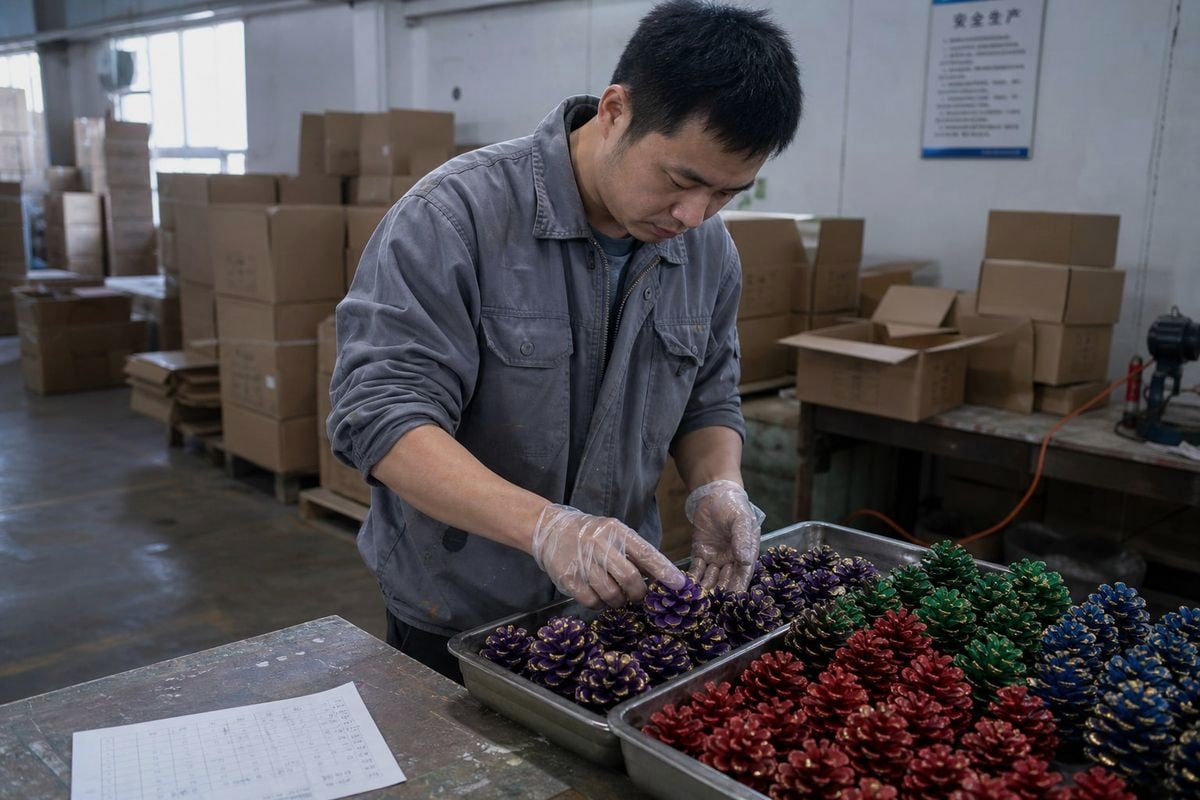
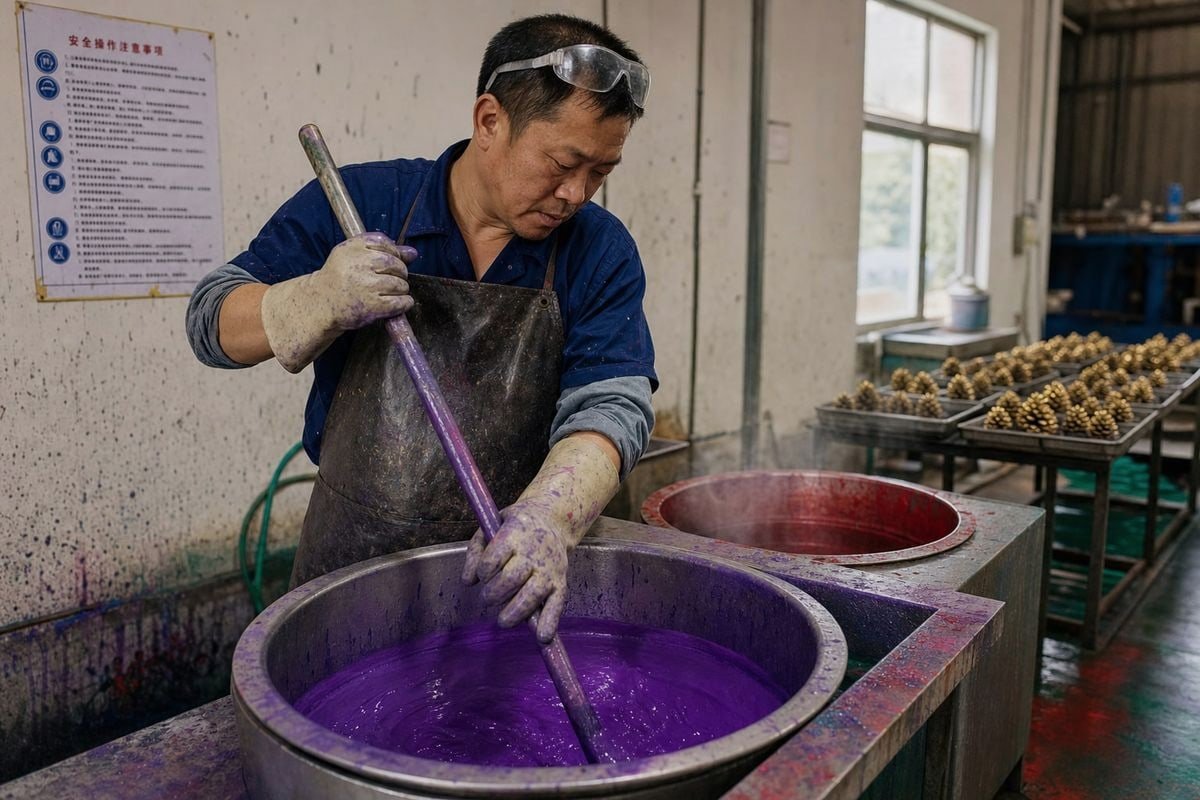
MOQ is not a random number a salesperson invents supply chain management 1. It is a bundle of real costs. When we run color-flame pinecones through our lines in Ningbo, we batch the mineral color treatment, calibrate the coating for consistency, and schedule packaging. Each of those steps has a minimum efficient scale. If you understand which step drives the MOQ, you can negotiate the right lever instead of just asking for a smaller number.
Why Colored Pine Cones Carry Higher MOQs Than You Expect
Fireplace colored pine cones are a seasonal, novelty product. That matters for three reasons. First, demand peaks from September to December, so factories batch production tightly. Second, the color treatment must be consistent across every cone, which means we mix treatment chemicals in minimum batch sizes. Third, packaging drives cost. A kraft stand-up pouch with a clear window, a burlap drawstring sack, or a plastic jar each requires its own setup and printing minimums.
Ask What the MOQ Is Actually Based On
Before you negotiate anything, ask the supplier one question: what exactly is the MOQ based on? The answer changes your whole strategy.
| MOQ Basis | What It Usually Means | Your Best Negotiation Angle |
|---|---|---|
| Per SKU | Each color or size has its own minimum | Ask to bundle variants under one total |
| Per order value | Factory needs a minimum revenue per PO | Mix products to hit the value threshold |
| Per packaging style | Printing minimums drive the number | Accept stock packaging for the trial |
| Per production batch | Chemical treatment batch size is fixed | Take delivery in phases from one batch |
| Per shipment | Freight economics drive the number | Use LCL shipping 2 or consolidated freight |
In our experience exporting to 30+ countries, buyers who ask this question first negotiate faster and get better terms. Buyers who skip it end up arguing against a number they do not understand.
How Can I Convince a Supplier to Accept a Trial Order Below Their Standard MOQ?
A German fireplace distributor once emailed us asking for 300 bags instead of our standard quantity. He got a yes in two days. The reason was not luck. It was how he framed the request.
Frame the small order as a market test with a clear reorder path. Offer a higher unit price, accept stock packaging and standard colors, pay a larger deposit, and put a second-order commitment in writing. Suppliers accept trial orders when their risk drops alongside the quantity.
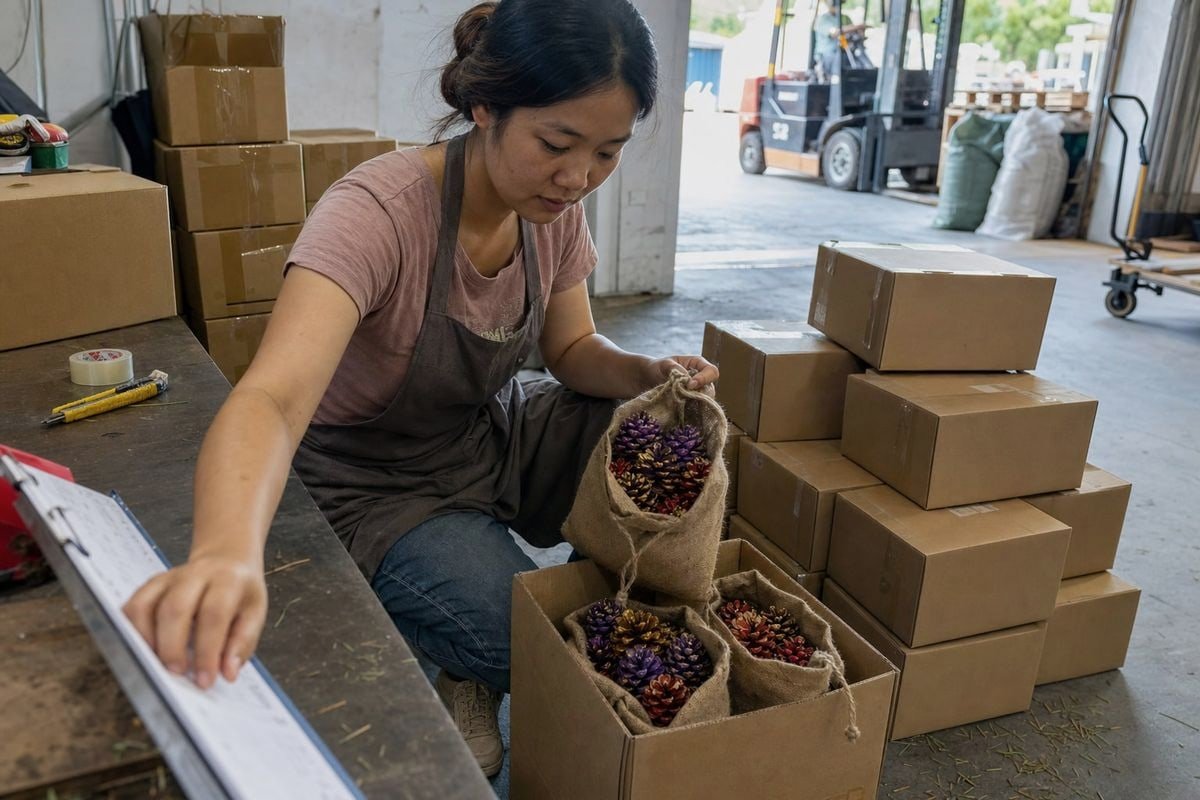
The distributor I mentioned did four things right, and any buyer can copy them. He explained his launch plan for the German market. He asked for our stock kraft pouch instead of custom private label packaging 3. He offered to pay 50% upfront instead of 30%. And he stated, in writing, that a successful sell-through would trigger a second order at full MOQ before the next season. From our side, that email removed almost every risk a small order normally carries.
The Language That Works in a Sample Order Request
Word choice matters more than buyers think. Compare these two approaches:
- Weak: "Your MOQ is too high. Can you do 300 units?"
- Strong: "We would like to place a trial production run of 300 units to validate demand in our market. We are flexible on packaging and can accept a higher wholesale unit price for this first order. If sell-through meets our target, we will commit to a full-MOQ reorder for the peak season."
The second version tells the supplier three things: you are serious, you understand their costs, and you represent future volume. When we receive a sample order request written like that, our sales team escalates it immediately.
Timing and Framing Tactics That Strengthen Your Case
A few extra levers make a below-MOQ request even easier to approve. Schedule your trial during the factory's off-peak months, typically February to May, when lines have idle capacity. Ask the supplier to use in-stock raw materials or standard color formulations already running for other clients, which eliminates new setup. You can also position part of the order as a compliance batch needed for third-party fire-safety and toxicity testing 4 before full-scale import. That framing is honest, and it signals you plan to do things properly. Finally, if your quantity is small, ask whether your order can piggyback on another client's production slot as one combined run, then ship via LCL shipping to keep freight sane.
What Trade-Offs Should I Consider When Negotiating Lower MOQ on Price or Lead Time?
Every week I weigh the same trade-off on our quote sheets: a smaller run means more setup cost per unit, so something else has to give. Buyers who understand that math negotiate far better deals.
Expect to trade a lower MOQ for a 10–25% higher unit price, longer lead time as your order waits for a production slot, stock packaging instead of custom branding, or stricter payment terms. The goal is the lowest viable MOQ with an acceptable landed cost, not the smallest number possible.
Here is the uncomfortable truth some sourcing guides skip: a lower MOQ is not always the best deal. I have seen buyers win a tiny trial quantity, then discover the unit economics made their retail price uncompetitive. If a lower MOQ pushes your landed cost 5 past what your market will bear, you are better off negotiating packaging or product simplification instead, or simply accepting the standard MOQ if the product is seasonal and likely to sell through.
The Main Trade-Off Levers Compared
| Trade-Off You Offer | What the Supplier Gains | What It Costs You | Best For |
|---|---|---|---|
| Higher unit price (10–25%) | Protected margin on a short run | Thinner first-order profit | Testing demand fast |
| Longer lead time | Flexible production scheduling | Slower time to shelf | Off-season orders |
| Stock packaging | No printing setup costs | Weaker shelf branding | Pure market tests |
| Bigger deposit / faster payment | Better cash flow | Tied-up working capital | Building trust early |
| Written reorder commitment | Predictable future volume | Obligation you must honor | Confident forecasts |
| Bundled SKUs, one total MOQ | One efficient production run | More variants to manage | Multi-color lines |
Think in Total Cost, Not Unit Price
A tiered pricing structure 6 rewards volume, so a small order always costs more per unit. The right question is whether the total picture works: unit price, tooling and setup charges, freight, and inventory risk. A slightly higher wholesale unit price on 500 units may beat bulk order discounts on 5,000 units if the smaller order protects your inventory turnover rate 7 and frees cash for a fast reorder. That reorder, placed at full volume once demand is proven, is where your margin actually lives.
One more warning from our side of the table: do not overpromise future volume you cannot support. Factories remember. A buyer who commits to a second order and delivers it becomes a priority account. A buyer who inflates forecasts to win a low MOQ loses leverage on every future negotiation.
How Do I Choose a Supplier Willing to Offer Flexible MOQ Without Sacrificing Compliance and Quality?
The hardest lesson from our 17+ years in this industry: flexibility means nothing if the product fails a chemical test at the border. I have watched competitors' shipments get rejected for exactly that.
Shortlist 3–10 suppliers, then filter for factories holding ISO 9001, BSCI, and SGS or Intertek test reports who will discuss MOQ flexibility openly. Verify they are a real factory, request samples from actual production batches, and confirm the trial order gets the same QC as mass production.

Some buyers assume a factory that refuses tiny orders is just being difficult. Sometimes the opposite is true: a high MOQ can signal a factory optimized for efficiency and batch-to-batch consistency. But for a new product test, a flexible supplier is usually the better fit, even at a higher per-unit cost. The trick is separating "flexible and compliant" from "flexible because nobody audits them." Fire products that burn in a home fireplace face real scrutiny in the US and EU. Cheap, uncertified colorants can release harmful chemicals. That is a risk no MOQ discount justifies.
A Practical Supplier Comparison Framework
Collect quotes from at least three suppliers, ideally more. Then score them on more than price:
| Evaluation Point | What to Ask | Red Flag |
|---|---|---|
| Compliance | ISO 9001 8, BSCI, CE, SGS/Intertek reports? | Vague answers, no documents |
| Factory status | Real factory or trading company? | No production address or video |
| MOQ basis | Quantity, order value, or packaging driven? | Refuses to explain the number |
| Trial terms | Will they run a trial production run? | Only sells at full MOQ, no discussion |
| QC consistency | Does the sample match mass production? | Sample quality "may vary" |
| OEM/ODM depth | Custom packaging, labels, barcodes later? | No private label packaging support |
| Logistics | LCL shipping and consolidated freight help? | FOB-only, no shipping guidance |
Verify That Small Orders Get Full Quality Control
Ask one pointed question: does a below-MOQ order go through the same batch QC as a standard order? At our factory, a 300-unit trial gets the same color-consistency checks and burn tests as a 30,000-unit run, because the first sample must reliably reflect mass-production quality. Any supplier who cannot make that promise in writing is asking you to gamble your brand on their convenience. Also confirm warning labels, barcodes, and market-specific compliance markings early, even on a trial. Retrofitting compliance after a successful test wastes the whole point of testing.
Conclusion
High MOQs stall good products. Wasted seasons hurt worse. Restructure the deal—trade price, packaging, payment, and reorder commitments—so supplier risk drops, and your lower MOQ for fireplace colored pine cones follows naturally.
Footnotes
1. Broad background concept underlying MOQ negotiation and supplier sourcing strategy discussed throughout. ↩︎
2. Background concept on consolidated freight shipping method referenced multiple times in article. ↩︎
3. Industry term for custom branded packaging referenced as a factor increasing supplier MOQs. ↩︎
4. US consumer safety regulatory reference relevant to fireplace product compliance testing mentioned. ↩︎
5. Official Trade.gov resource explaining total export pricing and landed cost components. ↩︎
6. Wikipedia entry explaining quantity discounts and tiered pricing models. ↩︎
7. Reliable Wikipedia definition of inventory turnover metrics and calculations. ↩︎
8. Authoritative Wikipedia entry for the ISO 9001 quality management standard. ↩︎



 English
  Spanish
  German
  French
  Arabic
  Portuguese
Join the Conversation