






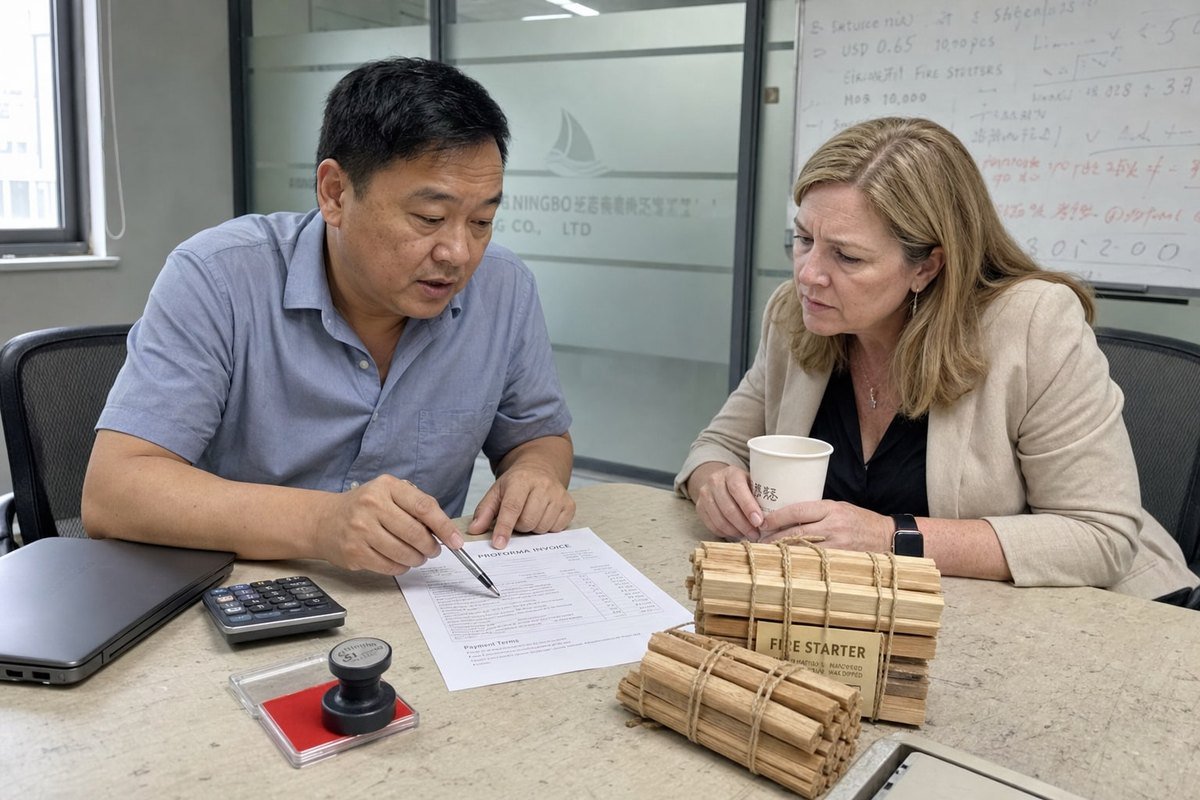
Payment risks when purchasing wood fire starters cost importers real money. On our factory floor in Ningbo, I have heard too many buyer stories about deposits that vanished before a single carton shipped.
To avoid payment risks when purchasing wood fire starters, verify the supplier's business license and certifications first, use protected payment methods like trade assurance, Letter of Credit, or escrow, insist on a 30/70 payment split, and never wire funds to a personal bank account.
These rules sound simple. Yet buyers break them every season, usually under time pressure. Below, I break down each part of the payment process so you can order with confidence.
What payment terms should I insist on when ordering wood fire starters from an overseas factory?
A German distributor once asked me why we would not accept 100% payment after delivery on a first order. That conversation taught me both sides carry risk, and terms must balance it.
Insist on a 30% deposit and 70% balance paid against the bill of lading copy or after a passed pre-shipment inspection. Avoid 100% upfront payment. Confirm all terms in writing on an authenticated proforma invoice before wiring any money.
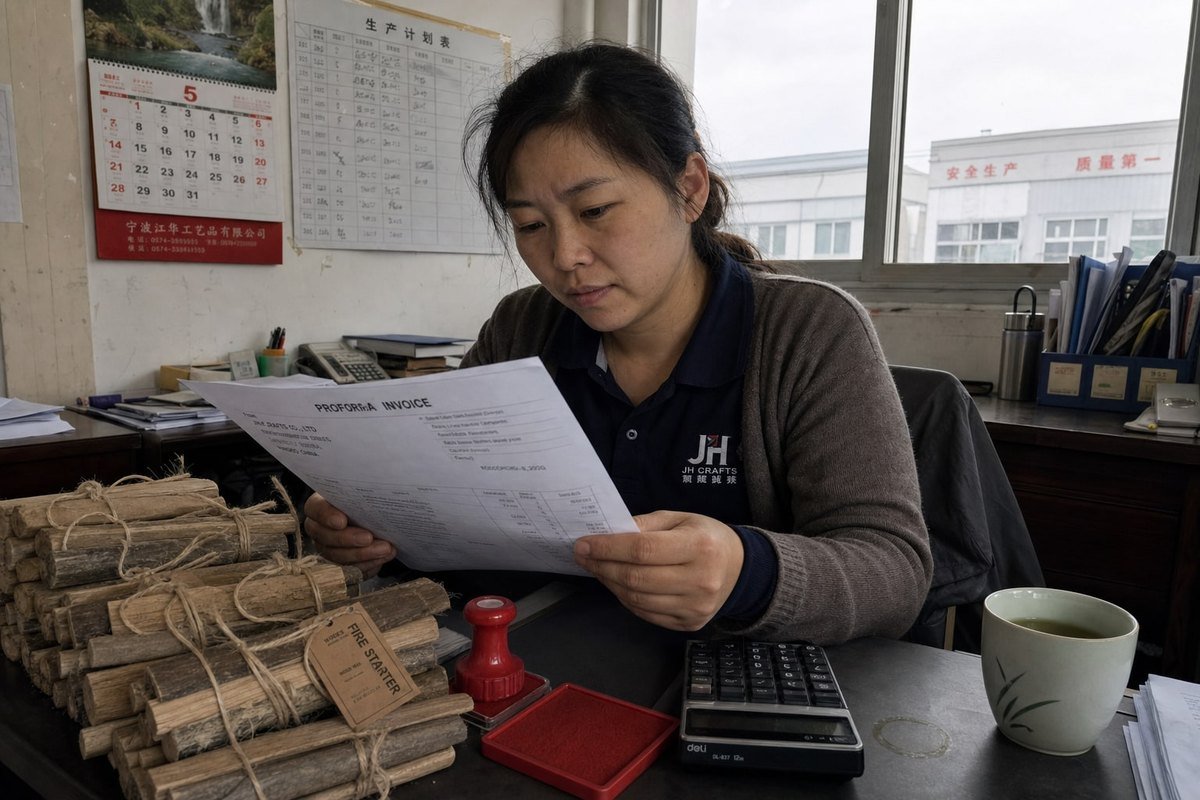
Payment terms are your first line of defense. They decide how much money sits at risk at any moment. In our 17+ years exporting fire-starting goods to the US, Germany, and 28 other markets, the 30/70 structure has become the industry standard for good reason. It shares risk fairly between buyer and factory.
Why the 30/70 split protects you
The 30% deposit covers our raw materials — wood wool, paraffin wax, and packaging. The 70% balance stays in your account until the goods exist, pass inspection, and are loaded. If the supplier fails to perform, you have only risked a third of the order value, not all of it.
Tie payment to milestones, not promises
Never release the balance based on photos alone. Tie it to a document or an event you can verify. Here is how I recommend structuring it:
| Payment Stage | Amount | Trigger | Your Protection |
|---|---|---|---|
| Deposit | 30% | Signed proforma invoice 1 | Order confirmed in writing |
| Balance option A | 70% | Passed pre-shipment inspection | Third party verifies quality and quantity |
| Balance option B | 70% | Copy of bill of lading | Goods are physically on the vessel |
| High-risk alternative | 100% upfront | None | Avoid this on first orders |
Also, agree on Incoterms 2020 2 explicitly. FOB Ningbo and CIF Hamburg carry very different cost and risk points. A vague "shipping included" line on an invoice is a warning sign, not a convenience. Put burn-time specs, carton counts, and warning-label requirements on the same proforma invoice, and confirm the invoice comes from the company's official email domain — not a free webmail account.
How can I verify a wood fire starter supplier's legitimacy before wiring a deposit?
Every trade show season, buyers visit our Liuyang headquarters and Ningbo production lines before signing anything. The serious ones always audit first, pay second — and that order matters.
Verify legitimacy by requesting the supplier's business license, checking it against China's official registry, confirming ISO 9001, BSCI, and SGS certificates directly with issuers, matching the bank account name to the company name, and conducting a factory audit or video tour.
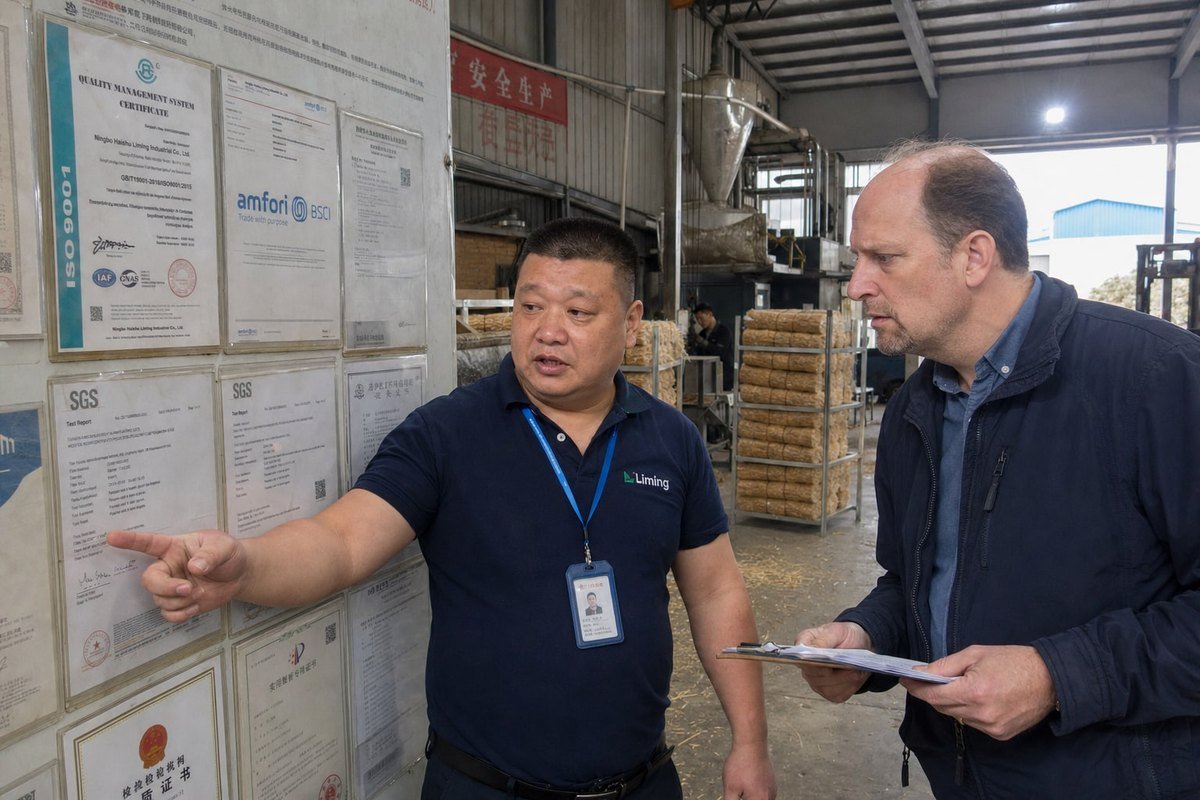
Supplier due diligence is not paranoia. It is basic procurement discipline. The cost of a video audit or a third-party verification report is tiny compared to a lost five-figure deposit. Here is the process I recommend to every purchasing manager who contacts us.
Step-by-step verification process
- Request the business license. Every legal Chinese company has one, with a unified social credit code 3. Check that code on the government's public enterprise registry.
- Confirm the certificates. Ask for ISO 9001 4, BSCI, and SGS or Intertek test reports. Then verify them with the issuing body, not just the supplier. Forged PDFs are common; verified certificates are not.
- Match the bank account. The beneficiary name on the wire instructions must match the company name on the license and the proforma invoice. Any mismatch — especially a personal account — should stop the deal immediately.
- Distinguish factory from trader. Ask for production-floor videos, machine lists, and a live video call from the workshop. A real factory can show you wax-dipping lines and wood wool processing in real time. A trading company posing as a factory cannot.
- Check the digital footprint. Run a WHOIS lookup 5 on the website domain. A domain registered three months before peak fire-starter season is a classic pop-up fraud pattern. Look for authenticated proforma invoice details, a physical address, and a working landline.
- Ask for a live inventory proof. Request a photo or video of stock with a handwritten, dated note. Verified biomass fuel exporters comply within hours; scammers stall or send stock images.
If distance makes a personal visit impossible, hire a local inspection firm to conduct a factory audit. For a modest fee, they photograph the facility, verify the address, and confirm production capability before your deposit leaves your bank.
What red flags signal a payment scam when sourcing wood fire starters from China?
Last year, a Canadian importer forwarded me a quote from a "factory" offering wax-dipped wood rolls at half our material cost. I told him plainly: that price cannot exist without a scam behind it.
Red flags include prices far below market, pressure to pay within hours, requests for bank transfer to personal or mismatched accounts, sudden mid-deal bank detail changes, refusal of third-party inspection, free-email-only communication, and newly registered website domains.
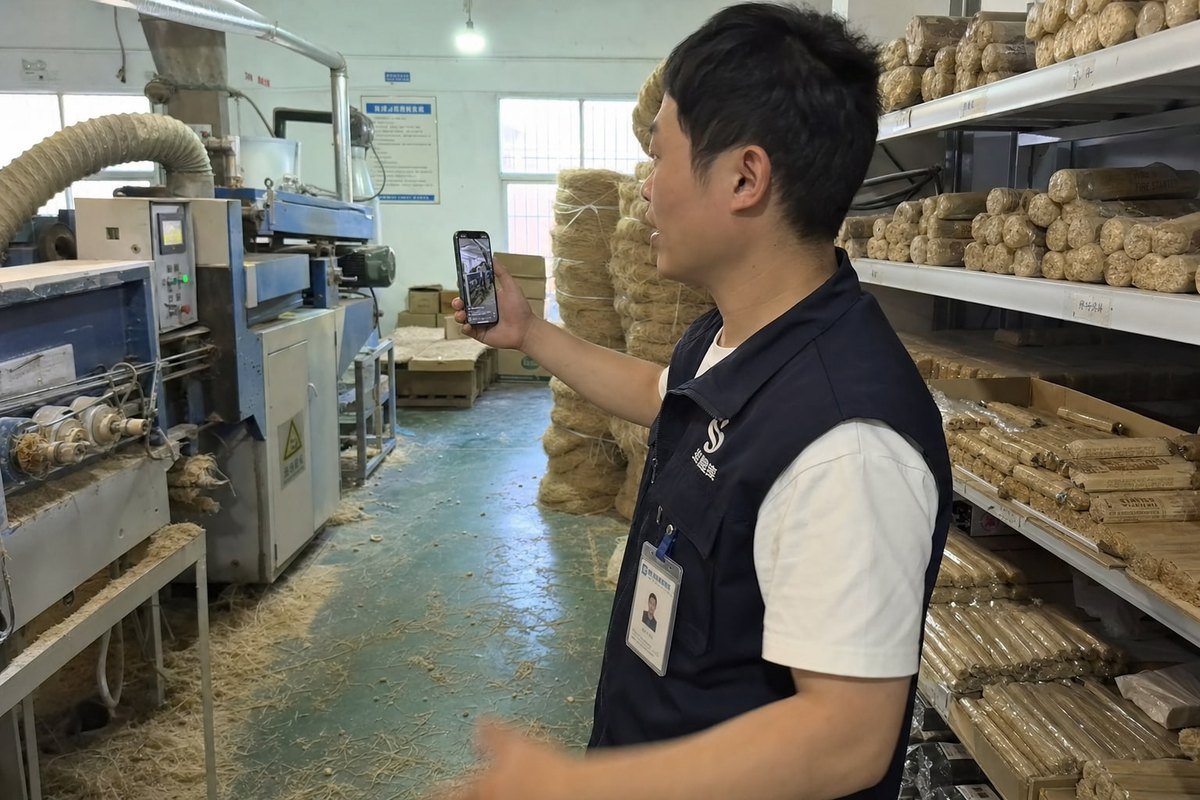
Scammers in this niche follow predictable scripts. Fire starters are seasonal, and buyers rush orders before autumn. Fraudsters exploit that urgency. Once you know the patterns, they become easy to spot. International trade fraud prevention starts with slowing down when someone tries to speed you up.
The most dangerous red flags, ranked
| Red Flag | What It Looks Like | Risk Level |
|---|---|---|
| Changed bank details mid-deal | "Our account is under audit, please wire to this new account" | Critical — likely email hijacking |
| Personal beneficiary account | Wire instructions name an individual, not the company | Critical |
| Price 40–50% below market | Quote far under what wholesale kindling suppliers can sustain | High |
| Extreme urgency | "Price valid 24 hours only" or "last production slot" | High |
| Inspection refusal | Excuses to block a pre-shipment inspection | High |
| Free email domains | Quotes and invoices sent from generic webmail | Medium |
| Vague company identity | Website, invoice, and license show different names | High |
The email hijacking trap
The most costly scam is not a fake supplier at all. It is a hacked email thread. Criminals monitor real negotiations, then send fake wire instructions at the payment stage from a lookalike address. The goods are real, the supplier is real, but your money goes to a thief. Our rule with buyers: any change to bank details must be confirmed by phone or video call with a known contact. No exceptions, ever. Also compare quotes across several established suppliers. Realistic pricing reflects real wood, real wax, and real compliance testing. A bargain that ignores those costs is bait.
Should I use a trade assurance platform or letter of credit for my wood fire starter orders?
When we onboard first-time buyers from the US or Europe, the payment method question comes up in nearly every call. My honest answer depends on order size, not loyalty to any single tool.
Use a trade assurance platform for smaller trial orders under roughly $20,000, and a Letter of Credit for larger container orders. Both beat unprotected wire transfers. Escrow services and credit card chargeback rights suit small sample purchases.
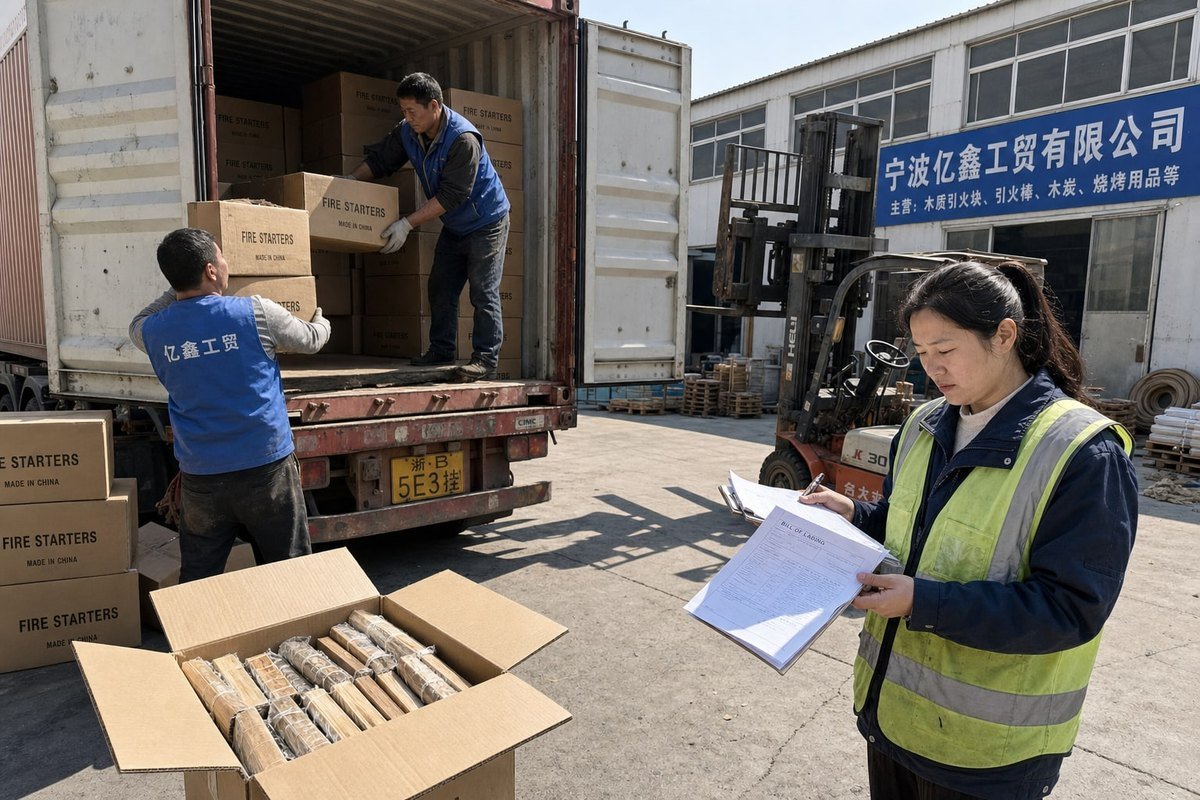
Neither tool is universally better. Each fits a different order profile, and each has costs and limits you should understand before committing.
Comparing your protected payment options
| Method | Best For | Cost | Protection Strength | Weakness |
|---|---|---|---|---|
| Trade assurance platform | Trial orders, small MOQs | Low or built-in | Refund if goods miss agreed specs | Coverage limited to platform terms |
| Letter of Credit 6 | Full container orders | Bank fees, typically 0.5–2% | Bank pays only against compliant documents | Complex; strict document rules |
| Escrow payment services | Mid-size custom orders | Small percentage fee | Funds released only on delivery proof | Not all suppliers accept it |
| Credit card / PayPal | Samples only | Low | Chargeback and dispute rights | Impractical for bulk B2B orders |
| Direct wire transfer (T/T) | Trusted, repeat suppliers | Bank wire fees | None once sent | No recourse if fraud occurs |
How to make each tool actually protect you
Trade assurance coverage only works if you document everything inside the platform. Specify burn time, wax coating, carton quantity, and label requirements in the platform order — not in side emails. If a dispute arises, the platform judges against those written specs.
With a Letter of Credit, precision matters even more. Letter of Credit terms must list exact documents: commercial invoice, packing list, bill of lading, and ideally a pre-shipment inspection certificate 7 from SGS or Intertek. Your bank releases payment only when documents match perfectly. Adding the inspection certificate as a required document is the single strongest move a buyer can make. It means the factory cannot get paid until an independent inspector confirms the goods.
For samples, pay through secure payment gateways with buyer protection, and consider a single-use virtual card to shield your details on unfamiliar sites. In our experience shipping to 30+ countries, buyers who match the payment tool to the order size almost never suffer losses. Buyers who wire full payments to save a small fee occasionally lose everything.
Conclusion
Payment risks when purchasing wood fire starters are real but manageable. Verify the factory, split payment terms, watch for red flags, and match protection tools to order size.
Footnotes
1. Defines the trade document buyers must use to confirm order terms in writing. ↩︎
2. ICC is the official publisher of Incoterms rules referenced for shipping terms. ↩︎
3. Background explanation of China's business registration identifier mentioned for verification. ↩︎
4. A stable, authoritative, and universally accessible alternative that provides a comprehensive overview of the standard. ↩︎
5. Explains the domain-lookup tool buyers use

 English
  Spanish
  German
  French
  Arabic
  Portuguese
Join the Conversation