






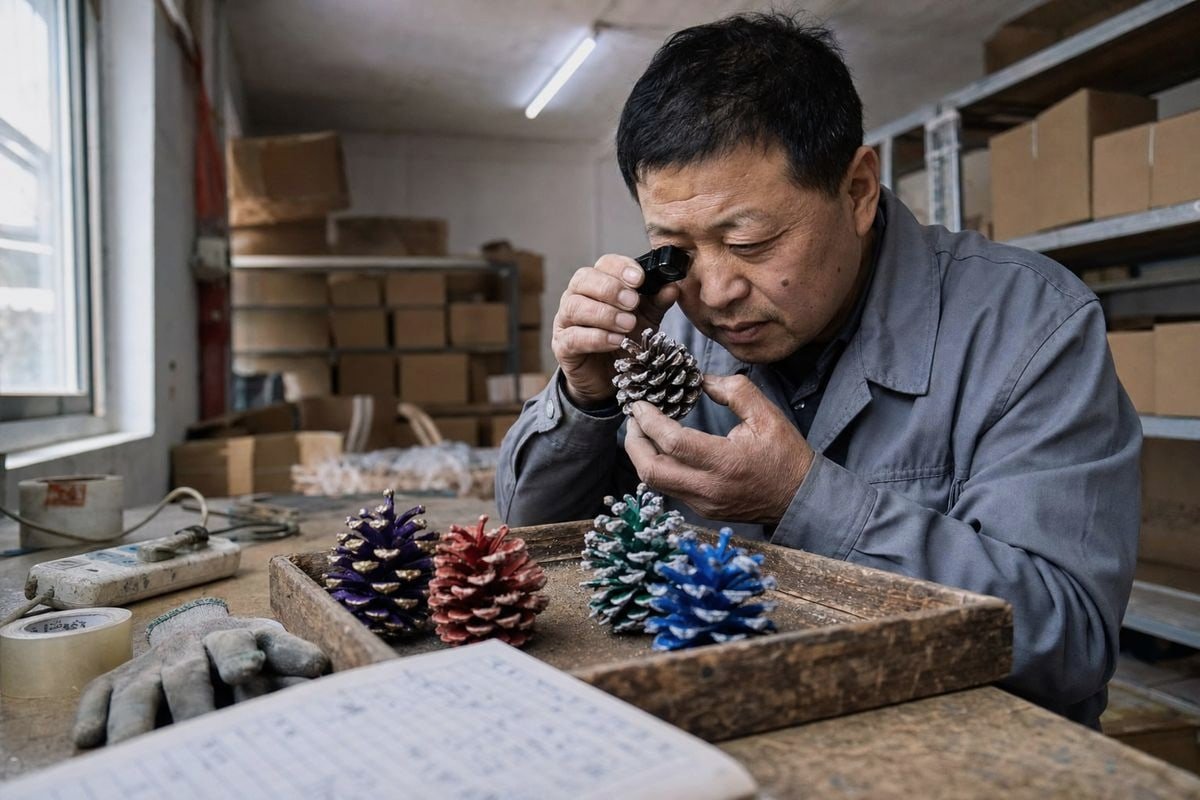
Every shipping season, our quality team fields the same worried email from buyers: "There's white powder on colored pine cones—is this mold, and should I reject the shipment?"
White powder on colored pine cones is usually harmless pine resin, chemical efflorescence from metal salts, or waxy bloom—not dangerous mold. True mold appears fuzzy, damp, and musty. Texture, storage history, and moisture levels are the decisive factors, not color alone.
This guide breaks down exactly what causes white residue, how to tell it apart from real mold, and what standards you should demand from your supplier to prevent moisture issues before they reach your warehouse.
What Causes the White Powder or Bloom I See on Color-Flame Pine Cones?
A lesson we learned early in our 17-year production run is that white residue on fire-coloring pine cones confuses even experienced buyers, because several completely different substances can look identical at a glance.
The white powder on color-flame pine cones is most often chemical efflorescence—metal salts like borax or copper sulfate recrystallizing on the surface due to humidity shifts—or natural sap crystallization from the cone's own pine resin drying after treatment. Both are harmless and non-toxic.
Why Color-Flame Cones Are Especially Prone to White Residue
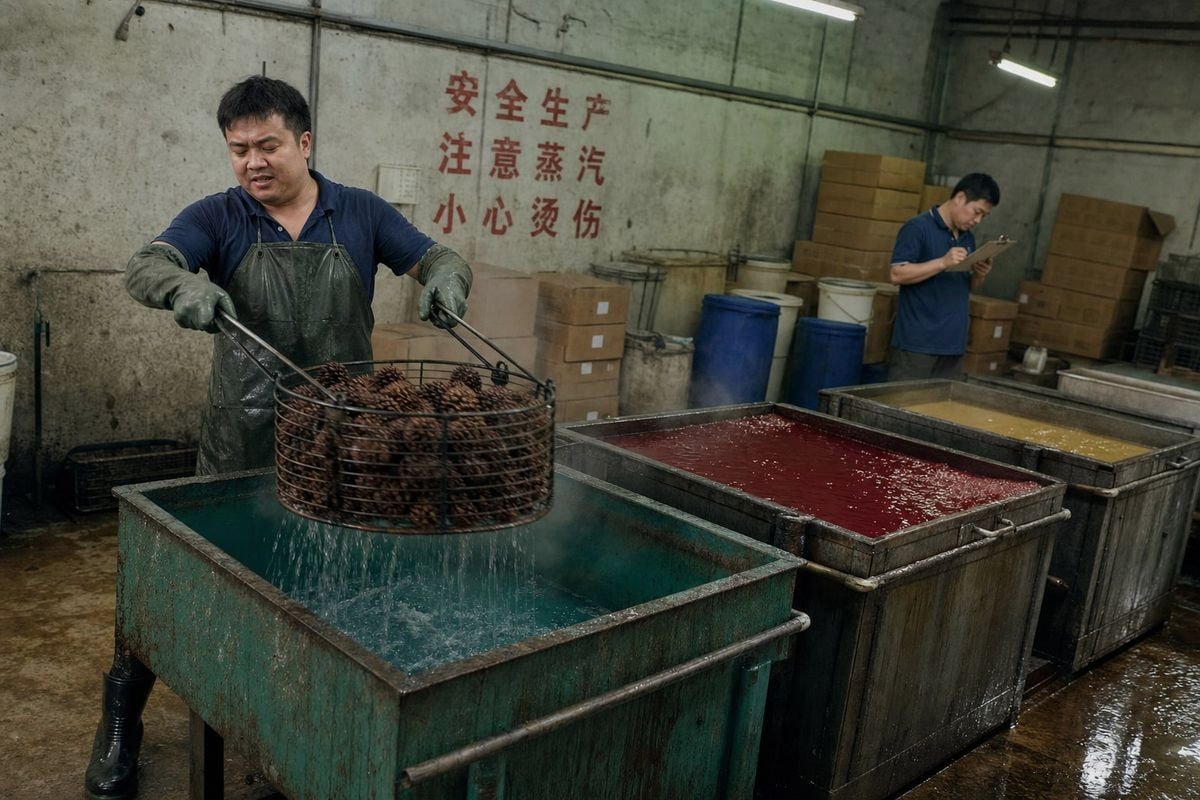
Standard decorative pine cones sit on a shelf and stay stable. Color-flame cones are different. During production, we soak raw cones in metal-salt solutions—copper sulfate 1 for blue and green flames, lithium chloride for red, borax for yellow-green. These salts absorb into the scales and the wood fibers.
When humidity rises even slightly during transit or long-term storage, moisture pulls dissolved salts back toward the surface. As the cone dries again, the salts recrystallize into a fine white or pale-blue powder. This process is called efflorescence, and it is the single most common cause of white bloom on color-flame products. It does not affect burn performance or safety.
Other Common Causes
Beyond efflorescence, several other substances can create a white appearance on pine cone surfaces.
| Cause | Appearance | Texture | Location on Cone |
|---|---|---|---|
| Chemical efflorescence 2 (metal salts) | White or pale-blue powder | Dry, chalky, wipes off | Uniform across scales |
| Sap crystallization (pine resin) | Amber-white, glossy crust | Hard, brittle, slightly sticky when warm | Near damaged areas or cut bases |
| Waxy bloom (natural coating) | Pale, even film | Smooth, powdery | Younger scales, certain conifer species |
| Surface mold or mildew growth | White, green, or gray fuzz | Soft, cottony, damp | Patchy, often in crevices between scales |
| Insect residue (adelgid/scale wax) | White filaments or wool | Waxy threads | On scale tips or near needle attachment points |
Solvent-based dyes used during coloring can also react with the cone's natural terpenes. This causes resins to leach out and dry into a fine, powdery film instead of clear droplets. Against a bright purple or emerald-green painted surface, even a thin resin haze becomes highly visible.
The Quick "Heat-Rub Test"
When our QC inspectors need a fast field check, they use a simple method. Rub the white spot firmly with a warm finger. If the residue softens and turns slightly sticky, it is pine resin. If it smears into a dry, dusty streak, it is likely mold or mildew growth. If it crumbles like chalk and dissolves on a damp cloth, it is salt efflorescence. This takes seconds and gives a reliable first answer without lab equipment.
Is Mold Growth on My Pine Cone Shipment a Sign of Poor Manufacturing Quality?
One of the toughest conversations I have had with a European distributor started with photos of gray fuzz on a pallet of color-flame cones that arrived after a six-week ocean shipment through tropical waters.
Mold on a pine cone shipment does not automatically indicate poor manufacturing. It most often signals a moisture failure during storage, packaging, or transit. Well-made cones that are dried below safe moisture levels and packed with desiccants rarely develop mold, regardless of conifer species.

Manufacturing vs. Transit: Where Mold Actually Starts
True surface mold—typically Trichoderma 3 or Penicillium species—needs moisture to colonize. In forestry research, these fungi are described as superficial saprophytes. They feed on dead organic tissue and colonize cone scales without necessarily destroying the structure. But for a decorative or fire-coloring product, visible mold is still a quality defect that no buyer will accept.
The real question is where the moisture entered the process. Here is how we trace it on our production line:
| Stage | Potential Moisture Source | Our Control Measure |
|---|---|---|
| Raw cone collection | Cones harvested from damp ground or after rain | Incoming inspection rejects cones above target moisture content |
| Salt-soak treatment | Cones absorb solution during chemical infusion | Mandatory oven drying cycle at controlled temperature post-soak |
| Pre-packing storage | Warehouse humidity spikes in humid seasons | Dehumidified storage rooms with logged humidity data |
| Packaging | Sealed bags trap residual moisture | Desiccant sachets included; bags not sealed until cones reach safe dryness |
| Ocean freight | Container condensation ("container rain") in tropical routes | Kraft-paper inner liners, container desiccants, and ventilated packing |
When Mold Is a Legitimate Manufacturing Defect
If cones leave the factory above safe moisture levels, or if oven drying was skipped or shortened, then mold growth is a fair quality complaint. A reliable supplier will have batch records showing drying times and post-dry moisture readings. If those records do not exist, the factory lacks basic process control.
On the other hand, if cones tested dry at the factory gate but arrived moldy after sitting in a humid port warehouse for three weeks, that is a logistics issue—not a manufacturing one. This distinction matters when you negotiate claims and corrective actions with your supplier.
Fungal Spores Are Everywhere—Moisture Is the Variable
Pine cones naturally carry fungal spores on their surfaces. You cannot sterilize a raw botanical product to hospital-grade cleanliness. What you can control is moisture levels. Below roughly 12–15 percent moisture content, mold spores remain dormant. Above that threshold, they germinate. So the practical standard is not "zero spores" but "zero conditions for growth."
For buyers worried about respiratory irritation, the key reassurance is this: dried cones with dormant spores pose minimal risk during normal handling. Active, fuzzy mold on damp cones is the scenario that can release enough airborne spores to irritate sensitive individuals.
How Can I Verify My Supplier's Pine Cones Are Safe and Meet Compliance Standards Like SGS or CE?
During a factory audit last year, a US buyer's compliance officer asked to see not just our certificates but the original lab test reports with sample numbers, test methods, and pass/fail results. That level of scrutiny is exactly what separates serious importers from casual ones.
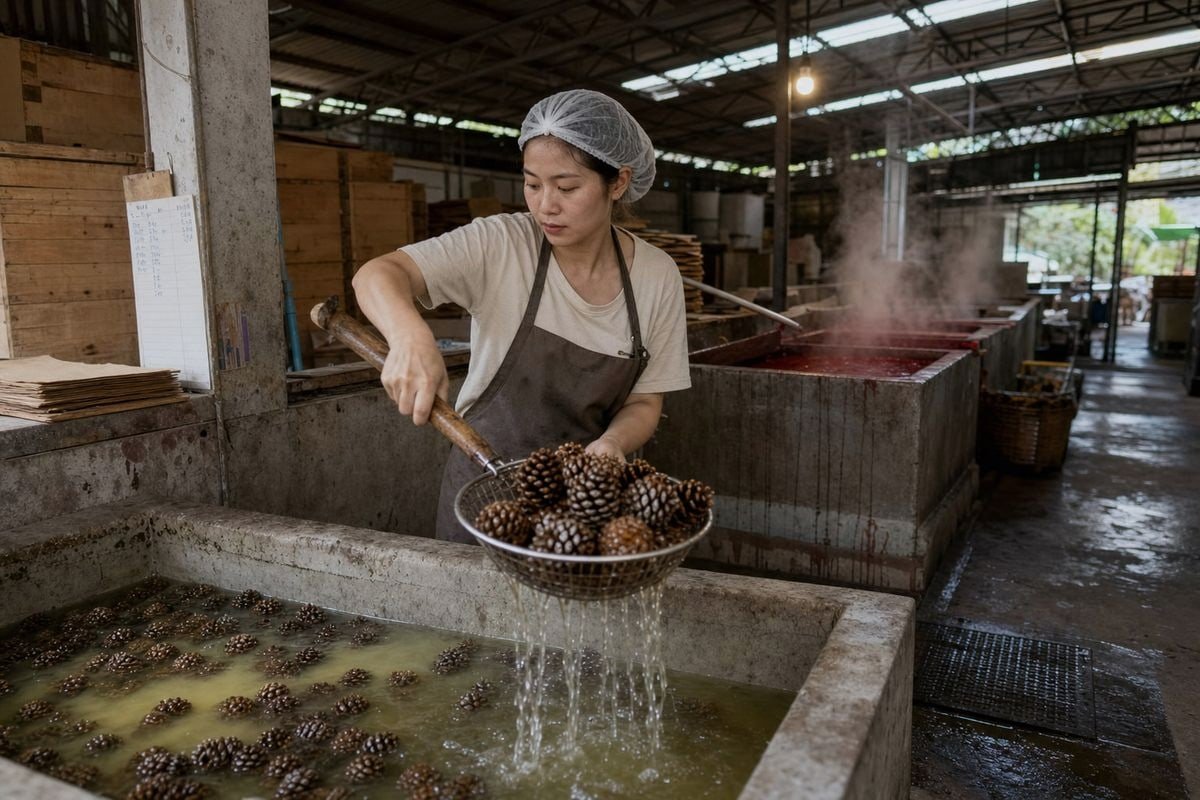
To verify your supplier's compliance, request original SGS or Intertek test reports (not just certificates), confirm CE marking covers the correct directive for your market, and cross-check the report's sample description against the actual product you are ordering. Certificates alone are not proof.
What Each Certification Actually Covers
Many buyers treat "SGS-certified" or "CE-marked" as a single stamp of approval. In reality, each certification covers a specific scope, and you need to verify that the scope matches your product and your destination market.
- SGS / Intertek test reports: These are third-party lab results. They test for specific hazards—heavy metals, flammability, chemical content—against a specific standard (e.g., EN 71 for toy safety, REACH for chemical restrictions). The report is only valid for the sample tested. If your supplier reformulates or changes materials, the old report may no longer apply.
- CE marking: For fire-coloring products sold in the EU, CE marking 4 signals compliance with relevant EU directives. But CE is a self-declaration backed by documentation—it is not an independent lab approval. A responsible supplier holds the supporting technical file and can produce it on request.
- ISO 9001: This certifies a quality management system, not a product ISO 9001 5. It means the factory follows documented processes. It does not guarantee the product is safe—only that the factory controls its procedures consistently.
- BSCI: This is a social compliance audit covering labor conditions, not product safety. Important for brand reputation but irrelevant to chemical safety or mold prevention.
A Practical Verification Checklist
Here is what I recommend every B2B buyer request before placing a first order:
- Ask for the full test report PDF, not a summary certificate. Check the lab name, accreditation number, test date, and sample description.
- Confirm the tested sample matches your SKU. If the report tested a plain pine cone and you are ordering gold-painted color-flame cones, the results may not cover paint chemistry.
- Request a REACH compliance 6 declaration if selling into the EU. This covers restricted substances including certain heavy metals and phthalates 7.
- For fire-coloring products specifically, ask whether the metal salts used (copper sulfate, borax, strontium chloride) are within permitted limits for consumer products in your market.
- If your buyer is a large retailer, ask whether the supplier can provide Walmart or Amazon chemical compliance documentation formats, because those chains have their own restricted-substance lists.
Why "We Have SGS" Is Not Enough
A certificate hanging on the office wall tells you the factory once passed a test. It does not tell you when the test was done, what product was tested, or whether current production matches the tested sample. Our approach is to maintain active, product-specific test reports that we update whenever we change a formulation or raw material source, and we share these directly with buyers during the quoting stage—not after a problem surfaces.
Decorative preservation coatings, dye formulations, and salt concentrations can all change between production runs. Each change should trigger a review of whether existing compliance documentation still applies. This is where genuine manufacturing depth matters—a factory with 17 years of process control treats compliance as ongoing maintenance, not a one-time checkbox.
What Storage and Packaging Standards Should I Require From My Manufacturer to Prevent Moisture Issues?
The most expensive lesson in our early export years was a container of color-flame pine cones that arrived in the Netherlands covered in white fuzz. The cones had tested perfectly dry at our Ningbo facility, but six weeks on the ocean through the Strait of Malacca 8 in monsoon season changed everything.
Require your manufacturer to dry cones below 12% moisture content, include desiccant sachets inside sealed bags, use moisture-barrier inner liners, and provide documented moisture readings per batch. For ocean freight, container desiccants and ventilated packing layouts are essential to prevent condensation damage.

Packaging Specifications That Actually Prevent Problems
Not all packaging is equal. A standard poly bag will trap moisture. A kraft bag breathes better but offers less protection against port humidity. The best approach depends on your shipping route, transit time, and destination climate.
| Packaging Element | Purpose | Recommended Standard |
|---|---|---|
| Inner bag material | Moisture barrier around cones | Multi-layer laminate or foil-lined kraft |
| Desiccant sachet (per bag) | Absorbs residual moisture inside sealed unit | Silica gel 9, sized to bag volume |
| Container desiccant | Absorbs "container rain" condensation | Calcium chloride hanging strips, 1–2 per container |
| Inner carton liner | Secondary moisture barrier | PE-coated kraft paper |
| Ventilation gaps | Prevents stagnant humid air pockets | Pallet spacing of at least 5 cm from container walls |
| Moisture indicator card | Visual proof of humidity conditions during transit | Cobalt-free humidity indicator inside carton |
The Problem With Airtight Plastic Containers
Many craft and retail buyers assume airtight containers are the safest option. In practice, sealing cones in airtight plastic often triggers what some handlers call storage-induced osmosis. If the cones are not completely dry when sealed, trapped moisture has nowhere to go. It migrates to the surface, pulls salts along with it, and creates a white "frost" that looks exactly like mold. Over time, if the moisture level stays high enough, actual mildew growth follows.
The fix is straightforward. Either ensure cones are bone-dry before sealing, or use semi-permeable packaging that allows slow moisture exchange without exposing cones to external humidity.
What to Put in Your Supplier Agreement
Beyond packaging materials, the following points belong in your purchase agreement or quality standard document:
- Moisture content specification: Maximum 12% at time of packing, measured with a pin-type or capacitance moisture meter and documented per batch.
- Drying process record: Oven drying temperature, duration, and post-dry moisture reading logged for every production lot.
- Desiccant requirements: Type, quantity, and placement specified per packaging unit.
- White vinegar soak or surface treatment option: If your market requires a pre-treatment step—such as a dilute white vinegar soak before drying—specify this in the manufacturing instructions.
- Claim procedure for moisture-related defects: Define what constitutes a valid claim (e.g., moisture above specification at destination, confirmed by independent testing) and who bears the cost.
Our standard operating procedure now includes photographing moisture meter readings at packing and inserting humidity indicator cards in every carton. When a buyer reports a problem, we can trace back to the exact batch's conditions. This level of documentation does not cost much, but it eliminates ambiguity in claims disputes.
Seasonal and Route-Specific Considerations
Shipping to the US West Coast via the Pacific is a cooler, shorter route than shipping to Northern Europe via the Suez Canal. Monsoon season in Southeast Asia increases container condensation risk dramatically. We adjust our desiccant quantities and inner-liner specs based on the season and route. A one-size-fits-all packaging approach invites trouble.
For buyers who plan to hold inventory in long-term storage, warehouse conditions matter as much as shipping conditions. A climate-controlled warehouse with humidity below 60% will keep cones stable for months. An unheated garage in a coastal city will not.
Conclusion
White powder on colored pine cones is usually harmless resin or salt efflorescence—not mold. Demand documented moisture controls, proper desiccants, and verified compliance from your manufacturer to keep every shipment shelf-ready.
`
Footnotes
1. Background on the metal salt compound used in blue and green flame coloring. ↩︎
2. Explains the salt recrystallization process described as the main cause of white powder. ↩︎
3. Provides scientific background on the fungal genus identified as common surface mold. ↩︎
4. Official EU source explaining the self-declaration compliance marking discussed in the article. ↩︎
5. Stable, authoritative Wikipedia overview of the ISO 9001 quality management standard to avoid 403 errors. ↩︎
6. Official European Commission overview of REACH chemical safety regulations and compliance requirements. ↩︎
7. EPA resource on the restricted chemical substances mentioned in compliance checks. ↩︎
8. Geographic context for the shipping route mentioned in the moisture failure story. ↩︎
9. Background on the common desiccant material recommended for packaging. ↩︎

 English
  Spanish
  German
  French
  Arabic
  Portuguese
Join the Conversation