






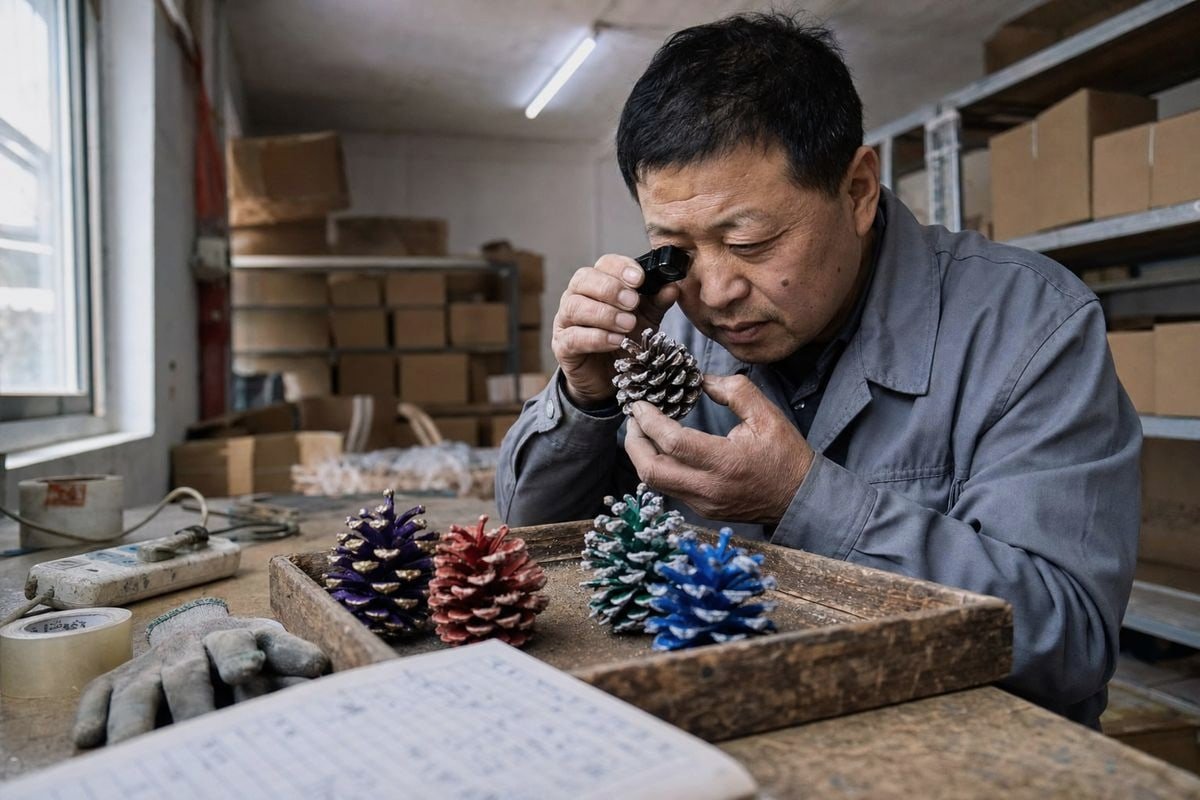
Cada temporada de envío, nuestro equipo de calidad recibe el mismo correo electrónico preocupado de los compradores: "Hay polvo blanco en las piñas de colores, ¿es moho y debo rechazar el envío?"
El polvo blanco en las piñas de colores suele ser resina de pino inofensiva, eflorescencia química de sales metálicas o una capa cerosa, no moho peligroso. El moho verdadero aparece algodonoso, húmedo y mohoso. La textura, el historial de almacenamiento y los niveles de humedad son los factores decisivos, no solo el color.
Esta guía desglosa exactamente qué causa el residuo blanco, cómo diferenciarlo del moho real y qué estándares debes exigir a tu proveedor para prevenir problemas de humedad antes de que lleguen a tu almacén.
¿Qué causa el polvo blanco o la floración que veo en las piñas Color-Flame?
Una lección que aprendimos al principio de nuestra producción de 17 años es que el residuo blanco en las piñas teñidas al fuego confunde incluso a los compradores experimentados, porque varias sustancias completamente diferentes pueden parecer idénticas a simple vista.
El polvo blanco sobre las piñas de color-llama es más a menudo eflorescencia química —sales metálicas como bórax o sulfato de cobre que se recristalizan en la superficie debido a cambios de humedad— o cristalización natural de savia de la propia resina de pino del cono que se seca después del tratamiento. Ambos son inofensivos y no tóxicos.
¿Por qué las piñas teñidas al fuego son especialmente propensas a residuos blancos?
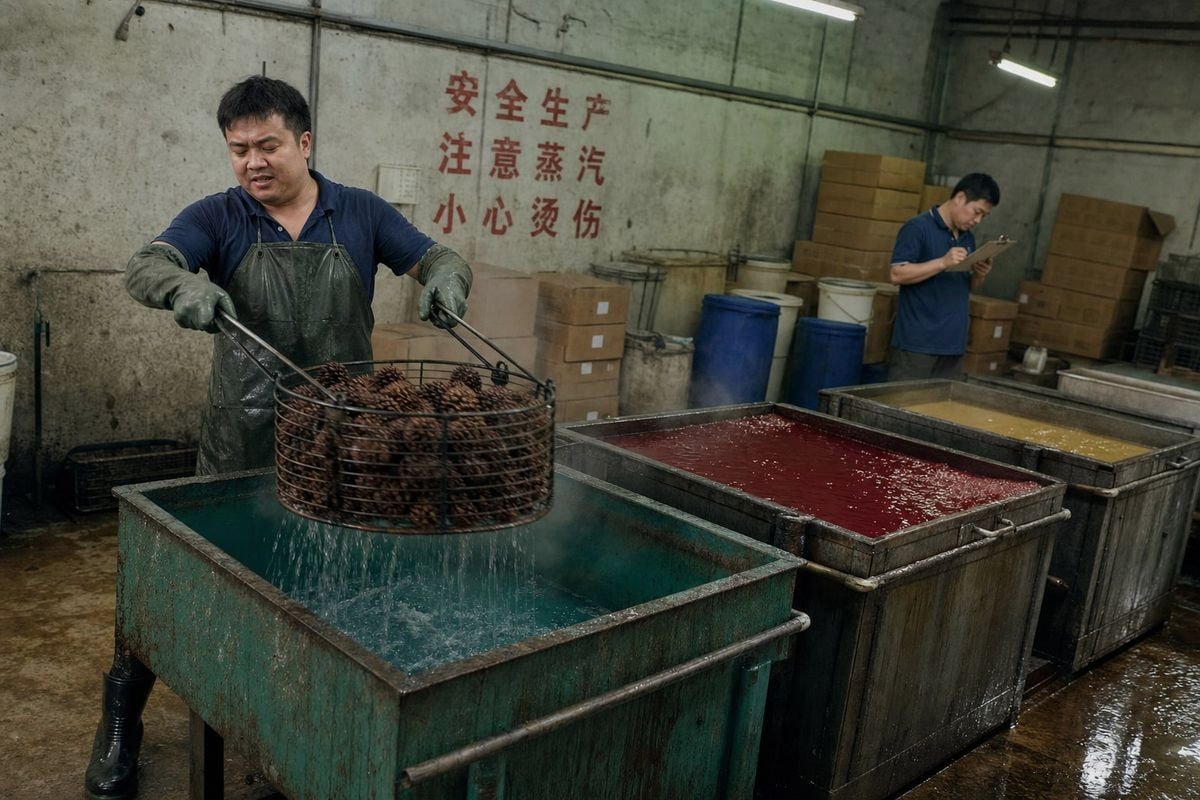
Las piñas decorativas estándar se asientan en un estante y permanecen estables. Las piñas teñidas al fuego son diferentes. Durante la producción, sumergimos las piñas crudas en soluciones de sales metálicas—sulfato de cobre 1 para llamas azules y verdes, cloruro de litio para rojo, bórax para verde amarillento. Estas sales se absorben en las escamas y las fibras de madera.
Cuando la humedad aumenta incluso ligeramente durante el tránsito o el almacenamiento a largo plazo, la humedad extrae las sales disueltas hacia la superficie. A medida que la piña se seca nuevamente, las sales se recristalizan en un polvo fino blanco o azul pálido. Este proceso se llama eflorescencia, y es la causa más común de floración blanca en productos teñidos al fuego. No afecta el rendimiento de la combustión ni la seguridad.
Otras causas comunes
Más allá de la eflorescencia, varias otras sustancias pueden crear una apariencia blanca en las superficies de las piñas.
| Causa | Apariencia | Textura | Ubicación en la piña |
|---|---|---|---|
| Eflorescencia química 2 (sales metálicas) | Polvo blanco o azul pálido | Seco, calcáreo, se quita al frotar | Uniforme en las escamas |
| Cristalización de savia (resina de pino) | Costra blanco ámbar, brillante | Dura, quebradiza, ligeramente pegajosa cuando está caliente | Cerca de áreas dañadas o bases cortadas |
| Floración cerosa (recubrimiento natural) | Película pálida y uniforme | Suave, polvorienta | Escamas más jóvenes, ciertas especies de coníferas |
| Crecimiento de moho o mildiú en la superficie | Pelusa blanca, verde o gris | Suave, algodonosa, húmeda | Irregular, a menudo en las grietas entre las escamas |
| Residuo de insectos (cera de áfidos/escamas) | Filamentos blancos o lana | Hilos cerosos | En las puntas de las escamas o cerca de los puntos de unión de las agujas |
Los tintes a base de solventes utilizados durante la coloración también pueden reaccionar con los terpenos naturales de la piña. Esto hace que las resinas se filtren y se sequen en una película fina y polvorienta en lugar de gotas transparentes. Contra una superficie pintada de púrpura brillante o verde esmeralda, incluso una fina neblina de resina se vuelve muy visible.
La rápida "Prueba de Frotamiento con Calor"
Cuando nuestros inspectores de control de calidad necesitan una verificación rápida en campo, utilizan un método sencillo. Frota el punto blanco firmemente con un dedo caliente. Si el residuo se ablanda y se vuelve ligeramente pegajoso, es resina de pino. Si se desmorona en una raya seca y polvorienta, es probable que sea crecimiento de moho o mildiú. Si se desmorona como tiza y se disuelve en un paño húmedo, es eflorescencia de sal. Esto toma segundos y da una primera respuesta confiable sin equipo de laboratorio.
¿El moho en mi envío de piñas es señal de mala calidad de fabricación?
Una de las conversaciones más difíciles que tuve con un distribuidor europeo comenzó con fotos de pelusa gris en un palé de piñas teñidas al fuego que llegaron después de un envío marítimo de seis semanas a través de aguas tropicales.
Moho en un envío de piñas no indica automáticamente una fabricación deficiente. Lo más frecuente es que señale un fallo de humedad durante el almacenamiento, el embalaje o el transporte. Las piñas bien hechas que se secan por debajo de los niveles de humedad seguros y se empaquetan con desecantes rara vez desarrollan moho, independientemente de la especie de conífera.

Fabricación vs. Tránsito: Dónde comienza realmente el moho
El moho superficial real, típicamente Trichoderma 3 o Penicillium especies, necesita humedad para colonizar. En la investigación forestal, estos hongos se describen como saprófitos superficiales. Se alimentan de tejido orgánico muerto y colonizan las escamas de las piñas sin necesariamente destruir la estructura. Pero para un producto decorativo o teñido al fuego, el moho visible sigue siendo un defecto de calidad que ningún comprador aceptará.
La verdadera pregunta es dónde entró la humedad en el proceso. Así es como lo rastreamos en nuestra línea de producción:
| Etapa | Fuente potencial de humedad | Nuestra medida de control |
|---|---|---|
| Recolección de conos crudos | Conos cosechados de suelo húmedo o después de la lluvia | La inspección de entrada rechaza conos por encima del contenido de humedad objetivo |
| Tratamiento de remojo en sal | Los conos absorben la solución durante la infusión química | Ciclo de secado obligatorio en horno a temperatura controlada post-remojo |
| Almacenamiento previo al envasado | Picos de humedad en el almacén en temporadas húmedas | Habitaciones de almacenamiento deshumidificadas con datos de humedad registrados |
| Empaquetado | Las bolsas selladas atrapan la humedad residual | Se incluyen sobres desecantes; las bolsas no se sellan hasta que los conos alcanzan una sequedad segura |
| Flete marítimo | Condensación en el contenedor ("lluvia de contenedor") en rutas tropicales | Revestimientos interiores de papel kraft, desecantes para contenedores y embalaje ventilado |
Cuando el moho es un defecto de fabricación legítimo
Si los conos salen de la fábrica por encima de los niveles de humedad seguros, o si el secado en horno se omitió o acortó, entonces el crecimiento de moho es una queja de calidad válida. Un proveedor confiable tendrá registros de lotes que muestren los tiempos de secado y las lecturas de humedad posteriores al secado. Si esos registros no existen, la fábrica carece de control básico del proceso.
Por otro lado, si los conos probados estaban secos en la puerta de la fábrica pero llegaron mohosos después de permanecer en un almacén portuario húmedo durante tres semanas, eso es un problema logístico, no de fabricación. Esta distinción es importante cuando negocia reclamaciones y acciones correctivas con su proveedor.
Las esporas fúngicas están en todas partes: la humedad es la variable
Las piñas transportan naturalmente esporas fúngicas en sus superficies. No se puede esterilizar un producto botánico crudo a una limpieza de grado hospitalario. Lo que se puede controlar son los niveles de humedad. Por debajo de aproximadamente el 12-15 por ciento de contenido de humedad, las esporas de moho permanecen inactivas. Por encima de ese umbral, germinan. Por lo tanto, el estándar práctico no es "cero esporas", sino "cero condiciones para el crecimiento"."
Para los compradores preocupados por la irritación respiratoria, la clave de tranquilidad es esta: los conos secos con esporas inactivas presentan un riesgo mínimo durante la manipulación normal. El moho activo y velloso en conos húmedos es el escenario que puede liberar suficientes esporas en el aire para irritar a personas sensibles.
¿Cómo Puedo Verificar Que las Piñas de Mi Proveedor Sean Seguras y Cumplan con Estándares de Cumplimiento Como SGS o CE?
Durante una auditoría de fábrica el año pasado, un oficial de cumplimiento de un comprador de EE. UU. pidió ver no solo nuestros certificados, sino también los informes de prueba de laboratorio originales con números de muestra, métodos de prueba y resultados de aprobación/rechazo. Ese nivel de escrutinio es exactamente lo que separa a los importadores serios de los ocasionales.
Para verificar el cumplimiento de su proveedor, solicite informes de prueba originales de SGS o Intertek (no solo certificados), confirme que el marcado CE cubre la directiva correcta para su mercado y cruce la descripción de la muestra del informe con el producto real que está solicitando. Los certificados por sí solos no son prueba.
Lo que cubre realmente cada certificación
Muchos compradores tratan "certificado por SGS" o "marcado CE" como un sello de aprobación único. En realidad, cada certificación cubre un alcance específico, y usted necesita verificar que el alcance coincida con su producto y su mercado de destino.
- Informes de prueba SGS / Intertek: Estos son resultados de laboratorio de terceros. Prueban peligros específicos (metales pesados, inflamabilidad, contenido químico) contra un estándar específico (por ejemplo, EN 71 para seguridad de juguetes, REACH para restricciones químicas). El informe solo es válido para la muestra probada. Si su proveedor reformula o cambia materiales, el informe antiguo puede ya no ser aplicable.
- Marcado CE: Para productos de colorear con fuego vendidos en la UE, Marcado CE 4 señala el cumplimiento de las directivas de la UE pertinentes. Pero CE es una autodeclaración respaldada por documentación; no es una aprobación de laboratorio independiente. Un proveedor responsable tiene el archivo técnico de soporte y puede producirlo a pedido.
- ISO 9001: Esto certifica un sistema de gestión de calidad, no un producto ISO 9001 5. Significa que la fábrica sigue procesos documentados. No garantiza que el producto sea seguro, solo que la fábrica controla sus procedimientos de manera consistente.
- BSCI: Esta es una auditoría de cumplimiento social que cubre las condiciones laborales, no la seguridad del producto. Importante para la reputación de la marca, pero irrelevante para la seguridad química o la prevención de moho.
Una lista de verificación de verificación práctica
Aquí está lo que recomiendo que solicite cada comprador B2B antes de realizar un primer pedido:
- Solicite el PDF completo del informe de prueba, no un certificado resumen. Verifique el nombre del laboratorio, el número de acreditación, la fecha de prueba y la descripción de la muestra.
- Confirme que la muestra probada coincide con su SKU. Si el informe probó una piña natural y usted está pidiendo piñas de color pintadas de oro, los resultados pueden no cubrir la química de la pintura.
- Solicite una REACH 6 declaración si vende a la UE. Esto cubre sustancias restringidas, incluidos ciertos metales pesados y ftalatos 7.
- Para productos de colorear con fuego específicamente, pregunte si las sales metálicas utilizadas (sulfato de cobre, bórax, cloruro de estroncio) están dentro de los límites permitidos para productos de consumo en su mercado.
- Si su comprador es un minorista importante, pregunte si el proveedor puede proporcionar los formatos de documentación de cumplimiento químico de Walmart o Amazon, porque esas cadenas tienen sus propias listas de sustancias restringidas.
Por qué "Tenemos SGS" no es suficiente
Un certificado colgado en la pared de la oficina le dice que la fábrica pasó una prueba alguna vez. No le dice cuándo se realizó la prueba, qué producto se probó o si la producción actual coincide con la muestra probada. Nuestro enfoque es mantener informes de prueba activos y específicos del producto que actualizamos cada vez que cambiamos una formulación o fuente de materia prima, y los compartimos directamente con los compradores durante la etapa de cotización, no después de que surge un problema.
Los recubrimientos de preservación decorativa, las formulaciones de tintes y las concentraciones de sal pueden cambiar entre lotes de producción. Cada cambio debería desencadenar una revisión de si la documentación de cumplimiento existente sigue siendo aplicable. Aquí es donde la profundidad de fabricación genuina importa: una fábrica con 17 años de control de procesos trata el cumplimiento como un mantenimiento continuo, no como una casilla de verificación única.
¿Qué estándares de almacenamiento y embalaje debo exigir a mi fabricante para prevenir problemas de humedad?
La lección más cara de nuestros primeros años de exportación fue un contenedor de piñas de color-llama que llegó a los Países Bajos cubierto de pelusa blanca. Las piñas habían dado resultados perfectamente secos en nuestras instalaciones de Ningbo, pero seis semanas en el océano a través del Estrecho de Malaca 8 en temporada de monzones lo cambiaron todo.
Exija a su fabricante que seque los conos por debajo del 12% de contenido de humedad, incluya bolsitas desecantes dentro de las bolsas selladas, utilice revestimientos interiores de barrera contra la humedad y proporcione lecturas de humedad documentadas por lote. Para el transporte marítimo, los desecantes de contenedores y los diseños de embalaje ventilados son esenciales para prevenir daños por condensación.

Especificaciones de embalaje que realmente previenen problemas
No todo el embalaje es igual. Una bolsa de polietileno estándar atrapará la humedad. Una bolsa de kraft respira mejor pero ofrece menos protección contra la humedad del puerto. El mejor enfoque depende de su ruta de envío, tiempo de tránsito y clima de destino.
| Elemento de embalaje | Propósito | Estándar recomendado |
|---|---|---|
| Material de la bolsa interior | Barrera de humedad alrededor de los conos | Laminado multicapa o kraft forrado de aluminio |
| Paquete de desecante (por bolsa) | Absorbe la humedad residual dentro de la unidad sellada | Los paquetes de gel de sílice 9, dimensionado al volumen de la bolsa |
| Desecante para contenedores | Absorbe la condensación de "lluvia del contenedor" | Tiras colgantes de cloruro de calcio, 1-2 por contenedor |
| Revestimiento interior de cartón | Barrera de humedad secundaria | Papel kraft recubierto de PE |
| Espacios de ventilación | Previene bolsas de aire húmedo estancado | Espaciado de palets de al menos 5 cm de las paredes del contenedor |
| Tarjeta indicadora de humedad | Prueba visual de las condiciones de humedad durante el tránsito | Indicador de humedad sin cobalto dentro del cartón |
El problema de los contenedores de plástico herméticos
Muchos compradores de artesanía y minoristas asumen que los contenedores herméticos son la opción más segura. En la práctica, sellar conos en plástico hermético a menudo desencadena lo que algunos manipuladores llaman ósmosis inducida por el almacenamiento. Si los conos no están completamente secos cuando se sellan, la humedad atrapada no tiene a dónde ir. Migra a la superficie, arrastra sales con ella y crea una "escarcha" blanca que parece moho. Con el tiempo, si el nivel de humedad se mantiene lo suficientemente alto, se produce un crecimiento real de moho.
La solución es sencilla. Asegúrese de que los conos estén completamente secos antes de sellarlos, o utilice un embalaje semipermeable que permita un intercambio de humedad lento sin exponer los conos a la humedad externa.
Qué incluir en su acuerdo con el proveedor
Más allá de los materiales de embalaje, los siguientes puntos deben incluirse en su acuerdo de compra o documento de estándares de calidad:
- Especificación del contenido de humedad: Máximo 12% en el momento del embalaje, medido con un medidor de humedad de tipo pin o capacitancia y documentado por lote.
- Registro del proceso de secado: Temperatura de secado en horno, duración y lectura de humedad posterior al secado registradas para cada lote de producción.
- Requisitos de desecante: Tipo, cantidad y ubicación especificados por unidad de embalaje.
- Opción de remojo en vinagre blanco o tratamiento superficial: Si su mercado requiere un paso de pretratamiento, como un remojo en vinagre blanco diluido antes del secado, especifíquelo en las instrucciones de fabricación.
- Procedimiento de reclamación por defectos relacionados con la humedad: Defina qué constituye una reclamación válida (por ejemplo, humedad superior a la especificación en el destino, confirmada por pruebas independientes) y quién asume el costo.
Nuestro procedimiento operativo estándar ahora incluye fotografiar las lecturas del medidor de humedad en el momento del embalaje e insertar tarjetas indicadoras de humedad en cada cartón. Cuando un comprador informa de un problema, podemos rastrear las condiciones del lote exacto. Este nivel de documentación no cuesta mucho, pero elimina la ambigüedad en las disputas de reclamaciones.
Consideraciones estacionales y específicas de la ruta
Enviar a la costa oeste de EE. UU. a través del Pacífico es una ruta más fría y corta que enviar al norte de Europa a través del Canal de Suez. La temporada de monzones en el sudeste asiático aumenta drásticamente el riesgo de condensación en los contenedores. Ajustamos nuestras cantidades de desecante y las especificaciones del revestimiento interior según la temporada y la ruta. Un enfoque de embalaje único para todos invita a problemas.
Para los compradores que planean mantener inventario en almacenamiento a largo plazo, las condiciones del almacén son tan importantes como las condiciones de envío. Un almacén con clima controlado y humedad por debajo del 60% mantendrá los conos estables durante meses. Un garaje sin calefacción en una ciudad costera no lo hará.
Conclusión
El polvo blanco en los conos de pino de colores suele ser resina inofensiva o eflorescencia de sales, no moho. Exija controles de humedad documentados, desecantes adecuados y el cumplimiento verificado de su fabricante para mantener cada envío listo para el estante.
`
Notas al pie
Antecedentes sobre el compuesto de sal metálica utilizado en el colorante de llama azul y verde. ↩︎
Explica el proceso de recristalización de la sal descrito como la causa principal del polvo blanco. ↩︎
Proporciona antecedentes científicos sobre el género fúngico identificado como moho superficial común. ↩︎
Fuente oficial de la UE que explica la marca de cumplimiento de autodeclaración discutida en el artículo. ↩︎
Resumen estable y autoritativo de Wikipedia sobre el estándar de gestión de calidad ISO 9001 para evitar errores 403. ↩︎
Resumen oficial de la Comisión Europea sobre las regulaciones de seguridad química REACH y los requisitos de cumplimiento. ↩︎
Recurso de la EPA sobre las sustancias químicas restringidas mencionadas en las comprobaciones de cumplimiento. ↩︎
Contexto geográfico de la ruta de envío mencionada en la historia de fallo de humedad. ↩︎
9. Background on the common desiccant material recommended for packaging. ↩︎
 English
  Spanish
  German
  French
  Arabic
  Portuguese
Únete a la conversación