







Every October, my inbox fills with urgent requests for wood fire starter production capacity that no longer exists. Buyers who waited are stuck. Buyers who booked our lines in spring ship on time.
To secure off-season wood fire starter production capacity, forecast peak demand 6–12 months early, reserve factory slots with deposits before summer ends, lock raw material and packaging supply through advance agreements, confirm quality standards via pre-production samples, and negotiate MOQ and staged payment terms in writing.
That is the short answer. Below, I break down each step in detail, drawing on what actually happens inside a fire-starter factory between spring and winter.
How can I lock in factory production capacity before peak season demand hits?
Last March, a German distributor booked three months of our wax-dipped wood roll line before our other buyers even sent forecasts. By November, he was the only one fully stocked.
Lock in capacity by sharing an annual forecast with your factory in Q1, signing a capacity reservation or bulk wholesale agreement by Q2, paying a deposit to hold production slots, and confirming a fixed monthly output schedule before the factory's calendar fills with competing orders.
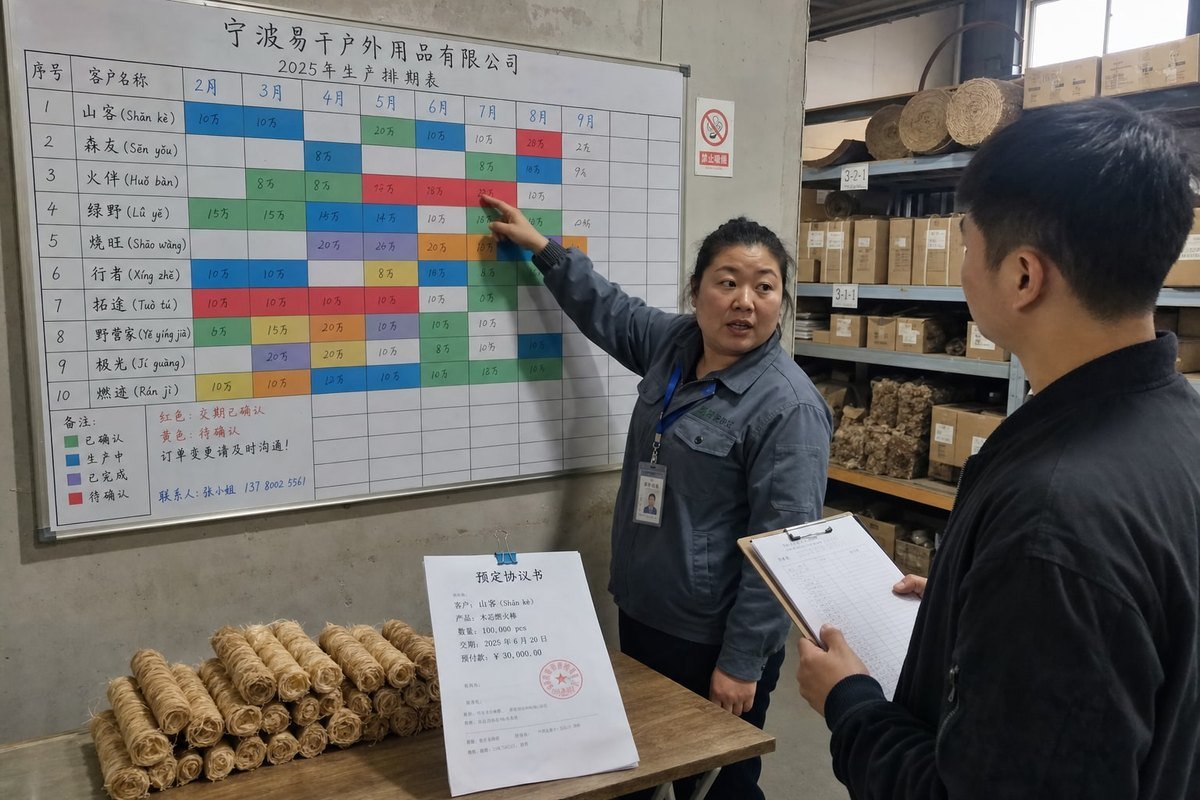
Peak-season availability is earned in the off-season. That is the single most important idea in this article. Factories like ours do not "catch up" in October. Our production scheduling for wood wool rolls, wax dipping, and packing is usually committed by late summer. Once the calendar is full, no amount of urgency creates new capacity.
Why factories cannot flex in peak season
Capacity is not just machine speed. It includes wood wool supply, paraffin wax stock 1, drying and curing time, trained line workers, warehouse storage capacity, and container bookings. Each of these tightens as winter approaches. When one buyer asks us to "squeeze in" 40,000 extra units in November, we would have to pull wax, labor, and packing time away from committed orders. A serious factory will refuse. A desperate factory will say yes and cut corners.
A practical reservation timeline
| Timing | Buyer Action | Factory Action |
|---|---|---|
| Jan–Feb | Review last season's sell-through, build seasonal demand forecasting model | Plan annual line capacity |
| Mar–Apr | Send forecast, negotiate bulk wholesale agreements | Quote and hold tentative slots |
| May–Jun | Sign contract, pay reservation deposit | Procure raw materials, confirm schedule |
| Jul–Sep | Approve samples, confirm packaging artwork | Run production, QC each batch |
| Sep–Oct | Ship and pre-position inventory regionally | Release goods, book freight |
In our experience exporting to the US and Germany, buyers who follow this timeline never face stockouts. Buyers who start in September compete for leftover slots at worse prices. Some of our long-term partners now use a tiered reservation model: a modest fee in spring guarantees priority production slots, which protects them against peak-season shortages while giving us planning certainty. Both sides win. Supply chain resilience is built through these early commitments, not through last-minute negotiation.
What lead time should I plan for off-season wood fire starter orders?
A Canadian buyer once asked me why a "simple wax roll" needs months of lead time. I walked him through wood wool sourcing 3, wax curing, private-label printing, and ocean freight. He booked in April ever since.
Plan a total lead time of 4–6 months for off-season wood fire starter orders: 2–4 weeks for sampling and approval, 30–60 days for production and curing, 2 weeks for QC and loading, and 4–8 weeks for ocean freight plus customs and inland delivery.
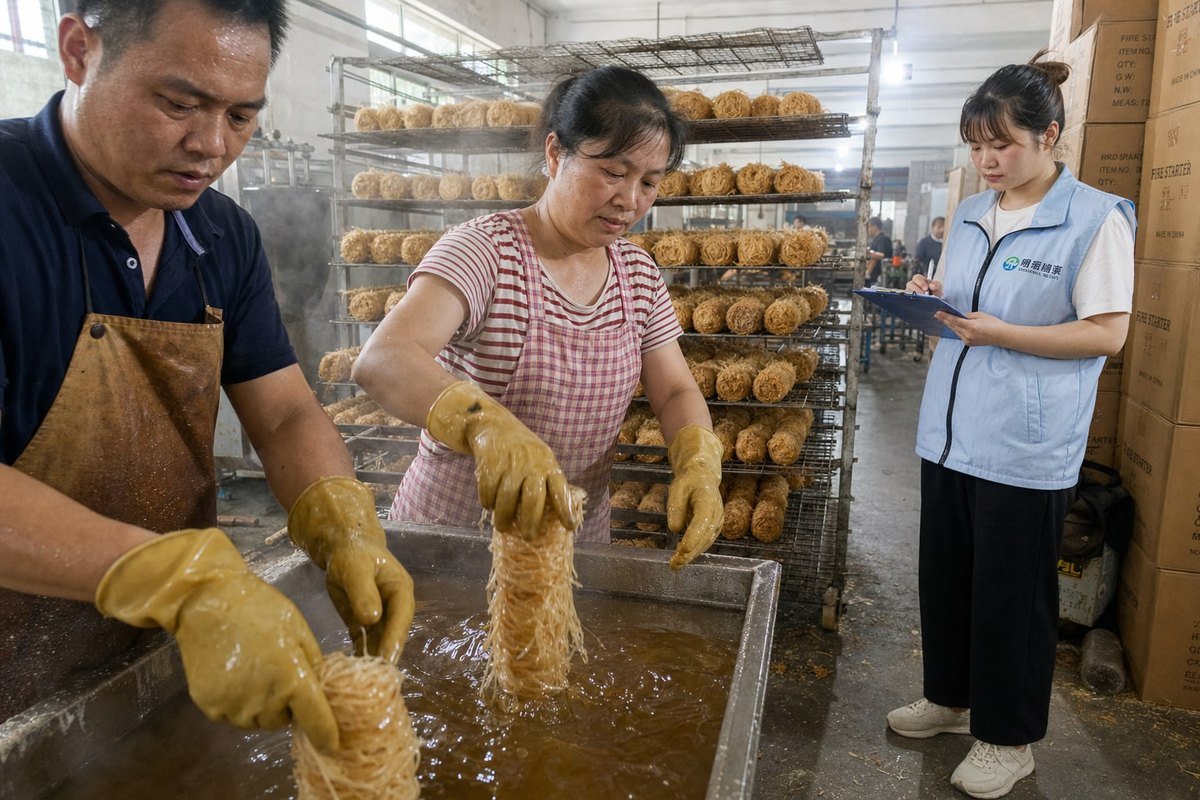
Lead time optimization starts with understanding where the time actually goes. Many buyers assume production is the long pole. Often it is not. Packaging approval, raw material procurement, and shipping consume more calendar days than the production line itself.
Where the weeks go
| Stage | Typical Duration | What Can Delay It |
|---|---|---|
| Sample and artwork approval | 2–4 weeks | Slow buyer feedback, label revisions |
| Raw material procurement | 2–4 weeks | Wax price spikes, wood wool shortages |
| Production and wax curing | 4–8 weeks | Order size, line congestion |
| QC inspection and loading | 1–2 weeks | Third-party inspection scheduling |
| Ocean freight 4 and customs | 4–8 weeks | Port congestion, peak shipping season |
Notice that ocean freight alone can take two months to Europe or North America during the autumn shipping crunch. Freight rates also climb sharply from August onward. Shipping in June or July, then pre-positioning inventory in regional warehouses near your demand centers, cuts both cost and risk.
Build backward from your shelf date
Start with the date product must be on shelves. For most Northern Hemisphere markets, that is late September or early October. Work backward: goods must leave China by July, which means production must start by May, which means orders and deposits must land by March or April. This backward planning is the core of inventory stockpiling 5 done right. It also gives your factory time to schedule kiln-dried kindling components 6 and wood wool inputs properly, rather than accepting whatever moisture level is available in a rush. Wet fiber means poor ignition. Time protects quality.
How do I ensure consistent quality when placing bulk pre-season orders?
Our QC team once rejected an entire wax batch because its melting point drifted slightly out of spec. It cost us a week. It also kept a UK retail program's burn time consistent across 200,000 units.
Ensure consistency by approving a golden sample, writing measurable specs into the contract — burn time, weight, moisture, wax coating — requiring batch-level QC records, requesting third-party inspection such as SGS or Intertek before shipment, and retaining sealed reference samples from each production run.
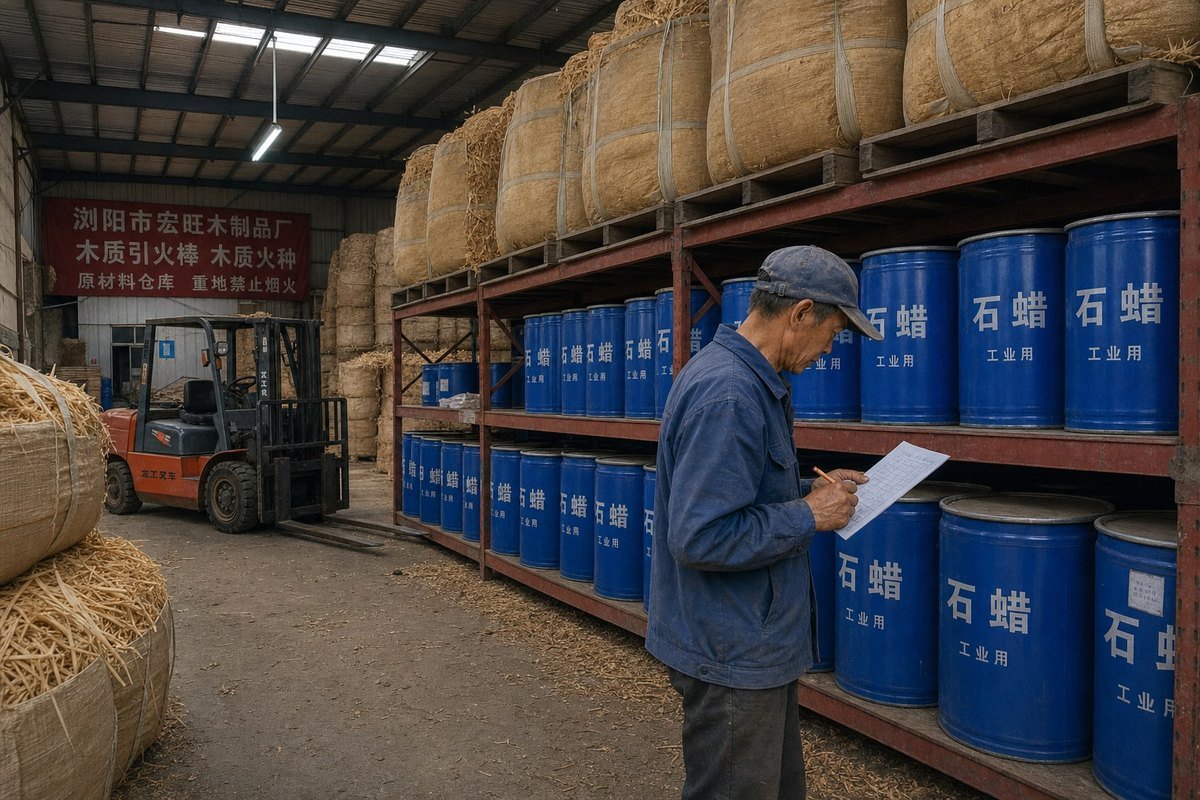
Bulk pre-season orders concentrate risk. If quality drifts, you discover it months later, in-season, with no time to reorder. That is why quality must be engineered into the order upfront, not inspected in afterward.
Define quality in numbers, not adjectives
"Good quality" means nothing in a contract. Measurable specs do. For our wax-dipped wood rolls, we control fiber moisture before dipping, wax pickup weight per unit, unit dimensions, and ignition performance. A buyer should insist on similar written tolerances. Burn time is the spec end customers actually feel, so define it with a test method: how the starter is lit, in what conditions, and what counts as full ignition.
The quality control checklist for bulk orders
- Approve a golden sample and keep one sealed on each side.
- Write specs and tolerances into the purchase contract.
- Require incoming inspection of wax and wood wool, since biomass fuel manufacturing quality starts with raw inputs.
- Ask for batch-to-batch QC records — moisture readings, weight checks, burn tests.
- Book a third-party pre-shipment inspection.
- Test retained samples from early batches against late batches.
Why certifications matter here
Compliance paperwork is not decoration. ISO 9001 tells you the factory has documented process control, which is exactly what keeps batch fifty identical to batch one. BSCI audits confirm the labor conditions behind seasonal scale-ups. SGS or Intertek reports verify the product itself. When we onboard a new distributor, we share these documents before discussing price, because for serious retail buyers, compliance is the entry ticket. First samples should reliably predict mass-production quality — if a supplier cannot promise that in writing, the pre-season discount is not worth the in-season disaster.
What MOQ and payment terms work best for securing off-season manufacturing slots?
The trade-off I weigh every spring is real: lower deposits attract more bookings, but committed deposits let me buy wax and wood fiber early at better prices. The right payment structure serves both sides.
A workable structure is a trial MOQ of roughly 500–1,000 cartons per SKU, scaling to container-level bulk orders, with a 30% deposit to reserve the production slot and fund materials, and the 70% balance paid against shipping documents or after passed inspection.
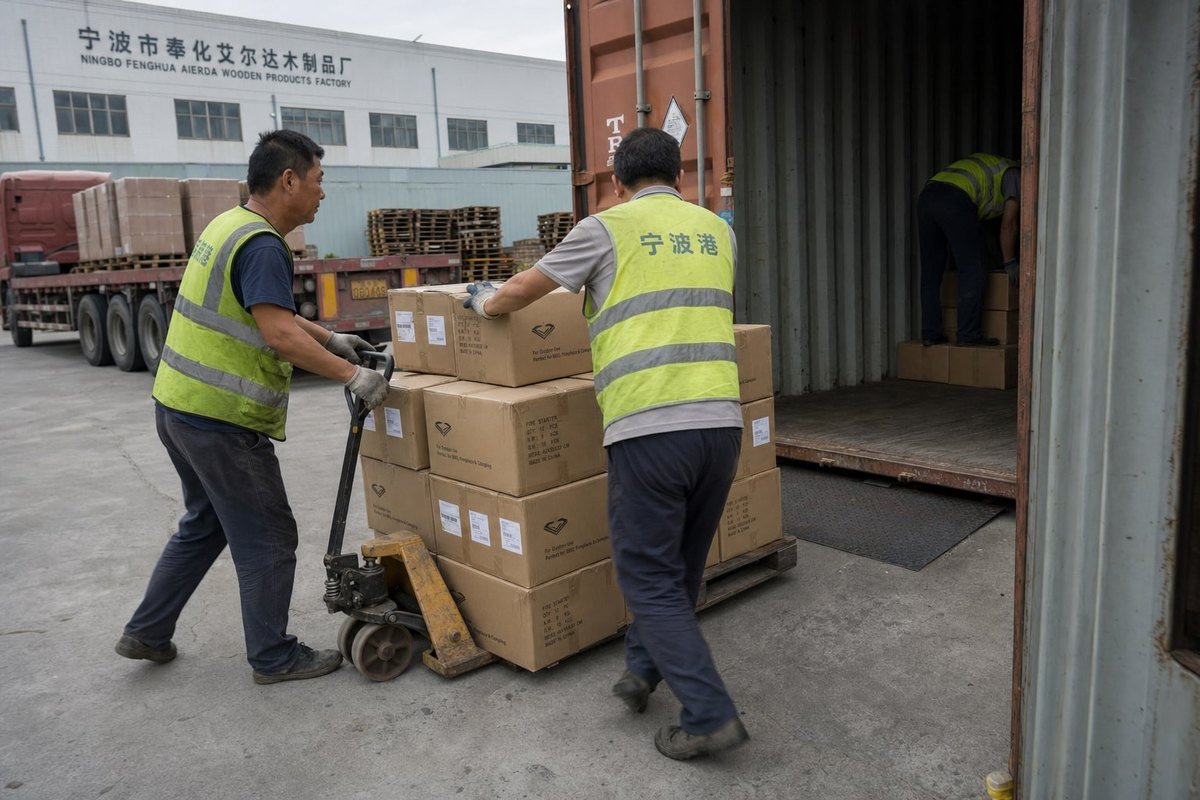
Payment terms are really a capacity-reservation tool. When a buyer pays a deposit in April, that money finances raw material procurement — wax, wood wool, cartons — at off-season prices. The buyer gets a guaranteed slot and often a better unit cost. The factory gets planning certainty. Everyone avoids the peak-season scramble.
Matching terms to order type
| Order Type | Typical MOQ | Deposit | Balance | Best For |
|---|---|---|---|---|
| Trial / first order | 500–1,000 cartons | 30–50% | Before shipment | Testing quality and market fit |
| Seasonal bulk order | 1 x 20' or 40' container | 30% | Against B/L or post-inspection | Established programs |
| Annual capacity reservation | Multi-container commitment | Reservation fee + per-PO deposits | Staged per shipment | Retail chains, large distributors |
| Private-label OEM program | Negotiated per SKU | 30–40% (covers custom packaging) | Against documents | Brand owners |
Flexibility earns loyalty
We deliberately keep trial MOQs accessible because purchasing managers need to test sell-through before committing to a full program. A distributor who starts with one mixed container of fire starters and color-flame products 7 this year often books quarterly containers next year. For repeat buyers with clean payment history, we relax terms — staged balances, blended SKU minimums across firestarters, color-flame packets, and wax torches to hit container volume efficiently.
One warning: beware suppliers demanding 100% upfront for off-season orders, or offering no deposit at all. The first signals cash-flow trouble. The second signals your slot is not actually reserved — a factory with no financial commitment from you will reassign your capacity the moment a bigger order arrives. Balanced terms, documented in bulk wholesale agreements, are what make a reservation real.
Conclusion
Winter stockouts are decided in spring. Forecast early, reserve capacity with deposits, fix quality in writing, and structure fair payment terms — then peak season becomes your strongest quarter, not your riskiest.
Footnotes
1. Identifies paraffin wax as a critical raw material for seasonal production planning. ↩︎
2. Authoritative Wikipedia entry defining procurement, including direct procurement of raw materials for manufacturing. ↩︎
3. Explains the sourcing of wood wool as a primary component in fire starters. ↩︎
4. Provides information on the regulatory body overseeing international ocean transportation. ↩︎
5. Authoritative Wikipedia entry defining stockpiling as a strategic reserve in supply chain and inventory management. ↩︎
6. Provides best practices for using dry wood to ensure efficient combustion. ↩︎
7. Details the science behind chemicals used to produce colored flames. ↩︎



 English
  Spanish
  German
  French
  Arabic
  Portuguese
Join the Conversation