






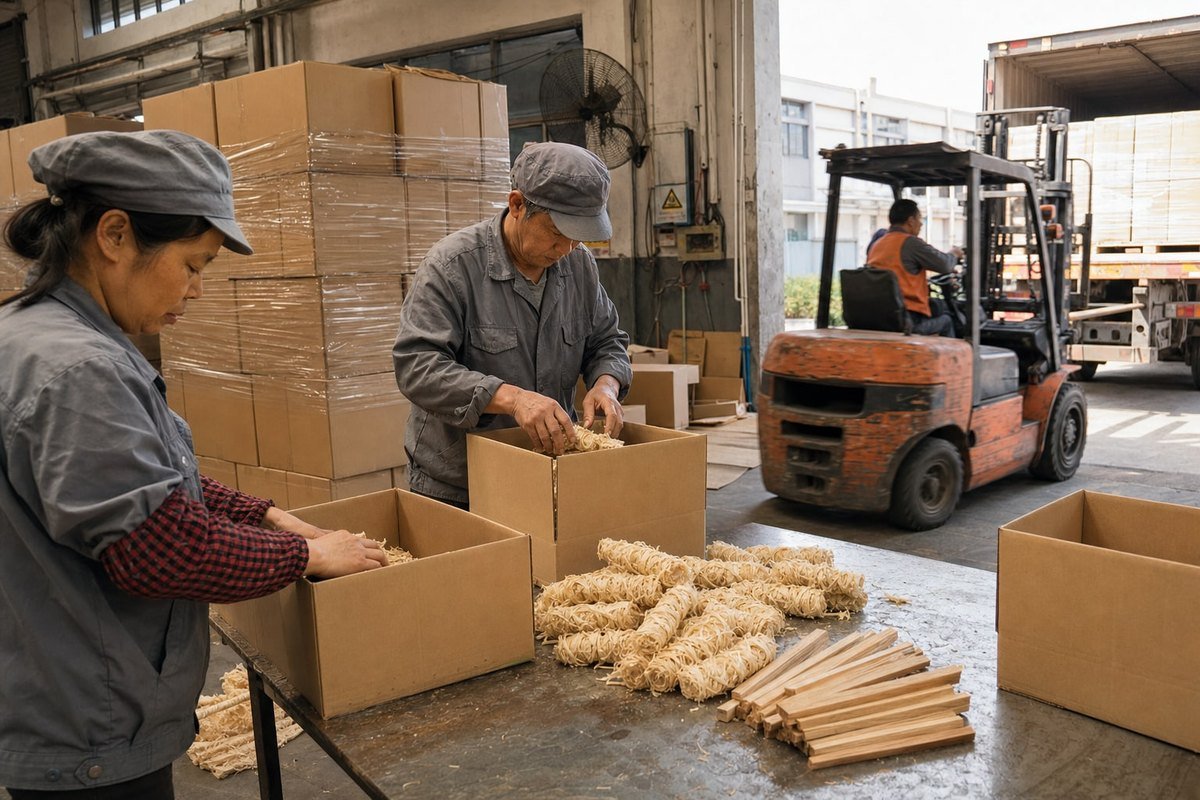
Wood fire starter inventory buildup quietly drains cash moisture-resistant packing 1. On our production line in Ningbo, I have watched buyers over-order, then panic when one warehouse overflows while another sits empty.
To reduce wood fire starter inventory buildup, use warehouse transfers to move surplus stock from low-demand sites to high-demand ones. Set transfer triggers based on days of supply, stock age, storage condition, and freight cost, then rebalance before placing any new purchase orders.
Transfers are not just a logistics trick. They are a demand-balancing tool. Below, I break down the strategies, the diagnostics, the MOQ tactics, and the manufacturer support that make them work.
What warehouse transfer strategies can I use to balance wood fire starter stock across regions?
A German distributor once told me his Munich warehouse held nine months of our wax-dipped wood rolls 2 while his Hamburg site kept running dry. Same product, same country, opposite problems.
Balance regional stock with four strategies: surplus-to-deficit matching before new purchases, min/max transfer triggers per warehouse, cross-seasonal swaps between heating and camping regions, and age-based rotation that moves the oldest sellable lots first. Review the network weekly during peak season.

The core idea is simple. Inventory buildup happens when replenishment is localized but demand is distributed. Each warehouse orders for itself, so surpluses and shortages coexist across the same network. Stock redistribution fixes that mismatch without spending new money.
Four transfer strategies that work
Here is how I see our long-term buyers apply them:
| Strategy | How it works | Best for |
|---|---|---|
| Surplus-to-deficit matching | Fill low sites from overstocked sites before reordering | Networks with 3+ warehouses |
| Min/max triggers | Auto-flag transfers when a site exceeds max days of supply 3 | Teams with a WMS in place |
| Cross-seasonal swapping | Move heating-season stock north, camping stock south | Seasonal demand planning across climates |
| Age-based rotation | Ship oldest sellable lots to the fastest-selling site | Wax and wood-wool products with condition risk |
Why fire starters need their own rules
Wood fire starters are small, light, and low unit value. That makes them easy to ignore until pallets stack up. But they are also condition-sensitive. Our wood-wool rolls are dipped in paraffin, and dry fiber is what makes them light fast. Stock that sits for a year in a humid corner is not the same product you received. So the best transfer policy weighs age, demand rate, and storage condition — not just absolute quantity. A useful framing I share with buyers: if fire starters are stored like passive shelf stock, they pile up; if they are managed like network inventory, they get redirected before they become dead stock. That mindset shift, plus consistent inventory rebalancing routines, does most of the heavy lifting. Improving your inventory turnover ratio 4 on this SKU category usually follows within two or three quarters.
How do I identify which distribution centers are causing my inventory buildup?
Before we quote a reorder for any repeat buyer, I always ask one question first: which of your sites is actually low? The answer is often a surprise to the buyer themselves.
Identify problem distribution centers by comparing days of supply per site against forecast demand. Flag any warehouse holding more than one season of stock, showing a falling turnover ratio, or receiving replenishment while a sister site has surplus. A WMS with network-wide visibility makes this fast.

Supply chain visibility is the starting point. If you cannot see stock levels across every location in one view, buildup hides in plain sight. Fire starters make this worse because many operators store them alongside kindling and firewood. Mixed storage muddies counts, and fuzzy counts encourage "just in case" buying. That is how a slow site quietly accumulates a year of supply.
A simple diagnostic process
- Pull on-hand quantity per SKU per warehouse from your Warehouse Management System 5 (WMS).
- Divide by the trailing 90-day sales rate at that site to get days of supply.
- Compare each site against its seasonal target — say, 45 to 60 days of cover.
- Flag any site above 120 days as a surplus source.
- Check lot dates and storage conditions at flagged sites before deciding to transfer.
Red flags worth acting on
| Warning sign | What it usually means |
|---|---|
| Days of supply above 120 at one site | Localized over-ordering or a missed seasonal shift |
| Turnover ratio falling quarter over quarter | Demand forecasting is not being updated per region |
| Reorders placed while a sister site is overstocked | No surplus-check step in the purchasing workflow |
| Inaccurate cycle counts near firewood storage | Mixed storage hiding true stock levels |
| Safety stock equal at all sites regardless of demand | Blanket policy instead of safety stock optimization |
Run this diagnostic monthly in the off-season and weekly during peak. In my experience shipping to buyers across the US, Germany, and Canada, the culprit is usually one or two sites, not the whole network. Fix the visibility, and the transfer decisions become obvious. Better data also feeds back into demand forecasting, which prevents the next buildup rather than just curing this one.
Can flexible MOQs help me clear excess wood fire starter stock through smaller repeat transfers?
Rigid minimums caused half the overstock stories I hear at trade shows. A buyer forced to take a full container "to hit MOQ" often spends the next year trying to work it off.
Yes. Flexible MOQs let you replenish in smaller, more frequent batches, so no single warehouse absorbs a season of stock at once. Smaller inbound orders keep sites near target cover, make surplus-to-deficit transfers lighter and cheaper, and shrink the excess you need to clear.

There are two sides to this. Inbound MOQs from your supplier shape how much stock enters the network. Internal transfer minimums shape how easily you can rebalance it. Both need to be flexible for the system to breathe.
Why smaller batches beat big drops
Large infrequent orders create a sawtooth pattern: a flood of stock, then months of slow drawdown. During that drawdown, demand shifts, weather changes, and a promotion moves units somewhere you did not expect. Smaller repeat orders track real demand more closely. At our factory in Liuyang, we deliberately keep trial and repeat MOQs workable for distributors testing multi-location fulfillment, because we would rather ship four right-sized orders a year than one oversized order that stalls the relationship. The same logic applies inside your network. If your internal transfer minimum is a full truckload, you will delay rebalancing until the surplus is severe. Allow mixed-pallet or parcel-level transfers for a lightweight product like fire starters, and you can correct imbalances early, while they are still cheap to fix.
The cost trade-off to check
Always run a cost-to-move versus cost-to-hold comparison. Fire starters are light, so freight per unit is usually modest. Holding costs — space, aging risk, insurance on combustible load, and eventual markdown — usually exceed a small transfer's freight. But if repack and handling costs exceed the item's margin, liquidation may beat transfer. Do the math per lane, not on instinct. Smaller repeat transfers also support dead stock prevention 6 directly: stock that keeps moving through the network keeps selling, and stock that keeps selling never ages into a write-off.
What logistics support should I expect from my manufacturer to streamline warehouse-to-warehouse transfers?
One lesson from 17+ years of exporting fire-starting goods to 30+ countries: transfer problems often start at the factory, long before the goods reach your first warehouse.
Expect transfer-ready packaging in split-able carton sizes, clear lot dating and barcodes on every unit, moisture-resistant packing, compliance documents that travel with the goods, and shipment planning that can route one order to multiple destinations. Good manufacturers design for redistribution, not just delivery.

A manufacturer who only thinks about the first port of delivery leaves you doing extra work at every later hop. A manufacturer who thinks about your whole network removes friction before it exists. Here is what that looks like in practice.
Support that actually streamlines transfers
| Support area | What to ask for | Why it matters for transfers |
|---|---|---|
| Carton engineering | Inner cartons that split cleanly from master cartons | Enables small mixed-pallet transfers without repacking |
| Labeling | Lot dates, barcodes, and warning labels on inner packs | Keeps WMS scans accurate at every warehouse hop |
| Moisture protection | Sealed liners and sturdy cartons | Protects wax and wood-wool through humid transit lanes |
| Compliance paperwork | Certifications and test reports supplied per shipment | Goods stay audit-ready when they cross state or EU borders |
| Multi-destination shipping | One PO split across two or more ports or warehouses | Stock lands closer to demand, so fewer transfers are needed |
| Consistent quality | Strict batch-to-batch control | Any lot can go to any market without re-inspection |
Why compliance and consistency matter mid-transfer
When goods move between your own warehouses, they may cross borders, insurers, and retail audits. Our buyers in the US and EU treat ISO 9001 7, BSCI, CE, and SGS/Intertek documentation as a hard requirement, and we supply test reports so transferred stock stays shelf-ready wherever it lands. Batch consistency matters just as much. If lot 12 burns and looks identical to lot 3, your team can consolidate lots during a transfer without quality doubts. As a one-stop OEM/ODM partner, we also build private-label packaging, display boxes, and barcodes around each buyer's own WMS conventions, so scanning works from our dock to their last regional hub. Ask your supplier for the same. If they hesitate, your transfer program will carry hidden labor costs on every single move.
Conclusion
Wood fire starter inventory buildup is a network problem, not a storage-bin problem. Diagnose sites by days of supply, transfer surplus early, keep MOQs flexible, and demand transfer-ready support from your factory.
Footnotes
1. Wikipedia page on packaging standards, relevant to protecting wood-wool products during transfers. ↩︎
2. Wikipedia entry for fire starters, providing context for the specific product type mentioned. ↩︎
3. Authoritative financial definition of the 'days of supply' metric used to identify inventory buildup. ↩︎
4. Authoritative Wikipedia entry for inventory turnover ratio and its calculation. ↩︎



 English
  Spanish
  German
  French
  Arabic
  Portuguese
Join the Conversation