






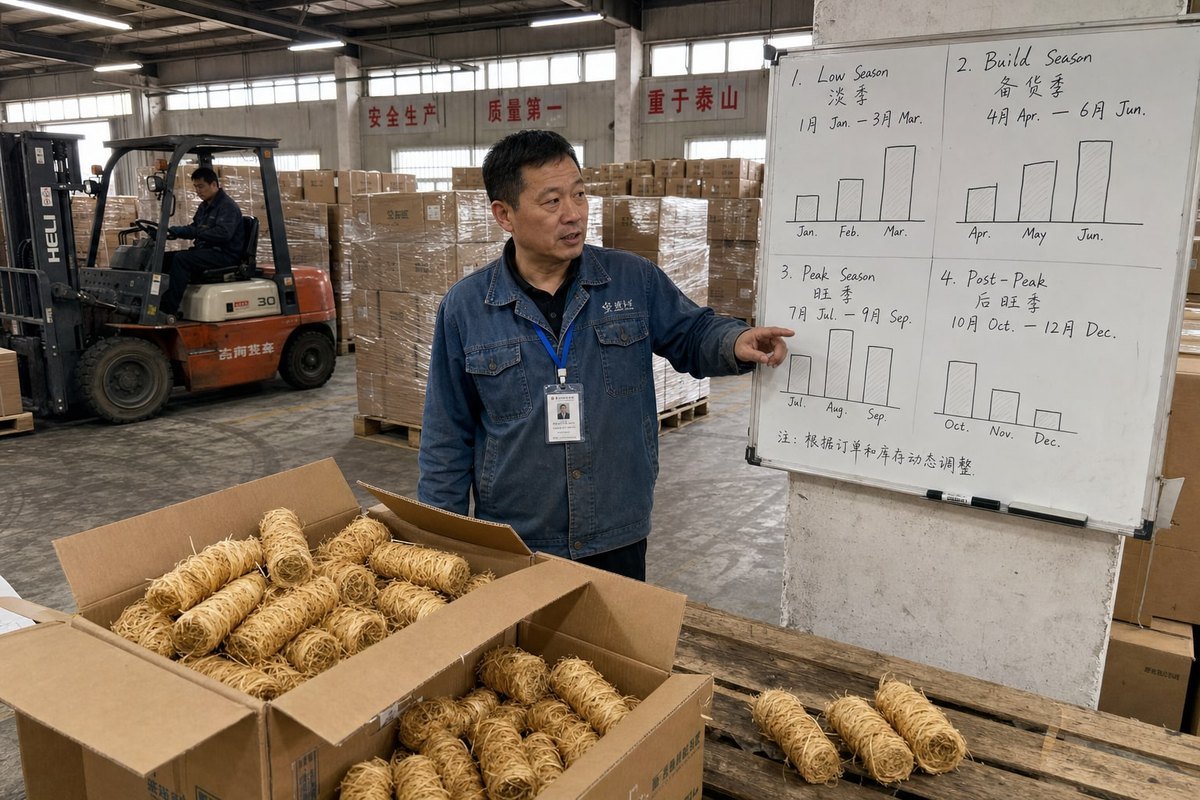
Planning procurement quantities for wood fire starters is one of the most common questions buyers bring to our factory floor, and I understand why it keeps them up at night.
Plan wood fire starter procurement by splitting the year into four periods: low season, build season, peak season, and post-peak. Forecast each period from last year's sales, apply seasonal indices, add safety stock, and place orders 3–6 months before the autumn-winter demand surge.
That is the short answer. The longer answer involves lead times, safety stock math, and MOQ strategy. Let me walk you through each piece, step by step.
How do I calculate the right order quantity for peak fire-starting season?
A German distributor once asked us to double his October shipment mid-production because his forecast used a flat monthly average. Our wax-dipping line absorbed it, barely. Averages hide the real curve.
Calculate peak-season order quantity by taking last year's peak-quarter sales, multiplying by a seasonal index and a growth factor, then subtracting on-hand inventory and adding safety stock. For most markets, October through December absorbs the majority of annual wood fire starter volume.

Demand for wood fire starters is not flat. It spikes when temperatures drop, when camping season opens, and when Q4 gifting begins. Market data shows that more than 60% of purchases concentrate in just two quarters of the year. Search interest peaks in August, October, December, and February. So the first rule is simple: never plan from a twelve-month average. Build your inventory forecasting models around your own seasonal curve instead.
A simple five-step calculation
- Pull last year's monthly sales. Your own history beats industry averages. A retailer in Texas and one in Minnesota will have very different curves.
- Compute a seasonal index for each month. Divide each month's sales by the monthly average. October might land at 1.8, while June sits at 0.5.
- Apply a growth assumption. If your channel grew 15% year over year, scale the forecast up.
- Subtract stock on hand and in transit. Many buyers forget the container already on the water.
- Add safety stock. Cover forecast error and supplier delays, especially before the peak heating season.
Worked example
| Step | Input | Result |
|---|---|---|
| Last year Q4 sales | 40,000 units | Baseline |
| Growth factor | +15% | 46,000 units |
| Seasonal buffer for demand volatility 1 | +10% | 50,600 units |
| Minus on-hand stock | −8,000 units | 42,600 units |
| Plus safety stock | +5,000 units | ~47,600 units to order |
In my experience running production for buyers in 30+ countries, the buyers who segment this calculation by SKU do far better than those who lump everything together. Wax-dipped wood rolls for fireplaces peak in winter. Compact starters for grills and fire pits carry meaningful summer volume. Treat them as separate demand streams 2, and your reorder point calculation becomes far more accurate.
What lead times should I plan for when importing wood fire starters from China?
Our production schedule in Ningbo fills up fast from July onward, because every fireplace distributor in the US and Europe wants goods on shelves before October. Timing is everything here.
Plan for a total lead time of 75–120 days when importing wood fire starters from China: 25–45 days for production, 30–40 days for ocean freight, and 2–4 weeks for customs, port handling, and inland delivery. Place peak-season orders by June or July.
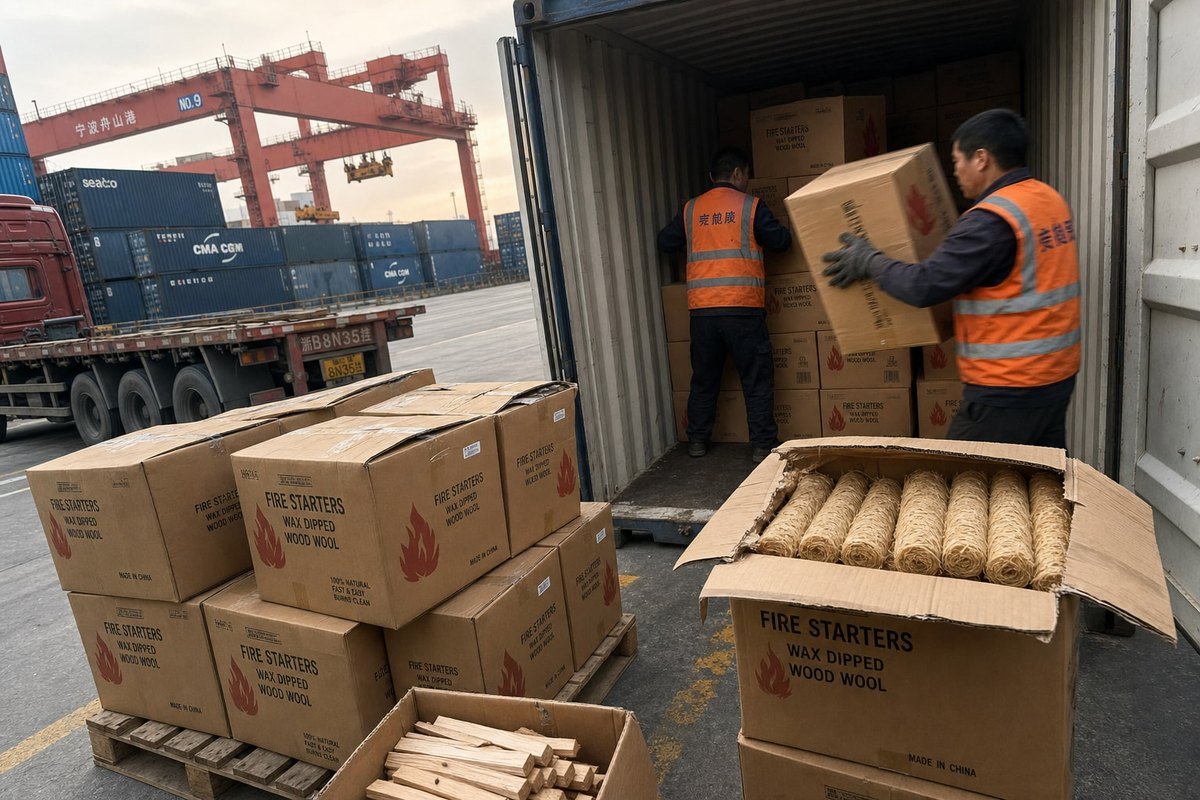
Lead time management is where most first-time importers stumble. They forecast well, then order in September and expect goods on shelves in October. Ocean freight alone makes that impossible. Let me break the timeline down the way we present it to our own OEM clients.
The realistic timeline, stage by stage
| Stage | Typical duration | What can stretch it |
|---|---|---|
| Sample approval and artwork | 1–3 weeks | Private-label packaging revisions, barcode setup |
| Production and QC | 25–45 days | Peak-season factory backlog, custom burn-time specs |
| Booking and export handling | 5–10 days | Container shortages before Chinese holidays |
| Ocean freight to US/EU | 30–40 days | Port congestion, weather, routing changes |
| Customs and inland delivery | 10–20 days | Inspection holds, missing compliance documents |
Two risk windows deserve special attention. First, Chinese New Year 3 shuts factories for two to four weeks, usually in late January or February, which affects post-peak replenishment. Second, the pre-Christmas shipping crunch from September to November raises freight rates 4 and delays bookings. In our 17+ years of exporting, the buyers who lock production slots in May or June consistently get better pricing and calmer supply chain logistics 5 than those who scramble in August.
Compliance documents matter too. Wax-based fire starters need proper test reports 6 to clear customs smoothly in the EU and North America. We keep ISO 9001 7, BSCI, CE, and SGS/Intertek documentation ready precisely because a missing certificate can add two weeks at the port. Build that paperwork check into your lead time, not after it.
How can I avoid overstock or stockouts between winter and summer demand cycles?
One lesson I learned early: a UK wholesaler once carried 30% of his winter stock into April, and his warehouse costs ate the season's margin. Cash tied up in slow inventory hurts twice.
Avoid overstock and stockouts by setting different safety stock levels per season, using smaller and more frequent orders in the shoulder months, keeping a FIFO rotation to protect wax and wood quality, and setting reorder points from real sell-through data rather than the calendar.
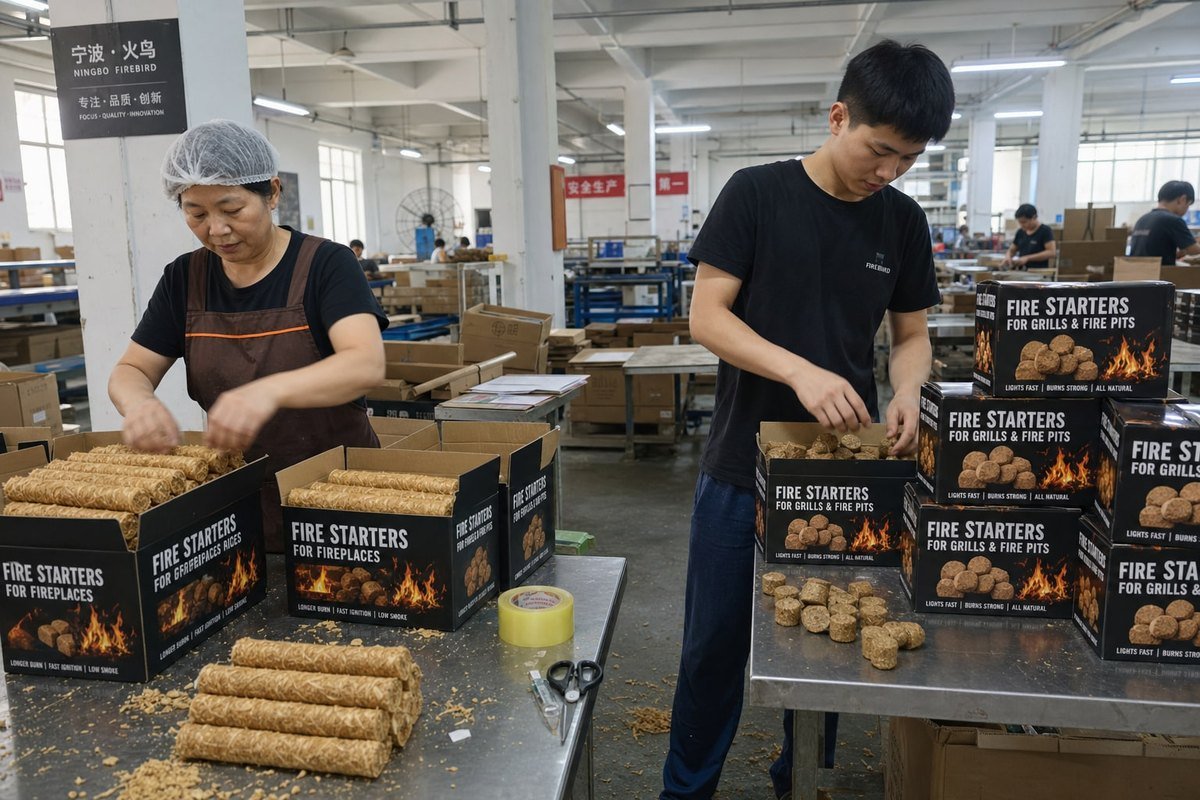
The swing between seasons is bigger than most buyers expect. Off-peak quarter sales can drop by more than 20% versus peak months, and heating-driven SKUs swing even harder. So the goal is not one perfect number. The goal is a system that flexes with the curve.
Set seasonal safety stock, not a single buffer
Safety stock levels should scale with both demand and risk. Before Q4, demand volatility is high and supplier capacity is tight, so buffers should be generous. In spring, demand is soft and replenishment is easy, so buffers can shrink. A practical guide:
| Period | Demand level | Suggested safety stock | Order cadence |
|---|---|---|---|
| Spring low season | Low | 2–3 weeks of sales | Small, infrequent |
| Summer build season | Rising (camping, BBQ) | 4 weeks of sales | Medium, testing SKUs |
| Autumn-winter peak | High | 6–8 weeks of sales | Large, placed early |
| Post-peak (Jan–Feb) | Moderate | 3–4 weeks of sales | Replenish selectively |
Protect product quality while it waits
Wood wool and wax do not spoil like unseasoned firewood, but storage still matters. We advise our distributors to run FIFO rotation, keep cartons on raised pallets, and avoid humid or hot storage areas that can soften wax coatings. Good storage capacity planning also means reserving warehouse space before your Q4 containers land, not after.
Use data triggers, not gut feel
Set a reorder point for each SKU: average weekly sales during the coming period, multiplied by lead time in weeks, plus safety stock. When inventory hits that line, order. This turns replenishment into a rule, and rules beat guesses when winter demand accelerates fast.
Can I use flexible MOQs to test seasonal demand before committing to a full container order?
Trial orders come across my desk every week. A Dutch camping brand recently started with a few pallets of our wax-dipped wood rolls in August, validated sell-through, then booked a full container for Q4.
Yes. Flexible MOQs let you test seasonal demand with a trial order of a few pallets or a partial container in the build season, measure sell-through for 4–8 weeks, and then scale to a full container order before the peak with real data behind the decision.

A full 40-foot container of wood fire starters is a serious cash commitment. If the product is new to your market, or you are testing new private-label packaging, jumping straight to container volume is a gamble. A staged bulk procurement strategy removes most of that risk.
A three-stage testing approach
- Trial order (build season, June–August). Order at a reduced MOQ, often one to three pallets or mixed SKUs in an LCL shipment. Test packaging, price points, and channel response. At our factory, we support trial quantities with the same batch QC as full production runs, so the sample truly predicts mass-production quality.
- Validation read (4–8 weeks). Track sell-through by channel: hardware stores, e-commerce, outdoor retailers, and gift channels behave differently. Compact starters may move online, while boxed 100-piece sets perform in retail.
- Scale order (before peak). Convert the winning SKUs into a full container, placed early enough to land before October. Because you validated demand, your quantity is grounded, not hopeful.
Why this works with seasonality
The build season is the natural testing window. Demand is already rising, so trial results are meaningful, yet there is still time to produce and ship a container before the peak heating season. Mixing SKUs within one container also hedges risk: fireplace-focused rolls, grill-oriented cubes, and giftable Q4 packaging can share space, and next year's mix adjusts based on what sold. Just confirm your supplier offers genuine OEM/ODM flexibility on size, burn time, and packaging, because a trial only teaches you something if the scaled order matches what you tested. That consistency between sample, trial batch, and mass production is exactly what we hold our production lines to.
Conclusion
Seasonal demand punishes average-based planning with stockouts in October and dead stock in April. The fix is a purchase calendar: forecast by season, order 3–6 months ahead, size safety stock to risk, and test with flexible MOQs before scaling. After 17+ years supplying wholesale firelighting supplies to buyers in 30+ countries, we have seen this discipline separate thriving distributors from struggling ones. Plan early, segment your SKUs, and let your own sell-through data set the quantities.
Footnotes
1. Authoritative Wikipedia page explaining demand forecasting and market volatility. ↩︎
2. Explains the concept of segmenting demand by product type to improve forecasting accuracy. ↩︎
3. Provides historical and cultural context for the annual factory shutdowns that impact global supply chains. ↩︎
4. The regulatory body overseeing international ocean transportation and monitoring shipping costs and logistics. ↩︎
5. Detailed explanation of the management of the flow of goods and services in a global economy. ↩︎
6. Authoritative Wikipedia article explaining product testing and quality reporting. ↩︎
7. Authoritative Wikipedia entry for the global ISO 9001 quality management standard. ↩︎



 English
  Spanish
  German
  French
  Arabic
  Portuguese
Join the Conversation