






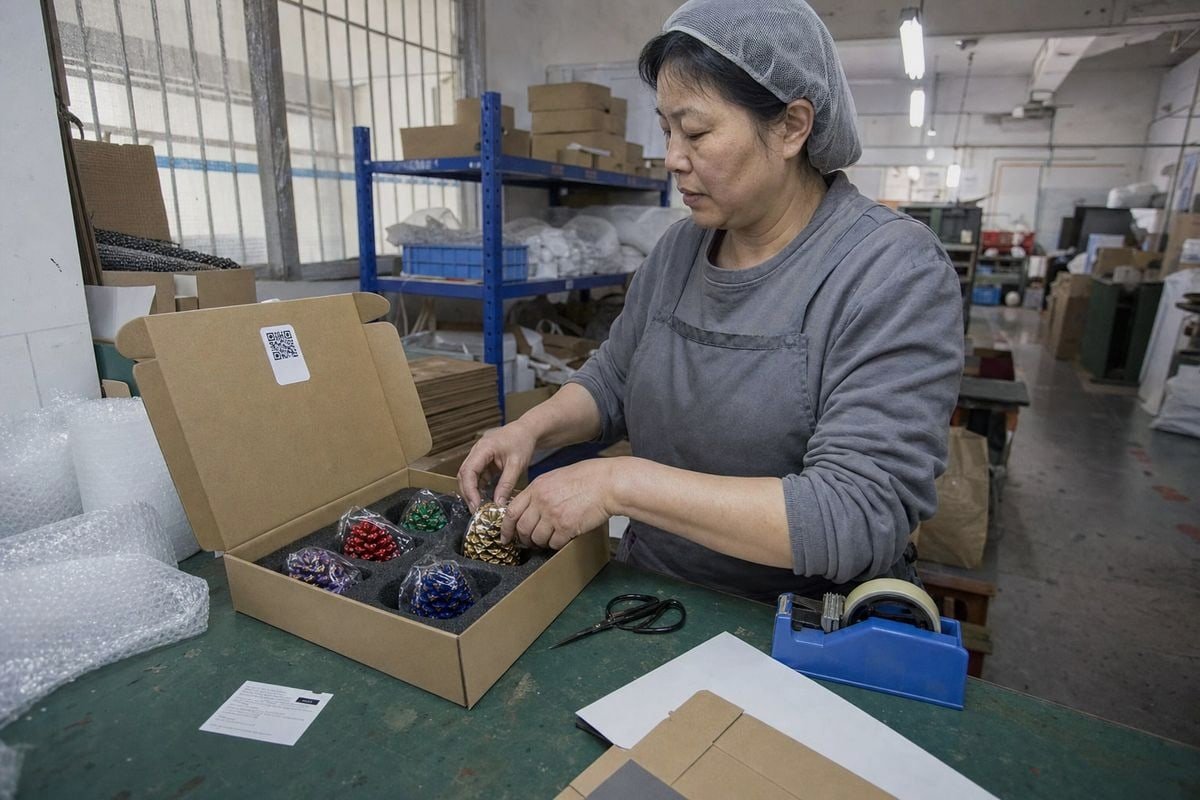
A sample kit for pitching fireplace colored pine cones can make or break a buyer meeting. On our production line, I have watched great products lose deals to weak presentation.
A winning sample kit for fireplace colored pine cones should include 3–6 finished cones, retail-ready packaging mockups, a wholesale sell sheet with pricing and margins, safety certifications and test reports, usage instructions, and a QR code linking to flame-effect video proof.
That is the short answer. Now let me walk you through each part, step by step, based on what actually works with camp store buyers.
What Should I Include in My Colored Pine Cone Sample Kit to Impress Camp Store Buyers?
A buyer from a US campground chain once told me she decides on a product within ninety seconds of opening the box. Our team never forgot that lesson.
Include 3–6 finished color-flame pinecones in your best-selling colors, a wholesale product sell sheet, packaging mockups, a safety and usage card, a QR code linking to a flame demo video, and a cross-merchandising strategy sheet showing campfire bundle opportunities.
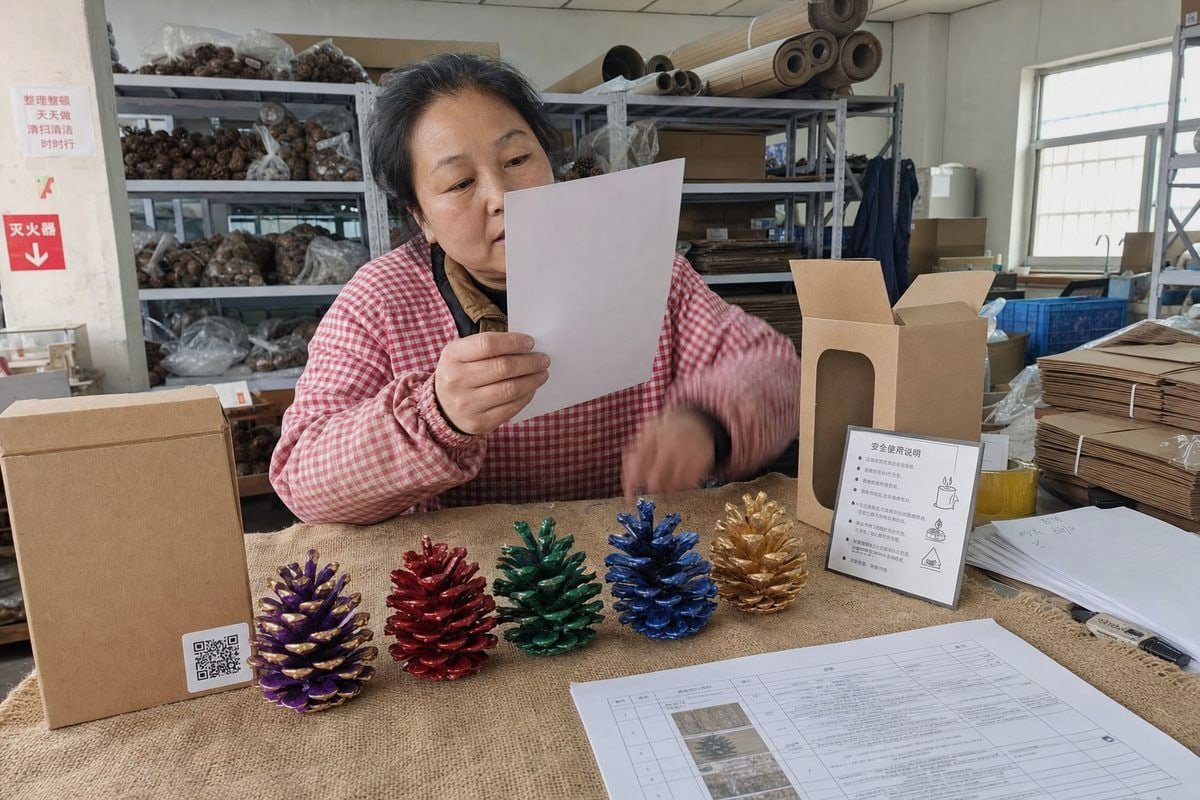
The kit is a sales tool, not a production sample. Its job is to help the buyer imagine your product on their shelf, next to firewood, matches, and s'mores kits. Every item in the box should support that mental picture.
The Physical Samples
Send your most sellable finishes. In our experience exporting color-flame pinecones to 30+ countries, buyers respond strongest to a small, curated assortment. Uniform cone size matters. Intact scales matter. A clean, even coating matters. One broken cone can undermine the whole pitch, so we pack samples in rigid boxes with molded inserts, and we individually wrap each cone to prevent rub-off.
The Paper Materials
Your wholesale product sell sheet does the talking after you leave. Keep it to one page. Include the product name, case pack, MOQ, lead time, wholesale price, suggested retail price 1, and the retailer's margin. Add a simple "How It Works" section explaining the color flame enhancers in plain terms.
| Kit Component | Purpose | Buyer Question It Answers |
|---|---|---|
| 3–6 finished cones | Show quality and color range | "Does it look premium?" |
| Sell sheet | Pricing and margin math | "Can I make money?" |
| Packaging mockup | Shelf visualization | "Will it fit my store?" |
| Safety/usage card | Risk reduction | "Is it safe to sell?" |
| QR video link | Flame proof without a fire | "Does it actually work?" |
| Bundle strategy sheet | Cross-sell ideas | "How do I merchandise it?" |
The QR code deserves special mention. A buyer cannot light a fire in a meeting room. A 15-second high-definition video 2 of blue, green, and purple flames solves that problem instantly. We shoot these clips for our OEM clients as part of sample preparation, and they consistently shorten the sales cycle.
Finally, add a personalized note. Reference the store's location, their existing hearth and patio accessories 3, or their customer base. Buyers notice when you did your homework, and it separates you from the pile of generic vendor pitch decks on their desk.
How Do I Prove Compliance and Safety Certifications When Pitching to Retail Buyers?
Compliance is the first thing serious buyers ask us about, often before price. In 17+ years of exporting fire products, I have never seen a large retail sourcing channel skip this step.
Prove compliance by including copies of third-party test reports such as SGS or Intertek, a Material Safety Data Sheet, CE marking documentation where applicable, and factory certifications like ISO 9001 and BSCI. Attach a clear safety and usage card confirming non-toxic, wood-fire-only application.

Here is the honest context. Colored-flame products have a reputation problem. Many DIY recipes online involve soaking cones in mineral-salt solutions 4 at home, with no testing and no labeling. Camp store buyers know this, and they worry about fumes, child safety, and liability. Your job is to draw a hard line between DIY chemistry projects and a professionally manufactured, tested product.
Documents That Belong in Your Kit
Do not just claim safety. Show it. When we prepare compliance packets for European and North American distributors, we include the following:
| Document | What It Proves | Who Asks for It |
|---|---|---|
| SGS or Intertek test report | Product passed third-party lab testing | Almost every retail buyer |
| Material Safety Data Sheet | Composition and safe handling data | Distributors and insurers |
| ISO 9001 certificate | Consistent quality management | Larger chains |
| BSCI audit | Ethical factory conditions | US and EU importers |
| CE documentation | Conformity for the EU market | European buyers |
Address Objections Before They Are Raised
Buyers may push back with three concerns. First, "Are the chemicals toxic?" Answer it with your MSDS and eco-friendly material statements 5 backed by test reports. Second, "Can families use it safely?" Answer it with a usage card stating wood-burning fires only, adult supervision required, and no cooking over treated flames. Third, "Who carries the liability?" Answer it by naming the certified factory behind the product, not a faceless trading company.
One more practical tip: put warning labels and barcodes on your packaging mockups, not just on a spec sheet. It shows the buyer that compliance is already built into the retail-ready product, not promised for later.
Which Packaging and Branding Details Help My Samples Look Shelf-Ready for Camp Stores?
There is a trade-off we weigh on every OEM project: rustic charm versus practical protection. Camp stores want the handcrafted look, but they also refuse products that shed wax or scales on their shelves.
Shelf-ready samples need retail packaging that shows the product without opening it, such as kraft pouches with clear windows or branded burlap sacks, plus visible warning labels, barcodes, a compact footprint for impulse-buy displays, and moisture-resistant materials suited to campground humidity.
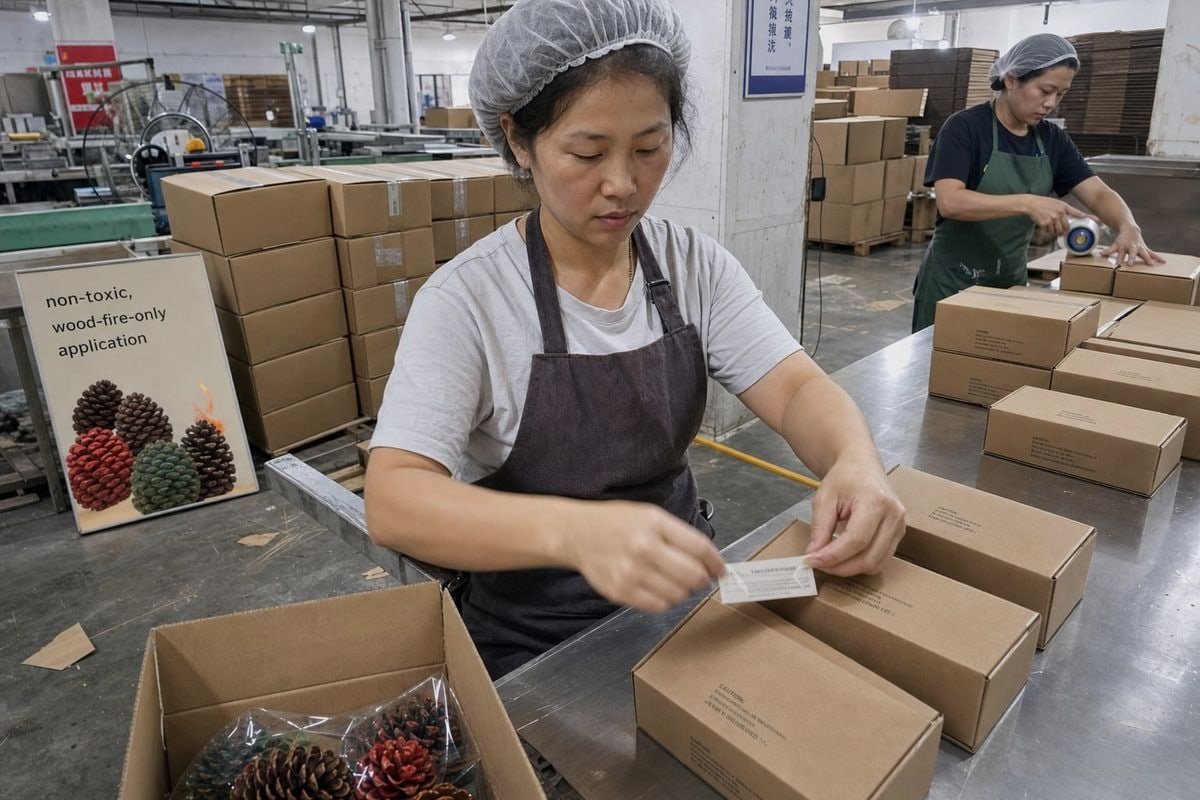
Retail packaging design for this category needs to do three jobs at once. It must protect the cones, tell the story, and fit a small store's limited space. Let me break down how we approach each one.
Protection Comes First
Pine cones are brittle. Wax coatings can smear in heat. A resealable stand-up pouch with an inner liner solves both problems. For sample kits specifically, we recommend a rigid outer box with paper filler so nothing rattles during shipping. If your samples arrive crushed, the meeting is over before it starts.
Formats That Fit the Camp Store Aesthetic
Three packaging formats consistently perform well in this channel:
- Kraft stand-up pouch with a clear window. The buyer sees natural cones inside, and the matte texture reads as eco-friendly craft packaging.
- Branded burlap drawstring sack. This gives the strongest gift appeal and works well beside a stone hearth display or in campground gift shop inventory.
- Recycled kraft box. Best for multi-cone gift sets and holiday positioning.
Details Buyers Check
A point-of-purchase display concept helps enormously. Include a laminated shelf-talker or a small counter display mockup 6 showing the pouches near the register. Campground retail often means humidity and outdoor exposure, so a weather-resistant display prototype proves you understand the environment. Also confirm the barcode placement, the country of origin marking, and the warning text. When we deliver private-label projects, all of these are printed before the sample ships, so the buyer sees exactly what will sit on their shelf. Nothing builds confidence faster than a sample that looks like it came off a store shelf already.
How Do I Work With a Manufacturer to Get Custom Samples Ready Before My Pitch Meeting?
A distributor in Germany once came to us six weeks before a major trade meeting, needing custom-branded samples. We made the deadline, but only because we started with a clear, structured brief on day one.
Work backward from your pitch date: send the manufacturer your branding files, color and scent preferences, and packaging specs 4–8 weeks ahead. Confirm sample lead time, review photos before shipping, request test reports with the samples, and verify the sample matches mass-production quality.

The single biggest risk in custom sampling is a sample that looks great but cannot be reproduced at scale. This is where genuine manufacturing depth matters. Our factory runs complete production lines with strict batch-to-batch quality control, which means the first sample we send reliably reflects what mass production will deliver. Ask any potential supplier directly how they guarantee this. A trading company often cannot answer.
A Realistic Sample Timeline
| Stage | Typical Duration | What You Should Do |
|---|---|---|
| Briefing and quotation | 3–5 days | Send logo files, colors, packaging format, target price |
| Design mockups | 5–7 days | Approve or revise artwork quickly |
| Sample production | 7–14 days | Request in-process photos |
| Quality check and video | 2–3 days | Ask for a burn test video of your actual batch |
| International shipping | 5–10 days | Choose express courier for pitch deadlines |
Questions to Ask Your Supplier
Get these answers in writing before you commit. What is the MOQ for a trial order, and is it flexible? What certifications and test reports ship with the samples? Can they customize burn time, colors, and packaging under your private label? What are lead times during seasonal peaks, since Q4 demand for hearth and patio accessories spikes early? How do they optimize logistics to remote destinations?
Also align your wholesale pricing strategy 7 with the supplier early. Your sell sheet needs final costs, and those depend on packaging choices, case packs, and shipping terms. In outdoor retailer procurement, buyers expect that math to be locked before the meeting, not estimated in the room. A responsive supplier with clear English communication will help you finalize everything in time, and that partnership shows in the polish of your kit.
Conclusion
A strong sample kit turns a novelty product into a serious retail proposal. Combine polished samples, proven compliance, shelf-ready packaging, and a dependable manufacturing partner, and camp store buyers will say yes.
Footnotes
1. Wikipedia entry explaining the concept of MSRP and its role in retail pricing and manufacturer-retailer relations. ↩︎
2. Wikipedia defines high-definition video standards, which are essential for creating professional product demonstration clips. ↩︎
3. The HPBA is the principal trade association representing the hearth, patio, and barbecue industries in North America. ↩︎
4. Academic resource explaining how metal ions in mineral salts produce distinct colors when heated in a flame. ↩︎
5. SGS provides verification for eco-friendly material statements to ensure product claims are accurate and compliant with regulations. ↩︎
6. Wikipedia provides an overview of point-of-purchase displays and their role in driving impulse buys in retail. ↩︎
7. Comprehensive Wikipedia entry detailing various pricing models and strategies used in wholesale and retail. ↩︎



 English
  Spanish
  German
  French
  Arabic
  Portuguese
Join the Conversation