







Sourcing wood fire starters from China for a BBQ season launch looks simple until the calendar bites. On our production line in Ningbo, I watch buyers underestimate timing every single year. Miss the order window, and your shelves sit empty in May. Overbuy, and your cash sits frozen in a warehouse until September. Neither mistake is survivable twice. The fix is a backward-planned inventory playbook, and that is exactly what I will walk you through here.
To plan inventory when sourcing wood fire starters from China, work backward from your BBQ launch date: allow 30–60+ days for production and sea freight, forecast seasonal demand, order to MOQ tiers of 100–500 cartons, add 20% buffer stock, and confirm MSDS and compliance documents before paying deposits.
That is the short answer. Now let me break each piece down, step by step, so you can build your own timeline and order plan with confidence.
How much lead time do I need to build in when sourcing wood fire starters from China before BBQ season?
Last spring, a German distributor asked us to rush a full container of wax-dipped wood rolls in three weeks. I had to tell him the honest truth: the math simply did not work.
Build in 90–120 days of total lead time before your BBQ season launch. Production takes 20–35 days, sea freight logistics add 25–45 days, and customs clearance plus receiving adds 1–3 weeks. For a May launch, place your purchase order no later than early February.
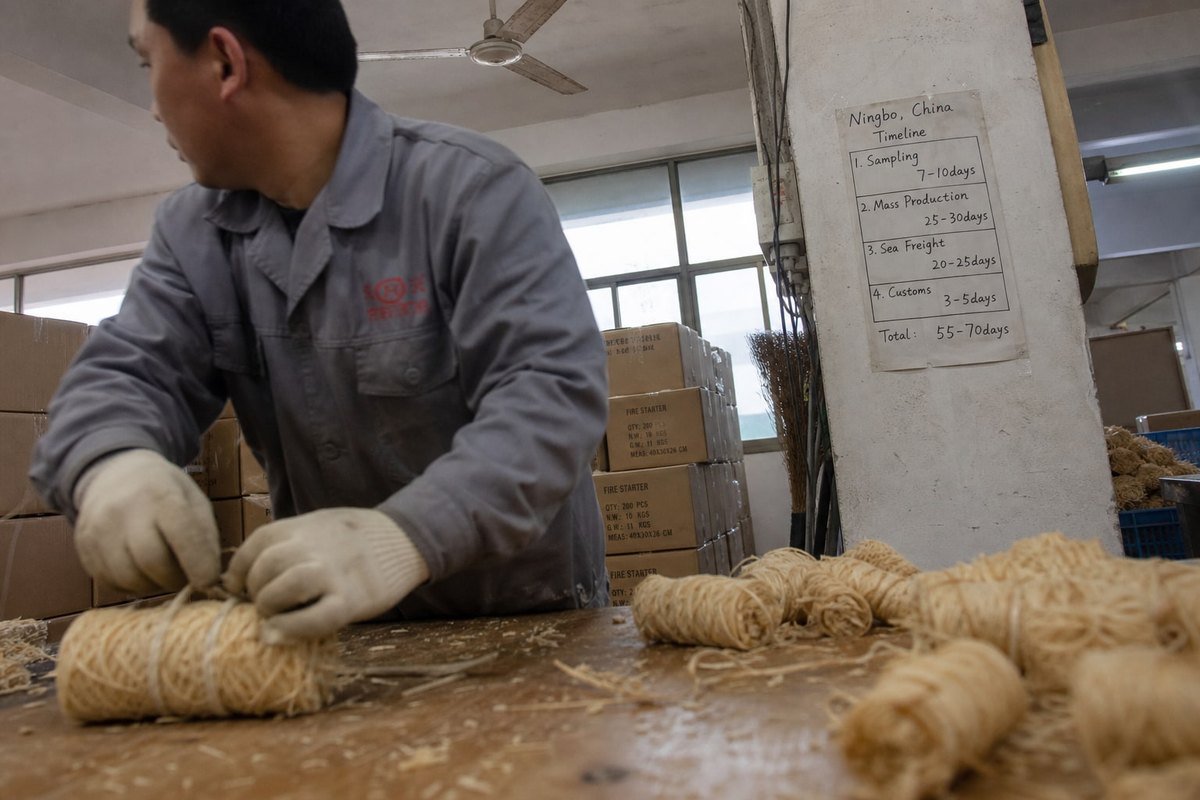
Import lead time is not one number. It is a chain of stages, and each stage has its own variability. In our 17+ years exporting to the US, Germany, the UK, and 27 other markets, the buyers who succeed treat lead time as a stack of buffers, not a single estimate.
Break the timeline into stages
Here is the backward-planning table I share with new B2B clients:
| Stage | Typical Duration | Risk Factor |
|---|---|---|
| Sampling and golden sample approval | 7–14 days | Revisions add a week each round |
| Mass production (wax-dipped wood rolls) | 20–35 days | Peak season queue, raw material supply |
| Pre-shipment inspection | 2–4 days | Failed inspection restarts the clock |
| Sea freight (China to US/EU port) | 25–45 days | Port congestion, vessel rollovers |
| Customs clearance | 3–10 days | Missing MSDS or HS code 1 disputes |
| Inland transport and receiving | 5–10 days | Warehouse appointment backlogs |
Add these up and you land between 60 and 118 days. That is why I tell buyers targeting a May BBQ launch to confirm samples in December or January and place the bulk order by early February at the latest.
Do not forget Chinese New Year
There is one calendar event that catches first-time importers off guard every year: Chinese New Year 2. Factories across China, including ours, pause for the holiday, and the ramp-up afterward can stall supply chains for up to six weeks. If your production window overlaps late January through February, add at least 20% buffer to your schedule. We advise clients to either lock production before the holiday or accept a post-holiday slot with realistic dates. Pretending the holiday does not exist is the most expensive form of optimism in this business.
What MOQ and reorder strategy will protect me from stockouts during peak BBQ demand?
The trade-off I weigh most often with buyers is a simple one: a bigger first order lowers unit cost, but a smaller first order protects cash if sell-through disappoints.
Order to MOQ tiers that match your freight mode: 100–200 cartons for air or small pallet shipments, 300–500 cartons for LCL, and full container loads for best unit economics. Cap your first buy at six months of forecast sales, then trigger reorders at pre-set sell-through checkpoints.
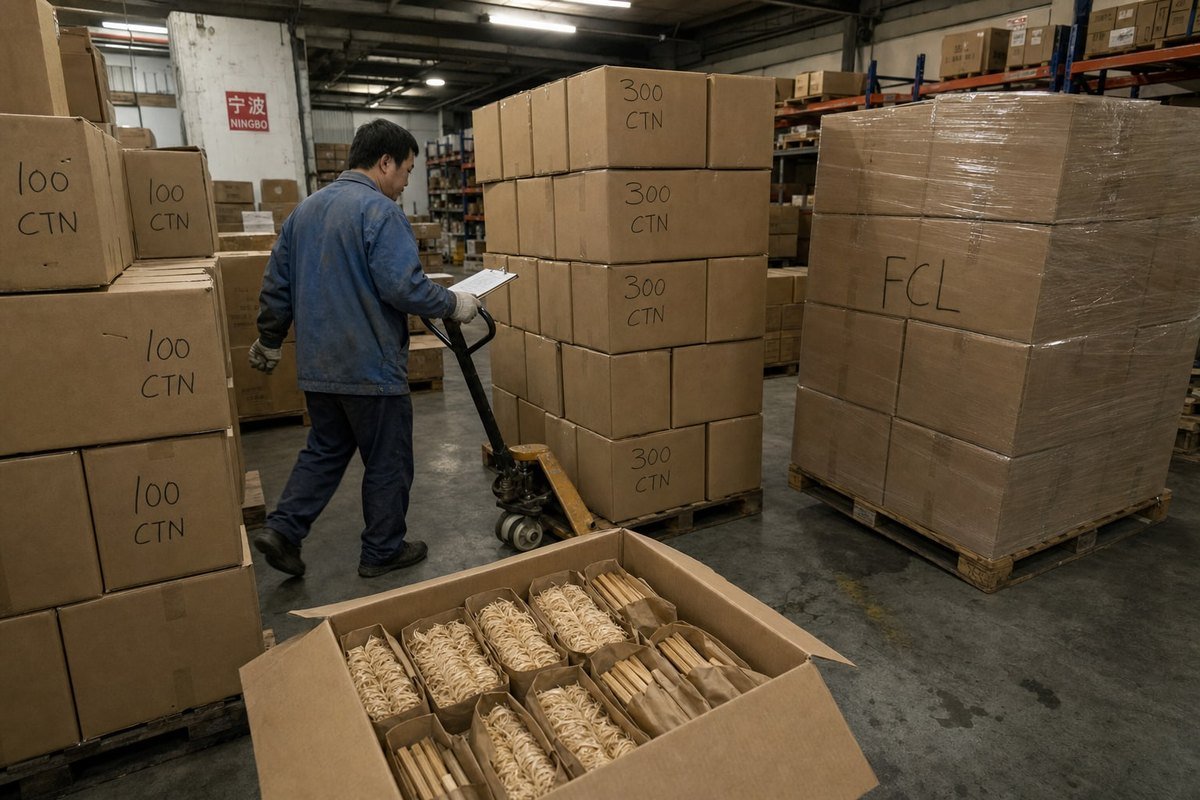
Minimum order quantity is not just a supplier rule. It is a freight economics rule. Wood fire starters are bulky relative to their value, so the shipping mode you choose changes your landed cost per unit dramatically.
Match order size to freight mode
| Order Size | Freight Mode | Unit Cost Impact | Best For |
|---|---|---|---|
| 100–200 cartons | Air or small pallet | Highest per unit | Market tests, urgent top-ups |
| 300–500 cartons | LCL sea freight 3 | Moderate | First seasonal buy, new SKUs |
| Full container (FCL) | Ocean FCL | Lowest per unit | Proven demand, full-season stock |
Full container loads also dilute fixed import costs, including tariff exposure, across more units. But an FCL only makes sense when your demand forecasting supports it. Even though wax-dipped wood rolls have a long shelf life, I advise clients never to order more than they can realistically sell in about six months. Working capital tied up in slow-moving cartons is a silent tax on your business.
Build a reorder trigger, not a reorder habit
For seasonal products, the classic reorder point works differently. Delays close to launch are so costly that your real target is a pre-season stock level, not a rolling replenishment trigger. My recommended approach:
- Set your launch stock target from your forecast plus buffer stock.
- Define a sell-through checkpoint at week two or three after launch.
- If sell-through exceeds plan, place the ocean reorder immediately — it will arrive mid-season.
- If sell-through lags, hold cash and negotiate a smaller LCL top-up instead.
Because we run complete production lines rather than brokering orders, we can hold agreed reorder slots for repeat clients. Ask your supplier whether they can do the same. A reserved production slot is worth more than a discount when July demand spikes.
How can I forecast BBQ season demand when I'm launching a new wood fire starter product line?
A US camping brand once told me their launch forecast was, in their words, an educated guess. After exporting fire-starting goods to 30+ countries, I can say most first-season forecasts are — but there are ways to make the guess much smarter.
Forecast BBQ season demand by combining retailer preorder commitments, comparable product sales history, and your promotional calendar. Build separate estimates for base demand and promotion spikes, weight for regional weather patterns, then add a 20% buffer for forecast error on a new line.
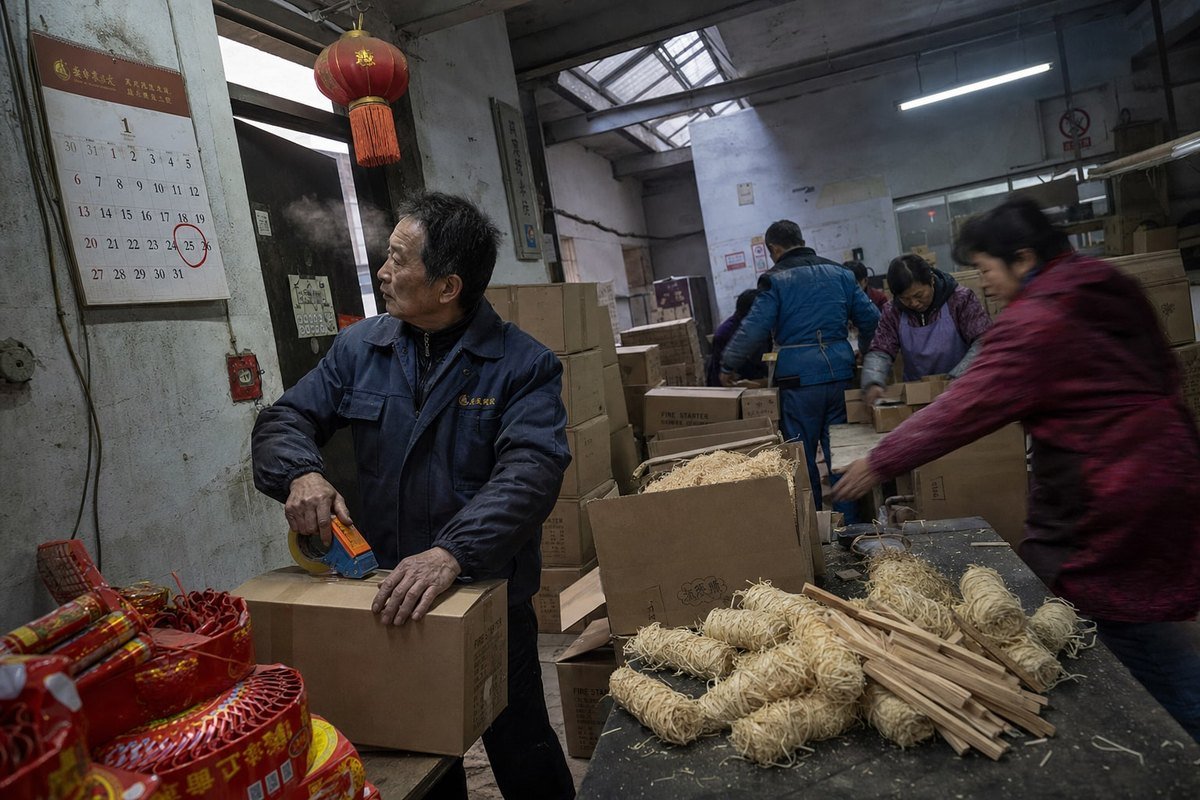
Demand forecasting for a new product line has no perfect method. But stacking several imperfect signals gets you close enough to order with confidence.
Layer your demand signals
Start with the hardest data you have and work down to the softest:
- Retailer preorders and commitments. If a distributor or retail chain has committed to shelf space, that volume is your floor.
- Comparable SKU history. Sales of charcoal, lighter fluid, or competing fire starters in your channels reveal seasonality shape and peak weeks.
- Promotional calendar. Memorial Day, Father's Day, and early-summer garden center promotions create demand spikes that base forecasts miss.
- Channel mix. E-commerce demand ramps earlier than in-store; big-box replenishment arrives in waves.
Weather is a real variable, not an excuse
Outdoor fuel products are weather-sensitive. A dry, warm spring pulls BBQ demand forward; a wet spring compresses it into fewer weekends. Some of our larger clients now feed long-range meteorological outlooks into their inventory models, scaling safety stock up for predicted dry springs in key regions. You do not need sophisticated software to apply the principle. Simply build a base case and a high case, and make sure your reorder plan can respond if the high case materializes.
Split base demand from spike demand
| Demand Layer | How to Estimate | Inventory Treatment |
|---|---|---|
| Base weekly demand | Comparable SKUs, channel run-rates | Core order quantity |
| Promotional spikes | Event calendar, retailer ad plans | Pre-positioned buffer stock |
| Upside scenario | Dry-spring weather case | Reserved reorder production slot |
One practical note from our side of the table: consistent burn time and ignition performance directly affect reorder rates. A fire starter that lights reliably in eight to ten minutes of usable burn earns repeat purchases, which makes your second-season forecast far easier. Quality is a forecasting input, not just a QC topic.
What certification and compliance checks should I confirm before placing my bulk inventory order?
Early in our export history, we learned a hard lesson: a shipment is only as fast as its slowest document. Since then, compliance paperwork at our Liuyang headquarters gets prepared before production starts, not after.
Before placing a bulk order, confirm the MSDS certification, correct HS code and duty rate, Lacey Act compliance for wood materials entering the US, supplier certifications such as ISO 9001 and BSCI, third-party test reports, and complete customs documentation including commercial invoice and packing list.
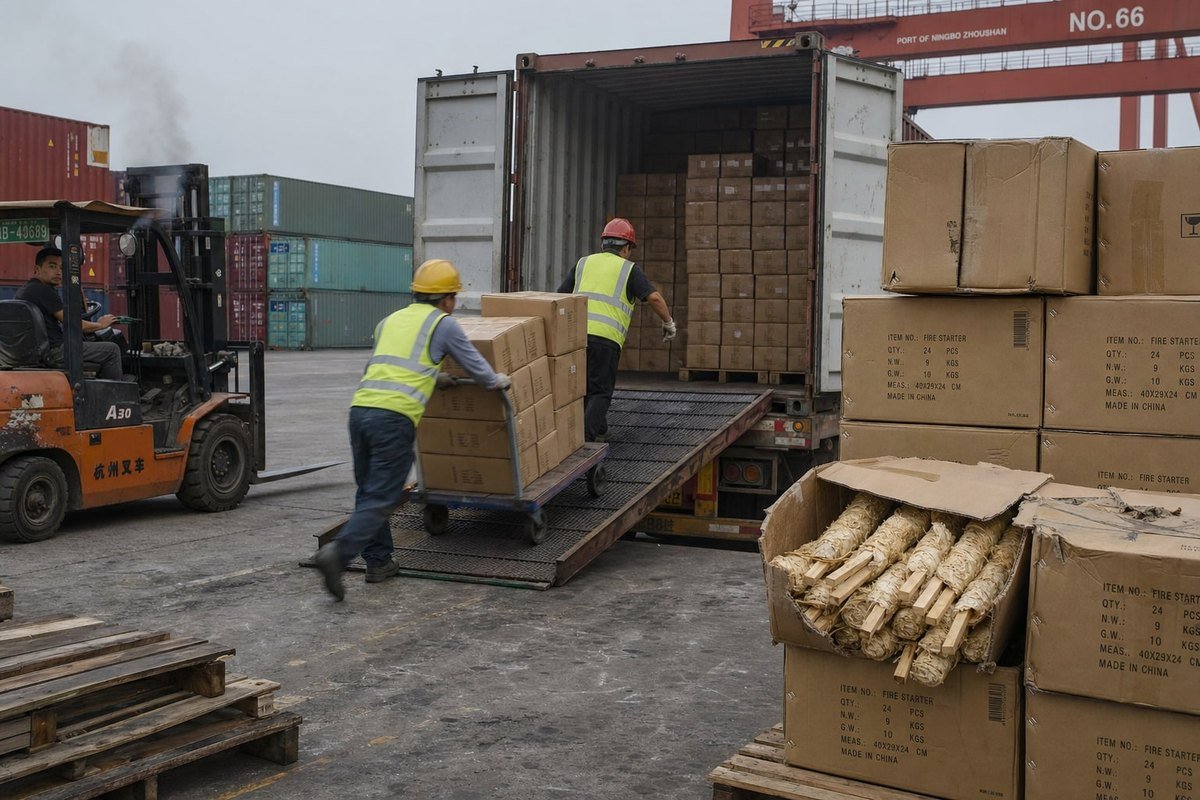
Wood fire starters sit at the intersection of two regulatory zones: combustible consumer goods and wood-based products. Each zone has its own paperwork, and missing either one can hold your container at port during the exact weeks you need it on shelves.
The document checklist
Run through this list before wiring any deposit:
- MSDS/SDS. Wax-dipped fire starters need a safety data sheet 4 for shipping classification and customs. Confirm your supplier can issue one for the exact formulation you are buying.
- HS code and duty calculation. Agree the classification with your customs broker early. The code drives your duty rate and your landed cost per unit.
- Lacey Act compliance. For US imports, wood-based products require a declaration of plant species and country of harvest. Ask your supplier for the wood species documentation up front.
- Supplier quality certifications. In our case, that means ISO 9001 5, BSCI, CE, and third-party test reports from SGS or Intertek. For serious buyers, these are a hard requirement, not a nice-to-have — and any factory that hesitates to share them is telling you something.
- Sustainability chain of custody. FSC 6 or PEFC documentation is increasingly a competitive differentiator in eco-conscious BBQ and outdoor retail channels.
- Commercial invoice and packing list. Verify these match the actual carton counts and descriptions before the vessel sails.
Verify formulation claims match the label
Natural positioning matters in this category. If your packaging says all-natural wood wool with no chemical accelerants, your test reports must support that claim. We produce our wax-dipped wood rolls from eco-friendly materials without harmful chemicals precisely because our US and EU clients need the documentation to survive retailer audits. Also confirm your warning labels, barcodes, and retail-ready packaging meet destination-market rules — shelf-ready display boxes save retailer labor, but only if the compliance text on them is correct.
Conclusion
Plan backward from launch, order to freight-smart MOQs, forecast in layers, and lock compliance early. Do that, and your BBQ season starts on shelves — not at sea.
Footnotes
1. Official trade source explaining harmonized system codes for customs classification. ↩︎
2. Provides background on the holiday affecting factory production schedules. ↩︎
3. Wikipedia background on container shipping methods referenced in freight mode planning. ↩︎
4. OSHA reference explaining MSDS/SDS requirements for hazardous or combustible materials. ↩︎
5. Comprehensive overview of the ISO 9001 quality management system standard. ↩︎
6. Background on Forest Stewardship Council certification for sustainable wood sourcing. ↩︎
7. USDA APHIS official page detailing Lacey Act wood import declaration requirements. ↩︎



 English
  Spanish
  German
  French
  Arabic
  Portuguese
Join the Conversation