






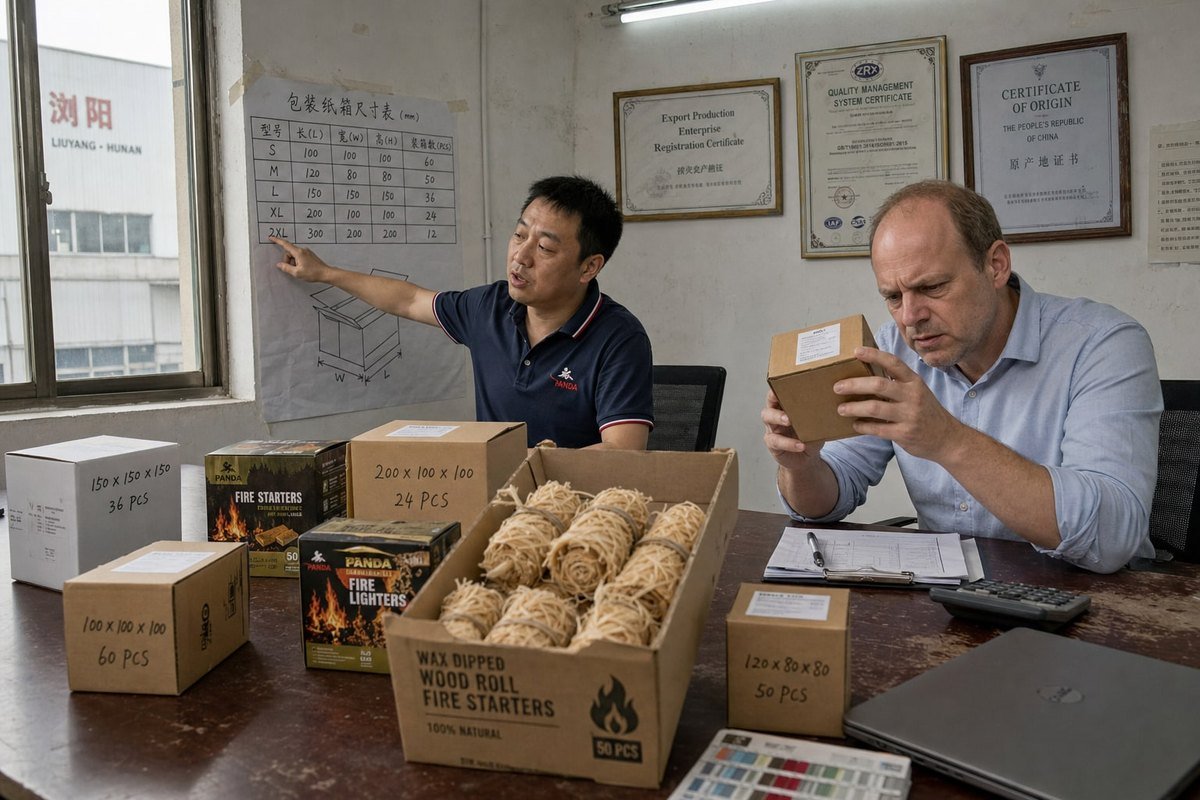
Small packaging specs for wood fire starters can quietly wreck a grill gift set's margin CE marking 1. I have watched buyers lose money on freight before our production line even started rolling.
Negotiate small packaging specs by requesting flexible pack counts, tight carton dimensions, stock-sized boxes with custom labels, and pre-agreed compliance labeling. Confirm MOQ tiers, barcode ownership, and moisture protection in writing before artwork approval, and compare suppliers on landed cost rather than factory price.
That answer covers the essentials. Now let me walk you through each negotiation lever, one section at a time, using what we see in real orders every week.
What MOQ Can I Realistically Negotiate for Small Wood Fire Starter Packaging?
A German distributor once asked our team for a 300-set trial run with fully custom-printed boxes. We said yes to the product, but we had to explain why the printing changed the math.
Most factories can accept 500–1,000 units for fire starters packed in stock boxes with custom labels, while fully custom-printed packaging usually starts at 1,000–3,000 units. Digital printing, blank inventory storage, and shared master materials can push the effective Minimum Order Quantity lower.
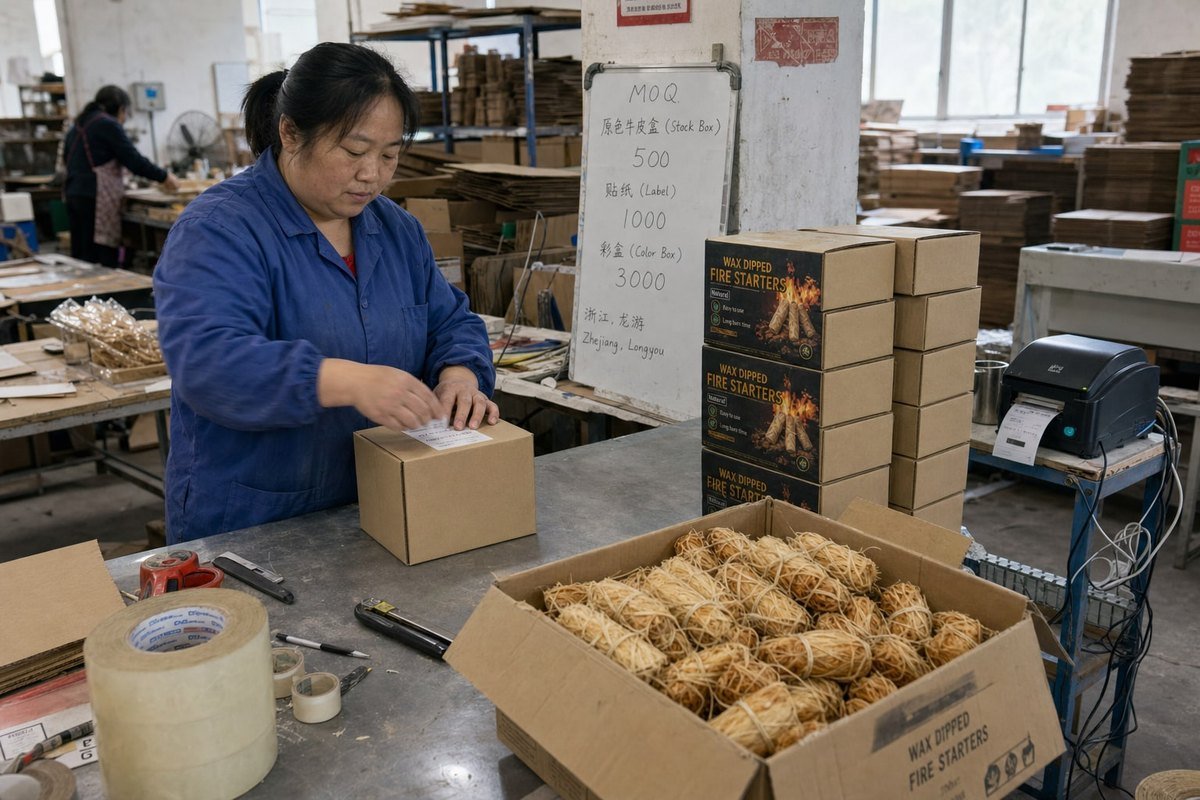
The Minimum Order Quantity for the fire starters themselves is rarely the problem. Our wax-dipped wood rolls come off the same line whether you order 500 pieces or 50,000. The real MOQ pressure comes from packaging. Offset printing needs plates and die-cutting tools. Those setup costs get spread across your order. A small run makes each box expensive.
So negotiate the packaging, not just the product. Here is what works in practice.
Four Proven Ways to Lower Your Effective MOQ
- Use stock-sized boxes with custom labels or belly bands. You skip tooling costs entirely. Your brand still shows, and you can move to printed cartons after the trial sells through.
- Ask for digital printing. No plates, no dies. It costs more per unit but far less in setup, which is exactly what a 500-unit trial needs.
- Consolidate materials. If your grill gift set uses one master material, such as a single kraft corrugated grade, across all components, you hit volume discounts with one supplier even on a small order.
- Negotiate blank inventory storage. We hold unprinted stock for some long-term buyers and print small batches as their gift set orders fluctuate. This turns one big MOQ into several small releases.
| Packaging Route | Typical MOQ | Setup Cost | Best For |
|---|---|---|---|
| Stock box + custom label | 300–500 sets | Very low | First trial orders |
| Digital-printed box | 500–1,000 sets | Low | Seasonal gift runs |
| Offset-printed custom box | 1,000–3,000 sets | High | Proven repeat SKUs |
| Blank stock + print on demand | Negotiated | Medium | Fluctuating demand |
In our experience exporting to 30+ countries, buyers who ask about MOQ tiers upfront get better terms than those who fight over unit price after quotation.
How Do I Ensure Compliance and Safety Labeling on Custom Grill Gift Set Packaging?
Compliance is the one topic where I refuse to be flexible. Our factory carries ISO 9001 2, BSCI, CE, and SGS/Intertek documentation because our US and EU buyers treat these as hard requirements, not nice-to-haves.
Ensure compliance by locking safety warnings, country of origin, batch codes, and GTIN/UPC placement into the packaging dieline before artwork approval. Request the supplier's CE marking and third-party test reports upfront, and confirm in writing who owns the barcode and who prints regulatory text.
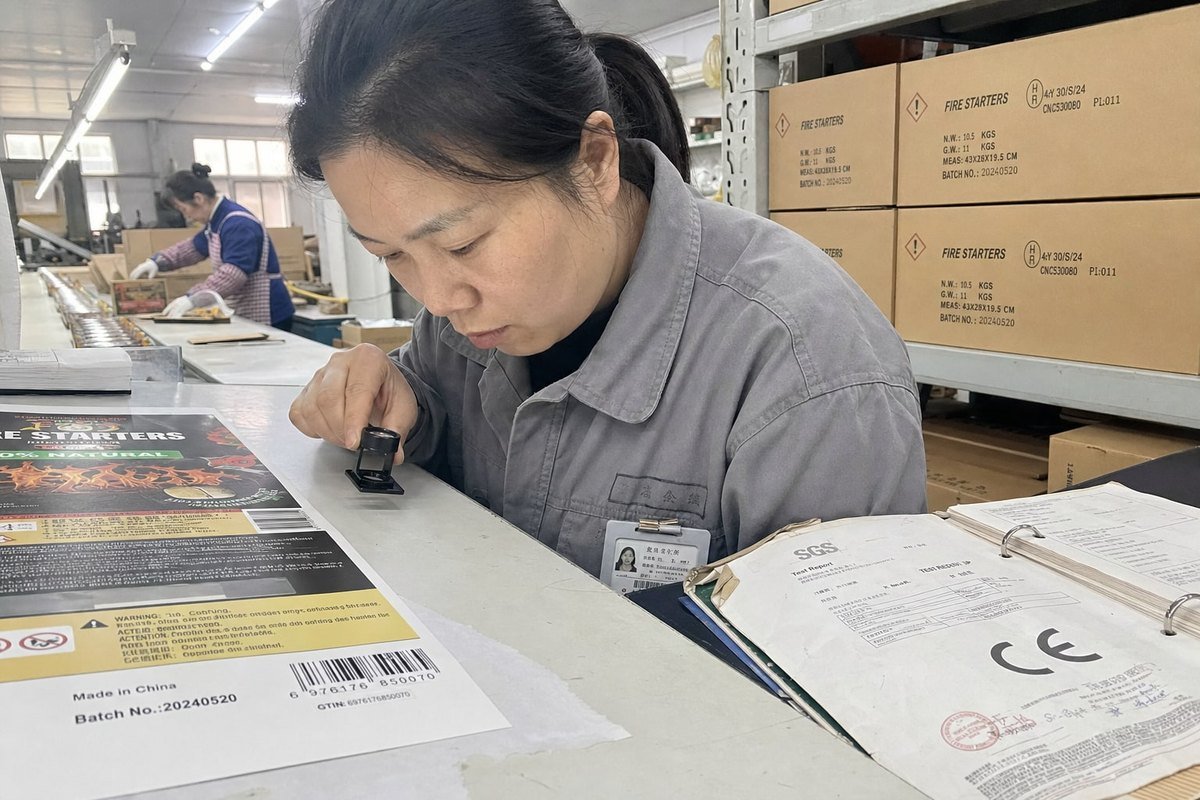
Fire starters are combustible consumer goods. That means the packaging carries legal weight, not just branding. If a required warning is missing, your shipment can be held at customs or rejected by a retailer's compliance desk. I have seen a buyer scramble to re-sticker an entire container because the labeling conversation happened after printing. Adding compliance elements late always costs more than building them in early.
The Labeling Elements You Must Lock In Early
- Safety warnings. Keep-away-from-children text, ignition cautions, and storage instructions in the languages of your target markets.
- Country of origin. Mandatory for US and EU imports. country of origin 3
- Batch or lot code. Essential for traceability and any recall scenario. Our batch-to-batch quality control depends on this too.
- GTIN/UPC barcode. Decide early whether you or the supplier registers it GTIN/UPC barcode 4. Organized retail channels will not accept ambiguity here.
- Certification marks. CE where applicable, plus any test-report references your retailer demands.
One practical tip from our packaging team: small boxes have limited real estate. A micro-QR code can carry safety data sheets 5, grill-lighting tutorials, and multilingual warnings without cluttering a compact gift box. Several of our private-label clients now use this approach on custom branding projects.
Also verify material claims. If your artwork says the wood wool comes from FSC certified wood 6 or uses eco-friendly packaging, your supplier must hold documentation to back it. Retail buyers audit these claims more aggressively every year, and an unsupported claim can be worse than no claim at all.
Which Packaging Formats Work Best for Wood Fire Starters in Small Gift Bundles?
During a trade show in Germany, a fireplace distributor picked up our kraft-window box, turned it over twice, and said the format sold him before the product did. Presentation matters that much in gift sets.
Kraft window boxes, heat-sealed bags inside printed sleeves, drawstring cotton pouches, and small tins work best for wood fire starters in gift bundles. Choose formats that protect wax coatings from moisture, minimize void space in the master set, and display the natural wood wool texture.
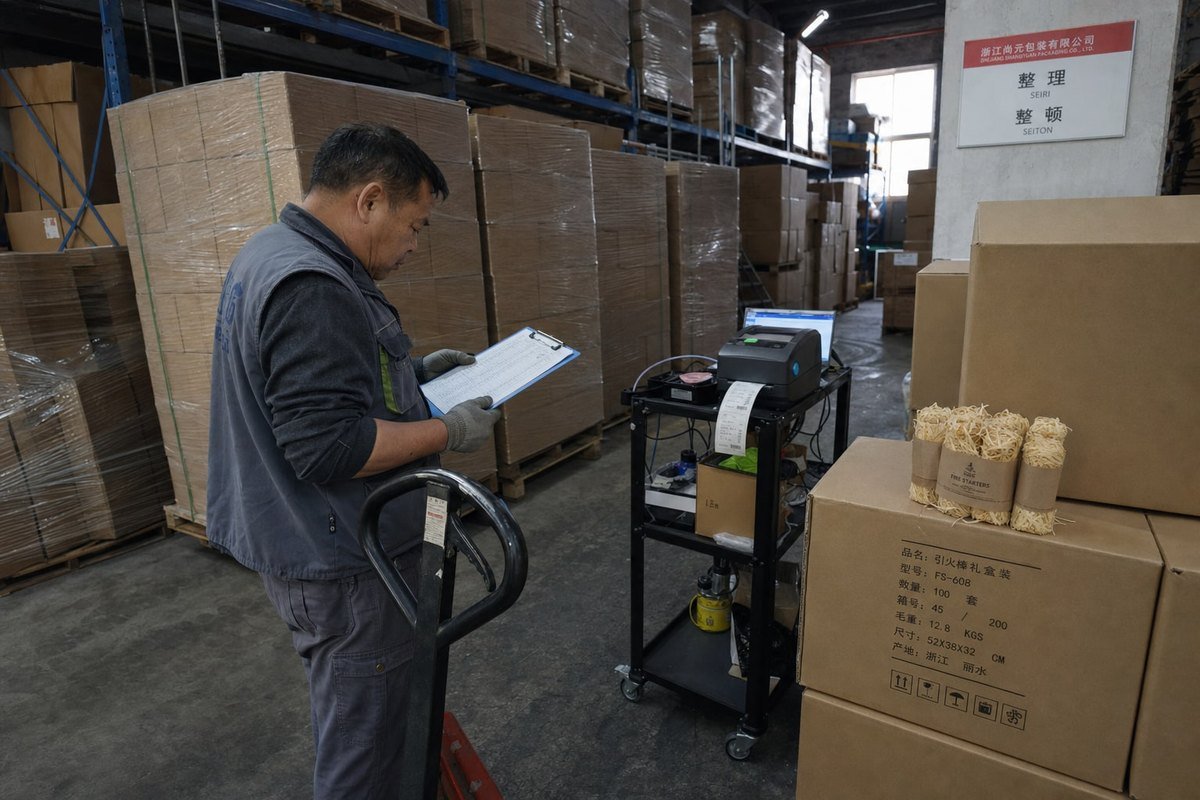
Our wax-dipped wood rolls are compact and light. That is a gift for pack geometry, but it also creates choices. Retail examples show fire starters commonly sold in 8, 12, and 24 packs, so a small count is commercially normal, not a downgrade. For grill gift sets, we usually recommend 6–12 pieces per inner pack. That count feels generous next to a dry rub and grill tools without dominating the box.
| Format | Moisture Protection | Gift Appeal | Relative Cost | Best Use Case |
|---|---|---|---|---|
| Kraft box with window | Medium | High | Medium | Eco-premium gift sets |
| Heat-sealed bags + sleeve | High | Medium | Low | Humid-climate markets |
| Cotton drawstring pouch | Low | High | Medium | Rustic/artisanal bundles |
| Small metal tin | High | High | High | Premium dual-utility sets |
| Bulk tray with dividers | Medium | Low | Lowest | Value multipacks |
Function Comes Before Looks
Product dimensions drive everything downstream. A tight cylindrical roll packs with less dead air than loose fatwood sticks, so negotiate pack geometry alongside the format. Less void space means smaller cartons, cheaper freight, and a set that does not rattle.
Two functional details deserve attention. First, moisture. Paraffin wax resists humidity well, but the exposed wood-wool ends can absorb moisture in long ocean transit. A barrier coating or functional paper liner keeps ignition reliable. Second, scent migration. Wax and pine aromas can taint food-grade components like spices in the same set. A scent-locking film or sealed inner bag solves this, and it is a cheap fix compared with returned goods.
For premium positioning, consider dual-utility containers. A small tin becomes a keepsake or even a char-cloth maker after the fire starters are used. Buyers remember packaging that earns a second life.
How Can I Balance Private-Label Branding with Cost When Ordering Small Packaging Runs?
The trade-off I weigh most often with new clients is simple: how much brand presence can a 500-unit run afford? After 17+ years of OEM and ODM work, my honest answer is more than most buyers think, if the spend goes to the right places.
Balance private-label branding with cost by spending on high-impact touchpoints — a printed sleeve, belly band, or premium label — while keeping the structural box generic. Use universal inserts, phase custom printing in with reorder volume, and reserve full custom packaging for proven SKUs.
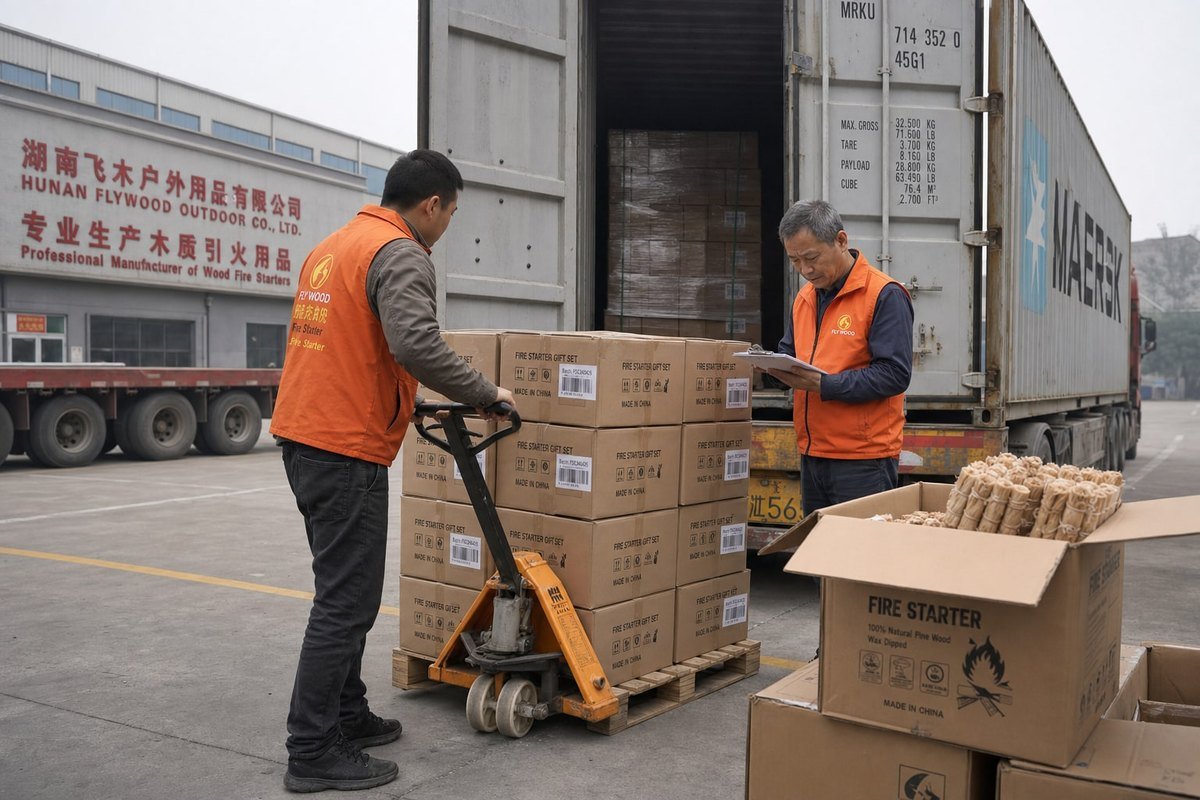
Private label manufacturing 7 does not require full custom packaging on day one. The smartest small-run brands treat branding as a ladder. You start light, prove sell-through, then reinvest in richer packaging as volume grows. Wholesale sourcing works best when the packaging spend scales with confirmed demand, not hopes.
A Phased Branding Ladder for Small Runs
- Phase one: label-level branding. Stock kraft box, premium custom label, belly band. Low cost, fast lead time, genuine shelf presence.
- Phase two: digital-printed sleeve or box. More color, more custom branding, still no plate costs. Ideal at 1,000+ units.
- Phase three: full offset-printed custom carton. Best unit cost at scale, strongest retail shelf space impact, justified once reorders are steady.
| Branding Level | Typical Cost Impact | Lead Time | When to Use |
|---|---|---|---|
| Custom label on stock box | +3–8% per unit | Shortest | Trial orders, market tests |
| Digital-printed sleeve/box | +8–15% per unit | Medium | Seasonal gift programs |
| Full custom offset carton | Lowest at volume | Longest | Repeat retail SKUs |
Two more cost levers matter. First, modular internal dividers. A universal insert that fits 6, 8, or 12 fire starters means one tooling investment serves multiple set configurations. Second, zero-waste thinking. Some of our eco-focused buyers wrap each roll in combustible cellulose paper that burns with the starter. It removes a packaging layer, tells a sustainability story, and cuts material cost at once.
One warning from experience: never cut cost on the sample stage. Insist on physical samples of the exact packaging before approving MOQ or artwork. Because our first sample reliably reflects mass-production quality, buyers can judge the real gift-set fit before committing. A supplier who resists sampling is telling you something.
Conclusion
Poor packaging specs drain margin silently — through freight, compliance rework, and weak shelf appeal. Negotiate pack counts, cartons, labeling, and branding early, and your grill gift sets protect both profit and presentation.
Footnotes
1. Background explanation of the European conformity marking referenced for compliance requirements. ↩︎
2. Authoritative Wikipedia overview of the ISO 9001 quality management standard. ↩︎
3. US government trade resource clarifying mandatory country of origin labeling for imports. ↩︎
4. Defines the global trade item number standard critical to retail barcode ownership decisions. ↩︎
5. OSHA reference explains safety data sheet requirements referenced for combustible product packaging. ↩︎
6. Explains the forestry certification standard mentioned for sustainable material claims. ↩︎
7. Background concept explaining the private-label business model discussed for branding strategy. ↩︎



 English
  Spanish
  German
  French
  Arabic
  Portuguese
Join the Conversation