






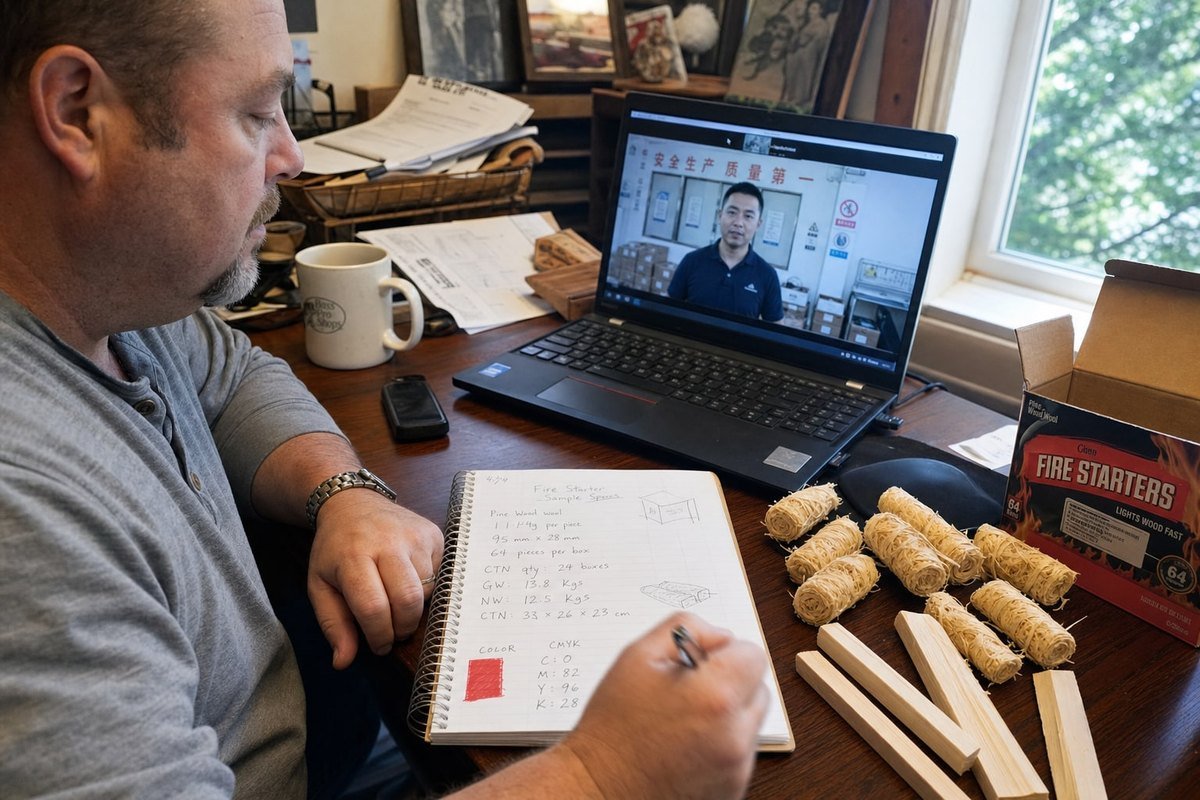
Requests for custom wood fire starter packaging 1 cross my desk weekly, and most arrive as one vague line: "Can you customize this?" Our production team can't quote that. Vague briefs create slow quotes, wrong samples, and packaging that looks bolted onto your grill line instead of born from it. The fix is a structured request — a mini spec sheet, not a casual inquiry.
To ask suppliers to customize wood fire starter packaging, send a complete packaging brief: product dimensions, packaging format, brand identity guidelines, CMYK color codes, artwork files, material and finish targets, compliance labels, MOQ, and lead time expectations — then request a written quote and a physical sample before production.
This guide walks you through each part of that brief. I'll show you exactly what to send, how to phrase the request, and what to check before you approve anything.
What Packaging Details Should I Specify When Requesting Custom Wood Fire Starter Boxes?
A buyer from Germany once sent us a single photo of his grill carton and asked for "something similar." Our OEM team needed eleven follow-up emails before we could quote his wax-dipped wood roll packaging accurately.
Specify the finished product dimensions, unit count per box, packaging format, target retail channel, material and coating, print method, CMYK colors, finish, insert requirements, barcode placement, warning label space, order quantity, and delivery region. Include vector artwork files and your brand identity guidelines if available.
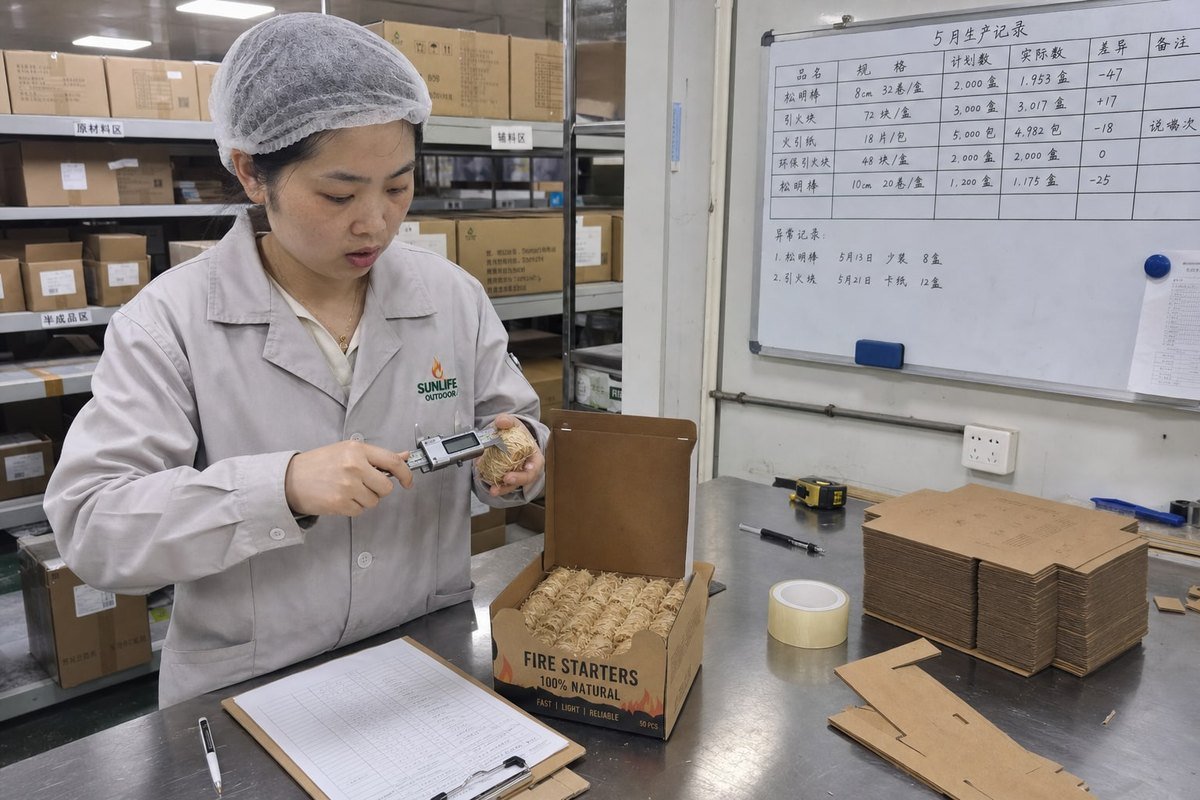
The single biggest mistake I see is buyers describing what they want the box to look like while skipping what the box needs to do. Our team quotes hundreds of private label firelighter projects each year, and the fastest ones always start with a spec-sheet-style message. Here is what that message should contain.
Start With the Physical Facts
Give us the finished dimensions of your fire starters, not estimates. A wax-dipped wood wool roll 2 behaves differently in a box than fatwood sticks or compressed pucks. Tell us the piece count — 24, 50, or 100 pieces changes the box structure, the internal divider needs, and the shipping carton math. Also state the packaging purpose. A retail-ready display box for a hardware chain is engineered differently from a kraft pouch for DTC e-commerce.
The Core Specification Table
| Specification | What to Provide | Why It Matters |
|---|---|---|
| Product dimensions | Exact length, diameter, weight per piece | Determines box size and structural strength |
| Unit count | Pieces per box, boxes per carton | Affects dieline, dividers, and freight cost |
| Channel | Retail shelf, club store, e-commerce, display | Defines structure and print quality level |
| Material | Kraft, coated cardboard, corrugated, pouch | Drives cost, durability, and brand feel |
| Print & finish | CMYK codes, matte/gloss, varnish, foil | Ensures visual match with your grill line |
| Compliance space | Warning text, UPC, usage icons | Required for most Western retail channels |
| Volume | Trial order size plus annual reorder estimate | Lets the supplier quote realistic pricing tiers |
Don't Forget the Environment
Fire starters sit in garden centers, outdoor displays, and garages. Ask about moisture-resistant coatings or UV-varnish finishes so the packaging survives humidity and sun exposure at retail. We've reworked boxes for buyers who skipped this and watched their kraft boxes soften in a damp warehouse. One sentence in your brief prevents that.
How Do I Confirm a Supplier Can Match My Grill Line's Branding and Color Standards?
Color drift is the quiet killer of brand families. In our Ningbo print runs, we hold color within tight tolerance batch to batch — but only because buyers give us proper CMYK targets to hold.
Send your brand identity guidelines with exact CMYK or Pantone codes and vector logo files, then request a printed color proof or golden sample on the actual substrate. Approve colors on physical material, never on screen, and confirm the supplier's batch-to-batch color tolerance in writing.
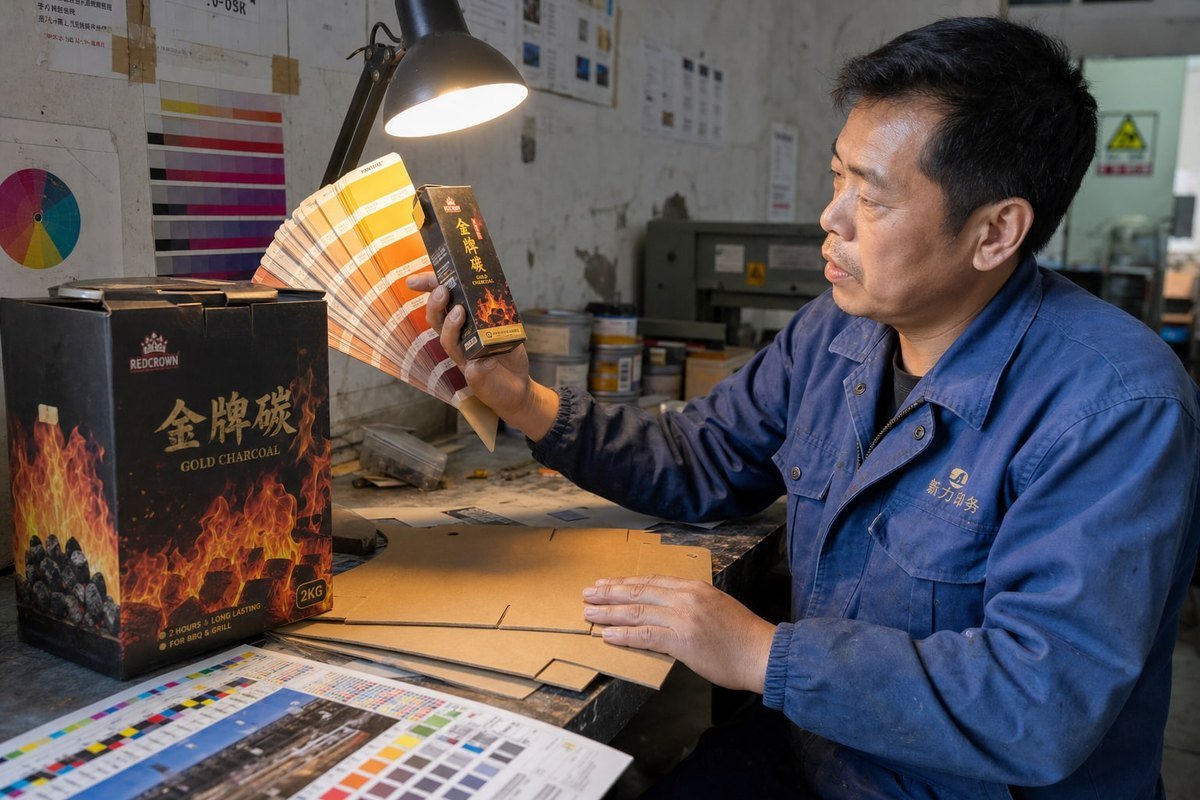
Matching your grill line means more than reusing your logo. Your grills, charcoal bags, and wholesale BBQ accessories already speak a visual language — typography, icon style, a premium or rugged tone. Your fire starter box has to speak it too, or it looks like a third-party add-on sitting next to your own products.
What "Matching" Actually Requires
First, define what must match exactly and what can flex. In my experience exporting to the US and EU, the non-negotiables are usually logo artwork, primary brand colors, and typography. The flexible items are box structure, finish, and secondary graphics. State this split in your brief. It gives the supplier creative room where you allow it and hard limits where you don't.
Second, understand that CMYK color matching 3 behaves differently on different substrates. The same ink formula prints darker on uncoated kraft 4 than on coated white board. If your grill cartons use coated stock and your fire starter box uses kraft for a rustic feel, an experienced supplier will adjust the ink build to make the colors read as a family. Ask directly: "How do you handle color matching across different substrates?" The answer tells you a lot about their print depth.
The Golden Sample Process
- Send vector logos (AI, EPS, or PDF) and your brand guide.
- Ask for a digital proof to check layout, dieline scale, and logo placement.
- Request a physical golden sample printed on the final material.
- Compare it under daylight next to your actual grill packaging.
- Sign off in writing, and require the supplier to keep the golden sample as the production reference.
We keep signed golden samples on file at our factory for every private-label run. When a reorder arrives eight months later, the press operator matches against that physical reference, not a memory. Ask your supplier if they do the same. If they hesitate, their batch consistency is a gamble.
What MOQ and Lead Time Should I Expect for Custom Fire Starter Packaging Orders?
A trade-off I weigh with almost every new buyer: lower Minimum Order Quantity 5 (MOQ) versus lower unit cost. Custom printing plates and dielines carry setup costs that must spread across the run, and there is no honest way around that math.
Expect MOQs of roughly 1,000–5,000 units for custom-printed fire starter packaging, with lead times of 30–45 days for production plus 7–15 days for sampling. Trial orders at lower quantities are often possible using simpler formats like labeled kraft boxes or belly bands.
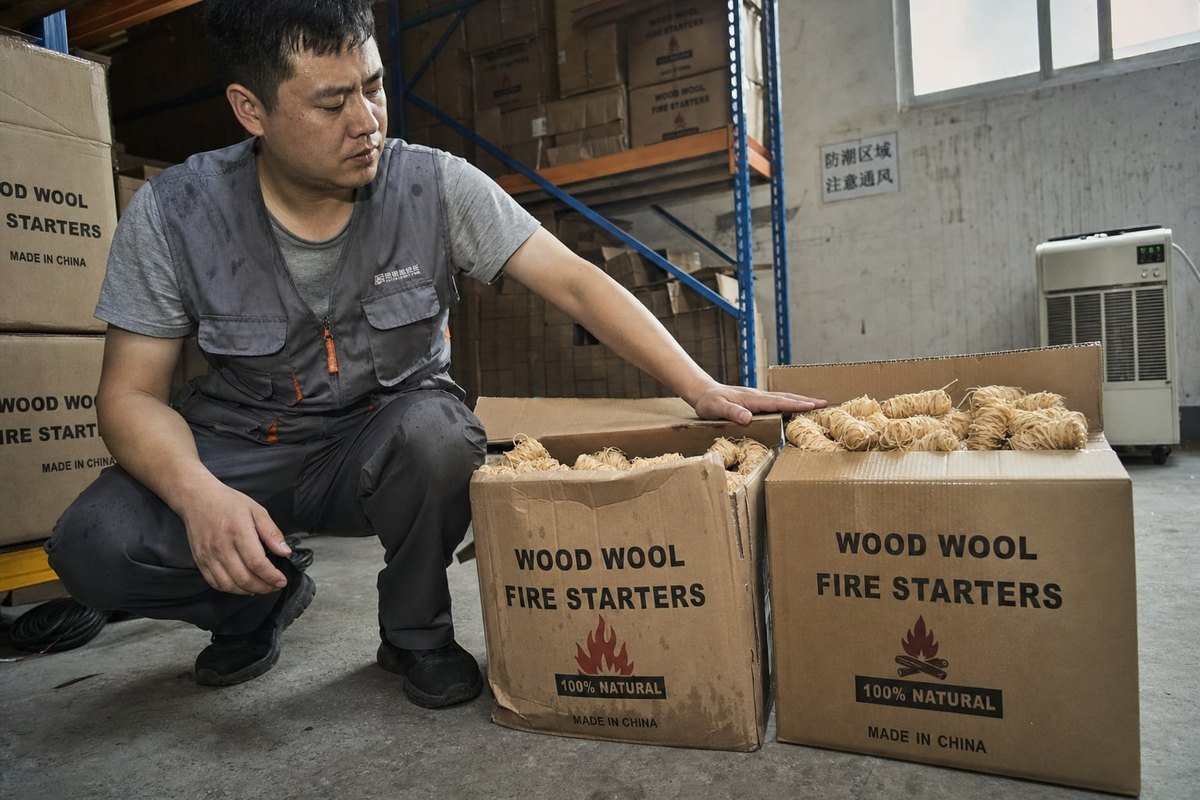
Buyers comparing suppliers often fixate on the headline unit price. That number is nearly meaningless without a cost breakdown. When we quote OEM manufacturing services, we separate materials, printing, finishing, artwork setup, inner packing, and shipping. Insist on the same breakdown from every supplier you approach — it's the only way to compare three quotes on equal terms.
Typical Timelines and Quantities
| Stage | Typical Range | What Affects It |
|---|---|---|
| Digital proof | 2–5 days | Artwork readiness, revision rounds |
| Physical sample | 7–15 days | Custom dieline, finish complexity |
| MOQ (full custom print) | 1,000–5,000 units | Print method, box structure |
| MOQ (trial format) | 300–1,000 units | Labels or belly bands on stock boxes |
| Mass production | 30–45 days | Order size, season, finish options |
| Shipping to US/EU | 25–40 days by sea | Port, incoterms, consolidation |
Smart Ways to Start Small
If you're testing a new grill-line accessory, don't force a full custom box on day one. Two lower-risk paths work well. First, use a stock box with a custom-printed label or belly band — the MOQ drops sharply and your branding still shows. Second, consider a modular sleeve design: a plain inner box with an interchangeable printed sleeve. Sleeves let you run seasonal branding or co-branded partnerships later without retooling the core box. Several of our European distributors started with sleeves, proved sell-through, then moved to fully printed retail-ready display boxes on reorder.
Plan Around the Season
Fire starter demand peaks before autumn and the holiday season. Our production calendar in Ningbo fills up from July onward. Book your custom packaging run at least one season ahead, and confirm whether the quoted lead time includes sampling or starts after sample approval. That single question prevents most timeline disputes.
How Can I Verify a Supplier's Compliance and Quality Before Approving My Custom Packaging Design?
A lesson learned the hard way — by a buyer, not by us. A US importer once came to our factory after his previous supplier's shipment was held because the packaging lacked proper warning labeling. The product burned fine. The paperwork didn't exist.
Verify certifications like ISO 9001, BSCI, and CE, request SGS or Intertek test reports, and confirm the packaging includes required warning text, usage instructions, and scannable UPC/EAN barcodes. Then approve a physical pre-production sample checking dieline accuracy, print quality, durability, and product fit.
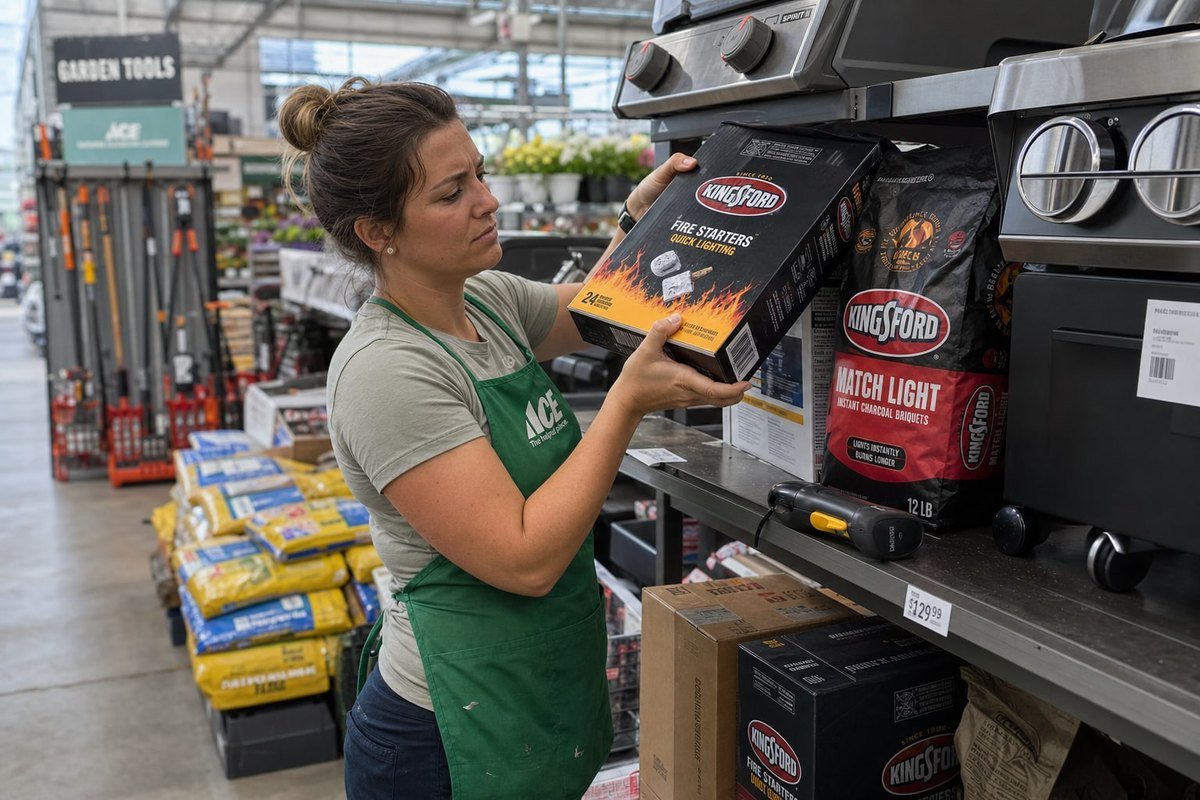
Fire starters are combustible consumer products. Major retailers and customs authorities 6 treat them accordingly. Beautiful packaging that fails a compliance check is worthless inventory sitting in a bonded warehouse. So verify compliance before you fall in love with a design.
The Documents to Request
Ask for these before sending a deposit, not after:
- Factory certifications: ISO 9001 for quality systems 7, BSCI for social compliance. Our buyers in Germany and the UK treat these as hard requirements, and yours will too.
- Product test reports: third-party reports from labs like SGS or Intertek covering the fire starters themselves.
- Safety documentation: if the starter contains wax or any coating, ask whether an SDS applies for your market.
- Labeling proof: confirmation that warning copy, usage instructions, and country-of-origin marks fit your destination market's rules.
Compliance Elements on the Packaging Itself
| Element | Purpose | Common Requirement |
|---|---|---|
| Warning text | Consumer safety | Keep away from children; flammable notices |
| Usage instructions | Correct ignition | Text or icon-based lighting steps |
| UPC/EAN/GTIN | Retail scanning | Required by nearly all chain retailers |
| Country of origin | Customs clearance | "Made in China" marking per import rules |
| Material claims | Eco marketing | Backed by sustainable material sourcing evidence |
Verifying Quality on the Sample
When the pre-production sample arrives, fill it with the actual product. Check that the wood rolls don't rattle or crush the box. Drop-test the branded shipping cartons. Scan the barcode with a phone app. Verify the dieline scale — I've seen samples where warning text panels shrank below the legible size once the real dieline was cut. If you're making sustainability claims for eco-friendly ignition products, confirm the substrate certification (such as FSC or recycled content 8) matches what your graphic design specifications state on the box. A supplier with genuine manufacturing depth will welcome this scrutiny. One who deflects it is telling you something important.
Conclusion
Vague requests produce mismatched packaging and stalled timelines. Send a structured brief — specs, brand guidelines, compliance needs, MOQ — approve a golden sample, and your fire starters will look born into your grill line.
Footnotes
1. Provides context on the various types of fire starters used in outdoor and grill applications. ↩︎
2. Explains the material properties and manufacturing of wood wool used in protective and decorative packaging. ↩︎
3. Technical explanation of the four-color process used in commercial packaging printing. ↩︎
4. Technical specifications and characteristics of uncoated kraft paper used in industrial and retail packaging. ↩︎
5. Defines the business term and its impact on manufacturing and supply chain costs. ↩︎
6. Wikipedia overview of customs authorities, their functions in trade, and international border regulations. ↩︎
7. Wikipedia guide to the ISO 9001 standard for quality management systems and organizational efficiency. ↩︎
8. Official EPA program page detailing recycled content recommendations and the Comprehensive Procurement Guideline. ↩︎



 English
  Spanish
  German
  French
  Arabic
  Portuguese
Join the Conversation