







Negotiating long-term partnership terms for wood fire starters looks simple until a shipment arrives late in October social compliance 1. I have watched buyers lose whole seasons that way, which is why our factory pushes structured agreements over handshake deals.
To negotiate long-term partnership terms when purchasing wood fire starters, require verified certifications first, then agree on tiered MOQ and volume pricing, codify measurable quality standards with defect remedies, and lock in private-label rights, packaging ownership, and lead-time guarantees inside one written supply agreement.
Each of those four pieces deserves its own negotiation third-party test reports 2. Below, I walk through them in the order I recommend buyers raise them, based on what actually works at the factory table.
What Certifications Should I Require Before Committing to a Long-Term Wood Fire Starter Supplier?
A German distributor once told me he had walked away from a cheaper quote purely because the supplier could not produce a current audit report. In our 17+ years exporting fire-starting goods, that instinct has proven right again and again.
Before committing long-term, require ISO 9001 for quality management, BSCI for social compliance, CE marking for European markets, and third-party test reports from labs like SGS or Intertek. For wood-sourced products, ask about FSC certification and verify every document directly with the issuing body.

Certifications are the foundation of any bulk procurement strategy, because they are the only evidence you can check before your first container ships. When buyers audit our production lines in Ningbo, they are not being polite. They are protecting themselves from customs seizures, retailer delistings, and liability claims. You should do the same with any supplier, including us.
The Core Documents to Request
Ask for these in writing before you discuss price. A serious factory will send them within a day.
| Certification / Report | What It Proves | Why It Matters Long-Term |
|---|---|---|
| ISO 9001 3 | A documented quality management system exists | Batch-to-batch consistency depends on process control, not luck |
| BSCI audit | Ethical labor and working conditions | Large retail sourcing channels increasingly require it |
| CE marking 4 | EU conformity for applicable product categories | Non-compliant goods can be blocked or recalled in Europe |
| SGS / Intertek test reports | Independent verification of burn safety and materials | Protects you in liability disputes and retailer audits |
| FSC certification 5 (if claimed) | Responsible wood sourcing | Supports ESG reporting and sustainable supply chain claims |
How to Verify, Not Just Collect
A PDF is not proof. Check the certificate number against the issuing body's database. Confirm the certificate names the actual factory, not a trading company that resells from unknown workshops. This distinction matters. We are headquartered in Liuyang with production in Ningbo, and our documents name our own facilities. When a "supplier" cannot match the certificate address to the production address, you are buying from a middleman, and your quality assurance protocols will have no real enforcement path.
Finally, put certification maintenance into the contract itself. Require the supplier to keep certifications current for the full contract term and to notify you within a set number of days if any audit lapses. That single clause turns compliance from a sales claim into a contractual obligation.
How Can I Structure MOQ and Pricing Terms That Work for Both Sides as My Orders Grow?
The trade-off we weigh most often at the quoting stage is this: a low minimum order quantity (MOQ) helps a buyer test the market, but it fragments our production runs. The best agreements resolve that tension openly instead of hiding it in the unit price.
Structure MOQ and pricing as a growth ladder: start with a lower trial MOQ at standard pricing, then define tiered volume discount structures that trigger automatically at annual purchase milestones. Add a price-adjustment clause tied to raw material indices so neither side absorbs extreme volatility alone.

A rigid flat price punishes growth. A tiered structure rewards it. When we set up long-term supply for wood firestarter buyers, we prefer a model where both sides can see exactly when better economics kick in. That transparency removes the annual haggling that erodes trust.
A Practical Tiered Structure
Here is the kind of ladder I recommend proposing. Adjust the numbers to your category and market.
| Stage | Typical Commitment | What the Buyer Gets | What the Supplier Gets |
|---|---|---|---|
| Trial order | Low MOQ, one shipment | Market validation at low risk | A qualified new account |
| Standard tier | Regular quarterly orders | Stable pricing and confirmed lead times | Predictable production planning |
| Growth tier | Annual volume milestone | Automatic per-unit discount | Fuller production capacity |
| Partner tier | Multi-year forecast shared | Best pricing, reserved seasonal capacity | Demand certainty worth investing in |
Terms That Support the Ladder
Three supporting clauses make this structure durable. First, negotiate net payment terms that fit the seasonality of fire products. Net-60 terms can align your accounts payable with autumn sell-through, and some suppliers will trade a small discount for faster payment. Second, agree on a raw material indexing mechanism. Wood, wax, and freight costs move. If pricing can only change by mutual renegotiation at review windows, or by a published index, neither party can impose surprise increases. Third, address logistics and freight costs explicitly. Decide who books freight, who owns risk in transit, and whether consolidated seasonal shipments earn a freight allowance. In our experience exporting to 30+ countries, unclear freight terms cause more disputes than unit pricing ever does.
One more point: give your supplier a rolling forecast. A factory that can plan capacity will almost always trade better terms for that visibility. Forecasts cost you nothing and buy you leverage.
What Quality Consistency Guarantees Should I Negotiate for Ongoing Bulk Orders?
During one production run a few winters back, our QC team rejected an entire batch of wood wool because its moisture reading edged past our internal limit. That is exactly the kind of check a long-term contract should force every supplier to perform, not just the careful ones.
Negotiate written quality specifications covering maximum moisture content, minimum burn duration, ignition reliability, wax coating consistency, and packaging integrity. Pair them with pre-shipment inspection rights, an agreed defect threshold, cure periods for failures, and defined remedies such as replacement or credit.
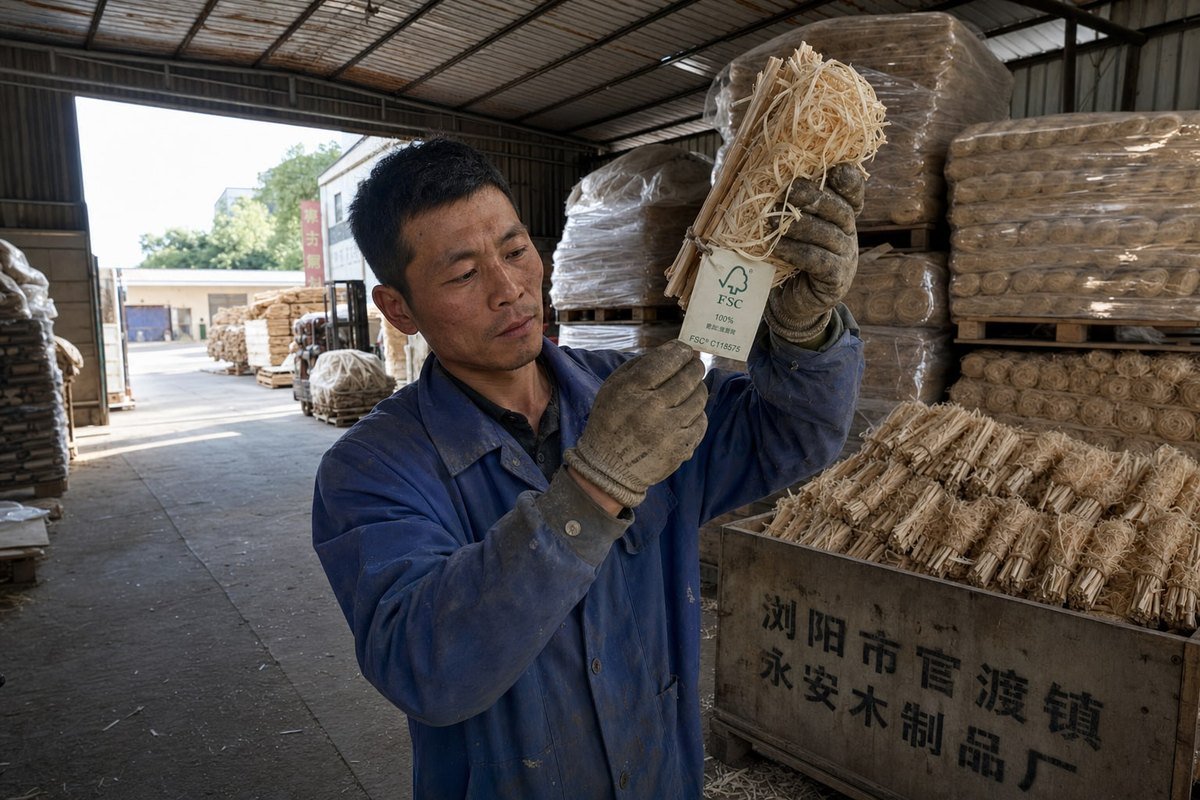
Supply chain reliability for a product like this comes down to measurable numbers. "Good quality" is not a specification. A wax-dipped wood roll either ignites with one match and burns long enough to light kindling, or it does not. Your contract should read like a checklist an inspector can score.
Specifications Worth Writing Down
Put these parameters into the agreement, with the exact values you and the supplier commit to:
| Parameter | Why It Matters | How It Is Verified |
|---|---|---|
| Moisture content ceiling | Damp wood wool ignites poorly and molds in storage | Moisture meter checks per batch |
| Minimum burn duration | Determines whether one starter lights a full fire | Timed burn tests on random samples |
| Ignition reliability | Failed lights become returns and bad reviews | Sample ignition testing per lot |
| Wax coating weight and coverage | Controls burn time and shelf appearance | Weight checks against reference samples |
| Packaging integrity | Crushed or leaking boxes are unsellable | Drop and compression checks on cartons |
The Golden Sample and Batch Control
Insist on a sealed golden sample. Both sides keep an identical approved reference, and every future batch is judged against it. At our factory, strict batch-to-batch quality control exists precisely so the first sample reliably reflects mass production. A contract clause makes that promise enforceable with any supplier: if a batch deviates from the golden sample beyond the agreed tolerance, the buyer may reject it.
Then define remedies in advance. Agree on an acceptable defect rate, an inspection method such as AQL sampling 6, and a cure period during which the supplier must replace or credit failed goods. Add a simple escalation path: documented notice, a response deadline, then dispute resolution. Finally, schedule quarterly business reviews to look at defect rates, fill rates, and on-time delivery together. Problems reviewed monthly stay small. Problems discovered in November become disasters.
How Do I Secure Private-Label and Custom Packaging Terms in a Long-Term Manufacturing Agreement?
A US camping brand we work with started with our standard boxes, then moved to full private-label cartons 7 with their own barcodes and warning labels within two seasons. That migration went smoothly only because the branding terms were settled before the first custom order, not after.
Secure private-label terms by contractually confirming your ownership of all brand assets, artwork, and tooling, the supplier's obligation not to resell your branded designs, agreed packaging specifications with approval rights, reasonable custom-packaging MOQs, and guaranteed seasonal lead times for branded production runs.
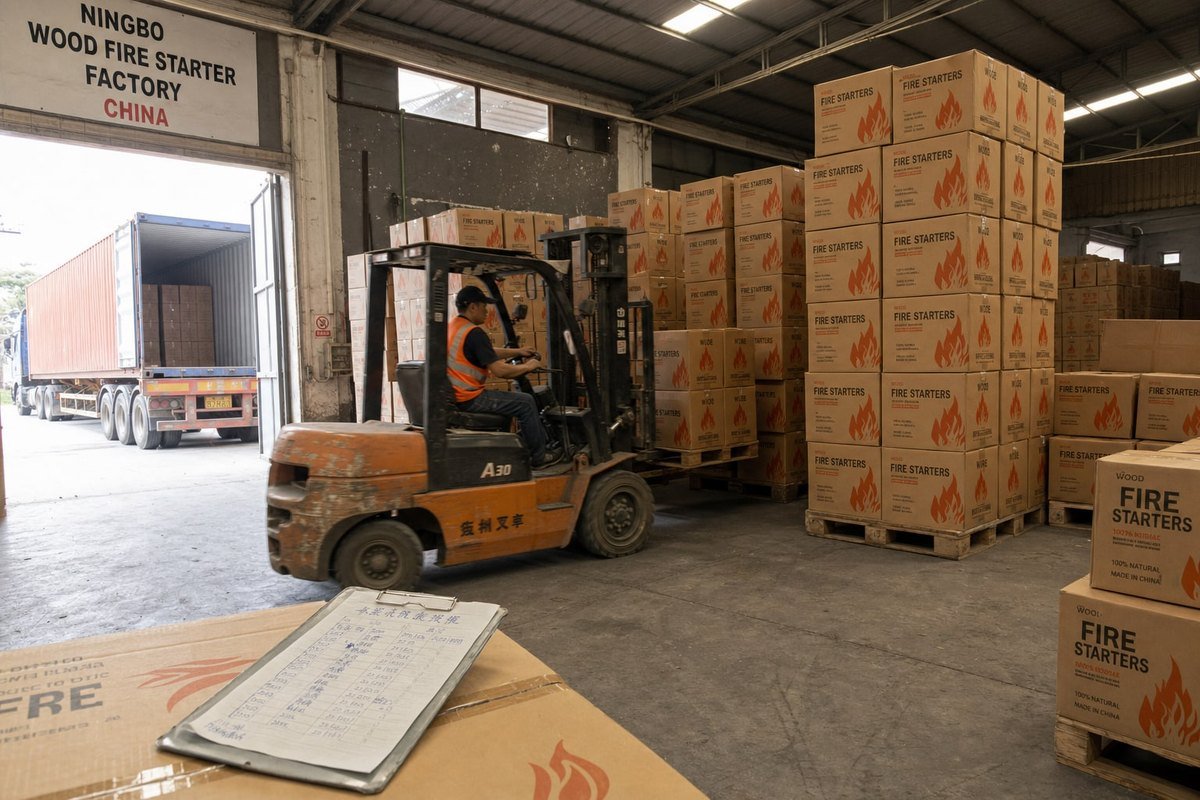
Private label manufacturing changes the negotiation, because you are no longer buying a commodity. You are buying your own product from someone else's factory. That raises three issues the contract must answer: who owns what, who may sell what, and how fast branded goods can be produced.
Ownership and Exclusivity
State plainly that your logos, artwork, box designs, and any custom molds or dies belong to you, even if the supplier paid part of the tooling cost. Prohibit the supplier from selling your branded or visually identical goods to anyone else. You usually do not need broad exclusivity on the product category itself; you need exclusivity on your brand identity. Broad exclusivity costs you leverage and usually costs extra. Brand-asset exclusivity is a reasonable ask that a serious OEM/ODM partner will accept without hesitation. Our one-stop customization work, covering size, burn time, retail boxes, display packaging, warning labels, and barcodes, always operates on that basis.
Packaging, Compliance, and Lead Time
Custom packaging introduces its own quality assurance protocols. Require written approval of printed proofs and a physical pre-production sample before mass printing. Confirm that warning labels and safety text meet the regulations of your destination market, because a compliant product in a non-compliant box is still a blocked shipment. Then negotiate lead time optimization for the season that matters. Fire starters sell in autumn and winter, so ask for a first-priority fulfillment clause covering your peak window, plus a defined production lead time for branded runs. Custom packaging often carries its own MOQ driven by printing minimums; agree on that number early so it never surprises your inventory plan. Lastly, ask for first-look rights on new formats, such as new roll sizes or eco-friendly coatings, so your brand gets innovations before your competitors do.
Conclusion
Weak supply terms quietly drain margin until one bad season exposes them. Negotiate certifications, tiered pricing, measurable quality guarantees, and private-label rights as one package, and your wood fire starter partnership compounds value instead of risk.
Footnotes
1. Official amfori page for the Business Social Compliance Initiative. ↩︎
2. Updated official SGS landing page for global testing services. ↩︎
3. Authoritative Wikipedia overview; avoids 403 errors common on the official ISO domain. ↩︎
4. European Commission's official guide to CE marking requirements. ↩︎
5. Official FSC page explaining certification labels, replacing the broken 404 URL. ↩︎
6. Wikipedia entry for the industry-standard Acceptable Quality Limit. ↩︎
7. Wikipedia entry explaining the concept of private-label production. ↩︎



Join the Conversation