






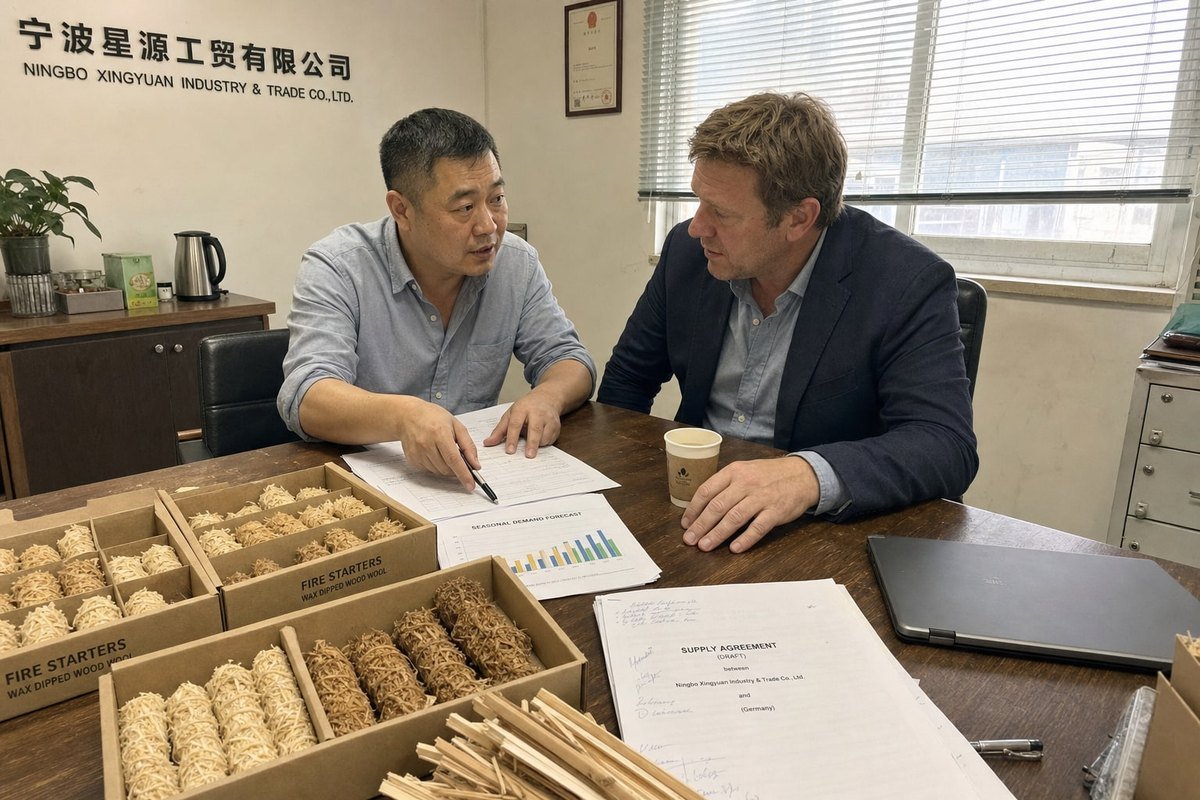
Choosing wood fire starter suppliers on price alone burned me early in my factory career. Buyers vanished after one bad winter shipment. Chasing spot deals creates stockouts, quality drift, and constant re-sourcing. The fix is a structured, long-term partnership — and I'll show you exactly how to build one.
Build a long-term partnership with wood fire starter suppliers by verifying certifications first, testing batch-to-batch quality consistency, starting with a flexible trial order, sharing seasonal demand forecasts, agreeing on clear KPIs and communication routines, and formalizing pricing and lead times in a supply agreement.
That is the short answer. The rest of this article breaks it into four practical steps. Each step reflects what actually happens between a factory and a buyer, order after order.
What Certifications Should I Verify Before Signing a Long-Term Supply Agreement?
A German distributor once asked us for our BSCI audit report 1 before he even asked for a price. In our experience exporting to 30+ countries, that order of questions is exactly right.
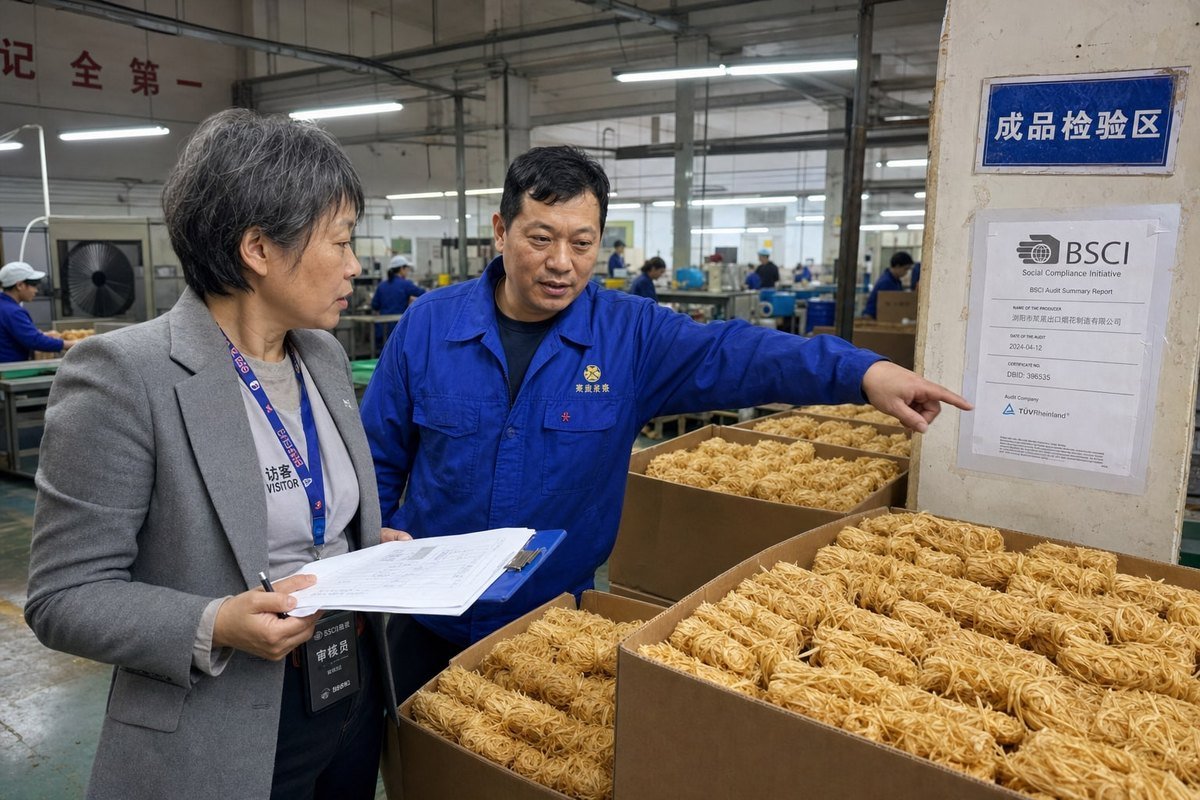
Before signing a long-term agreement, verify ISO 9001 for quality management, BSCI for social compliance, CE marking where applicable, third-party test reports from SGS or Intertek, and sustainability credentials such as FSC certification for wood sourcing. Ask for current documents, not expired scans.
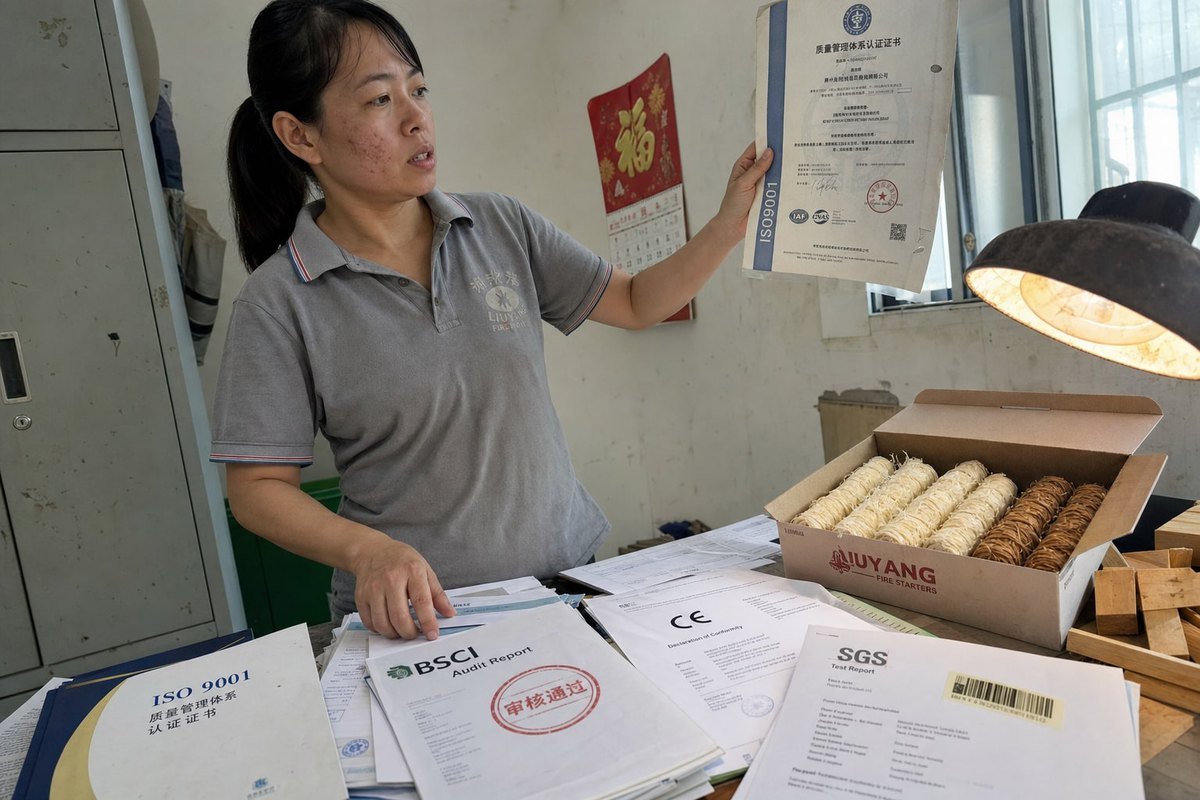
Certifications are not paperwork decoration. They are your legal and commercial protection. When you commit to bulk purchasing agreements, you are tying your brand to that factory's practices for years. If the supplier fails an import inspection or a retailer audit, you absorb the damage.
The Core Documents to Request
Here is the checklist I recommend to every purchasing manager who contacts our factory:
| Certification / Document | What It Proves | Why It Matters Long-Term |
|---|---|---|
| ISO 9001 | A working quality management system | Consistency across repeat orders, not just samples |
| BSCI audit report | Ethical labor and working conditions | Required by many EU and US retail sourcing channels |
| CE / relevant safety marks | Product meets applicable safety requirements | Smooth customs clearance in Europe |
| SGS or Intertek test reports | Independent verification of materials and performance | Protects you in disputes and recalls |
| FSC or PEFC chain of custody | Sustainable sourcing of wood fiber | Supports eco-friendly fire starters positioning at retail |
How to Verify, Not Just Collect
Do three things. First, check certificate numbers directly with the issuing body — audits expire, and some suppliers keep circulating old documents. Second, confirm the certificate name matches the actual factory, not a trading company 2 borrowing paperwork. We are headquartered in Liuyang with production in Ningbo, and we encourage buyers to match documents to our real production site. Third, request a recent test report on the exact product you plan to buy, including wax coating and packaging materials, not a similar item tested years ago.
If a supplier hesitates on any of these, that hesitation is your answer. Compliance is a hard requirement for serious wholesale distribution, not a nice-to-have.
How Can I Tell if a Wood Fire Starter Factory Can Maintain Consistent Quality Order After Order?
The trade-off we weigh daily on our production line is speed versus moisture control. Rushing wood wool drying 3 saves days but ruins ignition performance. How a factory handles that trade-off tells you everything.
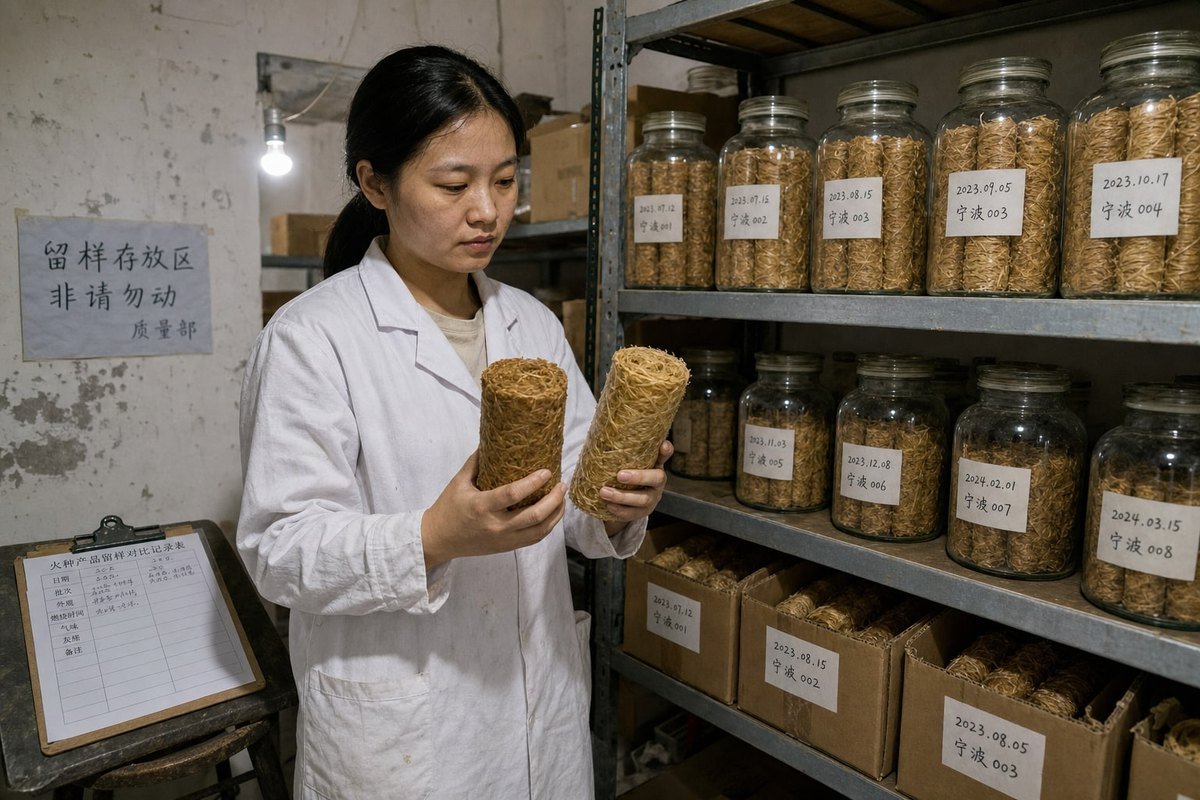
Judge consistency by asking for the factory's batch-to-batch quality control standards, moisture content limits below 20%, burn time tolerances, wax coating specifications, and retained samples from past orders. Then compare your trial shipment against the original sample under identical test conditions.
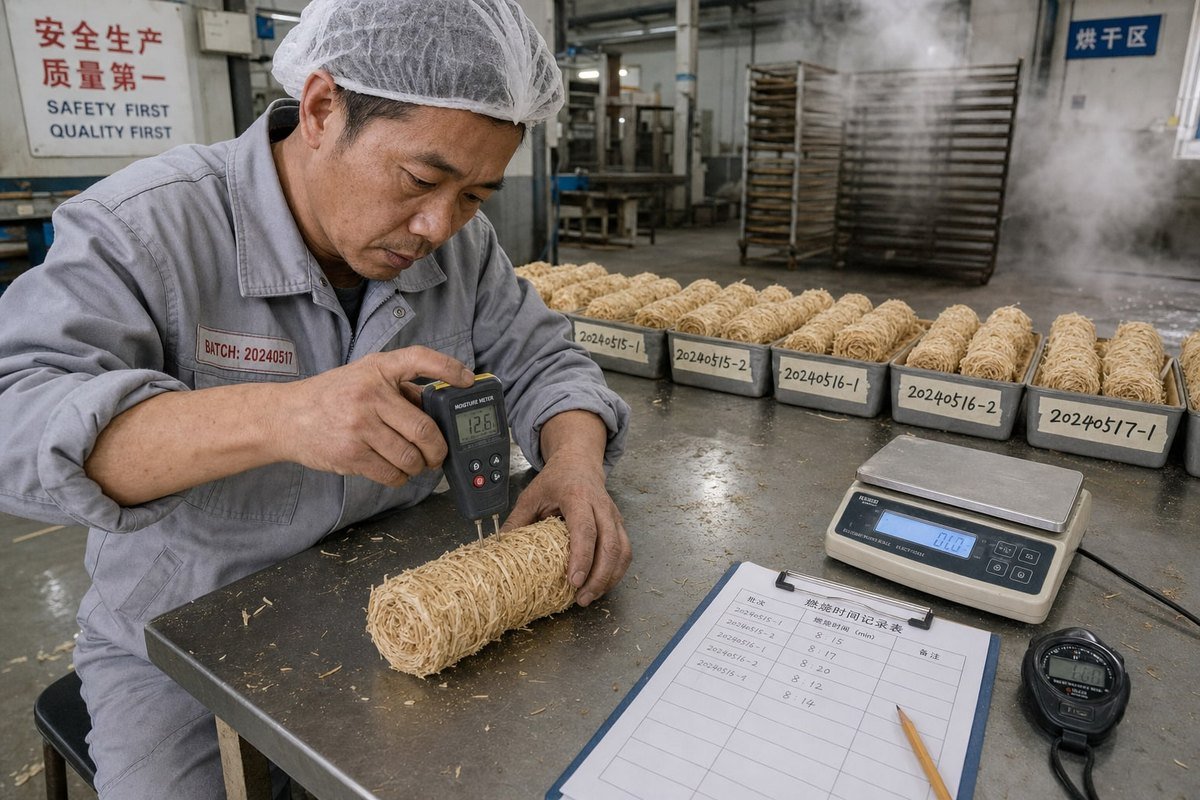
Consistency is the single hardest thing to fake. Any factory can make one good sample. Very few can repeat it across twelve months of production, seasonal humidity swings 4, and raw material variation. After 17+ years running fire-starter production, I can tell you where consistency actually comes from: documented process control 5, not good intentions.
The Variables That Drift Between Batches
Wood wool firelighters look simple, but four variables move constantly:
- Moisture content. Wood fiber absorbs humidity. Above roughly 20%, ignition slows and burn time shortens. Ask how the factory measures and logs moisture per batch.
- Wax dip weight. Too little wax and the roll burns out fast. Too much and it lights poorly. A stable factory controls dip temperature and coating weight within a defined tolerance.
- Roll density and size. Loose rolls burn fast; overly tight rolls smolder. Consistent winding equipment matters here.
- Packaging protection. Boxes that let humidity in undo everything upstream. Check the barrier quality of inner packaging.
Practical Tests You Can Run
Ask the supplier to send retained samples from two or three different production months. Burn them side by side with your latest sample. Time the ignition, flame duration, and residue. If results cluster tightly, the factory has real process control. If they scatter, you are looking at future complaint tickets.
Also ask a direct question: what happens when a batch fails internal inspection? A serious factory can describe rework, quarantine, and corrective action steps immediately. Vague answers signal that failed batches quietly ship anyway. On our lines, the standard we hold ourselves to is simple — the first sample must reliably reflect mass-production quality, because that is the only promise a long-term buyer can build a brand on.
What MOQ and Trial Order Options Make It Easier to Start a Long-Term Relationship?
A Canadian camping brand once told me they had walked away from three factories because every quote started at a full container. We closed that deal with a mixed-SKU trial pallet instead.
Look for suppliers offering a low-MOQ trial order — often one pallet or a mixed-SKU shipment — with clear pricing tiers, sample-to-production guarantees, and private label manufacturing available from the second order. Structured trial terms signal the supplier wants a partnership, not a one-off sale.
A trial order is not really about the goods. It is a live test of the whole relationship: quality, documentation, packing, communication, and lead time management. So structure it deliberately rather than treating it as a small purchase.
How to Structure a Smart Trial Order
A good trial order does four jobs at once. It validates product quality in your market's climate. It tests the supplier's export paperwork and labeling accuracy. It reveals real communication speed under deadline pressure. And it gives you a benchmark shipment to compare all future orders against.
Here is how I suggest buyers ladder from trial to partnership:
| Stage | Typical Volume | What You Should Negotiate | What You Are Testing |
|---|---|---|---|
| Samples | A few boxes | Free or at-cost samples, freight paid by buyer | Product performance, responsiveness |
| Trial order | One pallet to partial container | Low MOQ, mixed SKUs, standard packaging | Consistency vs. sample, documentation, packing |
| First repeat order | Partial to full container | Private-label packaging, barcodes, warning labels | Customization capability, lead time accuracy |
| Ongoing program | Scheduled containers | Volume discounts, priority production slots | Forecast-based planning, supply chain reliability |
Why Flexible MOQs Reveal Supplier Intent
Factories that refuse any order below a full container are optimizing for transactions, not relationships. In our own OEM/ODM work, we accept smaller trial quantities precisely because the buyers who test carefully become the buyers who order steadily. That steady demand lets us plan raw wood fiber, wax, and labor months ahead — which loops back into better pricing and inventory management 6 for the buyer. Flexibility at the start is an investment both sides recover many times over.
One caution: extremely low MOQs with rock-bottom prices sometimes mean the "factory" is a trading company reselling stock of unknown origin. Pair MOQ flexibility with the certification checks from the first section.
How Do I Ensure Reliable Communication and Lead Times When Working With an Overseas Supplier?
The hardest lesson from my early export years: a delayed answer hurts buyers more than a delayed shipment. Silence during production is what actually destroys trust across time zones.
Ensure reliability by agreeing on a named contact, a fixed communication cadence, milestone updates at production start, mid-production, and pre-shipment, documented lead times per order size, and shared seasonal forecasts. Put response-time and on-time-delivery expectations in writing inside the supply agreement.
Communication and lead times are two sides of the same system. A supplier who communicates in a structured way almost always delivers in a structured way, because both depend on internal planning discipline.
Build a Communication Cadence, Not Just a Contact
Agree on rhythm before the first production run. What works for most of our long-term accounts:
- During active production: brief weekly updates with photos at key milestones.
- Monthly: a short call covering open orders, upcoming needs, and any quality feedback.
- Quarterly: a business review — performance against KPIs, forecast for the next season, packaging or product improvements.
Make it two-way. Your supplier should feel safe flagging a raw material delay or cost pressure early. A partner who warns you in week two beats one who apologizes in week ten.
Manage Lead Times Around Seasonality
Fire starters are brutally seasonal. Demand spikes before winter and around outdoor season, and every buyer wants containers in the same eight-week window. Sharing forecasts changes your position entirely. When a buyer gives us a rough annual plan in spring, we reserve wood wool, wax, and packaging materials, and that buyer effectively gains preferred-customer status when winter capacity tightens. Off-season ordering also typically earns better pricing and calmer logistics.
Track the relationship with a simple scorecard:
| KPI | Target | Review Frequency |
|---|---|---|
| On-time delivery rate | 95%+ | Every shipment |
| Defect / complaint rate | Under an agreed threshold per order | Monthly |
| Quote and inquiry response time | Within 24 hours on business days | Quarterly review |
| Documentation accuracy | Zero customs holds caused by paperwork | Every shipment |
| Forecast fulfillment | Confirmed capacity vs. forecast shared | Quarterly |
Review the scorecard together, and treat misses as joint problems to solve, not ammunition. Finally, pay on time. Nothing signals partnership more clearly to a factory financing raw materials and labor than predictable payment — and no buyer gets prioritized faster than a predictable one.
Conclusion
Spot buying keeps you exposed to stockouts, quality drift, and winter shortages. Verify certifications, test consistency, start with a smart trial, then formalize forecasts and KPIs — and your wood fire starter suppliers become genuine growth partners.
Footnotes
1. Official amfori page explaining the BSCI social auditing methodology and benefits. ↩︎
2. Defines the role of trading companies in global trade and their relationship with manufacturers. ↩︎
3. Explains the technical process and importance of drying wood for industrial applications. ↩︎
4. Provides scientific information on humidity and its effects on organic materials like wood. ↩︎
5. Reliable definition of process control mechanisms used to maintain manufacturing quality. ↩︎
6. Comprehensive Wikipedia overview of inventory management systems and business practices. ↩︎
7. Authoritative Wikipedia entry explaining demand forecasting principles for supply chain management. ↩︎


 English
  Spanish
  German
  French
  Arabic
  Portuguese
Join the Conversation