






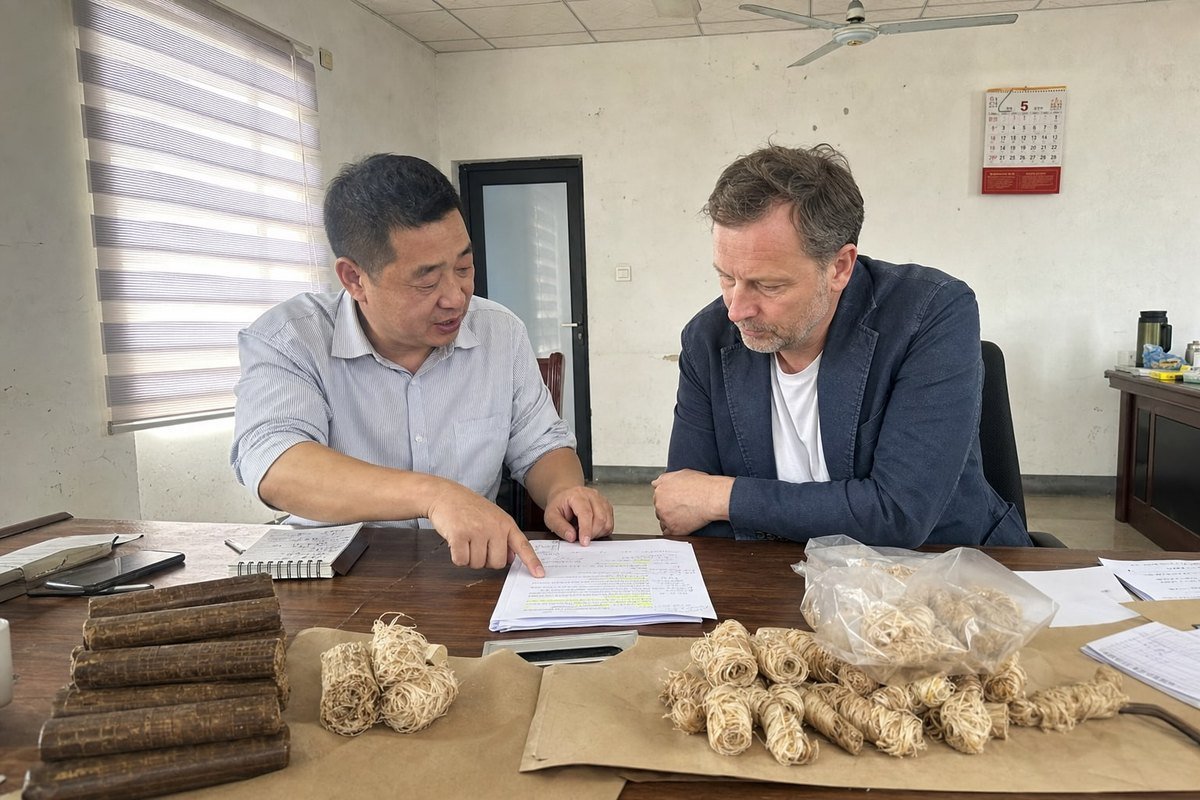
Negotiating exclusive supply terms with a wood fire starter manufacturer sounds simple until our sales team receives the actual request. Get it wrong, and you lock in bad pricing. Get it vague, and the exclusivity means nothing. I have watched buyers lose entire seasons over poorly drafted agreements. The fix is treating exclusivity as a fair trade, not a demand.
To negotiate exclusive supply terms with a wood fire starter manufacturer, offer credible minimum purchase commitments, define the scope narrowly by SKU, territory, and channel, tie exclusivity to performance targets, secure pricing and quality clauses, and set clear renewal and termination rights in a written contract manufacturing agreement.
That is the short version. The details decide whether the deal protects you or traps you. Let me walk through each part, from the buyer's side and from the factory floor.
What Terms Should I Prioritize When Negotiating Exclusivity with a Manufacturer?
A German distributor once sent our team a one-line exclusivity request: "We want Europe." We could not say yes to that. A serious request needs structure, and structure starts with the right terms.
Prioritize five terms when negotiating exclusivity: a precise product and SKU schedule, a defined territorial exclusivity clause, minimum purchase commitments, transparent pricing mechanics with capped increases, and performance-based renewal or termination triggers. These five terms decide whether exclusivity protects your business or exposes it.
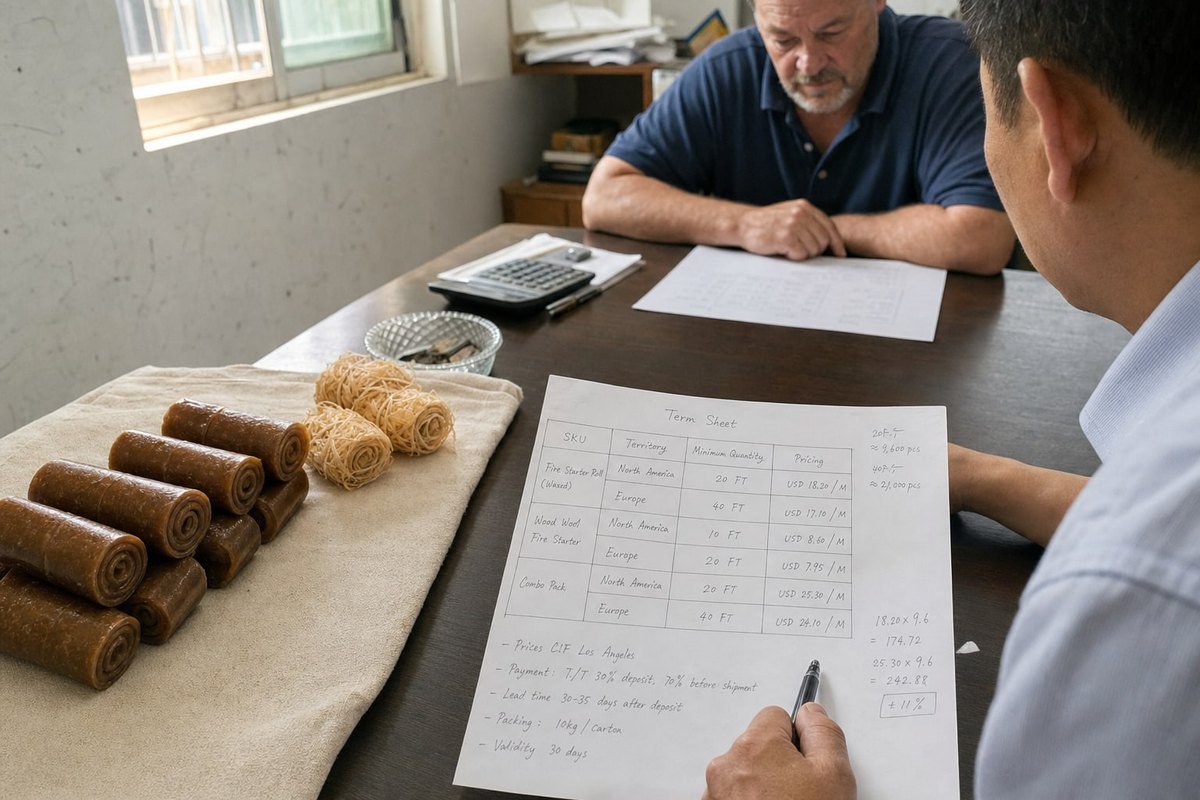
Exclusivity is a commercial bargain, not a legal formality. The factory gives up potential customers. You give up flexibility. Every clause should reflect that exchange fairly. In my experience reviewing dozens of these deals over 17 years of exporting fire-starting products, the buyers who succeed are the ones who arrive with a tightly scoped proposal instead of a broad demand.
Start with the Product Definition
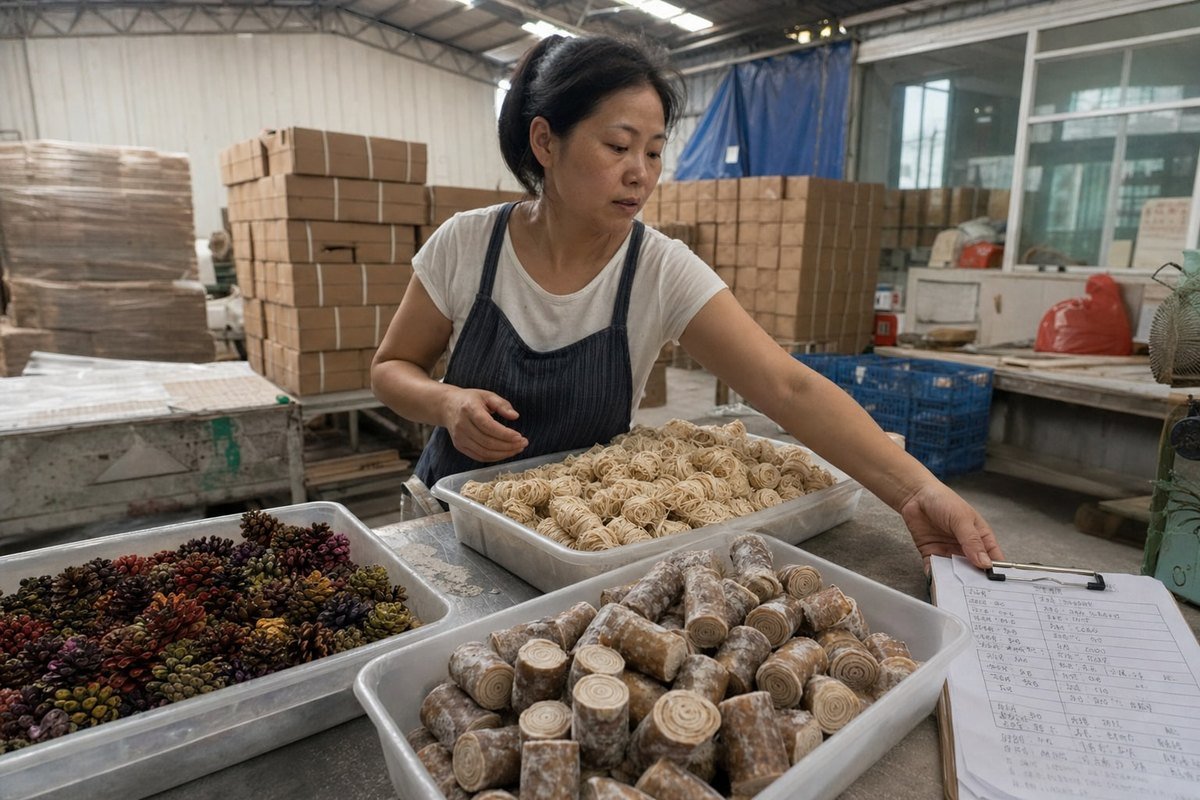
Never write "wood fire starters" as the product scope. That phrase covers wax-dipped wood rolls, wood wool bundles, paraffin pucks, and dozens of variants. List each SKU, its specification, unit of measure, burn time, and packaging format. If the deal covers our wax-dipped wood rolls but not color-flame pinecones, say so in writing. Vague scope creates disputes later, and disputes kill long-term supply relationships.
Rank the Terms by Negotiating Weight
Here is how I would rank the priority terms based on what actually causes conflict in real contracts:
| Priority | Term | Why It Matters | Common Mistake |
|---|---|---|---|
| 1 | SKU and product schedule | Defines exactly what is exclusive | Using vague category names |
| 2 | Territory and channel scope | Prevents the factory selling to your rivals | Claiming regions you cannot serve |
| 3 | Minimum purchase commitments | Justifies the factory's lost opportunity | Overpromising volume |
| 4 | Pricing formula and payment terms | Avoids lock-in above market rates | Accepting open-ended increases |
| 5 | Renewal and exit triggers | Keeps both sides accountable | No consequence for missed targets |
Beyond these five, add quality assurance standards, delivery lead times with Incoterms 1, a confidentiality clause, and a liability cap. But if the top five are weak, nothing else will save the agreement. Also insist on a non-disclosure agreement 2 (NDA) early, before you share forecasts, customer lists, or channel data. Your commercial plan is leverage; protect it.
How Can I Confirm a Wood Fire Starter Factory Can Support Exclusive Supply Long-Term?
Winter demand is the real stress test. Every December, our production lines in Ningbo run at full capacity, and buyers quickly learn which suppliers planned ahead and which did not.
Confirm long-term capability by auditing the factory's certifications, production capacity, raw material sourcing, and batch-to-batch quality control. Verify ISO 9001, BSCI, and third-party test reports, visit or video-tour the facility, review peak-season output records, and check raw material buffer arrangements before signing any exclusive supply agreement.
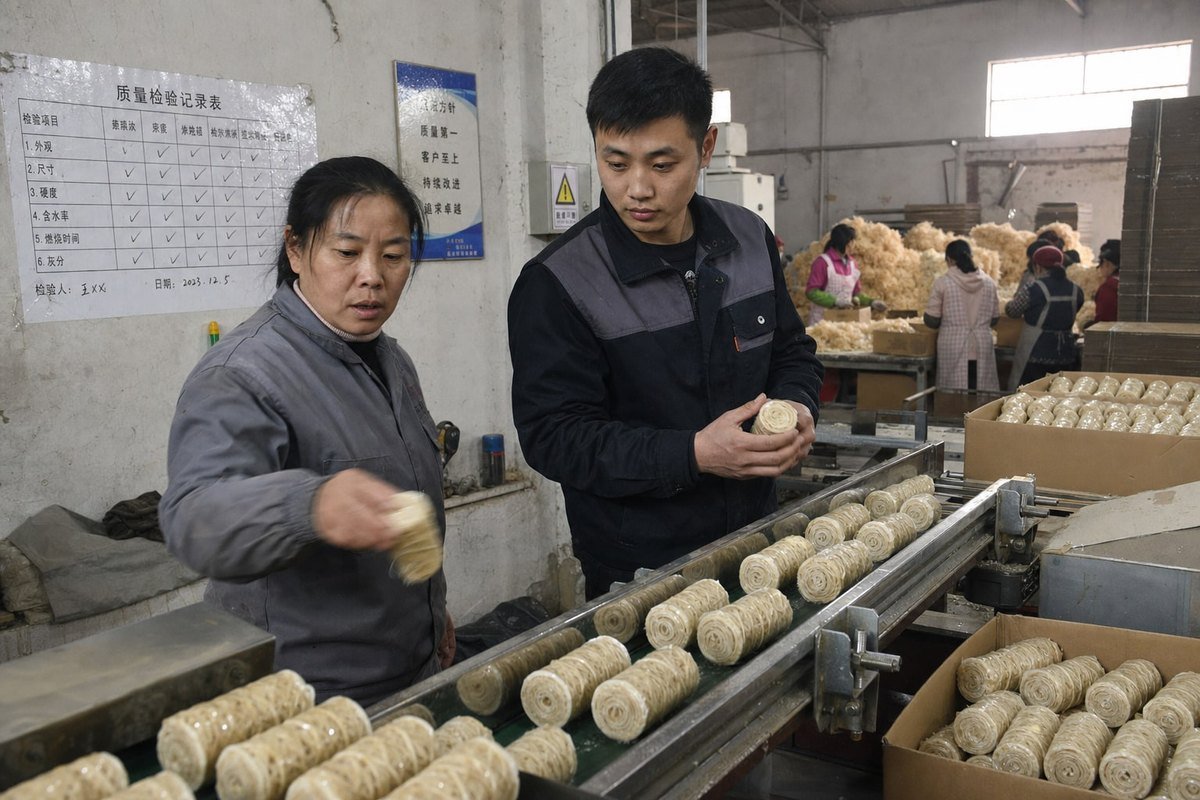
An exclusive deal makes you dependent on one supplier. That is the whole point, and also the whole risk. Supply chain risk management must come before signature, not after the first missed shipment. I tell buyers to verify three layers: compliance, capacity, and consistency.
Layer One: Compliance and Certification
For fire products entering the US or EU, compliance is a hard requirement, not a nice-to-have. Ask for ISO 9001 3 and BSCI audit reports, CE documentation where relevant, and SGS or Intertek test reports for the exact SKUs you plan to buy. If the factory uses eco-friendly fire starter materials, ask for evidence, not marketing claims. If your branding depends on sustainable wood sourcing, ask whether FSC certification 4 or certified waste-stream wood is available for your product line. A factory that hesitates to share documents will hesitate on bigger commitments too.
Layer Two: Capacity and Raw Materials
Fire starters are seasonal. Wood, wax, and paraffin prices move, and demand spikes from September through January. Ask these questions directly:
- What is your monthly output at peak season, and how much is already committed?
- Do you maintain a dedicated raw material reserve, ideally 60 to 90 days of wood and wax?
- What are your standard and peak-season lead times?
- Can you offer priority allocation or safety stock under an exclusive arrangement?
Lead time optimization matters here. A factory that quotes the same lead time in July and November either has real buffer capacity or is not being honest.
Layer Three: Consistency
The first sample must reflect mass production. At our facility, we run strict batch-to-batch quality control 5 precisely because one bad container can end a retail listing. Request records of defect rates, ask about inspection points on the line, and secure third-party inspection rights in the contract. Consistency over three years matters far more than a perfect first sample.
What MOQ and Volume Commitments Are Reasonable When Requesting Exclusivity?
There is a trade-off I weigh on every exclusivity request that lands on my desk: the volume the buyer promises versus the customers we must turn away. That math decides everything.
A reasonable exclusivity commitment typically starts at three to five times the standard Minimum Order Quantity (MOQ), structured as quarterly or annual minimums. Begin with a 6–12 month pilot term, then scale commitments as sales prove out, with shortfall remedies like conversion to non-exclusive status.
Minimum purchase commitments are the central trade for exclusivity. The factory gives up revenue from other buyers in your territory, so your committed volume must offset that lost opportunity. But do not overpromise. A commitment you miss in year one destroys trust and usually triggers the shortfall clause.
How Volume Should Scale with Scope
The broader the exclusivity, the bigger the commitment must be. This table shows the logic we apply when buyers approach us with different scopes:
| Exclusivity Scope | Typical Commitment Level | Suggested Structure |
|---|---|---|
| One SKU, one sales channel | 2–3x standard MOQ annually | Quarterly minimums, pilot term |
| One country, full product line | 4–6x standard MOQ annually | Annual minimum with quarterly reviews |
| Multi-country region | Significant six-figure unit volumes | Tiered targets, take-or-pay elements |
| Source-specific or custom formulation | Volume plus tooling or development contribution | Multi-year term with capital recovery |
Structure the Commitment Fairly
Three mechanisms keep volume commitments workable for both sides. First, use a pilot term. Propose 6 to 12 months of trial exclusivity with automatic renewal if targets are hit. This lowers the factory's risk and gives you time to prove demand. Second, use tiered bulk wholesale pricing, where the unit price drops as annual volume climbs. This rewards your growth and gives the factory a reason to prioritize your orders. Third, define the shortfall remedy in advance. The fairest remedy is usually conversion to non-exclusive status rather than a punitive fee, because it preserves the supply relationship even if exclusivity ends.
One more practical point from our export experience across 30-plus countries: bring a forecast, not a promise. Show your channel access, expected monthly sell-through, warehousing plan, and launch timeline. A credible plan earns more flexibility on MOQ and terms than any negotiating tactic.
How Do I Protect My Brand and Territory Rights in an Exclusive Supply Agreement?
A UK buyer once asked me a blunt question during a private-label project 6: "If we design the packaging, who owns it?" It was the right question, and the answer belongs in the contract, not in an email.
Protect brand and territory rights with a written territorial exclusivity clause listing countries and channels, explicit IP ownership terms for custom packaging and formulations, an NDA covering pricing and customer data, tooling ownership clauses, and performance-based exit triggers that let you leave if the manufacturer fails.
Brand protection has two fronts: what the factory could do with your intellectual property, and what could happen inside your territory. Both need contract language, not goodwill.
Lock Down Intellectual Property
Private label manufacturing creates shared assets: your logo, custom box designs, warning labels, barcodes, display packaging, and sometimes custom product specifications like burn time or size. The agreement should state that all buyer-supplied and buyer-funded designs remain your property, and that the factory may not reuse them for any other client. If you fund custom tooling or molds, the contract should confirm you own them and can move production if quality or lead times fail. At our factory, we handle full OEM/ODM customization for buyers across the US and Europe, and we always recommend putting ownership in writing because it protects both sides from misunderstanding.
Define the Territory Precisely
Distribution rights must name specific countries or regions and specific channels: retail, ecommerce, hospitality, or wholesale. Then address the gray areas that cause most disputes:
- Online marketplaces. Amazon and similar platforms cross borders. Decide whether the factory's other clients may list identical products visible in your territory.
- Existing accounts. The factory may have legacy customers in your region. Carve them out explicitly or negotiate a transition.
- Grey imports. You cannot fully stop third-party resellers, but you can require the factory not to knowingly supply distributors targeting your territory.
- Competition-law limits. Very broad exclusivity that forecloses competitors can raise antitrust concerns 7, especially in the EU. Keep scope proportionate to your real commercial footprint.
Build in Exit and Innovation Rights
Protect yourself against supplier failure with performance triggers: defect-rate benchmarks, on-time delivery thresholds, and third-party inspection rights, with the right to void exclusivity if the factory misses them. On the upside, ask for first-look rights on new eco-friendly ignition products or recycled material blends the factory develops. Finally, schedule quarterly business reviews. They catch forecast, pricing, and logistics problems before they become contract disputes.
| Protection Mechanism | What It Covers | Contract Trigger |
|---|---|---|
| Territorial exclusivity clause 8 | Countries, regions, channels | Breach if factory supplies competitors in territory |
| IP and tooling ownership | Packaging, labels, molds, formulations | Reuse ban; right to relocate production |
| NDA | Pricing, forecasts, customer lists | Survives contract termination |
| Performance exit triggers | Defect rates, lead times | Right to void exclusivity or terminate |
| First-look innovation rights | New materials and product formats | Right of first refusal window |
Conclusion
Weak exclusivity deals waste seasons and capital. Strong ones trade credible volume for narrow, enforceable scope. Define the SKUs, verify the factory, commit realistically, protect your brand — then sign.
Footnotes
1. Standardized international trade terms defining buyer and seller responsibilities for shipping. ↩︎
2. Legal contract used to protect sensitive commercial information during business discussions. ↩︎
3. Replaced 403 error with authoritative Wikipedia overview of the quality management standard. ↩︎
4. Global certification system ensuring wood products come from responsibly managed forests.


 English
  Spanish
  German
  French
  Arabic
  Portuguese
Join the Conversation