






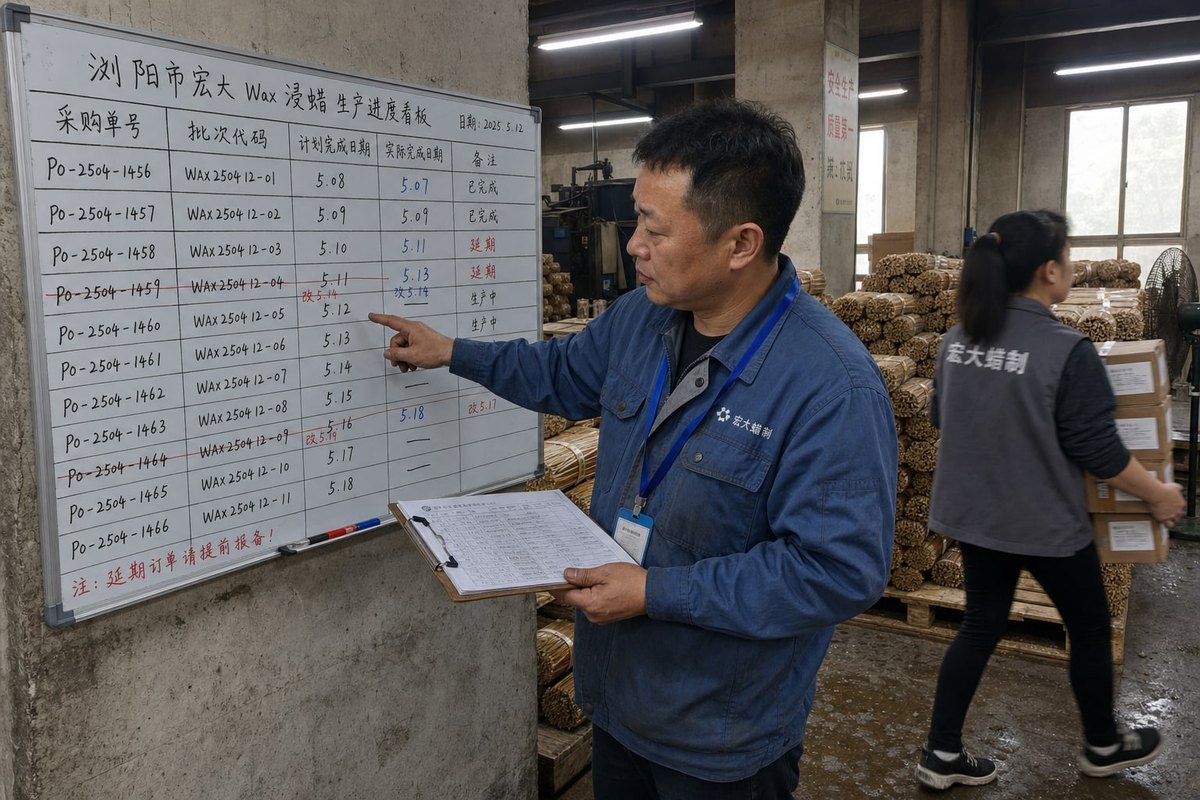
Late shipments kill trust fast. On our fire starter production lines, we learned that tracking wood fire starter production properly is the only reliable way to protect delivery dates.
To track wood fire starter production for on-time delivery, link every purchase order to a production batch, monitor milestones from raw material intake through wax dipping, packing, and dispatch, review real-time status reports weekly, and verify quality control checkpoints at each stage so delays surface early enough to fix.
That sounds simple, but the details matter. Below, I break down the milestones, tools, quality checkpoints, and recovery steps that keep orders on schedule.
What Production Milestones Should I Monitor to Avoid Delivery Delays?
A buyer in Germany once asked us for weekly photos of his order supply chain visibility 1. That request pushed our factory to formalize milestone tracking, and it changed how we plan every batch.
Monitor six core milestones: raw material arrival, wood wool rolling or forming, drying to target moisture, wax dipping and curing, packing and labeling, and dispatch to port. Each milestone needs a planned date and an actual date so schedule drift is visible immediately.
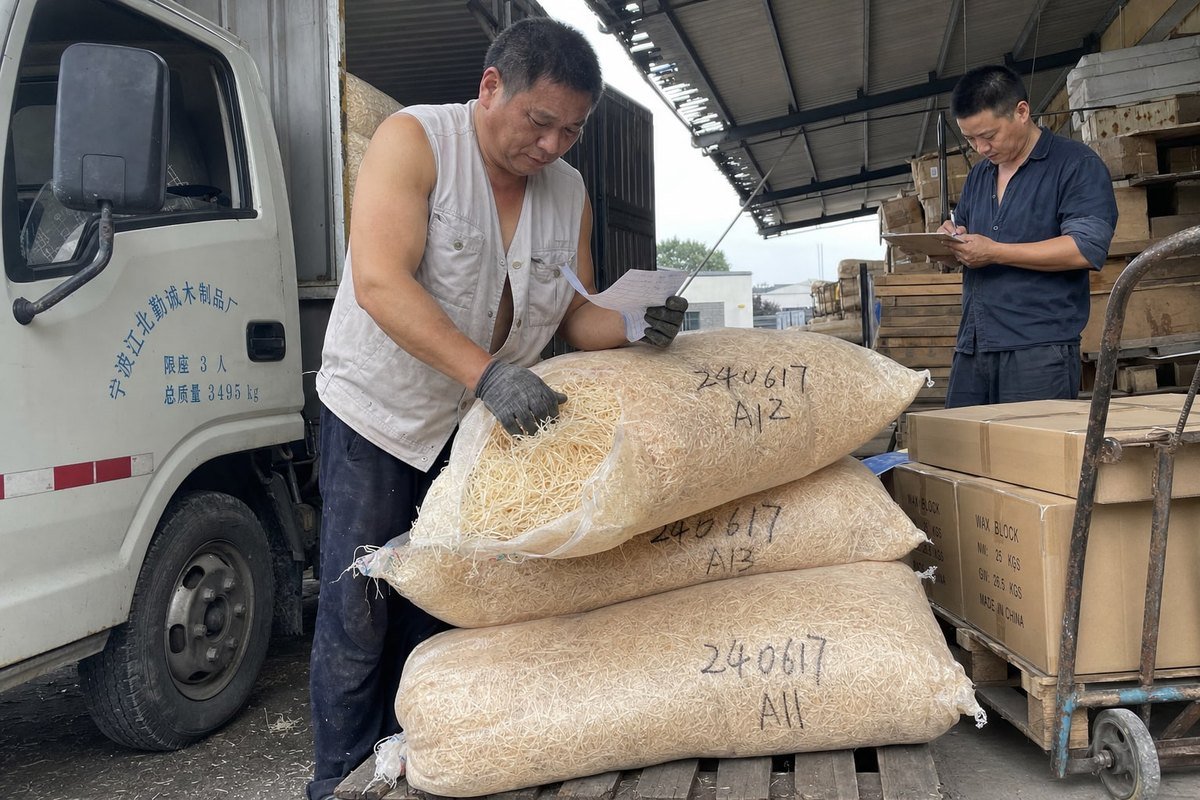
Most delivery failures do not happen at the end. They happen quietly in the middle, when nobody compares planned progress against actual progress. In our experience exporting fire-starting goods to 30+ countries, the orders that arrive late almost always slipped at an early milestone that nobody flagged.
The Six Milestones That Matter Most
Raw material procurement is the first and most fragile stage. Wood wool, wax, and packaging materials each have their own supplier lead times. If any one arrives late, everything downstream shifts. We ask buyers to confirm packaging artwork early for exactly this reason, because custom private-label boxes often have longer lead times than the fire starters themselves.
The middle stages are about manufacturing cycle time. Forming the wood rolls is fast. Drying is not. Moisture content 2 controls how well the wax adheres and how reliably the product lights, so the drying or kiln drying process cannot be rushed without hurting quality.
| Milestone | What to Record | Typical Risk |
|---|---|---|
| Raw material arrival | Supplier, quantity, inspection result | Late or off-spec wood wool or wax |
| Rolling/forming | Batch number, units formed per day | Machine downtime, labor shortage |
| Drying | Moisture readings, batch release date | Humid weather extending cycle time |
| Wax dipping and curing | Wax temperature, coating weight | Inconsistent coating, curing space limits |
| Packing and labeling | Boxes packed, label/barcode check | Packaging material shortage |
| Dispatch | Booking date, container loading date | Missed vessel cutoff |
Why Planned vs. Actual Dates Are Non-Negotiable
A milestone without a date is just a wish. For every order, we log a planned date and an actual completion date for each stage. When the gap exceeds two days, the order gets flagged. This simple discipline gives us lead time optimization data over dozens of batches, so our promised ship dates keep getting more accurate.
Which Reporting Tools Can Give Me Real-Time Visibility Into My Order Status?
There is a real trade-off we weigh with every new client: how much reporting detail is useful versus how much becomes noise. Seventeen years of exporting taught us that clarity beats volume.
Use a shared order-status dashboard, weekly production reports with photos, batch tracking records, and automated milestone alerts. A color-coded status view showing on-track, at-risk, and late orders gives buyers real-time supply chain visibility without drowning them in raw data.

You do not need enterp 3rise software to get visibility. You need structured data that updates on a fixed rhythm. Small producers can start with a well-built spreadsheet. Larger operations benefit from ERP-style production tracking tools. The right choice depends on order volume, not ambition.
Comparing Your Tool Options
| Tool | Best For | Strength | Limitation |
|---|---|---|---|
| Shared spreadsheet or order log | Trial orders, small volume | Free, fast to set up | Manual updates, human error |
| Production tracking software | Growing order books | Live status, automated alerts | Setup effort and cost |
| ERP with inventory module | Multi-SKU, multi-market buyers | Inventory management system tied to orders | Overkill for small teams |
| Supplier weekly report + photos | Any buyer working with a factory | Verifiable, low friction | Depends on supplier discipline |
What a Good Status Report Must Contain
Whatever tool you use, every order line should show the same fields: order number, SKU, quantity, current production stage, planned ship date, estimated completion date, and a status color. Green means on track. Yellow means at risk. Red means action needed now.
We send our B2B buyers a weekly update in exactly this format, often with photos of the actual batch in the drying area or packing line. Purchasing managers tell us this matters more than any sales promise. It also supports the order fulfillment process on their side, because their own customers ask them the same question: where is my order?
One practical tip: insist on estimated completion dates, not just current status. "In production" tells you nothing. "In wax dipping, packing starts Thursday, container loads Monday" tells you everything.
How Do I Verify Quality Control Checkpoints Throughout the Manufacturing Process?
Early in our factory's history, one batch of wax-dipped rolls cured unevenly because the workshop was colder than usual. We caught it at the pre-packing check. That day reshaped our quality control standards.
Verify quality at four checkpoints: incoming material inspection, in-process moisture and coating checks, pre-packing burn tests on random samples, and final inspection with documented reports. Ask your supplier for batch records, photos, and third-party test reports tied to each shipment.
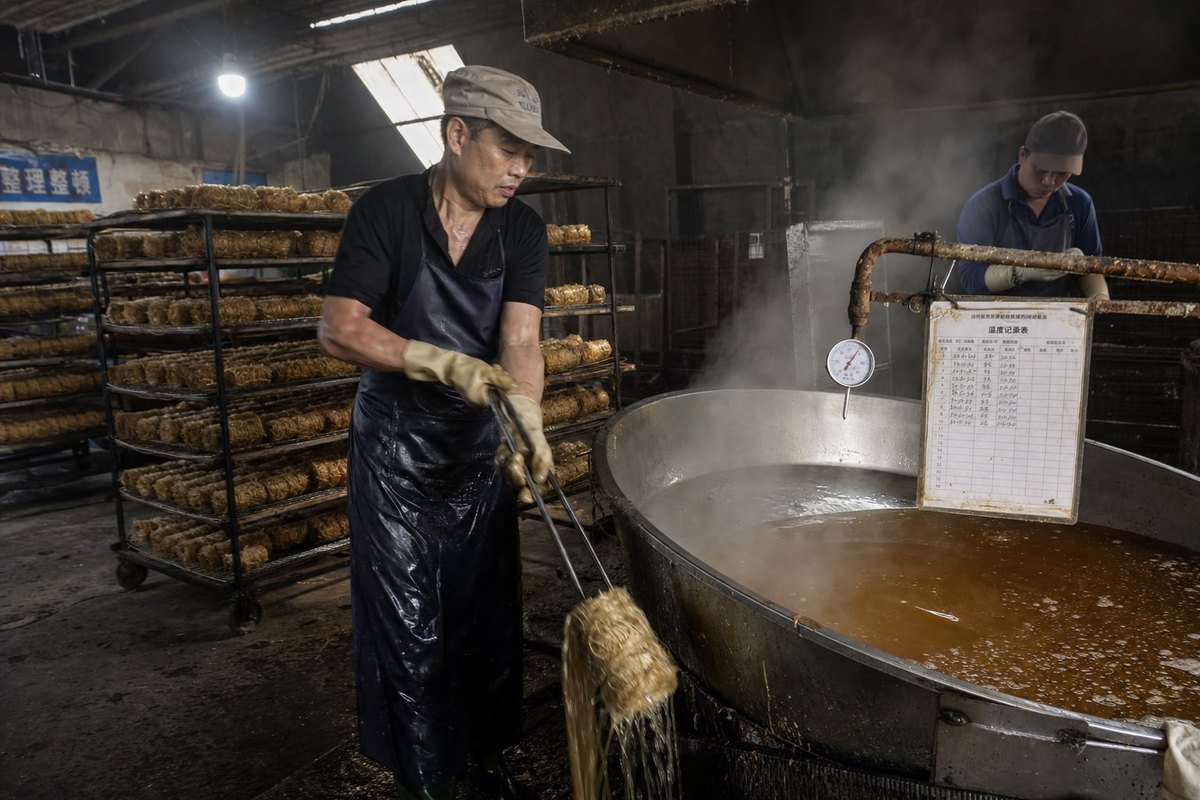
Quality and delivery are the same problem wearing different clothes. A failed batch that must be reworked is the most expensive delay there is. So quality checkpoints are not separate from production tracking. They are milestones inside it.
The Four-Checkpoint Framework
First, incoming inspection. Wood wool must be clean, dry, and consistent in fiber length. Wax must meet the specified melt point. If off-spec material enters the line, everything downstream is compromised. This is where batch tracking begins: every input lot gets a number that follows it to the finished carton.
Second, in-process checks. We verify moisture content before wax dipping and coating weight after. A roll with too much moisture lights poorly. A roll with too little wax burns too fast. Both are invisible on a photo, which is why documented measurements matter more than pictures at this stage.
Third, burn testing. Random samples from each batch are lit and timed. Burn time, flame height, and ease of ignition are logged against the buyer's specification. For our OEM clients, this is how we guarantee the first sample reflects mass-production quality, batch after batch.
Fourth, final inspection before loading. Carton count, labeling, barcodes, and warning labels are checked against the order. Certifications matter here too. Our buyers in the US and EU treat ISO 9001 4, BSCI, and SGS or Intertek test reports as hard requirements, so we tie report references to specific production batches. That way, a retailer audit can trace any carton back to its inputs.
How Buyers Can Verify Remotely
You do not need to visit the factory monthly. Request the batch QC record with each weekly report. Ask for short burn-test videos. For first orders, commission a third-party pre-shipment inspection 5. A supplier with real quality systems will welcome all three requests.
What Should I Do If My Supplier's Production Schedule Falls Behind?
A UK distributor once called us in a panic because a different supplier had gone silent three weeks before Christmas season. Helping him recover taught me what a real delay playbook looks like.
Act immediately: confirm the true delay in days, identify the root cause, agree on a revised production scheduling plan in writing, request partial or split shipments for urgent SKUs, increase reporting frequency to daily, and adjust safety stock and future order timing to prevent repeats.
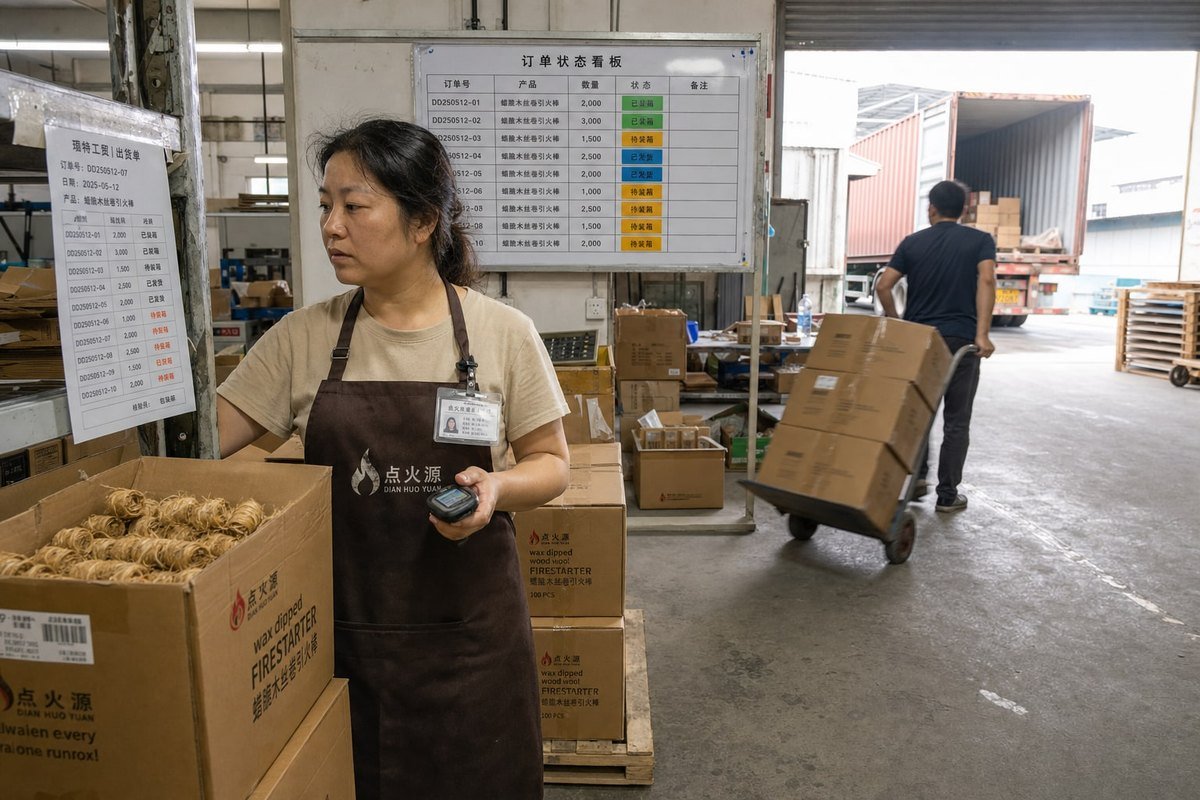
Silence is the worst response to a delay. The second worst is vague reassurance. When a schedule slips, you need facts, options, and a written recovery plan, in that order.
A Step-by-Step Recovery Sequence
- Quantify the slip. Ask for the new estimated completion date and the number of days late, not "soon."
- Find the root cause. Is it raw material procurement, a capacity overload, a quality rework, or logistics? The fix differs for each.
- Negotiate a recovery plan. Options include added shifts, prioritizing your SKUs, or simplifying packaging on one run.
- Split the shipment. Ship the finished portion by the original date; follow with the balance. Air freight 6 a small urgent quantity if the math works.
- Tighten reporting. Move from weekly to daily updates until the order ships.
- Prevent the repeat. Adjust your reorder point, build seasonal safety stock 7, and place peak-season orders earlier.
Matching the Fix to the Cause
| Root Cause | Best Recovery Action | Prevention for Next Time |
|---|---|---|
| Late raw materials | Substitute approved alternate lot, split shipment | Earlier PO placement, supplier holds buffer stock |
| Capacity overload | Added shifts, re-sequenced production scheduling | Book capacity before peak season |
| Quality rework | Rework fastest defects first, ship good portion | Tighter in-process checks upstream |
| Logistics delay | Rebook vessel, partial air freight | Earlier booking cutoffs, backup forwarder |
From our side of the table, the suppliers worth keeping are the ones who tell you about a two-day slip before you ask. When we run behind on a custom packaging component, we notify the buyer the same day with options. That transparency is uncomfortable in the moment, but it is why our distributor relationships last for years rather than one season.
Conclusion
Late fire starter orders cost shelf space and trust. Track milestones, demand real-time reports, verify quality checkpoints, and act fast on delays. Unified tracking turns delivery promises into delivery records.
Footnotes
1. Wikipedia background on the core concept discussed for real-time order tracking. ↩︎
2. Background concept explaining why moisture readings are critical to wax adhesion and drying. ↩︎
3. Wikipedia background explaining ERP systems mentioned as a production tracking tool option. ↩︎
4. ISO 9001 is referenced as a hard certification requirement for EU and US buyers. ↩︎
5. ISO relevance to third-party inspection standards referenced for quality verification. ↩︎
6. IATA authoritative source on air freight logistics referenced as an urgent shipment fix. ↩︎
7. Investopedia explains safety stock, a key inventory concept for preventing repeat delays. ↩︎



 English
  Spanish
  German
  French
  Arabic
  Portuguese
Join the Conversation