






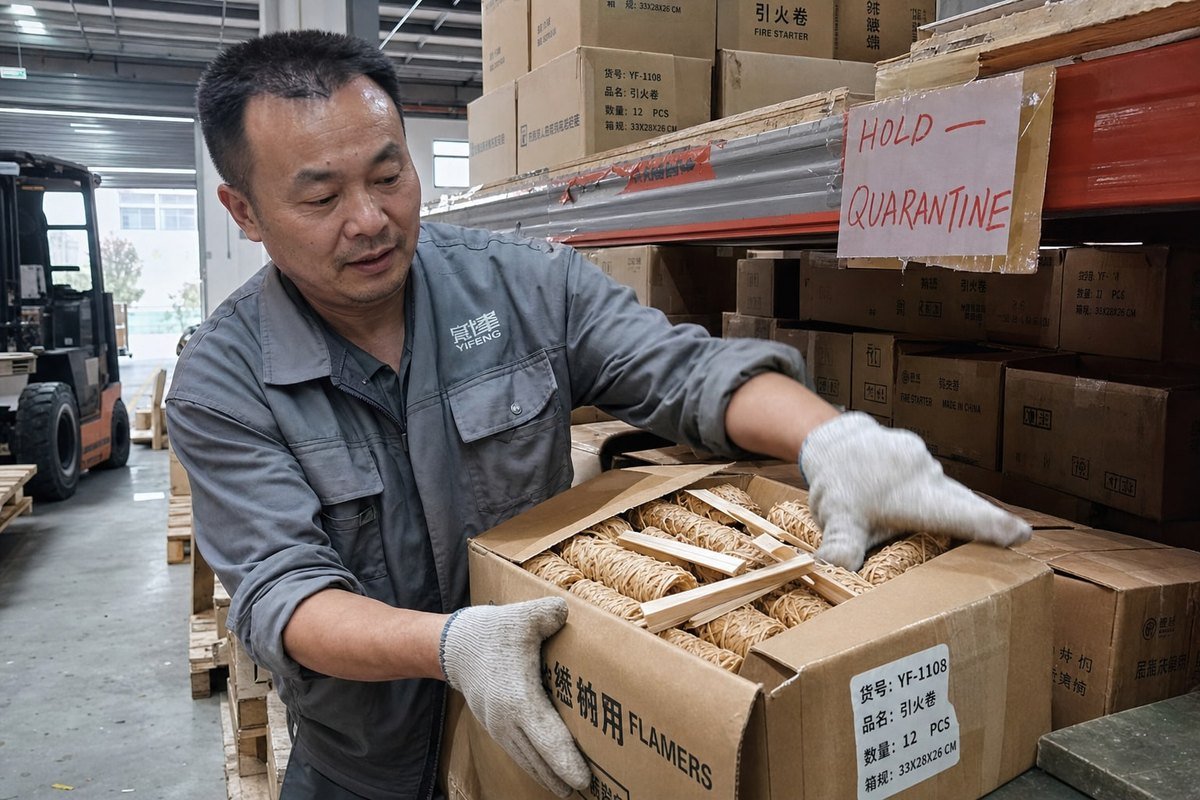
Wood fire starter inspection failures can freeze an entire shipment. On our Ningbo production line 1, I have seen how one bad batch delays a season. It costs money, shelf space, and trust — unless you have a clear response plan.
When wood fire starter inspection reveals quality issues, quarantine the affected lot immediately, document defects with photos and moisture readings, classify each defect as minor, major, or critical, then negotiate rework, replacement, or refund with your supplier based on severity and contract terms.
That is the short answer. Below, I will walk you through each step in detail, using what we have learned from 17+ years of making wax-dipped wood rolls for buyers in 30+ countries.
What Should I Do First When My Wood Fire Starter Shipment Fails Inspection?
A German distributor once called us in a panic. His third-party inspector had flagged high moisture in a container of wood wool rolls. His first question was simple: what now?
First, stop the lot from entering sale or use. Quarantine it in a separate area, photograph every defect, record lot numbers and counts, run moisture content analysis on split samples, and file a non-conformance report before contacting your supplier with evidence.
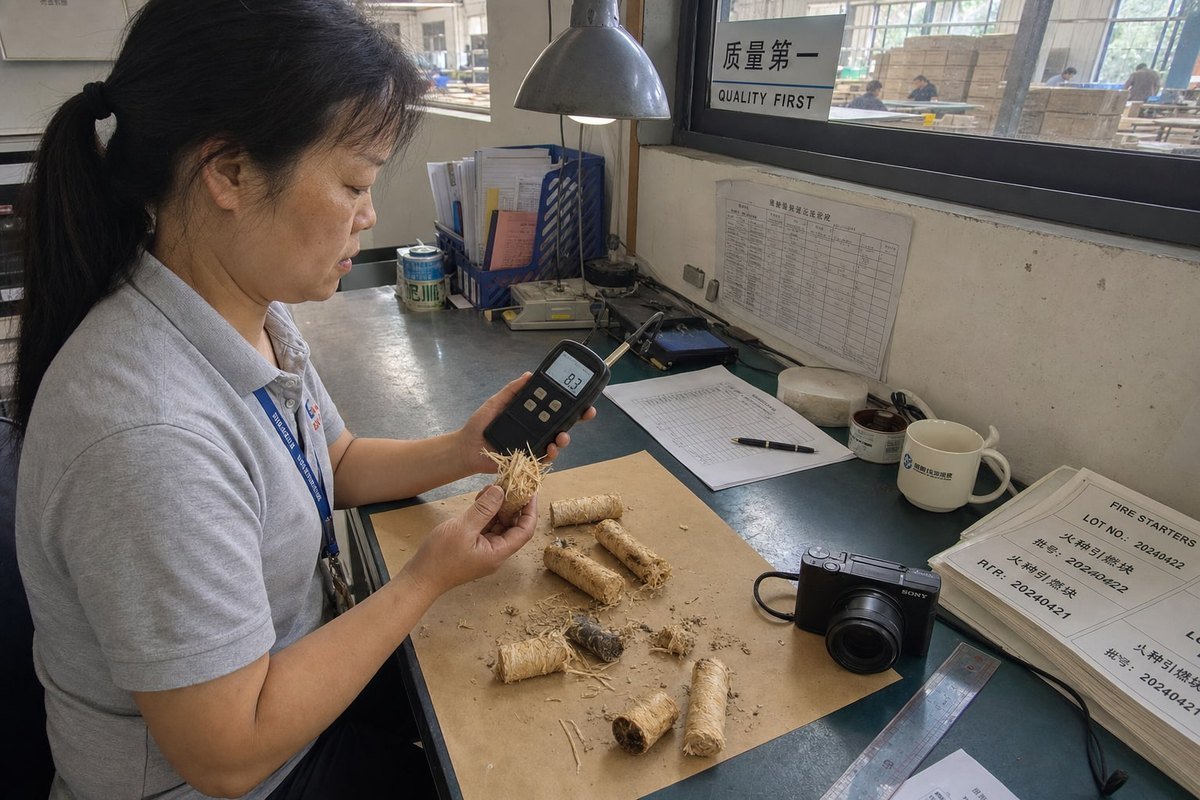
The worst thing you can do after a failed inspection 2 is nothing. The second worst thing is mixing bad stock with good stock. So your first moves need to be fast, physical, and documented.
Step One: Segregate the Lot
Move the affected cartons to a marked hold area. Tag them clearly. If your warehouse team pulls from mixed pallets, one defective batch can contaminate your whole picking process. We advise our buyers to hold the entire lot first, then release conforming cartons only after sorting.
Step Two: Verify the Failure Yourself
Do not rely on a single reading. For moisture complaints, split a few fire starters open and measure the interior with a calibrated moisture meter. Surface readings lie. The interior is the true indicator. Anything above 20% moisture content will smoke, smolder, and fail burn time testing.
Step Three: Build Your Evidence File
A strong non-conformance report should include the items below. We ask our own QC team to compile the same file before any batch leaves our factory, so we know exactly what a proper claim looks like.
| Evidence Item | Why It Matters |
|---|---|
| Photos of defects with a ruler or reference object | Proves scale and severity |
| Lot numbers, production dates, carton counts | Enables raw material traceability 3 |
| Moisture meter readings from split samples | Objective, repeatable data |
| Ignition and burn duration test results | Shows functional failure, not opinion |
| Copy of purchase order and agreed specification | Anchors the dispute in contract terms |
Step Four: Notify the Supplier in Writing
Send the evidence file promptly. Verbal complaints get forgotten. Written claims with photos and data get action. A serious supplier will respond within days, not weeks. When our buyers send us a documented claim, we can trace the batch back to the exact kiln drying process 4 run and wax-dip cycle within hours — that is what genuine manufacturing depth is for.
How Can I Tell If a Defect Is a Minor Issue or a Major Compliance Risk?
Not every flaw deserves the same reaction. Over the years, our QC team has learned that treating a cosmetic blemish like a safety failure wastes money — and treating a safety failure like a blemish is far worse.
Classify defects by consequence: minor defects are cosmetic and do not affect ignition; major defects reduce performance, such as high moisture or crumbling fibers; critical defects create safety or regulatory risk, such as contamination, harmful chemicals, or failure to meet standards like EN 1860-3.
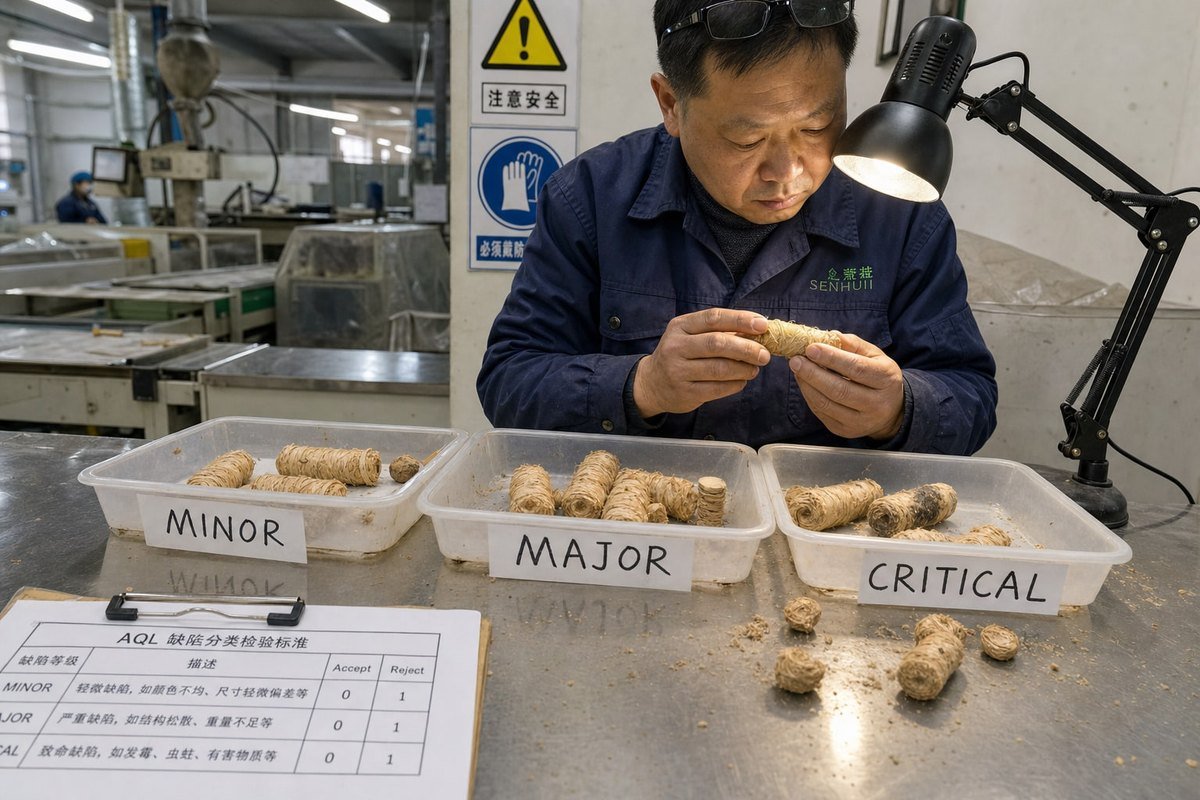
Defect classification is the backbone of any professional batch sampling plan. AQL-based inspection works exactly this way: you set acceptance limits 5 per defect class before the goods arrive, then compare findings against those limits. No guessing, no arguing.
The Three Severity Tiers
| Severity | Typical Examples | Recommended Action |
|---|---|---|
| Minor | Slight color variation, uneven wax coating, small size deviation within tolerance | Accept with documented concession; feed back to supplier |
| Major | Moisture above 20%, ignition takes over 30 seconds, wood wool crumbles or "dusts", short burn duration | Quarantine lot, request sorting, rework, or replacement |
| Critical | Mold, chemical odor, foreign contamination, missing warning labels, failed emissions or safety compliance | Reject the lot; block it from sale entirely |
Why Compliance Defects Are Different
Performance defects cost you refunds. Compliance defects can cost you your market access. In our exports to the EU, buyers routinely require test documentation against benchmarks like the EN 1860-3 standard 6 for barbecue firelighters. A starter that ignites fine but fails a chemical or labeling requirement is still a critical defect. This is why we hold ISO 9001, BSCI, CE, and SGS/Intertek certifications and keep test reports on file — for our retail buyers, compliance is a hard gate, not a preference.
Functional Tests That Separate Minor From Major
Run these three checks on your sample units:
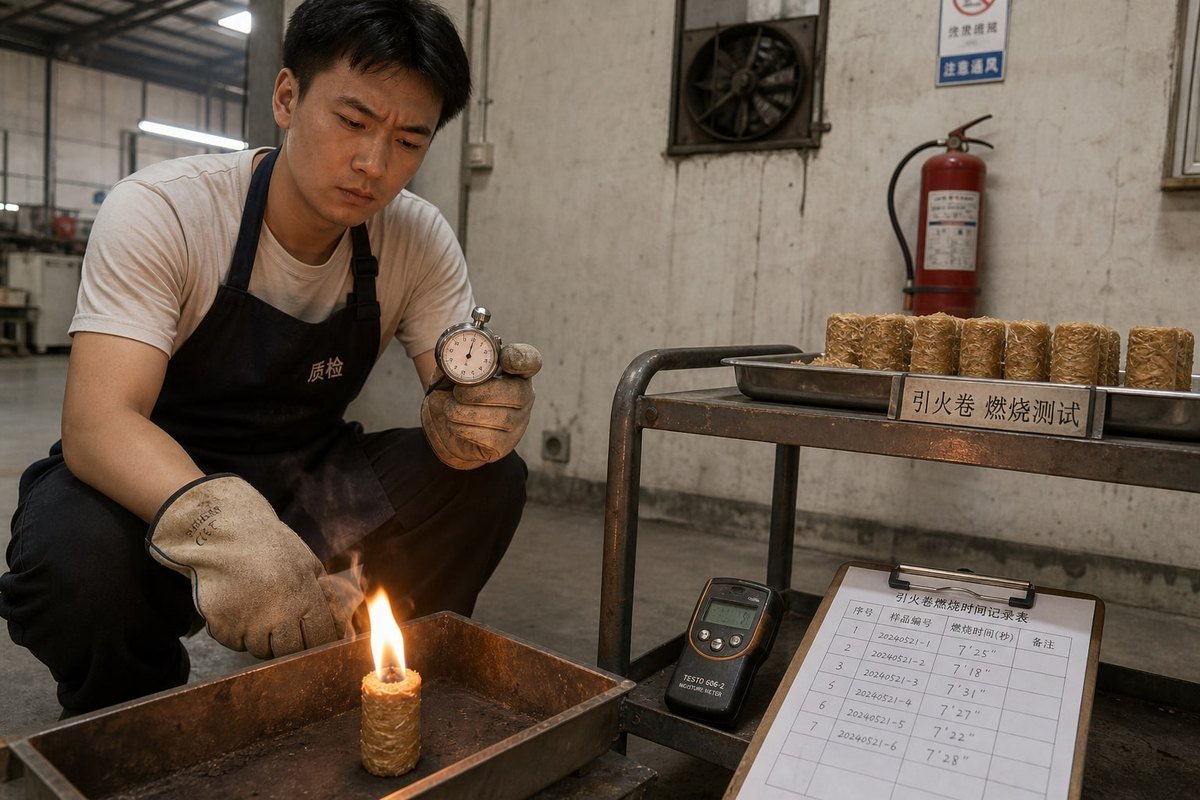
- Ignition test — the starter should catch from a single match within roughly 30 seconds.
- Burn time testing — the flame should sustain long enough to light kindling and logs without a second starter.
- Structural check — squeeze and handle the roll; excessive brittleness or fiber shedding signals a drying or compression fault.
If a unit fails any functional test, it is at least a major defect. If failure could mislead or endanger the end user, escalate it to critical.
Should I Request a Rework, Replacement, or Refund From My Supplier?
Here is a trade-off I discuss with buyers all the time: speed versus cost recovery. A refund closes the file fast, but leaves your shelves empty. A rework saves the stock, but only if the defect is actually fixable.
Choose based on defect type and timing: request rework for recoverable issues like elevated moisture, replacement when defects are widespread but you still need the inventory, and a refund or credit when the product is unsalvageable, the season is over, or trust in the supplier has broken down.

There is no single right answer. But there is a logical way to decide. Start by asking two questions: can the defect be fixed, and do I still need the goods in time?
Match the Remedy to the Situation
| Situation | Best Remedy | Why |
|---|---|---|
| Moisture slightly above threshold, structure intact | Rework (re-drying) | A controlled low-heat cycle can recover the stock; cheaper and faster than reshipping |
| Crumbling fibers, poor compression, mixed bad units | Sort plus partial replacement | Good units keep selling; supplier replaces the rejects |
| Widespread ignition failure across the lot | Full replacement | The process failed at the source; patching will not restore performance |
| Contamination, mold, or compliance failure | Refund or credit, lot destroyed or returned | Critical defects should never reach the market |
| Peak season already missed | Refund plus discount on next order | Replacement has no commercial value if the selling window closed |
Make Rework Conditional on Reinspection
If your supplier proposes rework — say, re-running batches through the kiln drying process — agree only with a mandatory reinspection afterward. Define the pass criteria in writing: interior moisture below 20%, ignition within the agreed time, burn duration meeting spec. We build reinspection into every corrective loop at our factory because a rework without verification is just hope.
Negotiate From Evidence, Not Emotion
Your non-conformance report is your leverage. Suppliers respond to data. A claim that says "10 of 200 sampled units failed interior moisture checks, readings attached" gets a resolution. A claim that says "the quality is bad" gets a debate. Also check your contract: partial refunds, credits on future orders, and freight responsibility should follow the terms of sale, not improvisation. When a buyer relies on recurring shipments, a credit against the next order often works better for both sides than a cash refund — it keeps the relationship and the supply moving.
How Can I Prevent the Same Quality Issues in My Next Wood Fire Starter Order?
Early in our export history, a repeated humidity complaint from a UK buyer taught us a lasting lesson: fixing a batch is tactical, but fixing the process is strategic. That complaint reshaped how we handle packaging and storage today.
Prevent repeat failures by demanding root cause analysis and corrective and preventive actions from your supplier, agreeing on written specifications and a batch sampling plan, requiring pre-shipment inspection reports, verifying moisture-barrier packaging, and conducting a supplier quality audit before scaling order volume.
One failed shipment is a problem. Two identical failures are a system failure — and usually a shared one. Prevention needs commitments from both sides.
Demand a Real Corrective Action, Not an Apology
After any major or critical defect, issue a supplier corrective action request. Ask three things: what caused the defect, what was fixed in the process, and how the fix will be verified on future batches. A credible answer names a specific process step. For example, if wood wool arrived damp, the root cause analysis 7 might point to a shortened drying cycle or a storage gap between drying and wax dipping. Vague answers like "we will be more careful" predict the next failure.
Lock the Specification in Writing
Most disputes we see in this industry start with unwritten expectations. Before your next order, put these on paper:
- Maximum interior moisture content and the measurement method.
- Ignition time and minimum burn duration, with the test procedure.
- Size, weight, and wax-coating tolerance per unit.
- Packaging requirements, including moisture-barrier liners for humid transit routes.
- Labeling, barcodes, and warning text for your market.
- The batch sampling plan and AQL levels for pre-shipment inspection.
Audit Before You Scale
A supplier quality audit — on site or through a third party — tells you whether the first sample truly reflects mass production. Look for raw material traceability from timber lot to finished carton, documented batch records, and calibrated instruments. At our facilities in Ningbo, we keep batch-level records precisely so that any complaint can be traced backward and any fix can be proven forward. That traceability, combined with strict batch-to-batch controls, is why our buyers can trust that shipment ten matches sample one. Start with a trial order at a flexible MOQ, verify the corrective and preventive actions held, and then commit volume. Prevention is cheaper than any refund.
Conclusion
Failed inspections drain margin and trust fast. Quarantine, measure, document, and classify — then choose rework, replacement, or refund with evidence, and prevent repeats through specs, audits, and corrective action.
Footnotes
1. Geographic and industrial overview of the major manufacturing hub mentioned in the article. ↩︎
2. Overview of the systematic process used to ensure products meet specified quality requirements. ↩︎
3. Global standards for tracking products and materials throughout the manufacturing and distribution chain. ↩︎
4. Encyclopedia entry explaining the industrial process used for drying wood and other materials. ↩︎
5. International standard for statistical sampling procedures used in batch inspections. ↩︎
6. Reference for the European safety standard governing the composition and testing of firelighters. ↩︎
7. Official government primer from AHRQ defining root cause analysis and its systematic application. ↩︎



 English
  Spanish
  German
  French
  Arabic
  Portuguese
Join the Conversation