







Market feasibility for a co-branded wood fire starters line trips up many buyers. On our production line, I've watched promising partnerships stall over missed certifications, wrong MOQs, and packaging that customs rejected.
Evaluate market feasibility for a co-branded wood fire starters line by verifying safety certifications first, testing demand with a low-risk MOQ pilot, auditing your manufacturer's batch-level quality control, and confirming packaging meets import regulations. Feasibility depends on audience overlap, unit margins, and compliance—not headline market size.
The fire starter category is growing, but growth estimates vary widely. That means your decision should rest on specifics, not hype. Let me walk you through the four questions that matter most.
What certifications should I verify before launching a co-branded wood fire starters line?
Last year, a German distributor came to us after a failed launch with another supplier. The product burned fine. But it had no SGS report, and a retail chain rejected the entire order at listing review.
Before launching a co-branded wood fire starters line, verify ISO 9001 for quality management, BSCI for social compliance, CE marking where applicable, and third-party SGS or Intertek test reports covering flammability, composition, and safety. EU and US retailers treat these as hard entry requirements, not optional extras.

Certifications are the first filter in any feasibility study because they decide whether your product can even reach the shelf. In our 17-plus years exporting fire-starting goods to over 30 countries, I have never seen a major US or European retailer waive its regulatory compliance standards for a small brand. So check the paperwork before you check the price.
The core certification stack
Different markets ask for different documents. Here is how I break it down for buyers evaluating a co-branded launch:
| Certification / Report | What It Covers | Who Demands It |
|---|---|---|
| ISO 9001 1 | Factory quality management system | Most established importers and chains |
| BSCI | Social and ethical audit of the factory | European retailers especially |
| CE marking 2 | EU product safety conformity where applicable | EU customs and distributors |
| SGS / Intertek reports | Composition, flammability, heavy metals 3 | US and EU retail listing reviews |
| Eco-friendly certification (e.g., FSC-linked sourcing claims) | Sustainable sourcing of wood fiber 4 | Premium and outdoor channels |
Why co-branding raises the stakes
A co-branded product carries two reputations. If a compliance issue triggers a recall, both partners take the brand equity hit. That is why brand equity evaluation should include a compliance audit of the manufacturing partner, not just a review of logos and design mockups. Ask for current test reports, not certificates from three years ago. Ask whether the reports cover the exact formulation you will sell—wood fiber and paraffin 5 blends can differ batch to batch if the factory cuts corners.
Also verify sustainability claims. If your packaging says biodegradable 6 or eco-friendly, you need documentation behind it. Green claims without proof now attract regulatory scrutiny in the EU and increasingly in the US. In our experience, buyers who collect this evidence upfront close retail listings two to three times faster than those who scramble for it later.
How do I determine the right MOQ to test market demand without overcommitting?
One trade-off I discuss with almost every new buyer is speed versus certainty. A big first order gets a better unit price. A small pilot order protects cash and proves velocity. For a co-branded line, I almost always recommend the pilot.
Determine the right MOQ by working backward from a pilot goal: enough units to stock two or three sales channels for eight to twelve weeks. For wood fire starters, that typically means a trial order of a few thousand units, negotiated with a manufacturer offering flexible trial MOQs.
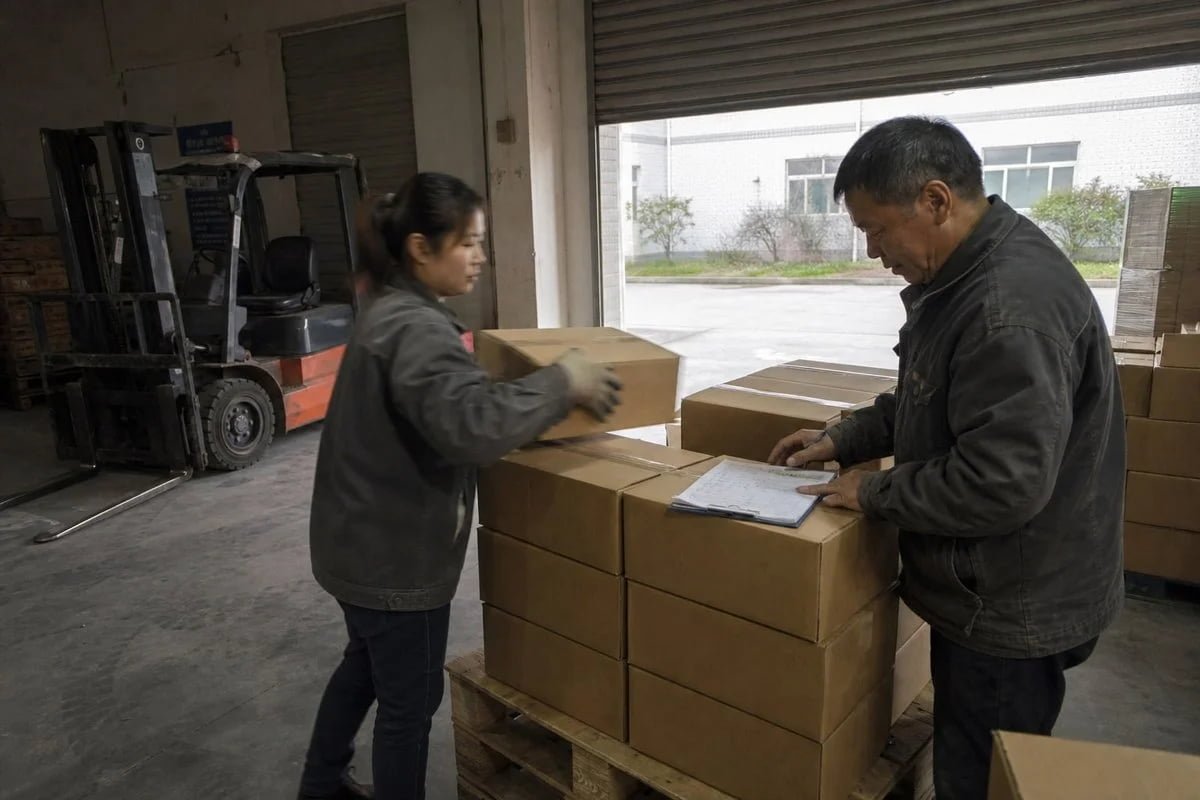
Market feasibility for a co-branded wood fire starters line cannot be proven on a spreadsheet alone. You need sell-through data. But you do not need a full container to get it. The trick is sizing the pilot so the data is meaningful without tying up your budget in slow-moving inventory.
Start with target market segmentation
First, decide who you are testing. Campers, fire pit owners, BBQ users, and emergency preparedness buyers all behave differently. Consumer demand trends favor outdoor recreation and eco-friendly products, so most of our buyers pilot in one or two of these segments before expanding.
A simple pilot-sizing framework
| Pilot Variable | Question to Answer | Practical Benchmark |
|---|---|---|
| Channel count | Where will you test? | 2–3 channels (e.g., DTC site, Amazon, one specialty store) |
| Test duration | How long to see repeat purchase? | 8–12 weeks, ideally covering a seasonal peak |
| Unit velocity | What sell-through proves demand? | Set a go/no-go threshold before launch |
| Cash exposure | What can you afford to lose? | Keep pilot cost under 10–15% of launch budget |
Season matters too. Fire starters sell year-round through grilling, camping, and fireplace occasions, but demand spikes in autumn and early winter in most of our export markets. Time your pilot to capture at least part of a peak. Otherwise, weak results might reflect timing, not the product.
At our factory, we deliberately keep trial MOQs flexible for exactly this reason. A partner who validates demand with a small co-branded run becomes a long-term repeat buyer. A partner forced into a large first order often disappears after one season. From a distribution channel strategy standpoint, low-commitment pilots also let you compare DTC margins against wholesale economics before you lock in a channel mix.
What quality control standards should I expect from my manufacturing partner?
A lesson I learned early in our Ningbo production facility: a fire starter that lights perfectly in the sample room can fail in a customer's damp garage six months later. Moisture control and wax consistency are everything.
Expect your manufacturing partner to enforce batch-to-batch quality control covering wood fiber moisture content, wax saturation consistency, ignition reliability, burn time performance, and packaging durability. Demand documented QC checkpoints and a guarantee that mass production matches the approved sample.
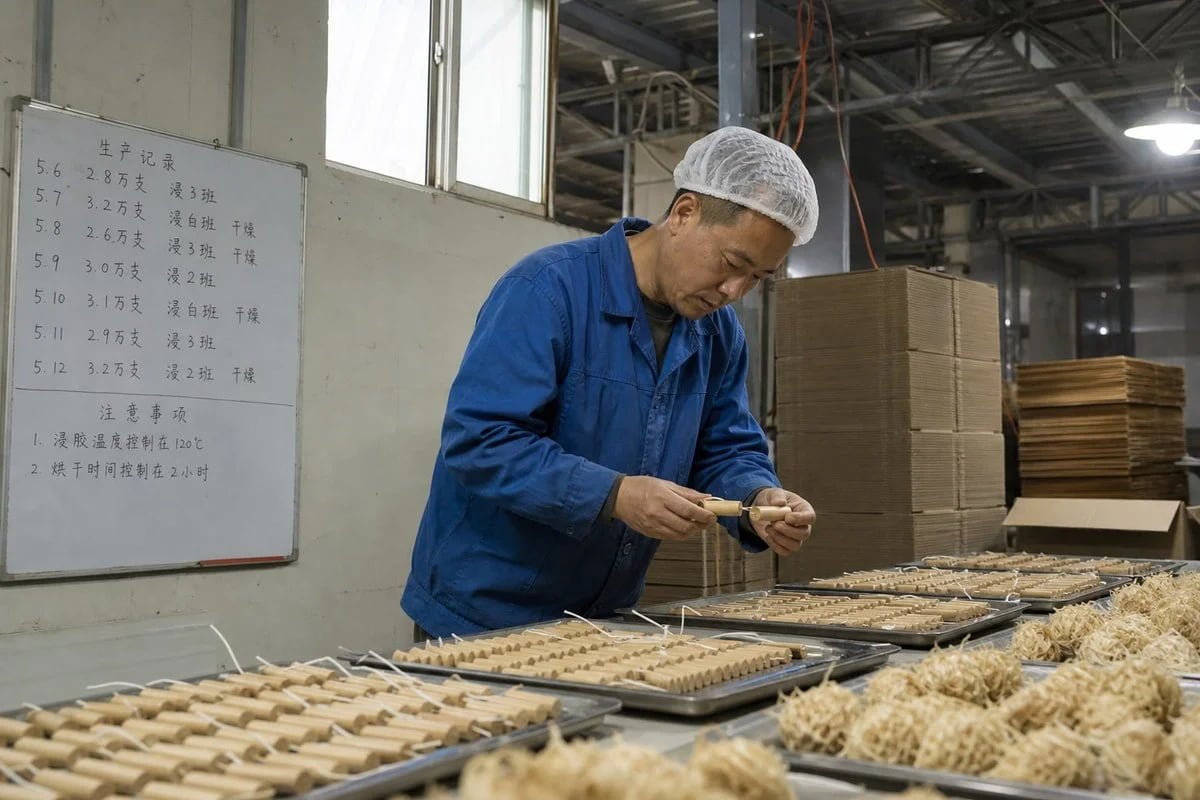
Quality control is where market feasibility becomes operational reality. A co-branded wood fire starters line lives or dies on consistency, because the co-brand promise is trust. One bad batch damages two brands at once. So here is what I tell buyers to verify before signing anything.
The QC checkpoints that actually matter
- Incoming material inspection. Wood wool or wood fiber must arrive within a defined moisture range. Wet fiber absorbs wax poorly and produces weak, smoky ignition.
- Wax formulation control. The paraffin or wax blend must be consistent in melting point and saturation. Variation here changes burn time performance from batch to batch.
- In-process sampling. Pull units during production, not just at the end. We test ignition speed and full burn duration on sampled rolls from every batch.
- Finished product testing. Confirm each unit lights with a single match and sustains flame long enough to ignite kindling—typically eight to ten minutes for a standard wax-dipped wood roll.
- Packaging and transit testing. Boxes must survive humidity, stacking, and long ocean freight without wax bleed or crushing.
Sample fidelity is the real test
Here is my practical advice: ask the factory directly whether the first sample reflects mass-production quality, and how they guarantee it. Trading companies often source samples from one workshop and production from another. A genuine factory with complete production lines controls the entire process, so the sample you approve is the product your customers receive. This also feeds your production cost analysis—stable quality means predictable reject rates, predictable freight claims, and predictable margins. Unstable quality quietly destroys the unit economics your feasibility model depends on.
How can I ensure my private-label packaging meets import regulations in my target market?
A US importer once asked us to reprint 5,000 boxes because the original design lacked a country-of-origin 7 mark. We caught it at pre-production, thankfully. Customs would not have been as forgiving.
Ensure private-label packaging compliance by including required warning labels, ingredient composition, country of origin, importer details, and correct barcodes in the destination language. Verify EU CLP-style hazard labeling or US labeling rules early, and have your manufacturer review artwork before printing.
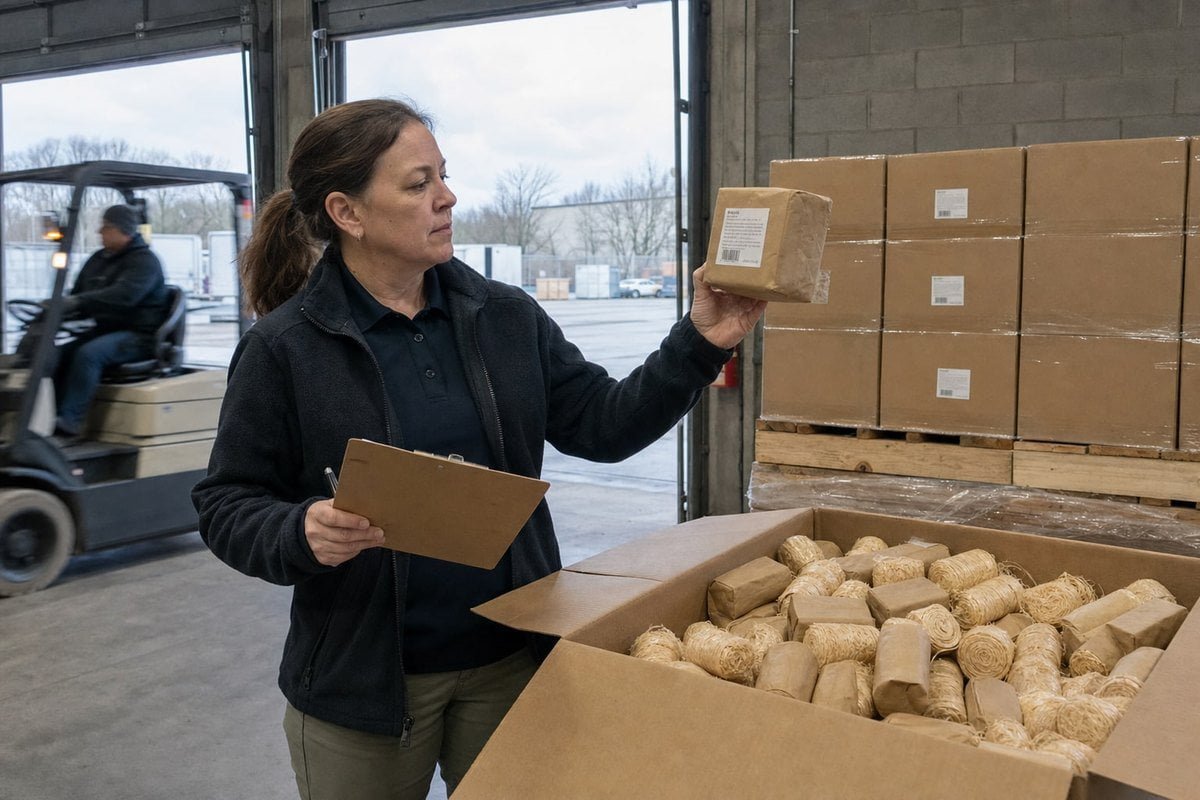
Packaging is the last mile of feasibility, and it is where co-branded projects most often hit avoidable delays. Two brands mean two logos, two legal reviews, and usually two opinions on design. But regulators do not care about aesthetics. They care about mandatory information, and the rules differ by market.
Market-by-market packaging requirements
| Requirement | United States | European Union |
|---|---|---|
| Warning labels | Required; clear flammability warnings in English | Required; hazard pictograms and phrases per CLP where applicable |
| Composition disclosure | Recommended; expected by retailers | Required for regulated substances like paraffin blends |
| Country of origin | Mandatory (e.g., "Made in China") | Mandatory for customs clearance |
| Importer / responsible party | Required on packaging or documentation | EU responsible person details increasingly required |
| Language | English | Local language of destination market |
| Barcodes | UPC standard | EAN standard |
Build compliance into the design process
My strongest recommendation is sequencing. Lock the regulatory elements first—warnings, composition, origin, barcode placement—then design the co-branded creative around them. Our OEM team reviews every private-label artwork file against the destination market's rules before it goes to print, because reprints cost weeks and the packaging premium of a co-branded box makes mistakes expensive.
Sustainability messaging deserves special care. If your competitive landscape analysis shows rivals winning on eco-claims, it is tempting to match them. But claims like biodegradable or plastic-free must be supportable in your target market, or they become a legal liability. Strong brand alignment between partners should extend to a shared, documented sustainability story—recycled kraft packaging, sustainably sourced wood fiber, soy-based inks—that survives scrutiny. Finally, remember that packaging affects your retail price point: display-ready boxes and premium finishes raise conversion, but they must fit inside margins that survive wholesale discounting.
Conclusion
Feasibility is not market size. Verify certifications, pilot with a smart MOQ, audit quality control, and lock packaging compliance early—then your co-branded wood fire starters line launches on solid ground.
Footnotes
1. Authoritative and stable overview of the quality management standard. ↩︎
2. Official EU source explaining CE marking requirements referenced in certification stack ↩︎
3. Background concept link for composition testing parameter listed in certification table ↩︎
4. Background reference on wood fiber material used as core fire starter ingredient ↩︎
5. Background reference on paraffin wax composition used in wood fire starter formulation ↩︎
6. EPA resource on green product claims relevant to biodegradable packaging compliance discussion ↩︎
7. Official government guide on determining country of origin for imports. ↩︎



 English
  Spanish
  German
  French
  Arabic
  Portuguese
Join the Conversation