






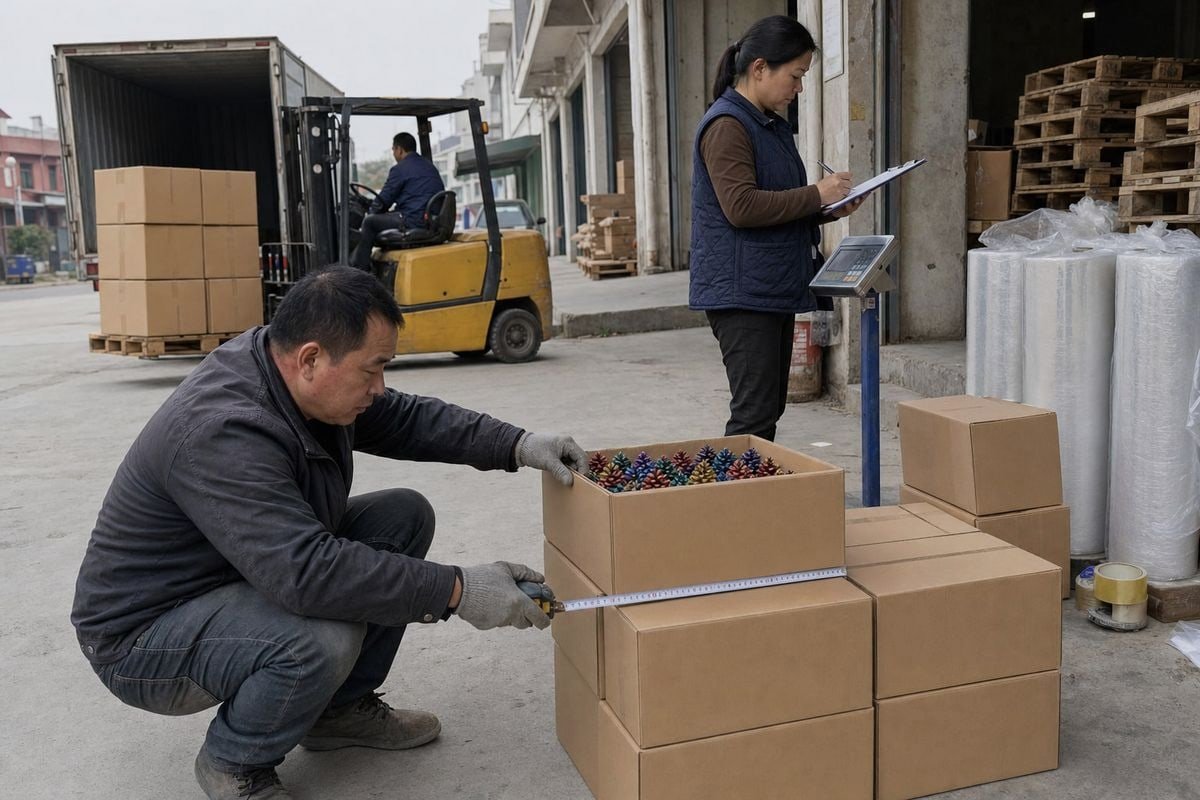
Calculating shipping costs for pine cones from China surprises many buyers. On our loading dock, I have watched freight bills exceed product invoices — because nobody warned the buyer about volumetric weight 1.
To calculate shipping costs for pine cones from China, compare actual weight against volumetric weight, choose the mode (air, express, sea LCL, or FCL), then add origin charges, customs clearance fees, import duties and taxes, and last-mile delivery to reach true landed cost.
Pine cones are light but bulky. That single fact drives most of the cost math. Below, I walk you through the factors, the mode comparison, the hidden fees, and the savings levers — step by step.
What Factors Influence Shipping Costs for Color-Flame Pine Cones from China?
A German distributor once asked me why his 180 kg pine cone order was billed as 420 kg. Our Ningbo shipping team pulled out the carton dimensions 2 and showed him the answer in two minutes.
Shipping costs for color-flame pine cones are driven by chargeable weight (the greater of actual or volumetric weight), carton volume, route and destination, shipping mode, seasonal surcharges, and compliance costs such as the phytosanitary certificate and fumigation requirements.
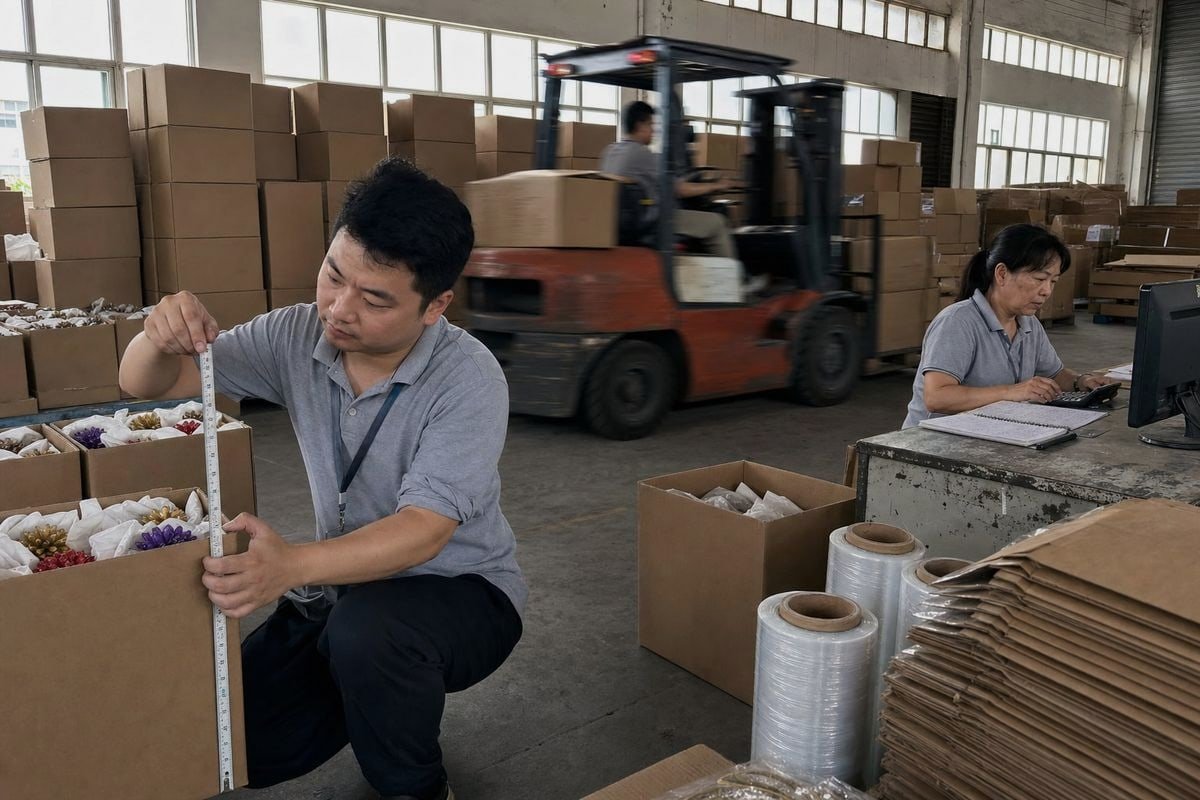
Pine cones are one of the trickiest low-density cargos we handle at our factory. A carton of our color-flame pinecones weighs very little, but it occupies real space. Carriers do not bill you for weight alone. They bill you for the space your cargo consumes. This is why understanding each cost driver matters before you request a single quote.
Chargeable Weight: The Core Concept
Carriers compare two numbers and bill the higher one. Actual weight is what the scale says. Volumetric weight converts your carton size into a billable weight. For most air couriers, the formula is length × width × height (in cm) divided by 5000. For sea freight, pricing usually shifts to cubic meters 3 (CBM) instead. Because painted pine cones with protective packaging are so light, volumetric weight almost always wins on air shipments. In our experience exporting to the US and Europe, the volumetric figure can be two to three times the actual weight.
The Full List of Cost Drivers
| Factor | Why It Matters for Pine Cones |
|---|---|
| Volumetric weight | Low-density cargo gets billed by space, not scale weight |
| Route and destination | China–US West Coast differs sharply from China–Netherlands |
| Shipping mode | Air, express, LCL, and FCL each price differently |
| Season | Rates spike August–November during holiday décor peak |
| Compliance documents | Phytosanitary certificate 4 and fumigation requirements add cost and time |
| Packaging design | Carton dimensions directly set your billable volume |
| Incoterms | EXW, FOB, and DDP shift which charges land on your invoice |
Compliance Costs Are Real Costs
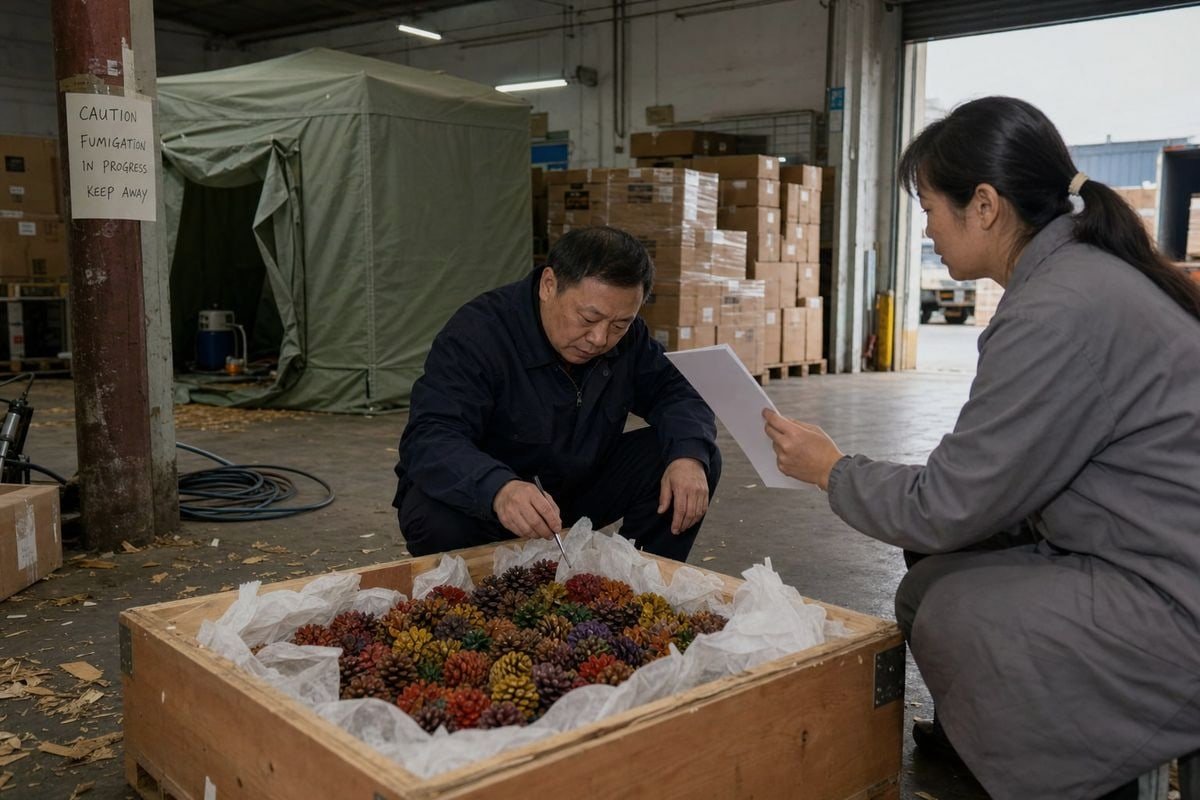
Natural botanical products face plant-health scrutiny. A phytosanitary certificate from China's customs authority 5 confirms the shipment is pest-free, including freedom from the pine wood nematode. US buyers also need a Lacey Act declaration 6 listing the genus Pinus and the country of harvest. Skipping these documents risks seizure, which is far more expensive than any freight surcharge. We build these steps into our export timeline for every pine cone order, because a certificate that expires before the vessel departs is worthless.
How Do I Compare Sea Freight and Air Freight Quotes for My Order?
The trade-off I weigh with buyers most often is speed against volume. A UK camping brand needed color-flame pinecones for a September launch; we ran both air and ocean numbers side by side before they committed.
Compare modes by converting each quote to cost per unit delivered. Air freight typically runs $5–$8/kg on chargeable weight, express $8–$12/kg, and ocean LCL roughly $50–$80/CBM. Ocean wins on volume; air wins on speed and small urgent orders.

Start with a simple side-by-side view before you dig into any single quote:
| Mode | Best For | Typical Cost Basis | Transit (China–US) | Key Risk |
|---|---|---|---|---|
| Express courier | Samples, urgent trial orders | $8–$12/kg chargeable | 3–7 days | Volumetric billing bites hardest |
| Air freight | Mid-size seasonal restocks | $5–$8/kg chargeable | 5–10 days | Dimensional weight surprises |
| Ocean LCL | Orders under ~15 CBM | $50–$80/CBM | 30–40 days | Crushed cartons, cross-contamination |
| Ocean FCL | Large volume programs | Flat container rate | 30–40 days | Higher upfront cost, needs volume |
Run the Math on Your Actual Order
Take a real example. Suppose your order fills 6 CBM and weighs 500 kg actual. On air freight, the volumetric weight is 6,000,000 cm³ ÷ 5000 = 1,200 kg chargeable. At $6/kg, that is $7,200. On ocean LCL at $70/CBM, the same order costs about $420 in base freight, plus origin and destination handling. Even after adding all accessorial fees, ocean usually lands under $1,500. The gap is enormous — but ocean takes a month longer.
FCL vs LCL: The Volume Threshold
The FCL vs LCL decision matters once your program grows. LCL is cheaper below roughly 15 CBM, but your cartons share a container with other cargo. For pine cones, that raises two risks: crushed cones from heavy neighboring freight, and odor or moisture contamination. When our buyers reach steady volume, we recommend FCL with ventilated stuffing plans. Sealed plastic liners trap humidity and cause container sweat over a 30-day trans-Pacific voyage; breathable bulk bags prevent mold on natural cones.
Do Not Ignore the Calendar
If your pine cones are tied to Q4 retail shelves, transit time is not negotiable. Peak season surcharges and general rate increases hit hardest from August to November — exactly when holiday décor ships. Booking ocean freight in June or July often beats an August air booking on both price and reliability. A good freight forwarder services team will flag these windows before you commit.
What Hidden Fees Should I Watch for When Evaluating a Freight Quote?
A lesson our export team learned years ago: a quote is only as honest as its exclusions list. One buyer chose a rock-bottom LCL rate, then paid destination charges that doubled the total.
Watch for excluded destination handling, customs clearance fees, fuel surcharges, inland trucking, documentation fees, and DDP markups of 15–20%. Confirm the Incoterms, verify whether duties and taxes are included, and check the quote's weight basis before signing.
Freight quotes rarely lie, but they often stay silent. The base rate you see first is usually just one line of the final invoice. When I review forwarder quotes with our buyers, I ask them to compare quotes line by line under identical assumptions — same Incoterms 7, same dimensions, same service scope. Otherwise you are comparing apples to shipping containers.
The Incoterms Trap
Incoterms define where the seller's responsibility ends and yours begins. Under EXW, you pay everything from our factory door. Under FOB, we cover origin charges and export clearance; you take over at the port. Under DDP, the supplier handles everything including import duties and taxes — convenient, but DDP quotes commonly hide a 15–20% markup over what you would pay managing FOB logistics yourself with your own freight forwarder services. For established importers, FOB usually offers the best control and transparency.
The Hidden Fee Checklist
| Fee Category | Often Excluded From | What to Ask |
|---|---|---|
| Destination handling (DTHC) | LCL "port-to-port" quotes | "Is destination handling included?" |
| Customs clearance fees | Base freight quotes | "Who files entry, and at what cost?" |
| Fuel and security surcharges | Air freight base rates | "Is the rate all-in or plus surcharges?" |
| Inland trucking | Port-to-port quotes | "Door delivery or port pickup?" |
| Documentation and Bill of Lading fees | Almost all quotes | "List every document fee, please." |
| Import duties and taxes | Everything except DDP | "What HS Code classification 8 are you using?" |
Product-Specific Cost Surprises
Pine cones carry unique fine print. First, HS Code classification matters: natural pine cones typically fall under 0604.99, and the duty rate can range from free to 7%, with possible Section 301 tariffs on Chinese goods for US importers. Verify the code your broker files. Second, moisture loss is real. Cones can lose 10–15% of their mass through dehydration during transit. If your quote or purchase contract references arrival weight, you invite short-weight disputes. We always document departure weight on our packing lists to keep the record clean. Third, check whether the quote includes the phytosanitary inspection fee and any fumigation requirements at destination — these are small charges, but an unplanned fumigation can also add days of delay.
How Can I Reduce Shipping Costs Without Compromising Delivery Reliability?
During a packaging redesign at our Ningbo facility, we cut carton height by three centimeters on our pine cone master cartons. That small change dropped the volumetric weight per carton enough to save one buyer a meaningful share of his air freight bill.
Reduce costs by optimizing carton dimensions to cut volumetric weight, consolidating orders to reach ocean LCL or FCL thresholds, booking before peak-season surcharges, choosing FOB over DDP, and using breathable packaging that prevents costly mold rejections at destination.
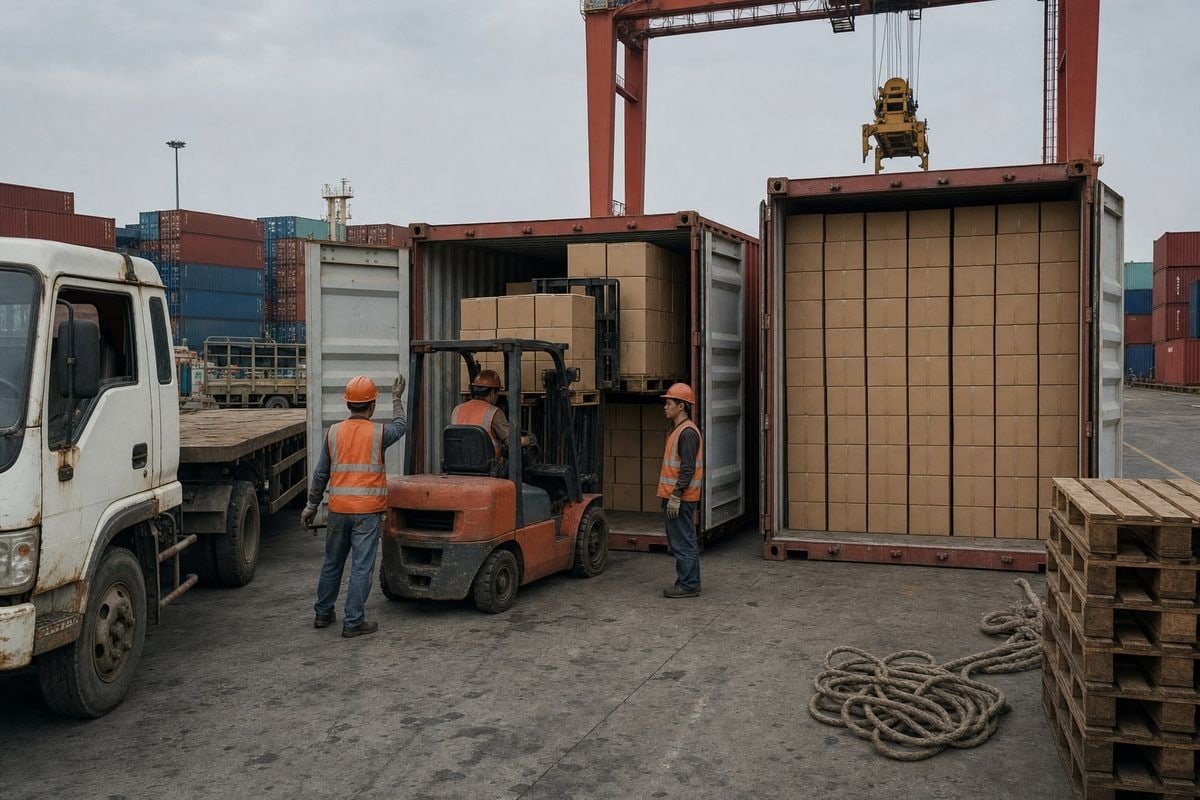
Cutting freight spend does not require accepting slower or riskier service. It requires attacking the cost drivers in the right order. Here is the sequence I recommend to our B2B buyers, from highest impact to lowest.
A Five-Step Cost Reduction Sequence
- Fix the packaging first. Volume is your enemy. We help buyers choose carton sizes that nest cones tightly without crushing scales. Every centimeter you remove from carton dimensions cuts billable volumetric weight on air and CBM on ocean. Display-ready packaging can still be dimensionally efficient — we design both together in our OEM process.
- Consolidate shipments. Two small air shipments almost always cost more than one ocean LCL shipment. If you order color-flame pinecones alongside fire starters or color-flame packets, combining them into one booking spreads the fixed fees — documentation, Bill of Lading issuance, customs entry — across more units.
- Book against the calendar, not the deadline. Holiday décor demand pushes rates up from August through November. Placing orders in Q2 lets you ride cheaper ocean rates and still hit Q4 shelves. Our standard production lead times are built to support this planning rhythm.
- Take control of the freight leg. Buying FOB and appointing your own forwarder removes the DDP markup and gives you visibility into every charge. You also choose the customs broker who files your HS Code classification and Lacey Act declaration correctly.
- Protect the cargo to protect the budget. A rejected, moldy shipment is the most expensive freight outcome possible. Ventilated containers and breathable bulk bags cost little and prevent container sweat during long voyages. Reliability is a cost lever, not a separate goal.
Timing the Compliance Window
One more reliability point: synchronize your phytosanitary inspection with the vessel schedule. Certificates are typically valid for a narrow window after issuance. If production or port delays push departure beyond that window, the certificate can expire and force re-inspection. We schedule inspection within 14–21 days of the planned departure on every pine cone shipment, so documents and vessel stay aligned.
Conclusion
Freight surprises kill margins fastest on light, bulky goods. Master chargeable weight, compare quotes under identical Incoterms, and plan compliance early — then your pine cone landed cost stays predictable and profitable.
Footnotes
1. Industry-standard explanation of how dimensional weight is calculated for air express shipments. ↩︎
2. Carrier guide on how package measurements affect billable weight calculations in logistics. ↩︎
3. Standard unit of volume used for calculating sea freight LCL charges. ↩︎
4. Official government resource detailing the requirements for plant health export documentation. ↩︎
5. Information on the government agency responsible for export inspections and customs in China. ↩︎
6. Official US government page explaining the declaration required for imported plant products. ↩︎
7. The official source for international commercial terms defining buyer and seller responsibilities. ↩︎
8. Official database for determining duty rates based on standardized product classification codes. ↩︎



 English
  Spanish
  German
  French
  Arabic
  Portuguese
Join the Conversation