






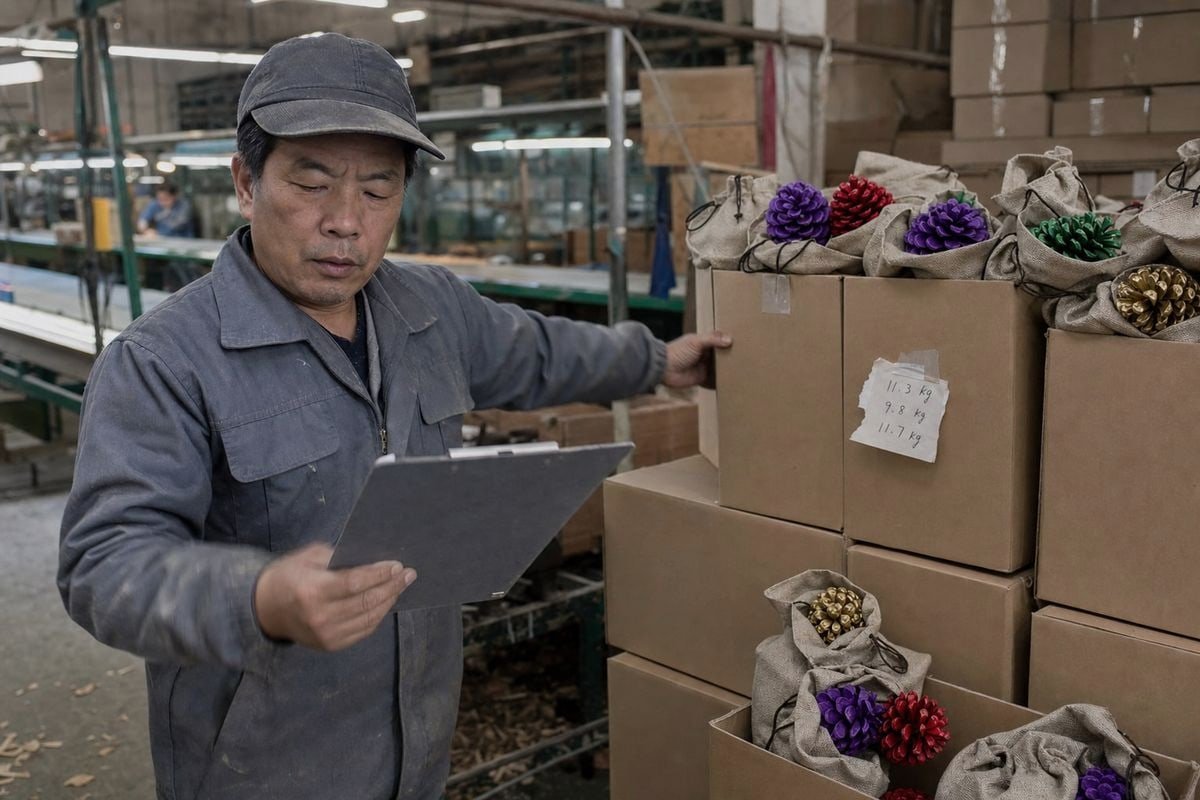
Calculating landed cost for fireplace colored pine cones 1 trips up many buyers. On our production line in Ningbo, I have watched importers underestimate it and lose their entire margin.
Landed cost for fireplace colored pine cones equals the factory unit price plus international freight, marine cargo insurance, import duties and taxes, customs brokerage charges, port handling, drayage, and warehouse receiving fees — all converted to one currency and divided by total units received.
That formula sounds simple. The hard part is knowing which charges apply to this specific product, and how to split them per bag. Let me walk you through it step by step.
What Costs Should I Include Beyond the Factory Unit Price?
A few years back, a US distributor asked us why his "cheap" pine cone order ended up costing nearly double per unit at his warehouse. Our quote was accurate. His cost model was not.
Beyond the factory price, include ocean or air freight, freight forwarding fees, export documentation, marine cargo insurance, import duties and taxes, customs brokerage charges, port handling charges, drayage to your warehouse, and receiving or unloading fees. Every cost required to get inventory on your shelf counts.
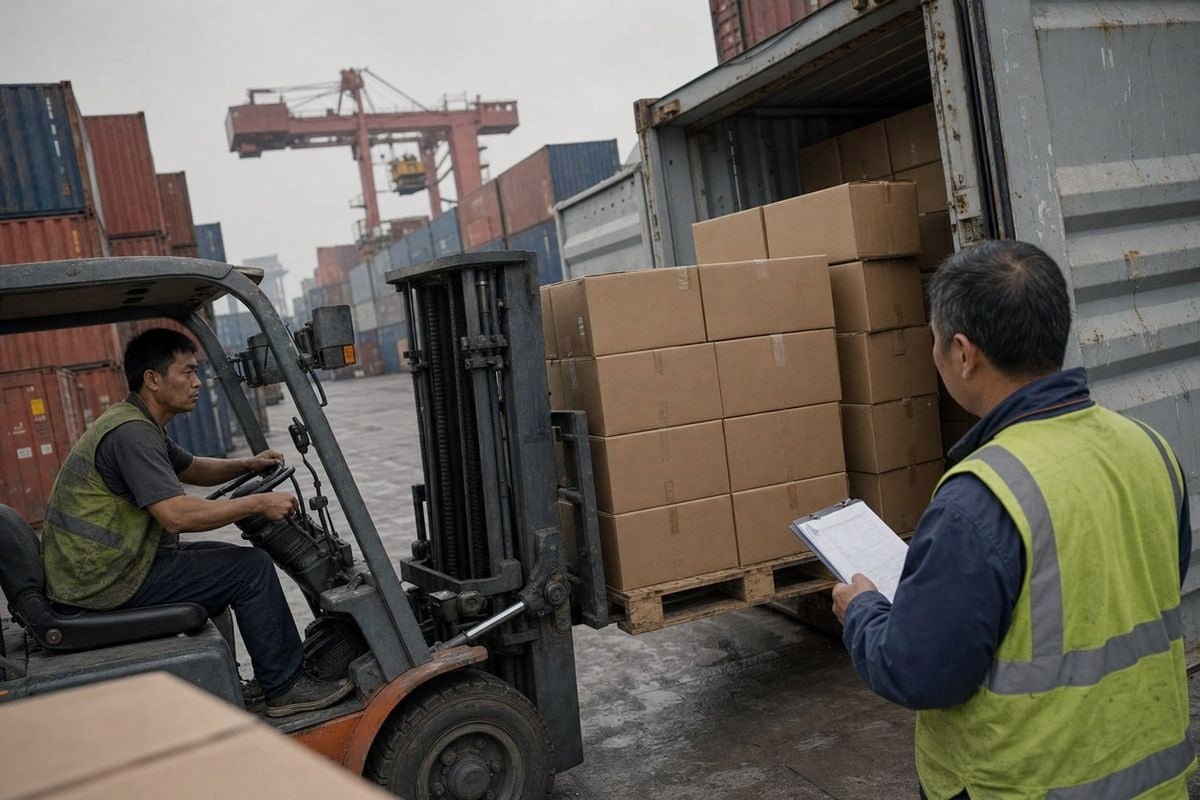
The factory invoice is only the starting point. When we quote our color-flame pinecones EXW or FOB under Incoterms 2020 2, the buyer takes on a chain of costs after the goods leave our door. Missing even one of them distorts your inventory valuation and your gross margin.
The Full Cost Stack
Here is how I tell buyers to build their landed cost model, line by line:
| Cost Layer | Typical Charges | When It Applies |
|---|---|---|
| Product cost | Factory unit price, packaging, private-label printing | Always |
| Origin charges | Export docs, phytosanitary certificate 3 if required, trucking to port | EXW terms; partly included in FOB |
| Freight | Ocean or air freight, freight forwarding fees, fuel surcharges | Always |
| Insurance | Marine cargo insurance, usually on CIF value plus 10% | Strongly recommended |
| Import charges | Import duties and taxes, MPF, HMF, customs brokerage charges | All cross-border shipments |
| Destination | Port handling charges, drayage costs, warehouse receiving | Always |
Why This Product Is Especially Sensitive
Colored pine cones are cheap per unit but bulky per dollar. A retail bag might carry a factory price under one dollar. Yet the fixed costs — brokerage, documentation, terminal fees — stay the same whether you import pine cones or electronics. So on low-unit-value goods, those fixed costs represent a much larger share of the final unit cost. In my experience exporting to the US and Germany, buyers who order below a sensible volume threshold often pay more in fixed fees per unit than they pay us for the product itself.
A Simple Six-Step Workflow
- Gather the supplier invoice and confirm the Incoterms 2020 basis.
- Add all freight and forwarding charges from your forwarder's quote.
- Add import duties and taxes based on your HS Code classification 4.
- Add insurance, brokerage, port, and drayage charges.
- Convert everything into one currency at your accounting-policy exchange rate.
- Divide the shipment total by units received to get per-unit landed cost.
How Do Tariffs and Duties Affect My Total Landed Cost from China?
Classification questions come up in almost every first call with a new importer. One UK buyer assumed our colored pine cones would clear duty-free like natural botanicals. The treated, dyed version is a different story.
Colored or chemically treated pine cones typically classify under HTSUS 0604.99.6000, drawing an ad valorem duty of roughly 7% to 11%, while untreated natural cones may enter duty-free. Add the Merchandise Processing Fee and Harbor Maintenance Fee, both calculated on entered value, plus any applicable Section 301 tariffs.
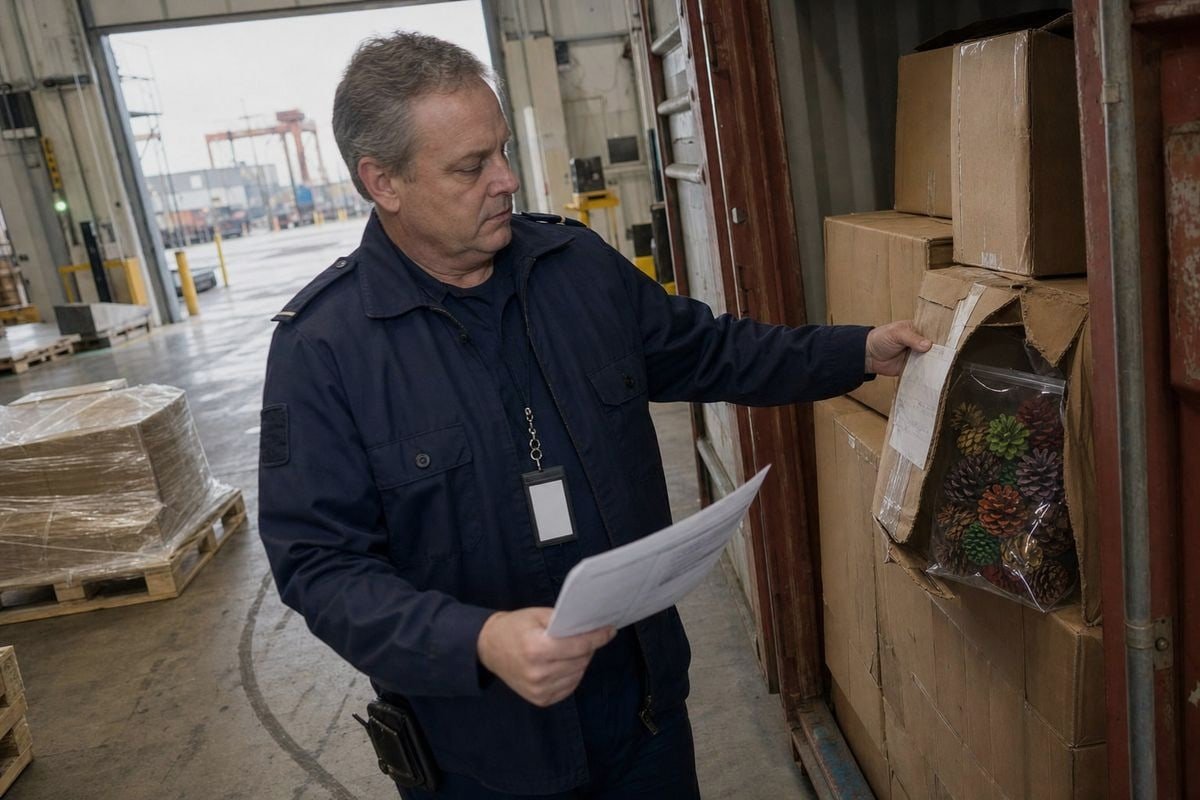
Getting the HS Code classification right is not optional. Customs authorities distinguish between natural dried plant material and material that has been dyed, bleached, or impregnated. Our color-flame pinecones are treated with eco-friendly coloring compounds, which usually pushes them into the "otherwise prepared" category. Declare them wrong, and you risk penalties, reclassification, and back duties.
The Duty Math in Practice
Import duties and taxes are calculated on the customs value 5, which in the US is usually the FOB price. In the EU, duty is assessed on the CIF value, and then VAT is charged on top of duty plus freight. That layering surprises many first-time importers.
| Charge | Basis | Typical Rate |
|---|---|---|
| Ad valorem duty (treated cones) | Entered value | 7%–11% |
| Merchandise Processing Fee (US) | Entered value | 0.3464%, with min/max caps |
| Harbor Maintenance Fee (US ocean) | Entered value | 0.125% |
| EU import VAT | CIF + duty | 19%–23% depending on country |
Compliance Charges That Ride Along with Duty
Because pine cones are a regulated plant product, many destinations ask for a phytosanitary certificate from the exporting country's plant protection authority. We arrange this routinely from the China side, and I always tell buyers to confirm the requirement before booking, because a missing certificate can mean quarantine, fumigation, or outright rejection. Seasonal fumigation for pests like the Brown Marmorated Stink Bug 6 adds per-container costs on shipments moving during high-risk months. And if the coloring agents involve metal salts, a Safety Data Sheet 7 must travel with the goods. Our SGS and Intertek test reports cover this, which is exactly why compliant sourcing costs less than cheap sourcing once you reach the border.
Currency: The Silent Duty Multiplier
One more factor: exchange rates. If your supplier invoices in RMB or USD and your books run in EUR or GBP, a 2% to 5% currency swing between order date and payment date changes your entire landed cost base — and your duty is then calculated on that shifted value. Lock rates at purchase-order time when you can.
Which Shipping Method Gives Me the Best Cost-to-Lead-Time Balance?
Packaging density is a trade-off we engineer deliberately at our Ningbo facility. Pine cones are mostly air. How we pack the master cartons directly decides whether your freight bill is reasonable or painful.
For fireplace colored pine cones, ocean LCL suits trial orders of a few cubic meters, full container loads deliver the lowest per-unit freight for seasonal programs, and air freight only makes sense for urgent samples. Because cones are low-density, volumetric weight drives cost, so ocean almost always wins.
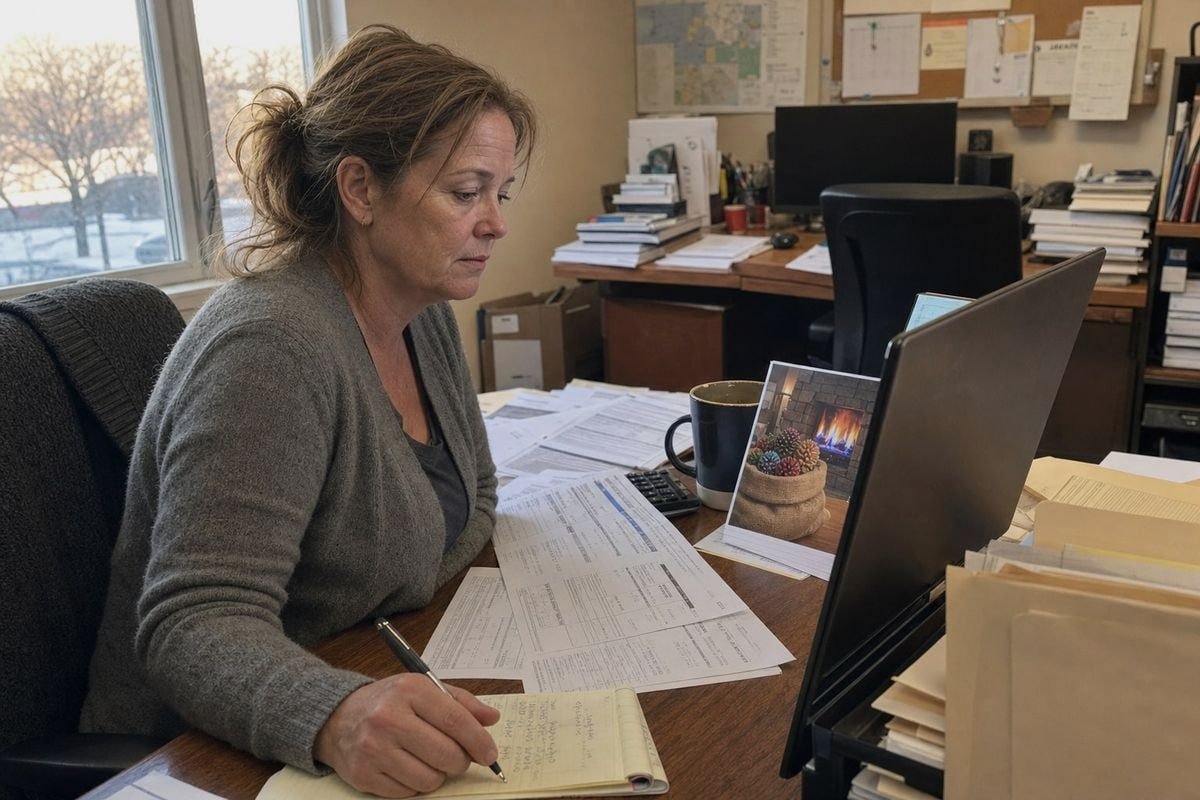
Freight is often the single largest landed-cost component for this product. Carriers charge by dimensional (DIM) weight when cargo is light and bulky, and colored pine cones are exactly that. A carton of cones weighs little but occupies real space. That is why I push buyers toward ocean freight for anything beyond samples.
Comparing Your Options
| Method | Best For | Cost Profile | Lead Time (China to US) |
|---|---|---|---|
| Air freight | Samples, urgent replenishment | Very high; DIM weight punishes bulk | 5–10 days |
| Ocean LCL | Trial orders, 2–10 CBM | Moderate; per-CBM plus destination fees | 30–45 days |
| Ocean FCL 20' | Established seasonal programs | Lowest per unit | 30–40 days |
| Ocean FCL 40'HC | Large retail programs | Lowest per unit at scale | 30–40 days |
The Seasonal Timing Problem
Fireplace pine cones sell in Q4. That means most shipments book in Q3, right in peak ocean season when rates climb and space tightens. When we plan production for our European and North American distributors, we typically recommend confirming orders by late spring, so goods ship before the peak-season rate spikes. A container booked in June can cost meaningfully less than the same container booked in September, and it dodges the pre-holiday port congestion that inflates drayage costs and detention risk.
Packing Density Is a Cost Lever
We offer full OEM packaging — kraft stand-up pouches, burlap sacks, jars, retail display boxes. Each format has a different carton density. Bulk-packed cones with retail bags shipped flat can cut cubic volume substantially versus pre-filled retail pouches. For some buyers, we split the difference: pre-filled pouches for their launch quantity, bulk plus flat packaging for replenishment they pack domestically. Run the landed-cost math on both before you decide. The prettiest packaging on the water is not always the smartest packaging on the balance sheet.
How Can I Avoid Hidden Fees That Inflate My Final Warehouse Cost?
Hard lessons teach best. Early in our export history, a buyer's shipment sat at a US terminal over a holiday weekend, and demurrage charges 8 wiped out weeks of negotiated savings. Since then, we help every client map the fee traps before booking.
Avoid hidden fees by demanding all-in freight quotes, confirming customs brokerage charges upfront, clearing containers before free time expires, pre-arranging phytosanitary documents, booking warehouse receiving slots early, and reconciling estimated landed cost against final invoices after every shipment.
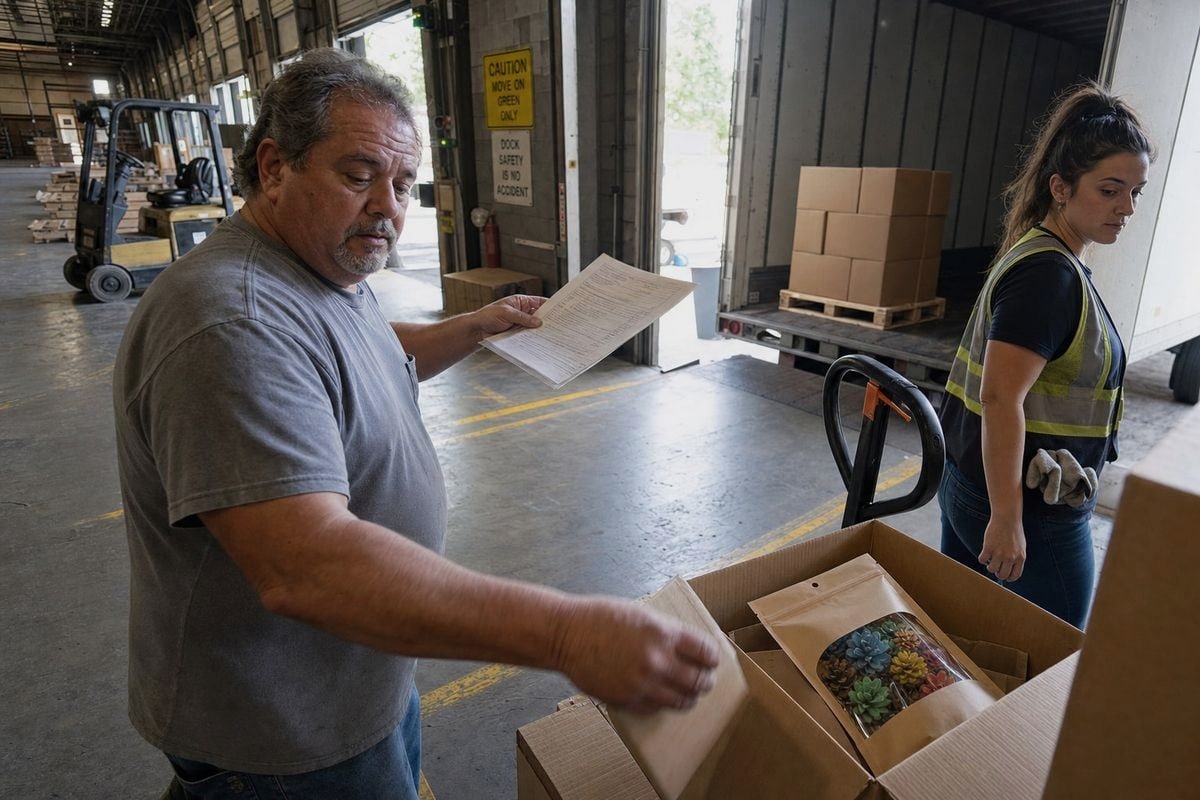
Hidden fees are rarely hidden on purpose. They are simply charges that first-time importers do not know to ask about. On a low-unit-value seasonal product, they hurt disproportionately.
The Usual Suspects
- Demurrage and detention. Containers sitting at port past free days, or equipment returned late, rack up daily charges fast.
- Peak-season receiving surcharges. Third-party warehouses raise labor and floor-space rates in Q3 and Q4 — exactly when your pine cones arrive. Book receiving appointments early and get the surcharge schedule in writing.
- Chassis and drayage accessorials. Drayage quotes often exclude chassis rental, congestion fees, and wait time.
- Exam and inspection fees. If customs or agriculture authorities pull your container for exam, you pay the exam and the trucking to the exam site.
- Document amendment fees. A mismatched bill of lading or missing phytosanitary certificate triggers correction charges and delay costs.
A Reconciliation Habit That Saves Margin
Estimated landed cost is a forecast. Actual landed cost is the truth. I encourage buyers to run a simple three-column reconciliation after each shipment: estimated charge, actual invoice, variance. Feed the variances back into the next PO's model. Buyers who do this consistently tighten their unit cost allocation within two or three shipping cycles.
Allocating Shared Costs Correctly
Many of our distributors combine pine cones with our Magic Fire packets or wood firestarters in one container. One freight bill, multiple SKUs. Allocate by the driver of the cost: freight by volume or carton count, duty by each SKU's declared value, brokerage evenly or by line item. Allocating everything by invoice value alone under-costs the bulky pine cones and over-costs the dense firestarters — which quietly distorts the margin picture on both products.
Conclusion
Factory price is where the math starts, not where it ends. Price fireplace colored pine cones on true warehouse landed cost — freight, duties, insurance, brokerage, drayage — and your margins will hold. After 17+ years shipping compliant color-flame products to 30+ countries, we can help you model it before you commit a single container.
Footnotes
1. Wikipedia entry for pine cones, the primary botanical product discussed in the article. ↩︎
2. Official ICC page defining the standard trade terms used in international shipping contracts. ↩︎
3. International standard for certifying that plant products meet import requirements to prevent pest spread. ↩︎
4. The World Customs Organization's explanation of the global system for classifying traded products. ↩︎
5. WTO technical information on how the value of imported goods is determined for duty assessment. ↩︎
6. Detailed information on the pest that triggers seasonal fumigation requirements for international shipments. ↩︎
7. OSHA's primary Hazard Communication page covering Safety Data Sheet requirements. ↩︎
8. Federal Maritime Commission fact sheet explaining port storage fees and detention penalties. ↩︎



 English
  Spanish
  German
  French
  Arabic
  Portuguese
Join the Conversation