






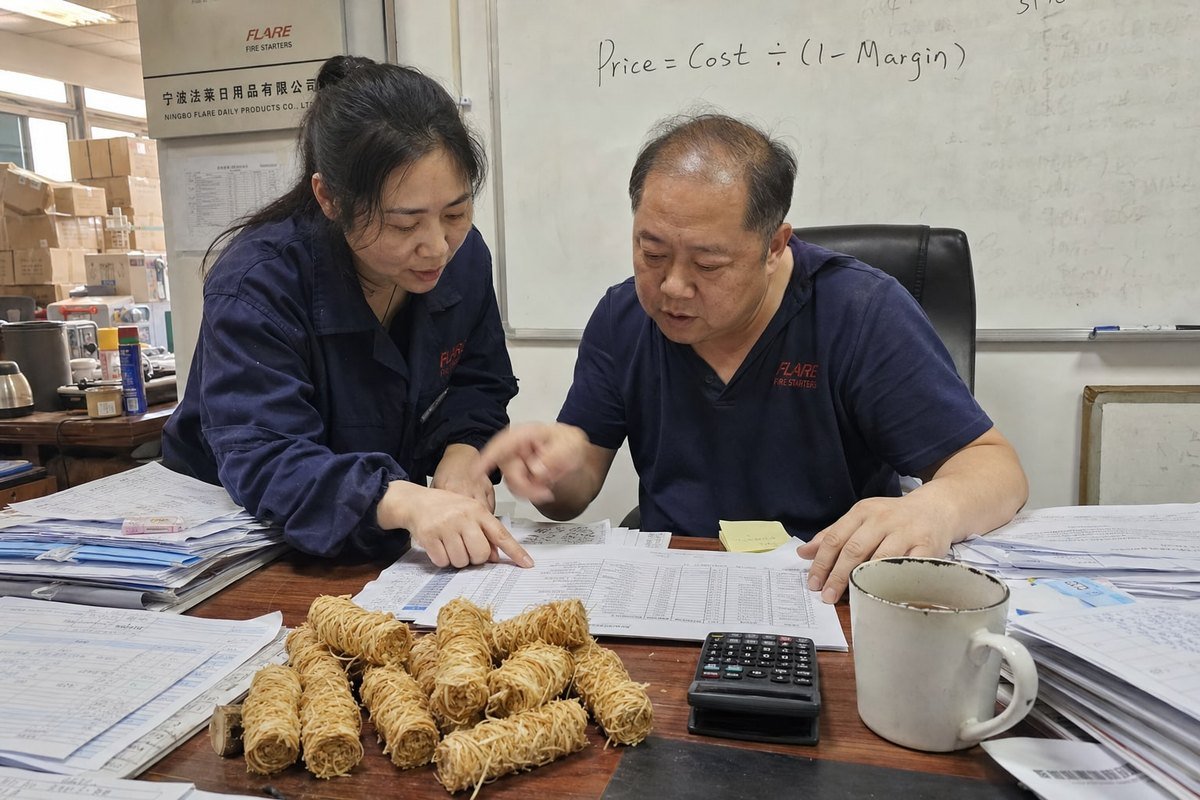
Getting the cost and pricing margin for wood fire starters right can make or break a grill combo bundle 1. On our production line, I have watched buyers underprice this small item repeatedly.
To calculate cost and pricing margin for wood fire starters in grill combo bundles, total the fully landed unit cost (materials, labor, packaging, freight), allocate shared bundle overhead, then set price using: Price = Cost ÷ (1 − Target Margin). A 40–60% gross margin on the starter component is typical.
That formula sounds simple. The real work is in the details. Let me walk you through each step, using the same numbers we discuss with our wholesale buyers every week.
How do I calculate the true landed cost of wood fire starters before setting my bundle price?
A German distributor once told me his fire starters "cost $0.30 each." When we rebuilt his cost sheet together at our Ningbo facility, the true landed cost was nearly double.
True landed cost equals factory unit price plus inbound freight, customs duties, insurance, port fees, and inland delivery, divided by units received. For wood fire starters, freight often adds 30–60% to the factory price because of their low value-to-weight ratio.
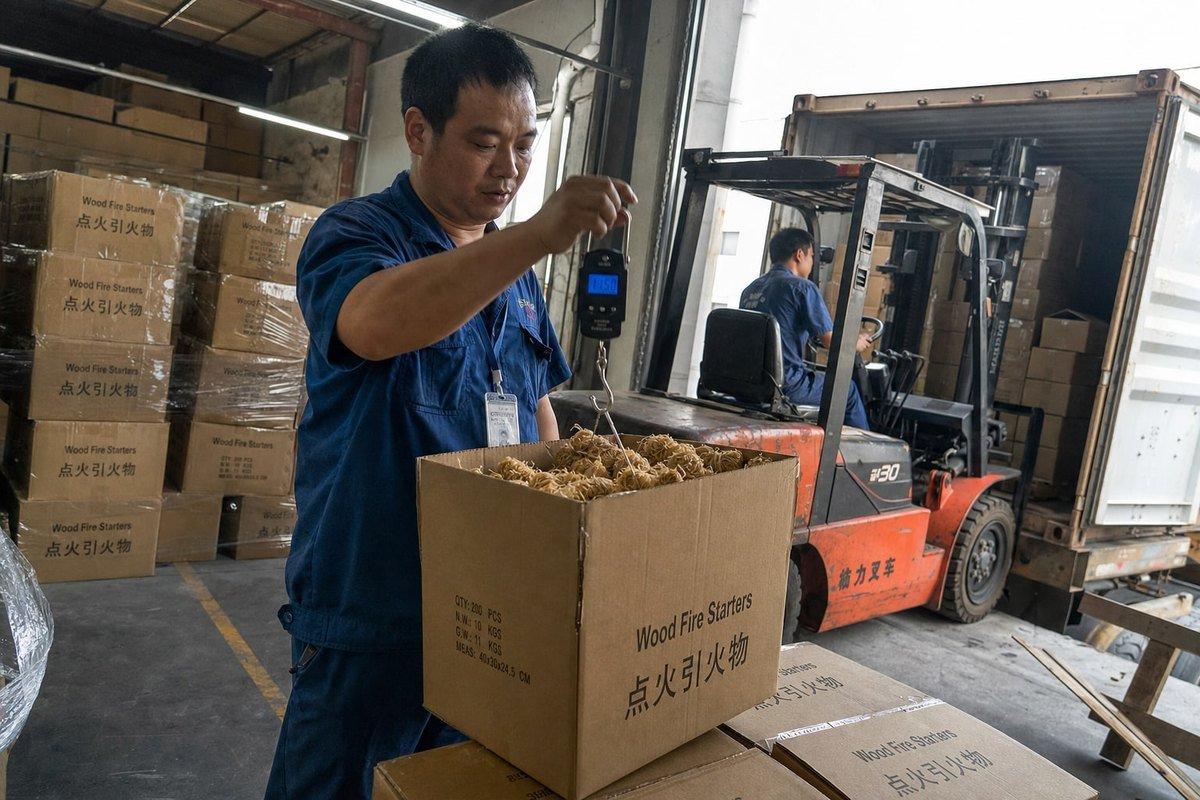
Most buyers stop at the FOB price 2. That is the first mistake. Wood fire starters are bulky relative to their value. A carton of 100-piece boxes takes real container space. So freight hits this product harder than it hits a set of steel tongs. I call this the bulkiness surcharge, and you must model it before you touch your bundle pricing strategy.
Build a full cost stack, line by line
Here is a realistic landed cost stack for a wax-dipped wood wool 3 fire starter, based on the cost categories we review with importers:
| Cost Component | Example Per Unit | Notes |
|---|---|---|
| Wood wool + paraffin wax | $0.14 | Raw materials |
| Dipping and rolling labor | $0.06 | Direct labor |
| Retail box packaging | $0.08 | Branded 100-pc box, prorated |
| Manufacturing overhead | $0.04 | Factory allocation |
| Ocean freight + inland | $0.09 | Volume-based |
| Duties and customs fees | $0.03 | Varies by market |
| Warehousing and handling | $0.04 | 3PL receiving and storage |
| Total landed cost | $0.48 | Before marketplace fees |
Notice that materials are less than a third of the total. Undercounting packaging, freight, or handling quietly distorts your unit economics. It makes the starter look profitable on paper while it drains margin in practice.
Do not forget selling costs
Landed cost gets the product to your warehouse. Selling it adds more: marketplace commissions, payment processing, and pick-and-pack fees for product kitting 4. Track these separately, but never ignore them. Your Cost of Goods Sold (COGS) plus selling costs together define the floor under any bundle price.
What profit margin should I target when bundling fire starters with grill accessories?
There is a trade-off I weigh with every OEM quote we prepare: push margin too hard and the bundle looks overpriced; keep it too thin and one promotion wipes out the profit.
Target a 40–60% gross profit margin on the fire starter component and a 30–40% blended margin on the full bundle. Low-cost consumables should carry the highest markup percentage in the kit to offset the thinner margin on the grill itself.
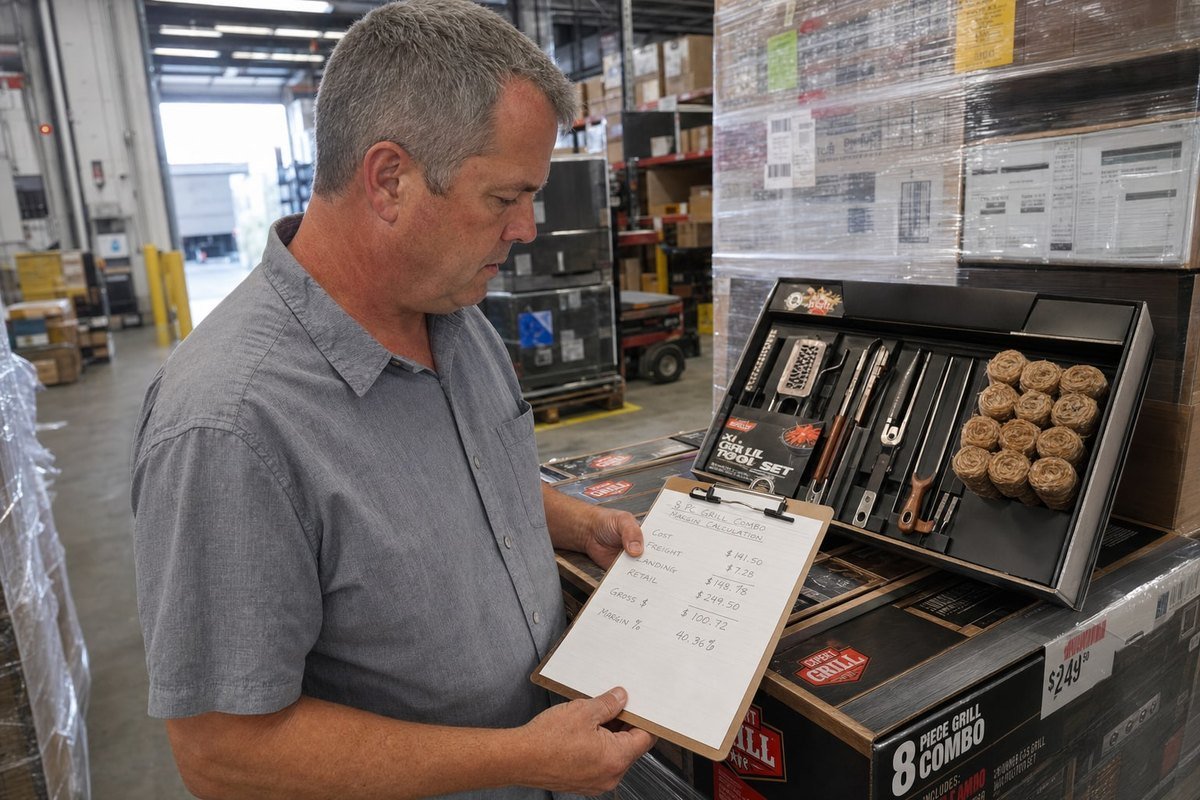
Bundle economics work like a seesaw. The grill is your anchor product. It attracts the buyer, but it usually carries a slim margin. The accessories — fire starters, tongs, seasoning — restore profitability. This is why the blended margin matters more than any single item's margin.
Margin versus markup: get the math straight
Confusing these two terms is the most common pricing error I see in buyer negotiations. Margin is profit as a percentage of the selling price. Markup is profit as a percentage of cost. The same profit produces very different numbers:
| Metric | Formula | Example ($0.48 cost, $1.20 price) |
|---|---|---|
| Gross profit | Price − COGS | $0.72 |
| Gross margin % | Profit ÷ Price | 60% |
| Markup % | Profit ÷ Cost | 150% |
A 50% markup is not a 50% margin. A 50% markup on $0.48 gives a $0.72 price and only a 33% margin. Pick one primary metric — I recommend margin, because it aligns with real profitability — and use the other only for conversion.
A worked blended-margin example
Say your bundle sells at $49.99. The grill costs you $22.00, accessories $7.50, and ten fire starters $4.80 landed. Total bundle COGS is $34.30. Gross profit is $15.69, for a 31.4% blended margin. If you swap in higher-margin starters or add two more at low incremental cost, the bundle margin climbs without raising the price. That is the quiet power of consumables in product kitting. They also lift Average Order Value (AOV) and bring the customer back for refills, which lowers your effective acquisition cost over time.
How do MOQ and private-label costs affect my pricing strategy for combo bundles?
Early in my export career, I quoted a UK buyer a trial MOQ that was too small for custom boxes. His per-unit packaging cost tripled. That lesson shaped how we structure private-label programs today.
MOQ directly sets your per-unit cost: larger orders spread tooling, printing plates, and setup fees across more units. Private-label extras — custom boxes, barcodes, warning labels — can add $0.05–$0.20 per unit at low volumes, so model pricing at your actual order quantity.
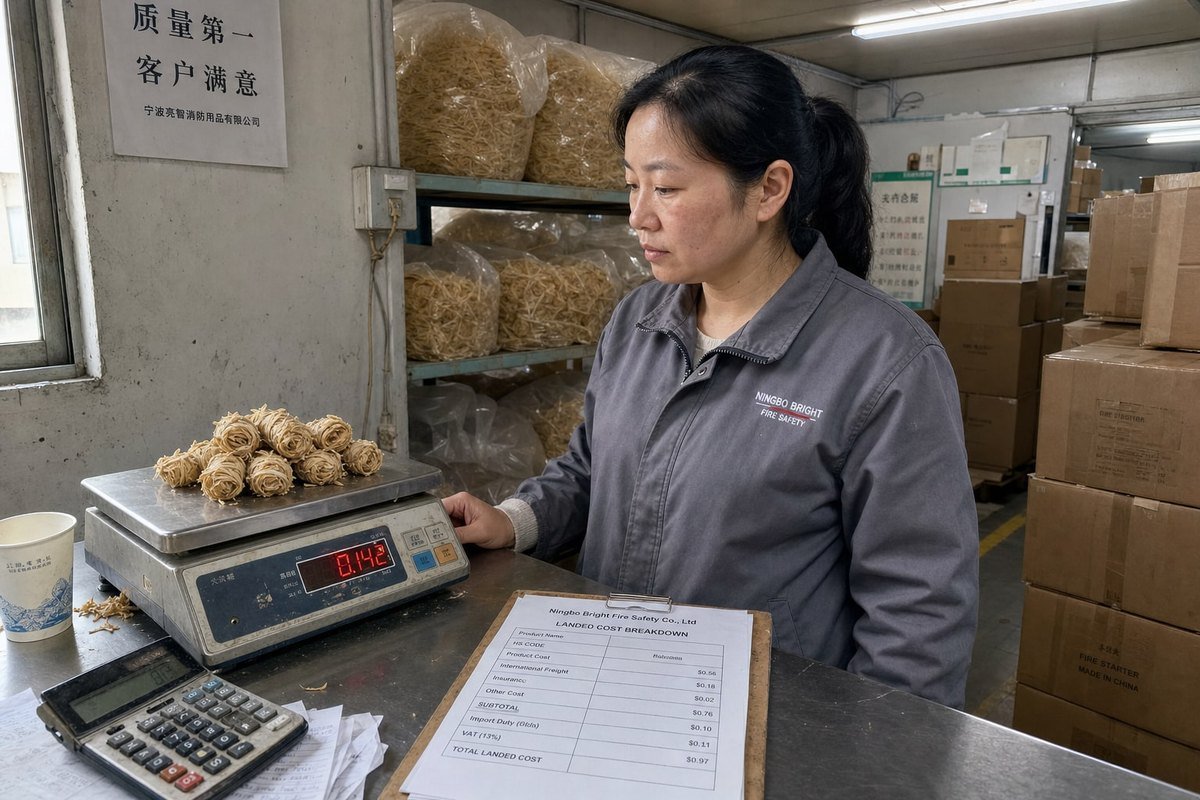
Wholesale pricing is never one number. It is a curve. At 1,000 units, custom retail boxes with flame graphics, brand tagline, and compliance labels carry heavy setup costs per piece. At 20,000 units, those same fixed costs become almost invisible in the unit price.
What private-label really adds to your cost sheet
When we run OEM/ODM projects, these are the typical cost drivers a buyer should budget for:
- Custom printed retail boxes and display packaging.
- Printing plates or dies (one-time setup fees).
- Barcodes, batch codes, and market-specific warning labels.
- Custom burn-time or size specifications requiring line adjustments.
- Pre-shipment testing and certification documentation for your market.
Each of these behaves differently as volume grows. Setup fees amortize quickly. Per-unit material upgrades, like moisture-resistant wraps, do not. Separate the two in your cost sheet so you can predict pricing at your next reorder volume.
Use trial MOQs strategically
Flexible trial MOQs 5 exist for a reason. We often advise buyers to run a first order in stock packaging or a simplified sleeve. You validate the bundle's sell-through and contribution margin 6 first. Then you commit to full private-label branding at a volume where the numbers work. Compliance is the one place not to economize. Certified production with proper test reports protects you from retail delisting, which costs far more than any packaging saving. A bundle that gets pulled from shelves has a margin of negative one hundred percent.
Which factors most influence my cost per unit when sourcing wood fire starters from a certified manufacturer?
Seventeen years of running fire-product lines has taught me one thing: the quote is shaped long before the quote is written. Five factors decide most of it.
The biggest cost-per-unit drivers are raw material quality (wood wool and wax grade), certification and testing requirements, order volume, packaging complexity, and freight terms. Certified production with ISO 9001, BSCI, and SGS-tested batches costs slightly more upfront but prevents expensive quality failures.
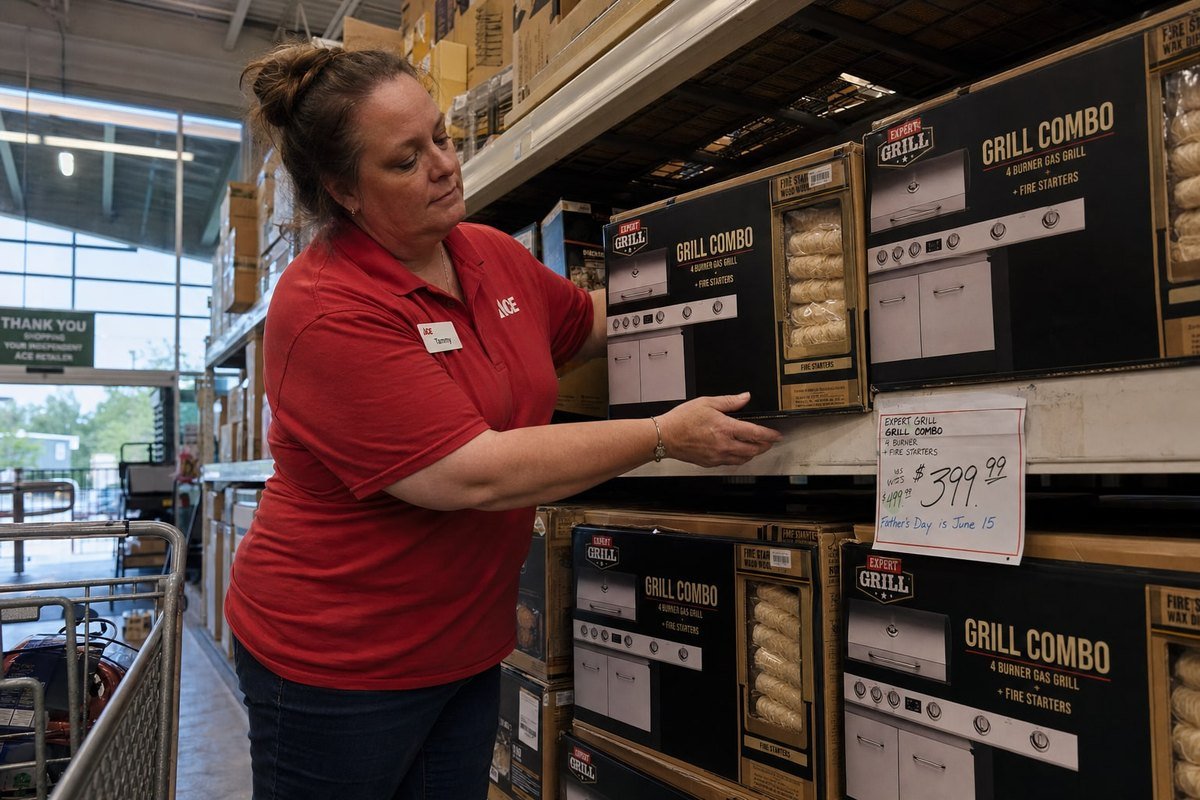
Buyers often compare quotes as if all fire starters were identical. They are not. Wax load determines burn time. Wood wool density determines flame reliability. A starter that guarantees a sustained ten-minute flame justifies a premium price, and customers will pay for that consistency. Cheap alternatives that sputter out generate returns and one-star reviews that destroy the whole bundle's economics.
Rank the cost drivers
| Factor | Impact on Unit Cost | What You Control |
|---|---|---|
| Raw material grade | High | Spec wax load and burn time |
| Order volume | High | Consolidate SKUs, forecast better |
| Packaging complexity | Medium | Simplify for trial runs |
| Certification and testing | Medium | Choose a pre-certified factory |
| Freight terms (FOB vs DDP) | Medium | Negotiate and consolidate loads |
| Seasonality of booking | Low–Medium | Order ahead of peak grilling season |
Certification is a cost input, not a cost problem
Some buyers see compliance as an added expense. In our experience exporting to the US, Germany, and the UK, it is the opposite. Factories running ISO 9001 7 systems with batch-to-batch quality control deliver consistent product, so your first sample reliably reflects mass production. That consistency protects your contribution margin. One rejected container, one failed retail audit, or one safety recall erases years of savings from a cheaper uncertified source. Manufacturing overhead at a certified factory also includes documented testing, which large retail sourcing channels demand anyway. Build these requirements into your landed cost model from day one, and your bundle pricing stays honest.
Conclusion
Small components decide bundle profits. Calculate the true landed cost of your wood fire starters, price from target margin, respect MOQ economics, and source certified quality. Your blended margin will thank you.
Footnotes
1. Major B2B sourcing platform relevant to buyers assembling grill combo bundles from suppliers. ↩︎
2. ICC defines FOB and other Incoterms used to calculate true landed cost in trade. ↩︎
3. Explains the raw material whose density directly affects fire starter performance and cost. ↩︎
4. Background concept explaining how bundled components are assembled and sold together. ↩︎
5. International Trade Centre provides guidance on minimum order quantities for wholesale trade buyers. ↩︎
6. Defines the financial metric buyers should validate before committing to private-label branding. ↩︎
7. Authoritative and stable Wikipedia entry for the ISO 9001 quality management standard. ↩︎



Join the Conversation