






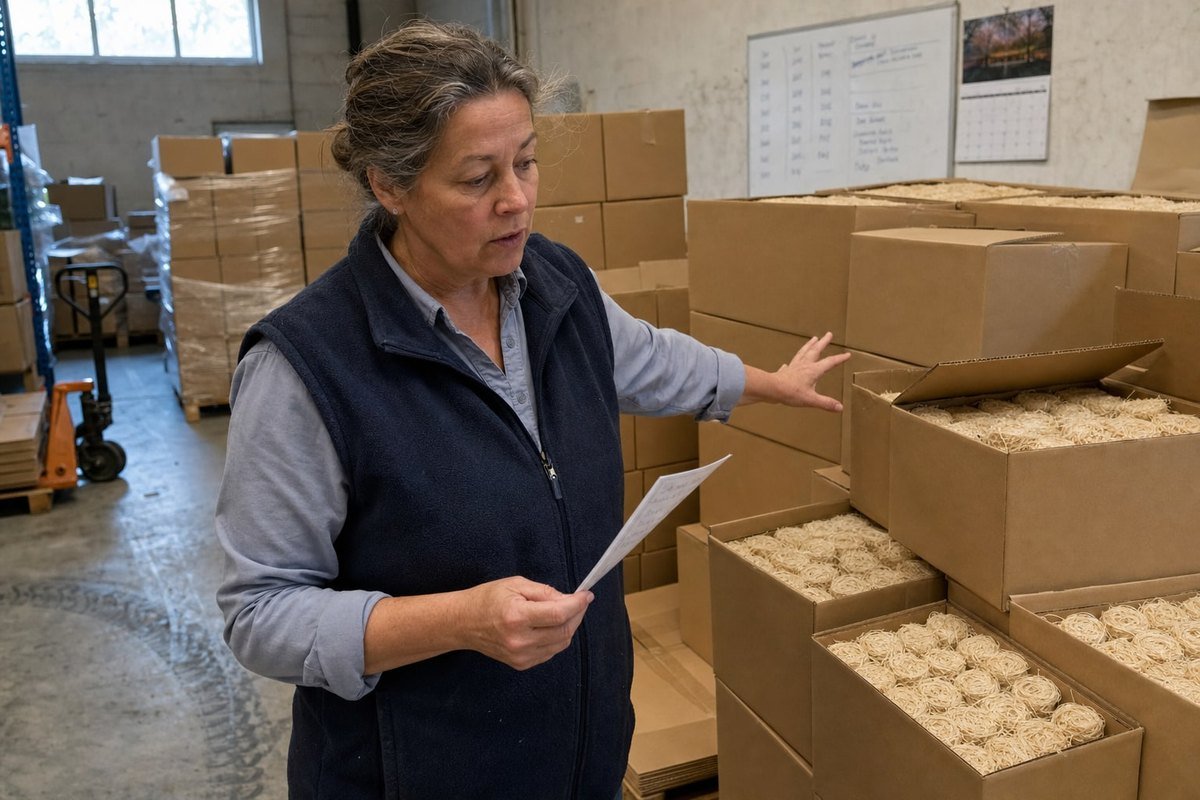
Balancing supplier MOQ and inventory turnover 1 for wood fire starters can feel impossible CE and SGS reports 2. I watch buyers overcommit, tie up cash, then watch stock sit through summer. Our production floor sees the fix daily.
Balance supplier MOQ and inventory turnover by forecasting monthly demand per SKU, calculating how many months the MOQ covers, and comparing bulk-price savings against carrying costs. Then negotiate tiered pricing, split shipments, or mixed-SKU minimums so stock turns four to six times per year.
That is the short answer. The details matter more. Below, I break down what MOQs really look like, how to avoid overstock, how trial orders work, and the exact math to use.
What MOQ Should I Expect When Sourcing Wood Fire Starters from a Chinese Manufacturer?
Last winter, a German fireplace distributor asked me why our wax-dipped wood roll MOQ was set where it was. I walked him through our line setup, and the number suddenly made sense to him.
Most Chinese factories set wood fire starter MOQs between 5,000 and 20,000 pieces per SKU, or roughly 500 to 1,000 retail boxes. Private-label orders with custom packaging usually sit at the higher end because printed boxes, labels, and barcodes carry their own printing minimums.
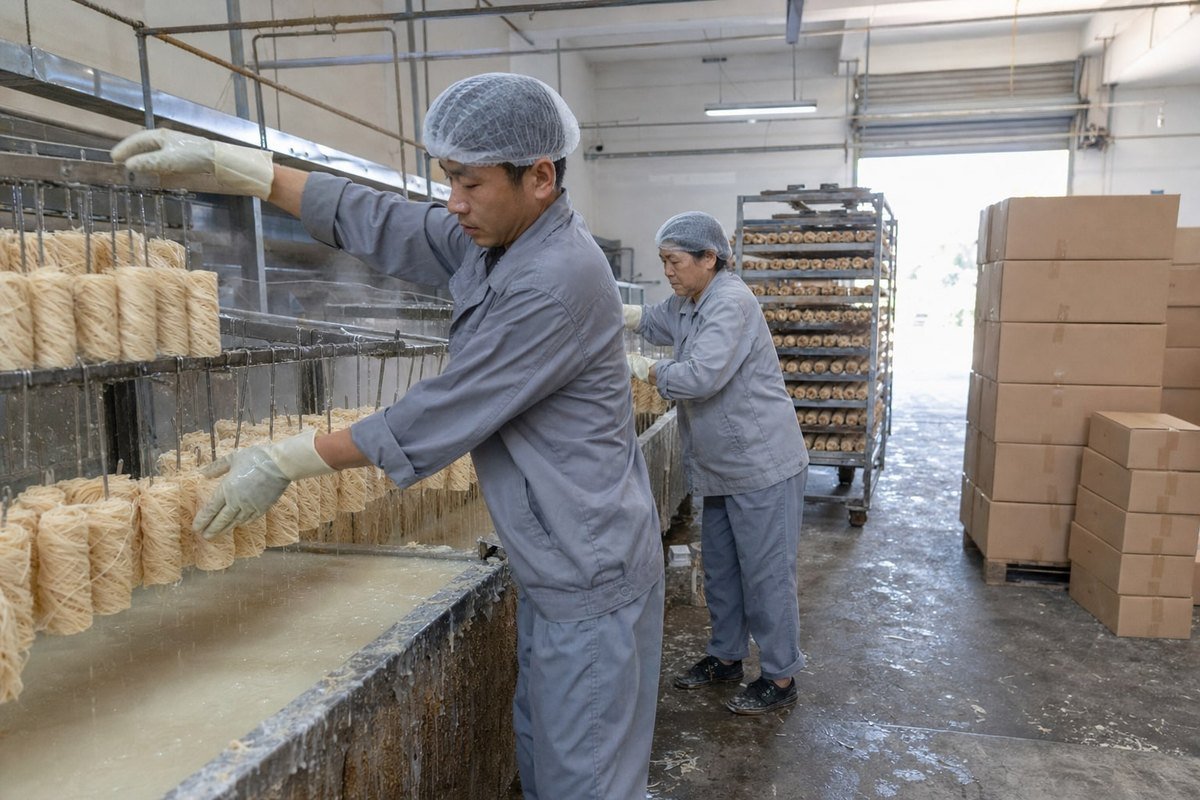
MOQ is not a random number a factory invents to pressure you. It is the smallest order that covers real costs. On our lines in Ningbo, one production run of wax-dipped wood wool rolls involves material staging, wax-bath temperature calibration, drying racks, and quality control inspections 3 at multiple checkpoints. Those setup costs exist whether we make 3,000 units or 30,000. Spread over too few units, the economics break for both sides.
What Drives the MOQ Number
Several layers stack on top of each other. Each one has its own minimum.
| Cost Layer | Why It Creates a Minimum |
|---|---|
| Raw materials | Wood wool and paraffin are bought in bulk lots; small runs waste material |
| Line setup | Wax-dipping calibration and drying time are fixed per run |
| Packaging | Printed retail boxes often have 3,000–5,000 piece print minimums |
| Compliance | SGS or Intertek batch testing costs are spread across the run |
| Freight | Ocean shipping favors full cartons and pallet-efficient loads |
Private label manufacturing 4 is usually the biggest multiplier. A bulk-packed, unbranded order can ship at a lower minimum. But once you add a custom box with flame graphics, warning labels, and your barcode, the printer's minimum becomes your minimum. In our experience exporting to 30+ countries, packaging minimums surprise first-time importers more than product minimums do.
One more point. Certification matters here too. Buyers who require FSC certification 5 on the wood component or documented CE and SGS reports should expect the factory to batch-test each production lot. That fixed testing cost is another quiet reason MOQs exist. A factory that skips it can quote lower minimums — and that should worry you, not attract you.
How Can I Avoid Overstocking When My Supplier Requires a Higher MOQ Than I Need?
A trade-off we weigh constantly on our side: push a buyer to fill a container for freight efficiency, or protect their cash flow with a smaller, smarter order. The second choice keeps clients for years.
Avoid overstocking by negotiating a minimum order value across mixed SKUs, requesting split shipments over several months, standardizing core components to pool volume, using a 3PL for low-cost overflow storage, and capping any single order at four to six months of forecast demand.

Overstock hurts twice. First, it locks up working capital that could fund marketing or new SKUs. Second, it generates carrying cost every month it sits — storage, insurance, financing, and shrinkage. A common estimate puts annual carrying cost at 20–30% of inventory value. On a low-to-medium value product like eco-friendly firelighters, that can quietly erase the discount you earned by buying big.
Practical Tactics That Actually Work
Here are the levers I see smart buyers pull, roughly in order of effectiveness:
- Mix SKUs under one minimum order value. Instead of 10,000 pieces of one item, ask for a combined MOV across fire starter rolls, color-flame pinecones, and kindling packs. We accept this structure often because our lines share materials.
- Request split shipments. Produce once, ship in two or three tranches. You pay for goods as they ship, and your average inventory stays lower.
- Standardize components. If your whole range uses the same wood wool grade and paraffin blend, the factory can aggregate material purchasing and soften per-SKU minimums.
- Stagger assembly. Some buyers pay for raw materials in bulk while we assemble and pack finished goods in waves matched to their sales velocity.
- Use a 3PL warehouse. Hold MOQ-driven overflow in a low-cost regional warehouse instead of expensive marketplace storage, then feed fast-turning stock forward in small batches.
- Share a container. Non-competing outdoor brands sometimes co-load a container. This helps with the FCL vs LCL shipping decision — full-container rates per unit, without full-container inventory risk for one buyer.
The Red-Flag Test
Run this simple check before signing any PO. If the MOQ divided by your monthly demand exceeds six months of coverage — and your replenishment lead time is 60–90 days — the order is too big for your business right now. Renegotiate the structure, not just the price.
Can I Negotiate a Trial Order Below Standard MOQ to Test Demand Before Committing to Bulk Inventory?
Early in our export history, a UK camping brand asked for just 2,000 units to test a new pack size. We said yes — with conditions. That trial grew into one of our longest-running accounts.
Yes, most established factories will accept a trial order below standard MOQ if you use stock packaging or minimal branding, accept a higher unit price or a small setup fee, and present a credible reorder forecast. Trial orders of 1,000–3,000 units are common for proven designs.
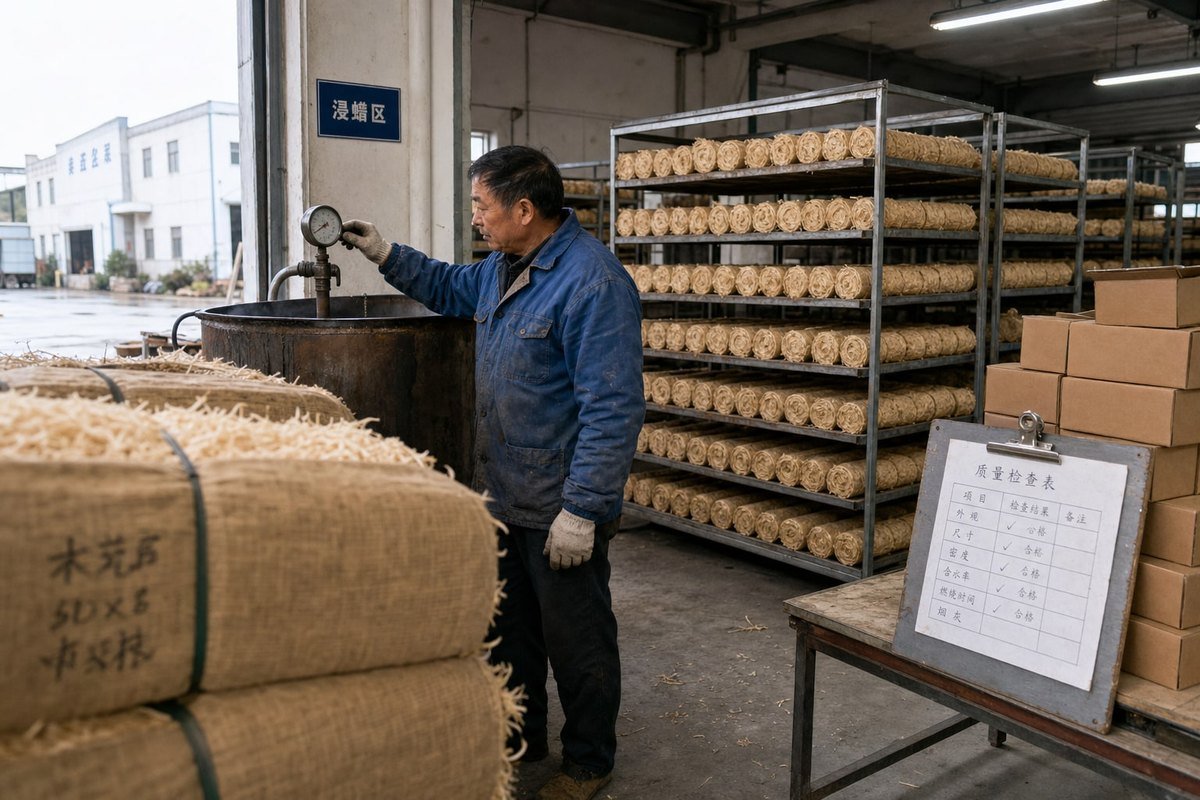
The key is understanding what the factory needs to say yes. We are not protecting a policy. We are protecting run economics. Remove the cost drivers, and the minimum drops.
How to Structure a Trial Order the Factory Can Accept
| Trial Order Lever | What It Does | What You Give Up |
|---|---|---|
| Stock or neutral packaging | Bypasses print minimums entirely | Full retail branding for the test |
| Paid setup fee | Compensates the factory for line calibration | Small fixed cost, often $200–500 range |
| Piggyback production | Rides alongside a larger client's run of the same spec | Flexibility on timing and exact spec |
| Higher trial unit price | Covers small-run inefficiency | Margin on the first order only |
| Signed forecast or LOI | Signals repeat-order potential | A commitment you should intend to honor |
A few practical notes from our side of the table. First, trial orders work best on proven designs. If we already produce a wax-dipped wood roll regularly, adding your 2,000 units to a scheduled run is easy. A fully custom shape, burn time, or scent resets the math. Second, ship trials by LCL or even air for speed. The goal is fast market data, not freight optimization. Third, use the trial to validate more than demand — check quality consistency, lead time reliability, and whether the sample truly matches mass production. That last point is where genuine manufacturing depth shows. After 17+ years, our position is simple: the first sample must reflect the batch, or the trial teaches you nothing.
Finally, treat the trial as the start of volume discount negotiation, not a one-off. Agree on the tiered pricing for the follow-up order before the trial ships. That protects you from renegotiating with weak leverage after your test succeeds.
How Do I Calculate the Right Order Quantity to Keep My Inventory Turnover Healthy While Meeting My Supplier's MOQ?
A Dutch importer once sent me his spreadsheet before placing his second order. He had modeled demand, lead time, and carrying cost per unit. His order was 30% smaller than his first — and his margin improved. Data beats gut feel.
Divide the supplier MOQ by your average monthly unit sales to get months of coverage. Target three to six months including safety stock. Then confirm that the bulk-price and freight savings exceed the carrying cost of holding that inventory, roughly 2–2.5% of stock value per month.

Let me walk through the framework step by step. It takes twenty minutes and prevents six-figure mistakes.
The Five-Step Calculation
- Forecast monthly demand by SKU. Use last year's sales, adjusted by channel and season. Fire starters spike from September through February in most of our markets. Some of our clients even use regional weather data to time large orders against forecasted cold spells.
- Add lead time. From PO to your warehouse, expect 60–90 days including production, quality control inspections, ocean transit 6, and customs. Lead time management is half the battle — variability here forces bigger buffers.
- Set safety stock levels. Cover demand during lead time plus a buffer for forecast error. For seasonal goods, hold more buffer entering the season and cut it hard before the season ends.
- Compute months of coverage. MOQ ÷ monthly demand. Compare it against your target turnover.
- Run the cost comparison. Bulk savings per unit × order size, versus carrying cost of the extra months of stock. If holding costs win, negotiate the MOQ down or restructure the order.
A Worked Example
| Input | Value |
|---|---|
| Supplier MOQ | 12,000 units |
| Monthly demand (in season) | 3,000 units |
| Months of coverage | 4 months |
| Unit cost at MOQ | $0.55 |
| Unit cost at half MOQ | $0.61 |
| Bulk savings | $720 total |
| Monthly carrying cost (2% of stock value) | ~$130 falling as stock sells |
| Verdict | MOQ acceptable in season; too high off-season |
Notice the answer changes with the calendar. The same MOQ that turns healthily in November may bury you in March. That is why working capital optimization 7 for seasonal products means front-loading orders before the season and shrinking them aggressively as it winds down. Inventory turnover — COGS divided by average inventory — is your scoreboard. For imported fire starters, four to six turns per year is a healthy target. Below three, your MOQ strategy needs surgery.
Conclusion
MOQ and turnover are not enemies. Forecast demand, cap coverage at four to six months, negotiate structure over price, and partner with a factory flexible enough to grow with you.
Footnotes
1. Defines the inventory turnover ratio used as the article's core performance metric. ↩︎
2. Official EU page detailing CE marking compliance requirements referenced for exported goods. ↩︎
3. Authoritative Wikipedia entry defining quality control processes and inspection standards in manufacturing. ↩︎
4. Background on private label manufacturing model that drives packaging-based MOQ minimums. ↩︎
5. Explains the forest sustainability certification standard buyers reference for wood fire starter sourcing. ↩︎
6. US trade authority resource on international shipping logistics referenced for lead-time planning. ↩︎
7. Explains working capital concept central to balancing seasonal inventory financing decisions. ↩︎



Join the Conversation