






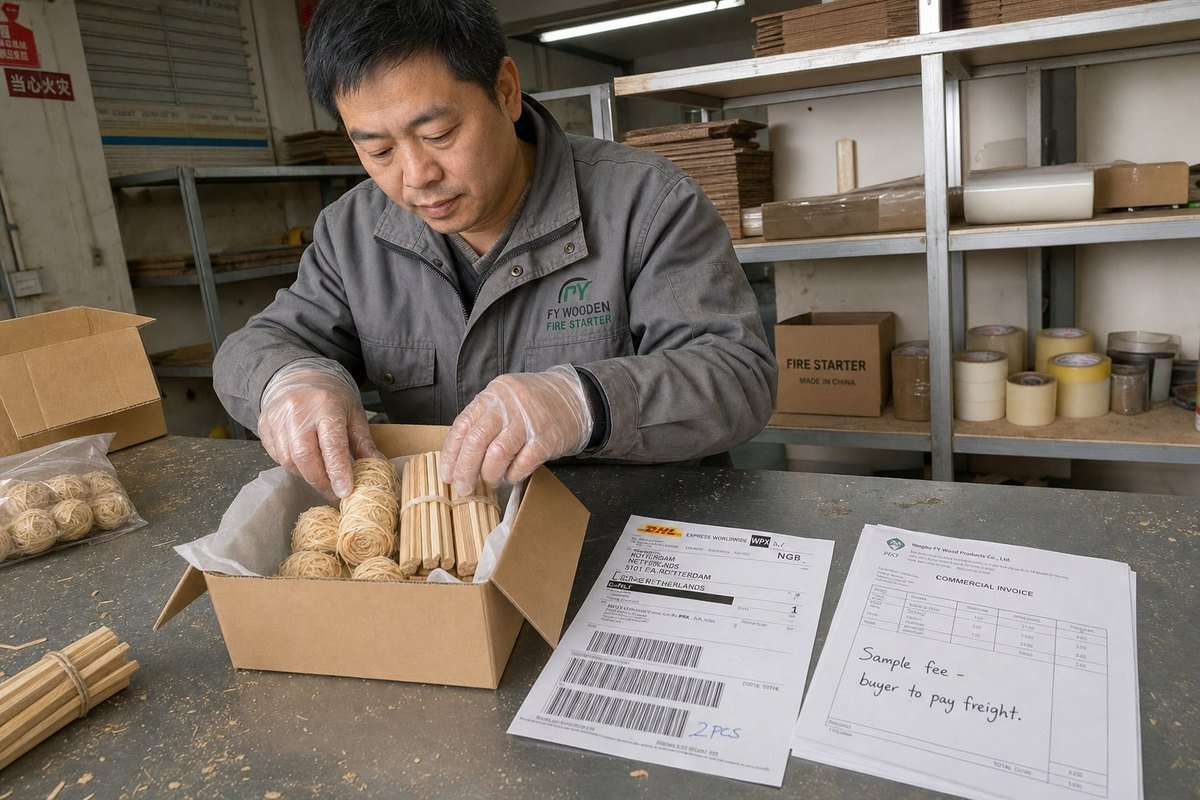
Every week, buyers ask our factory who pays for sample cost and shipping when purchasing wood fire starters. Unclear answers create budget surprises, stalled negotiations, and mistrust before an order even starts.
In most B2B transactions, the buyer pays for wood fire starter sample cost and shipping. However, many manufacturers charge samples at cost price, refund sample fees against a confirmed bulk order, or waive charges entirely for serious wholesale buyers with clear purchasing intent.
That is the short answer. The full answer depends on your buying channel 1, order size, and destination country. Let me break down each part so you can budget correctly and negotiate with confidence.
How Much Do Wood Fire Starter Samples Typically Cost Before I Place a Bulk Order?
Last month, a Dutch distributor told me he had received sample quotes ranging from free to forty dollars per piece. His confusion is common, and our production team sees it constantly.
Wood fire starter samples typically cost between $0 and $50 per sample set. Standard catalog samples are often free or charged at cost price, while custom private-label samples with branded packaging usually run $20–$50 to cover setup, materials, and small-batch handling.
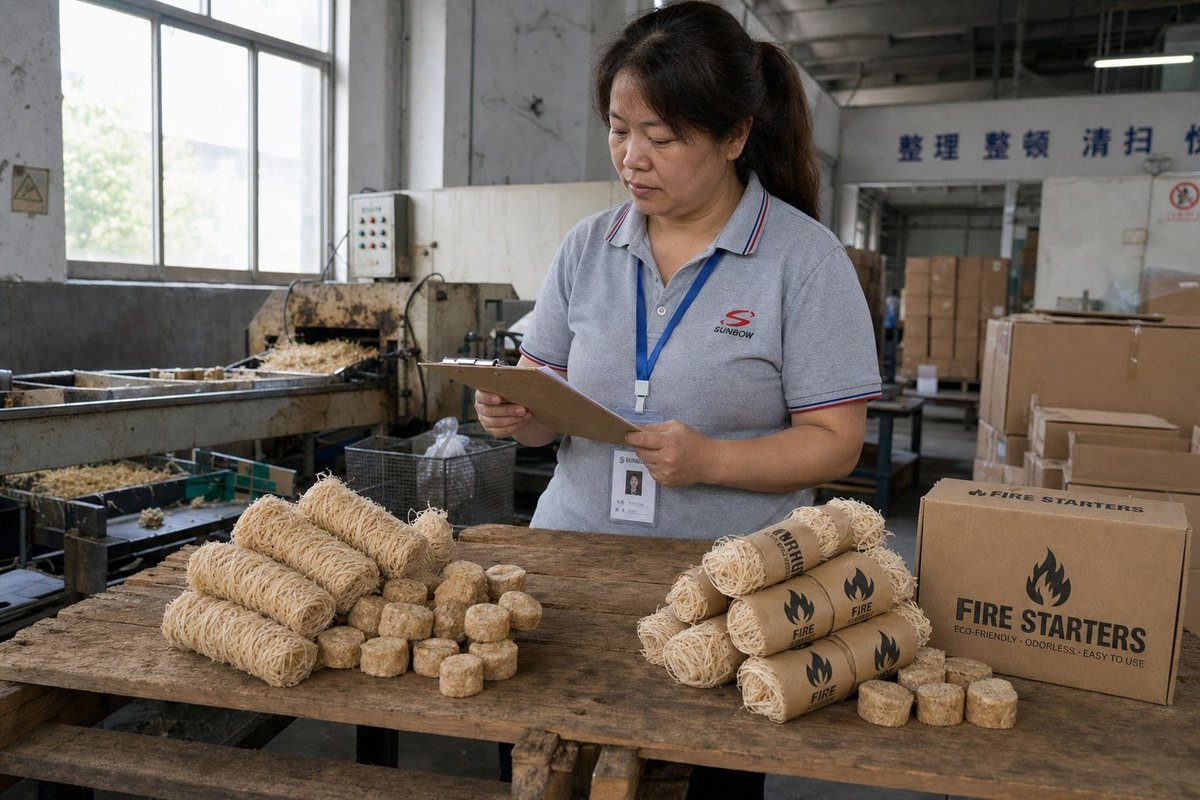
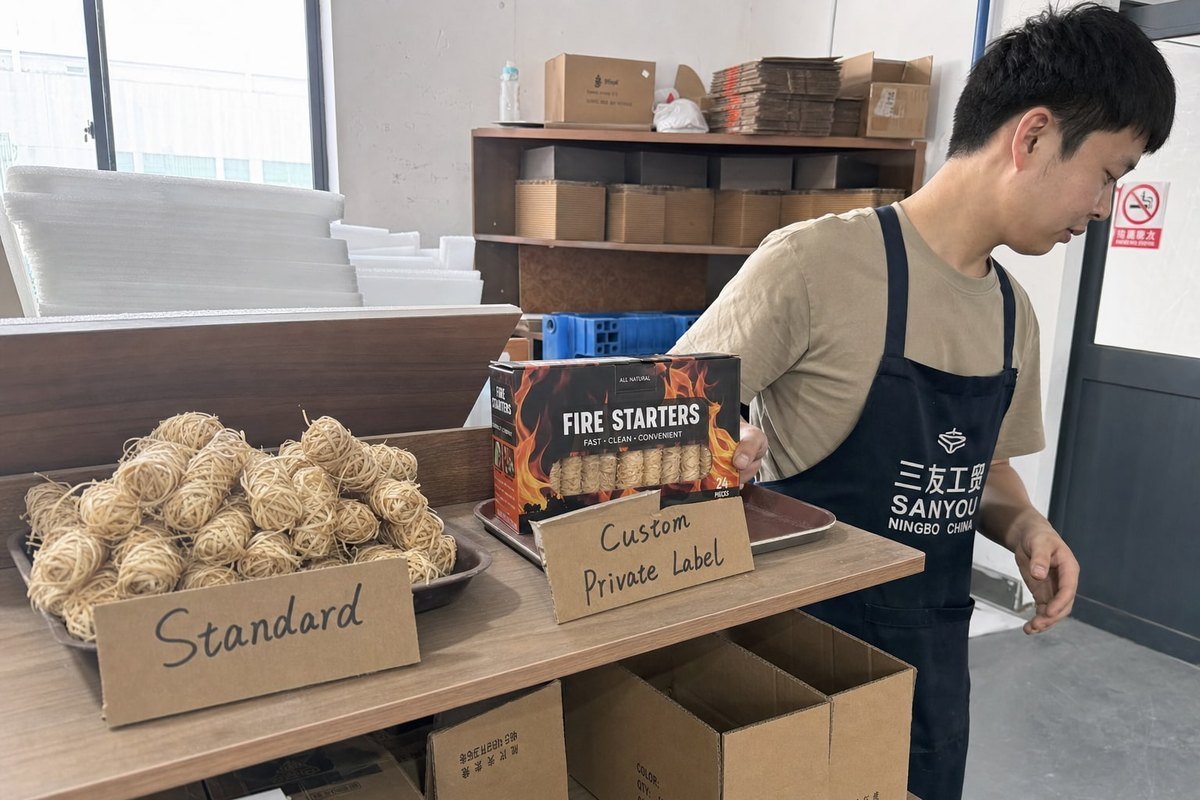
The price you pay depends heavily on what kind of sample you request. At our facility in Ningbo, a standard wax-dipped wood roll 2 pulled from an existing production batch costs us very little to send. A custom sample is a different story. It may require a new wax formula, a specific burn time target, custom box printing, and quality control testing before it ever leaves the factory.
Standard Samples vs. Custom Samples
Here is how the cost structure usually breaks down across the market:
| Sample Type | Typical Cost to Buyer | Why |
|---|---|---|
| Standard catalog sample | Free or at cost ($0–$10) | Pulled from existing stock, minimal handling |
| Retail unit purchase | Standard retail price | Common with artisan or small-scale producers |
| Custom size or burn time | $15–$40 | Requires small-batch production run |
| Full private label sample | $20–$50+ | Includes printed packaging, labels, barcodes |
Some marketplace listings show explicit sample prices, sometimes as high as $40 per piece for natural fire starters. That is not symbolic pricing. It reflects real small-order fulfillment overhead. In our 17 years serving B2B procurement teams 3 across the US and Europe, we have found that a clear product sample policy prevents disputes later. We charge standard samples at cost with no markup, because we want the sample to prove one thing: that mass production will match what you hold in your hand. That is what strict batch-to-batch quality control is for.
One more tip. Do not compare suppliers on sample price alone. A cheap sample from an inconsistent factory costs you far more later than a fairly priced sample from a certified one.
Can I Get Sample Fees Refunded Once I Confirm My Wholesale Order?
A UK fireplace distributor once negotiated with us for three weeks over a $30 sample fee, then placed a five-container order. We credited the fee back on his first invoice without being asked.
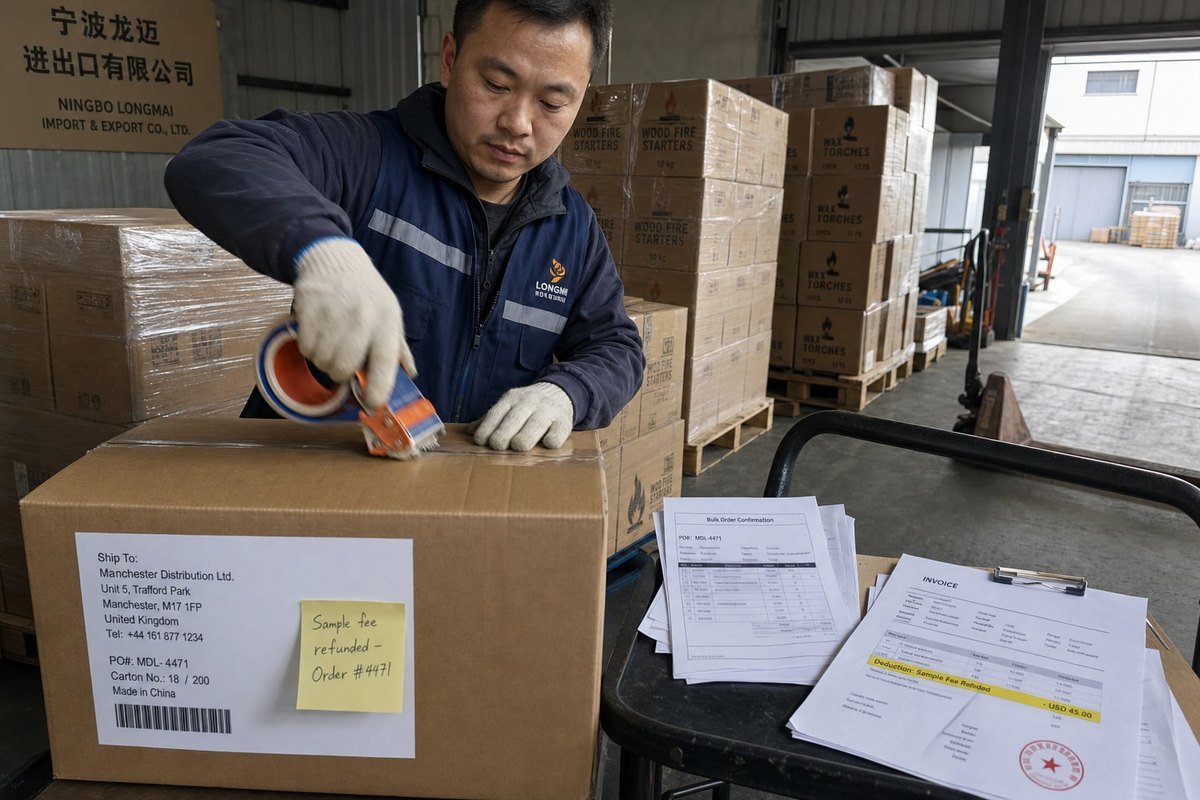
Yes, many wood fire starter suppliers refund or credit sample fees once you confirm a qualifying wholesale order. This is standard practice among wholesale firelighters manufacturers, though refunds are usually tied to a minimum order quantity and must be agreed in writing beforehand.
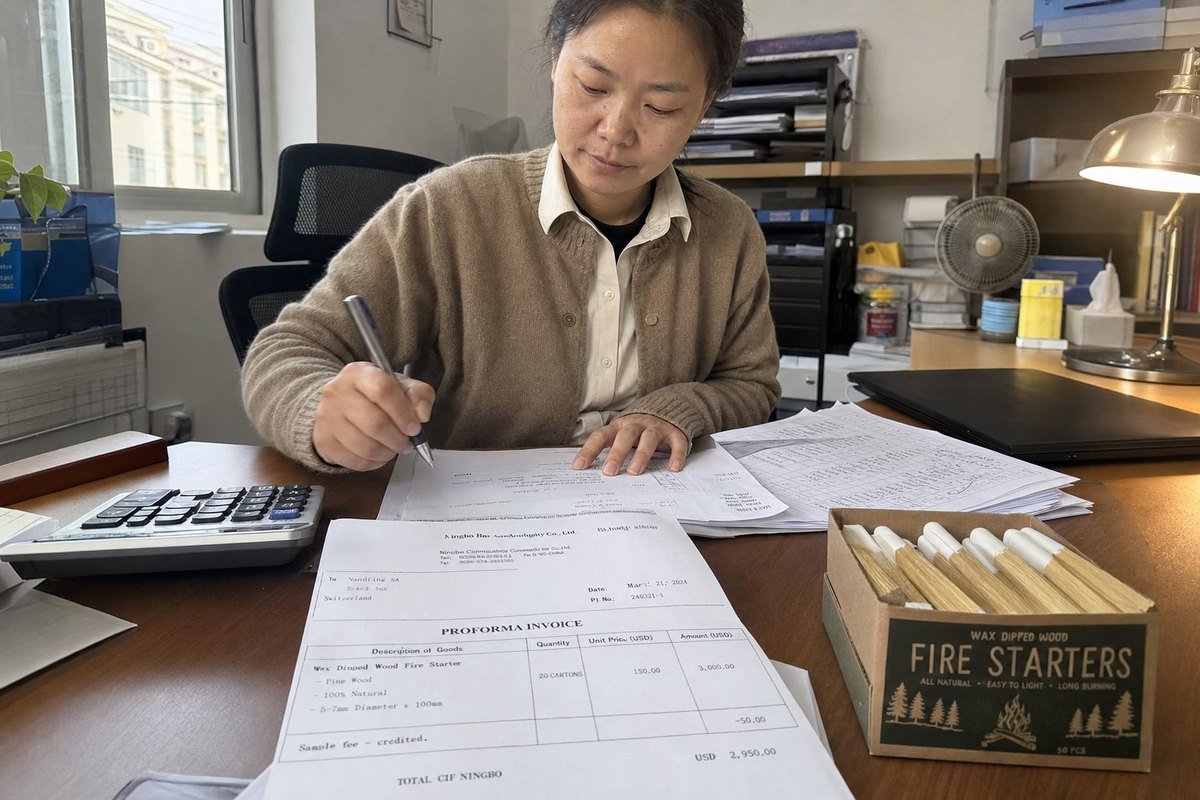
The sample refund is one of the most useful negotiation tools in B2B procurement, yet many buyers never ask for it. Suppliers use it to filter serious inquiries from casual ones. If you pay a sample fee and then commit to a bulk order, the supplier happily deducts it from your invoice. Everyone wins. The supplier avoids wasting samples on window shoppers, and you effectively get your samples for free once you buy.
How the Refund Process Usually Works
- You request samples and pay the quoted sample cost and freight.
- The supplier confirms in writing that fees are refundable against a qualifying order.
- You test the samples and approve quality.
- You place a bulk order meeting the agreed minimum order quantity.
- The sample fee is deducted from your proforma invoice or first payment.
Notice step two. Get the refund policy in writing before you pay. Verbal promises across time zones and languages are how disputes start. In our experience exporting to 30+ countries, the buyers who confirm terms by email always have smoother transactions.
Also understand what is typically refundable and what is not. Product cost is commonly credited. Shipping fees are sometimes credited but often are not, because the courier already collected that money. Custom tooling or printing setup fees for private label manufacturing 4 samples are usually non-refundable, since that work was done specifically for you. Ask about each line item separately, and you will avoid surprises.
Who Covers International Shipping Costs for My Wood Fire Starter Samples?
Shipping a small box of wood wool firelighters from China to Chicago can cost more than the samples inside it. That imbalance surprises almost every first-time importer we work with.
The buyer almost always covers international shipping costs for wood fire starter samples. Suppliers typically ship via courier on the buyer's account or bill freight separately. Import duties, customs clearance, and any freight forwarding fees at destination are also the buyer's responsibility.
International sample shipping deserves careful attention because the numbers are lopsided. A sample worth $15 may cost $40–$80 to courier internationally. Express carriers like DHL, FedEx, and UPS charge by volumetric weight, and even though fire starters are compact and light compared to fuels, the box still takes up billable space.
Common Sample Shipping Arrangements
| Arrangement | Who Pays | Best For |
|---|---|---|
| Buyer's courier account | Buyer directly | Regular importers with negotiated courier rates |
| Freight collect / billed separately | Buyer via supplier's invoice | First-time buyers without courier accounts |
| Supplier-subsidized shipping | Shared cost | Established accounts or promotional periods |
| Bundled with existing shipment | Effectively free | Repeat buyers with orders already in transit |
A few practical points from our export desk. First, wax-dipped fire starters made with paraffin are generally not classified as dangerous goods 5, but classification rules vary, and some high-wax or chemical-infused products can trigger hazmat surcharges. Our eco-friendly formulas avoid harmful chemicals precisely to keep compliance and shipping simple, and our SGS and Intertek test reports back that up for customs.
Second, clarify international shipping terms up front. Is the quote EXW, FOB, or DDP? For samples, most quotes exclude destination charges entirely. That means duties, taxes, and brokerage land on you at delivery.
Third, if you already have goods coming from your supplier, ask them to tuck samples into that shipment. We regularly bundle new color-flame or firestarter samples into existing container loads for repeat customers. It costs nothing extra and speeds up product development conversations on both sides.
What Should I Expect for Sample Lead Times Before Committing to a Full Production Run?
Timing killed a deal I watched unfold years ago: a US camping brand needed shelf-ready product by September, but started sampling in July. The math never worked. Plan backward from your launch date.
Standard wood fire starter samples ship within 2–5 business days from stock, plus 3–7 days courier transit. Custom samples with private-label packaging take 7–15 days to produce. Budget 2–4 weeks total for sampling before approving a full production run.
Lead time is where sampling either builds confidence or burns your calendar. The sample stage is not just shipping time. It includes production, quality control testing, transit, your own burn testing 6, feedback rounds, and possibly a second sample. Buyers who only count courier days consistently underestimate the timeline by half.
A Realistic Sampling Timeline
| Stage | Standard Sample | Custom / Private Label Sample |
|---|---|---|
| Quotation and sample agreement | 1–2 days | 2–4 days |
| Sample production | 0–2 days (from stock) | 7–15 days |
| Internal QC and burn testing | 1 day | 1–3 days |
| International courier transit | 3–7 days | 3–7 days |
| Your evaluation and burn tests | 3–7 days | 5–10 days |
| Revision round (if needed) | — | Add 10–15 days |
What to Test When Samples Arrive
Do not just light one and call it done. Evaluate like bulk kindling suppliers evaluate their own output. Check ignition reliability across several pieces, total burn time against the stated spec, flame height, smell, ash residue, moisture resistance, and packaging durability. Test in the real conditions your customers will face: a damp fire pit, a cold grill, a fireplace with poor draft.
One thing our production lines are built around is this: the sample you approve must match the containers that follow. That is why we run strict batch-to-batch quality control under ISO 9001 7, so your first sample reliably reflects mass-production quality. When you compare suppliers, ask how they guarantee that consistency. A beautiful sample means little if batch three arrives with a different wax coating or shorter burn time. Also confirm the minimum order quantity that applies after sampling, so approval flows straight into production without renegotiation.
Conclusion
Unclear sample terms waste budgets and delay launches. The buyer usually pays sample cost and shipping, but refunds, waivers, and bundled freight are all negotiable. Confirm every term in writing, test thoroughly, and choose a certified partner whose bulk production matches the sample.
Footnotes
1. Wikipedia entry explaining the various routes and intermediaries through which products reach the end consumer. ↩︎
2. Wikipedia entry describing the composition and use of manufactured fire starters and logs. ↩︎
3. Provides a comprehensive overview of the procurement process within business-to-business environments. ↩︎
4. Authoritative Wikipedia entry defining private label goods and manufacturing processes. ↩︎
5. Official IATA resource for identifying and shipping substances that pose a risk to health or safety. ↩︎
6. Professional fire testing services that ensure products meet safety and performance standards. ↩︎
7. Authoritative Wikipedia entry explaining the ISO 9001 quality management system standard. ↩︎



 English
  Spanish
  German
  French
  Arabic
  Portuguese
Join the Conversation