






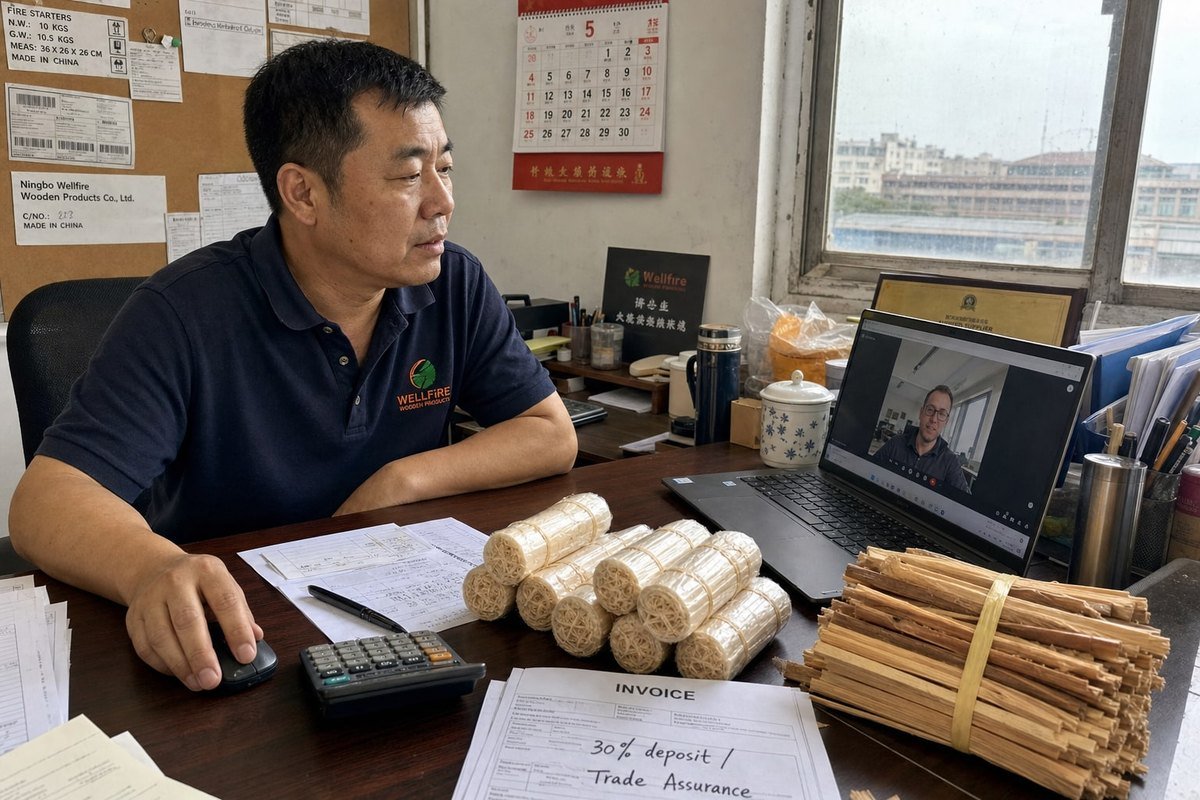
Choosing the most secure payment method for wood fire starters worries many buyers. I have watched importers lose deposits to [fake suppliers](https://sunrichfire.com/how-avoid-shell-companies-sourcing-wood-fire-starters/), and it always ends the same painful way: no goods, no refund, no recourse. After 17 years running our fire-starter production lines, we built our payment terms specifically to remove that fear.
The most secure payment method when buying wood fire starters wholesale is a Letter of Credit or Alibaba Trade Assurance, because both hold funds until delivery terms are met. For smaller sample orders, PayPal or a credit card offers the strongest chargeback rights and buyer protection programs.
The right answer depends on your order size and how well you know the supplier. Below, I break down payment terms, verification steps, and the warning signs that should stop you from wiring a single dollar.
What payment terms should I expect when ordering from a Chinese wood fire starter manufacturer?
A German distributor once asked me why we requested a 30% deposit. I explained it covers raw wax and wood wool for his custom order. That conversation taught me buyers deserve clear payment logic upfront.
Standard payment terms from a legitimate Chinese wood fire starter manufacturer are 30% deposit via T/T before production and 70% balance after inspection, before shipment. Sample orders are usually paid in full via PayPal or credit card through a secure checkout process.
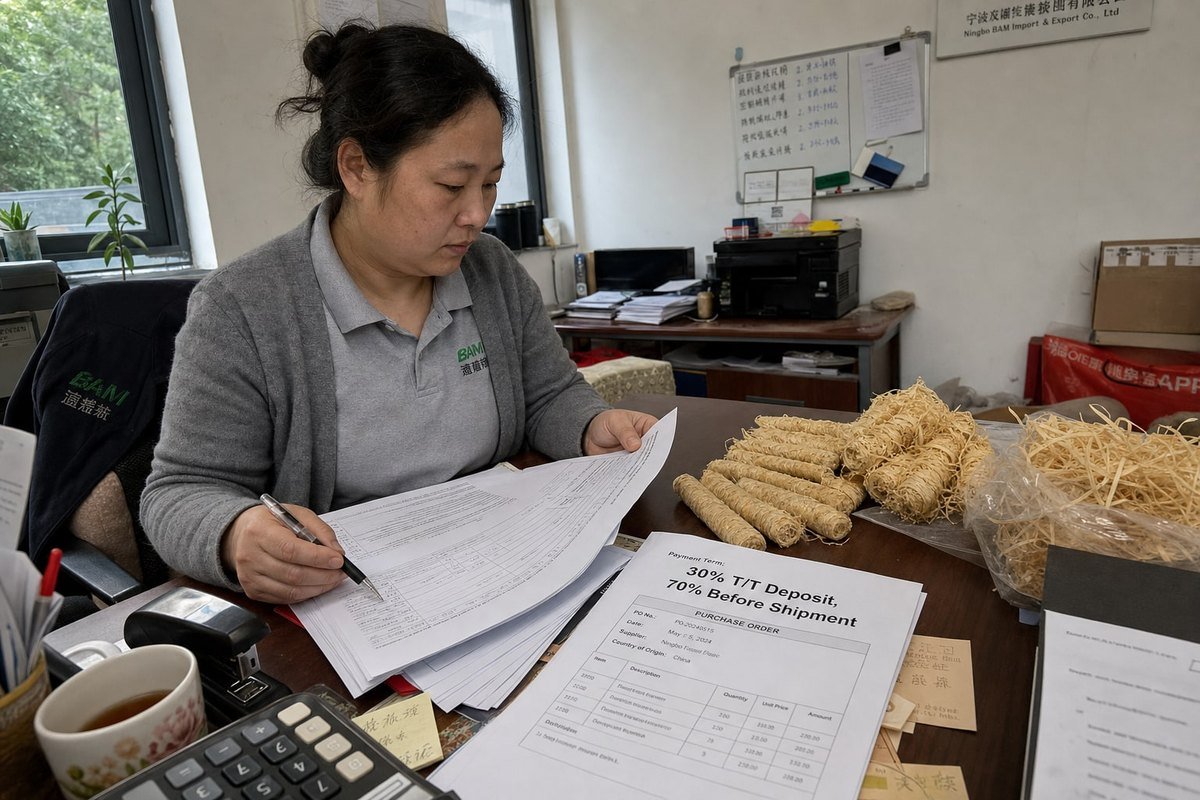
Payment terms in this industry follow a fairly predictable pattern. At our factory in Ningbo, we quote the same structure to almost every new buyer, because it balances risk fairly between both sides. You should expect something very close to it from any serious supplier.
The typical payment structure by order stage
| Order Stage | Typical Payment Method | Typical Terms |
|---|---|---|
| Samples | PayPal, credit card | 100% upfront, small amount |
| Trial order (1 pallet or less) | T/T, Trade Assurance | 30% deposit / 70% before shipment |
| Full container order | T/T, Letter of Credit 1 | 30/70 or LC at sight |
| Repeat orders (established relationship) | T/T | 30/70, sometimes balance against B/L copy |
The 30% deposit is not a trick. It covers real costs: wood wool, paraffin wax 2, custom packaging film, and printed retail boxes. If a buyer cancels mid-production, the deposit protects the factory from eating those materials. The 70% balance is where your leverage lives. You pay it only after you see inspection photos, third-party test reports, or a full SGS or Intertek inspection if you request one.
What flexibility looks like
Established relationships change the math. Some of our long-term buyers in the US and Netherlands pay the balance against a copy of the bill of lading. That means goods are already on the water before final payment. No factory offers that on a first order, and you should be suspicious of one that does. Overly generous terms from a stranger often signal desperation or fraud. Fraud prevention measures work in both directions, and healthy terms reflect a healthy business.
How can I verify a supplier is legitimate before sending payment for wood firestarters?
Buyers often ask us for a live video tour before their first wire transfer. We happily walk them through our wax-dipping line in Ningbo. A real factory never hesitates to show its floor.
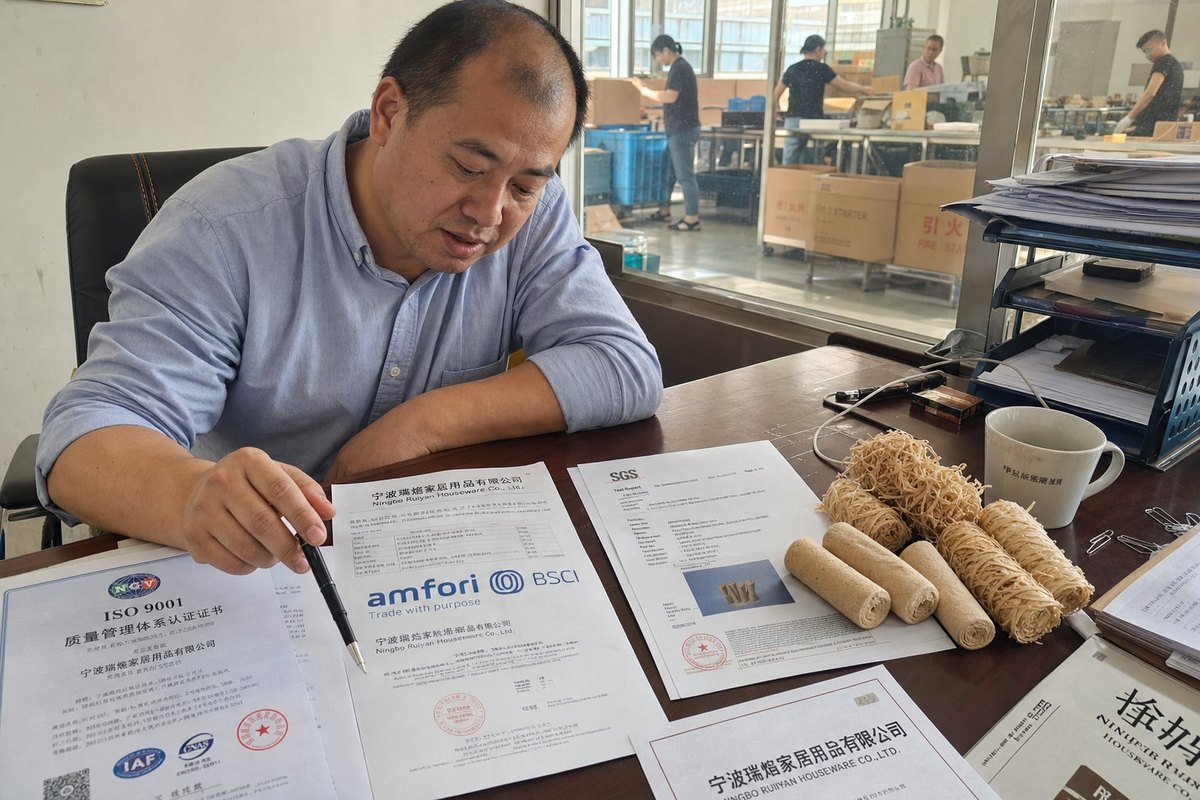
Verify a wood fire starter supplier by checking their business license, requesting ISO 9001 and BSCI audit reports, confirming SGS or Intertek test certificates directly with the testing body, doing a live video factory tour, and matching the bank account name to the registered company.
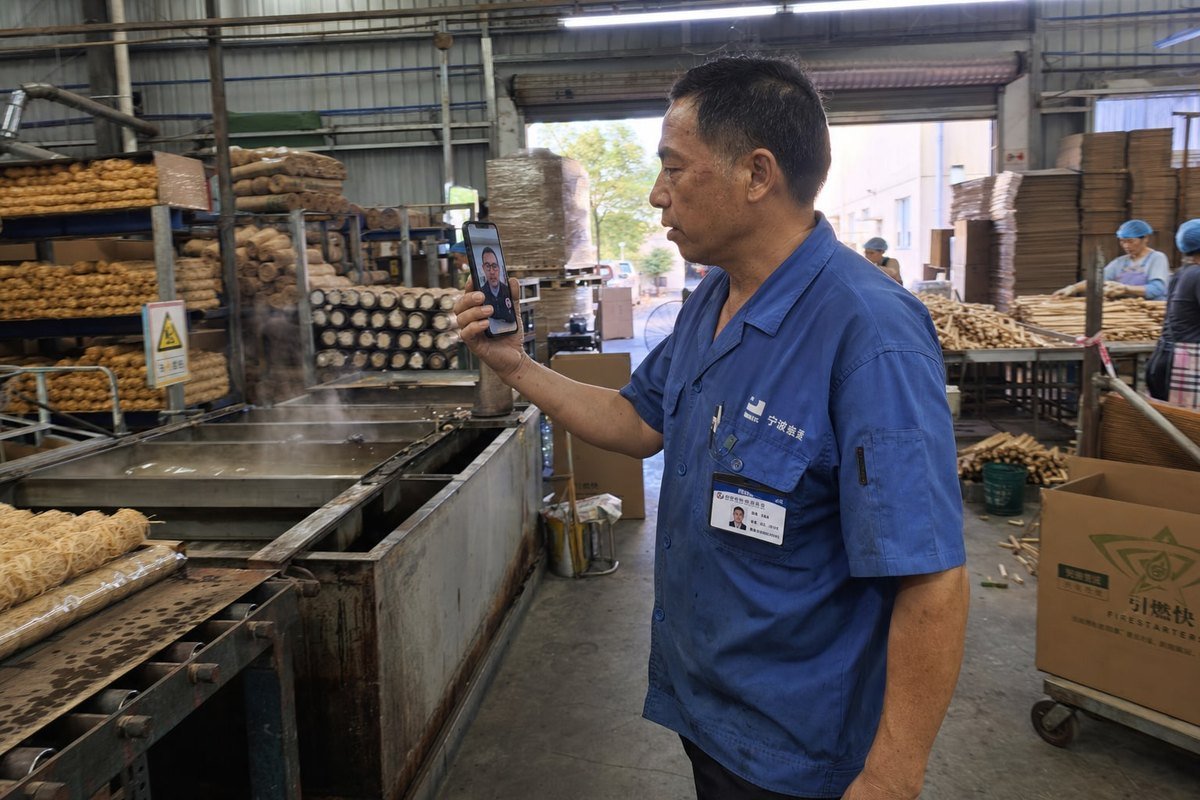
Verification is cheap. Recovering money from a fraudulent account is nearly impossible. So I always tell buyers to spend two or three days on due diligence before sending anything. In my experience exporting to 30+ countries, the legitimate suppliers welcome scrutiny, and the fake ones dodge it.
A practical verification checklist
- Request the Chinese business license. Check the registered company name, registration number, and business scope. The scope should mention manufacturing, not just trading.
- Ask for certifications with report numbers. ISO 9001, BSCI, CE, and SGS or Intertek reports can be verified directly with the issuing body. A verified merchant status on a B2B platform adds another layer, but never rely on it alone.
- Do a live, unscheduled video call. Ask them to walk from the office to the production line. Watch for wax tanks, wood wool rolls, and packing stations. A trading company posing as a factory cannot fake this on demand.
- Match the bank account name to the company name. This is the single most important step. If the beneficiary is a personal account or a differently named company, stop.
- Check the export history. Ask which markets they ship to and request a redacted bill of lading. Shipping records to the US, Germany, or the UK are hard to fabricate.
- Order a paid sample first. A wax-dipped wood roll tells you a lot: burn time, wax coating consistency, and packaging quality. It also tests their secure checkout process and communication speed.
Identity theft protection matters here too. Scammers sometimes hijack a real company's identity 3, using its license and certificates but swapping in their own bank details. That is exactly why step four is non-negotiable. When one of our buyers received a fake invoice from a spoofed email address years ago, the mismatched account name was what saved him.
Is a Letter of Credit or Trade Assurance safer for large wholesale fire starter orders?
Weighing these two options comes up constantly in our sales conversations. We accept both, and honestly, each protects a different kind of buyer with a different kind of order.
Trade Assurance is safer and simpler for orders under roughly $50,000 because it holds funds in escrow and offers built-in dispute resolution. A Letter of Credit is safer for large container orders, since banks release payment only against verified shipping and inspection documents.
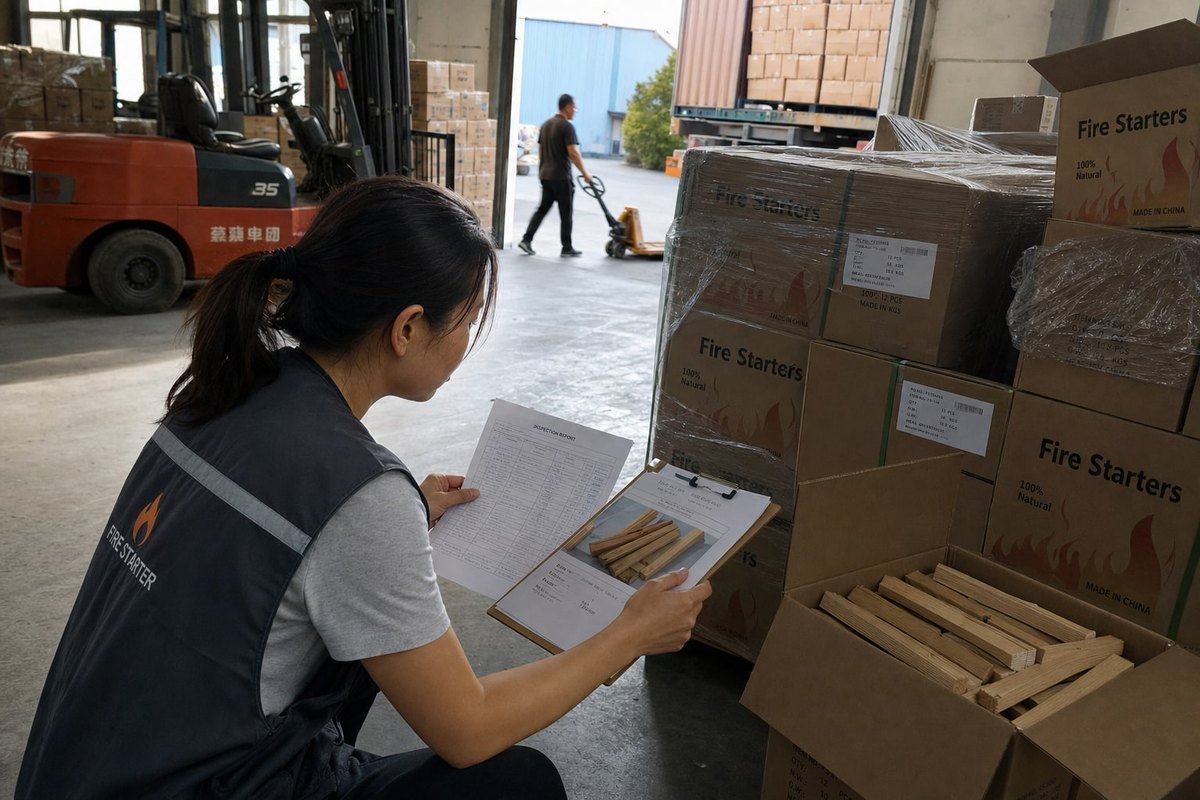
Both instruments solve the same core problem: you do not want to pay before goods exist, and the factory does not want to produce before payment is secured. They just solve it at different scales and costs.
Side-by-side comparison
| Factor | Letter of Credit (LC) | Trade Assurance |
|---|---|---|
| Best order size | Large ($50,000+, full containers) | Small to mid-size orders |
| Who holds the money | Your bank, released against documents | Alibaba escrow until you confirm |
| Cost | Bank fees, often 0.5–2% plus charges | Free for buyers, small processing fee |
| Dispute process | Strict document compliance rules | Platform mediation and refunds |
| Protection covers | Payment timing and documents | Quality, delivery time, and payment |
| Setup complexity | High; needs bank relationships | Low; built into the platform |
| Works off-platform | Yes, any supplier with a bank | No, Alibaba suppliers only |
How I advise buyers to choose
An LC at sight protects you through document control. The bank pays only when the supplier presents a clean bill of lading, packing list, and often an inspection certificate. For a purchasing manager ordering three containers of private-label fire starters 4, this is the gold standard. But LCs are unforgiving. A typo in the documents can freeze payment, and small factories sometimes refuse LCs from unfamiliar banks because of that rigidity.
Trade Assurance suits trial orders. The funds sit in escrow, the platform enforces the agreed specs and ship date, and buyer protection programs kick in if something goes wrong. Two-factor authentication on your platform account adds another safeguard against account hijacking, which is an underrated risk in B2B payments. The weakness is coverage limits and the fact that disputes over subjective quality issues can drag on.
My honest recommendation: use Trade Assurance for your first one or two orders, then graduate to T/T with inspection, or an LC for major volume. That is the path most of our long-term distributors have followed.
What red flags in payment requests suggest a wood fire starter supplier might be unreliable?
A buyer in Poland once forwarded me an invoice he had received from a "supplier" demanding urgent full payment to a personal account in a different city. Every warning light was flashing.
Major red flags include requests for 100% upfront payment, personal or mismatched bank accounts, sudden bank detail changes by email, pressure to pay within hours, refusal of escrow or Letter of Credit, prices far below market, and checkout pages lacking SSL encryption.
Most payment fraud in this industry is preventable. The warning signs repeat so consistently that you can build a simple screening habit around them. After nearly two decades of watching how scams unfold against our own buyers and prospects, I group the red flags into three categories.
Red flags ranked by severity
| Red Flag | Severity | What It Usually Means |
|---|---|---|
| Bank details changed via email mid-deal | Critical | Email compromise or invoice fraud |
| Personal account or mismatched beneficiary name | Critical | The "company" cannot legally receive funds |
| 100% payment demanded upfront on first bulk order | High | No skin in the game; likely no goods |
| Refusal of LC, escrow, or third-party inspection | High | Supplier avoids any accountability |
| Price 40%+ below market for wax-dipped wood rolls | High | Bait pricing or non-existent product |
| Extreme urgency ("pay today or lose the slot") | Medium | Pressure tactic to bypass your diligence |
| Payment page without SSL encryption or PCI compliance 5 | Medium | Weak digital wallet security and data risk |
| Vague or missing contract payment clauses | Medium | Disputes will have no paper trail |
The one rule that catches most fraud
If bank details change at any point, verify by phone or video call using a number you sourced independently, never one from the suspicious email. Invoice interception fraud is the most common way real buyers lose money to real suppliers' fake impersonators. The deal is genuine; the account is not.
Also check the basics on any online payment page. A legitimate supplier's checkout should show HTTPS, run on a PCI compliance-certified gateway 6, and never ask you to email card numbers. Chargeback rights only help if you paid by card in the first place, which is another reason we push sample orders 7 through PayPal rather than wire transfer. Cheap fire starters that require an untraceable payment are never cheap in the end.
Conclusion
Payment fraud destroys sourcing budgets fast. Verify the supplier, match bank names, use Trade Assurance or an LC by order size, and never wire funds under pressure. Secure payments start with a verified factory.
Footnotes
1. ICC provides authoritative guidance on Letter of Credit trade finance instruments and standards. ↩︎
2. Provides technical details on the material used in fire starter production. ↩︎
3. Guidance on protecting business identity and responding to data security threats. ↩︎
4. Explains the business model of selling products under a retailer's own brand. ↩︎
5. PCI Security Standards Council defines official compliance requirements for secure payment processing. ↩︎
6. Official site for payment card industry security standards. ↩︎
7. Explains the role of trial products in business-to-business procurement. ↩︎


 English
  Spanish
  German
  French
  Arabic
  Portuguese
Join the Conversation