






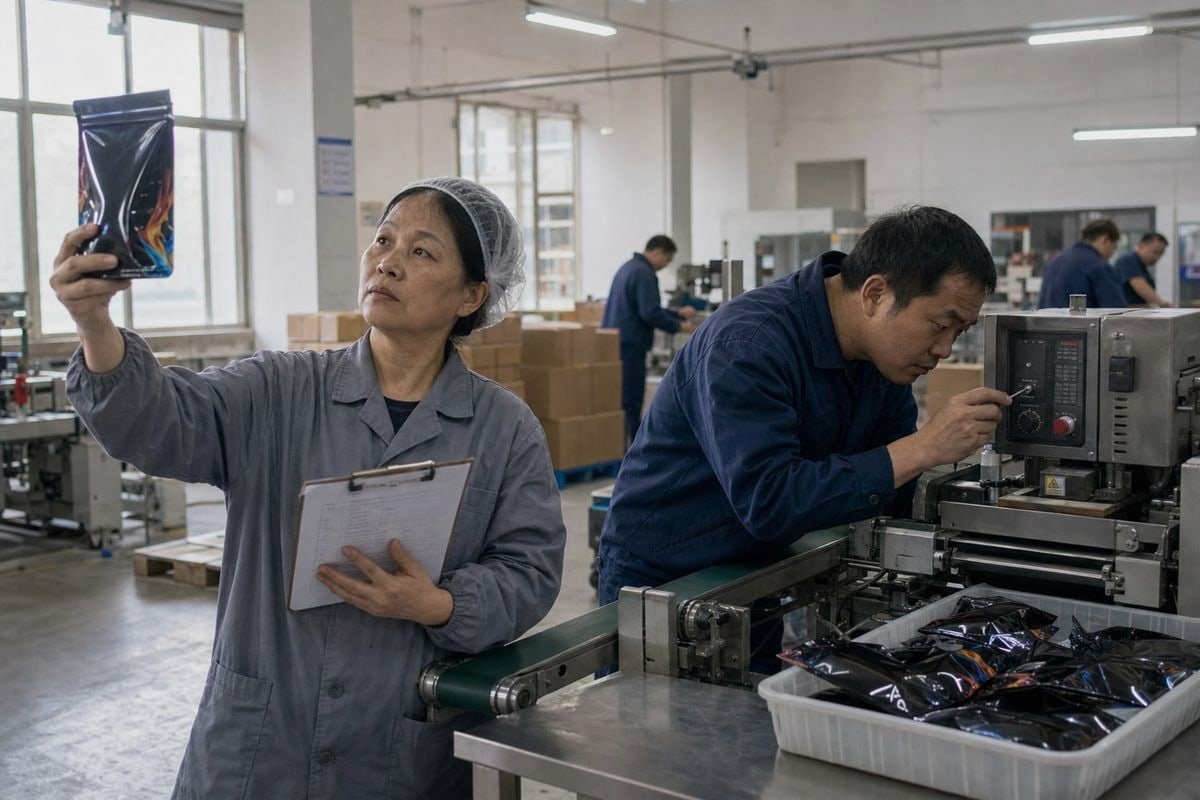
Choosing the right inspection schedule saved one of our Magic Fire production runs last spring SGS/Intertek test reports 1. A single missed setup check nearly cost a buyer an entire container of defective pouches.
First-article plus mid-production inspection prevents deviations better than final-only inspection. Final inspection only detects defects after production ends, while first-article and mid-production checks catch setup errors, material mistakes, and process drift early, when corrective action is still cheap and contained.
Let me break down why this matters for your orders AS9102 2. I will cover costs, risks, real defect examples, and how to build a plan that keeps your retail buyers happy.
What Are the Real Cost and Risk Trade-Offs Between First-Article Inspection and Final-Only Checks for My Orders?
Every quarter, our production team in Ningbo weighs the same trade-off buyers ask about: does the extra cost of early inspection actually pay for itself? The math consistently says yes.
First-article inspection adds a small upfront cost but prevents batch-wide defects, cutting scrap, rework, and delay risk. Final-only checks cost less to administer, yet a single systemic defect found at the end can force rework or scrapping of the entire finished order.
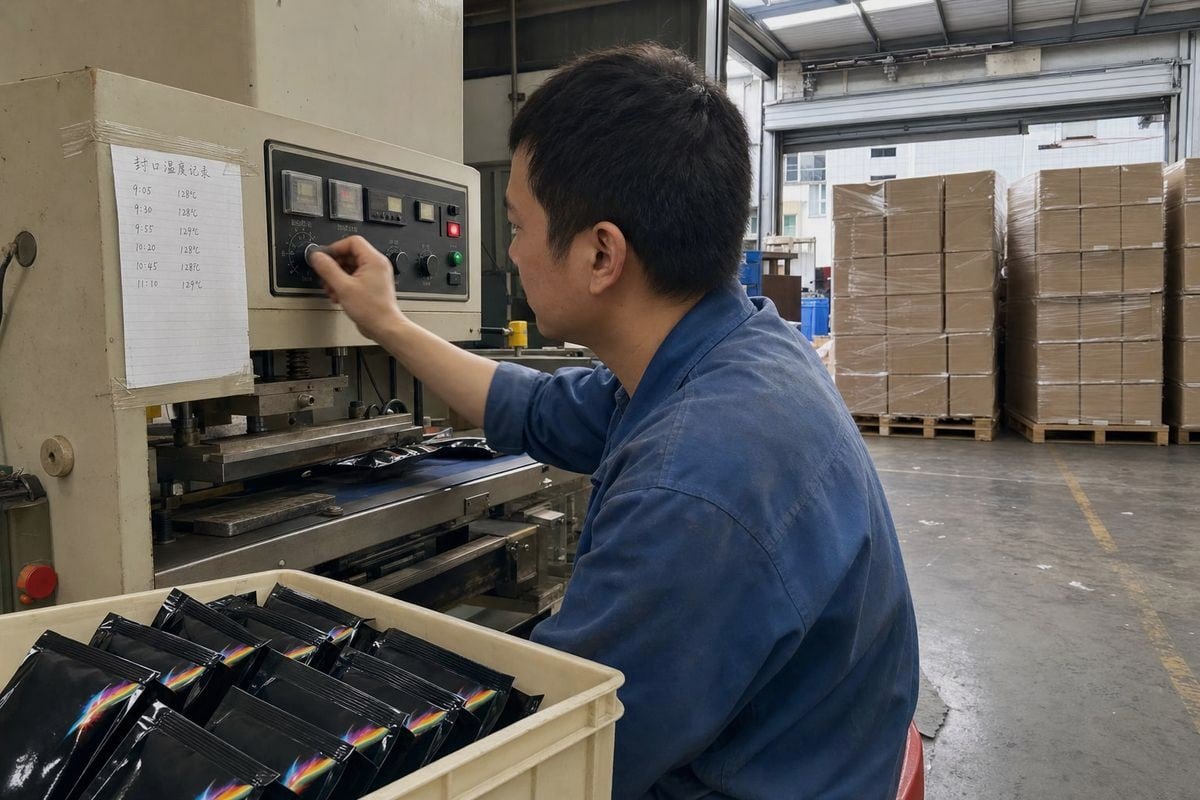
The core difference is simple. Final-only inspection is a detection strategy. First-article plus mid-production inspection is a prevention strategy. Detection tells you what went wrong after all the value has been added. Prevention stops the error before it multiplies across thousands of units.
Quality literature often frames this with the 1-10-100 rule. A problem that costs $1 to prevent at setup costs $10 to correct during production and $100 to fix after shipment. In our experience filling color-flame packets, that ratio feels conservative. If a heat-sealing machine is set two degrees too low at the start of a run, every pouch sealed after that point may leak crystalline powder. Catch it at the first article, and you adjust one machine. Catch it at final inspection, and you re-seal or scrap tens of thousands of pouches while your vessel booking slips away.
The Trade-Off at a Glance
| Factor | First-Article + Mid-Production | Final-Only |
|---|---|---|
| Prevention power | High — corrects the process itself | Low — finds defects after the fact |
| Upfront inspection cost | Higher | Lower |
| Downstream risk exposure | Low | High (rework, scrap, delays, recalls) |
| Batch protection | Stops defects from repeating | Cannot stop waste already created |
| Speed of correction | Fast — run is still live | Slow — production is finished |
| Best fit | New products, new suppliers, new tooling | Proven, stable, low-risk production |
When Final-Only Can Be Defended
I will be fair to the counterargument. Some buyers prefer final-only inspection because it is simpler to outsource and easy to document for shipment release. For a very stable, high-repeatability process with proven capability, that can work. But for anything new — a new supplier, a new formula, a new package format — the risk profile flips hard. One final gate cannot catch every defect category, and it cannot undo waste that has already happened. That is why our own quality system, audited under ISO 9001 3 and BSCI, layers checkpoints instead of relying on a single one.
How Can I Tell If Mid-Production Inspection Would Have Caught Defects My Final Inspection Missed Last Time?
A European distributor once shared their pre-shipment report with us after a bad experience elsewhere: inconsistent flame color across the batch. Our engineers traced the pattern immediately — it was classic mid-run material drift.
Review your last defect report and ask when the defect started. Systemic issues like wrong material lots, seal drift, tool wear, or fading print appear early or mid-run and repeat across units. Those are exactly the deviations a mid-production inspection at 20–50% completion would have caught.

There is a practical diagnostic you can run on any past quality failure. Different deviations have different birthplaces in the production timeline. Match your defect to its likely origin, and you will see which checkpoint would have intercepted it.
A Simple Root-Cause Timing Test
Ask three questions about your last missed defect:
- Was the defect present in every unit, or in a cluster? Defects in every unit point to a setup or tooling error — a first-article catch. Clusters point to drift — a mid-production catch.
- Was it a process output or a finishing issue? Wrong granule color mix, weak seals, and under-filled pouches are process outputs. Scuffed boxes and missing barcodes are finishing issues.
- Did the AQL sample pass while the batch still failed in the market? That is the classic signature of a process problem hiding inside acceptable sample statistics — something in-process checks and SPC trend data reveal, and final sampling often cannot.
Which Checkpoint Catches Which Deviation
| Deviation type | First Article | Mid-Production (DUPRO) | Final Only |
|---|---|---|---|
| Wrong tooling or misaligned dies | ✔ Caught | Possible | Too late |
| Incorrect material lot mid-run | Missed | ✔ Caught | Detected, not prevented |
| Heat-seal temperature drift | Possible | ✔ Caught | Detected, not prevented |
| Fill-weight drift from hopper wear | Missed | ✔ Caught | Sample-dependent |
| Packaging, labeling, barcode errors | Possible | Possible | ✔ Caught |
| Shipment documentation gaps | N/A | N/A | ✔ Caught |
On our own lines, mid-production checks typically happen once 20–50% of an order is complete, with in-process patrols starting as early as 10–15%. For our color-flame packets, that means verifying seal integrity, fill weight, and granule composition while the run is live. If drift appears, we stop, correct, and contain — usually within the same shift. A final-only schedule would have let that same drift run silently to 100% completion.
Which Inspection Schedule Should I Require When Launching a New Private-Label Color-Flame Product With My Supplier?
When we onboard a private-label buyer 4 for Magic Fire packets — new pouch artwork, new box, new barcode, sometimes a new burn-time spec — we insist on the full three-stage schedule ourselves, even before the buyer asks.
For a new private-label launch, require all three stages: first-article inspection to validate tooling, artwork, materials, and formula before volume ramps; a mid-production check at 20–50% completion to catch drift; and final random inspection for packaging, labeling, and shipment release.
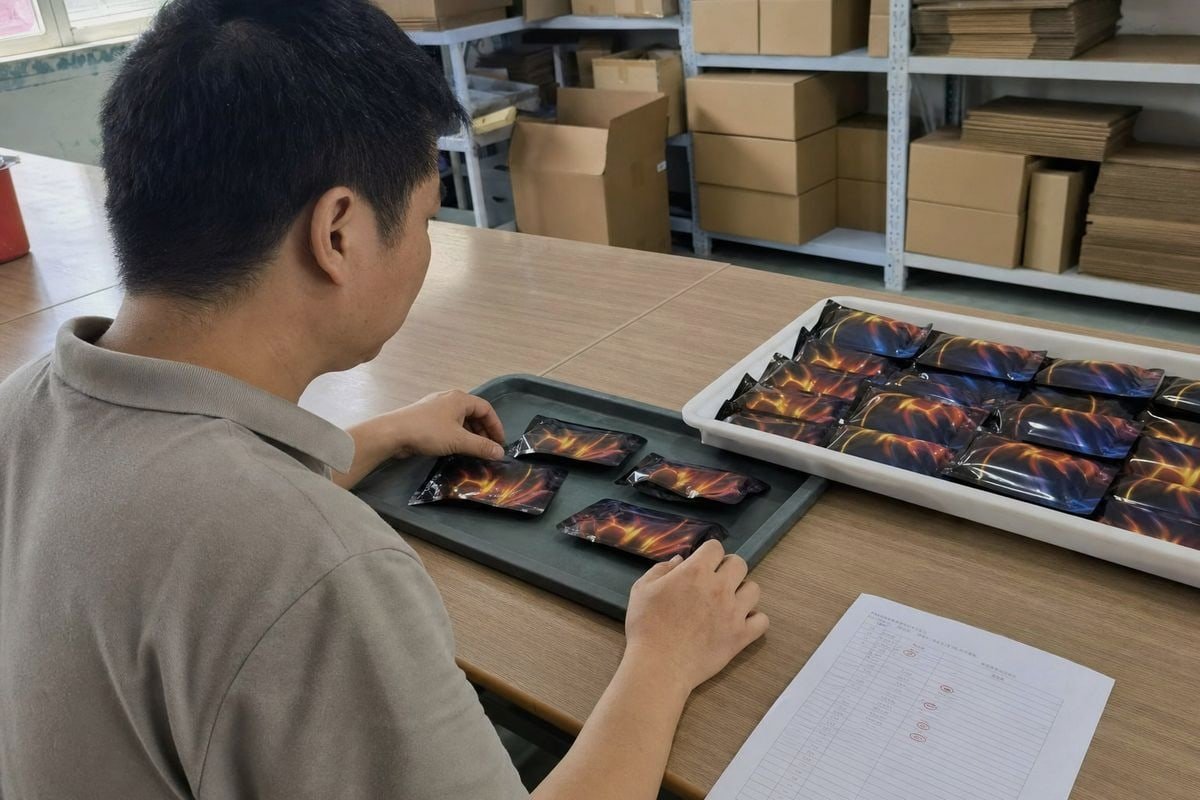
New product launches concentrate every known risk factor into one order. New tooling can be misaligned. New printed pouches can shift color from the approved proof. A new granule blend can behave differently in automated filling. In regulated and high-risk categories, layered inspection under standards like AS9102 5 is mandatory for exactly this reason — and while a color-flame packet is not an aerospace part, it is a fire-related consumer product headed for retail shelves in the US and Europe. The compliance stakes are real.
The Launch Inspection Sequence
Here is the sequence I recommend to buyers launching with us, and it applies to any supplier:
- Pre-production review. Confirm the golden sample, artwork files, warning-label text, and test-report requirements (we hold CE marking plus SGS/Intertek reports) before anything runs.
- First-article inspection. The first units off the line are checked against every spec: pouch dimensions, seal strength, fill weight, granule color and composition, print registration, and burn performance. Nothing ramps until FAI passes and is documented.
- Mid-production inspection. At roughly 30% completion, verify the process is holding: no seal drift, no material substitution, no print fading, consistent flame-color effect.
- Final random inspection. AQL sampling of finished, packed goods — inner boxes, display cartons, barcodes, warning labels, and carton markings — before shipment release.
There is a reason this matters more with an unproven partnership. Our production depth means our first sample reliably reflects mass-production quality, and after 17+ years we can prove batch-to-batch consistency. But you cannot assume that about any factory on a first order. The inspection schedule is how you verify it instead of hoping. Once two or three orders pass cleanly with strong process data, you can reasonably lighten the schedule — that is stability earned through evidence, not assumed on day one.
How Do I Build an Inspection Plan That Satisfies My Retail Buyers' Compliance Requirements Without Delaying My Shipment?
A US importer selling into large home-improvement chains once told me their real fear was not defects — it was the two-week delay a failed final inspection would trigger. That fear shaped how we design inspection plans today.
Build the inspection plan into the production timeline, not after it. Schedule FAI on day one and DUPRO mid-run so issues are fixed while production continues, then book final inspection two to three days before ex-factory. Early checks prevent the failures that cause re-inspection delays.
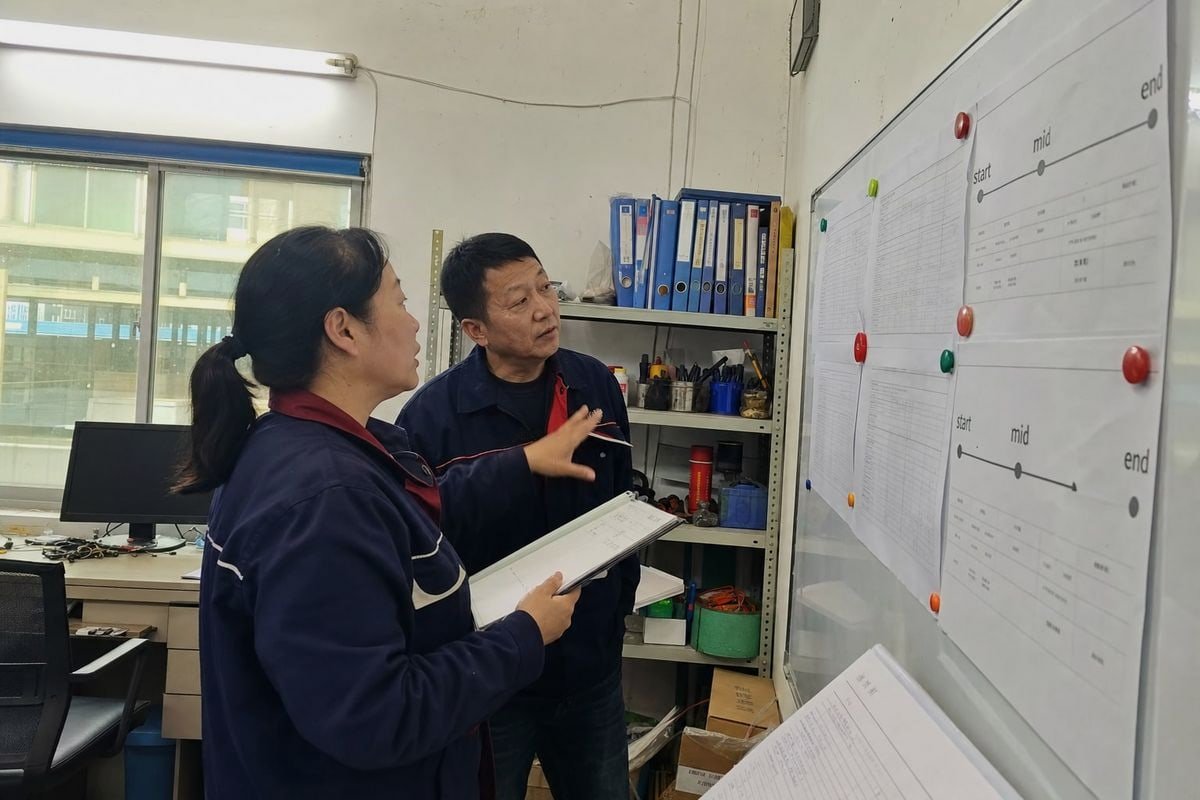
The counterintuitive truth is that layered inspection usually makes shipments faster, not slower. Delays rarely come from the inspections themselves — a DUPRO takes a day. Delays come from failed final inspections, which force rework, re-inspection booking, and missed vessel cut-offs. By front-loading verification, you remove the main cause of last-minute failure.
A Timeline That Protects the Ship Date
| Production stage | Inspection activity | Time impact | Delay risk removed |
|---|---|---|---|
| Day 1 of production | First-article inspection | Hours, run continues after pass | Setup, tooling, artwork, formula errors |
| 20–50% complete | Mid-production (DUPRO) check | 1 day, run continues | Process drift, material lot errors |
| 100% complete, packed | Final random inspection (AQL) | 1 day | Packaging, labeling, documentation errors |
| Pre-shipment | Document package review | Parallel, no added days | Compliance paperwork gaps at customs or retail |
Matching the Plan to Retail Compliance Demands
Big-box and established retail buyers care about traceability as much as pass/fail results. A multi-stage schedule produces exactly the documented trail they want: FAI reports, in-process records, final inspection certificates, and supporting test reports. When we supply retail sourcing channels, we bundle the ISO 9001 and BSCI audit evidence 6 with SGS/Intertek test reports and batch records, so the buyer's compliance team gets one clean package. That traceability also speeds root-cause analysis if anything ever does deviate — you know which checkpoint the problem passed through, so investigation takes days instead of weeks.
Two practical tips from our export experience across 30+ markets. First, agree on the AQL levels 7 and the defect classification list before production starts, not at booking time; renegotiating criteria at final inspection is a classic delay trap. Second, if you use a third-party inspection firm, book the final slot when the DUPRO passes — a clean mid-production result is the best predictor of a clean final result, so you can commit to the date with confidence.
Conclusion
Final-only inspection detects deviations; first-article plus mid-production inspection prevents them. Layer all three stages, keep final inspection as the safeguard, and partner with factories whose process control makes every gate pass predictable.
Footnotes
1. SGS is a leading third-party inspection and testing firm named in the compliance documentation. ↩︎
2. Official standard reference for the aerospace first-article inspection requirement cited in the text. ↩︎
3. Official ISO standard referenced as the quality management certification the supplier holds. ↩︎
4. Background on private-label manufacturing arrangements relevant to the launch scenario discussed. ↩︎
5. SAE standard for first-article inspection cited as the model for layered inspection compliance. ↩︎
6. amfori BSCI is the social compliance audit program directly referenced in the article. ↩︎
7. Explains the acceptance sampling statistic used for final random inspection criteria. ↩︎


 English
  Spanish
  German
  French
  Arabic
  Portuguese
Join the Conversation