






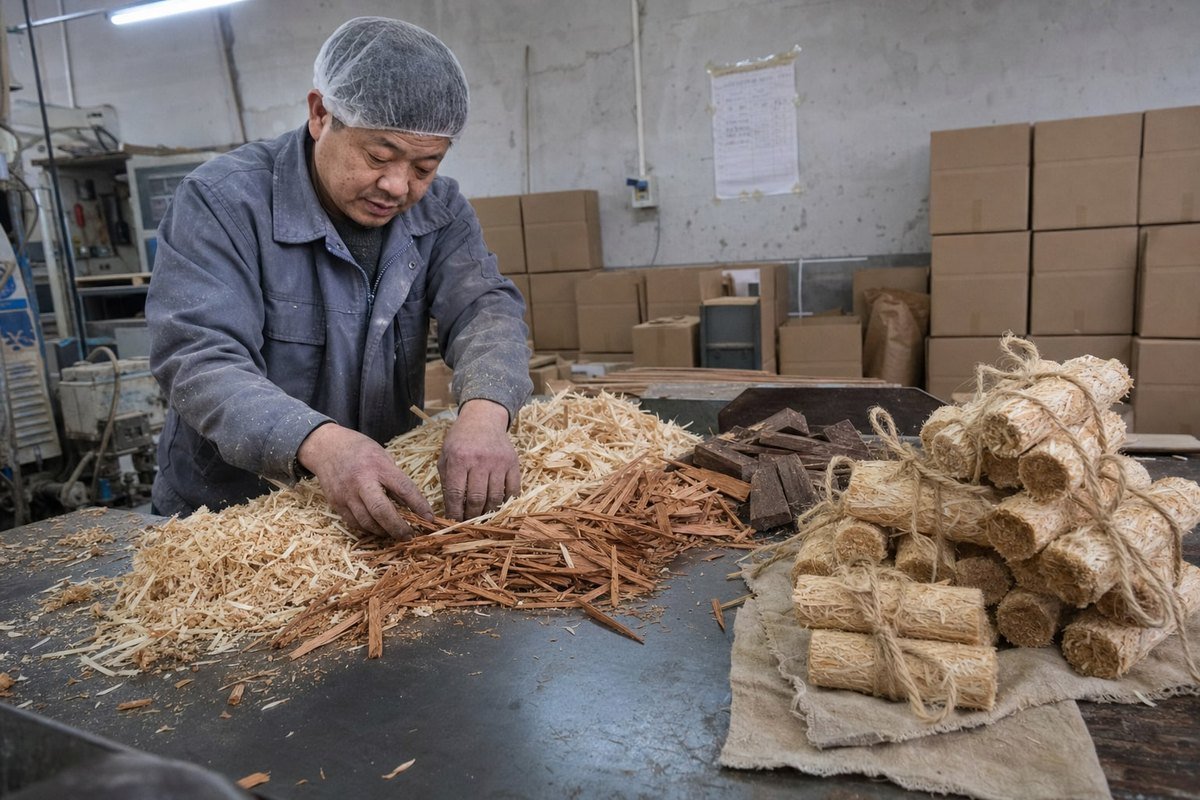
Choosing the wrong wood for wood fire starters costs importers real money tracheid cell structure 1. I have watched our production line reject entire shipments of raw material because the moisture content was off by a few points.
The best woods for wood fire starters are dry, resin-rich softwoods such as pine, cedar, spruce, and fir, plus fatwood for wet conditions. These species ignite fast and burn hot. Dense hardwoods like oak or hickory work better as main firewood, not as starters.
That short answer hides a lot of detail. Wood species, moisture, resin, and processing all change how a fire starter performs. Let me walk you through what actually matters when you source at scale.
How do I choose the right wood species for consistent burn performance?
A German distributor once asked me why two sample batches of firestarters burned so differently. The answer was simple: the wood fiber came from two different softwood species.
Choose light, low-density softwood species — pine, cedar, spruce, or fir — with moisture content below 20%. These woods ignite quickly, spread flame fast, and behave predictably. Avoid dense hardwoods and green wood, because both resist ignition and produce inconsistent, smoky starts.
The science here is straightforward. Softwoods have an open tracheid cell structure 2. Heat penetrates them fast, so they gasify and catch flame quickly. Hardwoods have denser, more complex vessel structures. They hold more thermal mass, which is great for a long fire but terrible for ignition. That is why our wood firestarters use fine softwood fiber wound into rolls, then dipped in paraffin wax for chemical-free ignition without lighter fluid.
Species-by-species notes
Here is how I rank the common options based on 17+ years of running fire-product lines:
| Wood Species | Ignition Speed | Resin Concentration | Best Use in Starters |
|---|---|---|---|
| Pine | Very fast | High | Core fiber for wood-wool rolls |
| Cedar | Very fast | Medium-high | Aromatic kindling and fiber |
| Fatwood (pine heartwood) | Fast, even damp | Very high | Premium wet-weather sticks |
| Spruce / Fir | Fast | Medium | Bulk kindling, budget fiber |
| Birch | Moderate | Oil-rich bark | Natural tinder (bark only) |
| Oak / Hickory | Slow | Low | Main firewood only |
Why moisture matters more than species
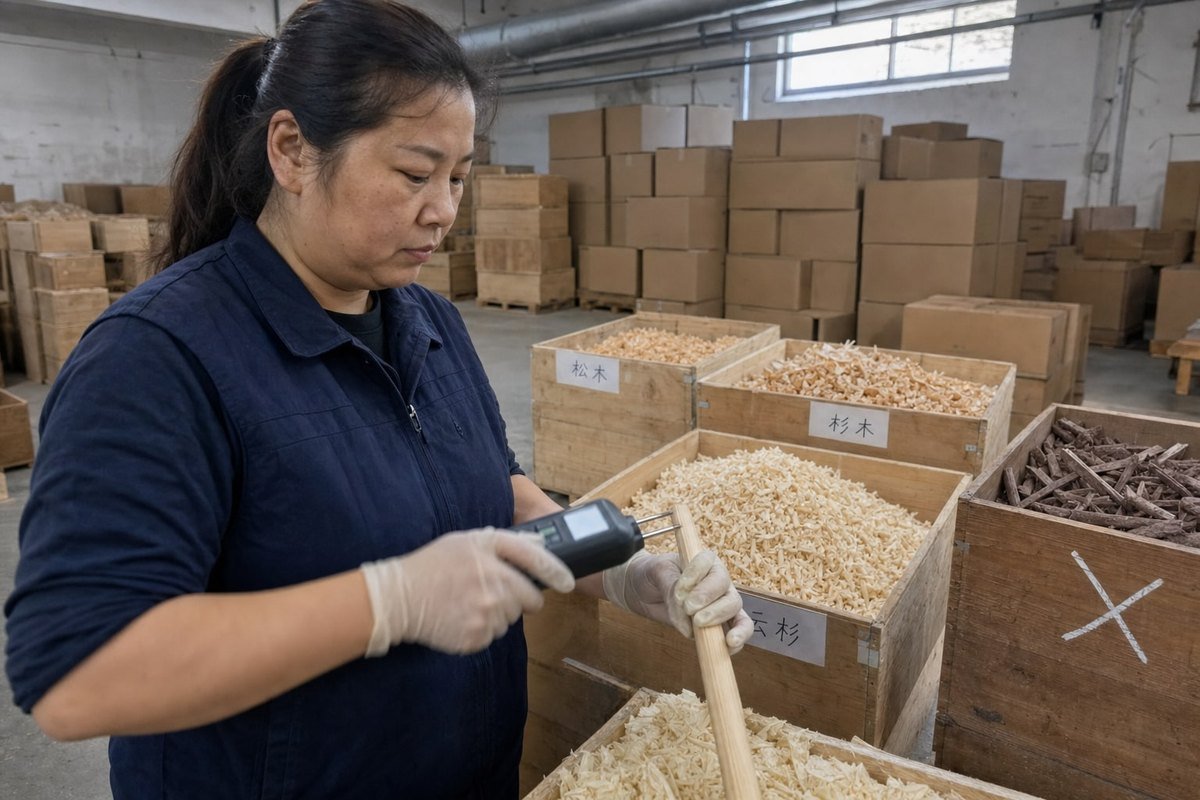
Even the best pine fails if it is wet. Water inside the wood absorbs the heat needed for combustion. The result is smoke, hissing, and failed lighting. On our line in Ningbo, we check incoming fiber with a wood moisture meter 3 before it ever reaches the wax bath. We hold raw material below 20% moisture, and kiln-dried kindling 4 gives us the tightest consistency batch to batch. Fatwood sticks are the exception to normal rules — their resin saturation makes them nearly waterproof, which is why campers love them in rain.
One more point. Resin is your friend at the ignition stage. Volatile compounds in pine and cedar lower the flash point 5, so a single match works. But resin-heavy wood should never be your customer's main indoor fuel, because it accelerates creosote buildup 6 in chimneys. Starters ignite the fire; seasoned firewood sustains it.
Can I request certified, compliant wood sourcing for my import market?
Compliance questions come up in nearly every first call I take with US and EU buyers. Honestly, I prefer it that way — it filters out suppliers who cut corners.
Yes. Serious buyers can and should require documented, compliant sourcing. Ask your supplier for ISO 9001 quality systems, BSCI social audits, CE marking where applicable, and third-party test reports from labs like SGS or Intertek covering composition, safety, and burn performance.
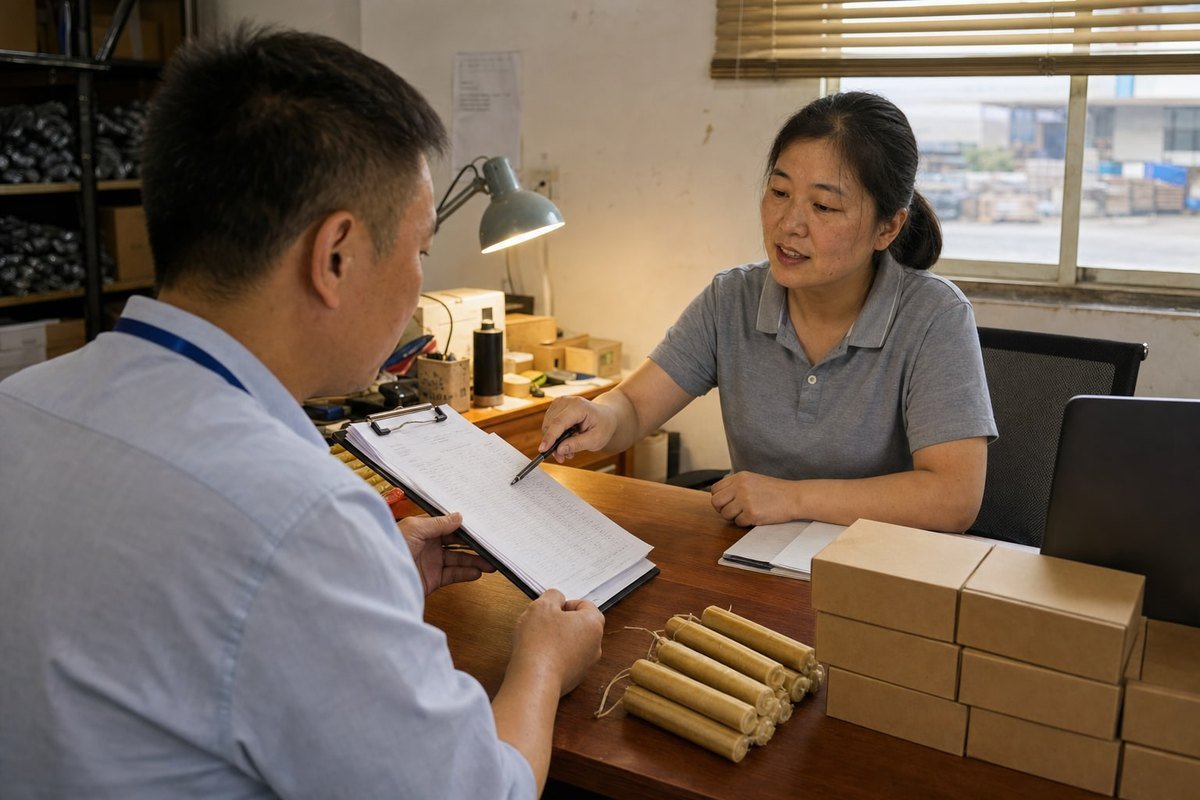
Let me be blunt about why this matters. Fire starters are a flammable consumer product. Customs authorities, retail chains, and insurance underwriters all treat them accordingly. If your supplier cannot produce test reports, your shipment can stall at port, or worse, your retail partner can delist you after one complaint. In our experience exporting to 30+ countries — including the US, Germany, the UK, France, and Australia — the buyers who succeed long-term treat certification as a hard requirement, not a nice-to-have. We hold ISO 9001, BSCI, and CE certifications, and we maintain SGS and Intertek test reports precisely because our distributor clients demand them before purchase orders are signed.
What documentation should you request?
- Quality system proof. ISO 9001 shows the factory runs documented processes, not ad-hoc production.
- Social compliance. BSCI audits matter to European retail chains and are increasingly checked by US buyers too.
- Product safety testing. SGS or Intertek reports should confirm composition (for example, 50% wood fiber, 50% paraffin) and that the product contains no harmful chemicals.
- Labeling compliance. Warning labels, barcodes, and language requirements differ by market. We prepare market-specific labels as part of our OEM service.
- Sourcing statements. Ask about sustainable harvesting practices for the wood fiber input. Retail sourcing channels increasingly require this.
Compliance expectations by market
| Market | Key Requirements | Common Sticking Points |
|---|---|---|
| USA | Lab test reports, retail-specific labeling, barcodes | Warning label wording |
| Germany / EU | CE where applicable, BSCI, EU-compliant labels | Language and pictogram rules |
| UK | UKCA considerations, safety data | Post-Brexit documentation |
| Australia / Canada | Import safety declarations | Paraffin composition proof |
My advice: request documents before you request pricing. A factory that answers fast with real paperwork will also answer fast when a container is on the water and you have a question.
Will different wood types affect burn time and flame quality in mass production?
There is a trade-off we weigh on every OEM project: faster ignition versus longer burn. Wood type sits at the center of that equation, and it never fully disappears at scale.
Yes, wood type directly affects burn time and flame quality. Resin-rich softwood fiber ignites in seconds and burns hot but fast. Denser fiber or heavier wax loading extends burn time to 8–10 minutes. Consistent species sourcing and moisture control keep mass-production batches uniform.
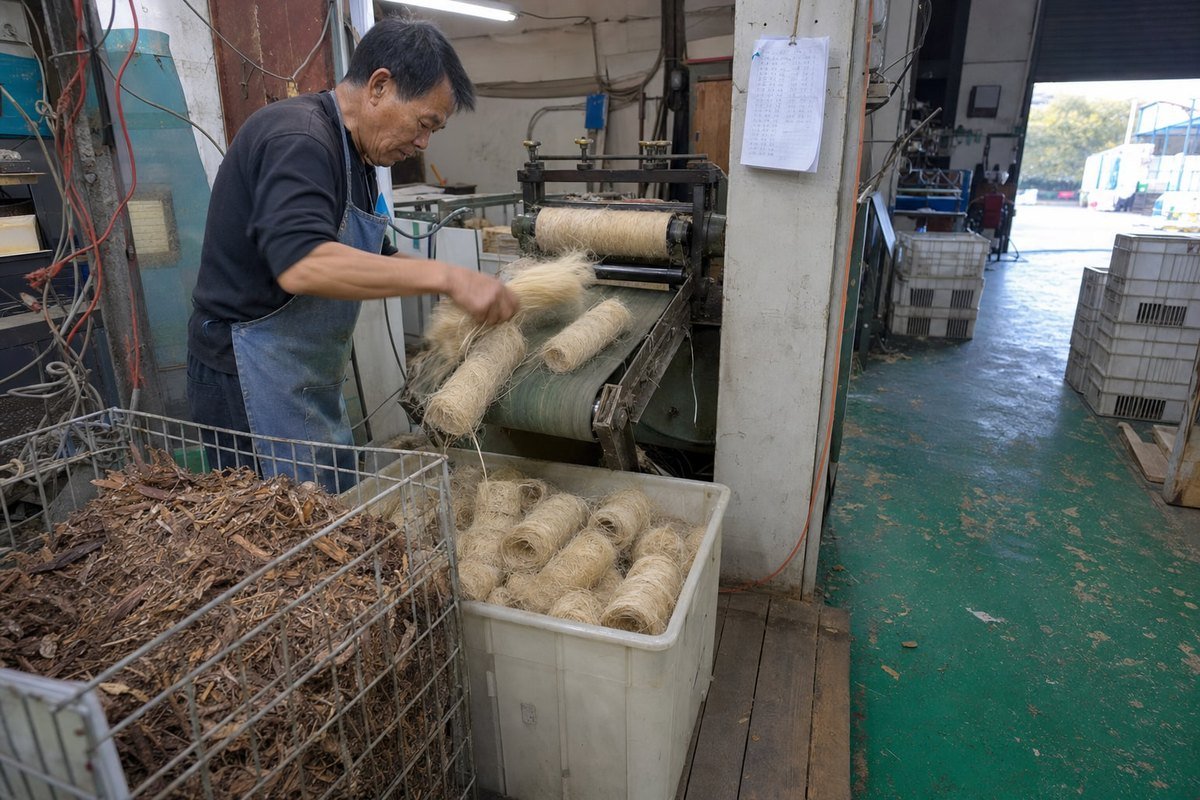
In mass production, variation is the enemy. A single fire starter that burns ten minutes in your sample but six minutes in the shipped container will generate returns and one-star reviews. When we developed our wax-dipped wood rolls, we learned that three variables control burn behavior, and wood type touches all of them.
The three levers of burn performance
First, the fiber species. Pine and cedar fiber carry natural resin. Higher resin concentration means a hotter, faster initial flame — great for lighting charcoal quickly, less ideal if your brand promises a long, gentle burn for fireplace customers. Spruce and fir burn slightly cooler and can smoke a little more if moisture control slips.
Second, moisture content. This is where mass production wins or loses. Kiln-dried fiber at a stable moisture level burns the same in January and July. Air-dried fiber varies with the season. We measure every incoming lot, because a few points of moisture change both ignition speed and total burn time. High internal water also produces visible smoke, which customers read as poor quality.
Third, wax loading. Paraffin is the burn-time regulator. More wax per gram of fiber extends burn duration and improves weather resistance. Our standard rolls target roughly 8–10 minutes, but we customize burn time for OEM clients — shorter for BBQ ignition products, longer for fireplace lines.
Flame quality follows the same logic. Softwood fiber plus clean paraffin gives a tall, steady, low-odor flame. Contaminated or treated wood scrap gives erratic flames and toxic fumes, which is why we never use recycled construction wood. The BTU heat value of the starter matters less than people think; what matters is whether the flame lasts long enough to ignite seasoned firewood above it.
How do I verify wood firestarter quality before placing a bulk order?
A Dutch buyer once burn-tested our samples on video and sent us the footage with timestamps. I loved it. That is exactly how a professional should verify quality before committing to a container.
Verify quality by burn-testing samples yourself: time the burn, check ignition with one match, and inspect for smoke and odor. Then confirm the factory's certifications, request lab test reports, check moisture and wax specs, and place a small trial order before scaling up.
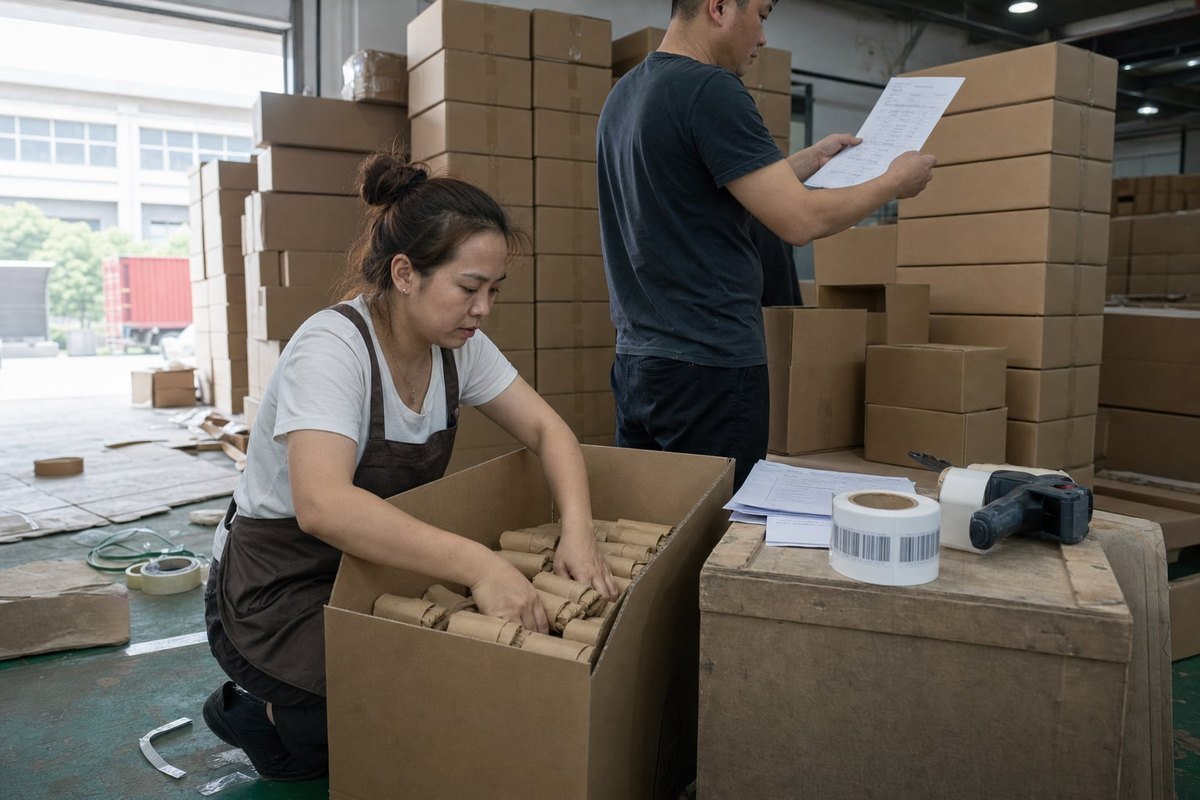
Sample quality means nothing if mass production drifts. So your verification process needs two layers: testing the product itself, and testing the factory behind it. I will give you the same checklist we hand to new distributor clients.
Step 1: Test the physical samples
Run a simple, repeatable burn test. Light one starter with a single match — it should catch within a few seconds without repeated attempts. Time the full burn against the stated specification. Watch the flame: it should be steady and tall enough to ignite kindling stacked above it. Note any heavy smoke, sputtering, or chemical odor. Then test wet-weather performance by splashing water on a starter before lighting it; a well-waxed wood roll or a fatwood stick should still ignite. Finally, break one apart. You should see clean natural tinder fiber, not sawdust filler or mystery scrap.
Step 2: Audit the factory's consistency
| Verification Item | What to Ask For | Red Flag |
|---|---|---|
| Quality system | ISO 9001 certificate | Expired or missing certificate |
| Safety testing | SGS / Intertek reports | "Reports available later" |
| Batch control | QC records, moisture logs | No wood moisture meter 7 used |
| Production reality | Factory video call or visit | Trading company posing as factory |
| Trial terms | Flexible MOQ for first order | Full-container minimum only |
Step 3: Run a trial order
Our strongest client relationships all started with small trial orders. A trial shipment shows you real-world packaging durability, labeling accuracy, lead-time reliability, and whether the mass-produced goods match the sample. At our factory, strict batch-to-batch controls exist precisely so the first sample reliably reflects the container. If a supplier resists a trial order or dodges documentation, walk away. The savings from a cheap quote never survive one failed shipment.
Conclusion
Bad starter wood means failed lightings, angry customers, and lost shelf space. The fix is simple: dry, resin-rich softwood for ignition, verified specs, and a certified factory partner behind you.
Footnotes
1. Background reference explaining the wood cell structure that governs softwood ignition behavior. ↩︎
2. Explains the cellular structure that determines softwood ignition properties. ↩︎
3. USDA Forest Service research supports moisture measurement standards for wood products. ↩︎
4. Background on the kiln-drying process used to achieve consistent low-moisture wood for starters. ↩︎
5. Explains the combustion science term used to describe how resin compounds ease ignition. ↩︎
6. EPA's wood-burning program explains creosote formation and chimney safety risks referenced in the article. ↩︎
7. USDA Forest Products Laboratory is the authoritative source on wood moisture measurement and testing. ↩︎



 English
  Spanish
  German
  French
  Arabic
  Portuguese
Join the Conversation