






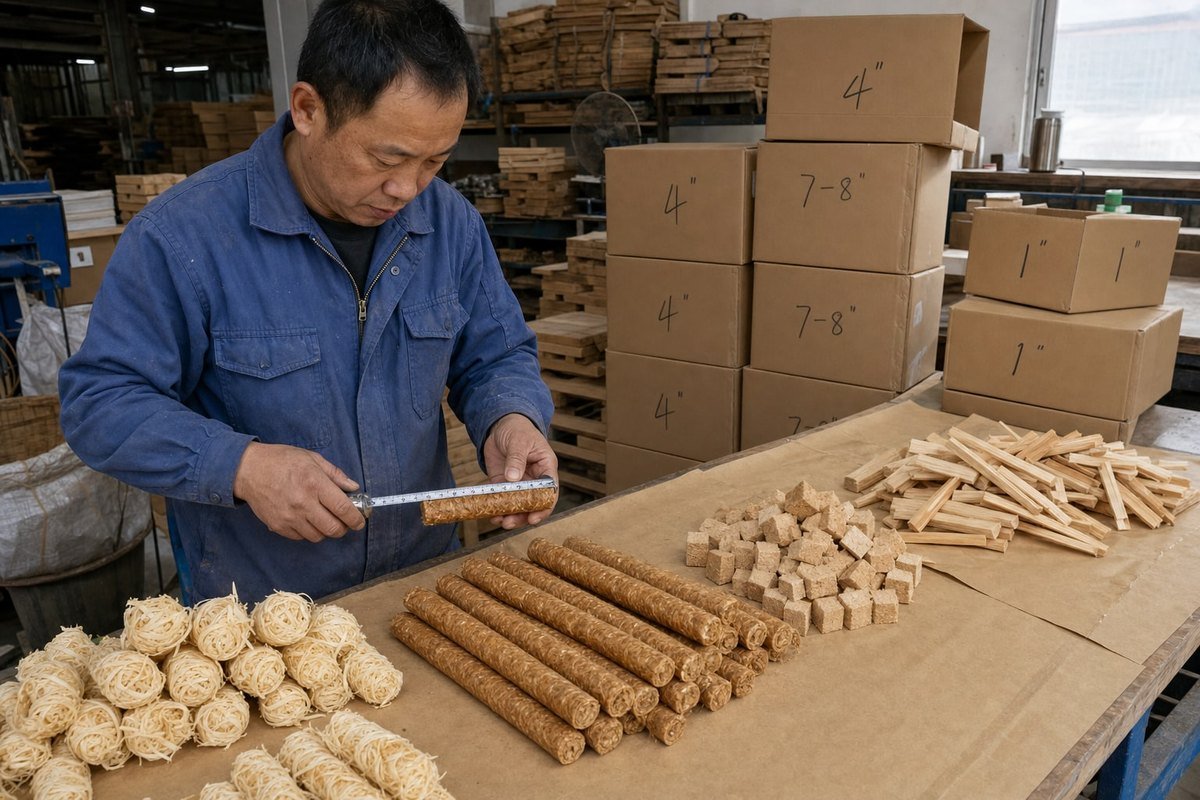
Buyers often ask me which wood fire starters fit which appliance quality management standards 1. On our production line, we learned early that a starter too big for the firebox frustrates end users, generates returns, and quietly kills repeat sales. The fix is simple: match size and shape to the appliance.
Wood fire starters should match the appliance: compact 3.5–5.5 inch mini rolls suit tabletop fire pits and tight fireboxes, 7–8 inch sticks or wax-dipped rolls suit wood stoves and open fireplaces, while small cubes or clean-burning rolls suit pellet stoves, smokers, and pizza ovens.
One size does not fit all. Below, I break down sizing by appliance, explain how shape affects airflow and burn time, and cover custom OEM options and wholesale size standards.
What Wood Firestarter Sizes Work Best for Wood Stoves vs. Open Fireplaces?
A German distributor once returned samples to us because his 12-inch strips would not sit flat in modern wood burning inserts. That order taught our team to always ask about firebox dimensions first.
Wood stoves work best with compact starters between 1 and 6 inches long, because tight fireboxes limit clearance and airflow. Open fireplaces accept longer formats, such as 8-inch fatwood sticks or 7-inch kiln-dried kindling, which reach deep under stacked logs safely.
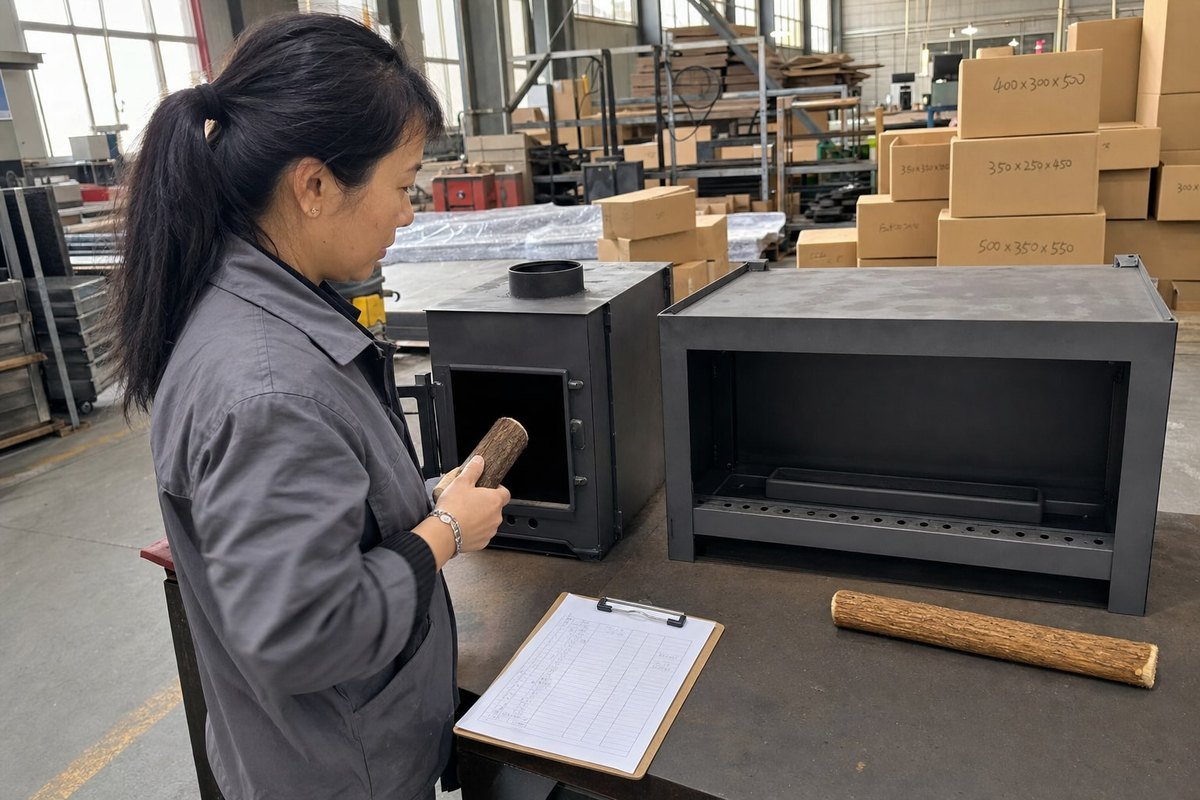
The core difference comes down to chamber geometry. A wood stove is an enclosed box with controlled air intake. An open fireplace is a wide hearth with generous draft. These two environments reward very different starter sizes.
Sizing by Appliance Type
| Appliance | Best Starter Length | Best Format | Why It Fits |
|---|---|---|---|
| Tabletop fire pits | 3.5–5.5 in | Mini rolls, small sticks | Tight chambers need compact fuel |
| Wood stoves | 1–6 in starters; ~7 in kindling | Split sticks, wax rolls, cubes | Small pieces ignite fast, allow airflow |
| Open fireplaces | 7–8 in | Fatwood stick 2s, kindling wood | Long reach under log stacks |
| Pizza ovens | Short, thin sticks | Split kindling, mini rolls | Fast flame in a narrow chamber |
| Smokers and BBQs | Small sticks or cubes | Low-residue rolls, cubes | Clean ignition without off-flavors |
| Pellet stoves | Small chunks | Cubes, wax starters | Controlled ignition, not a big flame |
Small pieces ignite faster because they expose more surface area. That is why wood-stove guides tell users to think small — splits around one inch wide or less catch reliably. Our wax-dipped wood rolls follow the same logic. We size the standard roll to sit comfortably inside multi-fuel stoves without touching the glass or blocking the air wash.
Open fireplaces are more forgiving. Here, an 8-inch fatwood stick or a longer wood-wool roll lets the user push the flame deep under a heavy log stack while keeping their hand clear of the grate. For very tight tabletop pits, we produce shorter rolls on request, because a 3.5-inch chamber simply cannot take a standard-length starter.
Moisture content also matters. Kiln-dried kindling below roughly 20% moisture lights fast; damp kindling stalls even the best starter. We ship our rolls in sealed packaging for exactly this reason.
How Do I Choose the Right Shape for Efficient Airflow and Burn Time?
When we developed our wood-wool roll line 3 in Ningbo, we tested cubes, pucks, and wound rolls side by side. The fibrous roll won on ignition speed almost every time.
Choose shapes with high surface-area-to-volume ratios for fast ignition — wood wool ropes and fibrous rolls light quickest. Choose dense shapes like compressed sawdust briquettes or pucks for longer burn time of 8–15 minutes, needed to ignite dense hardwoods like oak.

Shape controls two things: how fast the flame spreads, and how long the starter feeds heat into your kindling. You rarely get both at maximum, so you choose based on the fuel you need to light.
Shape Behavior Compared
| Shape | Ignition Speed | Typical Burn Time | Best Use Case |
|---|---|---|---|
| Wood wool rolls / ropes | Very fast | 6–10 min | Top-down lighting method, everyday stove fires |
| Fatwood sticks | Fast | 5–8 min | Damp conditions, outdoor fireplaces |
| Wax cubes / pods | Moderate | 8–12 min | Pellet stoves, BBQs, convenience buyers |
| Compressed sawdust pucks | Slow start | 10–15 min | Dense hardwood loads in large hearths |
| Hollow-core cylinders | Very fast | 6–9 min | Tall chimneys with weak initial draft |
Fibrous shapes work like a wick network. The thin strands in wood wool ropes catch from a single match, and air moves freely between fibers. That multi-directional airflow makes them ideal for the top-down lighting method now recommended for high-efficiency Ecodesign stoves, where the starter sits on top of the stack and burns downward with less smoke.
Dense shapes trade speed for endurance. A compressed puck takes longer to catch, but its 10–15 minute burn time bridges the gap when lighting oak or hickory 4, which need sustained heat before they commit to flame. Hollow-core cylinders add another trick: the open center acts like a mini chimney, pulling air upward and accelerating flame spread — useful for overcoming a cold air plug in a tall flue.
Our 50% wood fiber, 50% paraffin rolls sit in the sweet spot for most B2B buyers: fast ignition from the fibers, steady burn time from the wax.
Can I Get Custom Sizes and Shapes Made for My Private-Label Product Line?
Last year, a UK fireplace brand asked us for a shorter, thicker roll to match their compact stove range. We tooled the new size, tested burn time, and shipped branded retail boxes within one production cycle.
Yes. OEM manufacturers like us fully customize wood fire starters: roll length, diameter, wax ratio, burn time, piece count per box, private-label packaging, display cartons, warning labels, and barcodes. Trial MOQs let distributors test custom sizes before committing to full container volumes.
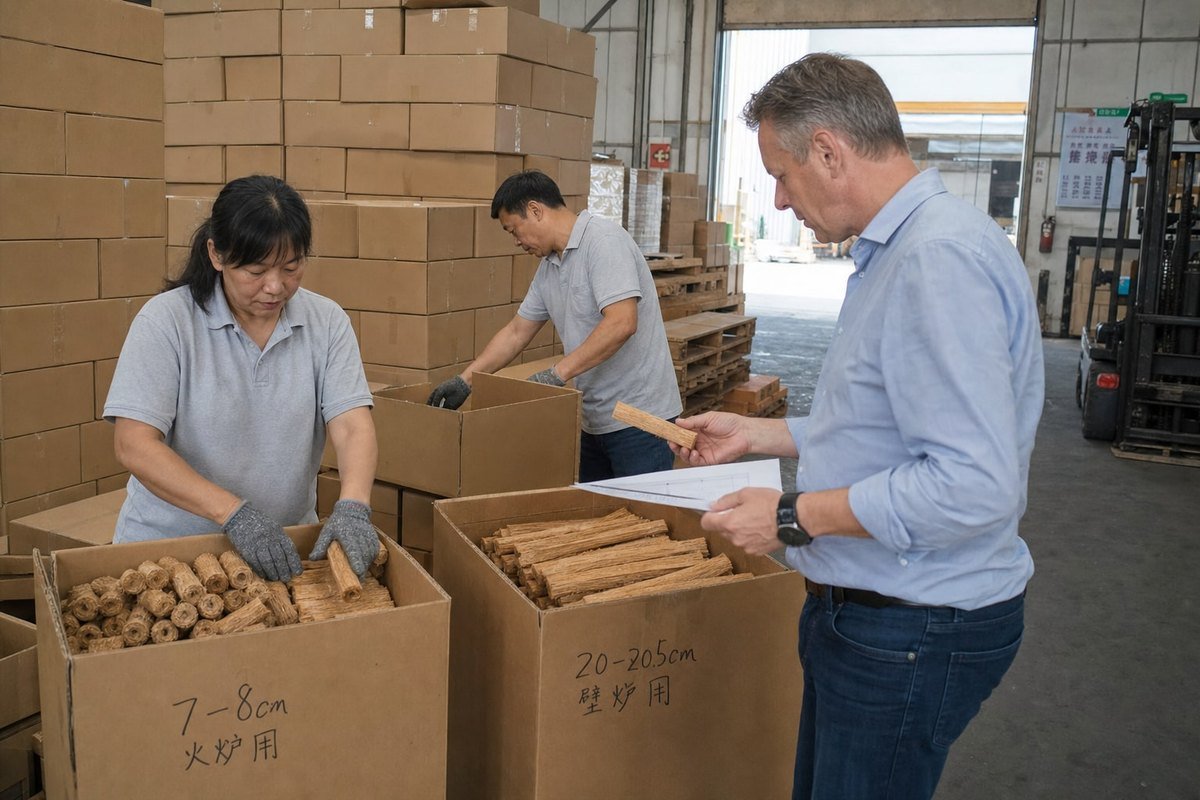
Customization is where a real factory earns its keep. A trading company resells whatever stock exists. Our production lines in Ningbo let us change the physical product itself, not just the label.
What We Can Adjust
- Length and diameter. Shorter rolls for tabletop pits and inserts 5; longer rolls for open hearths. Diameter changes affect both fit and burn time.
- Wax-to-fiber ratio. More paraffin extends burn time and moisture resistance; more fiber speeds ignition. We tune this per market — humid coastal markets often want higher wax content.
- Burn time targets. We calibrate and verify burn duration batch by batch, so the sample you approve matches mass production.
- Packaging format. Kraft boxes, retail display cartons, poly bags, or bulk cases of 100 pieces. We handle custom artwork, barcodes, and market-specific warning labels.
- Compliance documentation. ISO 9001, BSCI, CE, and SGS/Intertek test reports travel with the goods — a hard requirement for US and EU retail channels.
For private-label buyers, the practical path looks like this: send us your target appliance category and shelf format, we recommend a size and shape, produce samples, run burn tests, then lock the spec sheet before mass production. Because these are eco-friendly firelighters made from natural wood fiber and paraffin with no harmful chemicals, they clear indoor-use positioning in most of our 30+ export markets.
What Size Standards Should I Confirm Before Placing a Bulk Wholesale Order?
A hard lesson from our early export years: a buyer approved samples by photo alone, then discovered the rolls were 15mm too long for his branded retail tray. Now our team confirms a written spec sheet on every order.
Before bulk ordering, confirm five specs in writing: starter length and diameter with tolerances, verified burn time per piece, moisture content and packaging seal, piece count per retail unit and master carton, and compliance certificates required by your market, such as CE and SGS reports.
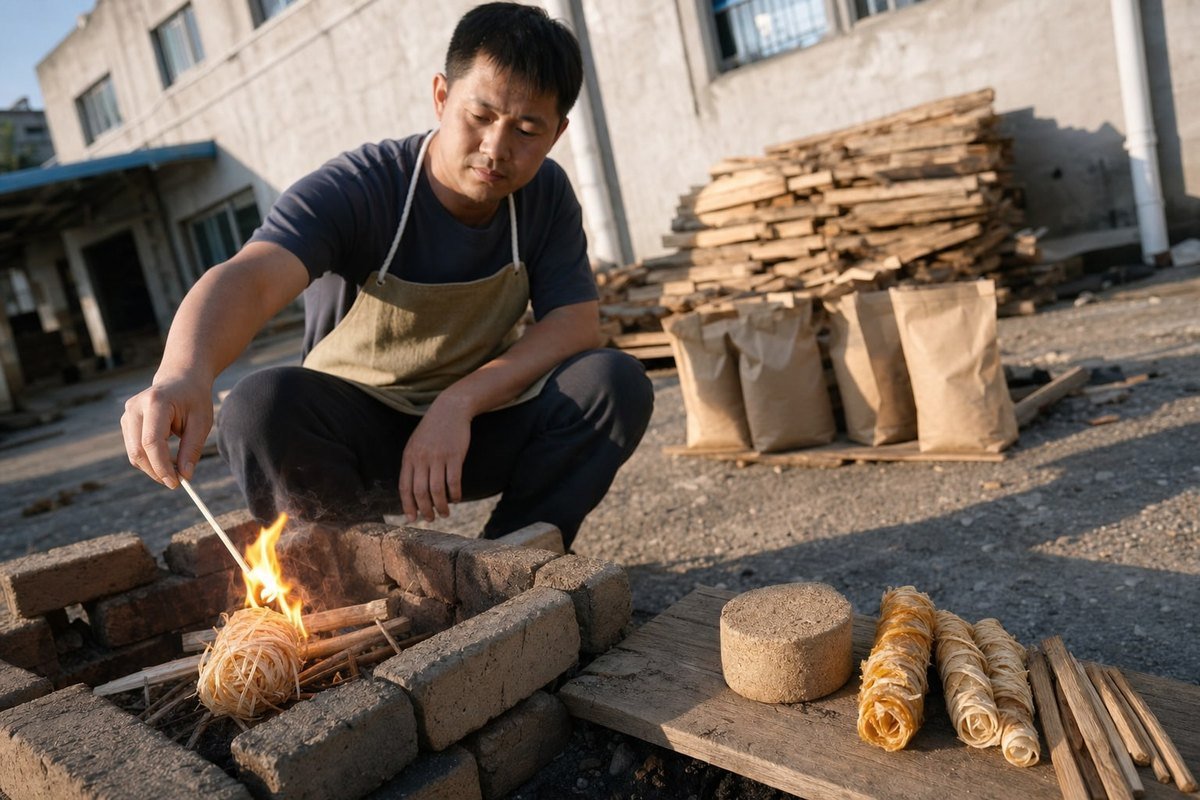
Bulk orders punish vague specifications. A few millimeters of variance across 100,000 pieces means trays that do not close and displays that look sloppy. Here is the checklist we walk every wholesale buyer through.
Pre-Order Specification Checklist
| Spec to Confirm | Typical Standard | Why It Matters |
|---|---|---|
| Length tolerance | ±3–5 mm on stated length | Retail tray and box fit |
| Diameter / thickness | ~0.75–1 in for sticks and rolls | Stacking stability, burn behavior |
| Burn time per piece | 6–12 min, verified by batch test | Core performance claim on packaging |
| Moisture protection | Sealed inner bag or wax coating | Prevents ignition failure at retail |
| Count per unit | 12, 24, or 100 pcs common | Price point and shelf positioning |
| Certificates | CE, SGS/Intertek, ISO 9001, BSCI | Customs clearance and retail listing |
Two more points deserve attention. First, ask how the factory controls batch-to-batch consistency. Our QC process measures roll weight, wax uptake, and burn time on sampled pieces from every production run, so the first container matches the sample. Inconsistent kindling wood sizing is one of the most common complaints we hear from buyers switching suppliers.
Second, align the size standard with your end customer's appliances. If your catalog targets wood burning inserts and compact multi-fuel stoves 6, standardize on shorter rolls. If you sell into the open-fireplace and fire-pit market, longer fatwood sticks or standard rolls make more sense. Getting this right before the purchase order saves months of correction later.
Conclusion
The wrong starter size means frustrated customers and returns. The right one matches firebox, airflow, and burn time. Confirm specs in writing, demand certificates, and partner with a factory that customizes properly.
Footnotes
1. Reliable overview of ISO 9001 standards for manufacturing quality and consistency. ↩︎
2. Wikipedia entry detailing the natural resinous properties of fatwood used for reliable ignition. ↩︎
3. Wikipedia overview of wood wool, a primary material used in fibrous fire starter production. ↩︎
4. Authoritative database entry explaining the density and burning properties of hardwood species like oak. ↩︎
5. Government resource explaining the design and installation of wood-burning inserts for home heating. ↩︎
6. Authoritative guide from HETAS on selecting and operating multi-fuel stoves and wood burners. ↩︎



 English
  Spanish
  German
  French
  Arabic
  Portuguese
Join the Conversation