







Lacey Act 1 plant declaration requirements catch many colored pine cone importers off guard. I have watched shipments from our Ningbo production line sit in customs holds because a buyer's broker assumed "decorative" meant "exempt." One missing scientific name can stall an entire seasonal order, burn your retail window, and trigger penalties Customs and Border Protection 2. The good news: once you know exactly what USDA APHIS 3 wants on the form, compliance becomes a repeatable checklist rather than a gamble.
Importing colored pine cones under an APHIS-listed HTS code as a formal entry requires a Lacey Act declaration stating the scientific genus and species, country of harvest, quantity in metric units, declared value, HTS code, and importer and consignee details, filed via PPQ Form 505 or electronically through ACE.
Let me break down each data element, where the documentation comes from, and how to verify it before your goods ship HTS code classification 4. This is the same process we walk our US buyers through every season.
What Exact Plant Species and Harvest Country Do I Need to Declare on My Lacey Act Form?
A US distributor once emailed me in a panic. His broker asked for the "Latin name" of our color-flame pinecones, and his previous supplier had only ever written "natural pine" on the invoice. That single vague phrase is exactly what APHIS rejects.
You must declare the full scientific genus and species of every pine cone type in the shipment, such as Pinus sylvestris or Pinus massoniana, plus the country where the cones were physically harvested from trees — which may differ from the country of manufacture, coloring, or export.

The Lacey Act plant declaration is species-level reporting. Trade names like "pine," "evergreen," or "forest cone" are legally insufficient. If your assortment mixes species — say a bag with both Pinus sylvestris and Pinus pinea cones — each species must appear as a separate line item with its own quantity and value. This surprises buyers who order mixed decorative lots.
Country of Harvest vs. Country of Origin
These two are not the same, and confusing them is the most common filing error I see. Our cones are collected in Chinese forests and processed at our Ningbo facility, so harvest country and manufacturing country happen to match. But if a supplier buys raw cones from Russia and paints them in China, the declaration must say Russia. If the harvest country is unknown or could be one of several, APHIS requires you to list all possible countries of harvest.
| Data Element | What APHIS Wants | Common Mistake |
|---|---|---|
| Scientific name | Full genus and species (e.g., Pinus massoniana) | Writing "pine" or "natural cone" |
| Country of harvest | Where cones were removed from trees | Listing the export or shipping country |
| Mixed species lots | Separate line per species | Lumping all cones as one item |
| Unknown harvest origin | List every possible country | Leaving the field blank |
Watch for CITES Overlap
Some pine species carry extra baggage. Pinus koraiensis, for example, is listed under CITES Appendix III 5 in certain harvest countries. That triggers a CITES export permit on top of the Lacey Act declaration. We deliberately source common, non-listed species and confirm this in writing for our buyers, because one protected species in a mixed lot can freeze the whole entry.
Can My Supplier Provide the Documentation I Need to Complete PPQ Form 505 Accurately?
Seventeen years of exporting fire-themed goods to 30+ countries has taught our team one thing: the declaration is only as good as the supplier's paperwork behind it. A factory that cannot name its cone species cannot support your filing.
Yes — a competent supplier should provide species identification with the Latin botanical name, harvest location records, net plant-material weight in kilograms, a commercial invoice separating plant value, and where applicable a phytosanitary certificate, giving you every data point PPQ Form 505 requires.

PPQ Form 505 is the paper version of the Lacey Act plant product declaration. Most brokers now file electronically through the ACE Automated Broker Interface, but the required data is identical either way. Your supplier feeds that data; your broker transmits it. If the supplier's documents are vague, your broker either guesses (dangerous) or holds the filing (costly).
The Document Package We Prepare for US Buyers
At our factory, every export of color-flame pinecones ships with a compliance folder. Here is what a proper package looks like, and why each piece matters:
| Document | What It Supports on the Declaration | Who Issues It |
|---|---|---|
| Species identification letter | Scientific genus and species field | Manufacturer |
| Harvest sourcing record | Country of harvest field | Manufacturer / collector |
| Packing list with metric net weights | Quantity in kilograms | Manufacturer |
| Commercial invoice | Entered value of plant material | Manufacturer |
| Phytosanitary certificate 6 | Pest-free treatment status | Origin country plant authority |
| SGS/Intertek test reports | Coating and safety compliance | Third-party lab |
Questions to Ask Before You Order
Do not wait until the goods are on the water. Ask these up front:
- What is the exact Latin species of the cones you use?
- Where are the cones harvested, and can you document it?
- Can you state the net plant weight separately from packaging, wax, or colorant?
- Have you shipped under Lacey Act declaration requirements before?
When we onboard a new US distributor, we answer all four in the first quotation email. A supplier who hesitates on any of them is telling you something.
What Happens If My Colored Pine Cone Shipment Has Incomplete Lacey Act Declaration Information?
The costliest lesson one of our early European-market buyers learned came from a US trial order handled by an inexperienced broker. The declaration listed the shipping country instead of the harvest country. The container sat for weeks while records were reconstructed — during the peak holiday sales window.
Incomplete declarations can trigger Customs and Border Protection holds, shipment delays, entry rejection, civil penalties, and in cases involving false statements or illegally sourced plants, forfeiture of goods and criminal liability — even when the underlying pine cones were legally harvested.
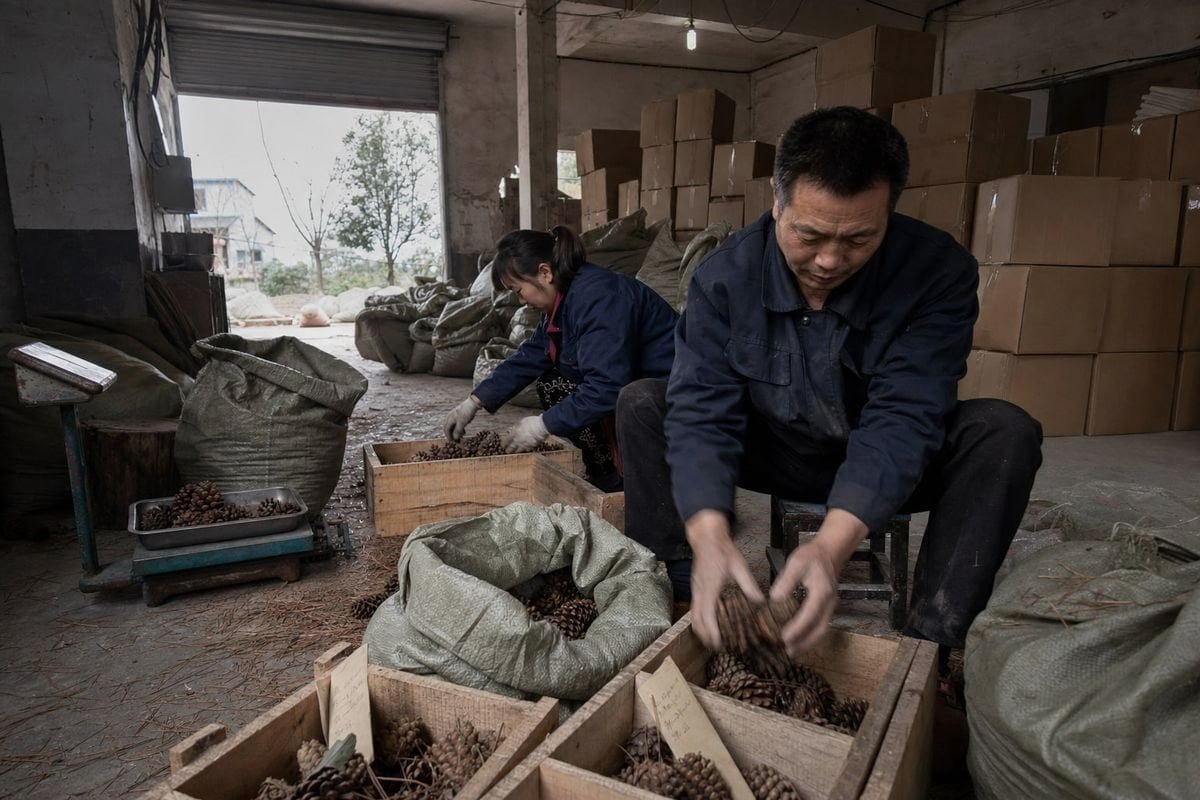
The severity scales with the nature of the gap. A clerical omission is handled very differently from a knowingly false statement. But even the "mild" end of the spectrum hurts a seasonal product. Colored pine cones and color-flame cones sell in a narrow autumn-to-December window. A three-week hold can mean missing the shelf date entirely, and your retail customer will not care whose fault it was.
Consequence Spectrum
| Severity | Typical Trigger | Likely Outcome |
|---|---|---|
| Low | Missing or vague data field | Filing correction, entry delay |
| Medium | Wrong harvest country or species | CBP hold, document demands, possible penalty |
| High | Declaration never filed for covered HTS code | Entry rejection, civil fines |
| Severe | False statement or illegally sourced material | Forfeiture, significant fines, criminal exposure |
Why HTS Code Classification Is the Real Trigger
Here is the objection I hear most: "These are finished decorative products, so they're exempt." That reading is wrong, and it is the assumption that causes most seizures of decorative plant materials. Finished-product status alone does not exempt you. The test is whether the article contains plant material, falls under an APHIS-listed HTS code, and enters as a formal entry. Following the Phase VII implementation in late 2024, decorative plant parts under HTS 0604.99.6000 — which captures colored pine cones — require a mandatory declaration. Paint, glitter, and wax coatings do not reclassify cones as composite materials like MDF or paper; species-level reporting still applies.
The genuine escape hatches are narrow. The de minimis exception applies only when plant material is no more than 5% of product weight and total plant material under the same 10-digit HTS provision stays under 2.9 kilograms per entry. A bag of pine cones is essentially 100% plant material, so this rarely helps. Informal entries and personal baggage are exempt, but commercial container shipments are formal entries by definition.
How Do I Verify My Manufacturer's Sourcing Records Will Satisfy US Customs Lacey Act Requirements?
Every audit season, our BSCI and ISO 9001 7 reviews force us to trace materials back to their source — and that discipline is exactly what Lacey Act "due care" demands from you as the importer. You cannot outsource legal responsibility, but you can verify your way to confidence.
Verify by requesting species and harvest documentation before ordering, cross-checking the HTS code classification against the APHIS-listed schedule, confirming the harvest complied with origin-country forestry laws, and keeping written records of every inquiry to demonstrate the due care standard courts apply under the Lacey Act.

Due care is a legal standard, not a checkbox. It means a reasonable importer took reasonable steps. Since pine cones are often wild-collected, you need records showing the collection complied with the harvest country's forestry and land-use laws. The practical question becomes: what does "reasonable steps" look like when your supplier is overseas?
A Five-Step Verification Process
- Request the sourcing dossier in writing. Ask for species identification, harvest region, and collection permits or legality statements. Written requests themselves become due care evidence.
- Cross-check the species claim. Compare the declared species against what plausibly grows in the stated harvest region. A supplier claiming Scandinavian species from a southern Chinese facility deserves follow-up questions.
- Confirm the HTS code with your broker. Have your customs broker independently classify the product rather than copying the supplier's suggested code. Then check that code against the current APHIS declaration schedule.
- Test the supplier's consistency. Ask the same sourcing questions twice, months apart, to different contacts. Consistent answers signal real records; shifting answers signal improvisation. Our sales and QC teams answer from the same batch-traceability system, so buyers get identical answers every time.
- Archive everything. Keep emails, certificates, invoices, and declarations for at least five years. If CBP ever questions an entry, your paper trail is your defense.
Red Flags Worth Walking Away From
Some warning signs justify changing suppliers, no matter the price. Refusal to name a species. Vague answers like "cones come from local forests." No third-party certifications such as SGS or Intertek reports. No prior US export experience under declaration requirements. In our experience exporting to the US market, buyers who insist on this documentation up front never face the fire-drill reconstructions that buyers of cheaper, undocumented product endure. Compliance is not a premium feature; for serious importers it is the entry ticket.
Conclusion
Colored pine cones are plant material, not exempt décor. Declare the exact species, harvest country, metric quantity, and value — and partner with a supplier whose sourcing records make
Footnotes
1. Background on the federal law underpinning all plant declaration requirements discussed. ↩︎
2. Official government directory link providing a stable entry point for CBP information. ↩︎
3. Official agency site governing plant import declarations referenced throughout the article. ↩︎
4. Official Harmonized Tariff Schedule database used to verify APHIS-listed classification codes. ↩︎
5. Official CITES source explaining appendix listings mentioned for protected pine species.
 English
  Spanish
  German
  French
  Arabic
  Portuguese
Join the Conversation