






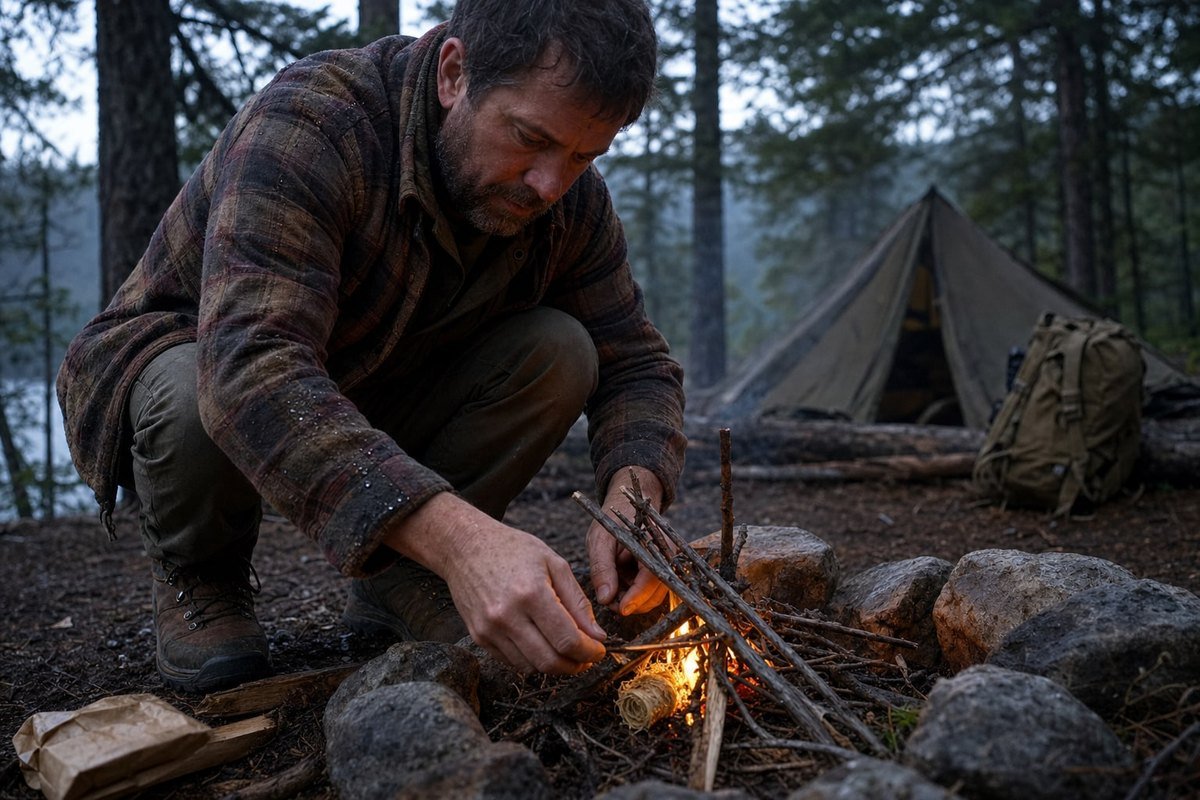
Wood fire starters solve a problem I see every season on our production line: campers struggling with damp tinder and kindling while a perfectly good evening slips away. It gets worse. Failed ignition pushes people toward lighter fluid, which ruins food flavor and violates campground rules. After 17 years of dipping wood-wool rolls in paraffin 1 at our factory, I can tell you the fix is simpler than most buyers expect — a properly made, properly used wood fire starter.
Wood fire starters for camping campfires are compressed wood-wool or fatwood products, often wax-dipped, that ignite easily and burn 8–15 minutes to light kindling. Use them under a loose fire lay in a designated fire ring, keep them dry, and never combine them with liquid accelerants.
That is the short answer. But if you import, distribute, or sell these products, you need more detail. Below, I cover certifications, real burn times, private-label options, and what to expect on MOQ and lead time.
What Certifications Should I Look for in Wood Fire Starters Before Importing Them?
Last year, a German distributor asked us for our full test-report package before he would even discuss pricing. In our experience exporting to 30+ countries, that caution is exactly right.
Before importing wood fire starters, require ISO 9001 for quality management, BSCI for social compliance, CE marking for the EU market, and third-party test reports from SGS or Intertek. These verify safe composition, consistent production, and legal market access in the US and Europe.

Certification is the first filter serious buyers apply, and for good reason. A fire product that fails compliance checks does not just cost you a shipment. It can cost you a retail listing, trigger a recall, or expose your brand to liability. When we onboard a new buyer in the US or Germany, the compliance conversation always comes before the price conversation.
The Four Documents That Matter Most
Here is how I explain the certification stack to purchasing managers who are new to fire-starting goods:
| Certification | What It Proves | Who Requires It |
|---|---|---|
| ISO 9001 2 | The factory runs a documented quality management system | Large retailers, brand owners |
| BSCI | Ethical labor and social compliance at the production site | EU retail chains, US big-box sourcing |
| CE Marking 3 | The product meets EU safety requirements | Mandatory for EU market entry |
| SGS / Intertek reports | Independent lab verification of materials and burn behavior | Importers, customs, insurers |
Why Composition Testing Is Not Optional
A wood fire starter is a simple product on the surface — typically around 50% wood fiber and 50% paraffin. But that simplicity hides risk. Cheap suppliers cut costs with recycled wax of unknown origin or wood fiber treated with chemicals. Third-party testing confirms the paraffin is clean-burning and the wood wool is untreated. This matters even more if your end customers cook over the fire, because chemical residues transfer odor and taste to food.
Ask for Batch-Level Consistency, Not Just a Certificate
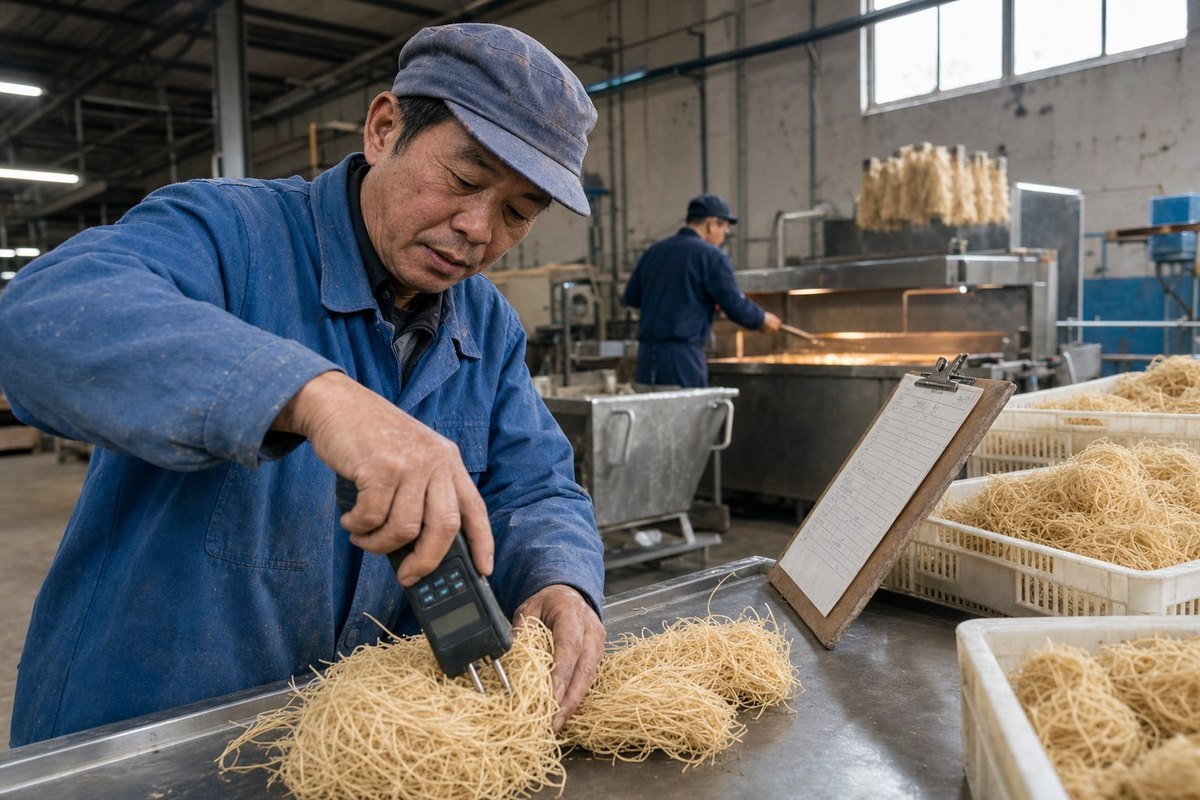
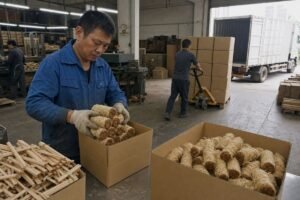
A certificate proves a factory passed an audit once. What you actually need is batch-to-batch consistency. Ask your supplier how they control moisture content 4 in the wood wool before dipping, and whether the sample you approve reflects mass-production output. At our facility in Ningbo, the first sample is pulled from the same line that runs full orders, so what you test is what you receive. Any supplier who cannot explain their in-line QC process is a supplier to avoid.
How Long Do Wax-Dipped Wood Firestarters Typically Burn in a Campfire?
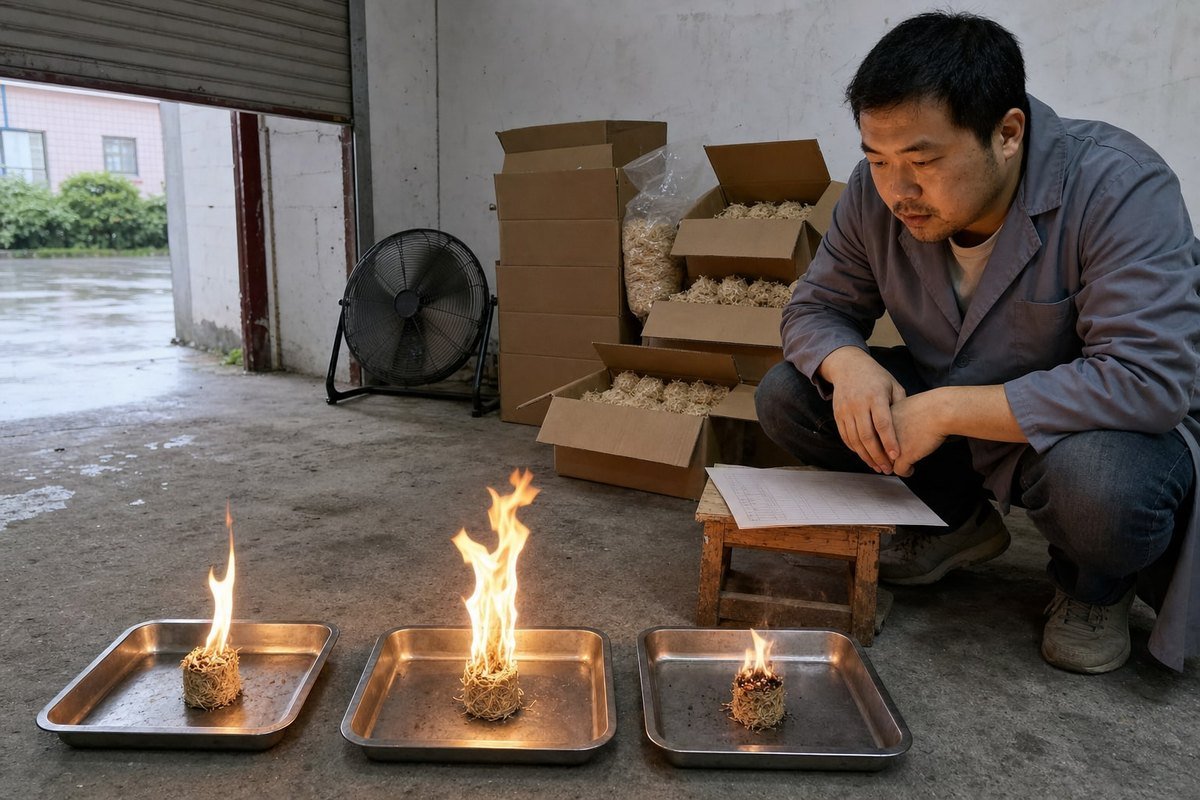
During product development, our team once ran timed burn tests across three humidity conditions in a single week. The variation surprised even our senior technicians.
Wax-dipped wood firestarters typically burn 8–15 minutes, depending on size, wax ratio, and wood-wool density. A standard finger-length roll burns about 10 minutes — long enough to ignite dry kindling and transfer flame to fuel logs in most weather conditions.
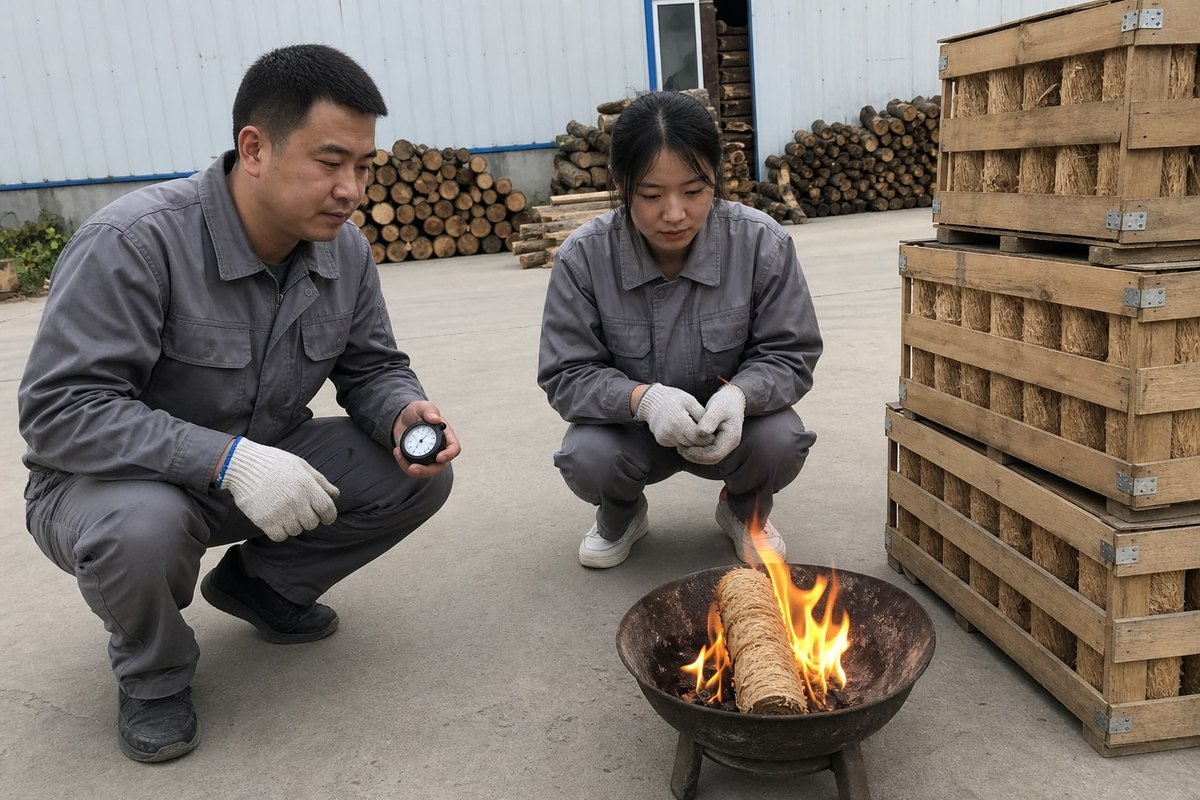
Burn time is where the fire triangle 5 — heat, fuel, oxygen — becomes practical rather than theoretical. A starter must burn long enough to raise surrounding kindling past its ignition point, and hot enough to overcome moisture content in that kindling. Too short, and the flame dies before the kindling catches. Too long is rarely a problem, but oversized starters add cost without much benefit.
What Actually Determines Burn Time
Three variables control how long a wax-dipped roll burns:
- Roll size and density. A tightly wound wood-wool core burns slower and steadier than a loose one. Our standard rolls are calibrated so the flame lasts through the critical kindling phase.
- Wax-to-fiber ratio. A 50/50 paraffin-to-wood-fiber mix balances easy ignition with sustained output. More wax extends burn time but slows the initial light.
- Placement and airflow. A starter buried under heavy logs suffocates. Placed at the base of a teepee or log cabin fire lay, the same starter performs at its full rated time.
Matching Burn Time to Wood Type
One of the SERP-level insights worth repeating: synchronize your starter with your wood density. Here is the guidance I give outdoor brands building product lines:
| Fuel Wood | Recommended Starter Burn Time | Why |
|---|---|---|
| Softwood kindling (pine, spruce) | 3–8 minutes | Ignites fast; short starters suffice |
| Mixed kindling and small splits | 8–12 minutes | Standard wax-dipped roll is ideal |
| Dense hardwood (oak, hickory) | 12–15+ minutes | Needs sustained heat; use larger rolls or fatwood alongside |
Wet-Weather Reality
Even a 15-minute starter fails if the tinder and kindling around it are soaked. We always advise end users to pair starters with dry kindling, waterproof matches, and a backup roll. Compared with a ferrocerium rod 6 or magnesium fire starter, a wax-dipped roll needs no technique — but it still obeys physics. Dry material and loose packing win every time.
Can I Get Custom Packaging and Private-Label Branding for Wood Fire Starters?
A UK camping brand once came to us with nothing but a logo file and a shelf-height limit from their retail partner. Six weeks later, they had shelf-ready boxes.
Yes. Established factories offer full OEM/ODM services for wood fire starters, including private-label boxes, custom piece counts, kraft or plastic packaging, display cartons, warning labels, barcodes, and multilingual instructions. Trial orders usually start with semi-custom packaging before moving to fully bespoke designs.
Private labeling is where a commodity product becomes a brand asset. The wood-wool roll inside the box is broadly similar across quality manufacturers. What differentiates your product on a retail shelf — or an Amazon listing — is the packaging, the count, the compliance labeling, and the story printed on the carton.
What Full Customization Actually Covers
When buyers ask what "one-stop OEM/ODM" means in practice, I break it into four layers:
- Product-level customization. Roll size, burn time, wax ratio, and even bundled kindling sticks can be adjusted. Some buyers want a 3-minute quick-light roll for softwood markets; others want a 15-minute heavy roll for hardwood regions.
- Primary packaging. Options range from kraft bags for an eco-positioned line to rigid boxes with flame graphics for a rugged camping aesthetic. Piece counts of 20, 50, or 100 per box are common.
- Retail-readiness. Barcodes, EAN/UPC placement, mandatory warning labels in the destination language, and composition statements. These details decide whether a big-box buyer accepts your product without rework.
- Display and logistics. Counter display units, master carton dimensions optimized for pallet loading, and container-fill planning to cut your landed cost per unit.
Positioning Angles That Sell
Packaging should reflect how campers actually use the product. Lines that emphasize Leave No Trace 7 values, fire ring safety, and clean burning without petroleum lighter fluid consistently perform well in the US and EU. Cooking-safe messaging also matters, since aromatic or chemical starters taint food — a clean paraffin-and-wood-fiber product is a genuine selling point. For humid markets, we recommend sealed inner bags, sometimes with desiccant, so ambient moisture never degrades ignition performance before the product reaches the customer.
What MOQ and Lead Time Should I Expect When Sourcing Wood Fire Starters from a Manufacturer?
Balancing trial-order flexibility against production efficiency is a trade-off we weigh with almost every new buyer, and there is no single right answer.
Expect MOQs of roughly 500–1,000 boxes for standard products and 1,000–5,000 for fully custom packaging. Lead times run 15–25 days for stock designs and 30–45 days for private-label orders, plus shipping. Trial orders with semi-custom branding often ship fastest.
MOQ and lead time are where many sourcing relationships succeed or fail. The numbers themselves matter less than whether your supplier explains what drives them. Let me open the books a little.
What Drives MOQ
The wood-wool rolls themselves are flexible to produce. The real MOQ drivers are packaging and setup. A custom-printed box has its own minimum print run. A custom roll size may require line adjustment. That is why the practical path for most importers looks like this:
- Sample stage. Test standard rolls and burn performance. Usually one to two weeks including courier time.
- Trial order. Standard product with a semi-custom label or sticker. Lower MOQ, faster turnaround, real market feedback.
- Scaled private-label order. Full custom packaging once sell-through data justifies the print run.
Realistic Timelines by Order Type
| Order Type | Typical MOQ | Production Lead Time | Notes |
|---|---|---|---|
| Stock product, neutral packaging | ~500 boxes | 15–20 days | Fastest route to market |
| Semi-custom (label/sticker branding) | ~500–1,000 boxes | 20–30 days | Best for trial orders |
| Full private label with custom box | 1,000–5,000 boxes | 30–45 days | Includes packaging print run |
| Custom product spec + custom packaging | Negotiated | 45+ days | Tooling and burn-test validation added |
Seasonality Is the Hidden Variable
Fire starters are seasonal goods. Demand in the US and Europe peaks from late summer through winter, and regional burn bans can shift retail timing unpredictably. Factories fill up from August onward. My honest advice: place autumn-season orders by late spring. Buyers who order in July for October delivery are competing for line time with everyone else who waited. A supplier with genuine manufacturing depth — complete in-house lines rather than subcontracted production — can absorb peak-season pressure far better than a trading company reselling factory capacity.
Conclusion
Weak starters, damp kindling, and non-compliant suppliers sink both campfires and product lines. The stakes rise with every failed shipment or recalled SKU. The solution is disciplined sourcing: verified certifications, tested burn times, shelf-ready private labeling, and honest lead-time planning. Choose wood fire starters — and a manufacturing partner — built for consistency, and both your campfires and your margins will light reliably.
Footnotes
1. EPA resource on chemical safety relevant to paraffin wax composition and clean-burning claims. ↩︎
2. Authoritative source explaining the quality management standard referenced for supplier certification. ↩︎
3. Official EU source clarifying CE marking requirements mentioned for market entry compliance. ↩︎
4. Government forestry research source relevant to wood mo


 English
  Spanish
  German
  French
  Arabic
  Portuguese
Join the Conversation