







Free vs. paid samples answer very different questions when vetting fireplace pine cone suppliers phytosanitary documentation 1. I learned this the hard way running our color-flame pinecone line, watching buyers get burned by pretty samples that never matched the bulk shipment.
Free samples verify appearance, packaging condition, and supplier responsiveness; paid samples verify production-grade quality, true landed cost, and supplier commitment. Reliable vetting of fireplace pine cone suppliers combines both, plus documentation checks covering moisture, treatments, burn behavior, and certifications, before any bulk order.
Neither sample type is "better" on its own. Each one proves something specific. Let me walk you through what each proves, and how to stack them into a real vetting process.
What Should I Expect a Free Sample to Actually Prove About a Pine Cone Supplier?
A buyer from Poland once told me he judged our factory before opening the box — by how fast we answered his sample questions. He was right to do so.
A free sample proves basic visual quality, size grading, cleanliness, and packaging condition on arrival. It also reveals supplier responsiveness and honesty. It does not prove the bulk order will match, because free samples are often hand-picked or specially finished versions of the product.

Treat a free sample as a screening tool, not a verdict. In our experience exporting color-flame pinecones to 30+ countries, free samples are a low-friction way for suppliers to attract buyers. That is fine. Just understand the limits of what you can conclude from one.
What a Free Sample Can Confirm
First, appearance. Compare the cones against the listing photos. Check size range, color, intact scales, and shape. If our purple-and-gold decorative cones arrive with chipped paint or crushed tips, that tells you something about handling and coating quality right away.
Second, cleanliness. Natural pine cones should arrive dry, free of dirt, sap mess, and any sign of pests. Infestation risk is real with botanical products. One bad cone in a sample bag is a warning, not an accident.
Third, packaging. Did the drawstring sack or stand-up pouch survive shipping? Was there excessive dust or debris at the bottom of the bag? Debris control matters for shelf-ready retail products.
Fourth, communication. How fast did the supplier reply? Did they explain sample terms clearly? Did they send photos of multiple cones when asked, not just the best one? A good supplier makes sample evaluation easy. A vague one makes it hard.
| Free Sample Can Verify | Free Sample Cannot Verify |
|---|---|
| Visual quality and size grading | Batch-to-batch consistency |
| Cleanliness and dryness on arrival | Whether bulk stock matches the sample |
| Packaging survival in shipping | True landed cost at volume |
| Supplier response speed and clarity | Supplier capacity for commercial orders |
| Basic burn behavior in one test | Repeatable flame performance across a run |
The Honest Objection: Are Free Samples Enough?
Some buyers argue free samples are enough for initial screening. For comparing five suppliers cheaply on appearance and communication, I agree. But if you stop there for a fire-adjacent product, you are guessing on the things that actually cause returns: moisture, treatments, and consistency. Screening is step one, not the whole process.
Why Would I Ever Pay for a Sample When Vetting a New Manufacturer?
There is a trade-off we discuss openly with new buyers at our Ningbo production site: a free cone from display stock, or a paid one pulled from the current production run. Serious buyers always pick the second.
Paying for a sample verifies production-grade quality, exposes the true landed cost including shipping and customs, and filters out casual sellers. A paid sample pulled from live production stock is the closest preview of your actual bulk order that money can buy.
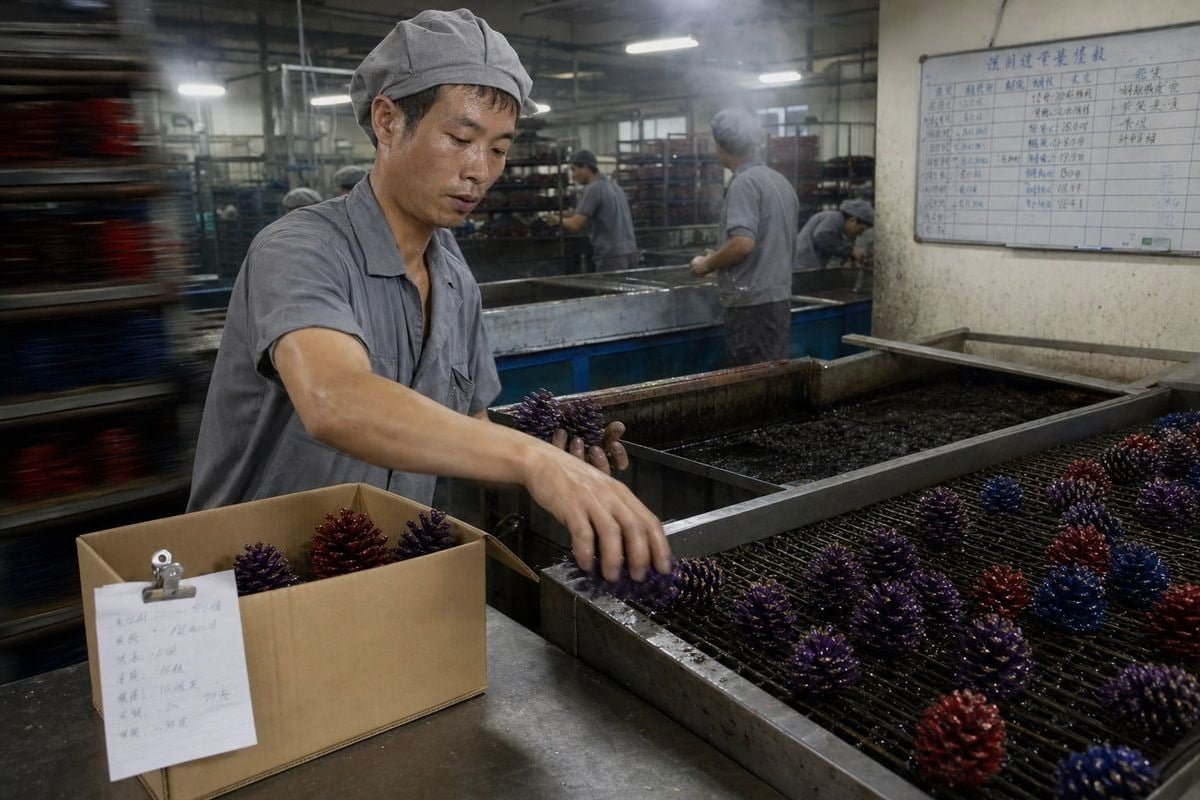
The word "paid" makes some purchasing managers flinch. It should not. In B2B sourcing, a modest sample fee often signals that the supplier runs a real commercial operation, not a listing farm.
Four Things a Paid Sample Proves That a Free One Cannot
First, production reality. When you request — and pay for — a sample taken from current production stock, the supplier has less room to hand-pick a flattering unit. Ask explicitly: is this from a production batch or specially selected? Get the answer in writing. At our factory, we pull paid samples straight from the batch queue precisely because our first sample must reflect mass-production quality; anything else creates a claim later.
Second, total landed cost. "Free" samples frequently carry shipping and handling charges anyway. A paid sample forces the full cost conversation early: unit price, courier fees, customs treatment for botanical goods, and payment terms. Hidden costs surface now, not after your PO.
Third, supplier seriousness. Suppliers who run formal paid-sample programs — especially those crediting the sample fee toward the first bulk order — are signaling they want a long-term relationship, not a one-off transaction. That credit structure is a small but telling legitimacy check.
Fourth, repeatability. Pay for three or four units, not one. Compare them side by side for size spread, coating evenness, moisture, and burn behavior. One perfect cone proves nothing. Four consistent cones prove a process.
One caution: payment does not guarantee quality. It reduces ambiguity about intent, cost, and specs. The sample still has to pass your tests.
How Do I Use Samples to Confirm Consistent Batch-to-Batch Quality Before a Bulk Order?
Batch-to-batch drift is the failure mode I have spent seventeen years engineering against. Pine cones are a natural material — harvest season 2, drying time, and coating application all vary unless the factory controls them deliberately.
Request 2–4 samples from different production batches, ideally across time, then compare them side by side for size, moisture, coating, packaging, and burn performance. Document every discrepancy in writing and lock the agreed specification into your purchase order before committing to bulk.

Consistency is where free and paid samples work together. Use the free sample as your baseline. Use paid production samples, ordered weeks apart if your timeline allows, as the real test. Here is the workflow I recommend to our distributor clients in the US and Germany.
A Five-Step Batch Consistency Workflow
- Set your spec first. Write down acceptable size range, moisture expectation, coating type, dust tolerance, and packaging format. You cannot judge consistency without a reference point.
- Order samples from separate batches. Ask the supplier to label which batch and date each sample came from. A factory with real batch traceability answers instantly. A trader stalls.
- Compare physically. Line the cones up. Measure the size spread. Check color uniformity, scale integrity, dryness, and any coating drips or bare spots.
- Burn-test identically. For color-flame pinecones, burn one unit from each batch under the same conditions. Compare flame color intensity, duration, ignition ease, and smoke or scent. Fire products must be tested as fire products, not judged as static décor.
- Document and confirm. Photograph everything. Send discrepancies back to the supplier and watch how they respond. A partner explains root causes. A risky supplier deflects.
| Consistency Check | What to Measure | Red Flag |
|---|---|---|
| Size grading | Length/width spread across units | Spread wider than the listed grade |
| Moisture and drying | Weight, feel, closed vs. open scales | Damp cones, mold smell, closed scales |
| Coating or treatment | Evenness, adhesion, flaking | Drips, bare patches, chemical odor |
| Burn performance | Flame color, duration, ignition | Weak or inconsistent color between batches |
| Packaging | Bag seal, dust level, labeling | Loose debris, torn seals, missing labels |
Seasonal variation deserves special mention. If you plan a year-round program, ask whether the supplier maintains grading and moisture standards across harvest seasons. Requesting samples in two different seasons is slow but revealing. Our own batch QC exists precisely so buyers do not have to discover seasonal drift in a container.
What Certification and Compliance Checks Should I Run Once I Receive My Samples?
A UK fireplace distributor once asked us for test reports before he even opened his sample box. His reasoning stuck with me: a beautiful cone that cannot legally clear customs or sit on a retail shelf is worth nothing.
Verify phytosanitary or heat-treatment certificates for cross-border botanical import, third-party test reports for any coatings or color-flame treatments, and factory credentials such as ISO 9001, BSCI, CE, and SGS or Intertek reports. Match certificate details against the actual sample received.
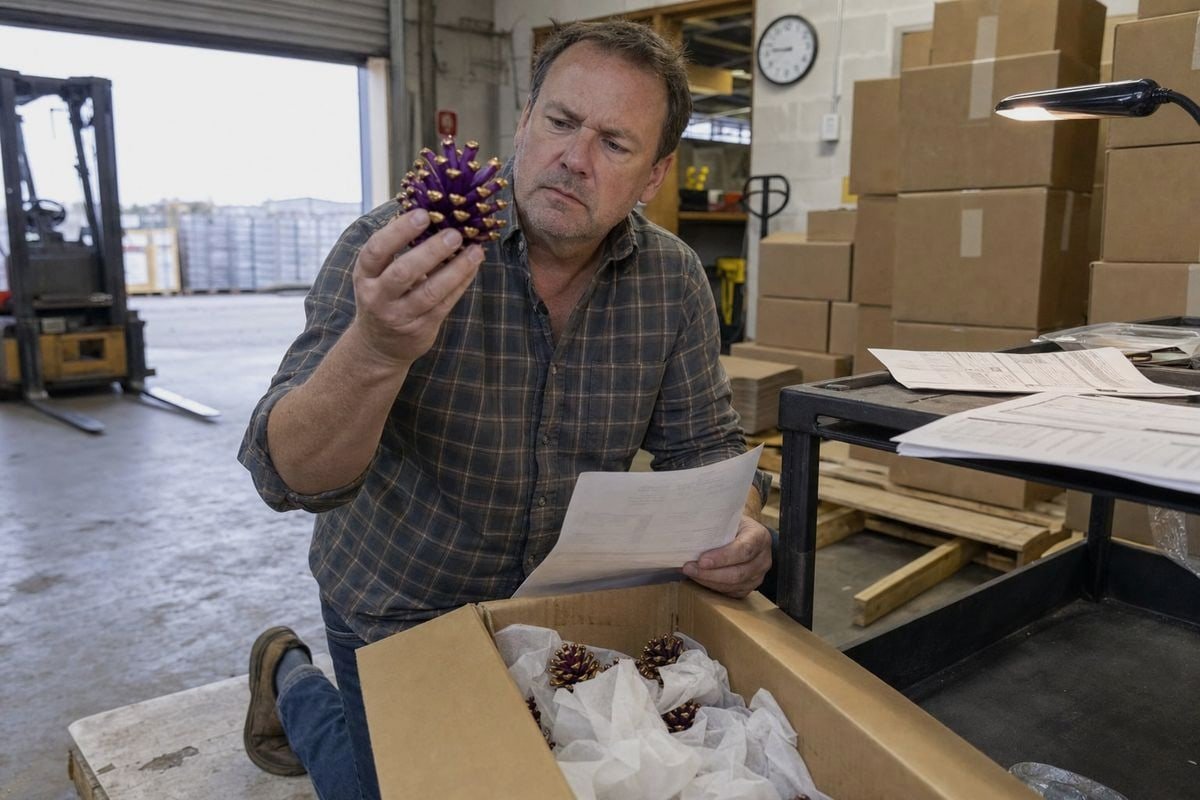
The sample in your hand is physical evidence. The paperwork behind it is legal evidence. You need both, and they must match each other.
The Document Stack, in Priority Order
Start with import eligibility. Pine cones are botanical material 3. Many markets require heat-treatment or phytosanitary documentation 4 to prove pest-control compliance. Without it, your shipment can be held, fumigated at your cost, or destroyed. Ask which certificate applies to your destination country and request a copy issued against a real prior shipment, not a template.
Next, treatment disclosure. If the cones are color-flame treated, painted, or fragranced, demand a written material composition statement. Vague "all natural" claims on a treated product are a serious red flag. Our color-flame products use eco-friendly formulations with no harmful chemicals, and we back that with SGS and Intertek test reports — because for our US and EU buyers, that documentation is a hard requirement, not a nice-to-have.
Then, factory credentials. ISO 9001 speaks to quality-management systems, which is what actually protects batch consistency. BSCI 5 covers social compliance, which large retail channels increasingly audit. CE marking 6 matters for certain EU product categories. Cross-check the certificate holder's name against the company invoicing you; mismatches often expose trading companies posing as factories.
| Document | What It Verifies | When It Is Essential |
|---|---|---|
| Phytosanitary / heat-treatment certificate | Pest-control compliance, import legality | Any cross-border botanical shipment |
| SGS / Intertek test report | Coating and treatment safety | Treated, painted, or color-flame cones |
| ISO 9001 certificate | Quality-management system | Any bulk program needing consistency |
| BSCI audit 7 | Social compliance | Large retail and sourcing channels |
| Material composition statement | What is actually on the cone | Fireplace or fire-adjacent use |
Finally, cross-check externally. Export records, business registration, and customer references can reveal whether the supplier actually ships at scale. Some buyers argue this documentation trail matters more than the sample itself. I would not go that far — but the strongest vetting stacks all three: sample, paperwork, and external verification.
Conclusion
Free samples screen; paid samples confirm production reality; documentation proves the supplier can deliver legally and consistently. Stack all three before your bulk order — that is how I would vet us, too.
Footnotes
1. IPPC sets international phytosanitary standards governing pest-control certification for plant exports. ↩︎
2. Background on conifer cone biology


 English
  Spanish
  German
  French
  Arabic
  Portuguese
Join the Conversation