






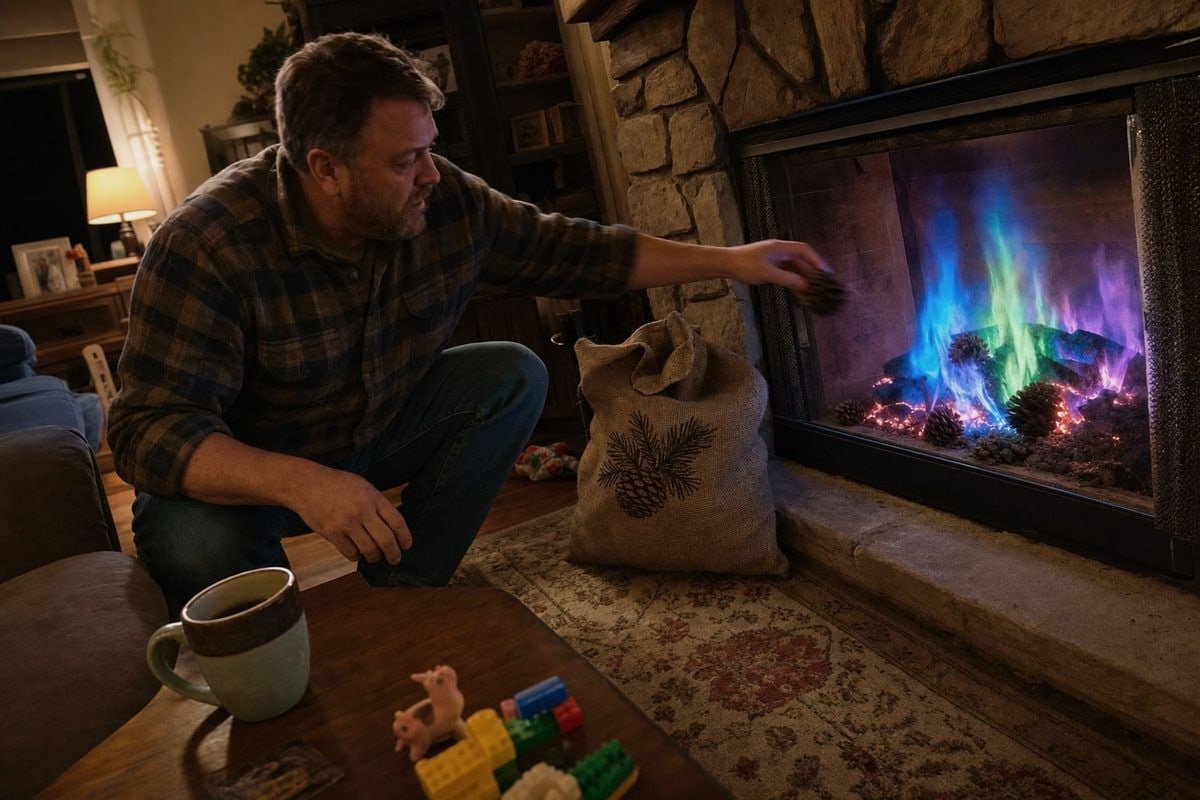
Fireplace colored pine cones sell fast in November and then vanish from reorder sheets. On our production line in Ningbo, I see which buyers reorder every year — and which quietly disappear.
Repurchases of fireplace colored pine cones are driven by consistent flame color performance, verified safety certifications, attractive seasonal packaging, fair price-per-use value, and a supplier who delivers reliable lead times. Buyers reorder when the product reliably delivers a vivid, safe, shareable fire experience.
That is the short answer. The longer answer matters more if you are a distributor planning next season's order. Let me walk through each driver, one by one.
What certifications should I check before reordering colored pine cones from a new supplier?
A German distributor once asked me for our SGS test report 1 before he would even discuss pricing. That conversation taught me how buyers really evaluate a new supplier of color-flame products.
Before reordering colored pine cones, verify ISO 9001 quality management, BSCI social audits, CE marking for the EU, and third-party SGS or Intertek test reports confirming no harmful chemical additives. Also request batch-level documentation, safety data sheets, and compliant warning labels for your market.

Certifications are not paperwork for its own sake. They are the reason your customers trust the product enough to burn it inside their homes. A colored flame comes from mineral flame colorants 2, and buyers rightly ask what is actually in the mix. If a supplier cannot show test reports, you carry the risk — not them.
In our 17+ years exporting to the US, Germany, the UK, and 30+ other markets, we have learned that compliance is a hard requirement, not a nice-to-have. Retail sourcing channels in particular will reject a shipment over a missing label before they ever light a single cone.
The core documents to request
Here is the checklist I recommend to every purchasing manager evaluating a new source:
| Document | What it proves | Why it affects repurchases |
|---|---|---|
| ISO 9001 certificate | The factory runs a real quality system | Batch two matches batch one |
| BSCI audit report | Ethical labor and working conditions | Protects your brand reputation |
| CE marking 3 (EU) | Product meets EU safety directives | Legal to sell in Europe |
| SGS / Intertek test report | Independent lab verified composition | Confirms clean-burning, safe formula |
| SDS (safety data sheet) | Full disclosure of contents | Answers customs and retailer questions |
Why chemistry disclosure matters
Traditional DIY recipes use copper sulfate soaks 4, which can be messy and inconsistent. A professional factory uses controlled, eco-friendly flame colorants with documented formulas. Ask your supplier directly: what produces the blue and green? A confident answer with a lab report behind it is a green light. A vague answer is a reason to walk away, because chimney safety questions from end customers will eventually land on your desk.
How does consistent flame color quality affect my customers' repeat purchases?
Every batch that leaves our Ningbo facility gets a live burn test. We light sample cones from each production run and time the color effect, because one weak batch can end a retail relationship.
Consistent flame color quality is the single strongest driver of repeat purchases. Customers buy again when every cone reliably produces vivid blue, green, and purple rainbow fire with a predictable burn time. One dull or inconsistent batch destroys trust and stops reorders immediately.
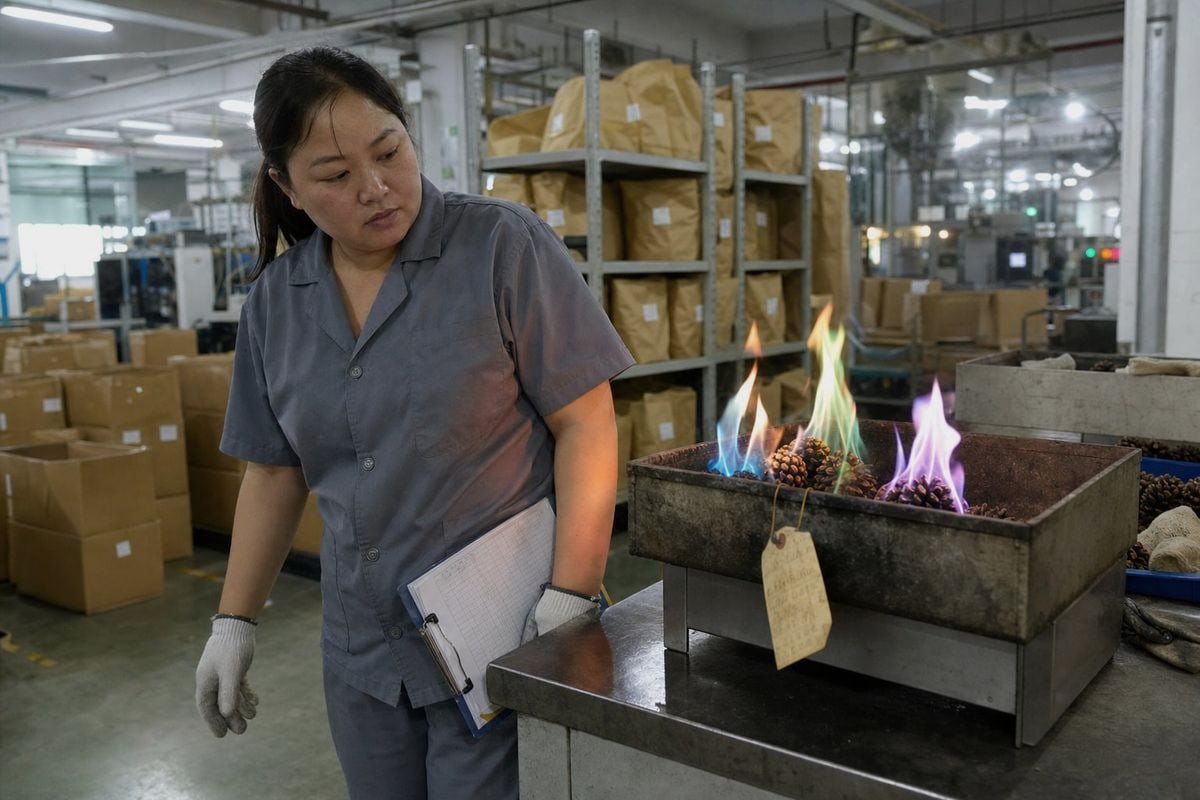
Think about what the first-time buyer experiences. They toss a cone into the fireplace, and guests lean in as the flames turn blue and green. That "wow" moment is the entire value proposition. Repurchase research consistently shows that satisfaction and perceived quality drive repeat buying 5, and for this product, satisfaction equals the visual payoff.
Now flip it. Imagine the second purchase produces a faint green flicker for ninety seconds. The customer does not blame the batch. They blame the brand — your brand. They leave a review saying the product is a one-time novelty, and that review suppresses future sales.
What consistency actually means
Consistency has three measurable parts:
- Color intensity. The saturation of the flame colorants must be uniform across every cone.
- Burn time. Customers expect the color effect to last long enough to feel worth the money. We calibrate coating weight per cone so burn time stays within a tight tolerance.
- Ignition behavior. The cone should catch easily and burn cleanly, without excess smoke or odor that raises indoor air-quality concerns 6.
The value connection
Colored pine cones are a discretionary purchase. Customers judge them on price-per-use. A multipack that delivers ten strong, long color displays feels like a bargain. A pack where three cones underperform feels wasteful. This is why we run batch-to-batch quality control on coating weight and colorant concentration — so the sample you approve is exactly what arrives in your container six months later.
The entertainment factor
There is also a social dimension. These cones work as icebreakers at gatherings, as Instagrammable moments, and even as family rituals — some households light them every Christmas Eve. Rituals only survive when the product performs identically every year. Consistency is what turns a novelty into a tradition, and traditions generate annual reorders.
What packaging and branding options keep my private-label pine cones selling season after season?
A UK buyer once told us his burlap-sack version outsold the plain poly bag three to one at the same price. The cones inside were identical. Only the packaging changed.
Private-label pine cones sell season after season when packaging matches the buying occasion: rustic burlap drawstring sacks for gifting, kraft stand-up pouches with clear windows for retail shelves, and holiday gift sets for Q4. Custom logos, barcodes, warning labels, and display boxes complete a shelf-ready product.

Packaging does more work in this category than in almost any other fireplace accessories niche. The product is bought largely as a gift — a stocking stuffer, a hostess gift, a camping present. The package is the first impression, and it sets expectations for the magic inside.
From our OEM/ODM work with brands across the US and Europe, three formats consistently drive repeat seasonal sales:
| Packaging format | Best sales channel | Repurchase advantage |
|---|---|---|
| Burlap drawstring sack with printed logo | Boutiques, gift shops, holiday markets | Feels artisanal; strong gifting appeal |
| Kraft stand-up resealable pouch with window | Outdoor retailers, camping stores | Rugged look; resealable supports multi-use |
| Rigid gift box or display-ready carton | Big-box retail, holiday gift sets | Premium shelf presence; multipack value |
Match the package to the season
The same cones can serve two seasons with two skins. A festive design with metallic gold accents and hand-painted color cues sells the winter fireplace story. A kraft-brown, adventure-themed pouch sells the summer campfire story. Brands that run both versions capture two buying windows per year instead of one, which doubles the repurchase rhythm.
Small details that drive reorders
Eco-friendly packaging materials 7 matter to European buyers especially — kraft paper, jute rope, and recyclable pouches signal quality. Clear usage instructions and honest expectation-setting ("toss one or two cones on an established fire") reduce disappointment. Compliant warning labels and barcodes prevent retail rejections. We handle all of these in-house, including custom box design and display packaging, so a distributor can go from approved sample to shelf-ready product without coordinating three vendors.
Can flexible MOQs and reliable lead times help me build a long-term supply partnership?
The trade-off I weigh most often with new buyers is trial size versus unit economics. A smaller first order costs slightly more per unit, but it lets a distributor test the market before committing a full container — and tested buyers become loyal buyers.
Yes. Flexible MOQs let distributors validate demand with low-risk trial orders, while reliable lead times guarantee stock arrives before the critical Q4 selling window. Together they reduce buyer risk, build trust through delivered promises, and convert first orders into annual repeat contracts.

Seasonality rules this product. Research on ornamental and seasonal goods shows that purpose of purchase and timing are the strongest predictors of repeat buying, and colored pine cones peak hard from October through December. A shipment that lands two weeks late does not lose two weeks of sales — it can lose the entire season. That is why lead-time reliability matters more here than in evergreen categories.
How a trial-to-partnership path works
Here is the progression we typically see with buyers who become long-term partners:
- Trial order. A modest MOQ tests the design, packaging, and market response without heavy inventory risk.
- First seasonal reorder. The buyer confirms sell-through, adjusts pack sizes, and locks in a Q4 delivery schedule.
- Annual program. Orders are placed in spring or early summer, produced on a fixed calendar, and shipped with buffer time before the season.
- Line extension. Successful buyers often add adjacent products — pine cone fire starters, wax-dipped wood firestarters, or color-flame packets — under the same private label.
What reliable really looks like
A dependable partner communicates in plain English, confirms production milestones, and flags any variance early. Because we run our own factory rather than trading through middlemen, we control the production schedule directly, and we optimize logistics for each destination market. That control is what allows us to promise a delivery window and hit it — and hitting it, year after year, is what turns a supplier relationship into a partnership. Buyers do not reorder from the cheapest quote. They reorder from the factory that never made them explain a stockout to their retail accounts.



 English
  Spanish
  German
  French
  Arabic
  Portuguese
Join the Conversation