






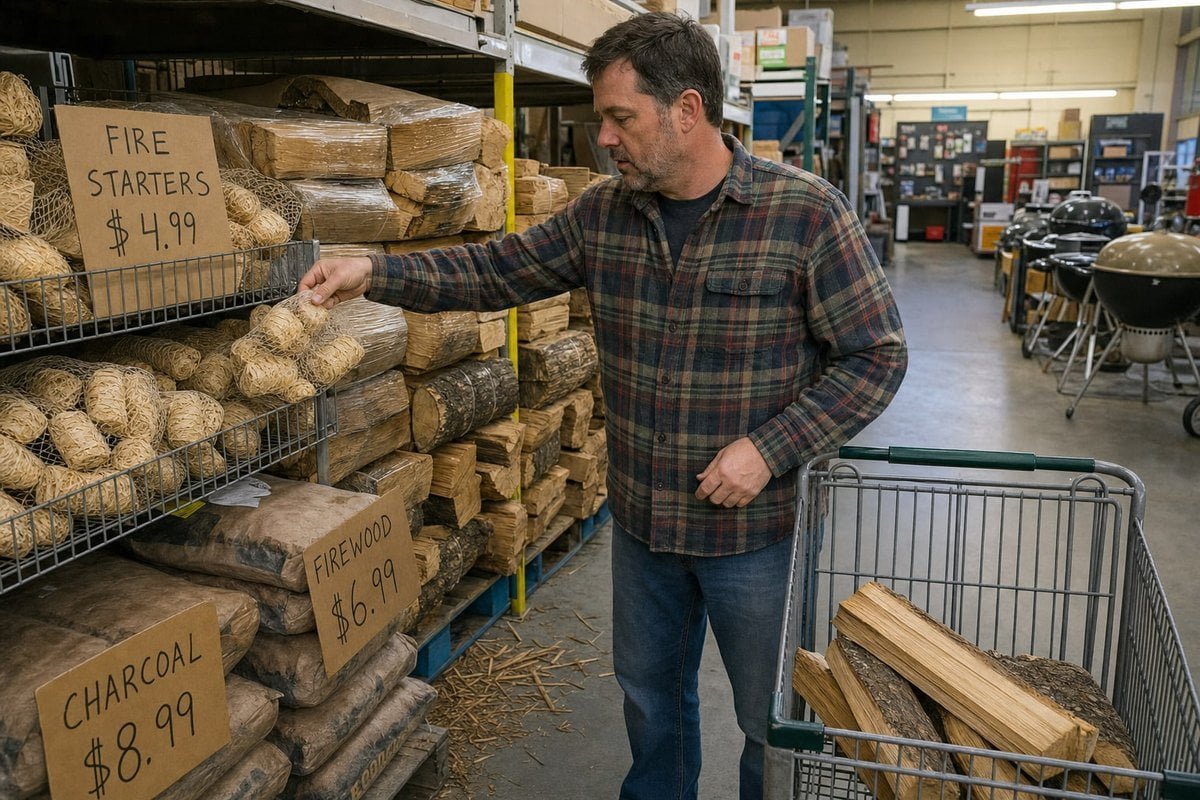
Many buyers who visit our factory ask the same thing: wood fire starters are cheap, small, and simple — can they really move revenue? I hear this question every trade season.
Wood fire starters boost your store's overall sales mix by acting as a high-margin, high-frequency add-on. They increase average basket size, drive impulse purchases near grills, firewood, and camping gear, and create repeat visits across summer barbecue and winter fireplace seasons.
That short answer hides a lot of retail mechanics. Below, I break down exactly how this small product influences your bigger numbers, and how to source it well.
How can wood fire starters increase my average basket size at checkout?
Last spring, a German distributor told me his firewood margins were shrinking. We ran his numbers together. Adding our wax-dipped wood rolls beside his firewood pallets changed his whole basket math.
Wood fire starters increase average basket size because they are low-cost impulse purchase items that attach to bigger purchases. A shopper buying firewood, charcoal, or a grill adds a fire starter without deliberation, lifting average order value by a meaningful margin per transaction.

Basket size optimization is not about selling more expensive items. It is about attaching small, profitable items to purchases that are already happening. Wood fire starters are almost perfectly designed for this job. They are compact, they solve an obvious problem, and the price point is low enough that customers do not stop to compare.
In our 17+ years supplying fire-starting goods to distributors in the US, Germany, and the UK, we have seen the same pattern repeat. The starter itself is rarely the destination purchase. The customer came in for firewood, a grill, or camping supplies. The fire starter completes the mission.
The attachment math
Think of it this way. Firewood and charcoal are bulky, low-margin anchor products. Fire starters are the opposite: small footprint, strong margin, fast turn. When you pair them, the blended margin of the transaction improves even though the anchor product margin stays flat.
| Product | Typical margin profile | Shelf space needed | Purchase decision time |
|---|---|---|---|
| Firewood bundle | Low | Large | Planned |
| Charcoal bag | Low–medium | Large | Planned |
| Grill / fire pit | Medium | Very large | Researched |
| Wood fire starters | High | Minimal | Seconds (impulse) |
Where the lift actually comes from
Three mechanics drive the basket lift. First, checkout placement captures impulse purchase items 1 at the moment of payment. Second, adjacency placement — starters clipped or displayed next to firewood — makes the add-on feel like part of the purchase. Third, repeat purchase behavior: a household that lights a fireplace weekly burns through starters constantly, so one attachment becomes many return visits.
One practical tip from our OEM work: display packaging matters. We build counter-display boxes for buyers specifically because a loose bin of starters converts far worse than a branded point-of-purchase display with a clear price. Small merchandising details drive the attach rate more than the product itself.
Which customer segments will buy wood fire starters alongside my existing products?
Our export data across 30+ countries taught me something useful: the buyer profile changes by season and by aisle, but the mission logic stays the same everywhere we ship.
Four core segments buy wood fire starters alongside existing products: barbecue and grilling customers in summer, fireplace and hearth households in winter, campers and outdoor recreation shoppers year-round, and emergency-preparedness buyers stocking backup ignition supplies for storms and outages.

Every one of these segments is in what retail people call "mission mode." They are not browsing. They are completing a project — a cookout, a cozy weekend, a camping trip, an emergency kit. Mission-mode shoppers are the most receptive audience for complementary product bundling, because the add-on helps them finish the job in one trip.
Segment-by-segment breakdown
| Segment | Anchor products they buy | Best season | Why they add starters |
|---|---|---|---|
| BBQ & grilling | Grills, charcoal, smoking wood, tools | Spring–Summer | Faster, cleaner charcoal ignition |
| Hearth & fireplace | Firewood, hearth and patio supplies, tools | Fall–Winter | Reliable indoor lighting, less mess |
| Camping & outdoor | Tents, camp stoves, coolers, lanterns | Year-round | Lightweight, works in damp conditions |
| Emergency prep | Lanterns, water storage, survival kits | Year-round, spikes pre-storm | Backup ignition security |
Two segments retailers underestimate
There are two more groups I always mention to purchasing managers. The first is eco-conscious shoppers. Demand for eco-friendly ignition products 2 keeps rising in our European markets, especially Germany and the Netherlands. Natural wood-wool starters with no harmful chemicals let these customers avoid petroleum-smelling lighter fluid 3 entirely. This is exactly why we build all our starters from eco-friendly materials — our EU buyers treat it as a purchase requirement, not a bonus.
The second is the novice fire-builder. Younger and urban customers often lack fire-building skills. A starter that guarantees first-time success removes their fear of failure. Some of our private-label clients 4 add QR-code tutorials to packaging for this exact audience, and they report that it converts hesitant first-timers into repeat buyers.
Cross-merchandising strategies work best when you map product placement to these segments. Put starters in four places, not one: the grill aisle, the hearth section, the camping display, and checkout.
Can private-label wood fire starters help me stand out from competitors on the shelf?
A US importer once showed me two shelves side by side: one with a generic brand, one with his own label on our starters. His label outsold the generic at a higher price. That day reshaped how I pitch OEM programs.
Yes. Private-label wood fire starters differentiate your shelf because generic starters are interchangeable commodities. Your own branding, custom packaging, and eco-friendly positioning create margin control, repeat-purchase loyalty, and a product competitors cannot replicate — while keeping your store name visible in the customer's home.
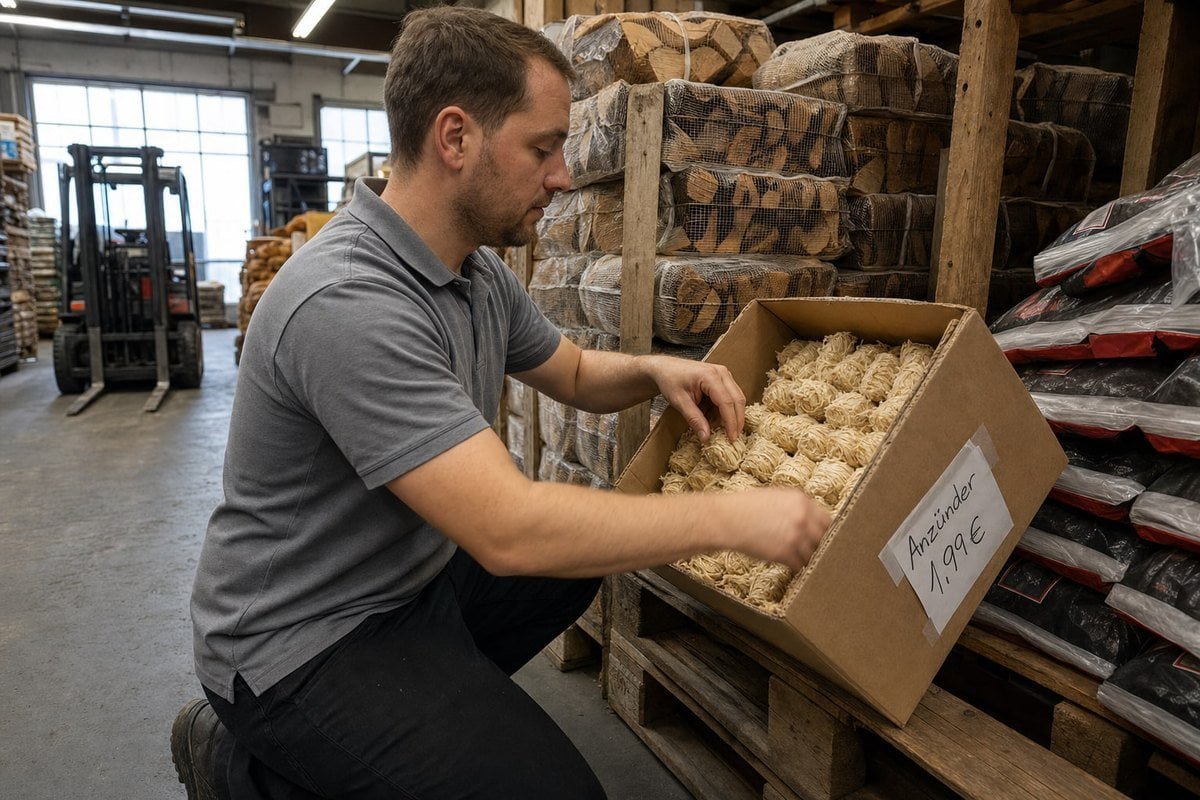
The fire starter category has a commodity problem. Most shelves carry near-identical products, so price becomes the only differentiator. Private label breaks that trap. When the product carries your name, comparison shopping ends. Nobody can undercut a product only you sell.
What private label actually changes
There is also a quieter benefit that buyers underestimate. Fire starters live next to the fireplace or the grill for months. A branded box in the customer's home is repeated brand exposure at zero media cost. High-margin retail accessories rarely deliver that kind of ongoing visibility.
From our side of the production line, a real OEM program covers far more than a printed logo. When we develop private-label starters with a client, we typically customize:
- Product specs — size, wax ratio, and burn time tuned to the client's market (a fireplace market wants longer burn; a BBQ market wants faster ignition).
- Packaging format — retail boxes, kraft bags, jars, or counter-display units designed as point-of-purchase displays 5.
- Compliance elements — warning labels, barcodes, and language versions correct for the destination market.
- Positioning — natural, chemical-free messaging for eco-focused retailers, or performance messaging for outdoor brands.
Commodity versus private label
| Factor | Generic starters | Private-label starters |
|---|---|---|
| Price pressure | Constant comparison | Insulated — unique to you |
| Margin control | Set by market | Set by you |
| Customer loyalty | To the category | To your store brand |
| Shelf differentiation | None | Full packaging control |
| Repeat purchase driver | Convenience only | Brand trust + convenience |
One honest caution from experience: private label only works when quality is consistent. If batch three burns worse than the first sample, your store brand — not the factory — takes the blame. This is why we run strict batch-to-batch quality control and why our clients test-burn samples against production runs. Your name on the box means your reputation is in the wax.
How do I choose a reliable supplier to keep wood fire starters in stock year-round?
Seasonal inventory management is where I have watched good retail programs fail. One Canadian buyer came to us after his previous supplier missed the October delivery window — he lost his entire fireplace season before we ever spoke.
Choose a supplier with verified certifications (ISO 9001, BSCI, CE, SGS or Intertek reports), real factory ownership rather than trading-company status, proven batch-to-batch consistency, seasonal production planning, and responsive English communication. These five factors determine whether your shelves stay stocked through demand spikes.
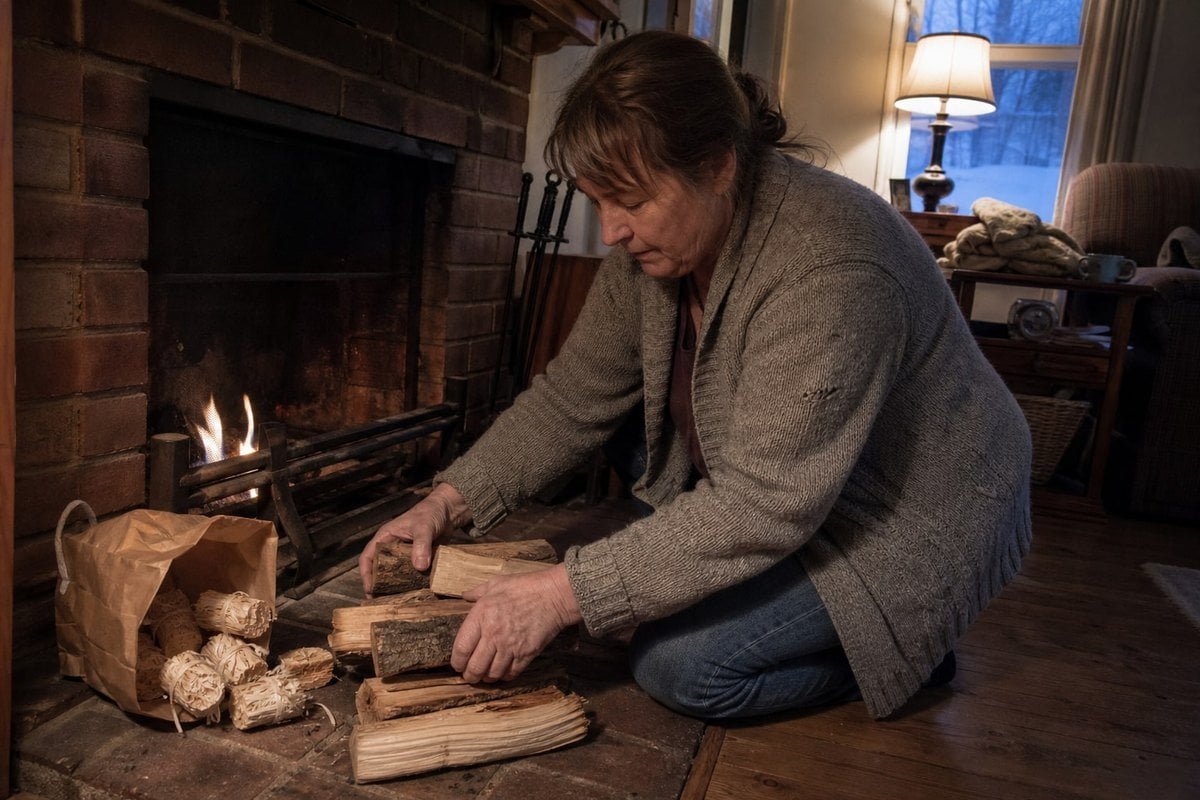
Fire starters look simple, so many buyers assume any supplier can deliver them. The reality is different. This category has two demand peaks — summer barbecue and winter heating — and a compliance burden that trips up inexperienced factories. A supplier failure in September can wipe out your winter season entirely.
A practical supplier vetting checklist
Here is the evaluation sequence I recommend to purchasing managers, based on what our most successful long-term clients checked before working with us:
- Verify certifications with documents, not claims. Ask for the actual ISO 9001 6 and BSCI certificates and current SGS or Intertek test reports. For fire products entering the US or EU, this is a hard requirement. A supplier who hesitates here will fail customs or retailer audits later.
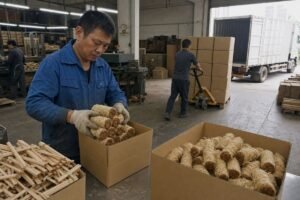
- Confirm factory status. Trading companies add a layer between you and quality control. Ask for a factory audit 7, a video tour, or production photos with dates. We host client visits at our Ningbo production site for exactly this reason — seeing the line builds more trust than any brochure.
- Test sample-to-production consistency. Order a sample, then compare it against the first production batch. Burn time, ignition speed, and wax coating should match. Consistency is the single best predictor of a factory's process discipline.
- Ask about seasonal capacity planning. Your winter stock must be produced in late summer and shipped by early fall. A reliable partner will proactively propose a production calendar. In our experience exporting to North America and Europe, we start clients' peak-season runs months ahead so weather-triggered demand spikes never catch shelves empty.
- Evaluate communication speed. Slow replies during quoting become slower replies during a shipping problem. Responsive English communication is an operational capability, not a courtesy.
- Check MOQ flexibility. A partner confident in their quality will support a smaller trial order, because they expect the reorder.
A supplier relationship in this category is a multi-year commitment, not a transaction. The right partner keeps your point-of-purchase displays full through every cold snap and holiday weekend. The wrong one turns a high-velocity category into an empty peg hook during your best sales week.
Conclusion
Thin margins on bulky anchor products squeeze every retailer. Wood fire starters counter that pressure: they lift baskets, attach across four seasons, carry your private label, and reward reliable sourcing.
Footnotes
1. Explains the psychological and retail concept of unplanned consumer purchases. ↩︎
2. Defines the environmental standards for consumer products in retail. ↩︎
3. Provides technical background on the chemical composition of traditional lighter fluids. ↩︎
4. Wikipedia definition of private labeling, describing products manufactured for sale under a retailer's brand. ↩︎
5. Industry leader's guide to effective point-of-purchase merchandising strategies. ↩︎
6. Authoritative Wikipedia entry for the international quality management standard. ↩︎
7. Wikipedia page explaining quality audits, the standard process for evaluating factory and supplier systems. ↩︎

 English
  Spanish
  German
  French
  Arabic
  Portuguese
Join the Conversation