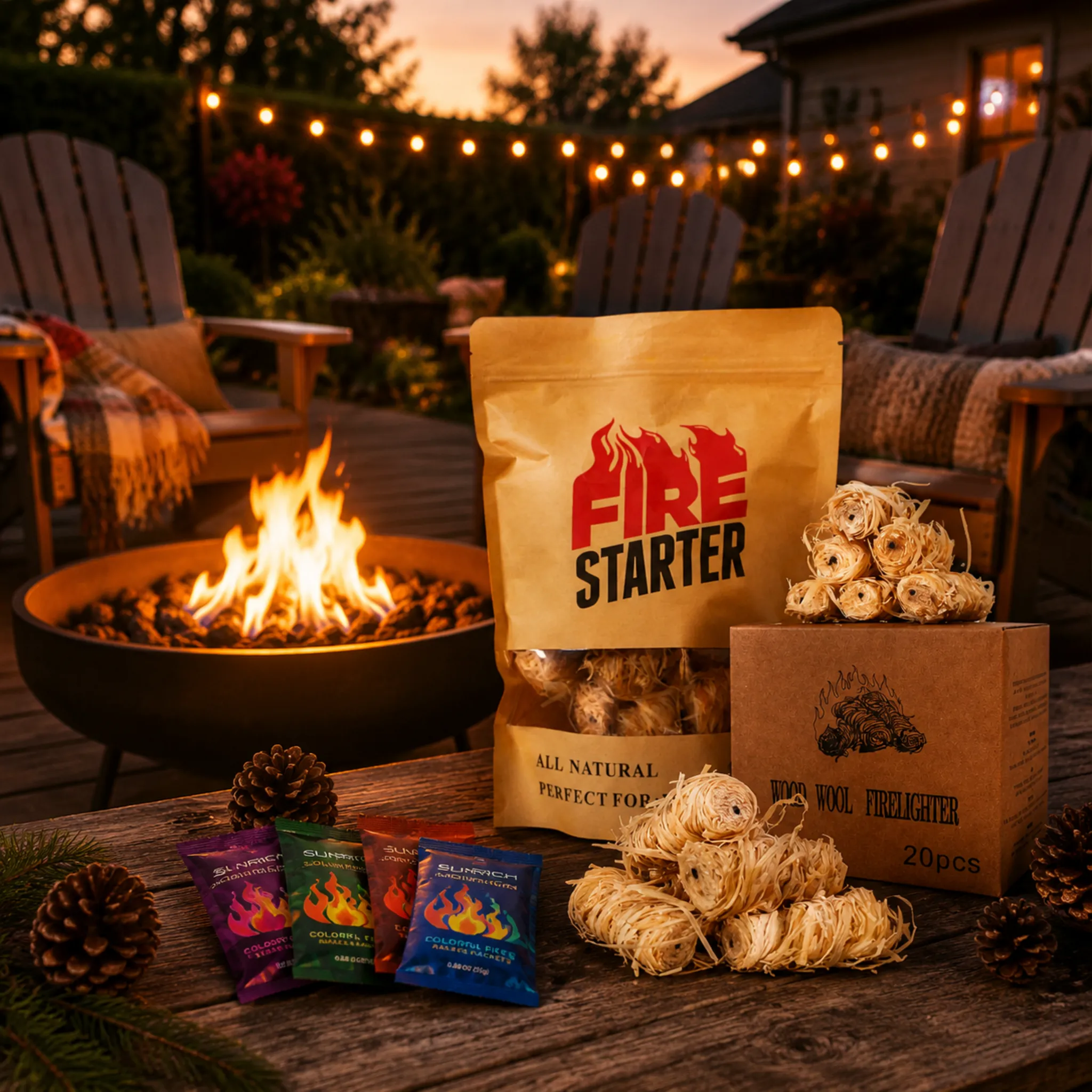
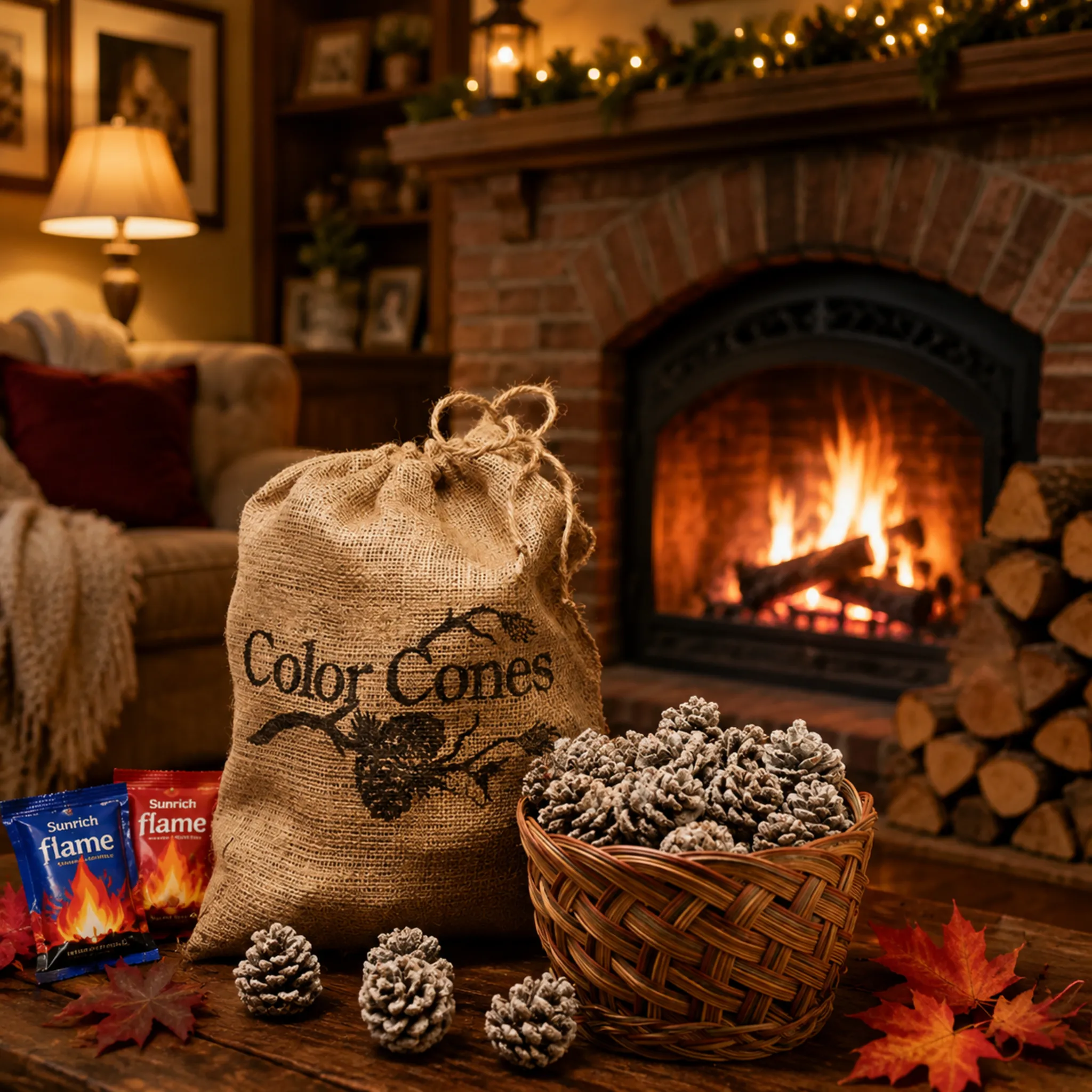
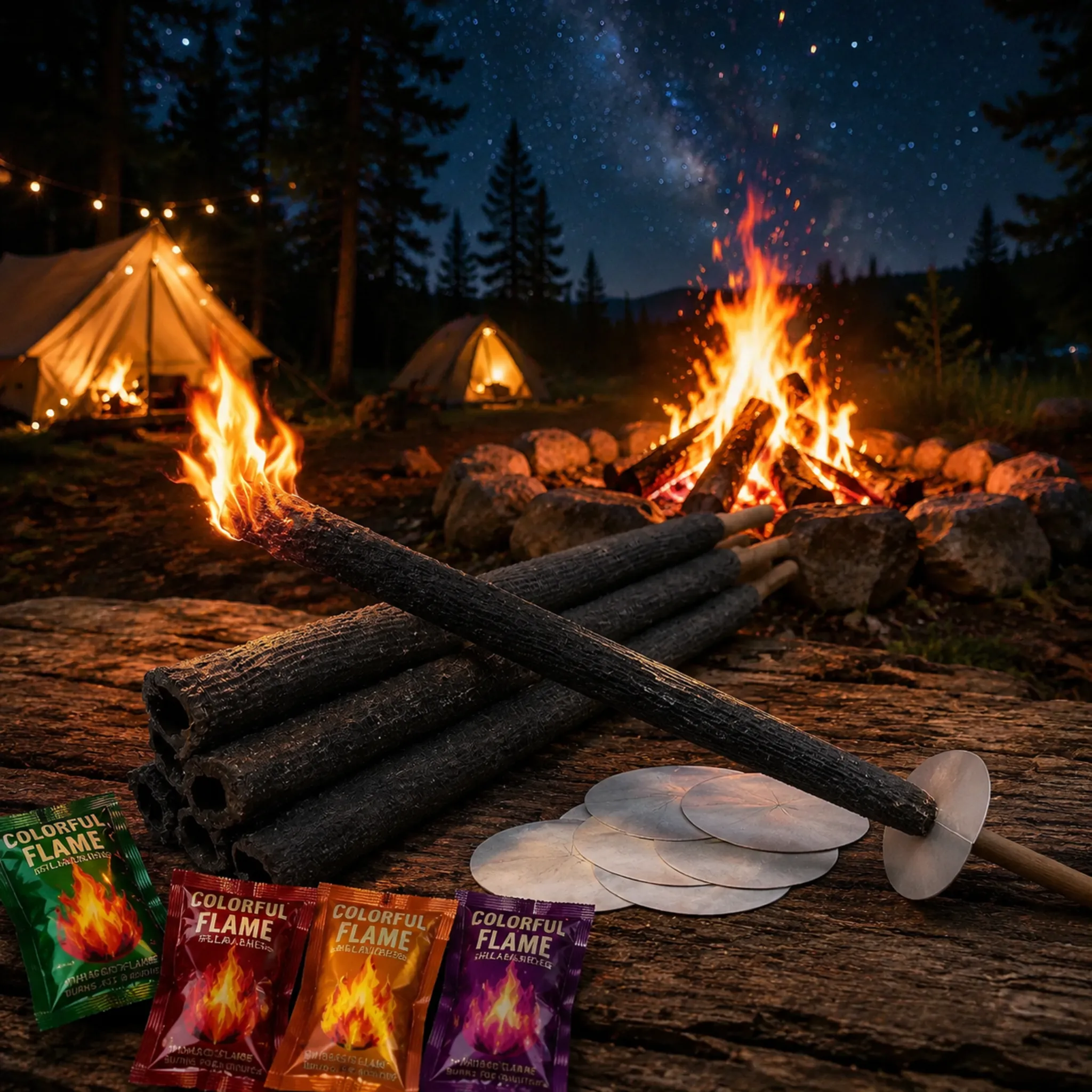
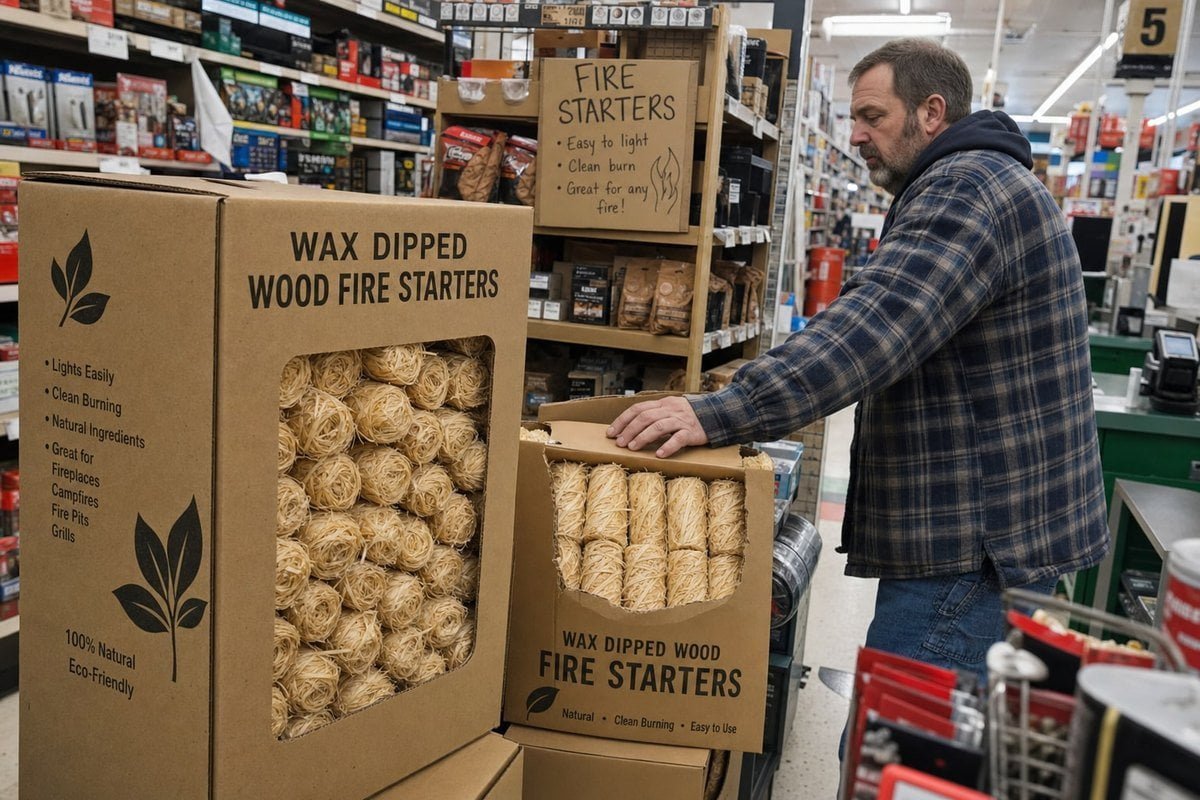
Shelf display and POP materials often decide whether wood fire starters sell or sit corrugated floor stands 1. I have watched great products fail at retail simply because our early packaging designs did not stand out on a crowded shelf. Shoppers walked right past them. That stings when you know the product inside is excellent. The fix, we learned on our own production line, is [retail-ready display packaging](https://sunrichfire.com/which-packaging-format-choose-wood-fire-starters-should/) built for visibility from day one.
The shelf display and POP materials that boost wood fire starter retail sales most are shelf-ready cartons with tear strips, branded countertop displays, corrugated floor stands, clip strips near firewood, and end-cap displays with clear eco-friendly and safety messaging that triggers impulse purchases.
Let me break this down piece by piece. I will cover the display formats that work, the signage that builds trust, and how to order everything alongside your private-label production run.
What custom display box options work best for wood fire starters at retail?
A German distributor once returned our first display sample because the front panel tore unevenly. That single detail taught our packaging team how much shelf presentation drives reorders.
The best custom display boxes for wood fire starters are shelf-ready cartons with perforated tear-away fronts, countertop shipper displays holding 24–48 units, corrugated floor stands for seasonal placement, and clip strips for cross-merchandising near firewood, grills, and hearth and patio accessories.
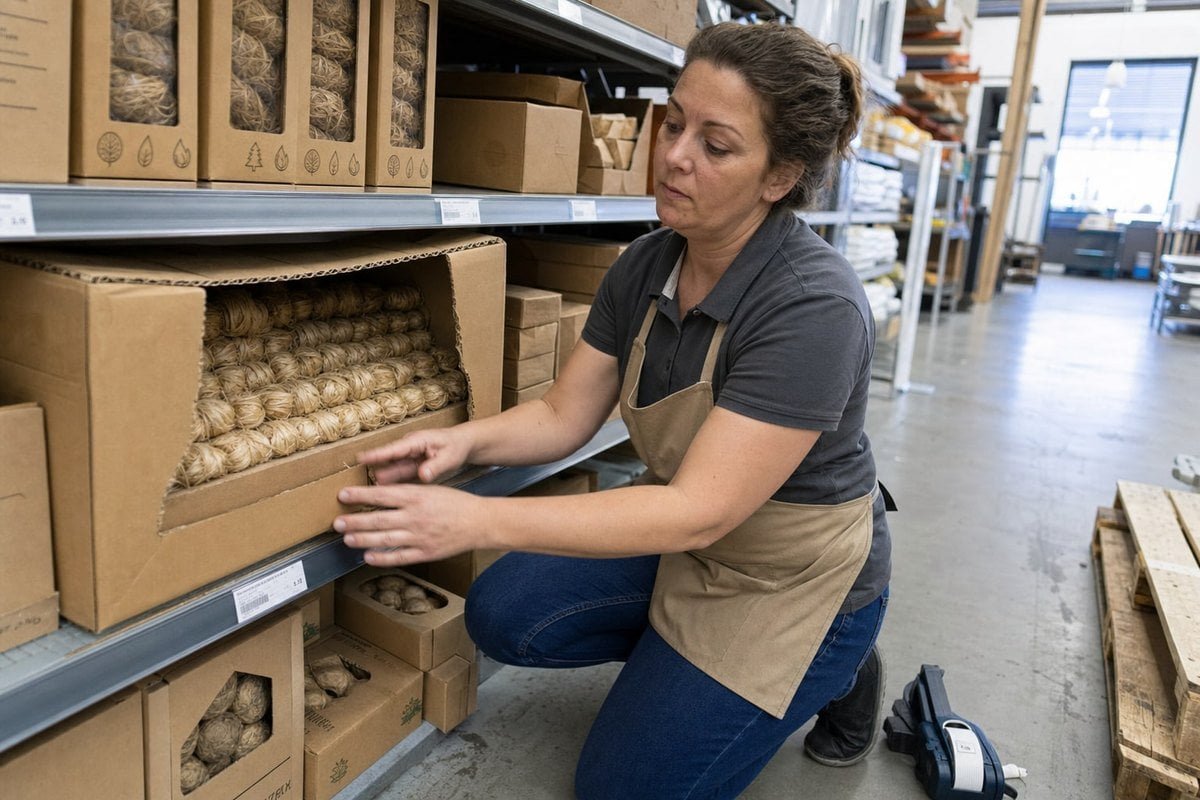
Retailers do not want loose product. Major chains expect cartons that move straight from the pallet to the shelf with almost no labor. In our experience exporting to the US and Europe, this is often the first thing a buyer checks, even before pricing. If your display box slows down stocking, your product loses shelf space to a competitor whose box does not.
The four core display formats
Each format serves a different retail job. Here is how we compare them for our fire starter clients:
| Display Format | Best Location | Typical Unit Count | Main Sales Benefit |
|---|---|---|---|
| Shelf-ready carton | Main aisle shelf | 24, 36, or 48 units | Fast stocking, tidy presentation |
| Countertop shipper | Checkout counter | 20–40 small packs | Impulse purchase triggers 2 |
| Corrugated floor stand | Aisle end or entrance | 100+ units | High visibility, seasonal volume |
| Clip strips | Next to firewood or grills | 10–12 hang packs | Cross-merchandising 3 without shelf space |
What makes a display box actually work
Three details matter more than most buyers expect. First, the tear strip must open cleanly, so the display looks organized, not shredded. Second, the carton must survive stacking during ocean freight; we test crush strength on every display run in our Ningbo facility. Third, the front panel needs bold branding visible from six feet away. A shopper decides in about two seconds. Visual merchandising works only when the box does the talking before the shopper picks anything up.
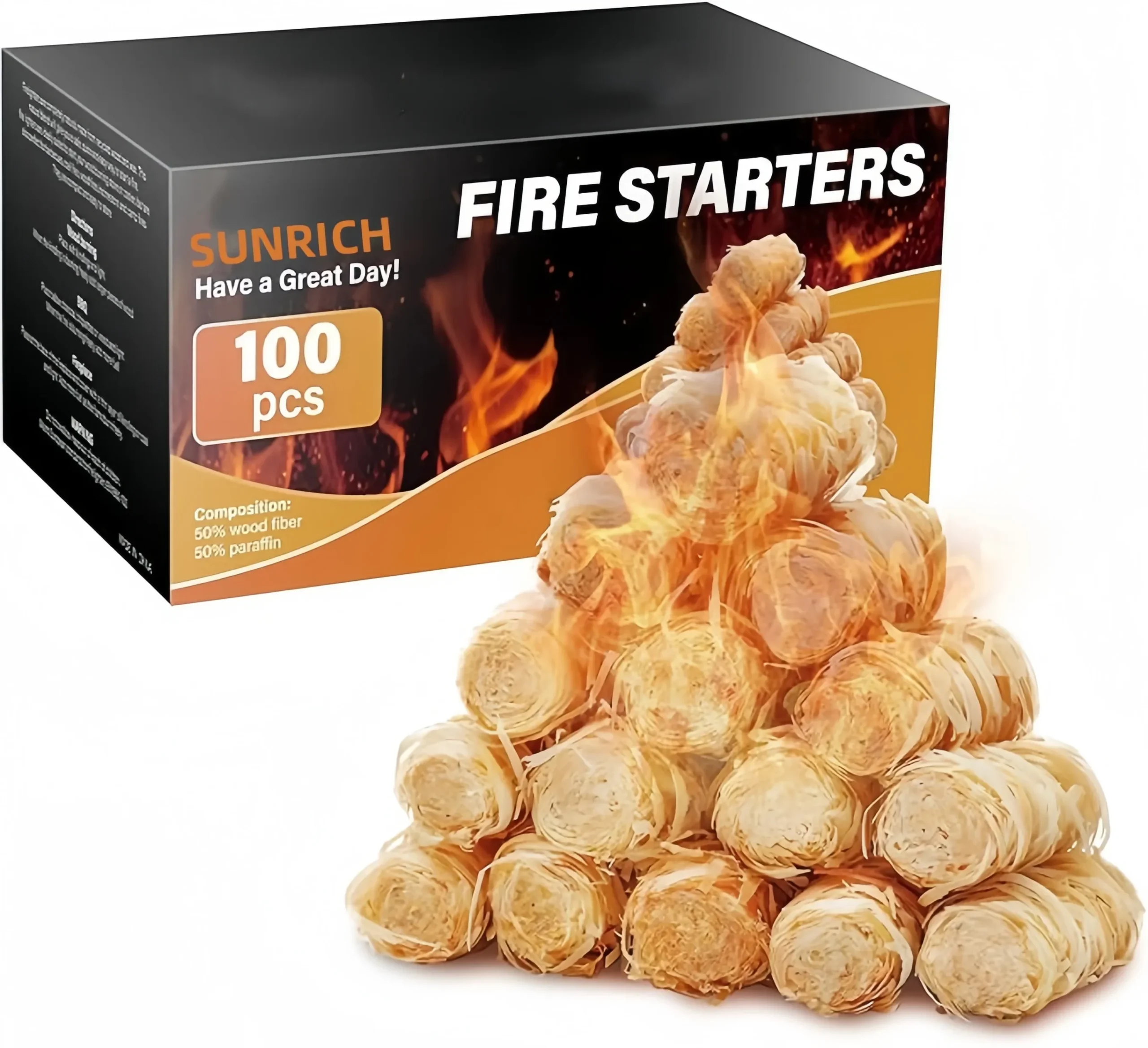
For fire starters specifically, we recommend showing the product itself. Our wax-dipped wood rolls have a natural, fibrous look that signals eco-friendly quality. A die-cut window or open-top tray lets that texture sell for you.
Can I get branded POP signage that highlights safety and burn time?
Burn time is the question every buyer asks me first. So we put the answer on the signage, not buried in small print, and conversion conversations changed overnight.
Yes, branded POP signage can highlight burn time, safety warnings, and eco-friendly composition. Effective formats include retail shelf talkers stating burn duration, header cards with claims like Lights Instantly, and point-of-sale signage showing safe-use icons and starter-to-log ratio graphics.
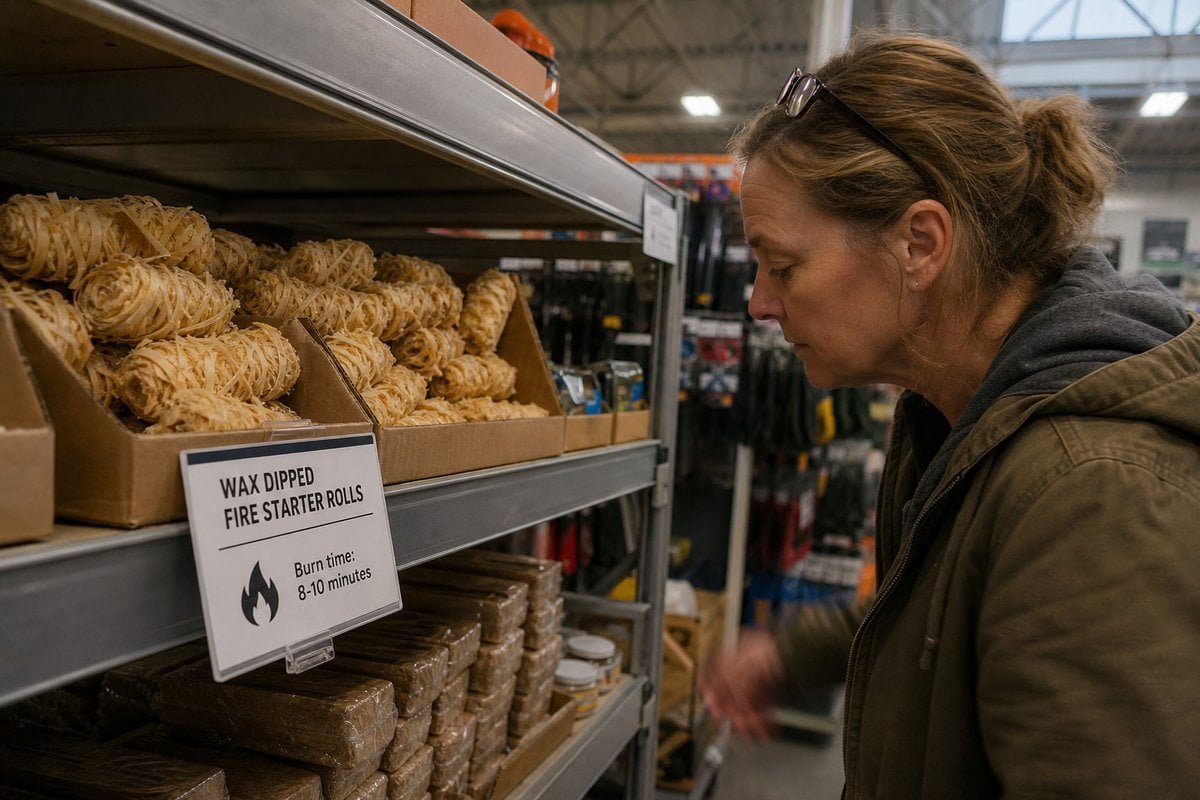
Fire starters carry a trust burden that most impulse products do not. Shoppers worry about chemicals, flare-ups, and whether the thing will actually light. Good point-of-sale signage 4 answers those worries before they become objections. In our 17+ years making fire-starting goods, we have found that two message types outperform everything else: performance claims and safety reassurance.
Performance messaging that converts
Keep claims short and specific. Vague copy like "premium quality" does nothing. Numbers do the work:
- Burn time: "Burns 8–10 minutes" tells the shopper exactly what one puck delivers.
- Ignition speed: "Lights instantly with one match" removes doubt about reliability.
- Composition: "50% wood fiber, 50% paraffin" signals a clean, simple formula.
- Usage ratio: A simple starter-to-log infographic shows one starter lights a full fire, which nudges shoppers toward larger pack sizes.
Safety messaging that builds trust
Compliance text is not decoration. Our SGS and Intertek test reports back every claim we print, and our buyers in the US, Germany, and the UK treat this as a hard requirement. Retail shelf talkers should carry keep-away-from-children icons, ventilation guidance, and storage notes. Batch codes and country-of-origin marks belong on the pack itself. When a category buyer sees that your signage already meets their compliance checklist, your listing conversation gets much shorter.
We design and print all of this in-house as part of our OEM service. Your logo, your colors, your claims, backed by our test documentation.
Does Sunrich offer point-of-sale materials tailored to my retail channel?
One trade-off I weigh with every buyer is channel fit. A display that wins in a garden center can look completely wrong in a warehouse club aisle.
Yes, Sunrich produces point-of-sale materials tailored to each retail channel, including compact counter displays for convenience stores, corrugated floor stands for hardware chains, clip strips for garden centers, and gift-ready boxes for specialty hearth and patio accessories retailers.

Channel fit is where many private-label programs stumble. We export to 30+ countries, and the same wood fire starter sells through very different displays depending on where it sits. A big-box hardware store wants efficient pallet-to-shelf cartons. A campground shop wants a small counter display next to the register. A specialty fireplace retailer wants a gift-ready box that looks at home beside premium hearth tools.
Matching display format to channel
Here is the channel guidance we give our B2B buyers:
| Retail Channel | Recommended POP Format | Key Message Focus |
|---|---|---|
| Big-box hardware / DIY | Shelf-ready cartons, end-cap displays | Value packs, reliability |
| Convenience / gas stations | Countertop shippers, durable merchandisers | Grab-and-go, lights instantly |
| Garden centers | Clip strips near firewood, floor stands | Eco-friendly, natural materials |
| Specialty fireplace shops | Gift-ready boxes, natural wood fixtures | Premium look, giftability |
| Camping / outdoor retail | Cross-merchandising bins near stoves | Compact, waterproof, easy ignition |
| Warehouse clubs | Large tray-pack cartons | Bulk value, pack count |
Seasonal placement matters as much as format
Fire starter demand spikes twice: fall camping season and winter fireplace season. Seasonal product placement should shift accordingly. We help buyers plan end-cap displays for October through January in fireplace markets, and spring-summer grilling placements in BBQ-heavy regions like the US and Australia. Because we run our own production lines in Ningbo, we can schedule display production ahead of these seasonal windows, so your goods land in stores before demand peaks, not after.
Our ISO 9001 5 and BSCI certifications also matter here. Many large sourcing channels audit display packaging suppliers the same way they audit product suppliers. Working with one certified factory for both removes a compliance headache.
How do I order display packaging alongside my private-label fire starter production?
Early in my export career, a buyer ordered product from us and displays from another vendor. The colors did not match. Since then, we bundle both under one roof.
Order display packaging and private-label fire starters together as one OEM project: share your brand assets and channel requirements, approve combined product and display samples, confirm compliance labeling and barcodes, then run production and shipping as a single consolidated order.
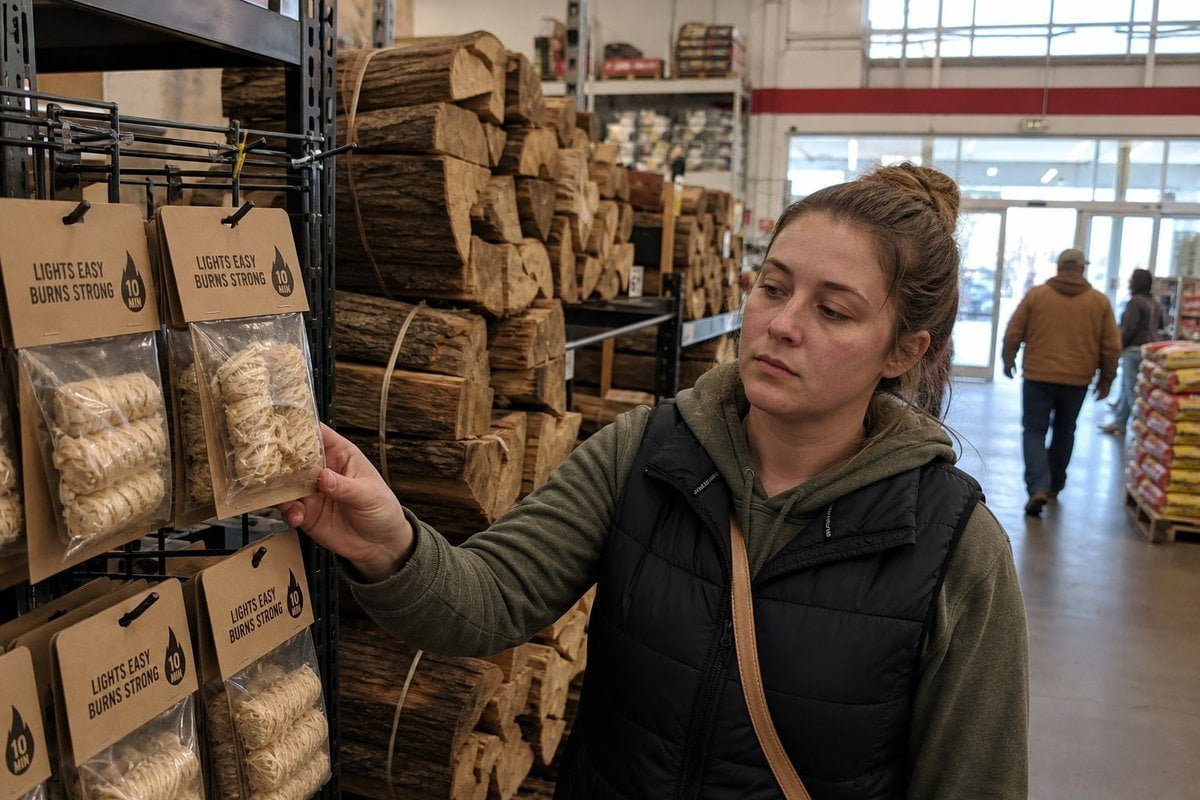
Splitting product and packaging across two suppliers creates real risks: color mismatches, sizing errors, delayed timelines, and finger-pointing when something goes wrong. A one-stop OEM process removes those failure points. Here is how the combined workflow runs at our factory.
The combined ordering process
- Brief and channel review. You tell us your target retail channel, unit counts, and branding direction. We recommend display formats that fit.
- Design and dielines. Our team produces artwork for the retail box, display carton, retail shelf talkers, and any point-of-sale signage. You approve everything before tooling.
- Compliance layer. We add warning text, batch codes, country-of-origin marks, and GTIN barcodes 6 to meet your market's retail requirements. Our CE marking 7 and SGS/Intertek test reports support your listings.
- Sample approval. You receive a physical sample of the product inside its final display. Because we control batch-to-batch quality on our own lines, the first sample reliably reflects mass production.
- Production and QC. Product and displays run on coordinated schedules. Our QC team checks fill counts, print quality, and carton strength on every batch.
- Consolidated shipping. Pre-packed displays ship palletized and ready for the retail floor, with optimized freight from Ningbo.
What to prepare before you order
| Item | Why It Matters |
|---|---|
| Logo files and brand colors | Ensures print accuracy across product box and display |
| Target retail channel | Determines display format and unit counts |
| Barcode / GTIN numbers | Required for major retailer systems |
| Market compliance needs | US, EU, and UK warning text differs |
| Seasonal launch date | Sets the production and shipping timeline |
We also support flexible MOQs for trial display runs, so you can test a countertop shipper in a few stores before committing to a full floor-stand program.
Conclusion
Great fire starters still fail without visibility. Shelf-ready cartons, counter displays, end-caps, and trust-building signage turn a utility product into an impulse buy. We build all of it, product and display, together.
Footnotes
1. Background on corrugated material used in the display formats discussed. ↩︎
2. Explains the consumer behavior concept referenced for display design effectiveness. ↩︎
3. Corrected Wikipedia URL using an underscore to provide a working definition of the retail cross-merchandising strategy. ↩︎
4. Background concept link for POS signage terminology used throughout the article. ↩︎
5. Authoritative Wikipedia section explaining the ISO 9001:2015 quality management standard and its specific requirements. ↩︎
6. Authoritative GS1 source explaining the barcode standard required by retailers. ↩︎
7. Official EU source for the compliance marking mentioned in the compliance layer step. ↩︎



 English
 Spanish
 German
 French
 Arabic
 Portuguese
Join the Conversation