






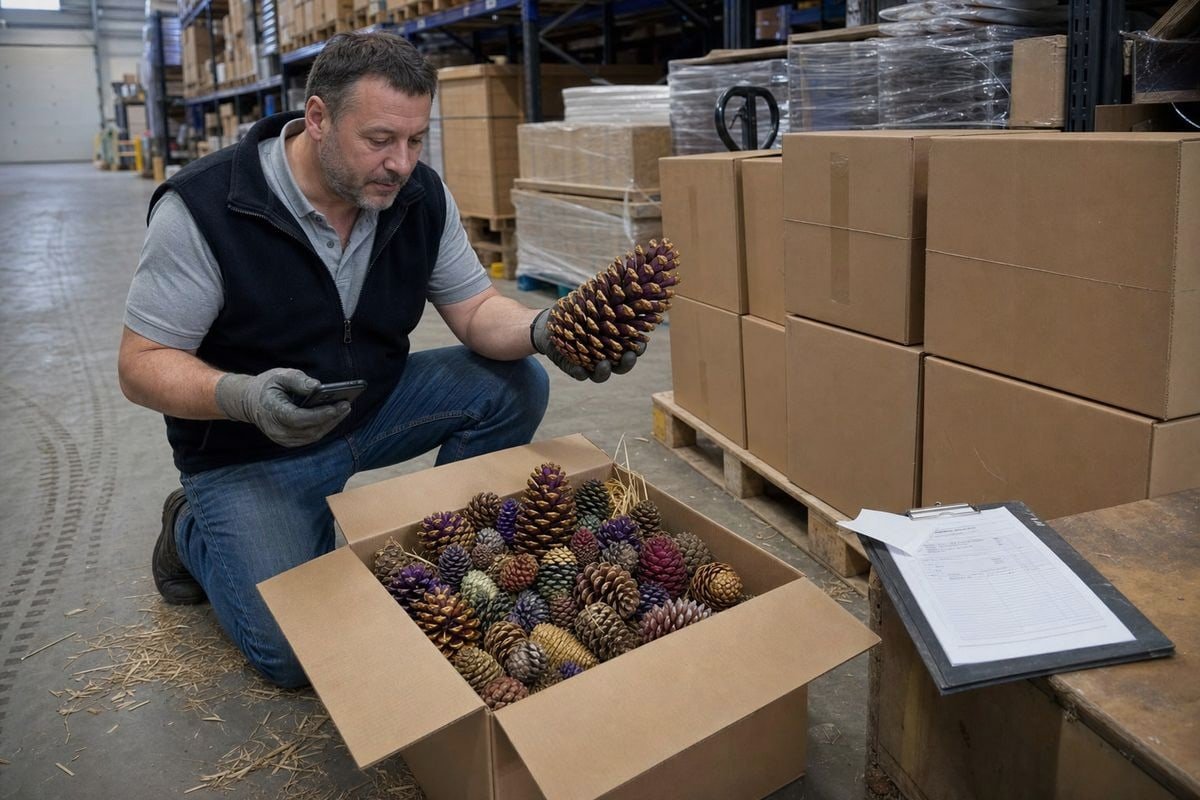
Verifying species, dryness, and size grading for fireplace colored pine cones sounds simple — until a container of inconsistent cones lands at your warehouse and our QC team gets the call.
To verify fireplace colored pine cones, request botanical identification and phytosanitary certificates for species, demand a documented moisture content of 15–20% confirmed by pin-meter readings, and require length-based size grading (Small 2–3", Medium 4–6", Large 6–8") with batch inspection reports.
Each of those three checks has a practical method behind it phytosanitary certificate 1. Below, I will walk through the exact [documents, tests, and grading standards](https://sunrichfire.com/how-create-spec-sheet-fireplace-colored-pine-cones-color-size-burn-effect/) to request from any supplier before you commit to a bulk order.
What Certifications Should I Request to Verify Pine Cone Species and Sourcing?
A German distributor once asked us to prove our cones were true pine and not mixed spruce or fir moisture content 2. That single question reshaped how we document sourcing at our Ningbo facility.
Request a phytosanitary certificate confirming heat treatment against invasive pests, a species declaration based on botanical identification (needle fascicles, scale morphology, cone shape), and sourcing documentation showing permitted collection areas. Reputable suppliers back these with SGS or Intertek inspection reports.

Species matters more than most buyers realize. Not all conifer cones behave the same in a fire. True pine cones are woody, rigid, and scale-defined botanical identification 3. Spruce and fir cones are softer, often more papery, and they burn faster with
Footnotes
1. IPPC governs international phytosanitary certification standards referenced for pest treatment verification. ↩︎
2. Wikipedia explains wood drying and moisture measurement relevant to verifying dryness levels. ↩︎
3. US Forest Service provides authoritative resources on conifer species identification and morphology. ↩︎



 English
  Spanish
  German
  French
  Arabic
  Portuguese
Join the Conversation