






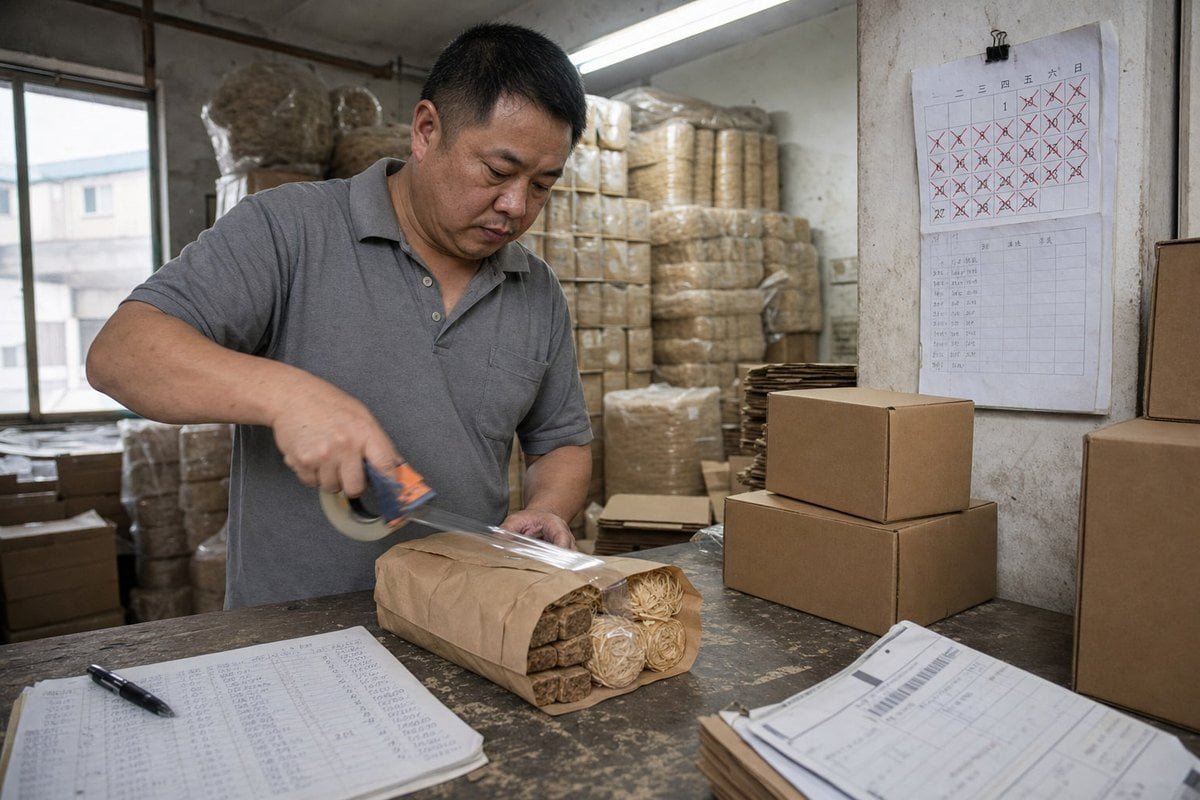
Sample revisions look free until the invoices arrive. On our production line for wood fire starters, I have watched buyers lose entire seasons chasing "one more small tweak."
Sample revisions increase hidden costs when sourcing wood fire starters by adding repeated courier fees, lab re-testing, setup charges, packaging obsolescence, and production delays. Each revision round can add hundreds of dollars and two to four weeks, inflating total landed cost far beyond the quoted unit price.
Let me break this down the way I explain it to purchasing managers 1 who visit our factory. We will look at the fees, the fixes, the timeline damage, and the questions that prevent all of it.
What Hidden Fees Should I Expect During Each Round of Sample Revisions?
Last year, a German distributor asked us for a fifth revision on a wax-dipped wood roll. His courier bill by then exceeded his planned trial order margin. That surprised him. It did not surprise me.
Each revision round typically triggers sample shipping fees of $50–$150, new burn time testing, machine setup charges for small-batch runs, import duties on inbound parcels, and internal labor hours. Combined, one revision cycle commonly adds $200–$600 in direct and indirect costs.

Most buyers only see the courier invoice. That is the visible tip. In our 17+ years exporting fire-starting goods to 30+ countries, we have seen the full cost stack behind every revision, and it is much wider than one DHL bill.
The Direct Fee Stack
Here is the typical cost breakdown we see per revision round on wood fire starters:
| Hidden Fee | Typical Range | Why It Appears |
|---|---|---|
| Sample shipping fees (express courier) | $50–$150 per round | Wax products often ship as regulated or heavier parcels |
| Import and export duties on samples | $10–$60 per parcel | Customs rarely waives fees on repeat shipments |
| Small-batch setup and machine time | $80–$300 | Lines must stop bulk work to run a few revised pieces |
| Burn time testing and lab checks | $50–$200 | Any wood-to-wax ratio change needs re-verification |
| Internal labor and documentation | 3–8 staff hours | Spec sheets, feedback loops, and approvals take time |
The Fees Nobody Invoices
Some costs never appear on paper. Raw material scrap from iterative test runs 2 gets absorbed somewhere, usually in your next quote. Warehouse space holds obsolete sample stock. Your procurement team spends hours writing feedback emails instead of managing other suppliers. These product prototyping costs are real even when no one bills them directly.
There is also a compounding effect. If a revision changes the puck diameter by even a few millimeters, your secondary packaging 3 may no longer fit. We have seen buyers scrap pre-printed retail boxes because a "minor" size tweak made the display tray useless. That is a four-figure loss triggered by a fee that looked like fifty dollars.
How Can I Reduce Sample Revision Costs When Vetting a New Wood Fire Starter Supplier?
When we onboard a new US camping brand, our first meeting is not about price. It is about locking the specification sheet before anything gets made. That single habit cuts revision rounds in half.
Reduce sample revision costs by writing a complete specification upfront, requesting video and photo verification before shipping, consolidating feedback into single rounds, choosing certified factories whose first sample matches mass production, and confirming kiln-dried wood specifications, burn time, and packaging dimensions in writing.
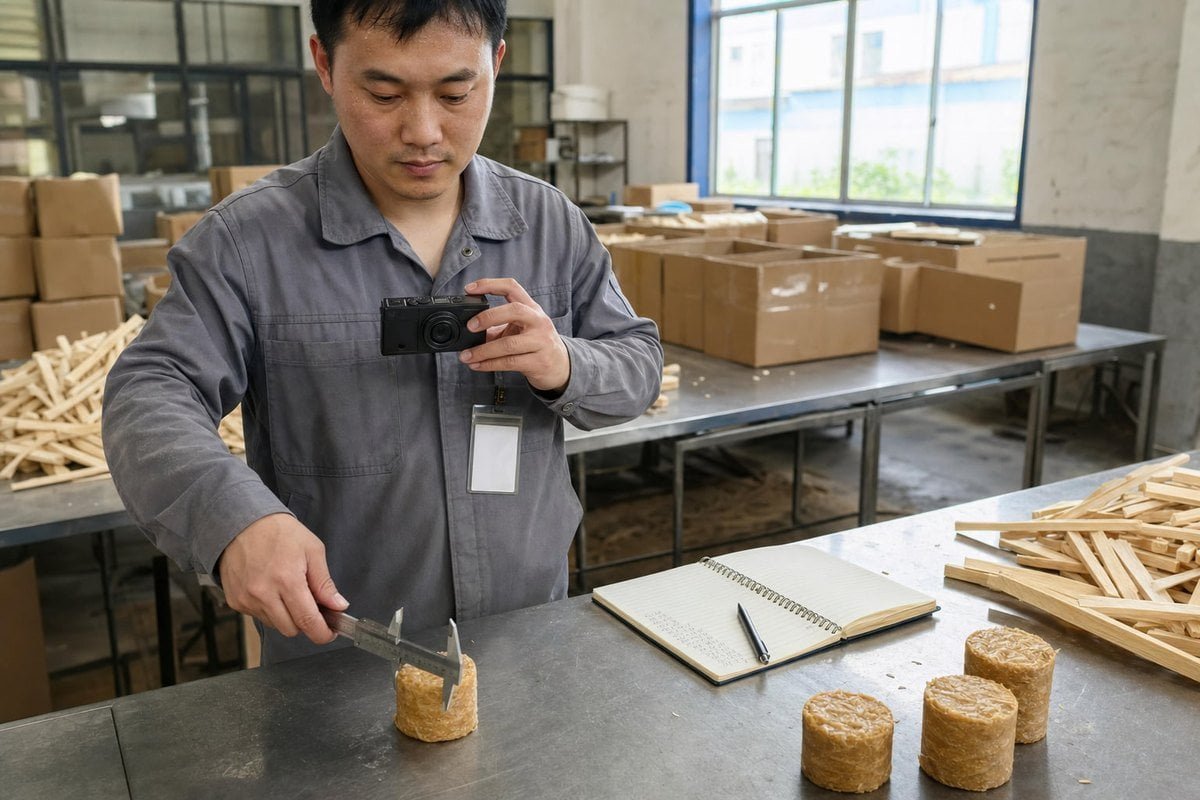
The cheapest revision is the one you never need. Our engineers have found that most revisions come from vague briefs, not bad manufacturing. So the fix starts on the buyer's side, and a good factory will help you do it.
A Practical Cost-Reduction Sequence
- Define the full spec first. State the wood type, kiln-dried wood specifications, wax percentage, puck size, target burn time, and count per box. Ambiguity is what revisions feed on.
- Use virtual verification. Ask for burn videos, dimension photos with calipers, and packaging mockups before any parcel ships. This filters out obvious misses without paying sample shipping fees.
- Batch your feedback. Send one consolidated revision list per round. Five separate small change requests become five rounds. One combined list becomes one.
- Vet quality control standards early. Ask how the factory ensures the approved sample matches bulk output. In our Ningbo facility, batch-to-batch checks exist precisely so the first sample reflects what a container will contain.
- Confirm certification before sampling. A factory holding ISO 9001, BSCI, CE, and SGS or Intertek reports has already documented its process. That documentation prevents the drift that forces revisions.
Why Supplier Choice Matters More Than Negotiation
A low-price supplier without documented quality control standards 4 will often need three to five rounds to hit spec. A disciplined factory hits it in one or two. Material sourcing logistics matter here too: a supplier with stable wood and paraffin sources will not quietly substitute inputs between your sample and your bulk order, which is a common trigger for painful late-stage revisions.
Why Do Multiple Sample Rounds Delay My Production Timeline and Increase My Sourcing Budget?
One trade-off I weigh constantly at our factory is line scheduling. Every sample run interrupts a bulk run. When a buyer requests round four, someone's production slot moves. Usually, it is theirs.
Multiple sample rounds delay production because each cycle consumes two to four weeks for revision, shipping, and approval, pushing bulk orders behind other customers in the queue. Delays compound into missed seasonal windows, rushed freight, higher opportunity cost, and inflated total sourcing budgets.
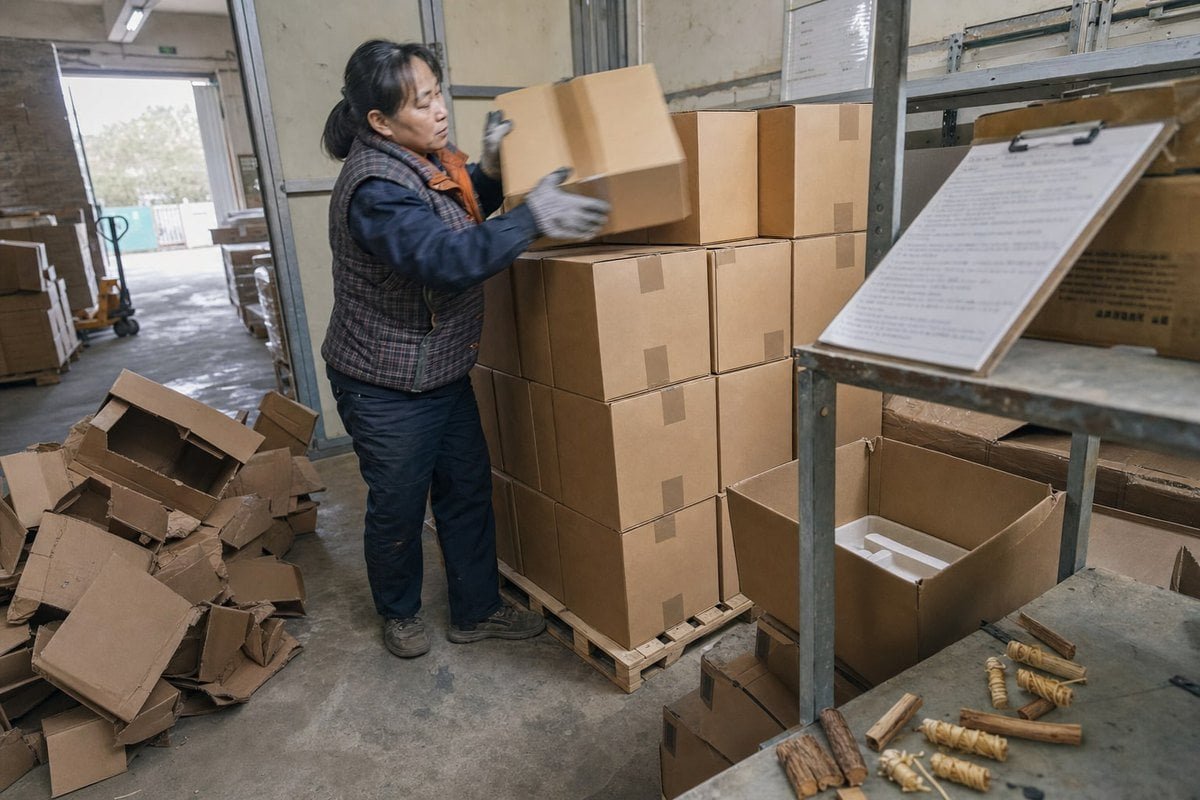
Wood fire starters are a seasonal product. Demand peaks in autumn and winter for fireplaces, and in late spring for camping and BBQ channels. Supply chain lead times do not care about your launch calendar. Sample rounds eat the buffer that protects it.
How the Weeks Stack Up
| Stage | Typical Duration | What Multiplies It |
|---|---|---|
| Revision production at factory | 3–7 days | Queue position behind bulk orders |
| International courier transit | 4–10 days | Customs holds on wax products |
| Buyer review and burn time testing | 5–10 days | Internal approvals and lab scheduling |
| Feedback and spec update | 2–5 days | Multiple stakeholders, unclear ownership |
| Total per round | 2–4 weeks | Each extra round repeats everything |
Three revision rounds can consume two to three months. If your bulk order needs another 30–45 days of production plus 30–40 days of ocean freight 5, one extra round can push a September delivery into November. For a fireplace product, that means missing the exact weeks when retailers stock shelves.
The Opportunity Cost Nobody Budgets
Missed seasons are the largest hidden expense. The opportunity cost of arriving after peak demand is not a fee; it is lost revenue for a full year. Buyers then compensate with air freight 6, which can cost five to eight times more than sea freight. Some suppliers also apply quiet priority penalties: buyers who change specs constantly get scheduled last, because their orders are unpredictable. We are transparent about scheduling in our own planning, but not every factory is. Meanwhile, minimum order quantity commitments sit frozen in your budget, tying up capital that could fund other product lines.
What Questions Should I Ask My Manufacturer to Avoid Costly Sample Miscommunications?
A lesson I learned early in exporting to the US: buyers who ask hard questions before sampling are our easiest customers later. Silence during vetting almost always means expensive conversations during production.
Ask your manufacturer about sample-to-bulk consistency guarantees, revision fees and timelines, burn time testing methods, certification coverage after material changes, packaging tolerance limits, kiln-dried wood specifications, and who owns the final approved spec sheet. Written answers prevent most costly miscommunications.
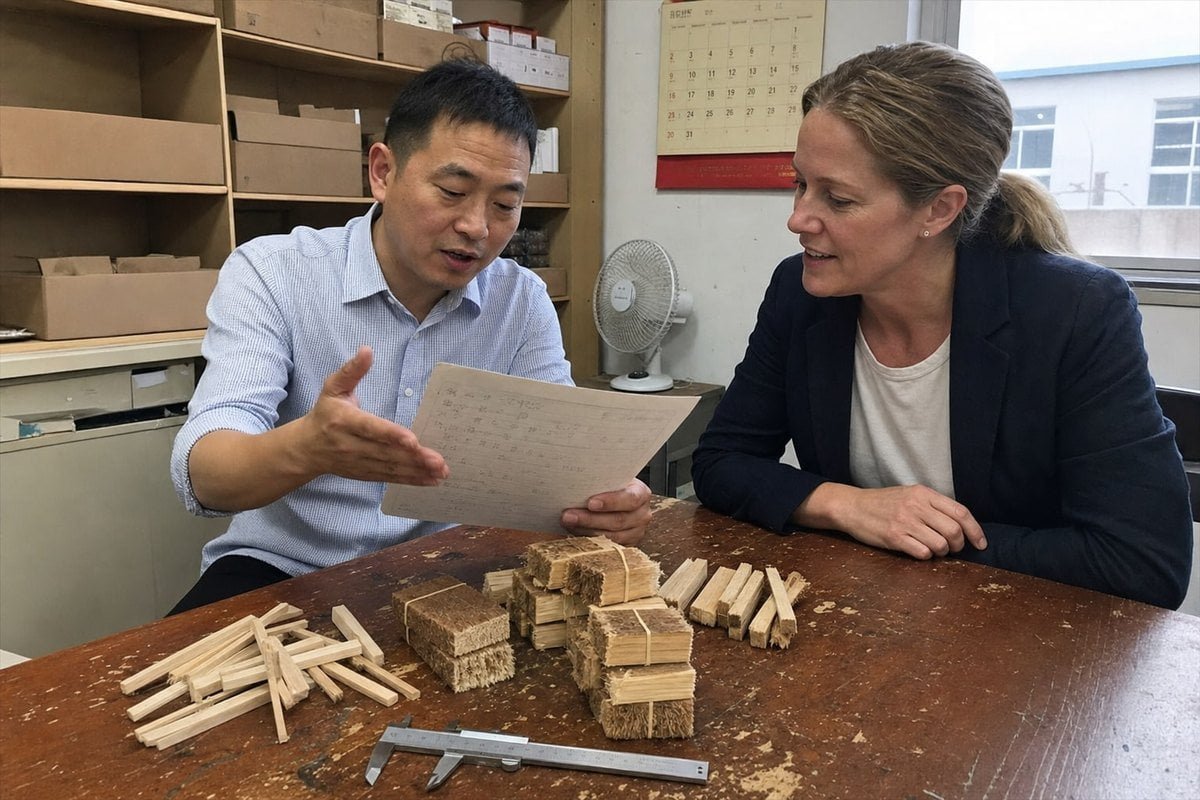
Good questions do two jobs. They extract information, and they test how a supplier communicates under pressure. If answers arrive slow and vague at the sample stage, expect worse when a container is at stake.
The Question Checklist
| Question | What a Strong Answer Sounds Like | Red Flag |
|---|---|---|
| Will bulk production match this approved sample? | "Yes, we run batch-to-batch QC against the sealed golden sample." | "Bulk may vary slightly." |
| What does each revision round cost and how long does it take? | A written fee schedule and a 5–7 day commitment | "Depends" with no numbers |
| How do you verify burn time? | Documented burn time testing protocol with recorded results | "We light one and watch it." |
| Do certifications still apply if we change the wax ratio? | Clear explanation of when re-testing with SGS or Intertek is needed | "Certificates cover everything." |
| What are your kiln-dried wood specifications? | Moisture percentage targets and sourcing details | No moisture data at all |
| What is the minimum order quantity for a trial run? | Flexible trial MOQ with a path to scale | Rigid high MOQ with no trial option |
Put Everything in One Document
After every question is answered, consolidate the results into a single signed specification sheet: dimensions, wax percentage, burn time range, packaging dimensions, label content, and warning text. In our OEM projects for private-label buyers 7, this sealed spec sheet is the reference for every future batch. When both sides work from one document, miscommunication has nowhere to hide, and revision rounds drop to the minimum a new product genuinely needs.
Conclusion
Sample revisions quietly inflate sourcing costs through fees, delays, and missed seasons. Lock specs early, batch feedback, and partner with certified factories whose first sample truly predicts bulk quality.
Footnotes
1. Authoritative US government-sponsored database providing official procurement role definitions. ↩︎
2. Authoritative encyclopedia entry defining the cyclic process of prototyping and testing. ↩︎
3. Comprehensive encyclopedia entry detailing industry-standard levels of packaging and distribution. ↩︎
4. Overview of quality control systems used to maintain consistency in manufacturing bulk orders. ↩︎
5. General reference for international freight transport methods and standard logistics timelines. ↩︎
6. Authoritative industry source for air cargo standards and the high-cost nature of air transport. ↩︎
7. Definition of the private-label business model common in wood fire starter sourcing. ↩︎


 English
  Spanish
  German
  French
  Arabic
  Portuguese
Join the Conversation