







Buyers ask me about small trial orders for wood fire starters almost weekly CE marking 1. Committing to a full container of an untested product feels risky — because it is. One bad batch means dead inventory, angry retail partners, and a damaged brand SGS or Intertek 2. On our production lines in Ningbo, we built a trial-order process specifically to remove that fear before you scale.
A small trial order for wood fire starters is feasible when the supplier offers a below-standard MOQ, produces the trial on the same line as mass production, documents burn time and moisture resistance, and keeps shipping costs proportionate to product value — typically a 500–1,000 unit pilot run.
That is the short answer. But feasibility depends on four practical questions: MOQ, quality verification, real cost, and supplier willingness Liuyang headquarters 3. Let me walk you through each one, using what we see on the factory floor every day.
What MOQ Should I Expect for a Wood Fire Starter Trial Order?
Last spring, a German fireplace distributor asked us for a 300-unit pilot of wax-dipped wood rolls. Our honest answer shaped this whole section: MOQ is negotiable, but only within physical production limits.
For wood fire starters, standard minimum order quantities range from 1,000 to 10,000 units, but many factories — including ours — accept trial orders of 500 to 1,000 units at a higher wholesale unit cost, provided the product uses existing molds and stock packaging.
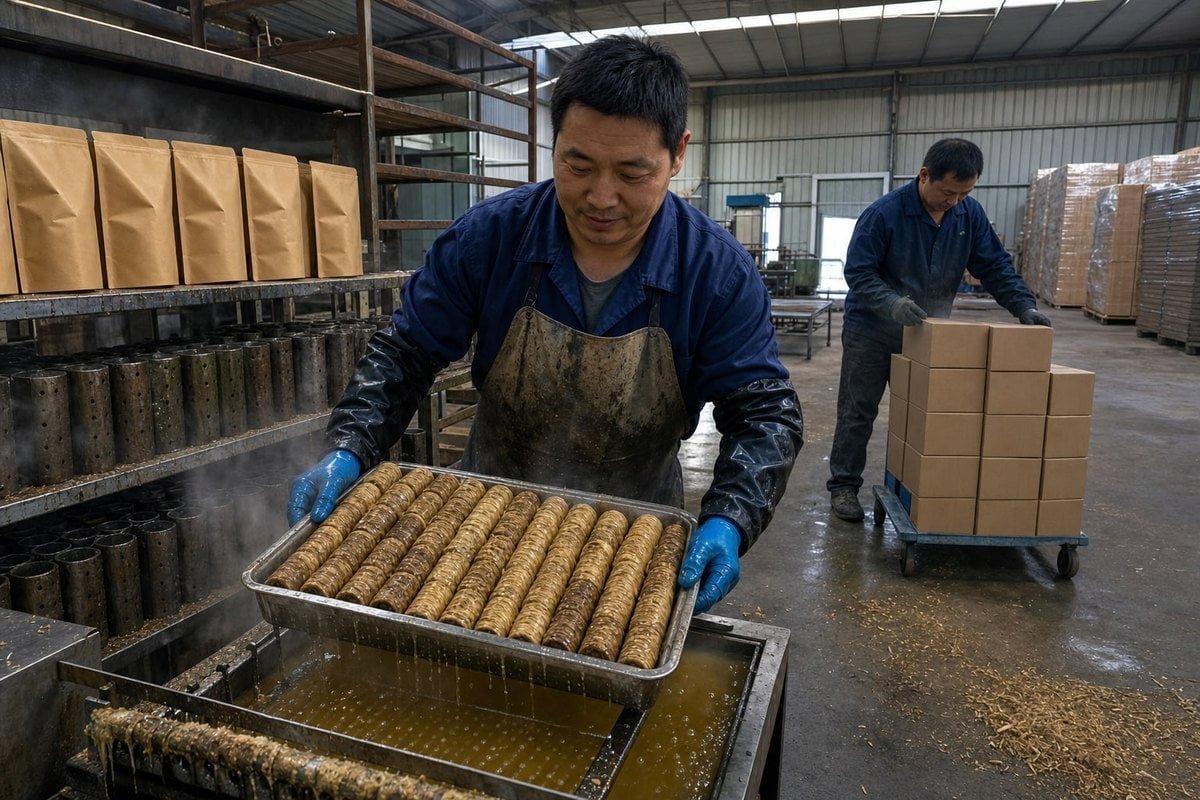
The industry-standard minimum order quantity exists for a reason. A production line for wax-dipped wood rolls needs setup time, wax melting, temperature stabilization, and QC sampling. Those fixed costs get spread across every unit. So a smaller run does not fail because the factory "can't" make it. It fails when the economics collapse or the packaging becomes custom.
Typical MOQ Tiers You Will Encounter
| Order Type | Typical Quantity | Pricing Impact | Best For |
|---|---|---|---|
| Free or paid samples | 5–50 units | Sample fee, often refunded | Basic burn testing |
| Trial / pilot run | 500–1,000 units | 15–35% above bulk price | Market validation |
| Standard first order | 1,000–5,000 units | Standard tiered pricing | Small brand launch |
| Bulk production | 10,000+ units | Best per-unit rate | Established SKUs |
What Makes a Lower MOQ Realistic
Three factors move the needle in your favor. First, use stock product formats — our standard wood roll sizes run continuously, so adding a small pilot to an existing schedule costs little. Second, accept neutral or semi-custom packaging on the trial; full custom retail boxes have their own printing MOQs. Third, be flexible on production turnaround time. If your pilot can slot into a gap in our schedule, we can quote lower. If you demand a dedicated run during peak season (August to November for fire products), expect standard MOQ terms.
One more point from experience exporting to 30+ countries: MOQ is also a compliance question. Even a 500-unit trial shipped to the EU needs correct labeling and safety documentation. A supplier who waives that for "just a trial" is a supplier to avoid.
How Can I Verify Product Quality Before Committing to a Larger Order?
In our QC room, we burn samples from every batch — literally set them on fire and time them. That habit, built over 17 years, is exactly what you should demand from any supplier before scaling.
Verify quality by requesting pre-production samples made on the actual production line, third-party test reports from SGS or Intertek, documented burn time and moisture data, and then running your own real-world sample testing protocol on the full trial batch, tracking failure-to-ignite rates.

The biggest trap in this industry is the "golden sample." A hand-finished sample can be dipped more carefully, dried longer, and inspected piece by piece. Mass production is different. So your first question to any supplier should be: is this sample made on the same line, from the same wood wool 4 and wax, as full production? At our factory, the answer is yes by design — batch-to-batch consistency is one of the reasons buyers stay with us — but you should verify this everywhere, including with us.
Build a Simple Test Protocol
Run your trial batch through a structured sample testing protocol rather than a casual "does it light" check:
- Ignition reliability. Test one-match ignition on at least 50 random units. Track the failure-to-ignite (FTI) rate. Anything above 2% signals a process problem.
- Burn time performance. Time each unit. A quality wood fire starter should hold a steady flame for 8–12 minutes — long enough to catch seasoned logs.
- Moisture resistance. Expose units to high humidity or a light water spray, then retest ignition. Outdoor and camping buyers rely on this.
- Moisture content specifications. Ask for documentation that the wood component stays below roughly 10% moisture. Higher levels invite mold in storage and slow ignition.
- Wax saturation check. Too little wax shortens burn time; too much drowns the flame in melted residue. Consistency across units matters more than any single result.
Documentation That Should Exist
Insist on paper, not promises. ISO 9001 process certification, BSCI social audits 5, CE marking where applicable, and SGS or Intertek test reports are standard for serious fire-product exporters ISO 9001 quality management 6. When a European buyer visited our Liuyang headquarters, the first thing he asked for was the test file — not the price list. That is the right order of priorities.
What Costs Should I Consider When Placing a Small Trial Order?
Here is a trade-off we discuss with buyers constantly: a trial order protects you from a big mistake, but it never delivers bulk economics. Understanding the full cost stack prevents unpleasant surprises.
Beyond the higher wholesale unit cost, budget for freight and shipping fees, sample charges, import duties, compliance labeling, warehousing, and potential failure costs. A trial is economically sound when total landed cost still supports your retail markup and shipping stays under roughly 20% of product value.
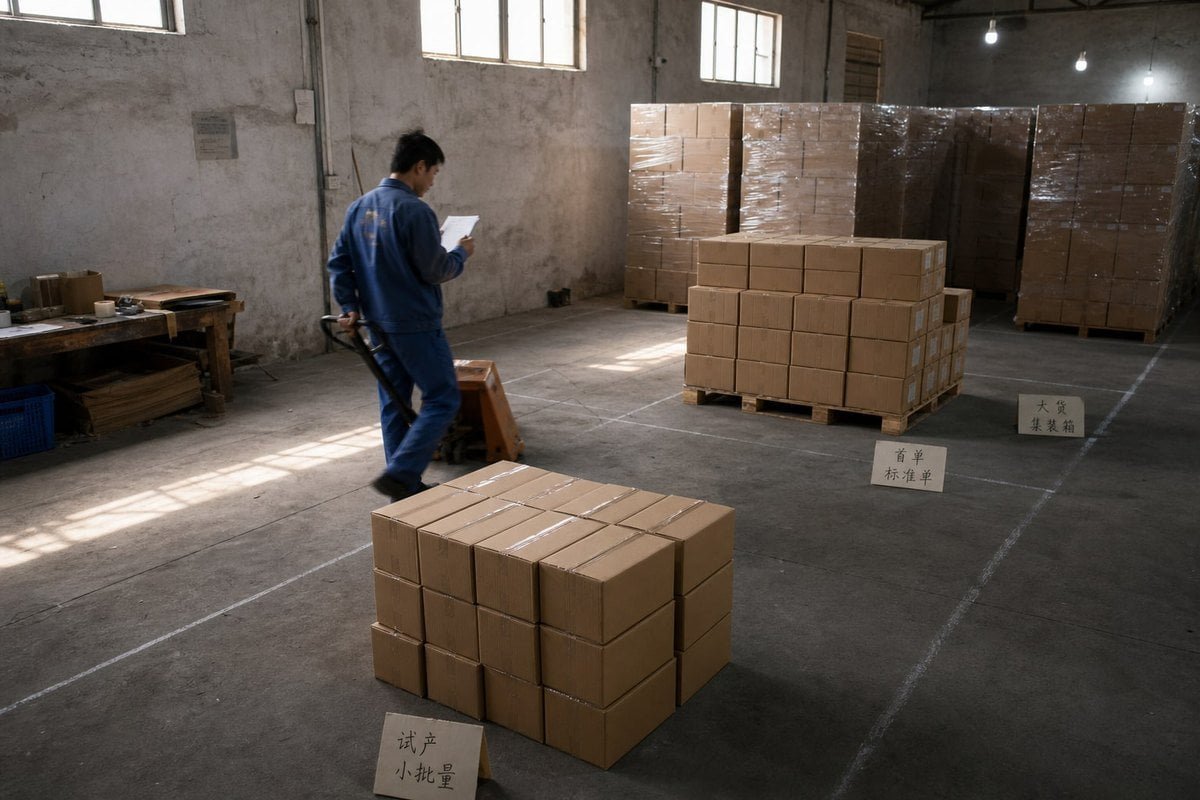
The mistake I see most often is comparing per-unit prices only. A small trial order of wood fire starters might cost 25% more per unit than bulk. That sounds bad — until you compare it against the cost of 10,000 unsellable units. The right frame is risk-adjusted cost, and even better, cost-per-successful-fire rather than cost-per-unit. A cheap starter that needs two or three units per fire is more expensive in the customer's hands than a premium one that lights every time.
The Full Trial Order Cost Stack
| Cost Item | Why It Hits Trial Orders Harder | How to Manage It |
|---|---|---|
| Unit price premium | Fixed setup costs spread over fewer units | Use stock formats and sizes |
| Freight and shipping fees | Small volumes cannot fill a container | Ship LCL or air-consolidate; keep freight under 20% of order value |
| Packaging setup | Custom boxes have print MOQs | Accept stock or semi-custom packaging for the pilot |
| Compliance and labeling | Same documents needed regardless of size | Choose a supplier with reports on file |
| Storage and handling | Small lots still occupy warehouse space | Time the trial close to your selling season |
| Failure and returns | Defects hurt more at small scale | Define replacement terms in writing before ordering |
Check the Margin Math Early
Work backward from shelf price. Wood fire starters are a value-priced category, and margins can be thin — some ecological fire-starter production runs at costs close to their selling price. Confirm your retail markup potential with trial-order landed costs, not bulk quotes. If the numbers only work at bulk pricing, that is fine — as long as you know it before launch. Also weigh packaging durability into the budget. A crushed or wax-leaking box in transit destroys shelf appeal, so a drop-tested carton is worth a few extra cents per unit.
How Do I Choose a Manufacturer Willing to Support Trial Orders?
A US camping brand once told me they had contacted eight suppliers before us; six quoted bulk-only terms, and one quoted a "trial" that was clearly a trading company reselling stock. Sorting real partners from listings takes a method.
Choose a real factory — not a trading company — with verified certifications, documented QC, transparent MOQ tiers, and written trial terms. The best partners treat a trial order as the first step of a long-term relationship, offering line-produced samples, private-label support, and defined replacement policies.

Willingness to support trial orders is a business-model signal. A factory built purely for bulk economics will either refuse your pilot or treat it carelessly. A factory positioned as a long-term partner — the way we have built our OEM/ODM operation 7 — sees the trial as an audition for years of reorders. You want the second type.
A Practical Supplier Evaluation Checklist
- Verify factory status. Ask for the business license, factory address, and a live video tour of the production line. Trading companies cannot show you wax-dipping stations.
- Check certifications with documents. ISO 9001, BSCI, CE, and SGS/Intertek reports should be sent as files, not just claimed in chat. For US and EU retail channels, this is a hard requirement.
- Confirm eco-friendly material sourcing. Chemical-free, non-toxic composition — natural wood wool, food-safe wax — is now table stakes for fireplace and BBQ retail, and your buyers will ask.
- Test communication speed. Send a technical question about moisture content specifications or wax ratios. A real factory answers precisely within a day. Vague answers predict vague production.
- Ask about pilot-to-scale consistency. Will the trial run on the same line, with the same raw materials, as bulk? Get it in writing.
- Review OEM/ODM depth. Can they customize size, burn time, packaging, warning labels, and barcodes when you scale? A trial with a supplier who cannot grow with you wastes the trial.
Feasibility Scorecard
| Question | Green Flag | Red Flag |
|---|---|---|
| Trial below standard MOQ? | Yes, with clear pricing tier | "Bulk only" or suspiciously cheap "trial" |
| Sample from production line? | Confirmed in writing | Evasive or "special sample workshop" |
| Test reports available? | SGS/Intertek files provided | Verbal claims only |
| Replacement terms defined? | Written policy before payment | "We will discuss if problems occur" |
| Lead time stated? | Specific weeks, seasonal notes | "Very fast" with no number |
If a supplier scores green across the board, your small trial order is not just feasible — it is the smartest possible entry point.
Conclusion
Untested bulk orders are how importers lose money in this category. A structured trial — realistic MOQ, line-produced samples, documented testing, honest cost math, and a certified factory partner — removes that risk. After 17 years and 30+ export markets, our advice is simple: trial small, test hard, then scale with confidence.
Footnotes
1. Official EU page explaining CE marking requirements referenced for compliance documentation. ↩︎
2. SGS is one of the named third-party inspection and testing companies cited for verification. ↩︎
3. Background on Liuyang, the Chinese city mentioned as the factory's headquarters location. ↩︎
4. Wood wool is the core natural material used in fire starters, explained for background context. ↩︎
5. amfori BSCI is the official body behind the social compliance audits mentioned for exporters. ↩︎
6. Authoritative .gov source explaining ISO 9001 standards and quality management systems. ↩︎
7. Explains the OEM/ODM manufacturing model referenced as the factory's business structure. ↩︎

 English
  Spanish
  German
  French
  Arabic
  Portuguese
Join the Conversation