







Order cancellations on fireplace colored pine cones hurt more than most buyers expect chemical adhesion checks 1. Our production team in Ningbo has seen importers lose entire seasonal margins over one canceled container.
To reduce losses from order cancellations when sourcing fireplace colored pine cones, vet supplier compliance certificates first, lock cancellation clauses and milestone payments into purchase order agreements, start with flexible MOQs and trial orders, and mandate pre-shipment quality control inspections to prevent customs rejections.
Each of those four levers deserves a closer look. Below, I break down exactly how we structure them with our B2B buyers, and what you should demand from any supplier.
How can I vet a fireplace pine cone supplier’s compliance before placing a large order?
A German distributor once asked our team for our full SGS test file 2 before even requesting a price. That request was smart, and honestly, it should be standard practice.
Vet a supplier by requesting ISO 9001 and BSCI audit reports, CE marking documentation, and third-party SGS or Intertek test reports covering flame colorant safety standards. Verify certificate numbers directly with the issuing body, and confirm the supplier is a factory, not a trading company.

Compliance is where cancellation risk starts, long before any container ships. If a supplier cannot prove their colorant chemistry 3 is safe, your customers will cancel, your retailer will reject the listing, or customs will hold the goods. In our 17+ years exporting color-flame products to the US, Germany, the UK, and 27 other markets, we have watched buyers switch to us after a cheaper supplier failed a chemical screening mid-season. The cancellation cascade that followed wiped out their holiday inventory turnover ratio for the year.
The documents that actually matter
Not all paperwork carries equal weight. Here is how I would rank the documents when vetting a colored pine cone supplier:
| Document | What it proves | Red flag if missing |
|---|---|---|
| ISO 9001 certificate | Consistent quality management system | Batch quality will drift |
| BSCI audit report | Ethical factory conditions | Retail chains may delist you |
| SGS / Intertek test report | Flame colorant safety standards met | Customs seizure risk |
| CE documentation | EU market conformity | Cannot legally sell in Europe |
| Factory business license | Real manufacturer, not a middleman | No control over production dates |
Verify, do not just collect
Ask for certificate numbers 4 and check them with the issuing lab directly. Fake or expired reports circulate widely in this niche. Also request a live video tour of the production line. A trading company cannot show you a coating line, a drying room, or a packing floor. We give these tours weekly, and buyers tell us it settles the question in ten minutes. Finally, ask how the supplier handles supply chain risk management for raw pine cones. Suppliers who source cones from a single region are exposed to harvest failures. Diversified sourcing means fewer force majeure cancellations passed on to you.
What contract terms should I include to protect against last-minute order cancellations?
Early in our export history, a buyer canceled a custom private-label run after we had printed thousands of kraft pouches. That loss taught us to structure contracts differently, for both sides.
Include non-refundable deposits of 30–50% for customized goods, a written cancellation cutoff tied to production milestones, partial cancellation rights before raw material coating begins, defined supplier lead times with delay remedies, and a clause redirecting canceled inventory to neutral packaging for resale.
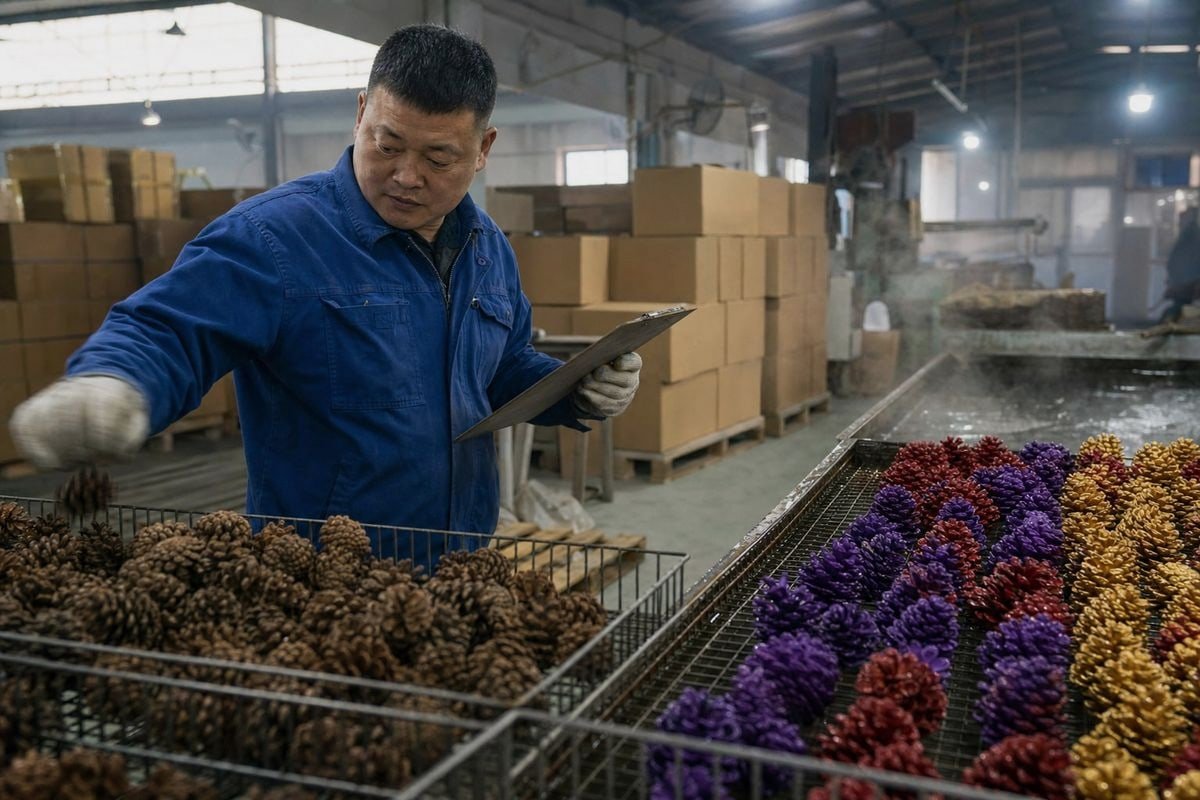
Purchase order agreements are your main tool for moving risk upstream. The core principle is simple: costs get locked in at specific production stages, so your cancellation rights should track those stages. Before cones are coated and packed under your private label, cancellation is cheap. After branding, it is expensive for everyone. Your contract should reflect that reality honestly, not pretend risk does not exist.
Structure payments around milestones
Milestone-based payment structures protect both parties. A typical structure we negotiate looks like this:
| Milestone | Payment | Your cancellation exposure |
|---|---|---|
| Order confirmation | 30% deposit (non-refundable for custom specs) | Deposit only |
| Raw cones treated and coated | 30% | Deposit plus partial materials |
| Private-label packing complete | 30% | Most costs locked in |
| Pre-shipment inspection passed | 10% balance | Full commitment |
This structure also disciplines your own downstream sales. When your customers know you carry non-refundable deposits on special-order decorative items, you can justify your own cancellation fees and cutoff windows to them.
Clauses buyers often forget
Three terms deserve special attention. First, define supplier lead times in calendar days with a stated remedy for delays, because slow delivery is the top trigger for customer-side cancellations. Second, add a partial cancellation clause allowing you to reduce quantity by a set percentage before coating starts; we accept this because uncoated cones return to general stock easily. Third, require the supplier to hold raw materials for a defined window, which lets you delay a commit if your seasonal demand forecasting shifts late in the cycle. One caution: overly aggressive terms can backfire. If you demand full cancellation rights up to shipment, serious factories will decline or price in the risk. Fair, staged terms get you better pricing and a supplier who prioritizes your orders.
How do flexible MOQs and trial orders help me reduce risk when testing a new supplier?
The trade-off we weigh constantly is this: small trial runs cost us more per unit to produce, but they build long-term buyers. So we offer them anyway, and the math works for both sides.
Flexible MOQs let you validate flame color quality, packaging durability, and real supplier lead times with minimal capital at risk. A trial order confirms that sample quality matches mass production before you commit to a full seasonal container, cutting cancellation exposure dramatically.

A trial order is essentially cheap insurance. Instead of betting a full container on a supplier you have never worked with, you bet a few cartons. If the flame colors disappoint, the packaging arrives crushed, or the lead time slips, you learn it at trial scale, not at peak-season scale where a failure forces you to cancel customer orders you cannot fill.
Here is the sequence I recommend to new buyers testing us or any factory:
- Order samples first. Burn them yourself. Check color intensity, burn duration, smoke, and residue against the spec sheet.
- Place a small trial order. One pallet or a few hundred units in your actual retail packaging, not generic packaging.
- Compare trial goods to samples. This is the real test. Weak factories send perfect samples and inconsistent bulk. Our batch-to-batch quality control exists precisely so the first sample reflects mass production.
- Test your sales channel. Run the trial stock through your store or marketplace. Real sell-through data beats any seasonal demand forecasting model built on guesses.
- Scale with a pre-order fulfillment strategy. Once validated, place your main order early, off-season, to secure preferred-buyer status and priority production slots.
That last point matters more than most buyers realize. Ordering in spring for a Q4 fireplace season gives you better pricing, guaranteed capacity, and calmer logistics cost management. pre-order fulfillment strategy 5 Buyers who order in September compete for freight space and factory time with everyone else, and late-season shipping delays are a top driver of downstream cancellations. Flexible MOQs also let you test multiple SKUs, such as fireplace jars, campfire pouches, and gift-sack formats, and then scale only the winners.
What quality control steps can I request to ensure my bulk order won’t be rejected at customs?
A Canadian importer once shared how a previous shipment from another supplier arrived moldy after crossing the Pacific. Moisture control, not chemistry, sank that order, and it is entirely preventable.
Request kiln-drying certification showing moisture below 10%, chemical adhesion checks to prevent colorant dusting, batch-specific flame performance videos before shipment, third-party pre-shipment inspection with SGS or Intertek, and ISTA-standard crush-resistant packaging verification. Match all documentation to your destination market’s import codes.
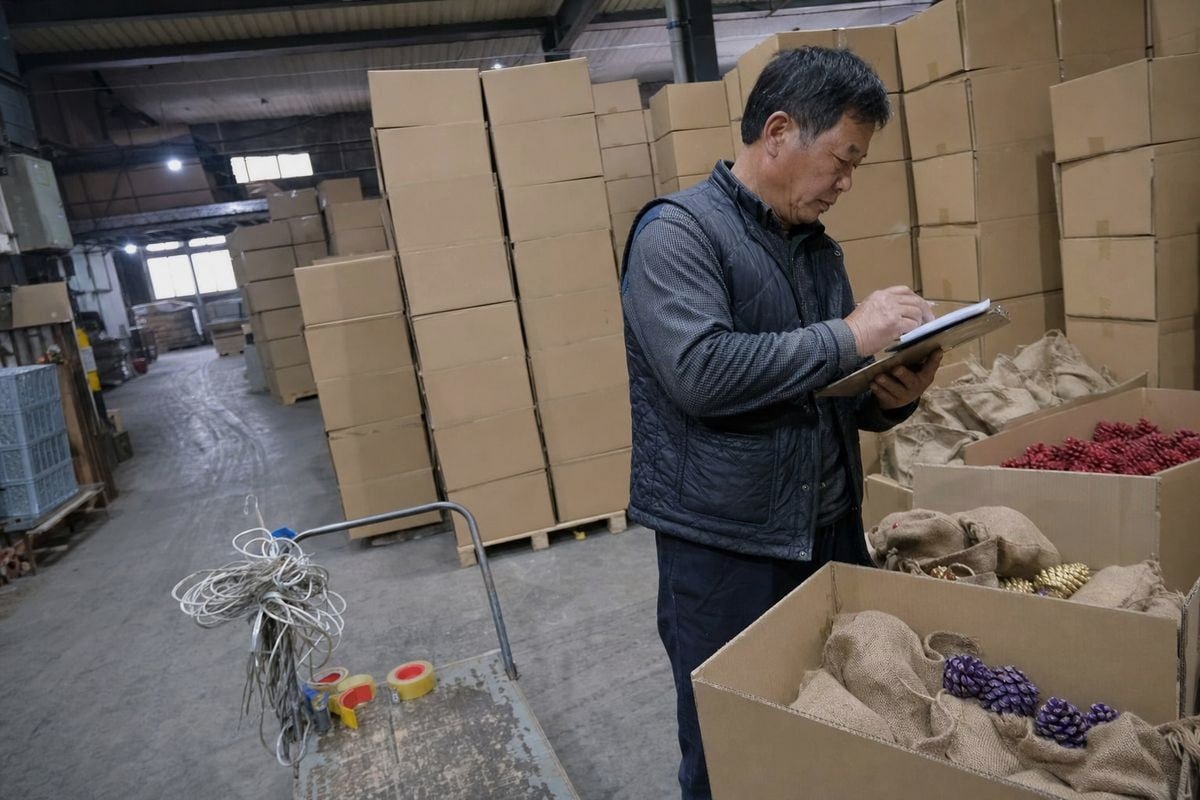
Customs rejection is the most expensive form of cancellation, because you pay freight both ways plus storage while the goods sit in limbo. The good news: nearly every rejection traces back to a check you could have mandated in writing. Quality control inspections should be listed in your contract as conditions of the final payment, not requested informally by email.
The five QC gates to put in writing
| QC gate | What it prevents | When it happens |
|---|---|---|
| Kiln-drying certification (moisture under 10%) | Mold, poor combustion, biosecurity holds | Before coating |
| Chemical adhesion testing | Metal salt efflorescence, color dusting in storage | After coating |
| Batch-specific flame performance video | Weak or wrong flame colors reaching shelves | Before packing |
| Third-party pre-shipment inspection | Mixed batches, labeling errors, quantity gaps | Before container loading |
| ISTA-standard crush-resistance packaging test 6 | Brittle-scale breakage and damaged-goods claims | Packaging design stage |
Why the flame video matters most
Colored pine cones sell on one promise: vivid multicolor flames. If the treatment is uneven, some units burn plain orange, and customers file complaints that trigger returns and chargebacks. We film batch-specific flame tests for our buyers before final shipment, showing the blues, greens, and purples the batch actually produces. It takes our QC team minutes and removes the single biggest quality dispute in this category. Also confirm the supplier's eco-friendly formulation documentation matches destination regulations 7; flame colorant safety standards differ between the US and EU, and a report valid for one market may not clear the other. Finally, require country-appropriate warning labels and barcodes on retail packaging. Customs officers and retail receiving departments both check labels first, and a missing warning statement can stall an otherwise perfect shipment.
Conclusion
Cancellation losses on colored pine cones are preventable. Vet compliance early, stage payments by milestone, trial before scaling, and mandate QC gates. Move the risk upstream, before costs lock in.
Footnotes
1. Technical testing process to ensure coatings remain bonded to the product surface during transit. ↩︎
2. Global leader in inspection and testing services for product compliance and safety. ↩︎
3. Substances used to change the color of a material, requiring safety verification in consumer products. ↩︎
4. Unique identifiers used to verify the authenticity of compliance and testing documents. ↩︎
5. Explains fulfillment planning concepts underpinning early, off-season bulk ordering strategies. ↩︎
6. ISTA sets the recognized packaging performance and crush-resistance testing standards referenced. ↩︎
7. Official EU site explaining conformity requirements for products sold in the European market. ↩︎



 English
  Spanish
  German
  French
  Arabic
  Portuguese
Join the Conversation