






Wood fire starters can quietly eat your firelighter margins. I have watched buyers on our production line worry about exactly this — a new SKU that steals sales instead of adding them.
Position wood fire starters as an ignition aid, not a fuel substitute. Set them one price tier above commodity firelighters, differentiate by burn time and format, use separate private-label branding when audiences differ, and merchandise them beside firewood and kindling to grow basket size.
That is the short answer. The longer answer involves pricing tiers, product differentiation 1, brand architecture, and bundling. Let me walk you through each piece, based on what actually works for our export buyers.
What price and margin tier should I set for wood fire starters so they don't undercut my existing firelighter lines?
A German distributor once asked us to quote wax-dipped wood rolls at parity with paraffin cubes. We pushed back. In our 17 years of exporting fire-starting goods, matching prices downward almost always triggers demand substitution.
Price wood fire starters 20–40% above your standard paraffin or chemical firelighters, in a distinct mid-premium tier. This preserves the value ladder, protects existing firelighter margins, and signals that the wood-wool format offers natural materials, longer burn time, and better performance — not a cheaper alternative.

Pricing is where cannibalization starts or stops. If your wood fire starter lands at the same shelf price as your existing firelighter cubes, the customer sees two interchangeable products. One will lose. Usually it is the older, higher-volume SKU — and your blended margin drops with it.
Run a price gap analysis first
Before you set a number, map your current fire-starting assortment. A simple price gap analysis 2 shows where a new SKU can sit without colliding with an existing one. Most catalogs we supply have a crowded bottom tier and an empty middle. That gap is where wood fire starters belong.
| Tier | Typical Product | Price Position | Role in Portfolio |
|---|---|---|---|
| Value | Paraffin cubes, lighter fluid | Baseline | Volume driver, traffic SKU |
| Standard | Compressed fiber squares | +10–15% | Everyday repeat purchase |
| Mid-premium | Wax-dipped wood wool rolls | +20–40% | Natural, high-performance ignition |
| Premium | Gift-grade starters, color-flame add-ons | +50%+ | Seasonal, decor, gifting |
Protect margin, not just price
A higher shelf price only helps if the margin structure supports it. Wood-wool starters made from wood fiber and paraffin carry a naturally higher perceived value than chemical cubes, because customers read "natural" and "eco-friendly" as quality cues. Our buyers typically achieve stronger per-unit margin on wood rolls than on commodity cubes, even after freight. The key is refusing to market them as a "cheap way to start any fire." That framing commoditizes the SKU and drags the whole category down.
Think of the wood starter as the SKU that lifts the average selling price 3 of your fire-starting shelf. Sound portfolio management means each tier has a distinct job. When tiers overlap, you get SKU rationalization pressure a year later — and that usually means killing a product you paid to launch.
How can I differentiate wood fire starters by burn time and format to target a distinct customer need in my catalog?
Burn time is the specification we adjust most often at our Ningbo facility. One UK fireplace brand wanted an eight-minute roll for airtight stoves; a camping brand wanted a fast three-minute flare. Same material, different products.
Differentiate by burn time and format: short-burn compact rolls for BBQ and camping, medium-burn standard rolls for fire pits, and long-burn large rolls for fireplaces and EPA-certified wood stoves. Each format then targets a distinct use case your existing firelighters do not own.
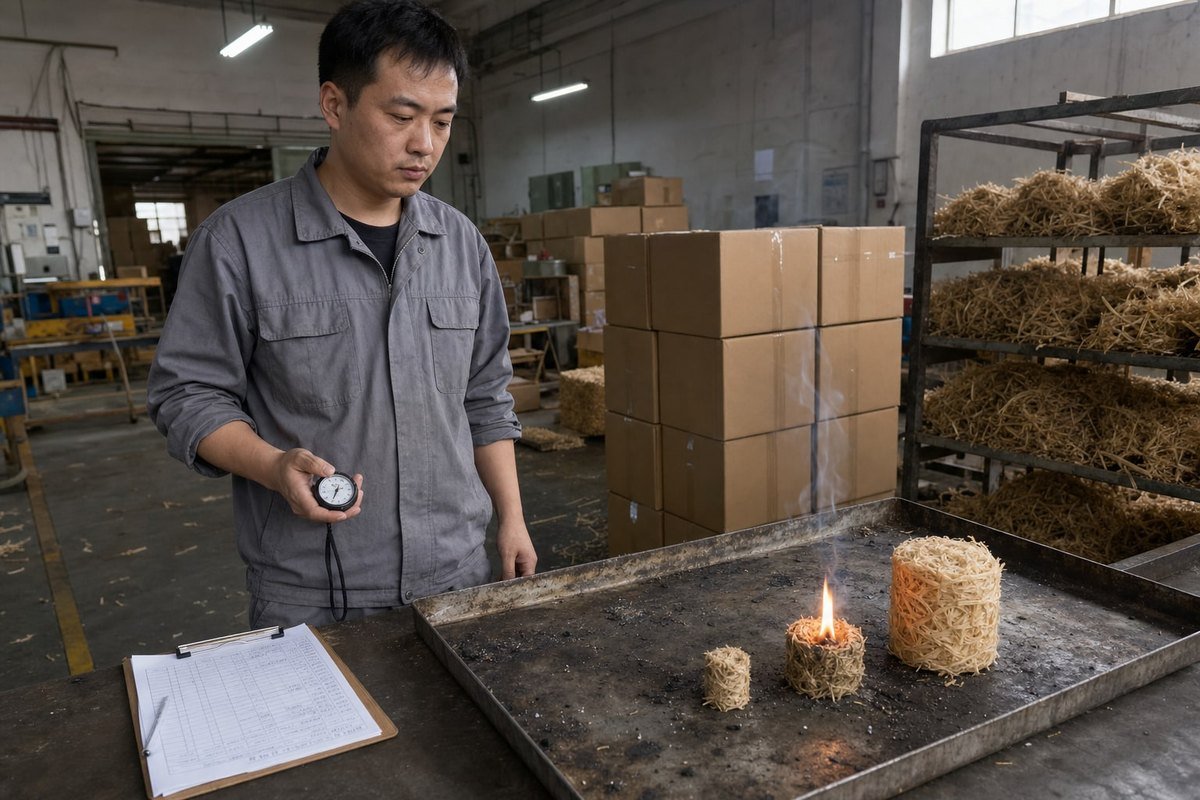
Product differentiation is your strongest defense against cannibalization. If two SKUs solve different problems, they cannot substitute for each other. The good news is that wood-wool starters are highly tunable. We control roll diameter, wool density, and wax loading on our production line, which lets us hit specific burn-time targets batch after batch.
Match burn time to the fire the customer builds
A fireplace fire, a kettle grill, and a campfire have different ignition demands. Market segmentation 4 by application turns one generic product into three or four defensible SKUs.
| Format | Burn Time Target | Best Application | Customer Persona |
|---|---|---|---|
| Small roll / sphere | 3–5 minutes | BBQ, charcoal chimney, camping | Convenience seeker, one-match start |
| Standard roll | 6–8 minutes | Fire pits, open fireplaces | Weekend host, outdoor living |
| Large / dense roll | 8–12 minutes | Airtight and EPA-certified stoves | Winter heating user, ritualist |
| Bulk box (100 pcs) | Mixed | Rental properties, heavy users | B2B, short-term rental operators |
Format signals intent as much as function
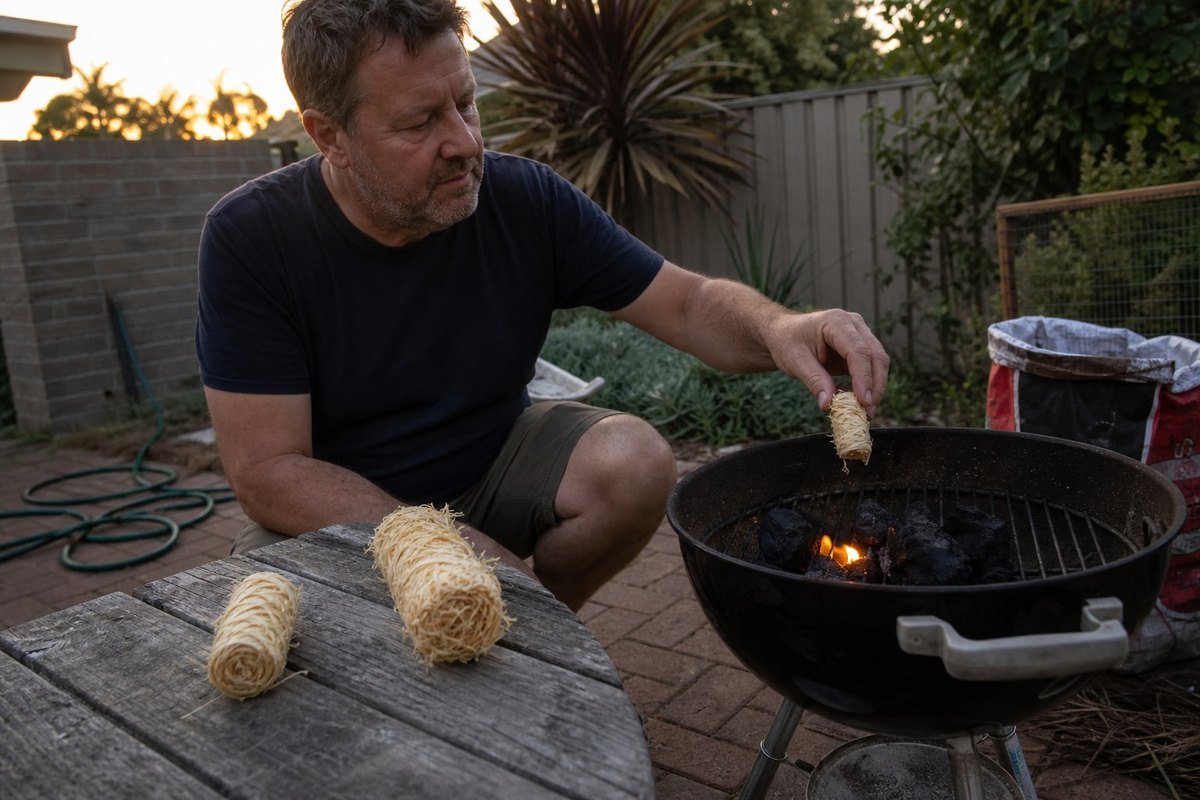
Placement in the fire matters, and format supports it. Small spheres tuck under kindling. Standard rolls sit at the center of a log-cabin stack in a fire pit. Long-burn rolls hold flame under dense hardwood on a fireplace grate. When your product copy explains where the starter goes in the fire-building sequence, customers understand it is the ignition layer — not the fuel. That framing keeps kindling bundles, compressed logs, and premium firewood safe from demand substitution.
Distinct customer personas complete the picture. The convenience seeker wants a guaranteed one-match start. The ritualist enjoys building the stack and buys the starter as insurance against wet or dense wood. Neither persona is choosing between the starter and your firewood. They are buying both.
Should I private-label wood fire starters separately from my current fire-starting SKUs to avoid brand overlap?
Brand decisions are where our OEM/ODM work gets interesting. Last year, a Dutch importer asked us to develop two completely different box designs for chemically identical wood rolls — one rustic kraft, one bold retail black-and-flame graphics — because his channels demanded it.
Use a separate private label when the wood fire starter targets a different channel, persona, or price tier than your current firelighters. Use a sub-brand or line extension under your existing brand when audiences overlap and you want the halo of established trust.
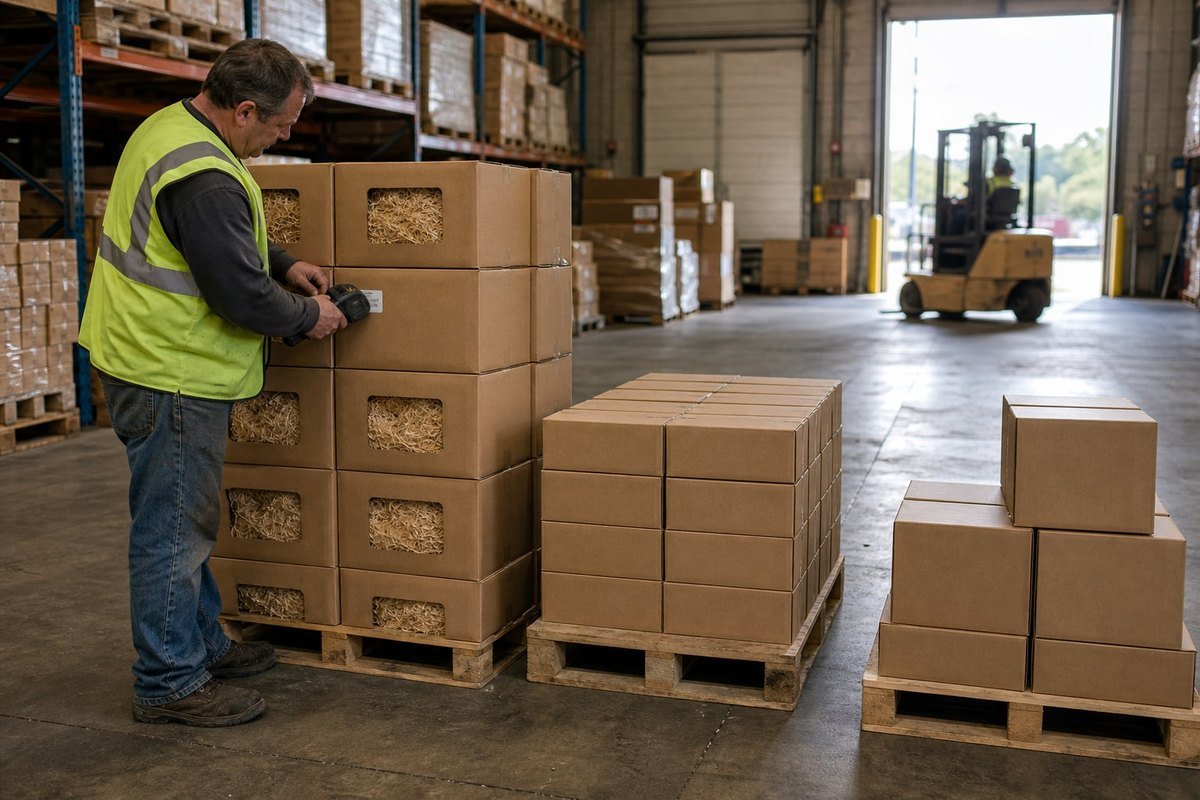
This is fundamentally a brand architecture 5 question, and there is no single right answer. There is, however, a clear decision framework we walk buyers through before they commit to packaging tooling.
Three brand routes and when to use them
- Product line extension. Keep your existing firelighter brand and add "Natural Wood Wool" as a range. Best when your brand already stands for fire-starting expertise and the new SKU targets the same shopper. Fastest to shelf, lowest marketing cost, but highest overlap risk if pricing is not tiered properly.
- Sub-brand. Same master brand, distinct range identity — different palette, different shelf story. Best when you want brand trust plus visible product differentiation. This is the most common choice among our European distributors.
- Separate private label. A standalone brand with its own packaging, barcodes, and warning labels. Best when the wood starter targets a premium, eco-focused, or gift-oriented persona your utility firelighter brand cannot credibly serve — the "mantle-ready" aesthetic tier, for example.
What separation actually requires
A separate label is more than a new logo. It needs compliant packaging in every destination market, correct composition declarations (for instance, "50% wood fiber, 50% paraffin"), warning text in local languages, and consistent batch quality so the first sample matches mass production. Our ISO 9001 and BSCI 6 systems, plus SGS and Intertek test reports, exist precisely because retail sourcing channels audit this. A weak second brand with compliance gaps damages the parent business faster than any cannibalization would.
The honest trade-off: separate labels cost more upfront but give you cleaner market segmentation 7 and easier future SKU rationalization. Line extensions are cheaper but demand disciplined price-tier separation to avoid internal competition.
How do I bundle or merchandise wood fire starters alongside my existing products to grow basket size instead of splitting sales?
The best merchandising lesson I ever received came from a Canadian fireplace retailer who moved our wood rolls from the accessories aisle to a clip-strip on the firewood rack. Attach rate jumped. Nothing about the product changed — only its placement.
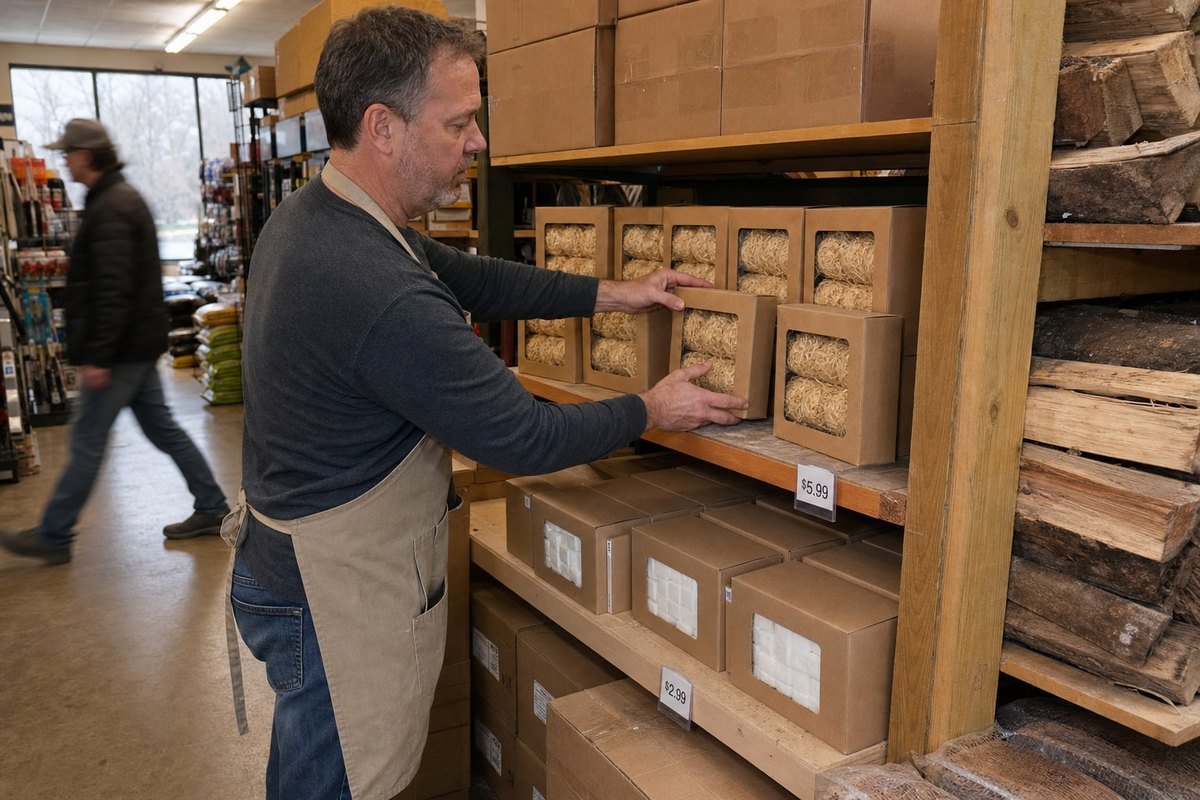
Merchandise wood fire starters next to firewood, kindling, and fire pits — never beside cheaper firelighters. Bundle trial packs with premium wood, cross-sell them at checkout, and frame them as the ignition layer that unlocks your fuel SKUs, driving incremental revenue per basket.
Placement decides whether a starter is a complement or a substitute. Put it next to lighter fluid and cheap cubes, and shoppers compare on price. Put it next to premium firewood, and shoppers read it as the accessory that makes the wood perform. That single shelf decision changes the product's economic role.
Bundle architectures that grow the basket
Cross-selling strategies work best when the bundle tells a complete fire-building story: starter, kindling, fuel. Here are the structures our buyers deploy most often.
| Bundle Type | Structure | Goal |
|---|---|---|
| Attach bundle | 4–6 starters clipped to premium firewood bundle | Lift firewood conversion and price justification |
| Trial pack | Small starter pouch at checkout or counter | Gateway SKU that seeds repeat purchase |
| Complete kit | Starters + kindling sticks + matches in gift box | Seasonal gifting, higher average order value |
| Subscription add-on | Starters included in firewood delivery box | Retention and predictable reorder volume |
| B2B hospitality pack | Bulk 100-piece box for rentals and lodges | One-match reliability, liability reduction |
Merchandising rules that prevent sales splitting
Keep three principles in front of your category team. First, adjacency: starters live with fuel and outdoor-living products, not with commodity ignition. Second, messaging: copy should say "start your firewood faster" and "works with your existing logs and kindling," which positions the starter as additive. Third, seasonality: launch stove-focused long-burn SKUs for autumn and winter, and BBQ or fire-pit formats for spring and summer, so the two waves never compete for the same shelf moment.
Bundling also helps inventory optimization. When starters ship inside firewood kits or seasonal displays, forecasting follows your fuel demand curve instead of creating a separate, volatile reorder pattern. We support this on the factory side with custom display packaging, barcodes, and mixed-carton configurations, so a distributor can land shelf-ready bundles rather than assembling them in a local warehouse.
Conclusion
Cannibalization is a positioning failure, not a product flaw. Priced in a distinct tier, differentiated by burn time, branded deliberately, and merchandised beside fuel, wood fire starters add incremental revenue — and we build them to spec, fully certified, shelf-ready.
Footnotes
1. Defines the marketing strategy used to distinguish a product from others in the market. ↩︎
2. Explains pricing strategy concepts underlying tiered SKU positioning to avoid cannibalization. ↩︎
3. Defines the key financial metric used to measure the success of the premium positioning strategy. ↩︎
4. Background on segmentation supports differentiating fire starters by burn time and application. ↩︎
5. Explains the structure of brands within an organizational entity to manage multiple SKUs. ↩︎
6. Official standards for quality management and social compliance mentioned as requirements for retail sourcing. ↩︎
7. Describes the process of dividing a broad consumer market into sub-groups for better targeting. ↩︎


 English
  Spanish
  German
  French
  Arabic
  Portuguese
Join the Conversation