






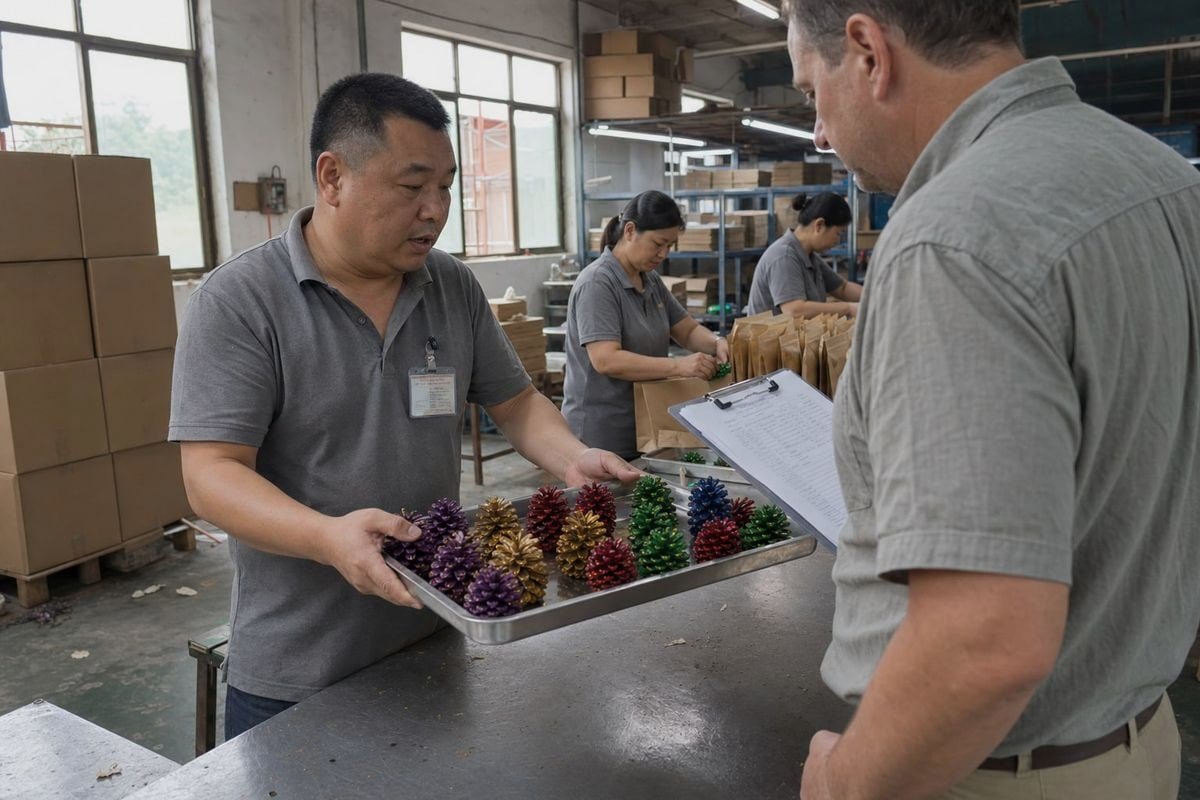
Buyers often ask me about OEM vs ODM as if they were just two price tiers CE marking 1. They are not. On our color-flame pinecone lines, the wrong choice locks buyers into designs they never own. That mistake surfaces later — when they try to switch suppliers, defend a bestseller, or scale into new retail channels — and by then, fixing it costs far more than choosing correctly upfront.
OEM vs ODM determines who controls the design, who owns the intellectual property, and how easily you can switch suppliers. OEM means the buyer leads design and usually keeps the IP. ODM means the supplier owns the base design, giving you speed but less control and portability.
Let me break this down the way I explain it to purchasing managers who visit our factory. We will look at design authority, IP ownership, supplier switching, and quality protection — one at a time.
What design changes can I actually make under OEM versus ODM production?
A German distributor once sent us a full spec sheet for a custom wax torch — burn time, core material, wax formula, packaging dieline. That is OEM. Most buyers arrive with far less, and that is where ODM starts.
Under OEM, you can change almost everything: formula, size, burn time, materials, and full packaging design, because you define the specification. Under ODM, you customize an existing product — typically branding, colors, packaging, and minor features — within limits the supplier's platform allows.
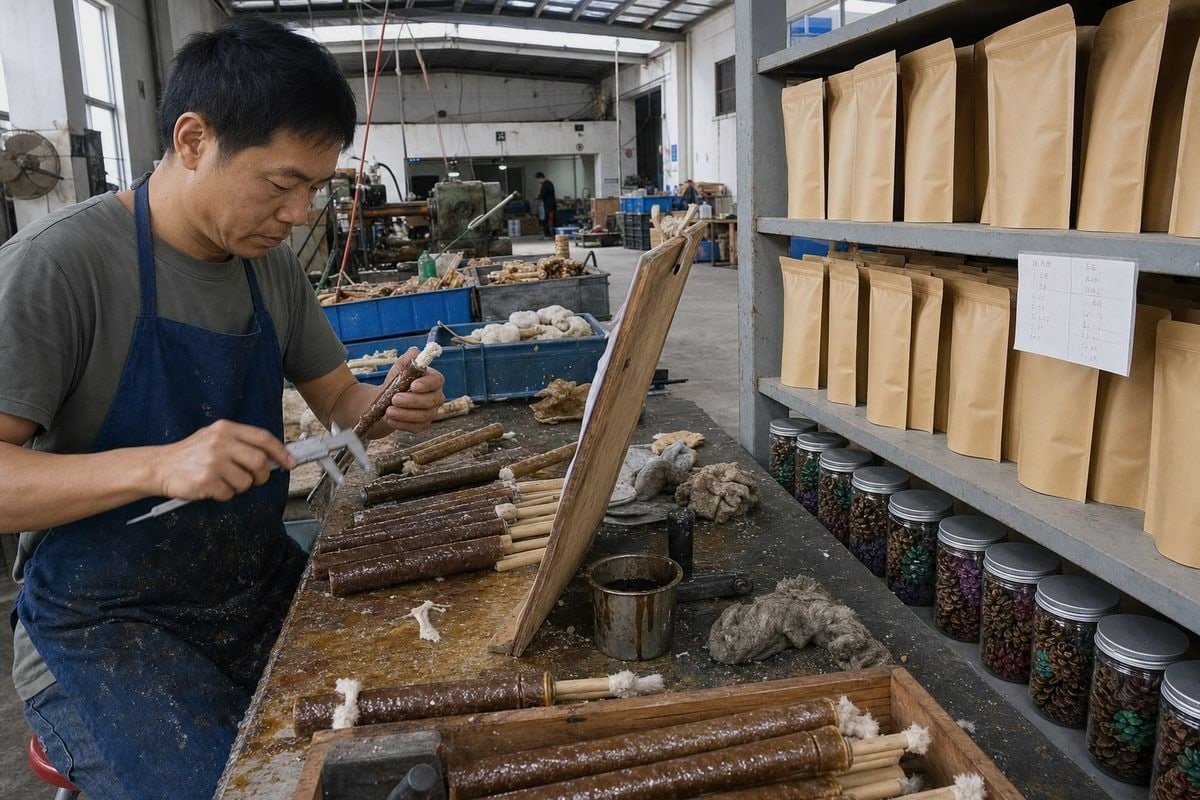
The clearest way I can frame it: OEM is full custom design, while ODM is platform-based customization. Both are legitimate. But they give you very different levels of authority over what actually gets built.
Full custom design versus platform customization
With OEM, you own the product definition. When a US camping brand asks us to develop a color-flame pinecone with a specific burn duration, a particular flame color sequence, and a stand-up kraft pouch with their artwork, we build tooling and production steps around their spec. They decide features, dimensions, and performance targets. We execute.
With ODM, you start from our existing catalog — say, our standard Magic Fire packets or our hand-finished decorative pinecones — and adapt them. You can change the label, the pouch style, the color assortment, the box count. You usually cannot change the core formula or the fundamental product architecture, because that design is amortized across multiple clients.
Here is how the two models compare in practice:
| Design element | OEM (buyer-led) | ODM (supplier-led) |
|---|---|---|
| Core formula / performance | Fully customizable | Fixed or limited tweaks |
| Product size and burn time | Buyer specifies | Choose from existing options |
| Packaging format | Fully custom dielines | Select from standard formats |
| Branding and artwork | Fully custom | Fully custom |
| Warning labels, barcodes | Custom to your market | Custom to your market |
| Development timeline | Longer | Faster |
One nuance worth stating: OEM does not mean you manufacture anything yourself original equipment manufacturer 2. It means you control the specification while production stays outsourced. And ODM is often the right call when a buyer has no in-house industrial design or engineering capability. In our experience, many first orders start as ODM and evolve toward OEM once the buyer learns what their market wants.
Who owns the product IP and packaging design once I choose an OEM or ODM path?
The most uncomfortable conversation I have with new buyers is this one. Several have assumed that putting their logo on our burlap sack packaging made the product "theirs." intellectual property 3 Legally, it did not — and that surprise is avoidable.
In OEM, the buyer typically owns the product design and IP because they created the specification, though contracts decide the details. In ODM, the supplier retains the core design IP, and the buyer owns only their brand, artwork, and any custom elements they paid to develop.

Ownership is not one thing. When buyers work with our team on private-label fire products, I encourage them to separate four distinct layers of IP, because each can sit with a different party.
The four layers of ownership you must separate
- Design IP — the product formula, structure, and engineering. Buyer-owned under true OEM; supplier-owned under ODM.
- Tooling and molds — physically separate from design IP. Even under OEM, if you did not pay for the tooling or secure it contractually, you may not control it.
- Brand rights — your trademark 4, logo, and trade dress. These stay yours in both models, but only where you have registered them.
- Packaging design — if you supplied the dieline and artwork, it is yours. If you selected a supplier template and added a logo, the template is not yours.
This is why a company can own a strong brand yet not own the product behind it. Private-label and ODM arrangements produce exactly that situation, and it is fine — as long as you know it going in.
Why the contract matters more than the label
Here is the objection I hear: "The agreement says OEM, so I own everything." Not automatically. The commercial label OEM does not transfer IP unless the contract explicitly assigns it. Two further points matter, and they matter a lot for buyers sourcing from China:
- Local registration beats contract language. An IP clause is hard to enforce if you never registered your trademark 5 or patent in the manufacturing country. File in China, not just at home.
- Use NNN agreements, not standard NDAs. A No Use, No Disclosure, No Competition agreement is written to be enforceable in Chinese courts. A US-style NDA often is not.
We sign NNN agreements with OEM clients as standard practice, and we advise every private-label buyer to register their mark in China before their first container ships. It costs little. Skipping it can cost the product.
How does choosing OEM or ODM affect my flexibility to switch suppliers later?
A UK importer once approached us mid-season, trying to move an ODM fire-log product away from a struggling supplier. He owned the brand and the barcode — and nothing else. He had to relaunch from scratch. That episode shaped how I brief every new client.
OEM gives you far more switching flexibility because you own portable design files and specifications that any capable factory can quote. ODM creates supplier lock-in: the supplier owns the design, tooling, and know-how, so leaving often means redesigning the product entirely.
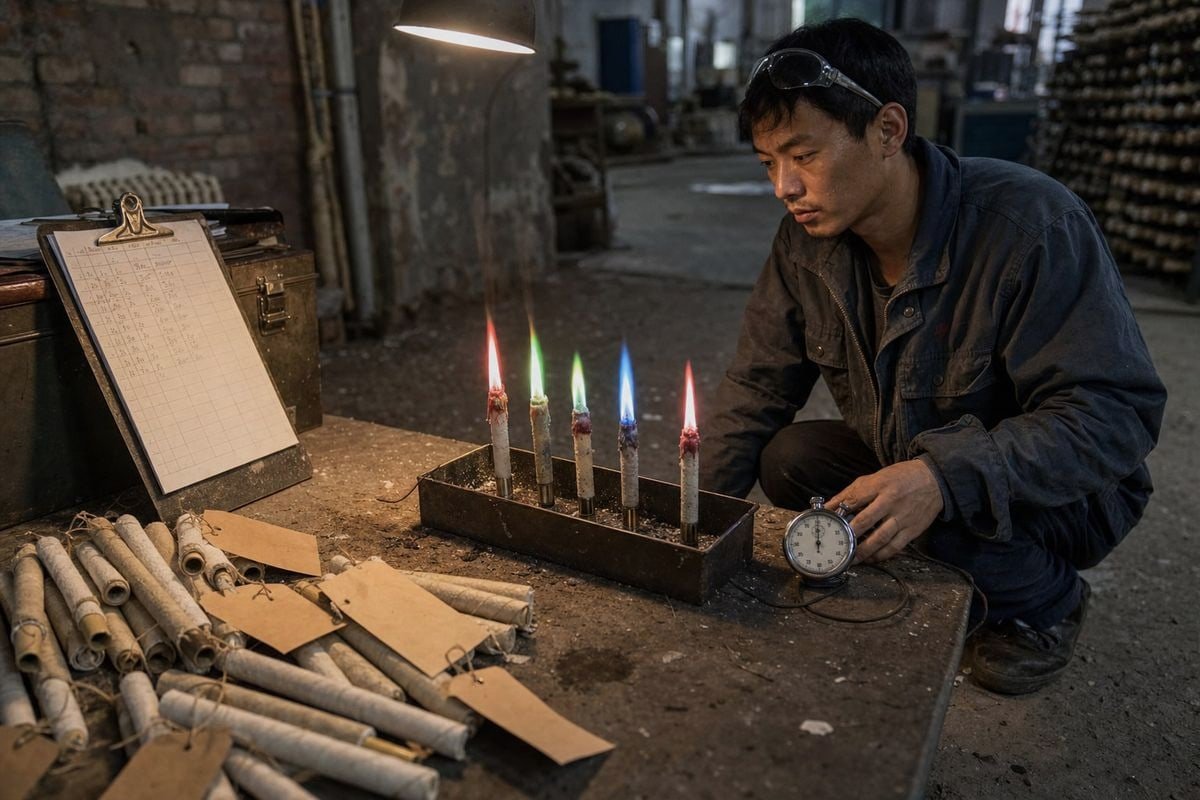
Flexibility has two levels, and buyers often confuse them. At the ordering level, ODM feels flexible — low MOQs, fast reorders, easy artwork changes. At the strategic level, it is the opposite. You are buying into a design ecosystem you cannot take with you. OEM reverses that: slower to start, but portable forever.
The switching-cost picture
| Switching factor | OEM | ODM |
|---|---|---|
| Design files portability | You hold the spec; any factory can quote | Supplier holds the design; nothing to carry out |
| Tooling and molds | Yours if purchased and documented | Almost always supplier-owned |
| Process know-how | Documented in your spec | Lives inside the supplier |
| Multi-supplier sourcing | Feasible | Very difficult without redesign |
| Re-shoring or near-shoring later | Realistic | Usually requires a new product |
| Risk if supplier fails | Disruptive but recoverable | Product may be unrecoverable |
The honest caveat about OEM
I should be fair here, because the simple version oversells OEM. Even with buyer-owned designs, dependency can creep in. If the supplier built specialized tooling you never purchased, or holds undocumented process knowledge — say, the exact dipping and drying sequence that keeps a wax-coated pinecone from cracking — switching still hurts. OEM gives you more leverage, not immunity.
Three habits protect that leverage. First, buy your molds and tooling outright, and get it in writing with photos and serial numbers. Second, require complete technical documentation as a deliverable, not a favor. Third, audit whether your spec is genuinely complete enough for a second factory to produce from. We help OEM clients maintain that documentation precisely because long-term buyers trust partners who do not need lock-in to keep the business.
Which option, OEM or ODM, gives me better protection through certifications and quality control?
Certification questions come up in almost every first call we take from US and European buyers — usually before price does. And here the OEM versus ODM answer is less obvious than people expect, because protection comes from the factory, not the label.
Neither model automatically protects you better. ODM products often carry existing certifications, giving faster compliance. OEM requires new testing but gives you certificates in your own name and specs you control. Either way, protection depends on the factory's real QC systems.
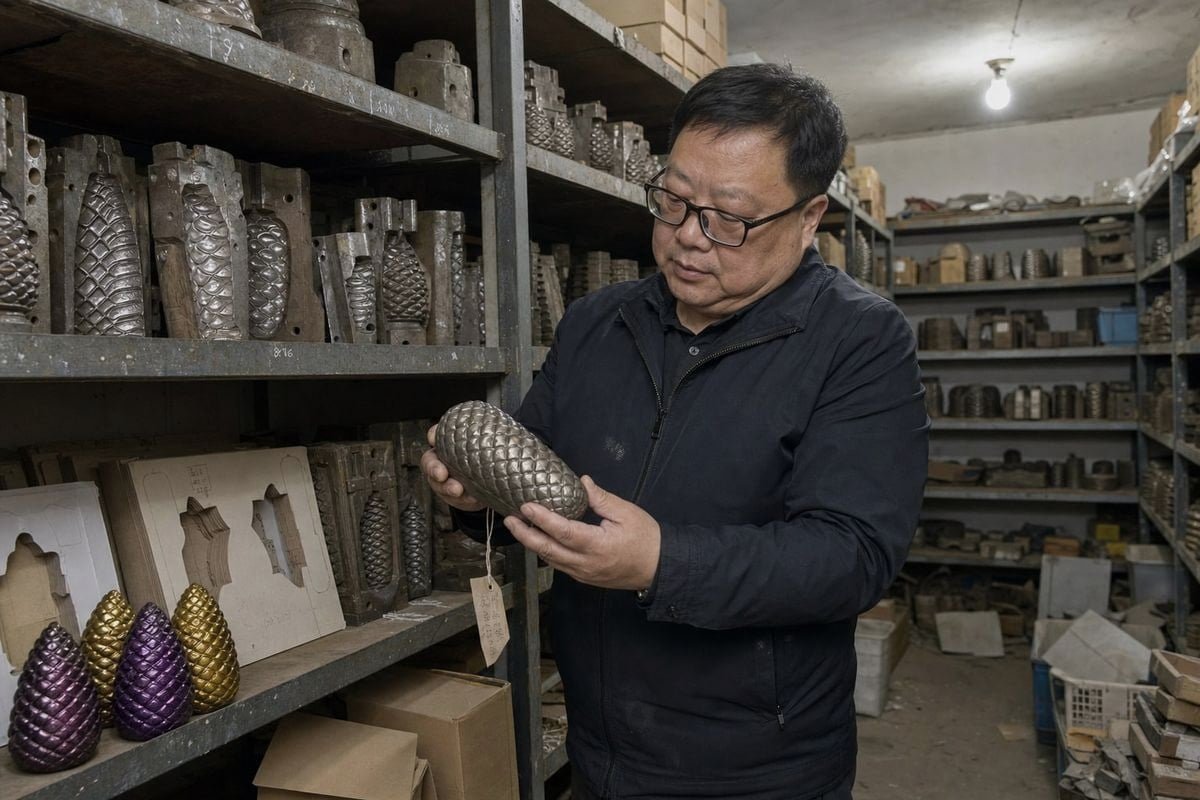
Let me unpack this from the factory floor side, because it is where the theory meets reality.
What each model gives you on compliance
With ODM, the supplier's existing product typically already holds test reports and certifications. Our standard color-flame packets and pinecones, for example, ship with SGS or Intertek test reports 7, and our facility operates under ISO 9001 8 with BSCI social compliance and CE marking where applicable. An ODM buyer inherits that compliance foundation on day one. That is genuinely faster to market, and for a trial order it is often the right move.
With OEM, your custom product needs its own testing. New formula, new burn time, new packaging — each may trigger new test requirements for your target market. That costs time and money upfront. But the certificates reference your specification, and in many cases your name. When a retail chain like a large US home-improvement channel audits your product file, holding your own reports is a stronger position.
| Protection factor | OEM | ODM |
|---|---|---|
| Speed to compliant product | Slower (new testing needed) | Faster (existing reports) |
| Certificates tied to your spec | Yes | No — tied to supplier's product |
| Control over test standards | You choose markets and standards | Supplier's existing scope |
| Batch-to-batch consistency | Depends on factory QC | Depends on factory QC |
| Retail audit readiness | Stronger long-term | Adequate short-term |
The variable that matters more than the model
Notice the row both columns share: batch-to-batch consistency depends on the factory, full stop. A supplier with weak QC will fail you under either model. After 17-plus years running fire-product lines, our internal rule is simple — the first sample must reliably reflect mass-production quality, or the sample was a lie. Ask any prospective supplier, OEM or ODM, how they control that. Ask for batch records. Ask which lab tested the current production run, not a golden sample from three years ago. The answers will tell you more than the sourcing label ever will.
Conclusion
Choose wrong between OEM vs ODM, and you risk owning a brand without a product, or a design without leverage. Choose deliberately, and both models work.
Here is the decision framework I give buyers: pick ODM when you need speed, lower upfront cost, and a proven compliant product for market testing. Pick OEM when you need a defensible, differentiated product with portable IP and multi-supplier freedom. Either way, register your trademark locally, sign an NNN agreement, secure your tooling in writing, and verify the factory's certifications and batch QC before the first purchase order. On our lines, we run both models daily — and the buyers who thrive are the ones who knew exactly which trade-off they were making before they signed.
Footnotes
1. Official EU source explaining the CE marking compliance requirement referenced in the text. ↩︎
2. Defines the OEM concept central to the article's comparison framework.



 English
  Spanish
  German
  French
  Arabic
  Portuguese
Join the Conversation