






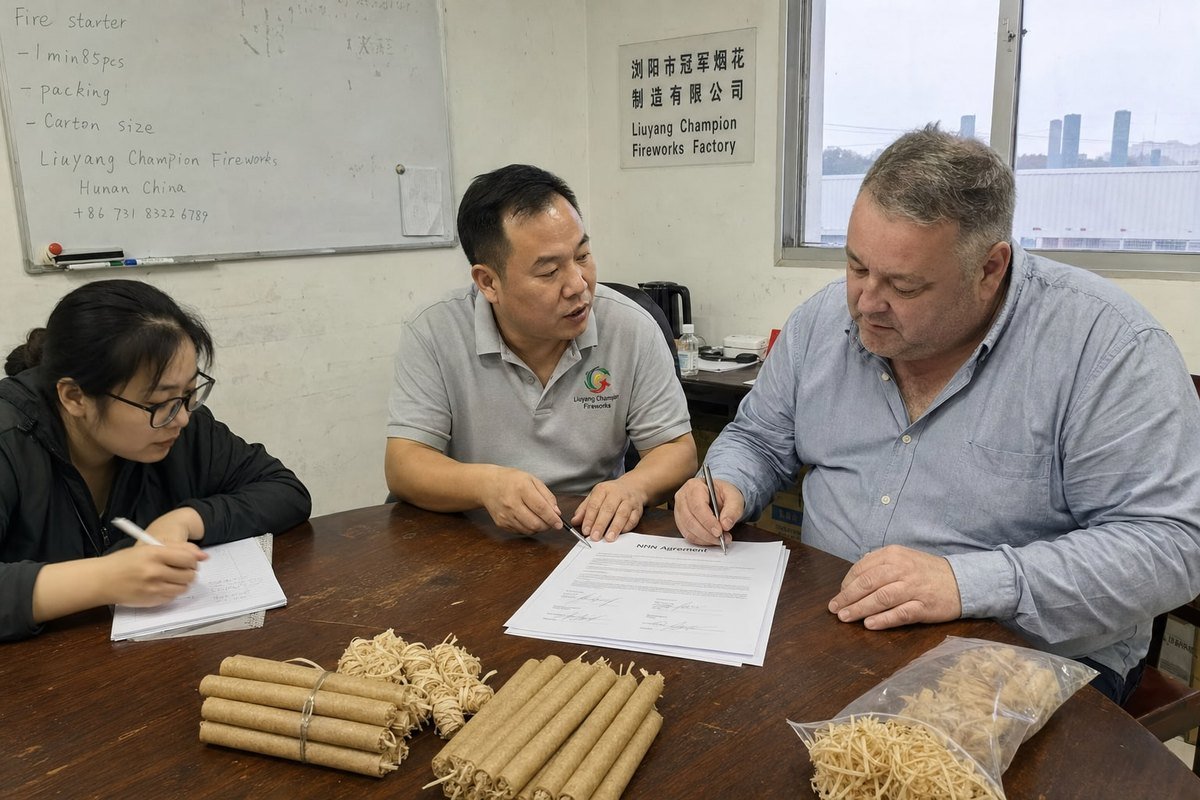
IP and confidentiality clauses often get skipped when buyers rush to source wood fire starters. On our production line, I have seen what that shortcut costs brands later.
To handle IP and confidentiality clauses when sourcing wood fire starters, sign an NNN agreement before sharing specs, define confidential information precisely, state that you own all designs, molds, formulas, and improvements, restrict supplier use to your orders only, and set clear breach remedies with post-termination survival terms.
That is the short answer. Below, I break down each piece: the NDA terms, the branding protections, the reuse clauses, and how to vet a factory before you commit.
What NDA terms should I require before sharing my custom wood fire starter designs with a manufacturer?
A buyer from Germany once emailed our team his full wax-ratio spec sheet before we had signed anything. I stopped him and asked him to send an NDA first. He was surprised a factory would insist.
Require an NNN agreement — covering non-disclosure, non-use, and non-circumvention — that precisely defines confidential information, limits use to manufacturing your product, grants no license, restricts sharing to need-to-know staff, survives termination for three to five years, and is enforceable in the supplier's jurisdiction.
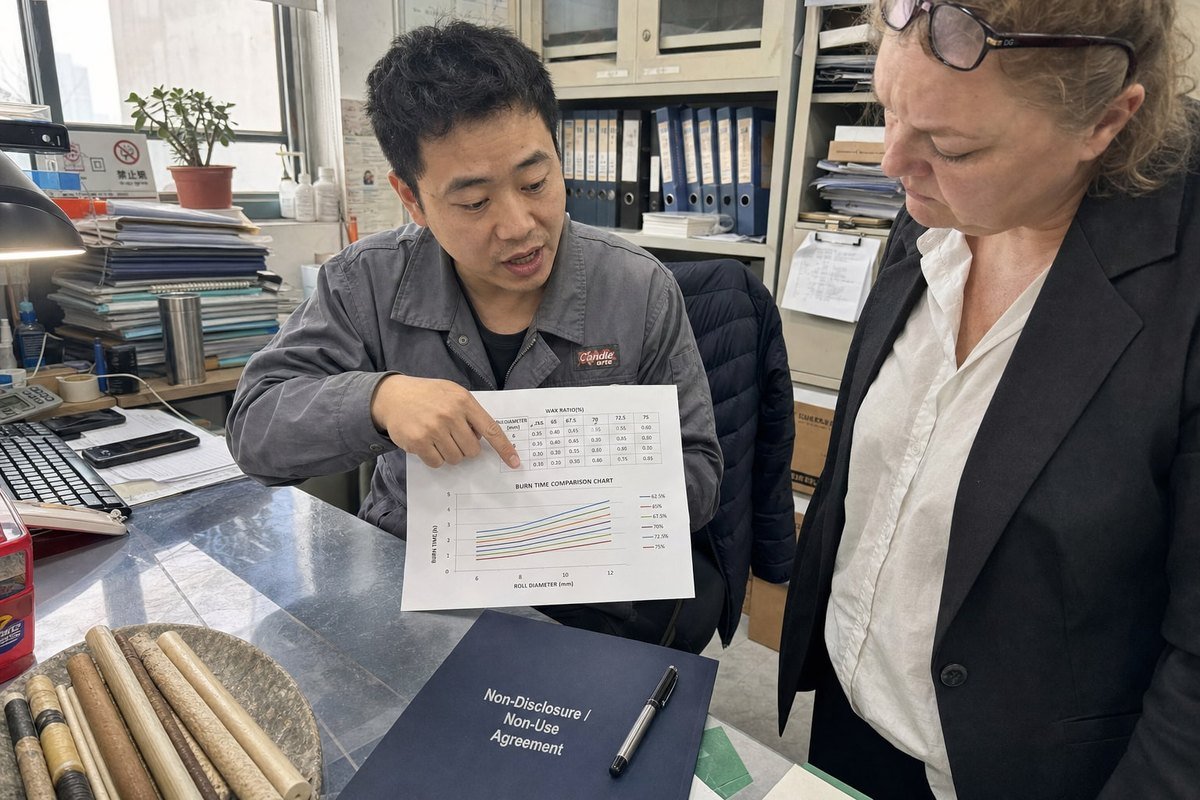
A standard Non-Disclosure Agreement 1 only stops the supplier from telling others your secrets. It does not stop the supplier from using them. That gap matters with wood fire starters, because the real value sits in the recipe and the process, not the finished puck. Your wood-to-wax ratio, your binding method, your dip temperature, your burn-time targets — a factory can absorb all of that and quietly launch a competing product without ever "disclosing" anything. That is why experienced buyers use NNN agreements instead. The non-use clause blocks internal reuse. The non-circumvention clause stops the factory from going around you to sell directly to your retail customers.
Define confidential information precisely
Vague definitions are hard to enforce. In our contract manufacturing agreement templates, we encourage buyers to list categories explicitly. Here is what should typically be covered for a wood fire starter product:
| Information type | Examples | Why it matters |
|---|---|---|
| Formula and process | Wax ratio, binding agents, dip time, proprietary manufacturing process details | Core of trade secret protection |
| Design specs | Roll dimensions, mold shapes, fiber density, burn-time targets | Enables copycat production |
| Commercial data | Pricing, distributor terms, order forecasts | Reveals your margin structure |
| Packaging assets | Artwork files, brand names, barcodes, warning label text | Enables counterfeit-quality clones |
| Testing data | Burn-profile results, SGS/Intertek reports commissioned by you | Shortcuts a competitor's R&D |
Add the practical mechanics
Also require: a permitted-purpose clause stating information may be used only to manufacture your agreed product; a no-license-granted statement; need-to-know disclosure limited to employees and bound subcontractors; return or destruction of all materials on request; and a lawful-disclosure carve-out with advance notice where legally allowed. Finally, make sure the agreement is written to be enforceable where the factory operates. An NDA governed only by a US court is nearly useless against a supplier in China. We sign China-enforceable NNN agreements regularly, and serious factories will not resist a fair one.
How can I protect my private-label packaging and branding from being copied or resold to competitors?
Private-label work makes up a large share of our OEM/ODM output — custom boxes, display packaging, warning labels, and barcodes for brands across the US and Europe. So I have seen exactly where branding leaks happen.
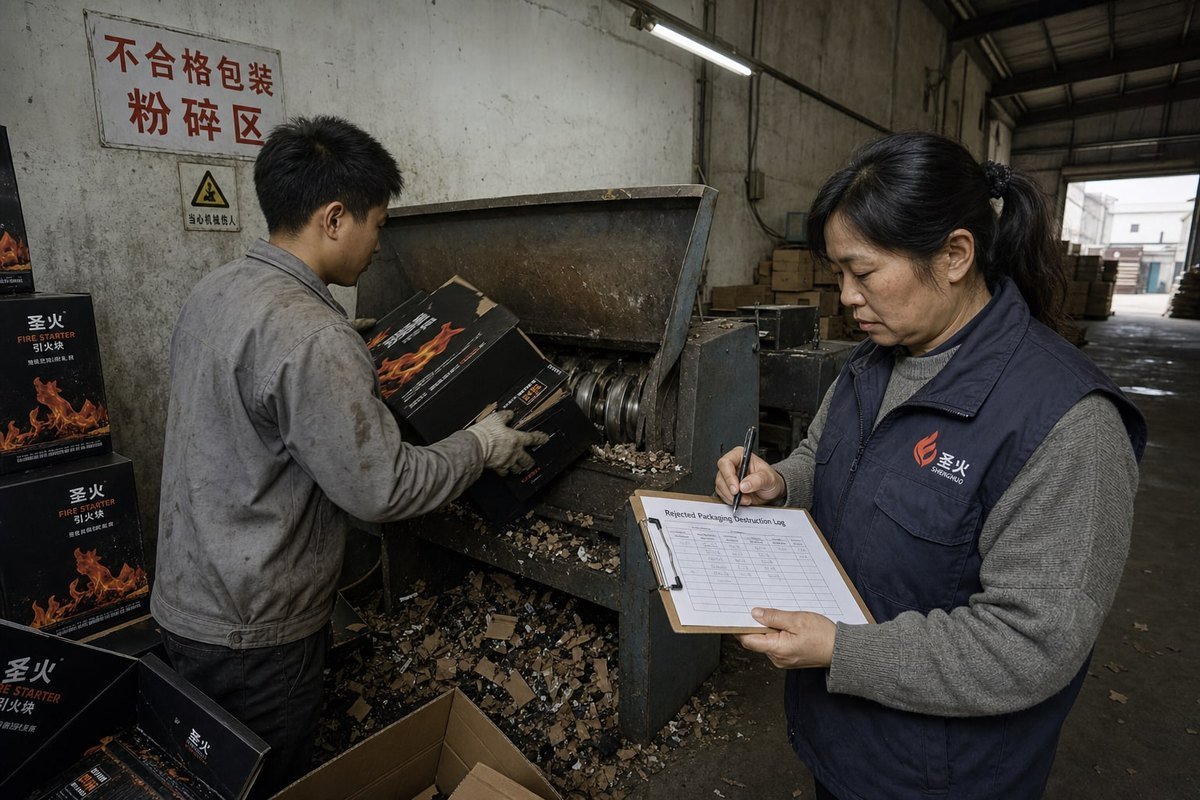
Protect private-label branding by registering your trademark in the manufacturing country, stating in the contract that all packaging artwork and dies remain your sole property, prohibiting sale of overruns or seconds bearing your brand, and requiring destruction of misprints and rejected packaging under documented supervision.
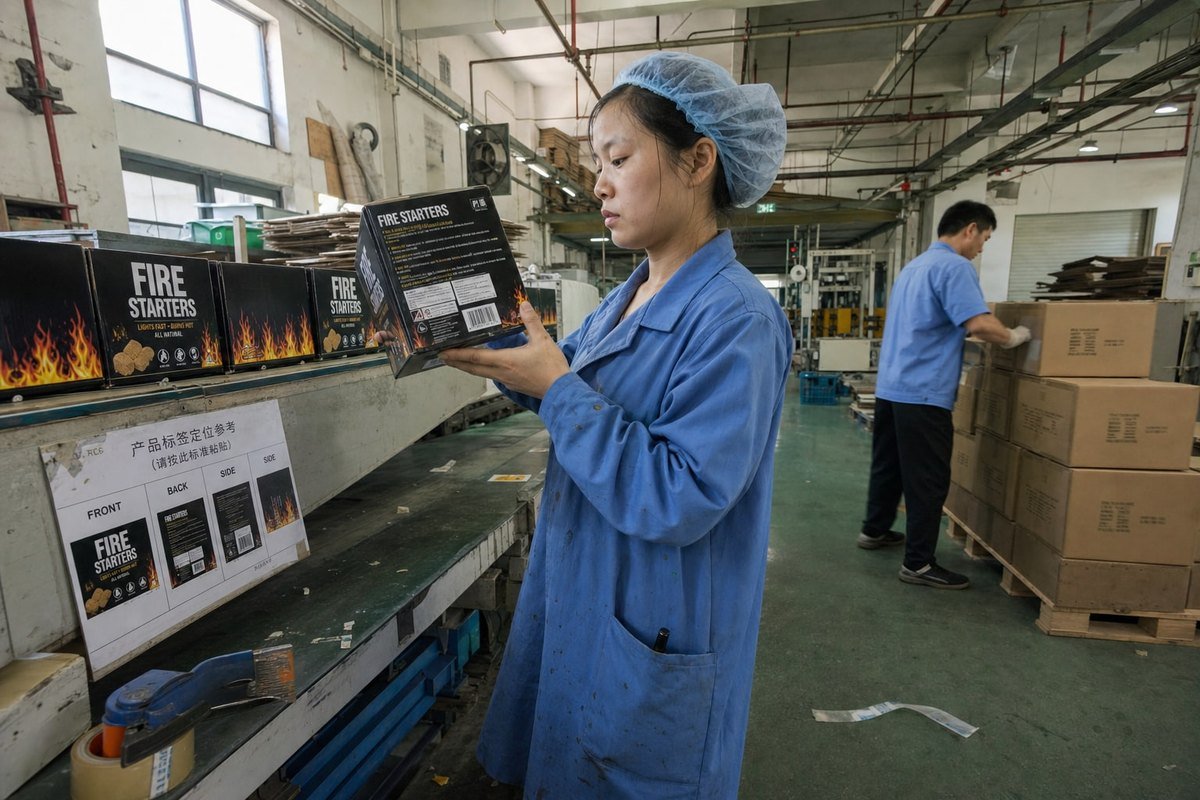
Packaging is often the easiest thing to steal and the hardest to defend after the fact. Your flame graphics, box structure, and shelf-ready display design are visible to everyone in the factory and to every subcontracted printer. In my experience exporting to thirty-plus countries, three leak points come up again and again.
The three common leak points
- Overruns and rejected stock. A printer produces extra boxes "just in case." Those extras can end up filled with generic product and sold at a market stall — or worse, exported. Your contract should ban the sale of any overstock, seconds, or misprints carrying your branding, and require certified destruction.
- Third-party print shops. Most factories outsource packaging printing. Mandate that every sub-tier supplier is bound by the same confidentiality terms 2 as the main contractor. We flow these obligations down to our print partners in Ningbo as standard practice, and any factory with real supply chain compliance discipline can do the same.
- Design reuse for other clients. Without a written ownership clause, a supplier may treat your box structure or display concept as reusable "house design." State clearly that you own all artwork, dielines, and derivative versions.
Register before you produce
Trademark registration in the manufacturing country is cheap insurance. In first-to-file jurisdictions like China, whoever registers first owns the mark locally. I have watched a buyer discover his own brand name registered by a stranger, blocking his shipments at export. Registering also lets customs seize counterfeits at the border. Pair the trademark with product design patents where the shape or packaging is genuinely distinctive, and consider an exclusivity agreement for the specific design if the volume justifies it.
What contract clauses ensure my supplier won't reuse my product molds or formulas for other clients?
One trade-off I weigh with every custom project is tooling cost versus tooling control. When a buyer pays for a custom mold or a unique roll dimension on our lines, that asset must stay theirs — and the contract has to say so in plain terms.
Include clauses stating you own all buyer-funded molds, dies, and tooling; that all Background IP stays with its original owner while all Foreground IP and improvements belong to you; that the supplier may use your formulas only for your orders; and that tooling must be returned on termination.
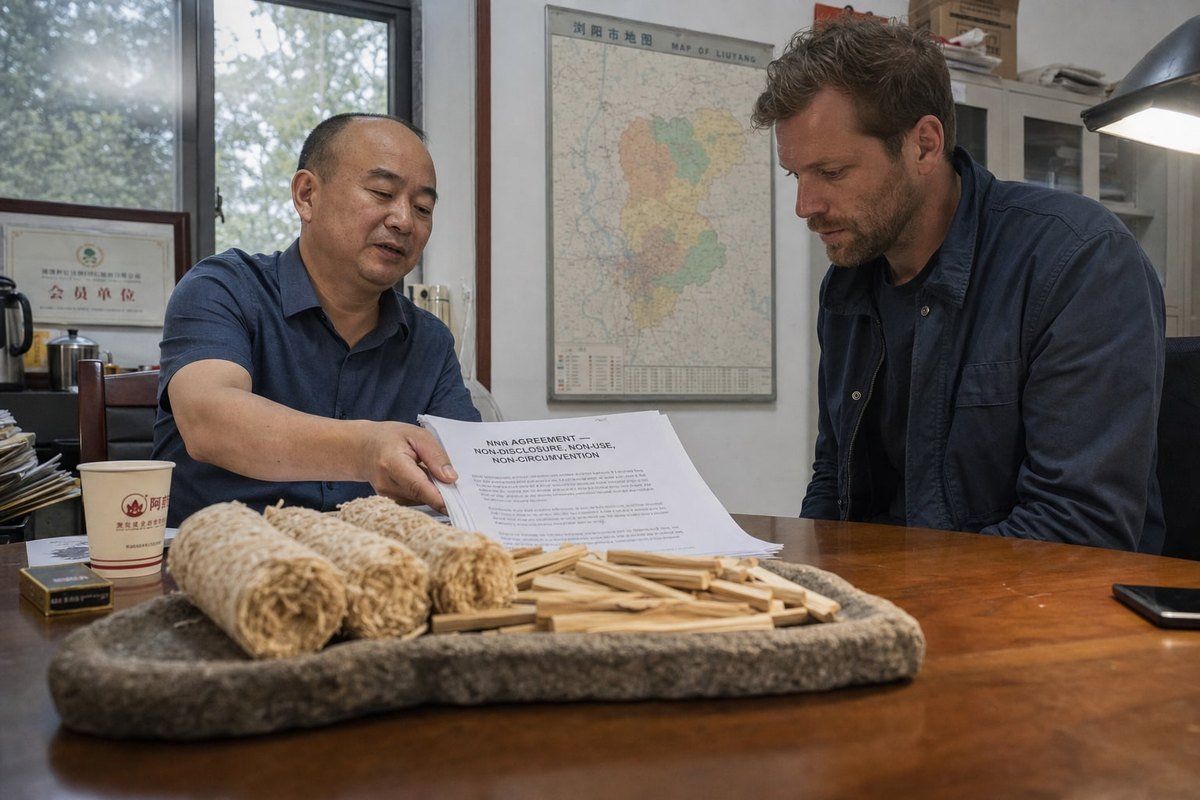
This is where confidentiality and IP ownership split into two separate jobs. Confidentiality clauses control information flow. Ownership clauses control who legally holds the rights. You need both, and buyers often draft only the first.
Background IP vs. Foreground IP
Your pre-existing formula is Background IP. It stays yours. But production always creates new knowledge. Suppose our engineers adjust your wax blend to improve ignition speed during a trial run. Who owns that improvement? Without a clause on ownership of IP improvements 3, the answer is unclear — and the factory could apply that enhancement to another client's product. Your contract should state that all Foreground IP 4, improvements, and derivative works created for your project belong to you. Fair suppliers accept this when it is scoped to your product; they will push back if the clause tries to claim their general manufacturing know-how, and honestly, that pushback is reasonable. Keep the clause specific and it becomes enforceable.
The clause checklist
| Clause | What it does |
|---|---|
| Tooling ownership | Buyer-funded molds, extrusion dies, and jigs are buyer property, labeled and logged |
| Tooling return | Physical assets returned or destroyed within a set period after termination |
| Exclusive use | Formulas, specs, and tooling used solely for buyer's purchase orders |
| Non-compete clause (scoped) | Supplier will not sell an identical or confusingly similar product in defined markets |
| Improvements assignment | All Foreground IP and enhancements assigned to buyer in writing |
| Subcontractor flow-down | All sub-tier suppliers bound by identical restrictions |
| Confidentiality breach remedies | Injunctive relief, liquidated damages, return/destruction of materials, dispute venue |
Also clarify the OEM vs ODM manufacturing distinction 5 upfront. In a pure OEM deal, you bring the design, so ownership is clean. In ODM work, the factory contributes its own catalog design — and you should not expect to own that. Mixing the two without a written boundary is where most reuse disputes actually start.
How do I verify a factory's track record on IP protection before committing to a production order?
Buyers audit our Ningbo facility several times a year, and the ones I respect most ask about information handling, not just output capacity. A factory's paperwork discipline usually predicts its IP discipline.
Verify a factory's IP track record by checking business licenses and certifications like ISO 9001 and BSCI, searching litigation and trademark records, requesting references from long-term private-label clients, auditing the facility for information controls, and testing willingness to sign an enforceable NNN agreement.
A signed contract only matters if the counterparty respects contracts. So your supplier vetting process should probe behavior, not just promises. Here is the sequence I recommend, based on what serious buyers do when they qualify us.
A five-step verification sequence
- Confirm the entity. Verify the business license and confirm you are dealing with a real factory, not a trading company hiding the actual producer. If a middleman holds your specs, you have no idea who actually sees your formula.
- Check certifications and audit history. ISO 9001, BSCI, CE marking 6, and third-party test reports from SGS or Intertek 7 show the factory submits to external scrutiny. A facility that documents batch-to-batch quality control usually documents information access too.
- Search public records. Look for IP litigation, trademark squatting under the factory's name, and copycat listings of clients' branded products on marketplaces. Ten minutes of searching reveals a lot.
- Ask for references and behavior signals. Request contacts from long-term private-label clients. Also test the factory directly: ask how they separate one client's tooling from another's. At our plant, custom molds are tagged by client and stored separately — a factory should answer this question without hesitation.
- Audit and include a right-to-audit clause. Visit or send a third-party auditor. Then build audit rights into the contract, so you can inspect for unauthorized "midnight runs" using your materials or molds.
Watch how they react to the NNN
The negotiation itself is a test. A factory that signs a reasonable, jurisdiction-appropriate NNN without drama has likely done it many times for Western brands. A factory that stalls, insists on its own vague template, or claims "trust is enough" is telling you exactly how it will behave after your deposit clears.
Conclusion
Weak IP and confidentiality clauses turn your fire starter concept into a supplier's free R&D. Sign an NNN first, define ownership of formulas, molds, and improvements in writing, protect your private-label packaging, and vet the factory's track record before production. Get this right, and your sourcing relationship becomes an asset instead of a risk — which is exactly how we prefer to work with our long-term partners.
Footnotes
1. Explains the legal framework of non-disclosure agreements in international trade and manufacturing. ↩︎
2. Provides authoritative guidance on protecting sensitive business data and trade secrets from unauthorized disclosure. ↩︎
3. Official US government resource defining intellectual property rights and protection strategies for businesses. ↩︎
4. Comprehensive overview of intellectual property types and their importance in global commerce. ↩︎
5. Defines the standard relationship and legal structures between buyers and manufacturers in contract production. ↩︎
6. Official EU source explains CE marking requirements mentioned as a factory certification signal. ↩︎
7. Leading global inspection and testing company providing product compliance and quality assurance services. ↩︎

 English
  Spanish
  German
  French
  Arabic
  Portuguese
Join the Conversation