






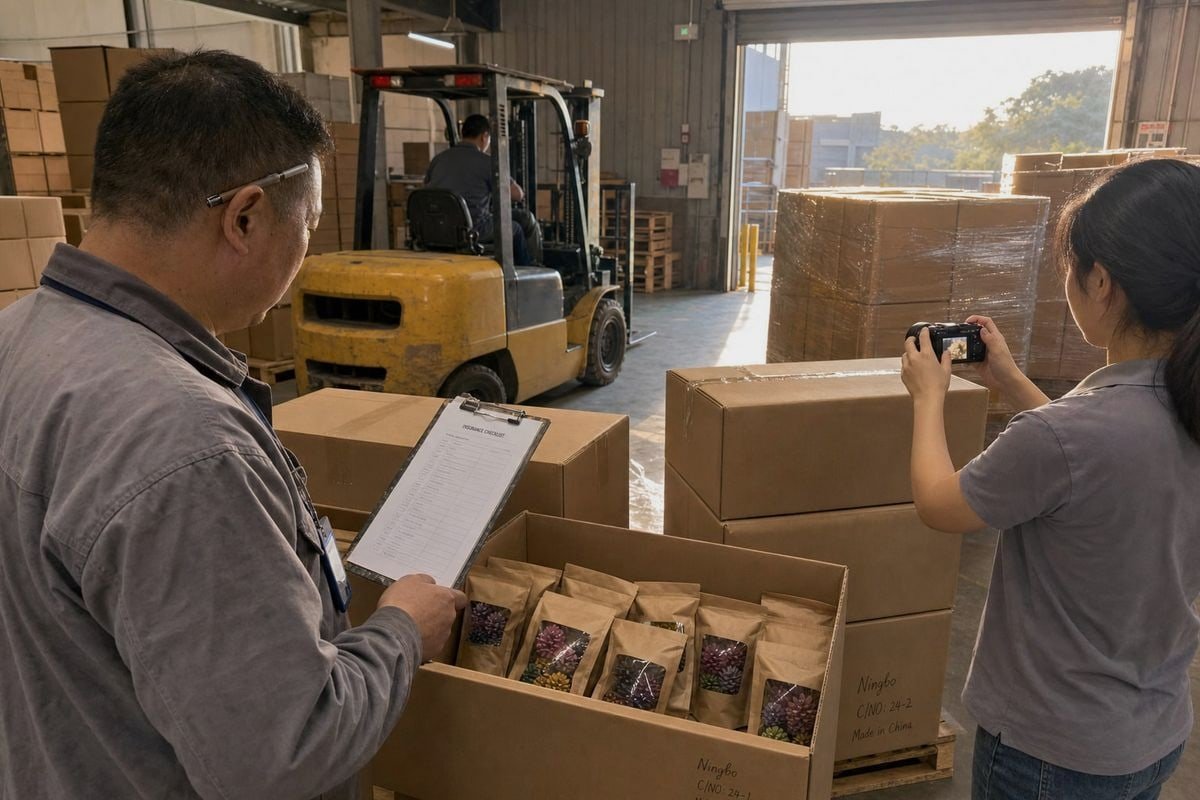
Insuring fireplace colored pine cones shipments from China looks simple until a container arrives crushed, damp, or seized at customs USDA/APHIS 1. I have watched our buyers learn this the hard way.
To insure fireplace colored pine cones shipments from China, buy all-risk marine cargo insurance before the goods leave the supplier's warehouse, cover the full door-to-door route, insure at 110% of CIF value, name yourself as beneficiary, and keep invoices, packing lists, and photos for claims.
That is the short answer. The details matter more. Below, I walk through the coverage options, the math, the paperwork, and the incoterms — in plain English.
What insurance options should I consider when importing color-flame pinecones from China?
At our Ningbo production facility, we pack color-flame pinecones into retail pouches, kraft bags, and display boxes every season. Light cargo, but sensitive cargo — and that shapes your insurance choices.
Importers of color-flame pinecones should compare four options: supplier-arranged insurance, freight forwarder policies, carrier liability, and independent all-risk marine cargo insurance. Independent all-risk coverage (ICC Clause A) offers the broadest protection against crushing, moisture, theft, and handling damage across the entire route.

Colored pinecones create a specific risk profile. The unit value is low, but the cartons are light and easy to crush during consolidation. The mineral colorants tolerate moisture poorly, and damp retail packaging is unsellable even if the product inside still works. So your real exposure is not one catastrophic loss. It is packaging failure, condensation damage, and rough handling at transshipment points. That is why the type of coverage you choose matters so much.
The four options compared
| Option | Who arranges it | Typical coverage | Main weakness |
|---|---|---|---|
| Supplier-arranged (CIF) | Seller in China | Minimum institute clauses 2, port-to-port | Buyer may not be the named beneficiary |
| Freight forwarder policy | Your forwarder | Varies by service contract | Forwarder is not required to insure your cargo |
| Carrier liability | Ocean carrier | Limited by law | Capped near $500 per package under COGSA |
| Independent all-risk cargo insurance | You, via broker or insurer | Door-to-door, ICC Clause A | Requires you to act before departure |
Do not confuse freight forwarder liability with cargo insurance. A forwarder's liability only pays when the forwarder is proven negligent, and the payout is capped by weight, not value. For a container of retail-packed pinecones, that cap is almost meaningless.
Why all-risk still has limits
Some buyers push back and say all-risk sounds like marketing — surely it covers everything? It does not, and that objection deserves a straight answer. All-risk coverage still excludes inherent vice, inadequate packing, and delay losses. In our experience exporting to 30+ countries, insurers scrutinize packing quality first. This is one reason we invest in reinforced export cartons and moisture barriers: a claim denied for "insufficient packing" protects nobody. Ask your insurer in writing which exclusions apply to decorative fire-starting goods, and confirm whether General Average 3 contributions are included. If another shipper's cargo is jettisoned in a maritime emergency, you can be legally billed for a share of the loss even when your pinecones arrive untouched.
How do I calculate the right coverage value for my fireplace pinecone shipments?
A German distributor once asked me why his claim payout came in far below his replacement cost. He had declared a "rounded down" value to save on premium. That shortcut cost him an entire holiday season's margin.
Calculate coverage as 110% of the CIF value: add the invoice cost, the ocean or air freight, and the insurance premium, then multiply by 1.1. The extra 10% covers expected profit and incidental costs. Never declare less than the real invoice value.

The CIF + 10% formula is the industry standard, and it exists for a good reason. If your goods are lost, you lose more than the invoice amount. You lose the freight you already paid, the duty deposit, and the profit you would have earned reselling the pinecones during peak season. The 10% uplift is a rough proxy for those downstream losses.
A worked example
Say you order a mixed container of our color-flame pinecones in kraft pouches and jars.
| Item | Amount (USD) |
|---|---|
| Invoice value (FOB Ningbo) | $22,000 |
| Ocean freight to Long Beach | $2,600 |
| Insurance premium (estimate) | $80 |
| CIF total | $24,680 |
| Insured value (CIF × 1.1) | $27,148 |
| Premium at 0.3% of insured value | ~$81 |
Premiums for standard cargo coverage from China typically run between 0.1% and 0.5% of declared value. One common shortcut formula is cargo value × 1.1 × 0.001, which lands near the low end of that range. Either way, the cost is trivial compared with the exposure. On the table above, full coverage costs less than a single carton of finished product.
Three mistakes that shrink payouts
- Underdeclaring value. Insurers pay based on the declared figure. A low declaration means a low payout, even if your real loss is larger.
- Forgetting import costs. Import duty rates 4 and customs fees paid on a destroyed shipment are lost money. Confirm whether your policy reimburses duties. A full landed cost calculation from factory to warehouse helps you capture every one of these figures before you declare a value.
- Confusing parcel insurance with cargo insurance. Courier parcel insurance can cost 1–3% of package value and follows completely different rules. It is the wrong product for a container or LCL shipment.
For seasonal goods like fireplace pinecones, I also encourage buyers to weigh timing risk. If a December shipment is lost in October, no payout replaces the selling window. Some importers now use parametric insurance 5 riders to hedge against port-of-entry delays and inspection congestion. That is a supply chain risk management decision, not a standard cargo clause — but for peak-season goods, it is worth a conversation with your broker.
What documentation do I need from my supplier to file a cargo insurance claim?
Every export shipment that leaves our factory travels with a document pack we assemble before the truck is loaded. We learned over 17 years that claims are won or lost on paperwork, not on who was actually at fault.
To file a cargo insurance claim, you need the commercial invoice, packing list, bill of lading or air waybill, insurance certificate, a phytosanitary certificate for botanical goods, photos of the damage, the surveyor's report, and a written notice of claim filed within the policy deadline.
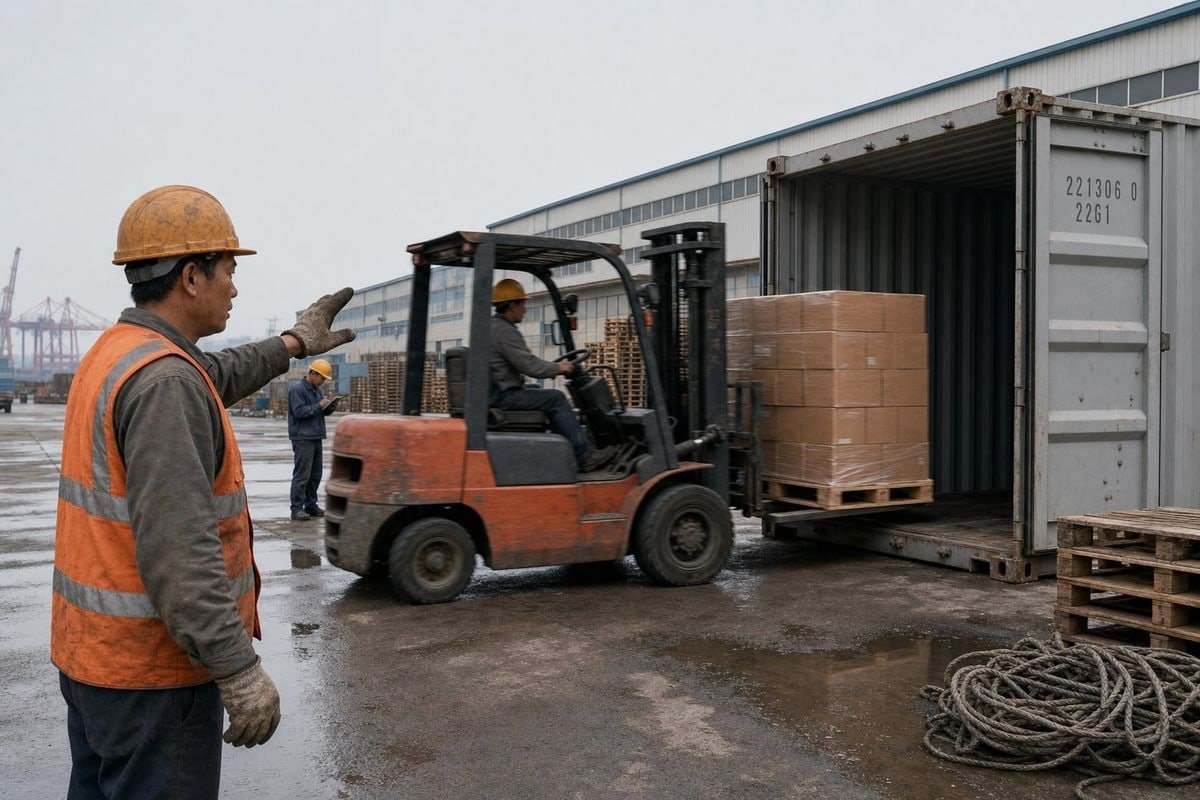
Pinecones are botanical products, and that changes the documentation game. A standard transit damage claim needs commercial documents. But a shipment refused entry over plant-health rules can void your claim entirely if the refusal counts as a compliance failure rather than an insured peril. Get both sets of paperwork right.
The compliance documents that protect your claim
For US-bound shipments, your supplier must provide a Phytosanitary Certificate 6 issued through China's GACC. Without it, USDA/APHIS can order the shipment destroyed at the port — and most cargo policies exclude losses caused by the importer's own compliance failure. Lacey Act 7 declarations matter for the same reason. Declare the genus, species, and country of origin of the pinecones accurately. A seizure caused by a false declaration is not a covered loss; it is a denied claim plus a fine. Our export team prepares these documents alongside SGS and Intertek test reports as standard practice, because our buyers treat compliance as a hard requirement, and so do their insurers.
Also confirm your customs bond 8 is active before arrival. A lapsed bond causes delays, and delay losses are excluded under nearly every cargo policy.
Building a claim-proof file
| Document | Who provides it | Why the insurer needs it |
|---|---|---|
| Commercial invoice | Supplier | Proves the insured value |
| Packing list | Supplier | Shows what each carton contained |
| Bill of lading / AWB | Carrier or forwarder | Proves the goods shipped in good order |
| Insurance certificate | Insurer | Confirms coverage and beneficiary |
| Phytosanitary certificate | Supplier via GACC | Proves regulatory compliance |
| Damage photos, timestamped | You, at delivery | Evidence of loss condition |
| Survey report | Independent surveyor | Independent loss assessment |
Two practical habits make claims faster. First, photograph every damaged carton before you move it, and keep the packaging until the insurer releases it. Second, note the damage on the delivery receipt at the moment of receipt. A clean signed receipt is the single most common reason transit damage claims get denied. Finally, check your notification deadline — many policies require written notice within days, not weeks.
Which incoterms give me the best protection for my colored pinecone orders from China?
When buyers ask us to quote, we always present FOB and CIF side by side, and I explain the difference before they choose. The cheapest-looking term is rarely the safest one for the importer.
FOB with your own all-risk cargo policy gives the best protection for colored pinecone orders. You control the insurer, coverage scope, and beneficiary. Under CIF, the seller buys only minimum coverage, and under DDP, hidden coverage gaps are common. Never assume any incoterm means fully insured.
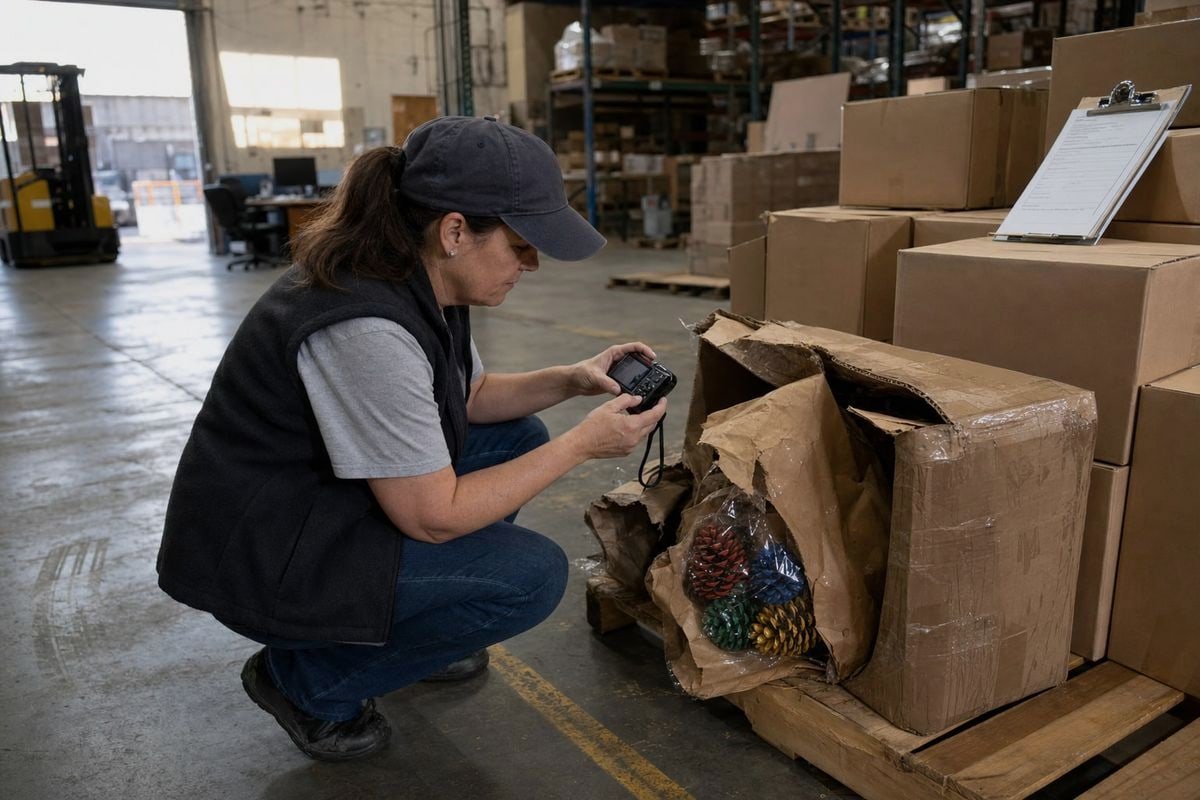
Incoterms decide where risk transfers, not whether anyone actually insured the cargo well. That distinction trips up even experienced purchasing managers.
Incoterms CIF vs FOB, in practice
- FOB (Free On Board): Risk transfers to you when the goods are loaded at the Chinese port. You arrange freight and insurance. Best control, and usually the best pricing on both.
- CIF (Cost, Insurance, Freight): The seller arranges minimum-clause insurance to the destination port only. Coverage often stops at the port, excludes inland legs, and may name the seller as beneficiary.
- EXW (Ex Works): You carry risk from the factory door. Only workable with a strong forwarder and full door-to-door coverage.
- DDP (Delivered Duty Paid): The seller handles everything, but you rarely see the policy. Verify exclusions and the named beneficiary before relying on it.
Some buyers argue CIF is safer because "the seller already insured it." I push back on that. CIF insurance meets the minimum legal standard, typically the narrowest institute clauses. It may not cover theft, wet damage, or transshipment handling — exactly the losses that hit decorative retail-packed goods hardest. Even under CIF, buying your own supplementary all-risk policy is inexpensive and closes the gaps.
Three checks regardless of the term
First, confirm the policy is door-to-door, including loading, unloading, and every transshipment. Damage to pinecone cartons happens most often at transfer points, not mid-ocean. Second, confirm the named beneficiary is you, the importer — not the supplier or the forwarder. Third, insure before departure. No insurer sells coverage on cargo that has already sailed. When we ship under FOB terms, we coordinate handover timing with the buyer's forwarder precisely so their coverage window starts before the container gates in.
Conclusion
Insure fireplace colored pine cones shipments from China with all-risk, door-to-door coverage at 110% of CIF, verified compliance documents, and yourself as beneficiary — before the cargo ever leaves the factory.
Footnotes
1. Wikipedia overview of the USDA's Animal and Plant Health Inspection Service. ↩︎
2. Background on the standardized marine insurance clauses (A/B/C) discussed for CIF coverage. ↩︎
3. Explains the maritime law principle referenced for shared-loss liability in cargo insurance. ↩︎
4. WTO resource on tariffs relevant to import duty costs importers must factor into coverage. ↩︎
5. Defines the alternative insurance model mentioned for hedging seasonal shipment delays. ↩︎
6. Wikipedia entry explaining international standards for phytosanitary certification. ↩︎
7. Official source on the US wildlife and plant trafficking law affecting botanical import declarations. ↩︎
8. Wikipedia entry defining the purpose and types of customs bonds in international trade. ↩︎



 English
  Spanish
  German
  French
  Arabic
  Portuguese
Join the Conversation