







Evaluating a supplier's after-sales service for wood fire starters is where I have seen buyers lose the most money CE marking 1. On our production line, the sale is never the finish line.
Evaluate a supplier's after-sales service for wood fire starters by testing response time, reviewing written warranty and replacement policies, verifying documentation like SDS and certifications, checking claim handling speed, and confirming a named technical support contact — all before signing any bulk purchasing agreements.
A low unit price means nothing if a defective batch sits unresolved for a month. Slow replies, vague warranties, and missing documents quietly destroy your margin. Let me walk you through how to test a supplier's support before you commit, using the same criteria our own buyers apply to us.
What Should I Look for in a Supplier's Response Time When Issues Arise After Delivery?
A German distributor once emailed us at 11 p.m. our time about crushed cartons. Our reply within hours, not days, is why that account still orders today.
Look for a first response within 24 hours, a named contact person with defined working hours, English communication capability, and a documented escalation path. Test this before ordering by sending a mock complaint and timing both the reply speed and the quality of the answer.

Response time is the easiest service metric 2 to measure, yet most buyers never test it. In our 17-plus years exporting to the US, Germany, the UK, and 30 other markets, we have learned that speed alone is not enough. A fast reply that says "we will check" and then goes silent is worse than a slower reply with a real solution. So you should measure two things separately: time to first response and time to actual resolution.
Speed Versus Substance
Technical support responsiveness has two layers. The first layer is acknowledgment. Did someone confirm receipt of your issue within one business day? The second layer is substance. Did that person understand the problem, ask the right questions, and commit to a timeline? A supplier who asks for batch numbers, photos, and moisture readings in the first reply is a supplier with a real process. A supplier who replies "no problem, don't worry" is a red flag.
Benchmark Response Standards
Here is the benchmark table I recommend buyers use when scoring suppliers:
| Metric | Strong Supplier | Acceptable | Warning Sign |
|---|---|---|---|
| First response | Under 24 hours | 24–48 hours | Over 48 hours |
| Resolution plan offered | Within 2 business days | Within 5 days | Vague or none |
| Named support contact | Yes, with hours listed | Shared inbox | No clear owner |
| English fluency | Direct, clear replies | Workable | Constant confusion |
| Time-zone coverage | Overlap with your hours | Partial overlap | None |
Also check how issues are logged. We track every complaint against the batch record from our Ningbo facility, which lets us trace whether a problem is isolated or systemic. Ask your supplier if they can do the same. If they cannot link a complaint to a production batch, they cannot prevent repeat issues, and your resolution time will stretch with every order.
How Do I Know If a Supplier Will Stand Behind Their Wood Fire Starters If a Batch Fails?
Batch consistency is a trade-off we weigh daily: tighter wax-coating tolerances cost more per unit, but they are what make our replacement promises affordable to keep.
A supplier will stand behind a failed batch if they offer a written defect replacement policy, keep batch-level production records, share burn-test and moisture data, and state clearly who pays return freight. Verbal promises without batch traceability are not real guarantees.
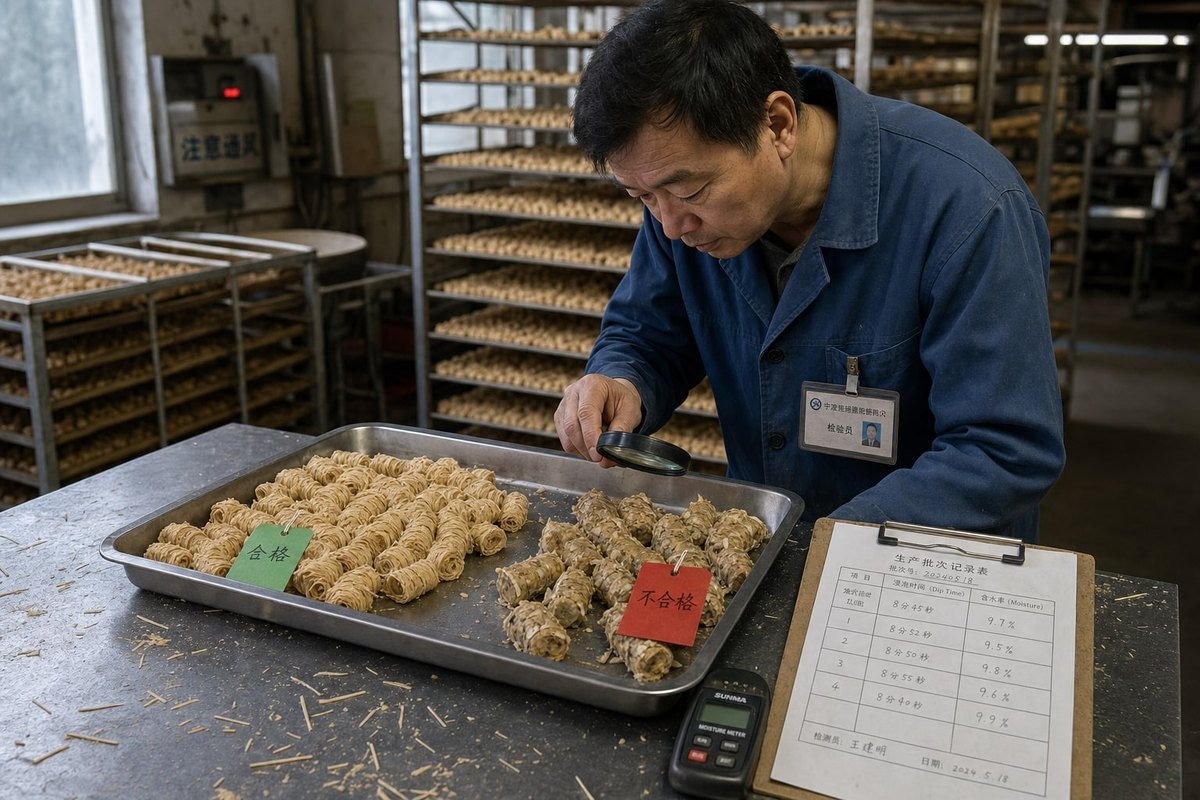
Wood fire starters fail in predictable ways: moisture absorption 3 during shipping, inconsistent wax coverage, weak ignition, or crushed packaging. The question is not whether a problem will ever happen. Across enough containers, something eventually will. The question is what your supplier does next.
Batch Traceability Is the Foundation
At our factory, every production run of wax-dipped wood rolls gets a batch record covering raw material intake 4, wax temperature, dip time, and drying conditions. This matters to you for one simple reason. When a buyer reports weak ignition, we can pull the batch data and confirm whether the issue started in production or in transit. Without that traceability, a supplier can only guess, and guessing suppliers tend to blame the shipping line.
Ask these specific questions:
- Do you keep batch-specific moisture content logs?
- Can you provide burn-test data for each shipment?
- What is your documented product defect rate threshold before a full batch replacement?
- Do you follow recognized fuel-quality references such as ISO 17225-5 standards for densified and processed wood fuels?
What a Real Replacement Commitment Looks Like
A credible supplier defines defect categories in writing before you order. Cosmetic packaging damage, partial moisture exposure, and total ignition failure should each have a stated remedy: credit, partial replacement, or full replacement. They should also state timelines. In our experience, a replacement shipment or credit decision should be committed within five business days of receiving evidence. Suppliers with genuine manufacturing depth can honor this because their product defect rate is low enough that replacements do not threaten their margin. Trading companies often cannot, because they have no control over the factory that made the goods. This is one reason supply chain reliability starts with knowing whether you are dealing with the actual producer.
Can I Trust a Supplier's Warranty and Claims Process Before Placing a Bulk Order?
One lesson from our early export years: buyers do not read warranty terms until something breaks. Now we put ours in writing before the first sample ships.
Trust a warranty only when it exists as a written document specifying claim windows, required evidence, remedy types, freight responsibility, and decision timelines. Verify it by requesting the full warranty claim process in writing and checking references from current customers before any bulk order.

A warranty you cannot read is a warranty that does not exist. Before any bulk purchasing agreements 5 are signed, you should hold a document that answers every foreseeable dispute. If a supplier resists putting terms on paper, that resistance is itself your answer.
The Documents That Prove a Claims Process Is Real
Documentation is where compliant manufacturers separate from the rest. Our buyers in the US and EU treat certification as a hard requirement, not a bonus, and we structure our paperwork accordingly: ISO 9001 quality management 6, BSCI social audit, CE marking, and SGS/Intertek test reports. For fire-starting products specifically, MSDS compliance matters because retailers and customs authorities may request safety data sheets 7 at any point. Some buyers also ask about FSC certification and other eco-friendly certifications for wood-based materials, especially in Germany and the Netherlands where sustainability claims face real scrutiny.
Here is a pre-order verification checklist in table form:
| Item to Request | Why It Matters | Red Flag If Missing |
|---|---|---|
| Written warranty terms | Defines remedies before disputes | Claims become negotiations |
| Claim evidence requirements | Photos, batch codes, quantities | Supplier can reject anything |
| Freight responsibility clause | Return shipping costs add up | Hidden cost lands on you |
| SDS and test reports | Retail and customs compliance | Shipment holds, delisting risk |
| Decision timeline | Keeps claims from stalling | Open-ended "under review" |
| Customer references | Proof of past claim handling | No verifiable track record |
Test the Process, Not the Promise
Run a small trial order first and treat it as a service audit. File a minor documentation request mid-shipment. Ask a technical question about storage humidity. Note how each interaction is handled. A supplier's behavior on a small order under no pressure predicts their behavior on a large order under real pressure. We encourage trial orders with flexible MOQs for exactly this reason: it lets both sides prove themselves before scale.
What Questions Should I Ask to Confirm a Supplier Offers Reliable Technical Support After the Sale?
When buyers visit our Liuyang headquarters, the sharpest ones arrive with a question list. Their questions about our processes tell me they will be excellent long-term partners.
Ask who owns after-sales issues, what the average response and resolution times are, which documents accompany each shipment, how recurring complaints are tracked, whether storage and handling guidance is provided, and how lead time consistency is maintained during peak season. Demand specific, written answers.
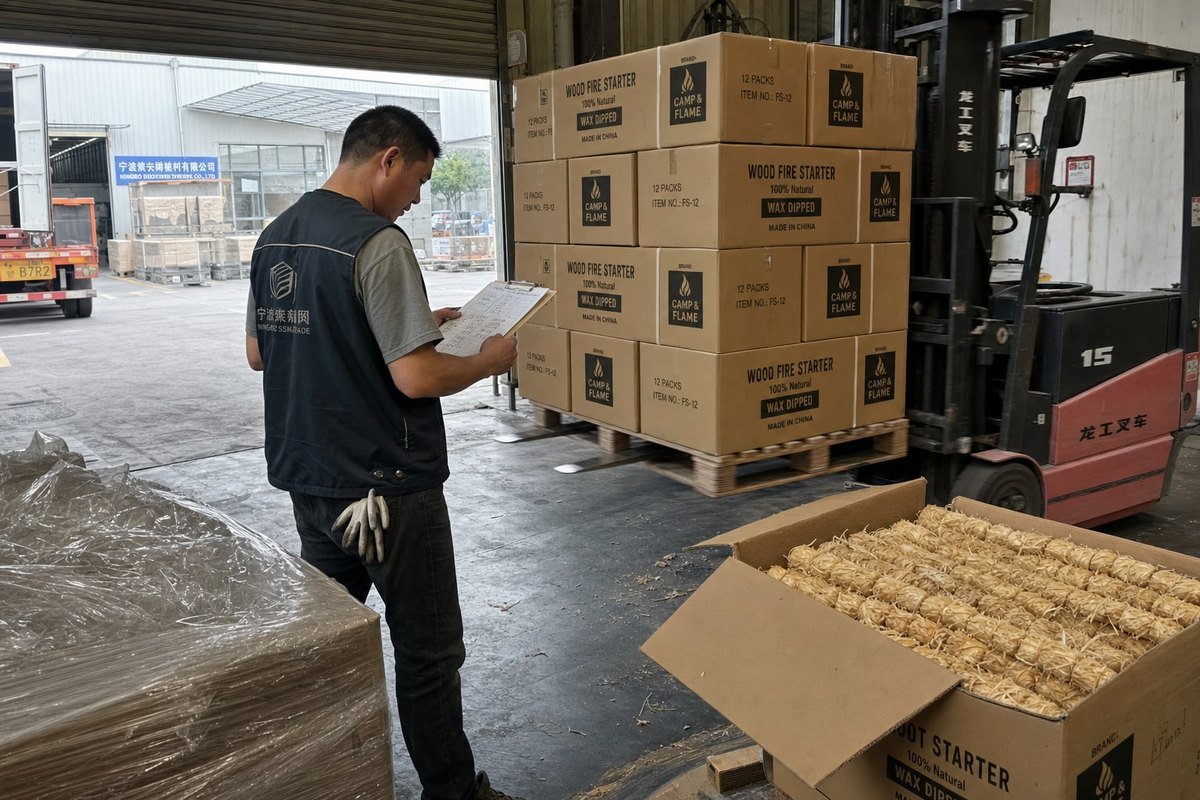
Good questions force specific answers, and specific answers expose weak suppliers fast. Vague questions like "do you offer good support?" invite the answer "yes" and teach you nothing. Structure your questions around measurable commitments instead.
The Core Question Set
Use this list in your supplier evaluation call or email:
- Who handles after-sales issues by name, and during what hours?
- What is your average first-response time and average resolution time?
- What is your defect replacement process, step by step?
- Which documents ship with every order — packing lists, test reports, safety data sheets?
- How do you track recurring complaints and feed them back into production?
- What happens if goods arrive with compromised packaging or moisture exposure?
- Do you offer credit, replacement, or refund for confirmed defects, and who decides?
- How do you protect lead time consistency during Q4 peak demand?
- Can you provide references from current customers in my market?
- Do you support private-label buyers with product guidance, warning labels, and usage content?
Score the Answers, Not the Charm
Weight each answer and build a simple scorecard. In our experience supplying outdoor brands and BBQ distributors across Europe and North America, the suppliers who survive long-term relationships are the ones whose answers are boring, specific, and consistent across different staff members. If the sales manager and the QC contact give you conflicting answers about the same claims process, the process does not really exist. One more practical tip: ask how support connects to production. Our support loop feeds complaint data back to the line in Ningbo, so a packaging issue reported by a Canadian buyer changes the carton spec for every future order. That closed loop is what "reliable technical support" actually means. It is problem prevention, not just problem response.
Conclusion
Weak after-sales service quietly erases every cent saved on unit price. Test response times, demand written warranties, verify documentation, and score answers — then choose the supplier who proves support before the sale.
Footnotes
1. Official European Union guidance on product compliance and safety standards for goods sold in the EEA. ↩︎
2. Explains the use of performance indicators to measure and evaluate service quality in business operations. ↩︎
3. Authoritative Wikipedia entry explaining how materials attract and hold water molecules from the environment. ↩︎
4. Reliable Wikipedia overview of basic substances used in the primary production or manufacturing of goods. ↩︎
5. Describes long-term procurement contracts used to manage high-volume purchasing and supply chain stability. ↩︎
6. Comprehensive Wikipedia guide to the international standard for quality management systems. ↩︎
7. Detailed Wikipedia explanation of documents listing occupational safety and health information for various substances. ↩︎



 English
  Spanish
  German
  French
  Arabic
  Portuguese
Join the Conversation