







Getting the brand address and country-of-origin on private label packaging wrong can freeze your shipment at customs responsible party's name 1. I have watched it happen to buyers before they found our factory.
Private label packaging must show two separate disclosures: your brand's real physical business address with a qualifier like "Distributed by" or "Manufactured for," plus a conspicuous "Made in [Country]" origin mark in English. The brand address never replaces origin marking, and origin marking never replaces the address.
These two requirements confuse many first-time importers. This guide walks through the legal rules, correct placement, and the extra information your packaging needs before it ships.
What legal requirements must I meet when labeling country-of-origin on my private label fire products?
A German distributor once asked us to leave "Made in China" off his color-flame pinecone cartons entirely. We had to explain why that request would have cost him the whole container.
Imported private label fire products must carry a legible, conspicuous, permanent country-of-origin mark in English, such as "Made in China," under U.S. Customs and Border Protection rules. The mark must appear on the item's immediate packaging that reaches the end consumer, and a foreign manufacturer address alone does not satisfy it.
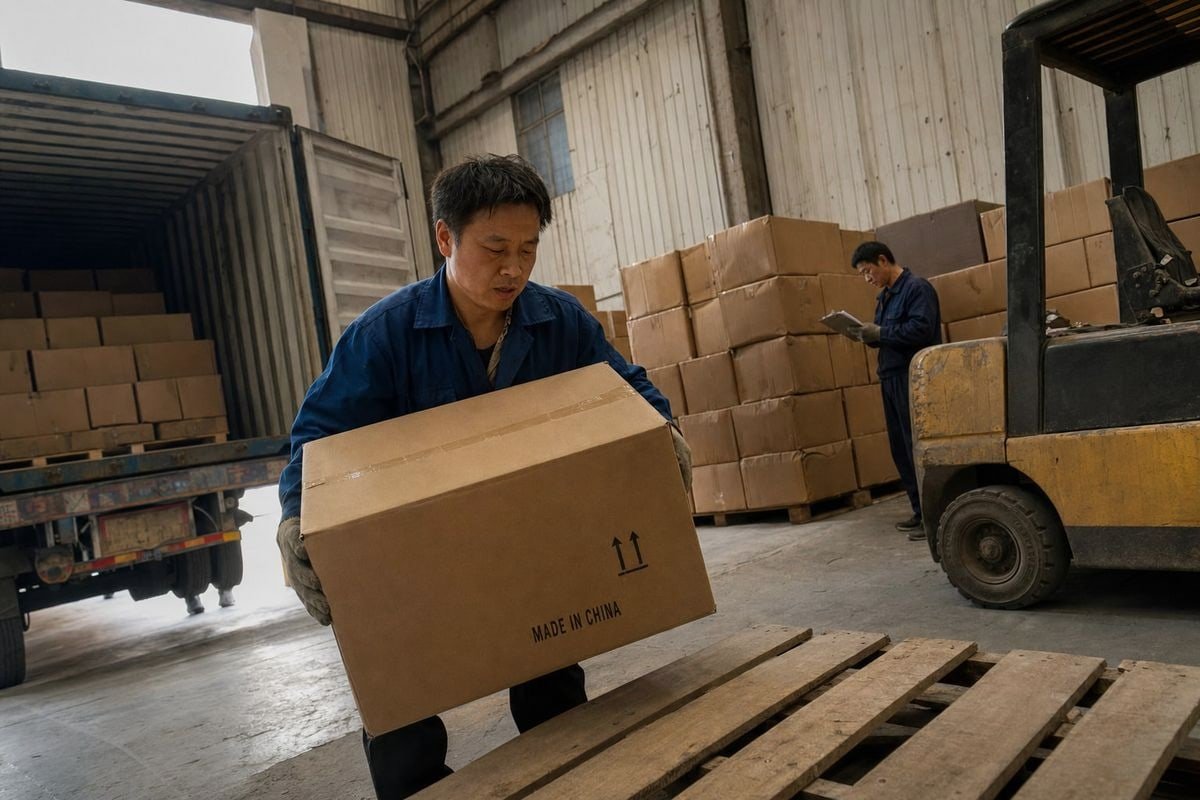
Origin marking is a customs requirement, not a branding choice. When our color-flame packets, pinecones, and firestarters leave Ningbo for the US, Customs and Border Protection 2 expects every retail unit to declare where it was made. The same logic applies in the EU and UK, where consumer protection law and customs documentation must line up with what the package says.
The substantial transformation test
Origin is determined by where the product was last substantially transformed. Our color-flame pinecones are collected, treated, colored, and packed in China, so the origin is unambiguous: China. But if you import our bulk product and repack it in the US, repacking alone does not change origin. The retail pouch still needs "Made in China." We have corrected more than one artwork file where a buyer assumed domestic repacking 3 earned a domestic origin claim. It does not.
Watch the Made in USA trap
The FTC applies an "all or virtually all" standard to Made in USA claims. If your product contains our Chinese-made color-flame packets 4, an unqualified USA origin claim invites FTC enforcement. FTC compliance guidelines allow qualified claims like "Packaged in USA with imported materials," but the wording must be precise.
| Requirement | US (CBP/FTC) | EU | UK |
|---|---|---|---|
| Origin mark mandatory on imports? | Yes, conspicuous and in English | Required in practice via customs docs and safety rules | Yes, aligned with UKCA-era rules |
| Acceptable format | "Made in China" / "Product of China" | "Made in [Country]" in market language | "Made in [Country]" in English |
| Determination method | Substantial transformation | Last substantial processing | Last substantial processing |
| Domestic-origin claims | "All or virtually all" standard | National rules apply | CMA guidance applies |
Where should I place my brand address and manufacturer details on color-flame packaging to stay compliant?
Every artwork file that reaches our pre-press team gets checked for one thing first: is the responsible-party block grouped correctly, or scattered wherever the designer found empty space?
Place your brand name and full physical address on the Principal Display Panel or the information panel, grouped with other mandatory text. Use a street address, city, state or region, and postal code. Add "Distributed by" or "Manufactured for" if your brand is not the physical manufacturer.

The Fair Packaging and Labeling Act established the logic most product labeling regulations still follow: consumers must be able to identify the business responsible for the product and where that business is located. For our private label buyers, that means the label identifies them — the brand owner and importer of record — not our factory, unless they choose to disclose it.
The address format that passes review
A P.O. box alone does not work. FDA labeling requirements for regulated goods demand a physical place of business 5, and the same expectation has spread across consumer goods generally. Our artwork checklist requires four elements: street address, city, state or region, and ZIP or postal code. The street line may sometimes be omitted if your business appears in a public directory, but we advise buyers to include it anyway. It removes any argument at inspection.
Qualifying phrases matter
If your brand did not make the product, the label needs a relationship qualifier. Here is how we set them up for buyers:
| Qualifier | When to use it | Example |
|---|---|---|
| Distributed by | You buy finished goods and resell under your brand | Distributed by FlameCo LLC, 123 Oak St, Denver, CO 80202 |
| Manufactured for | Product is made to your specification under contract | Manufactured for FlameCo LLC, 123 Oak St, Denver, CO 80202 |
| Imported by | Common in EU/UK where an importer address is mandatory | Imported by FlameCo GmbH, Musterstr. 5, 10115 Berlin |
Panel placement
On our stand-up kraft pouches, the responsible-party block sits on the back information panel 6, near the warning text and barcode. On drawstring burlap sacks, we print it on a sewn-in or adhesive label since burlap holds fine text poorly. Outer cartons repeat the same information, because a master carton with mismatched details raises flags at customs.
Can Sunrich help me design compliant labels that meet US, EU, and UK import regulations?
Seventeen years of exporting fire products to 30+ countries has taught our team one thing: label compliance is easier to build in than to bolt on after printing.
Yes. Sunrich provides one-stop OEM/ODM label support covering responsible-party address blocks, origin marking, warning labels, barcodes, and language translation for US, EU, and UK markets. Our ISO 9001, BSCI, CE, and SGS/Intertek-backed process includes pre-print artwork compliance review before mass production.
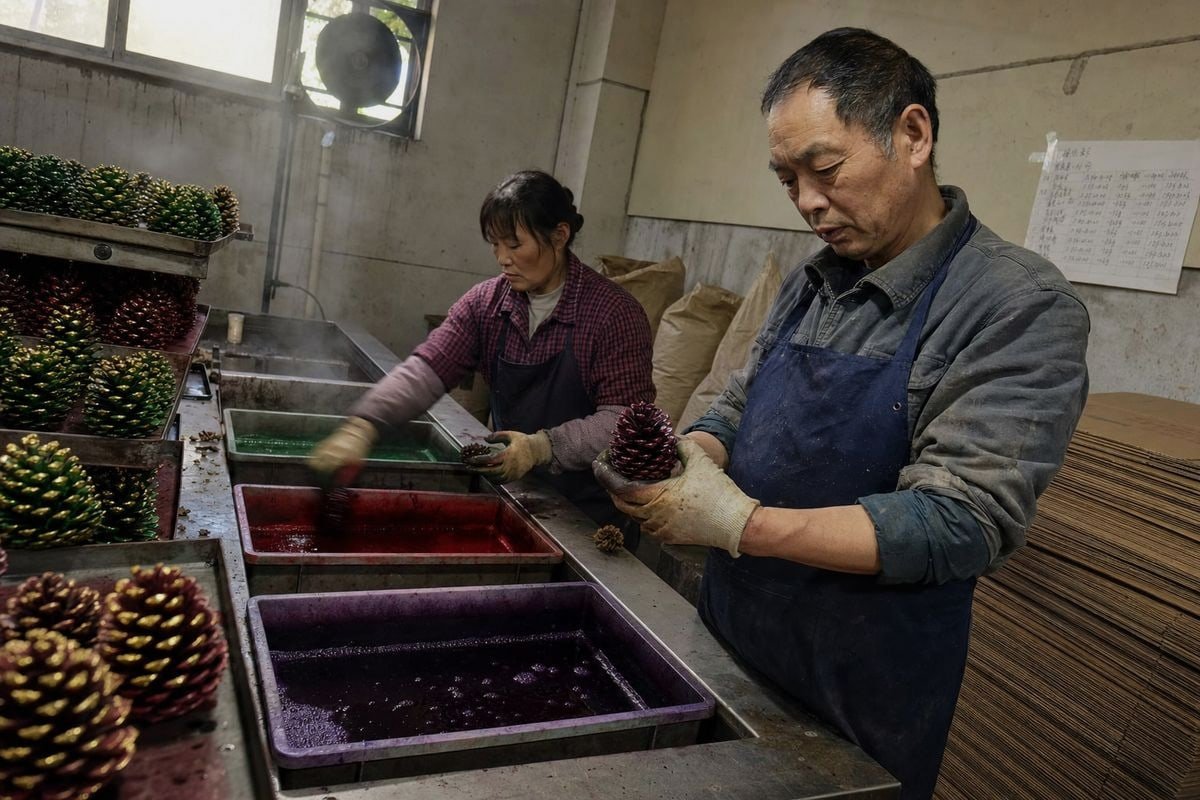
Compliance is a hard requirement for our buyer base, not a nice-to-have, so we structured our private-label service around it. When a US fireplace distributor or a UK camping brand sends us artwork for color-flame pinecones or Magic Fire packets, our process runs like this:
- Regulatory scoping. We confirm the destination markets and flag which rules apply — CBP origin marking and FTC compliance guidelines for the US, importer-address requirements for the EU, and UK-specific wording.
- Artwork audit. We check the Principal Display Panel and information panel layout: address block complete, origin mark conspicuous, warning text legible at the required size, barcode zone clear.
- Translation and localization. EU shipments often need warnings in German, French, Dutch, or Polish. We handle multilingual panels so one SKU can serve several markets.
- Documentation matching. The label, the test reports, and the customs paperwork must tell the same story. Our SGS and Intertek reports name the actual origin 7 and product composition, so nothing on the package contradicts the file.
- Sample sign-off. You approve a physical printed sample before mass production. Because our batch-to-batch quality control is strict, the first sample reliably reflects what ships.
One practical option more buyers now request: modular dual-origin layouts, where the origin line and address block sit in a fixed, easily swapped zone. If tariffs or sourcing shift, only that zone changes — not the whole design. We also advise on legibility, using high-contrast typography so origin and contact details stay readable for all consumers, including visually impaired ones.
What information besides country-of-origin do I need to include on private label warning labels and packaging?
The trade-off we weigh on every small pouch is the same: buyers want maximum branding space, but regulators want maximum mandatory text. Both can fit if you plan early.
Beyond origin marking, private label fire product packaging needs the responsible party's name and address, product identity, net quantity, safety warnings and usage instructions, age or supervision advisories, a scannable barcode, and any market-specific compliance marks. All mandatory elements must be legible and properly grouped.

Fire-related products carry more mandatory text than most consumer goods, and this is where generic e-commerce templates fail. Sellers copy a label built for supplements or cosmetics, then wonder why their color-flame packets get questioned at import. The categories differ. Product labeling regulations for a fireplace additive center on safety communication, not nutrition panels.
The full checklist we apply
| Element | What it covers | Where it goes |
|---|---|---|
| Product identity | What the item is, in plain terms | Principal Display Panel |
| Net quantity | Count or weight of contents | Bottom third of the PDP |
| Responsible party | Brand name plus full physical address | Information panel |
| Origin mark | "Made in China" or equivalent | Conspicuous, near address block works well |
| Safety warnings | Keep away from children, not for cooking fires, ventilation notes | Information panel, prominent |
| Usage instructions | How to add the product to a fire safely | Information panel or insert |
| Barcode | EAN/UPC matched to your listing | Clear zone, no texture interference |
| Compliance marks | CE or market-specific marks where applicable | Information panel |
Practical lessons from our packaging lines
Warning text must survive the material. On our kraft stand-up pouches with clear windows, matte textured finishes can swallow fine print, so we set minimum font sizes above the legal floor. On wax torches and wood firestarters, we often add a hang tag when the product surface cannot carry text.
Language matters too. For the US, English is required. For the EU, warnings go into each destination market's official language. We build multilingual panels so distributors covering Germany, France, and the Netherlands can run one print job.
Finally, keep the label honest against your test reports. Our eco-friendly, no-harmful-chemicals formulation is backed by SGS and Intertek testing, so buyers can make that claim on-pack with documentation behind it. A claim you cannot evidence is a recall waiting to happen. Some of our larger retail buyers are also preparing for Digital Product Passport-style QR codes that link the package to supply chain records — worth reserving artwork space for now.
Conclusion
Compliant private label packaging discloses who stands behind the product and where it was made. Get both right before printing, and your fire products clear customs and reach shelves smoothly.
Footnotes
1. The primary US statute requiring the disclosure of the business responsible for a consumer product. ↩︎
2. Official government regulation for country of origin marking requirements. ↩︎
3. Explains the role of packaging and labeling in the supply chain and consumer protection. ↩︎
4. FTC guidelines regarding domestic origin claims for products containing imported components. ↩︎
5. Regulatory standard for identifying the physical location of a business on product packaging. ↩︎
6. Technical definition of the information panel used for mandatory regulatory disclosures on packaging. ↩︎
7. Authoritative source for product compliance, testing, and certification of origin. ↩︎



 English
  Spanish
  German
  French
  Arabic
  Portuguese
Join the Conversation