







Every week, buyers ask me whether a Magic Fire powder price they received is fair CE marking 1. Quotes vary wildly, specs look identical, and one wrong sourcing call can wreck a season's margin.
A Magic Fire powder price is reasonable when it aligns with quotes from 3–5 verified suppliers, survives a should-cost check of raw materials and packaging, and stays competitive after freight, duties, certification, and compliance costs are added—not simply when it is the lowest number.
That single sentence hides a lot of work. So let me walk you through the same checks I recommend to our own distributor partners, step by step.
What certifications should I expect a fair Magic Fire powder price to include?
A German fireplace distributor once showed me two quotes for identical-looking sachets hazardous-material shipping 2. One was 40% cheaper. It also came with zero test reports. That gap was not a coincidence—our compliance files exist for a reason.
A fair Magic Fire powder price should already include SGS or Intertek third-party test reports, MSDS safety documentation, CE marking for European markets, and proof of ISO 9001 quality management. If a supplier charges extra for these—or cannot provide them—the quote is incomplete, not cheap.
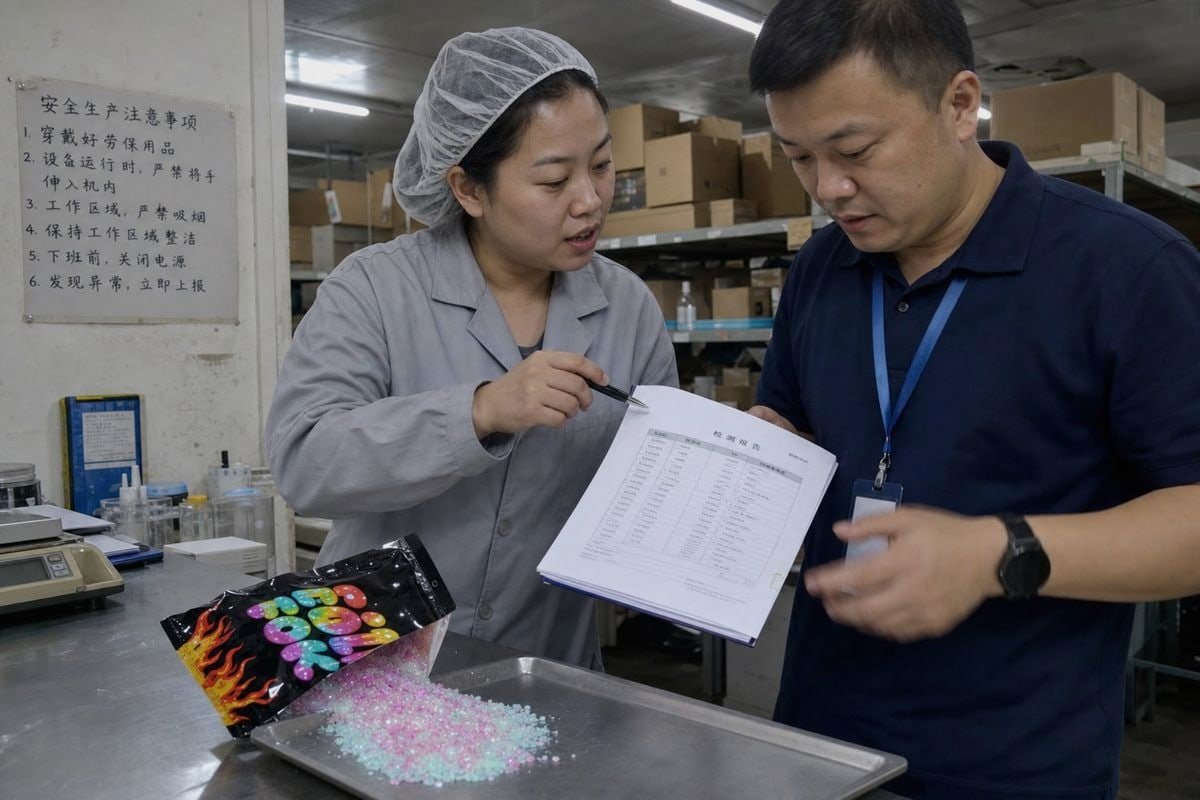
Certification is not paperwork decoration. It is a real cost that a serious factory builds into every unit. When we run batch testing at our Ningbo production site, each round of third-party verification adds measurable cost per container. A supplier quoting far below market either skipped those tests or is passing untested product to you.
The core documents to demand before comparing any price
Here is what I tell purchasing managers to request up front, before they even look at the number on the quote:
| Document | What it proves | Risk if missing |
|---|---|---|
| SGS / Intertek test report | Product composition and heavy-metal safety | Customs seizure, retail delisting |
| MSDS (Safety Data Sheet 3) | Safe handling and shipping classification | Carrier refusal, liability exposure |
| CE marking 4 (EU) | Conformity for European sale | Fines, forced recall in the EU |
| ISO 9001 certificate | Consistent quality management system | Batch-to-batch variance |
| BSCI audit report | Ethical factory conditions | Retail chain rejection |
Large retail channels—the Home Depot–type accounts many of our clients supply—treat these as hard gates. No documents, no purchase order. So a quote without them is not comparable to a quote with them.
How compliance changes the "real" price
Think of it this way. If a compliant quote is $0.50 per sachet and a bare quote is $0.35, you are not saving $0.15. You are buying $0.15 worth of risk: rejected shipments, retailer chargebacks, and in the worst case, a safety incident tied to your brand. In my experience exporting to 30+ countries, the documented quote almost always wins on total cost.
How do I compare quotes when suppliers use different packaging and MOQs?
Our sales team quotes Magic Fire packets in plastic bags, kraft stand-up pouches, and jars—each at different MOQs. I know firsthand how confusing that looks from the buyer's side of the table.
Normalize every quote to a cost-per-gram or cost-per-burn basis at the same delivery point, currency, and Incoterm. Then adjust for MOQ cash commitment and packaging value. Only after quotes share one common denominator can you judge which Magic Fire powder price is actually lower.
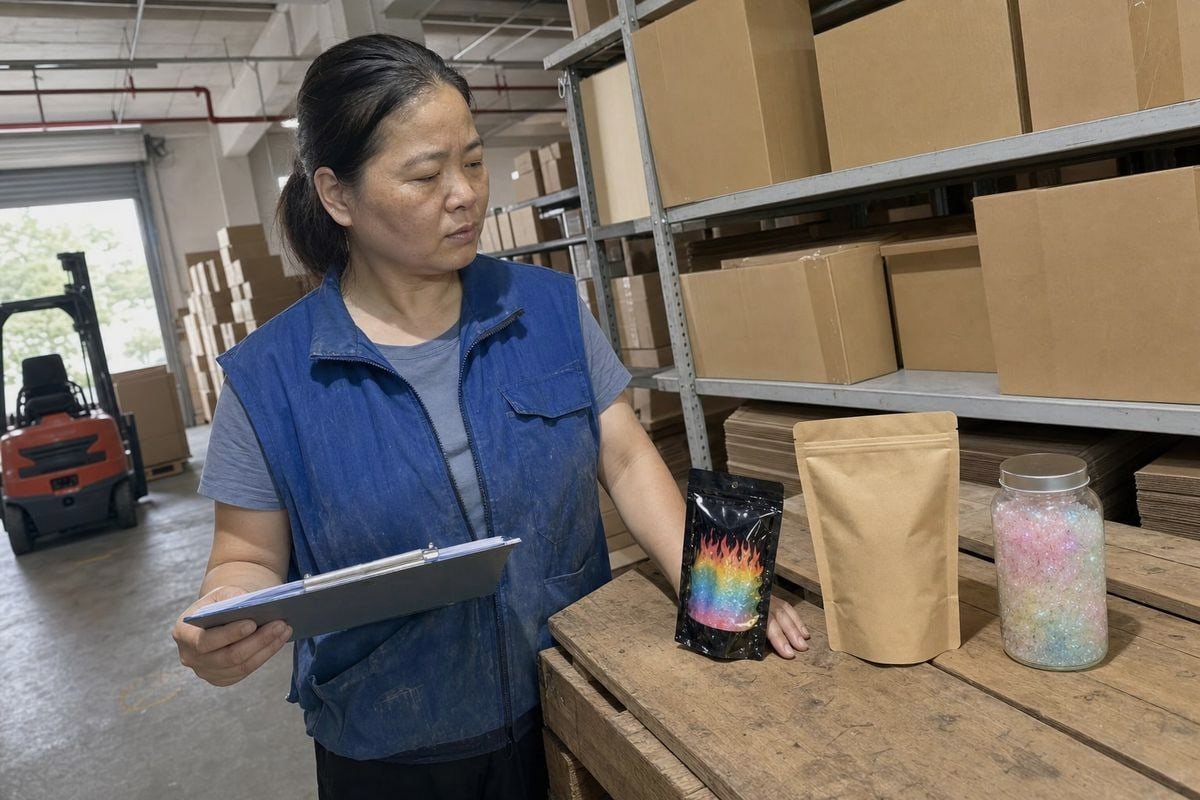
Quotes are only comparable when the specification behind them is identical. In practice, they almost never are. One supplier quotes a 25g single-use sachet, another a 15g sachet, a third a bulk jar. One quotes FOB Ningbo, another EXW, another includes DDP shipping. Comparing those raw numbers is meaningless.
A simple normalization process
Follow this sequence before making any judgment:
- Convert to one unit. Divide the quoted price by net powder weight to get cost per gram. Better yet, calculate cost per minute of colored flame if burn times are stated.
- Convert to one currency. Use the same exchange rate and date for all quotes.
- Convert to one delivery basis. Ask every supplier to quote the same Incoterm 5—FOB at the same port is the cleanest baseline.
- Align quantities. Request pricing at the same volume tier, or ask for the full tiered price list.
- Value the packaging. A retail-ready display box with barcodes and warning labels is worth more than bulk polybags. Assign it a realistic per-unit value.
Why MOQ changes the true cost
A low unit price at a 50,000-unit MOQ can be worse than a slightly higher price at 5,000 units. Your cash is tied up, your warehouse fills, and a slow-selling SKU becomes dead stock. That is why we offer flexible trial-order MOQs to new distributor partners—testing the market first is worth a few cents per unit. When you compare quotes, put the total cash commitment next to the unit price. Both numbers matter.
Years ago, a Canadian importer told me he chose a bargain supplier over us, then paid nearly a third extra in surprise hazmat freight surcharges. His landed cost 6 ended up higher than our original quote.
Hidden costs that inflate a cheap quote include hazardous-material shipping surcharges of 15–30%, unlisted testing and labeling fees, seasonal price spikes of 20–40%, customs duties, storage, and rework on defective batches. Always calculate the full landed cost before declaring any Magic Fire powder price cheap.
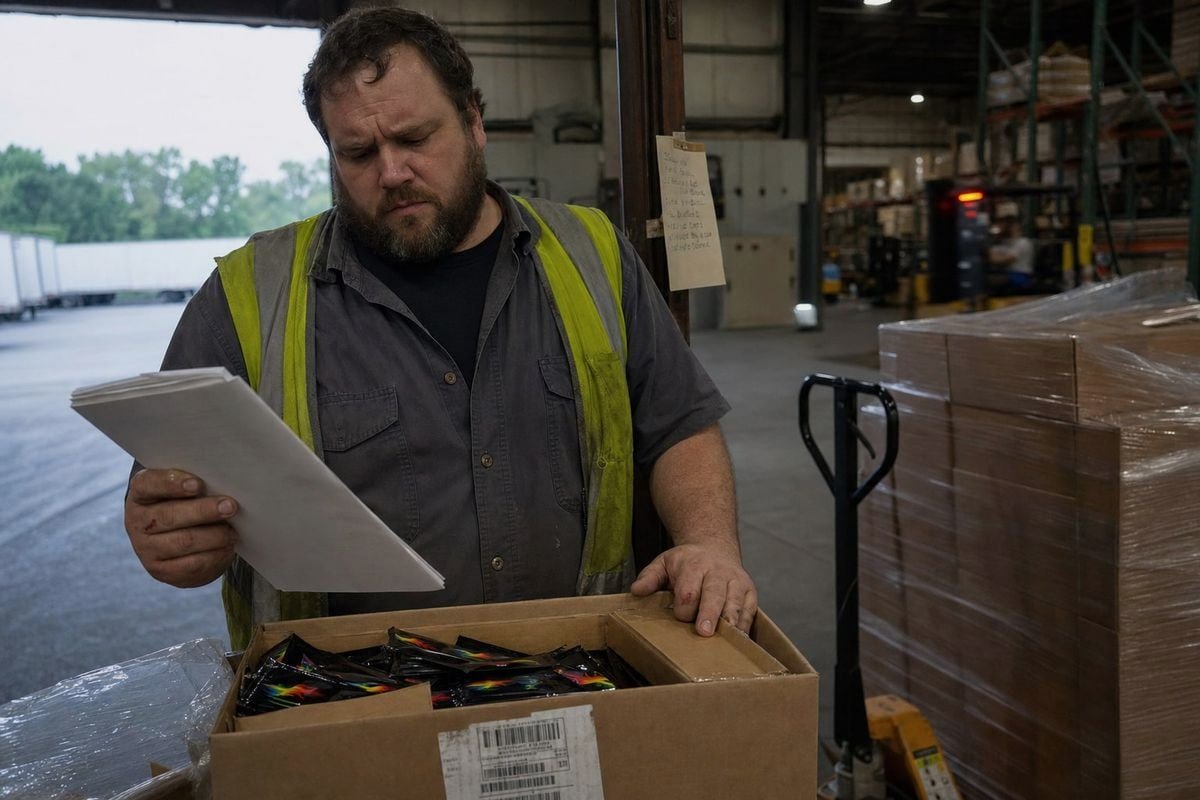
The visible unit price is the tip of the iceberg. Landed cost and total cost of ownership decide what you actually pay. In our seventeen-plus years shipping color-flame products worldwide, the buyers who model landed cost up front are the ones who keep stable margins.
The landed cost stack
Build your comparison around a table like this for every quote:
| Cost layer | Typical impact | Common trap |
|---|---|---|
| Ex-factory unit price | Baseline | Only number most buyers compare |
| Hazmat / chemical shipping class | +15–30% on freight | Quoted as "standard cargo," reclassified at port |
| Testing & certification fees | Varies per shipment | Charged as a surprise add-on after PO |
| Retail packaging, labels, barcodes | Per-unit add | Quoted price was for bulk polybags only |
| Import duties & taxes | Market-dependent | Wrong HS code 7 assumed in quote |
| Storage & inventory carrying | Grows with MOQ | Ignored when chasing volume discounts |
| Defects, rework, returns | Unpredictable | Zero QC budget in cheap quotes |
Timing costs are real too
Prices for fire-color products often spike 20–40% during peak bonfire and holiday seasons, independent of production costs. A quote gathered in the off-season may not hold when you actually order. We lock pricing for our long-term partners for exactly this reason—predictability is part of the product. Ask any supplier how long their quote is valid and whether seasonal surcharges apply. If the answer is vague, budget for the spike.
How can I tell if a low price means compromised quality or compliance?
When we develop a new colorant blend, our QC team burns samples from every batch and checks flame color against the previous run. That discipline costs money—and its absence is exactly what a suspiciously low price usually signals.
Test physical samples for flame color intensity, burn duration, and residue. Then demand an itemized cost breakdown, verify colorant purity grade, inspect certifications, and audit the production setup. If a supplier resists any of these checks, the low price is funded by cut corners.

There are legitimate reasons for price gaps. Industrial-grade versus reagent-grade colorant purity alone can create a genuine 2–3x difference between suppliers. Automated mixing facilities also price differently from small manual workshops. Your job is separating legitimate gaps from dangerous ones.
Legitimate versus suspicious price differences
| Signal | Legitimate low price | Suspicious low price |
|---|---|---|
| Cost breakdown | Itemized, explains the gap | Refused or vague |
| Colorant grade | Clearly stated purity level | "Same as everyone else" |
| Sample vs. bulk | First sample matches mass production | Great sample, inconsistent bulk batches |
| Certifications | Current, verifiable documents | Expired, missing, or "in process" |
| Production setup | Automated mixing, batch QC records | Manual workshop, no traceability |
| Explanation | Volume deal, off-season, simpler packaging | No explanation offered at all |
The sample test that settles it
Never skip physical samples. Burn them side by side. Check whether the flame color is vivid or washed out, whether the stated burn duration holds, and whether the residue is clean. Our own standard is that the first sample must reliably reflect mass-production quality—complete production lines and batch-to-batch controls make that possible. A supplier who sends a hand-tuned "golden sample" and ships something different is the most expensive mistake in this category. Order a small trial batch after the sample, and test units pulled randomly from that batch. If quality drops between sample and trial order, walk away no matter how attractive the price looks.
Conclusion
A reasonable Magic Fire powder price passes three tests: market comparison, should-cost logic, and landed-cost review—backed by certifications and verified samples.
Chasing the lowest quote invites rejected shipments, hidden fees, and brand damage. Instead, normalize every quote, demand documentation, test samples, and model the full landed cost. Do that, and the right supplier becomes obvious. After 17+ years supplying compliant color-flame products to distributors in 30+ markets, I can tell you the buyers who follow this discipline rarely regret their sourcing decisions—and their margins prove it.
Footnotes
1. Background reference on CE marking conformity requirement mentioned as a compliance gate. ↩︎
2. Background on hazardous materials classification affecting freight surcharges described in article. ↩︎
3. Explains MSDS/Safety Data Sheet purpose for chemical handling and shipping classification. ↩︎
4. CE marking is an EU regulatory requirement referenced as a compliance standard for suppliers. ↩︎
5. Trade authority context for Incoterms used in normalizing supplier quotes for comparison. ↩︎
6. Background concept explaining total landed cost calculation central to the article's advice. ↩︎
7. WTO resource on Harmonized System codes relevant to import duties trap mentioned. ↩︎



 English
  Spanish
  German
  French
  Arabic
  Portuguese
Join the Conversation