







Getting net weight and dosage specs right for magic fire powder is harder than it looks. On our production line, we see buyers burned by vague listings, mismatched packet sizes, and gross-weight confusion every week.
To determine net weight and dosage specs for magic fire powder, confirm the net weight per packet (typically 10g–30g), the recommended packets per fire, and the expected burn time per gram. Then verify these figures with supplier test reports and per-batch weight tolerance documentation.
That short answer covers the basics. But each of those steps hides real decisions. Let me walk you through them one by one, using what we see from real B2B orders.
How do I calculate the right net weight per packet for my target burn time and flame color intensity?
A distributor in Germany once asked us why his 10g trial packets burned out in minutes while a competitor's 25g version lasted much longer. The answer was simple math — math our factory runs daily.
Divide your target burn time by the burn rate per gram of the formula. Most magic fire powder burns roughly 1–3 minutes per 5 grams in a standard campfire, so a 25g packet typically delivers 20–45 minutes of visible color effect.

Burn time is not linear across all fire sizes. A 10g packet in a small fireplace performs very differently from the same packet in a large bonfire. In our 17+ years making color-flame products in Liuyang and Ningbo, we have learned that buyers need to anchor three variables together: fire size, packet weight, and expected effect duration.
Start with your end user's fire
Ask yourself who lights the fire. A camping brand's customer uses a fire pit. A fireplace distributor's customer uses an enclosed hearth. The heat profile changes how fast the powder consumes.
Here is the reference table we share with new B2B buyers during sampling:
| Packet Net Weight | Typical Fire Type | Approximate Color Duration | Best Use Case |
|---|---|---|---|
| 10g | Small fireplace, tabletop fire | 10–20 minutes | Trial packs, party favors |
| 15g | Standard fireplace | 15–30 minutes | Gift sets, festival traders |
| 25g | Campfire, fire pit | 25–45 minutes | Core retail SKU |
| 30g | Large campfire | 30–60 minutes | Outdoor/camping brands |
| 60g | Bonfire, extended sessions | 60+ minutes | Premium or event use |
Intensity is a formula question, not just a weight question
More grams do not automatically mean brighter color. Color intensity depends on the metal-salt concentration 1 in the formula. Two 25g packets from different factories can look completely different in the flame. So when you calculate net weight, always test a sample in a realistic fire first. Then scale the packet weight to hit your target duration. We calibrate our own formulas so that burn time scales predictably with weight — that predictability is what you should demand from any supplier.
What dosage specs should I confirm with my supplier to ensure consistent color-flame performance across every batch?
Batch-to-batch drift is the silent killer of repeat sales. Early in our export history, we tightened our QC after seeing how strictly European importers audit consistency — and that lesson shaped our entire production process.
Confirm five specs in writing: net weight per packet with tolerance range, colorant concentration percentage, granule size range, moisture content limit, and packets-per-fire usage instruction. Require your supplier to document these on every batch's quality control record.

Dosage specs for magic fire powder are not medical dosing. They define how much product goes into each packet and how much each packet delivers in the fire. If any one spec drifts between batches, your customers notice — the flames look weaker, the burn ends sooner, or the packet feels light in hand.
The five specs and why each one matters
First, net weight tolerance. A packet labeled 25g should never contain 21g. Ask for the filling tolerance, typically written as ±0.5g or ±2%. Our filling lines are checked against calibrated scales at set intervals per shift, and we log the results. Your supplier should do the same.
Second, colorant concentration. This determines flame vividness. It should be a fixed percentage of the formula, held constant across production runs.
Third, granule size. Fine powder burns fast and flashes. Coarse granules burn slow and steady. A consistent granule range keeps burn behavior uniform.
Fourth, moisture content 2. Damp powder clumps, ignites poorly, and mutes the color effect. This matters even more if you ship to humid markets like Brazil or the Middle East, where we route many orders.
Fifth, the usage instruction itself. Many products, including ours, are designed to be tossed into the fire as sealed, unopened packets. If the packet is the dose, the packet weight must be exact — because your customer cannot compensate by adding "a bit more."
A simple spec sheet template
| Spec Item | What to Request | Red Flag |
|---|---|---|
| Net weight per packet | Target ± tolerance (e.g., 25g ± 0.5g) | No tolerance stated |
| Colorant concentration | Fixed % held per batch | "Formula may vary" |
| Granule size | Defined mesh/size range | No answer given |
| Moisture limit | Maximum % with test method | Not tested |
| Usage instruction | Packets per fire size, sealed or loose | Vague "add as needed" |
How can I match net weight and packaging size to my retail price point and shelf display requirements?
Packaging decisions come up in nearly every OEM conversation we have. One US camping brand wanted a hero SKU at $4.99; a UK gift trader wanted a $1.99 impulse buy. Same powder, very different packets.
Match packet net weight to your price tier: 10g–15g sachets for impulse buys under $3, 25g–30g packets for core SKUs at $4–$8, and multi-packs or 60g formats for premium shelf positions. Then align packaging format to the retail channel's display fixtures.
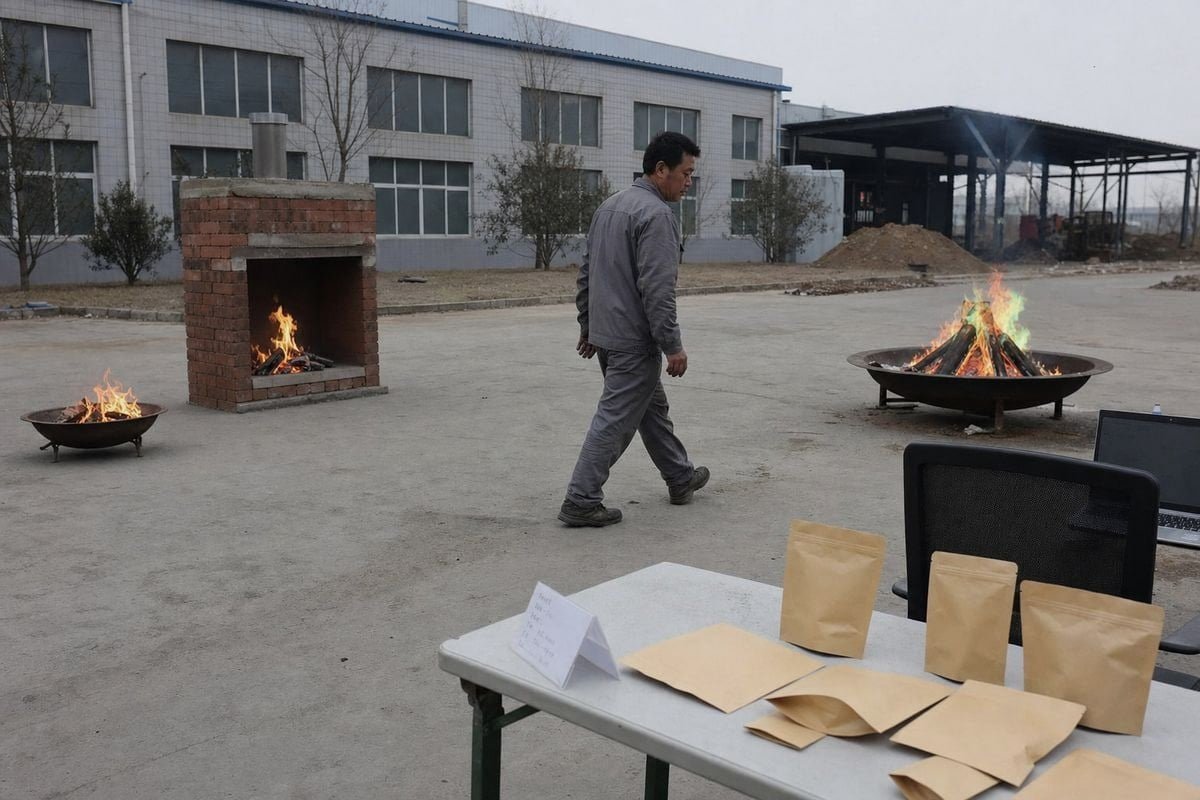
Net weight is a merchandising decision as much as a technical one. The market is fragmented on purpose. Sellers on different platforms — marketplace listings, big-box retail, outdoor specialty stores — optimize pack sizes for their own price architecture. Your job is to reverse that logic: start from your target shelf price, then work backward to the net weight and packaging that support it.
Work backward from the price point
Calculate your landed cost per gram first. Then test which packet weight lets you hit your target margin at your target retail price. A 25g packet in a printed foil sachet costs more per gram to produce than a 60g pouch, because packaging and filling costs are semi-fixed per unit. Smaller packets carry higher packaging cost as a percentage of total cost — but they also unlock lower price points and impulse purchases.
Match the format to the fixture
We produce Magic Fire in plastic bags, kraft stand-up pouches, and plastic jars, and we build custom display boxes for retail. Each format suits a different shelf reality:
| Packaging Format | Typical Net Weight | Best Retail Fit | Display Style |
|---|---|---|---|
| Foil sachet | 10g–30g | Checkout counter, gift shops | Counter display box, hang tabs |
| Kraft stand-up pouch | 25g–60g | Outdoor/camping aisles | Shelf-standing, peg hooks |
| Plastic jar | 60g+ | Fireplace specialty, premium | Shelf-standing |
| Multi-pack box | 3–10 sachets | Big-box retail, online bundles | Shelf-ready case packs |
Do not forget the label real estate
Your packet must fit the net weight statement, usage instructions, warning text, and barcode — often in multiple languages for EU markets. A tiny 10g sachet leaves little room. We handle this in our one-stop OEM process by designing the warning label, barcode placement, and net content statement together, so the artwork passes retail compliance checks the first time. If your supplier treats labeling as an afterthought, expect rejected shipments at the retailer's receiving dock.
What documentation should I request to verify net weight accuracy and dosage compliance before placing a bulk order?
Paperwork is where good sourcing decisions get protected. When we onboard a new importer, the compliance file is usually the first thing their team asks for — before price, and rightly so.
Request the supplier's ISO 9001 certificate, third-party test reports from labs like SGS or Intertek, a batch weight inspection record showing fill tolerances, a signed product specification sheet, and pre-shipment inspection results confirming net weight and labeling accuracy.

Documentation separates a real factory from a trading company reselling unknown stock. Before you wire money for a bulk order, build a verification file. Here is the sequence I recommend, based on how our own export customers audit us.
The five-step verification process
-
Request the quality system certificate. ISO 9001 3 shows the factory runs documented processes, including filling and weighing controls. We also hold BSCI 4 for social compliance, which many European retailers now require from every supplier in the chain.
-
Get third-party test reports. SGS 5 or Intertek reports verify the product is what the spec sheet claims. For fire products entering the EU, CE-related documentation 6 matters too. Intertek 7 Ask for reports tied to the actual product, not a generic certificate.
-
Ask for batch weight records. A serious factory logs fill-weight checks during production. Request a sample record from a recent batch. It should show target weight, measured weights, and tolerance limits.
-
Sign a product specification sheet. This is your contract-level document. It locks in net weight per packet, tolerance, colorant concentration, packaging, and labeling. Both parties sign it before mass production.
-
Verify at pre-shipment inspection. Either use a third-party inspector or request weighed samples with photos. Independently weighing packets on arrival with a simple scale is cheap insurance — some private-label products round up their stated weights, and you do not want to discover that after your retail customer does.
Distinguish the weights in shipping documents
One final trap: shipping documents show gross weight, which includes cartons and packing materials. A carton listed at 1.5kg gross may contain far less actual product. Always reconcile the net content on your spec sheet against the packing list before signing off.
Conclusion
Vague listings and gross-weight confusion cost buyers real money. Anchor every magic fire powder purchase to verified net weight per packet, documented dosage specs, and batch-level proof — then order confidently.
Footnotes
1. Explains the chemistry behind how metal salts produce different flame col



 English
  Spanish
  German
  French
  Arabic
  Portuguese
Join the Conversation