







A tiered wholesale pricing system for wood fire starters can quietly destroy your margins. I've watched buyers negotiate our wax-dipped wood rolls into unprofitable territory before we fixed our ladder.
Design a tiered wholesale pricing system for wood fire starters by anchoring breaks to case, half-pallet, and full-pallet quantities, offering 5–15% volume-based discounts across 3–4 tiers, and validating that every tier preserves at least 30% gross profit margin after landed costs.
That is the short answer. The rest of this article breaks it down step by step, using the same logic we apply on our own production line.
What order volume breakpoints should I use when structuring tiered pricing for wood fire starters?
A German distributor once asked me why our price breaks sat at odd-looking numbers. The answer was simple: our breaks follow carton and pallet math, not round figures.
Set breakpoints at physical logistics units: one case (100–200 pcs) for trial orders, 10–20 cases for a half-pallet tier, a full pallet for the third tier, and multi-pallet or container volume for the top tier with the deepest price breaks.
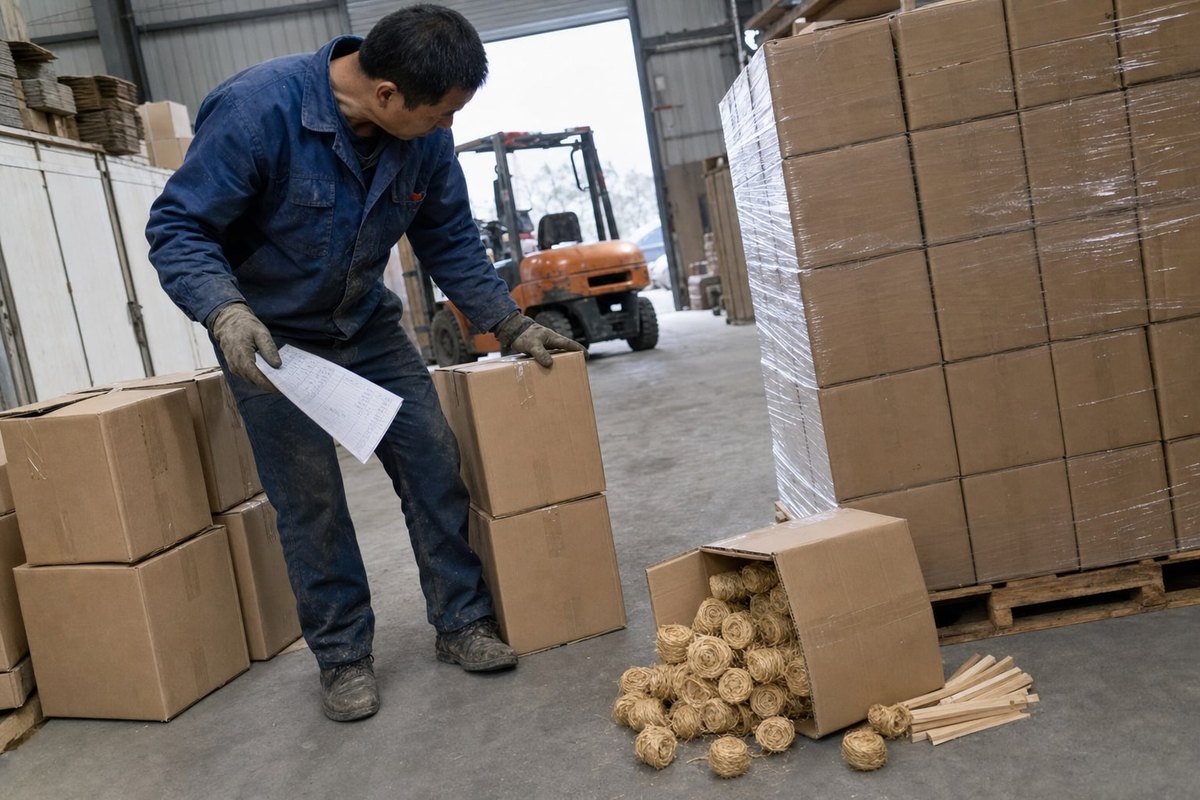
Breakpoints only work when they map to real behavior. In our export business, wood fire starters ship in master cartons 1, and cartons stack onto pallets. If your tier thresholds ignore that, you create half-empty pallets, wasted freight, and confused buyers. So start with your packaging reality, then build the ladder.
Align tiers with how the product actually ships
Wood-wool fire starters are light but bulky. Freight cost per unit drops sharply when a buyer fills a pallet, and again when they fill a container. Your breakpoints should sit exactly where those savings kick in. That way, every discount you give is funded by a real cost reduction, not by your gross profit margin.
Here is a structure we often recommend to importers in the US and Europe:
| Tier | Volume Range | Logistics Unit | Typical Discount |
|---|---|---|---|
| Tier 1 | 1–9 cases | Loose cartons | Base wholesale price |
| Tier 2 | 10–19 cases | Half-pallet | 5–7% off base |
| Tier 3 | 20–39 cases | Full pallet | 8–12% off base |
| Tier 4 | 40+ cases | Multi-pallet / container | 13–15% off base |
Make each jump meaningful
Notice the jumps get proportionally smaller as volume rises. The move from Tier 1 to Tier 2 asks a buyer to roughly 10x their commitment. Tier 2 to Tier 3 only asks for a doubling. This mirrors how buyer risk works. A new distributor testing your fire starters takes a big leap going from trial cartons to a stocking order. A proven account topping up a pallet takes almost none. Keep the tier count at 3–4. Five or more tiers confuse purchasing managers and slow down decisions. Also consider seasonal breakpoints: off-season stocking tiers in spring and summer, with slightly better pricing, help stabilize your cash flow and your factory's production schedule.
How do I calculate per-unit cost savings to set fair discounts at each pricing tier?
Early in our export history, we quoted volume-based discounts by gut feel. Then a large Dutch order taught us a hard lesson: without a landed-cost model, discounts are guesses.
Calculate the full landed cost per unit — product, inbound freight, duties, packaging, warehousing, and overhead — then measure how each cost falls at higher volumes. Pass through 50–70% of the actual savings as a discount, keeping the rest as margin protection.

Fair discounts start with honest math. Manufacturing cost alone tells you almost nothing. A wood fire starter that costs $0.40 to produce might carry another $0.25 in freight, packaging, and handling by the time it reaches a US warehouse. If you discount off the production cost, you go underwater fast.
Build the landed-cost stack first
Add up every cost that touches the unit. For wax-dipped wood rolls, the stack usually looks like this:
| Cost Component | Example (per unit) | Scales with Volume? |
|---|---|---|
| Product cost (kiln-dried wood 2, wax) | $0.40 | Slightly |
| Inbound ocean freight | $0.12 | Yes — strongly |
| Duties and clearance | $0.05 | No |
| Retail packaging and labeling | $0.08 | Slightly |
| Warehousing allocation | $0.06 | Yes |
| Overhead allocation | $0.09 | Yes |
| Total landed cost | $0.80 | — |
Now model the same stack at pallet and container volume. Freight per unit may fall from $0.12 to $0.06. Warehousing and overhead spread across more units. Suppose the total saving at Tier 3 is $0.10 per unit. A fair discount passes through $0.05–$0.07 of that, not all of it.
Check margin at every rung
Then validate the ladder against your gross profit margin. If your base wholesale price is $1.30 against an $0.80 landed cost 3, you hold a 38% margin. A 12% discount at the top tier drops the price to $1.14, but landed cost also falls to about $0.70 — margin stays near 39%. That is the goal: discounts that reflect real savings keep margin flat or better. This margin floor should be a non-negotiable rule for your sales team. In our factory, no quote leaves the office below the floor without a director's sign-off. Also benchmark against retail markup: your wholesale price should sit around 40–50% of MSRP so retailers can still apply their keystone markup and stay competitive on shelf.
What MOQ should I set for my lowest pricing tier to attract trial orders from new distributors?
One thing I have learned from 17+ years of quoting importers across 30+ countries: a rigid minimum order quantity kills more first deals than price ever does.
Set your entry MOQ at one master case — typically 100–200 fire starter units or 10–20 retail boxes — priced at full base wholesale. This covers handling costs, lets new distributors test sell-through with minimal risk, and keeps trial orders profitable.
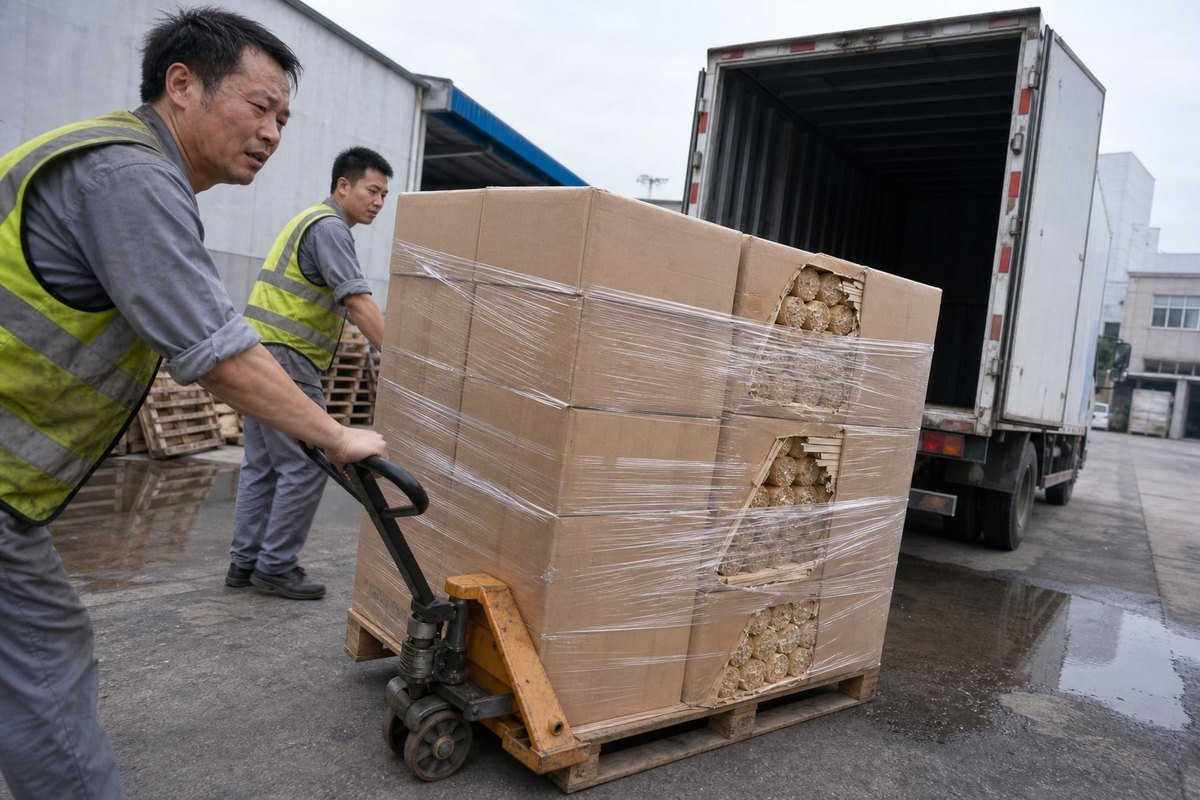
Your lowest tier is a marketing tool, not a profit center. Its job is to remove risk for a new buyer while covering your fulfillment cost. Get it wrong in either direction and you lose. Too high, and cautious purchasing managers walk away. Too low, and every trial order costs you money in picking, paperwork, and export documentation.
Price the trial tier to cover real handling costs
Wood processing carries a high labor-to-value ratio. Cutting, shredding, rolling, and wax-dipping each unit takes hands-on work, and the administrative cost of a wholesale shipment — invoicing, labels, customs paperwork 4 — is nearly the same for one case as for ten. wholesale trade 5 So the entry tier must carry full base pricing with zero discount. Buyers accept this. In our experience exporting to the US and Germany, serious distributors expect to pay more per unit on a trial. What they actually negotiate is flexibility, not price.
Make the trial order easy to say yes to
A few tactics make the entry tier work harder:
- Keep it at one case. A single master carton of 100 pcs boxes is easy to approve without a committee.
- Bundle a POS asset. Including a branded counter display or wooden crate in the opening order reduces the retailer's perceived risk and speeds up shelf placement.
- Offer mixed SKUs. Let a trial case combine fire starters with kindling sticks or color-flame products so the buyer tests a range.
- Set a clear upgrade path. Tell the buyer exactly what Tier 2 unlocks — for example, "reorder 10 cases and your unit price drops 6%."
- Time-limit nothing. Trial pricing should be standing policy, not a promotion, so buyers trust the structure.
The entry MOQ is also where compliance matters most. New distributors checking a supplier for the first time want SGS or Intertek test reports and CE documentation before they commit even one case. A low MOQ paired with full certification is the strongest trial offer you can make in this category.
How can I negotiate volume-based pricing with my manufacturer without sacrificing quality or lead times?
Sitting on the factory side of these negotiations for years, I can tell you exactly which volume requests we say yes to — and which ones force a quiet cut in quality somewhere.
Negotiate volume pricing by requesting a tiered quote with locked specifications, agreeing on annual committed volume rather than one huge order, and confirming in writing that materials, burn time, and lead times stay fixed at every price level.
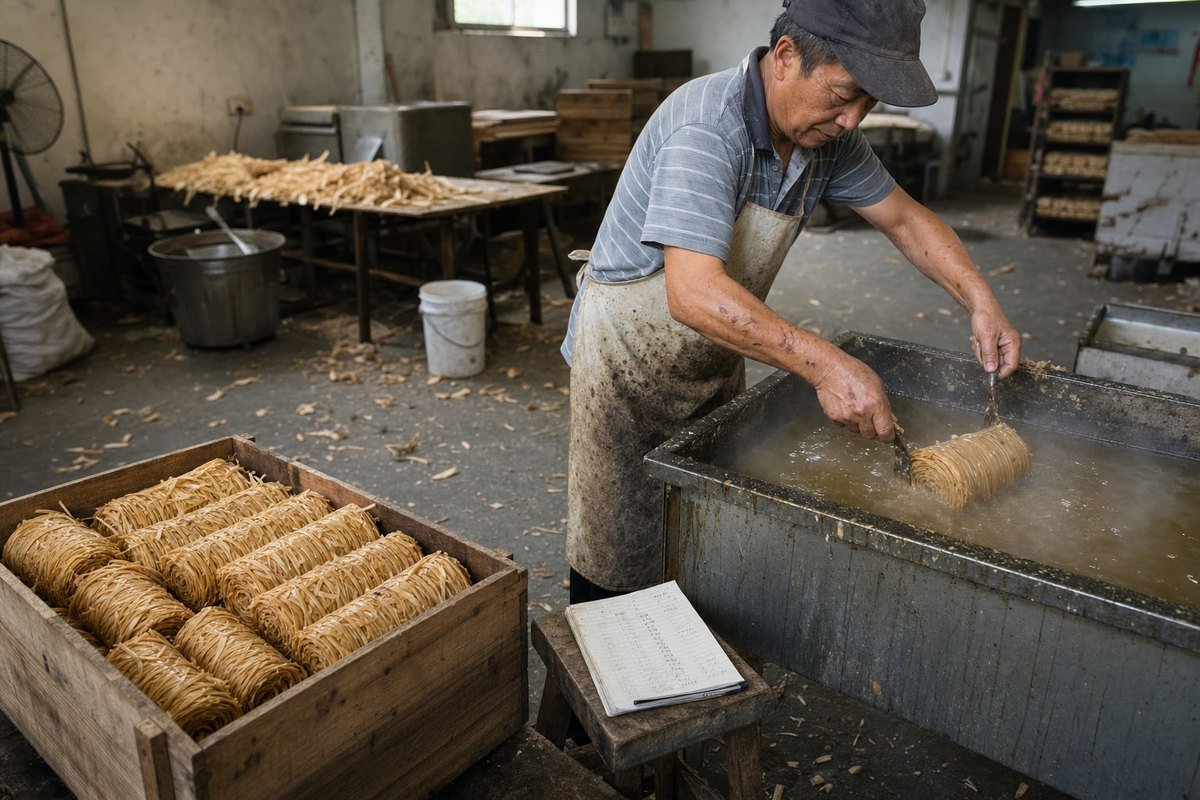
Factories can lower prices two ways: through genuine efficiency, or through invisible downgrades. Bigger production runs genuinely cut cost — less machine setup, better raw material buying, fuller containers. But if a buyer pushes past those savings, a weaker supplier will thin the wax coating, switch to greener wood instead of properly kiln-dried wood, or shave the unit weight. The product still looks the same in photos. It just burns for four minutes instead of eight.
Anchor the negotiation to specifications, not just price
Before discussing numbers, lock the spec sheet: wood type and moisture content, wax ratio (for example, 50% wood fiber and 50% paraffin), unit weight, burn time, and packaging. Then ask for a tiered quote against that fixed spec. Any manufacturer with real depth — complete production lines and batch-to-batch quality control 6 — can show you where their costs genuinely fall at volume. If a factory offers a huge discount without explaining the source of the savings, treat that as a warning sign.
Trade commitment, not just quantity
The strongest lever you hold is predictability. A guaranteed annual volume, shipped in scheduled releases, is worth more to a factory than one giant speculative order. It smooths their production planning, so they can price it better without touching quality. Consider these negotiation trades:
| What You Offer | What You Should Ask For |
|---|---|
| Annual committed volume with quarterly releases | Lowest tier pricing on every shipment, regardless of size |
| Off-season production windows | Deeper discount or lower per-release minimums |
| Top-tier container volume | Free or freight-inclusive shipping terms |
| Long-term contract (12–24 months) | Private label manufacturing and custom packaging at no tooling premium |
| Consolidated SKUs per shipment | Priority production slots and protected lead times |
Also verify compliance before you verify price. ISO 9001, BSCI 7, and third-party test reports tell you the factory can hold quality at scale. This is core to any sound B2B pricing strategy 8: the cheapest quote from an uncertified workshop is not a price advantage — it is a recall risk. Finally, put lead times in the contract with remedies. For bulk distribution into seasonal retail, a pallet arriving three weeks late in November is worth less than a smaller order arriving on time in September.
Conclusion
Build your tiered wholesale pricing system on landed costs, pallet-aligned price breaks, a low-risk trial MOQ, and spec-locked negotiations. Discounts should reward volume — never subsidize it.
Footnotes
1. Standard definitions for bulk packaging units used in international shipping. ↩︎
2. Technical research on the importance



Join the Conversation