







IP ownership for co-branded wood fire starters trips up more buyers than pricing ever does. I have watched our OEM clients discover, too late, that nobody owns the packaging they paid for.
Define IP ownership by separating background IP from foreground IP in the purchase contract. State that each party keeps pre-existing marks, then expressly assign or license new packaging, artwork, product names, and formulas to one named owner, with quality control, territory, and post-termination rules.
That is the short answer. The rest of this article breaks it into four practical questions our buyers ask us before signing. Let's take them one at a time.
What Contract Clauses Should I Include to Protect My Private-Label Design Rights?
A few years back, a German distributor sent us artwork for a wax-dipped wood roll line and asked a smart question first: who owns this design once your factory prints it? Our production team in Ningbo hears that question far too rarely.
Include an IP definition clause, a background IP schedule, an express assignment of new designs upon payment, a trademark licensing agreement limited to the product line, quality control and approval rights, non-contest language, and an indemnification clause covering third-party infringement claims.

Most purchase contracts for fire starters focus on price, MOQ, and lead time. IP gets one vague sentence, if that. In our 17+ years supplying private-label fire products to the US and Europe, the disputes we have seen almost never come from product quality. They come from ambiguous ownership of the creative assets on the box.
The Core Clause Set
Here is how I explain it to buyers. Your contract needs to answer three questions in plain language: what existed before, what is new, and who owns each piece. Everything else is detail.
| Clause | What It Does | Why Buyers Need It |
|---|---|---|
| Background IP schedule | Lists each party's pre-existing marks, templates, and know-how | Prevents the factory from claiming your logo, and you from claiming its process |
| Foreground IP assignment | Assigns new artwork, slogans, and packaging to you on payment | Makes you the sole owner of what you funded |
| Trademark licensing agreement 1 | Grants the factory a narrow right to apply your mark during production only | Stops residual use after the order ends |
| Quality control clause | Gives you approval rights over every print run | Protects trademark validity and brand identity guidelines |
| Non-contest clause | Bars the supplier from challenging your ownership | Blocks the classic "we filed it first" problem |
| Indemnification clause | Allocates liability if the design infringes a third party | Decides who pays for the lawsuit, not just who caused it |
Assignment Beats Vague Sharing
Avoid phrases like "shared branding rights." They sound cooperative but decide nothing. If you paid for the packaging design, ask for a full assignment on creation or on payment. If we contribute template elements from our library, we carve those out as background IP and license them to you for that SKU. Both sides know exactly where they stand, and nobody argues about it two years later when the line succeeds.
How Do I Ensure My Manufacturer Cannot Resell My Custom Formula to Competitors?
One trade-off we weigh constantly at our factory: buyers want custom burn times and wax blends, but they also want assurance that a competitor cannot order the identical spec next month. That tension is solvable, but only in writing.
Use a trade secret protection clause classifying the formula as your confidential information, an exclusivity provision barring the factory from producing it for others, sublicensing restrictions, a defined confidentiality term surviving termination, and post-termination innovation restraints with clear penalties for breach.
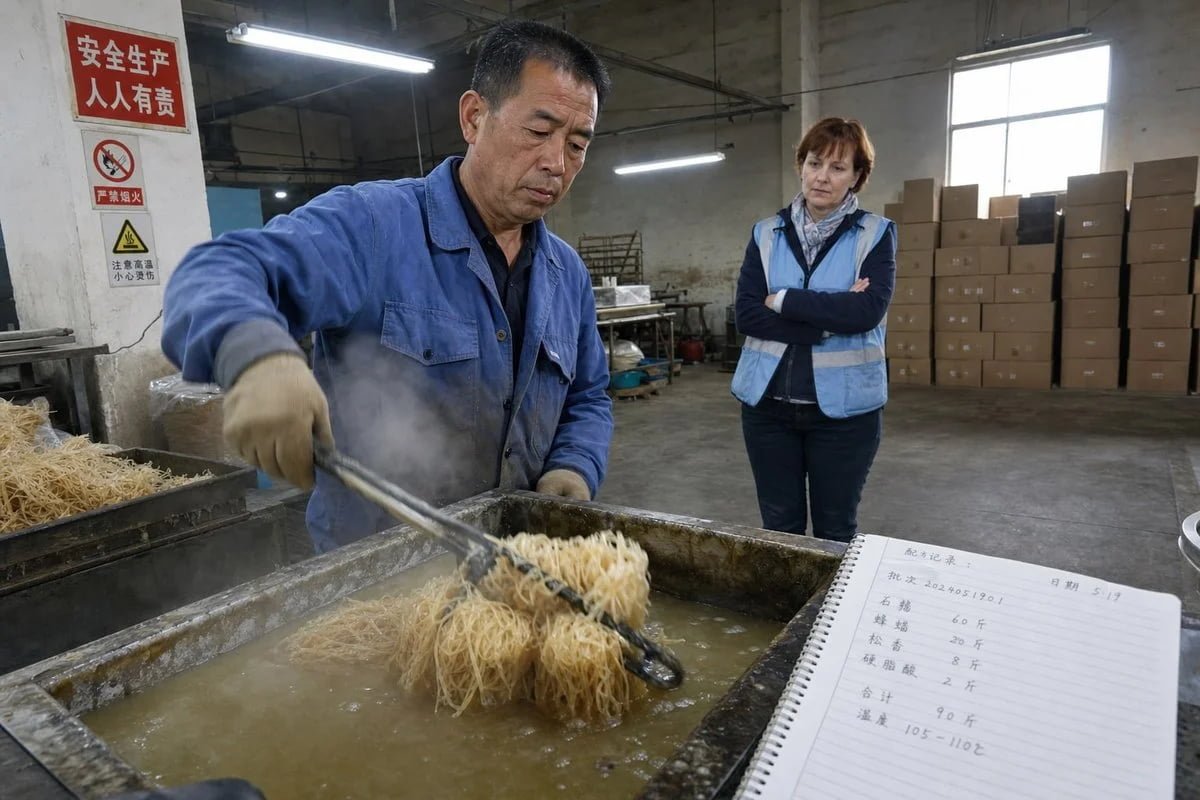
Let me be direct about how this looks from the factory floor. Our standard wood fire starters use a base process — compressed wood wool dipped in food-grade wax — that is our proprietary manufacturing process 3 and our background IP. No contract can transfer that to a buyer, and no honest supplier will pretend otherwise. But when a client co-develops something new with us, such as a specific scent profile, an extended burn time calibration, or a clean-burn wax blend, that co-developed spec is foreground IP. The contract must say who owns it.
A Practical Three-Layer Approach
- Isolate the base recipe. Acknowledge the factory's core process as its background IP. This builds trust and keeps negotiations realistic.
- Assign the custom layer. State that the buyer-funded modifications — dimensions, burn profile, additives, scent — belong to the buyer as foreground IP or as protected trade secrets.
- Restrict use, not just ownership. Ownership means little if the factory can quietly replicate the spec. Add an exclusivity clause: the supplier may not manufacture the custom formulation for any third party, in any market, during the term and for a defined tail period afterward.
Enforcement Details That Matter
Include sublicensing restrictions so we cannot pass your spec to a sister factory. Define "confidential information 4" broadly enough to cover test data and tooling. And be fair on scope: a global, perpetual restraint on a minor tweak will get pushback; a two-to-three-year restraint on a genuinely novel formulation will not. In our experience, buyers who propose balanced terms get them signed faster and enforced more willingly.
What IP Documentation Should I Request Before Signing an OEM Agreement?
A UK buyer once told me his previous supplier "definitely had certificates" — until a retailer audit asked for them and nothing arrived. We now send our ISO 9001, BSCI, and SGS/Intertek documentation before buyers even ask, because paperwork gaps kill deals late.
Request the supplier's background IP schedule, trademark registration certificates, proof of design ownership or licenses for any templates used, compliance test reports, a signed IP warranty stating the factory owns what it contributes, and written confirmation of any joint ownership rights.

Documentation is where an OEM relationship proves itself before a single unit ships. If a factory cannot show you what it owns, it cannot warrant that your co-branded product is clean. Here is the checklist we recommend, based on what serious importers and large retail sourcing channels actually request from us.
The Pre-Signing Documentation Checklist
| Document | What It Proves | Red Flag If Missing |
|---|---|---|
| Background IP schedule | What the factory brings: process, templates, tooling | Supplier may later claim your assets |
| Trademark certificates 5 | The factory's own marks are registered, not assumed | Weak IP hygiene overall |
| Design ownership or license proof | Stock artwork and fonts on your packaging are licensed | Third-party copyright claims at customs |
| SGS/Intertek or CE test reports | The product meets your market's safety rules | Compliance and IP risk often travel together |
| IP warranty and non-infringement rep | The factory stands behind its contributions | Nobody to pursue if a claim arises |
| Joint ownership rights confirmation | Any shared foreground IP is documented, not implied | Ambiguity over enforcement and licensing |
Why Compliance Papers Belong in an IP Discussion
This surprises some buyers, but test reports matter to IP allocation. If your contract's indemnification clause makes the factory liable for defective design, the test reports define what "the design" actually is. We have found that suppliers who maintain rigorous batch-to-batch quality control are also the ones with clean documentation trails. The two disciplines come from the same operational culture. Ask for both, and judge the supplier by how fast the files arrive.
How Can I Legally Protect My Packaging and Branding Across Different Export Markets?
Shipping to 30+ countries has taught our export team one uncomfortable lesson: a trademark protected in Hamburg means nothing in São Paulo. Buyers who scale a co-branded fire starter line across markets need territory-by-territory thinking from day one.
File trademark applications in each target market before launch, register key designs where design rights exist, define territory and channel limits in every trademark licensing agreement, record marks with customs authorities, and align packaging warnings and labeling with each market's regulations.
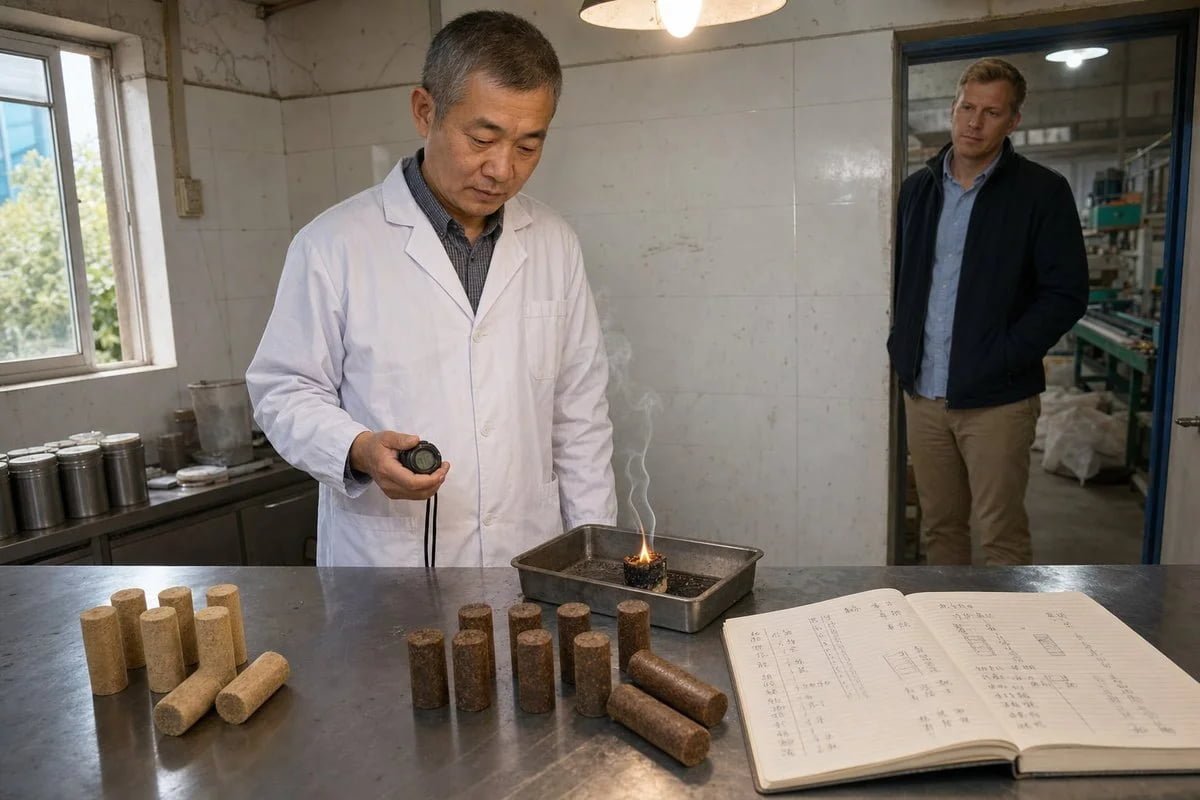
Trademarks are territorial. So are design rights, labeling laws, and enforcement options. When we prepare private-label packaging — custom boxes, display packaging, warning labels, barcodes — we always ask which markets the client will sell into, because the answer changes the artwork, the registrations, and the contract language.
Map Your Protection to Your Markets
| Market | Key Registration Route | Practical Note |
|---|---|---|
| United States | USPTO trademark; record with CBP customs | Use-based system; keep sales evidence |
| EU (Germany, France, NL, Poland) | EUIPO trademark 6 covers all member states | One filing, 27 countries; strong design rights too |
| United Kingdom | Separate UKIPO filing post-Brexit | EU marks no longer cover the UK |
| Canada / Australia | National filings or Madrid Protocol 7 | Madrid saves cost if you file in several markets |
| Brazil / Middle East | Local filings, often slower | File early; first-to-file rules dominate |
Contract Terms That Travel Well
Your co-branding contract should define territory, sales channels, and term for every license granted. If you hold exclusive distribution rights in one region, say so explicitly, and state whether the factory may supply the same co-branded design elsewhere. If the deal involves ongoing payments, spell out the royalty fee structure — per unit, per territory, or flat — so nobody renegotiates it under pressure later.
Finally, plan the exit. Termination of rights should never be instant chaos. Build in a sell-off period for remaining inventory, a de-branding obligation for tooling and templates, and a rule for online listings and product photos. In our experience, the partnerships that end cleanly are the ones that wrote the ending before the beginning.
Conclusion
Ambiguous IP clauses quietly destroy co-branded product lines that quality never could. Map background and foreground IP, assign what you fund, license what you share, and write the exit before you sign. We



 English
  Spanish
  German
  French
  Arabic
  Portuguese
Join the Conversation