







Confirming color pattern availability for fireplace colored pine cones next season is a question our production team in Ningbo hears every spring, usually from buyers who ran short last winter.
To confirm color pattern availability for fireplace colored pine cones next season, contact the factory before summer, lock in your color specifications with a written order, request test reports on the flame colorants, approve a trial batch, and sign off on a private-label spec sheet.
Retail stock for these products moves fast. Refill bags sell out, listings go dark, and substitutes vary in quality Material Safety Data Sheet 1. The safest path is to work directly with the source. Below, I walk through the four questions buyers ask us most often, in the order they usually come up.
How early do I need to place my order to lock in specific color pattern availability for next season?
Last March, a German distributor called us in a panic ISO 9001 quality management 2. His previous supplier had dropped the blue-green pattern he sold under his own brand. We had eleven weeks to rebuild it.
Place your order six to nine months before your selling season, ideally between March and June for a Q4 launch. This window secures raw pinecone supply, reserves metal salt colorants, and leaves time for sampling, compliance checks, sea freight, and warehouse distribution.
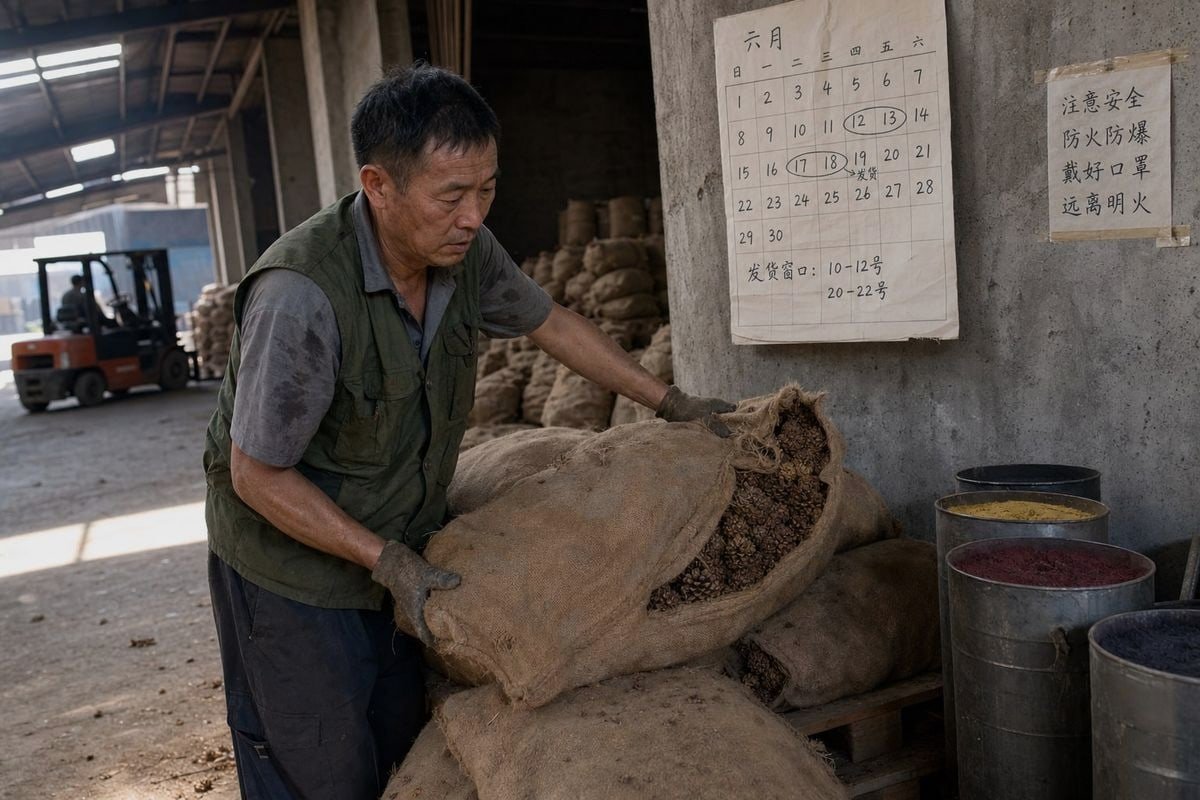
The timing question is really a supply-chain question blue and green tones 3. Colored pinecones depend on two raw inputs, and both are seasonal or market-driven. First, natural pinecones are harvested in autumn. A strong mast year means surplus cones for the following production season; a weak one tightens supply. Second, chemical flame colorants 4 such as copper sulfate for blue-green tones follow industrial metal markets, and prices or lead times can shift with global demand. If you wait until September to order, you are competing with every other buyer of wholesale holiday supplies for the same production slots.
A realistic ordering timeline
Here is the calendar we recommend to our importers in the US and Europe:
| Month | Action | Why it matters |
|---|---|---|
| Jan–Feb | Review last season's sell-through | Decide which color patterns to repeat or drop |
| Mar–Apr | Send specs and request samples | Sampling and lab testing take 3–6 weeks |
| May–Jun | Confirm order and pay deposit | Locks production slot and colorant reservation |
| Jul–Aug | Mass production and QC | Batch-to-batch color checks happen here |
| Sep–Oct | Sea freight and customs | 4–7 weeks to US or EU ports |
| Nov | Product on shelf | Ready before peak fireplace demand |
Some retailers do offer pre-order seasonal inventory windows in late summer, but by then a factory's flexible capacity is largely committed. In our experience, the buyers who confirm by June get first choice of color patterns, packaging formats, and shipping dates. The ones who arrive in August get what is left.
What documentation or test reports can confirm the color additives in pinecones meet my market's safety standards?
Compliance paperwork is where we win or lose a buyer. Our team in Liuyang treats third-party testing as a hard requirement, because our customers' retail channels demand it.
Request an SGS or Intertek test report, a Material Safety Data Sheet listing the metal salt colorants, CE documentation for the EU, proof of ISO 9001 quality management, and a BSCI social audit. Together these confirm the additives meet US and European safety standards.

Not all colored pinecones are made the same way. Some workshops use whatever chemical flame colorants are cheapest, and a few still rely on formulations that would fail a heavy-metals screen in the EU. That is why documentation matters more than a pretty sample photo. The MSDS should name the actual compounds. Copper sulfate 5 produces the blue and green tones most buyers want. Boric acid contributes a soft green. Other metal salt colorants shape reds, purples, and oranges within the rainbow flame effects. If a supplier cannot tell you which salts are inside, walk away.
The document checklist we hand to new buyers
| Document | What it proves | Who issues it |
|---|---|---|
| SGS / Intertek test report | Additives tested against safety limits | Third-party lab |
| MSDS | Chemical composition and handling data | Manufacturer |
| CE documentation | EU market conformity | Manufacturer with lab support |
| ISO 9001 certificate | Consistent quality management system | Certification body |
| BSCI audit report | Ethical factory conditions | Audit body |
One caution I share with every purchasing manager: a certificate can be borrowed or outdated. Ask for reports issued in the supplier's own legal name, check the issue date, and verify the report number directly with the lab. We encourage this because it filters out trading companies presenting someone else's paperwork as their own. Also confirm the report covers the finished product, not just one raw ingredient, since burning behavior depends on the full formulation. Finally, match warning labels on the packaging to your market's fireplace safety precautions 6, including the standard advice against burning these products in gas fireplaces, where ash can clog components.
Can I request a small trial batch to verify color consistency before committing to a full seasonal order?
There is a trade-off we discuss openly with buyers: trial batches cost us setup time, but they save both sides from a container of disappointment. We accept flexible MOQs for exactly this reason.
Yes. Reputable factories offer trial batches, typically a few cartons, in spring. Burn-test the samples yourself, compare color intensity and burn duration against your specification, then keep a sealed reference sample so mass production can be checked against the approved batch.

A trial batch is not a formality. It is your only chance to see how the product actually performs before you commit a season's budget. When our lab runs an internal burn test, we log ignition time, how quickly the color develops, how long the rainbow flame effects hold, and how the flame fades out. You should do the same on your side, in the actual conditions your customers will use: a wood-burning fireplace 7, an outdoor fire pit, or a campfire. Color-changing fire starters and coated pinecones can behave differently in a drafty hearth than in still air, so test in more than one setting if you can.
How to run a meaningful trial evaluation
- Request samples from a real production line, not a hand-made showroom piece.
- Burn at least several cones from different parts of the batch, not just one.
- Time the color effect and note when each hue appears and fades.
- Photograph the flames under consistent lighting for your records.
- Retain sealed samples as the golden reference for mass production.
The lesson we learned years ago is that the first sample must reflect mass-production quality, or the trial is meaningless. That is why we run trial batches through the same coating, drying, and QC steps as full orders. If a supplier's sample looks perfect but the bulk shipment burns dull orange, the problem is usually a diluted colorant load in production. Batch-to-batch control, documented in QC records you can request, is what keeps the tenth container matching the first.
How do I communicate custom color pattern requirements clearly to ensure the factory matches my private-label specifications?
A UK buyer once sent us a single phone photo of purple flames and asked us to "match that." Three sample rounds later, we both agreed: vague briefs are expensive.
Write a one-page specification sheet covering target flame colors with reference images, burn time, cone size and coating finish, packaging format, label artwork, warning text, and barcodes. Have the factory confirm each line in writing, then approve a pre-production sample before mass production.
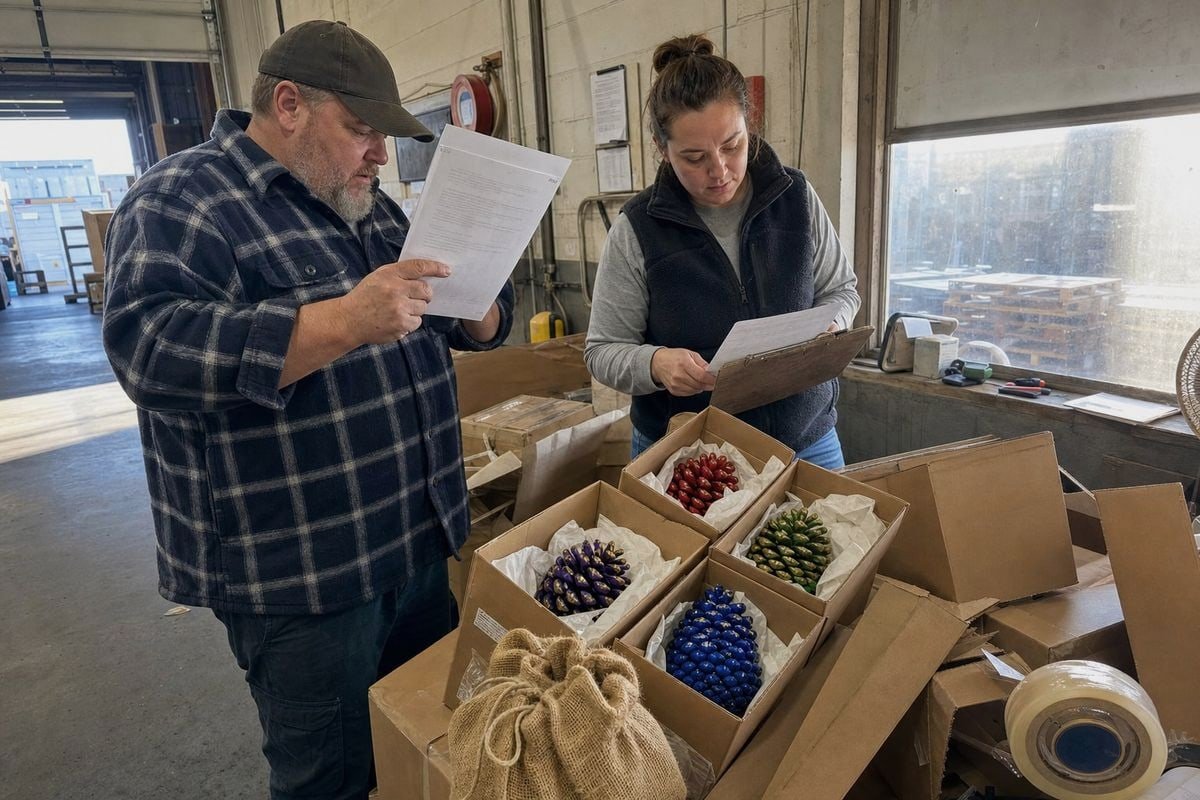
Custom color work fails at the communication stage far more often than at the production stage. Flame color is subjective. Your "deep blue" may be my "blue-green." So we ask buyers to anchor every requirement to something measurable or visual. For flame color, that means reference photos or video of an approved burn, plus the underlying colorant chemistry we agree to use. For appearance, that means Pantone codes if the cones are decoratively painted, and clear notes on finish, such as a glossy lacquered sheen or gold-tipped scales that fit current hearth decor trends.
Specification points that prevent disputes
| Spec item | What to define | Common mistake |
|---|---|---|
| Flame color pattern | Reference video plus colorant basis | Describing color in words only |
| Burn duration | Minutes of color effect per cone | Assuming all cones burn alike |
| Cone size and grade | Length range and cleanliness | Accepting "standard size" |
| Packaging format | Refill polybag, burlap gift sack, or kraft stand-up pouch | Leaving format to the factory |
| Labels and compliance | Warning text, barcodes, market language | Forgetting gas-fireplace warnings |
Packaging deserves equal precision. As the search data shows, suppliers prioritize different SKUs based on early-season trends: bulk refill polybags for value channels, gift-ready cotton or burlap bags for boutiques, and resealable kraft pouches for camping brands. Our OEM/ODM team builds all three, but only when the buyer specifies which one, with dieline artwork, before production starts. Finally, insist on a signed pre-production sample. Once both sides hold the same approved reference, "does it match?" stops being an argument and becomes a checklist.
Conclusion
Waiting until autumn risks empty shelves and mismatched substitutes. Order by early summer, verify test reports, burn a trial batch, and lock specifications in writing with your factory partner.
Footnotes
1. Official OSHA Hazard Communication page explaining the transition from MSDS to the current SDS standard. ↩︎
2. Highly accessible and stable overview of the standard from a preferred authoritative source. ↩︎
3. Scientific explanation of the flame test colors produced by different chemical elements. ↩︎
4. Technical reference for the chemical additives used to produce specific color effects in fire products. ↩︎
5. Chemical profile of the primary metal salt used to create blue and green flame colors. ↩︎
6. Official NFPA heating safety landing page covering fireplaces, chimneys, and seasonal fire prevention. ↩︎
7. Federal guidelines for the safe and efficient use of wood-burning appliances in residential settings. ↩︎



 English
  Spanish
  German
  French
  Arabic
  Portuguese
Join the Conversation