






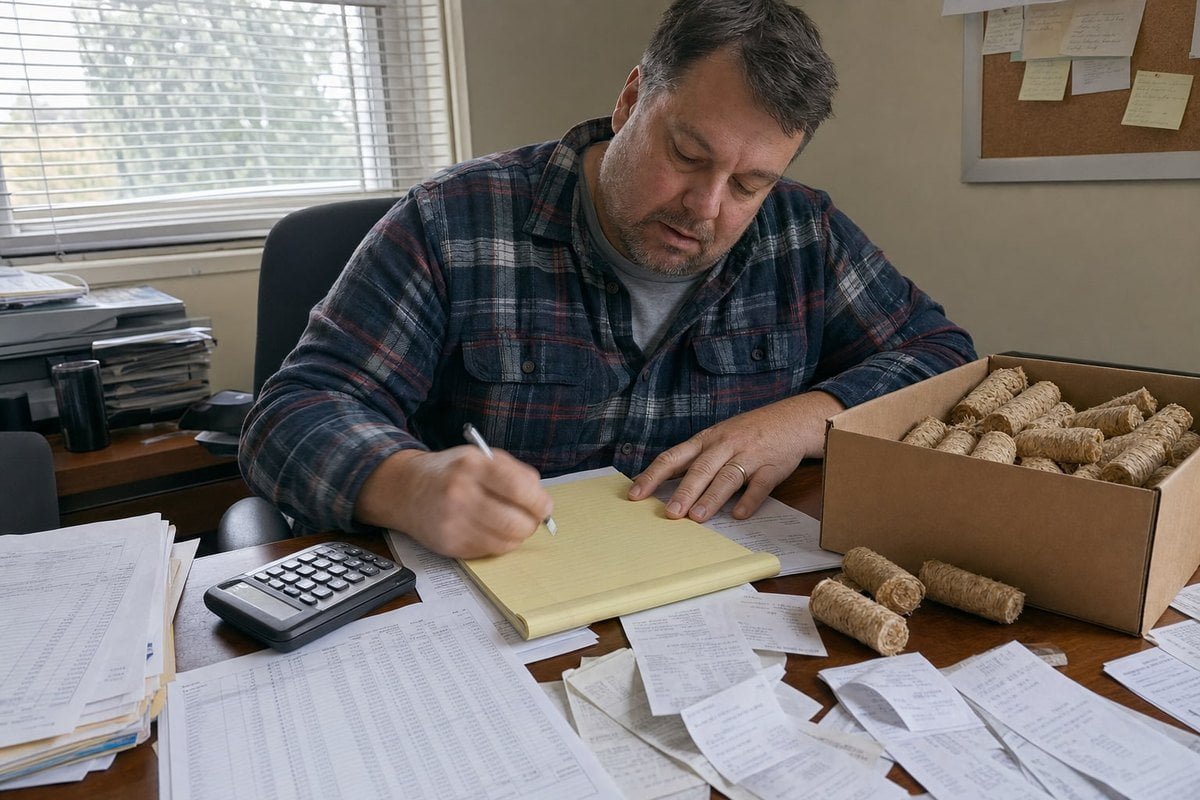
Calculating the max unit price for wood fire starters looks simple until a big-box buyer emails our factory demanding a promo discount that erases the margin overnight. That pressure breaks unprepared importers. Here is the math that protects you.
To calculate the max unit price for wood fire starters, multiply the retail pack price by (1 minus the discount rate), subtract retailer margin and your target margin, then divide by units per pack. That figure is the ceiling for your landed cost per unit.
That formula is the skeleton. The real work is filling in each variable correctly. Let me walk you through certification costs, promo margins, landed cost, and MOQ leverage, one by one.
How do I factor certification and compliance costs into my target unit price for wood fire starters?
A buyer from Germany once rejected a competitor's cheaper quote purely because the SGS report was missing. At our Ningbo lines, compliance is priced in from day one, not bolted on later.
Divide total compliance costs — testing fees, certification audits, label revisions, and documentation time — by your annual order volume, then add that per-unit amount to your base cost before setting your max unit price. Certification typically adds $0.01–$0.04 per unit at realistic import volumes.
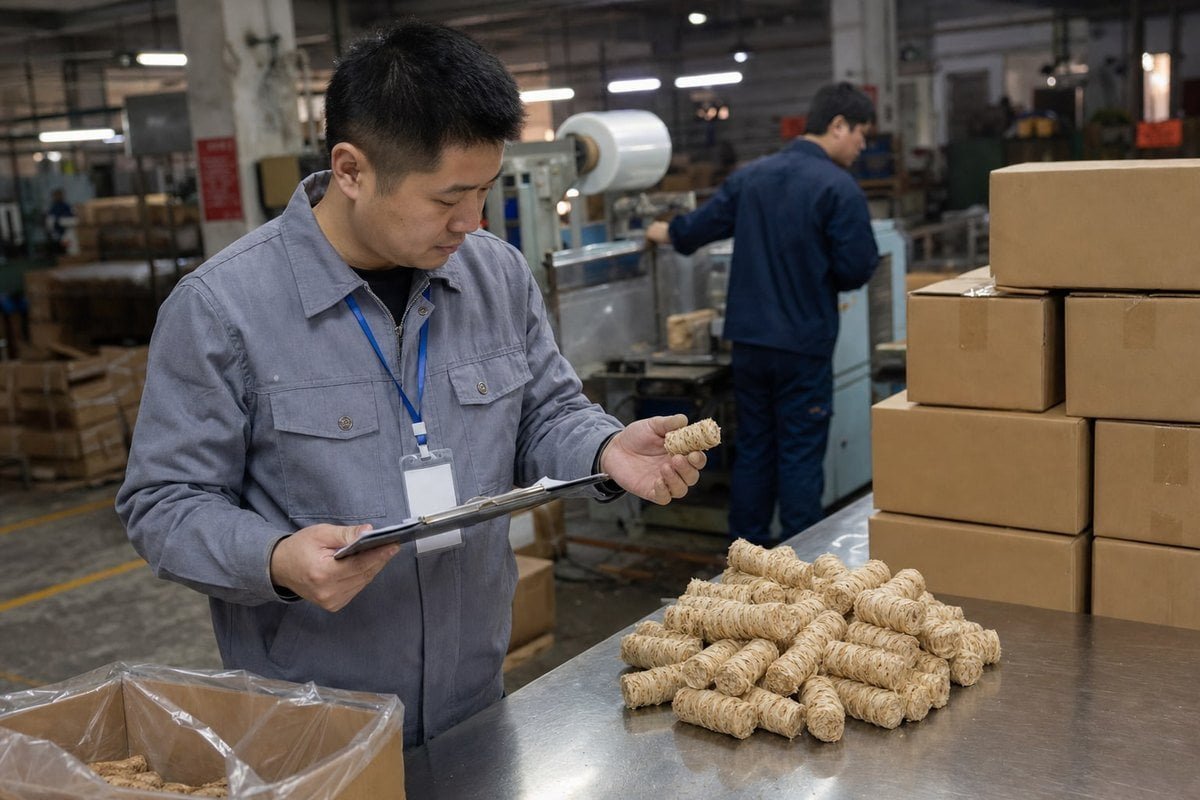
Compliance is a fixed cost pool spread over variable volume. That means the more units you order, the thinner the compliance layer becomes per piece. In our 17+ years exporting fire-starting goods to the US, Germany, the UK, and 30+ other markets, we have seen buyers make the same mistake repeatedly: they compare quotes as if compliance were free, then discover the "cheap" supplier cannot produce a valid CE mark 1 or an ISO 9001 2 audit trail. The rework, retesting, and shipment delays cost far more than the original price gap.
Which compliance items actually hit your unit price?
Break the pool into three buckets. First, product testing — burn behavior, composition checks on wood fiber and paraffin wax 3 cubes, and third-party lab reports from SGS or Intertek 4. Second, factory-level certification — ISO 9001 and BSCI audits 5, which a serious factory absorbs but which you should verify exist. Third, market-entry paperwork — warning labels, barcodes, and language-specific packaging text.
| Compliance Item | Typical One-Time Cost | Allocated Over 100,000 Units |
|---|---|---|
| Third-party lab test report | $800–$2,000 | $0.008–$0.02/unit |
| Label and packaging revision | $300–$800 | $0.003–$0.008/unit |
| Retailer-specific audit support | $500–$1,500 | $0.005–$0.015/unit |
Here is the practical rule I give purchasing managers: if compliance adds $0.03 per unit and your max unit price ceiling is $0.60, that is 5% of the ceiling. Build it into your target unit price explicitly. Never treat it as overhead you will "absorb somewhere," because big-box retailers will not let you recover it later.
What margin should I build in when big-box retailers demand deep promotional discounts?
The trade-off we weigh with every private-label quote is this: quote tight and win the listing, or quote with promo headroom and survive the first markdown cycle. Headroom wins long term.
Build 15–25% additional margin above your normal wholesale margin when selling into big-box channels. Retailers typically demand 20–40% promotional funding once or twice per year, so a fire starter deal priced at everyday margin alone will go underwater during the first promo.
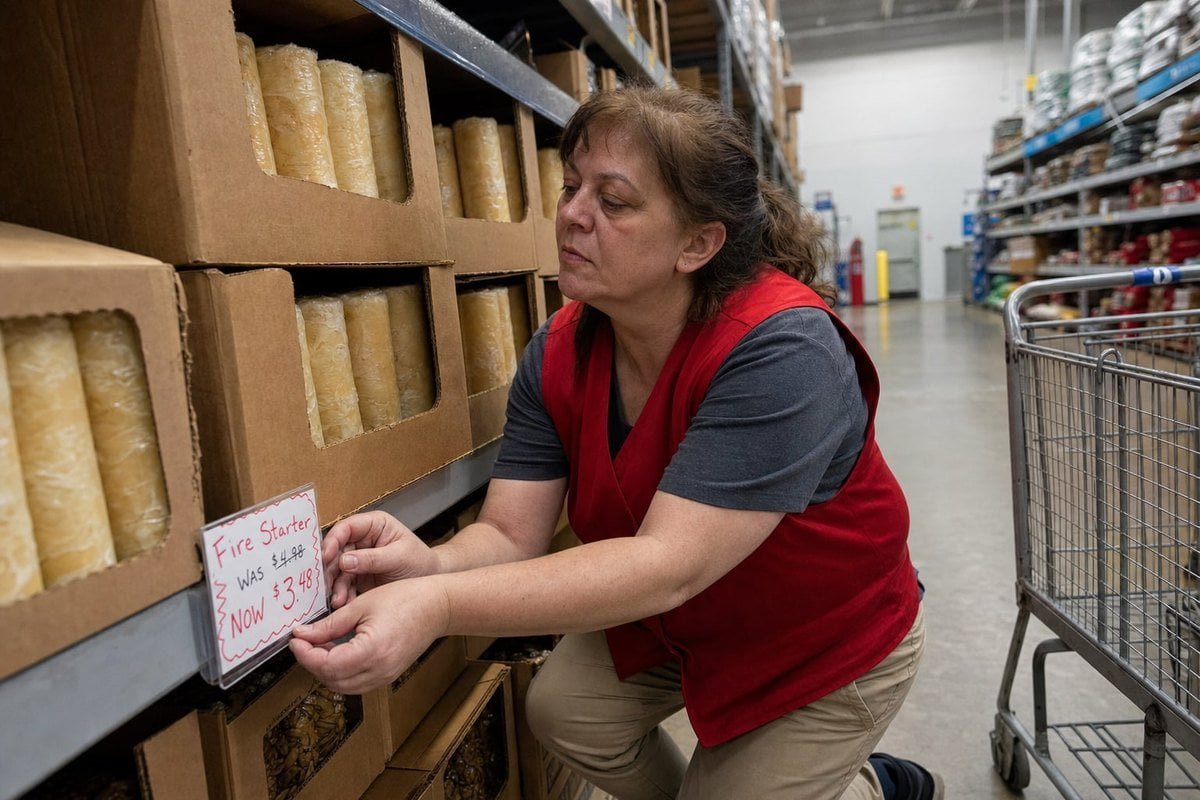
Big-box promotional math works backward from the shelf. Suppose a 24-pack of wood fire starters retails at $18.00. A 20% seasonal promo drops it to $14.40, or $0.60 per starter at the shelf. The retailer still wants their full margin — often 40–50% — on the discounted price, not the original. So your effective sell-in price during the promo could fall to roughly $0.30–$0.36 per unit. If your landed cost is $0.28 and you planned only a $0.05 everyday margin, one promo cycle wipes out your profit on that volume.
A blended-margin approach
I recommend buyers model a blended year, not a single order. Assume some share of annual volume sells at everyday terms and some sells under promotion, then set one weighted margin that survives both.
| Scenario | Share of Annual Volume | Your Net Price per Unit | Margin at $0.28 Landed Cost |
|---|---|---|---|
| Everyday terms | 65% | $0.45 | 38% |
| Standard promo (20% off) | 25% | $0.36 | 22% |
| Deep clearance support | 10% | $0.31 | 10% |
The blended margin here is about 30%, which is sustainable. Seasonal clearance deals in late February and March are predictable, so plan for them rather than reacting to them. One more point from our export experience: retailers respect suppliers who present promo funding as a planned line item. It signals you understand their business, and it protects the quality of the product — nobody wins when a supplier quietly cuts paraffin content or switches to damp wood fiber to rescue a margin they never built in.
How do I calculate landed cost per unit including freight, duties, and packaging from my supplier?
A UK distributor once told me our FOB quote looked 8% higher than a rival's — until we ran his full landed-cost sheet together and our optimized carton density flipped the result.
Landed cost per unit equals (FOB price + inland freight + ocean freight + insurance + duties + port fees + retail packaging cost) divided by total units. For wood fire starters, freight and duties commonly add 20–35% to the FOB price, so never compare quotes on FOB alone.
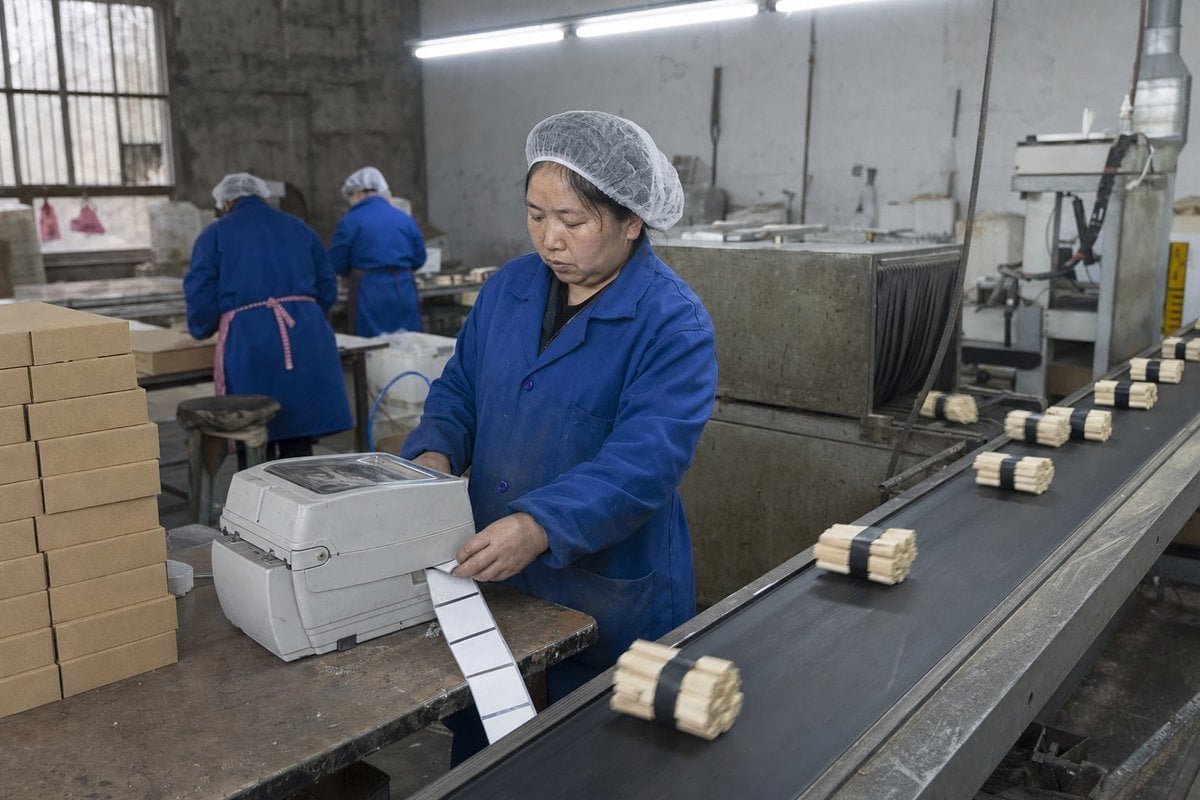
Sticker price is not real price. The number that matters is the cost per unit at your warehouse door, because that is what you measure against the max unit price ceiling you calculated from the big-box discount. Follow this sequence for every quote you receive.
The five-step landed cost calculation
- Start with FOB. Say a supplier quotes $0.18 per wax-dipped wood roll, FOB Ningbo.
- Add ocean freight per unit. Divide the container cost by the units it holds. Fire starters are light but bulky, so carton density matters enormously. Tumbleweed fire starters and loose excelsior bundles ship worse than compressed pucks. If a 40ft container costs $4,500 and holds 150,000 units, freight adds $0.03.
- Add duties and tariffs. Check the HS code 6 for your market. If the duty rate is 5% on customs value, add roughly $0.01.
- Add insurance, port, and delivery fees. Typically $0.01–$0.02 per unit at volume.
- Add retail packaging. A printed display box with warning labels and barcodes might add $0.03–$0.05 per unit if not already included.
That $0.18 quote becomes roughly $0.26–$0.29 landed. Now compare it to your ceiling. If your promo-adjusted max unit price is $0.36, you have room. If it is $0.30, you do not — and it is better to know before you commit. Also convert bulk fatwood kindling sticks to a price per pound when comparing across formats, since suppliers quote fatwood by weight but cubes by count. One consistent metric — cost per fire — keeps disparate products comparable.
How can I use MOQ and order volume to negotiate a lower per-unit price without sacrificing quality?
Early in my career on our production floor, I learned that volume discounts come from real efficiencies — longer machine runs, fewer changeovers — not from cutting natural resin content or wax weight.
Negotiate volume tiers tied to annual commitments rather than single orders, ask suppliers to show which costs actually fall at higher quantities, and lock quality specifications — wax weight, burn time, and materials — into the contract so the discount comes from efficiency, not degradation.

Volume pricing is legitimate when it reflects real cost behavior. A factory running one continuous 200,000-unit batch of compressed wood-fiber starters spends less per unit on setup, material purchasing, and QC sampling than it does across four 50,000-unit runs. Your job as a buyer is to capture that efficiency while keeping the product identical. Here is how the tiers typically behave for wood fire starters, using illustrative wholesale benchmarks.
| Product Tier | Typical Unit Price Range | Where Volume Helps Most |
|---|---|---|
| Basic wax and sawdust cubes, very high volume | $0.05–$0.08 | Material purchasing scale |
| Quality wood wool starters with natural wax | $0.10–$0.20 | Longer production runs |
| Premium eco-friendly or certified starters | $0.25+ | Amortized compliance and tooling |
Three negotiation levers that protect quality
First, offer an annual volume commitment split into scheduled releases. We give better pricing for a 300,000-unit yearly agreement shipped quarterly than for one speculative 300,000-unit order, because it lets us plan lines and buy materials forward. Second, negotiate on packaging and logistics, not just the product — consolidating SKUs into one container or simplifying inner packaging often saves more than squeezing the piece price. Third, write burn time efficiency into your spec: a 10-minute minimum burn, a defined wax coating weight, and moisture limits. Damp wood is a moisture weight tax — you pay for water that fights ignition. A starter that burns 15 minutes often beats two cheap 5-minute units on cost per fire, which is why smart buyers of wood stove accessories track burn-to-cents ratios, not shelf prices. Bulk purchase savings only count when the sample you approved matches every batch that follows — which is exactly why factory depth and batch-to-batch QC matter more than the lowest opening quote.
Conclusion
Big-box discounts punish buyers who skip the math. Work backward from the promo shelf price, amortize compliance, calculate true landed cost, and negotiate volume with locked specs.
Get those four numbers right, and the max unit price for wood fire starters stops being a guess. It becomes a ceiling you can defend in every negotiation — and a filter that separates reliable manufacturing partners from suppliers who only look cheap on paper. When you are ready to run these numbers against a real quote, with full certification documents and consistent batch quality behind it, that is exactly the conversation our team has been having with importers and distributors for over 17 years.
Footnotes
1. CE marking background helps readers understand this EU compliance requirement referenced. ↩︎
2. Replaced 403 link with stable Wikipedia reference for the quality standard. ↩︎
3. Paraffin wax is a key material component tested in fire starter compliance checks. ↩︎
4. Intertek is named as a third-party testing lab for fire starter compliance reports. ↩︎
5. Updated 404 link to the current official amfori BSCI solution page. ↩︎
6. WTO explains the Harmonized System codes used to determine import duty rates. ↩︎
7. Customs valuation explains how duty rates are calculated against declared shipment value. ↩︎


 English
  Spanish
  German
  French
  Arabic
  Portuguese
Join the Conversation