






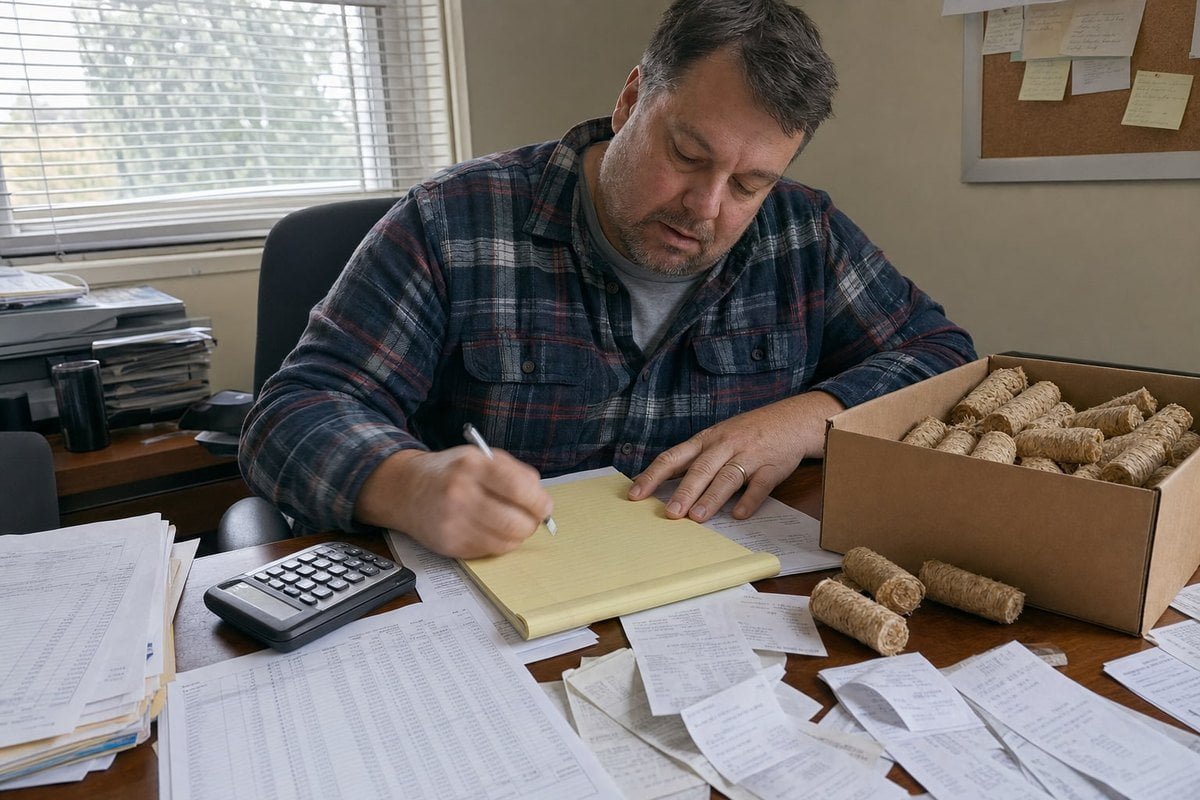
Calculer le prix unitaire maximum pour les allume-feu en bois semble simple jusqu'à ce qu'un acheteur de grande distribution envoie un e-mail à notre usine exigeant une remise promotionnelle qui efface la marge du jour au lendemain. Cette pression brise les importateurs non préparés. Voici les calculs qui vous protègent.
Pour calculer le prix unitaire maximum des allume-feu en bois, multipliez le prix du paquet de détail par (1 moins le taux de remise), soustrayez la marge du détaillant et votre marge cible, puis divisez par le nombre d'unités par paquet. Ce chiffre est le plafond de votre coût débarqué par unité.
Cette formule est le squelette. Le vrai travail consiste à remplir correctement chaque variable. Laissez-moi vous guider à travers les coûts de certification, les marges promotionnelles, le coût débarqué et le levier MOQ, un par un.
Comment intégrer les coûts de certification et de conformité dans mon prix unitaire cible pour les allume-feux à bois ?
Un acheteur d'Allemagne a un jour rejeté un devis moins cher d'un concurrent simplement parce que le rapport SGS était manquant. Dans nos lignes de Ningbo, la conformité est intégrée dès le premier jour, pas ajoutée plus tard.
Divisez les coûts de conformité totaux — frais de test, audits de certification, révisions d'étiquettes et temps de documentation — par votre volume de commande annuel, puis ajoutez ce montant par unité à votre coût de base avant de fixer votre prix unitaire maximum. La certification ajoute généralement 0,01 $ à 0,04 $ par unité à des volumes d'importation réalistes.
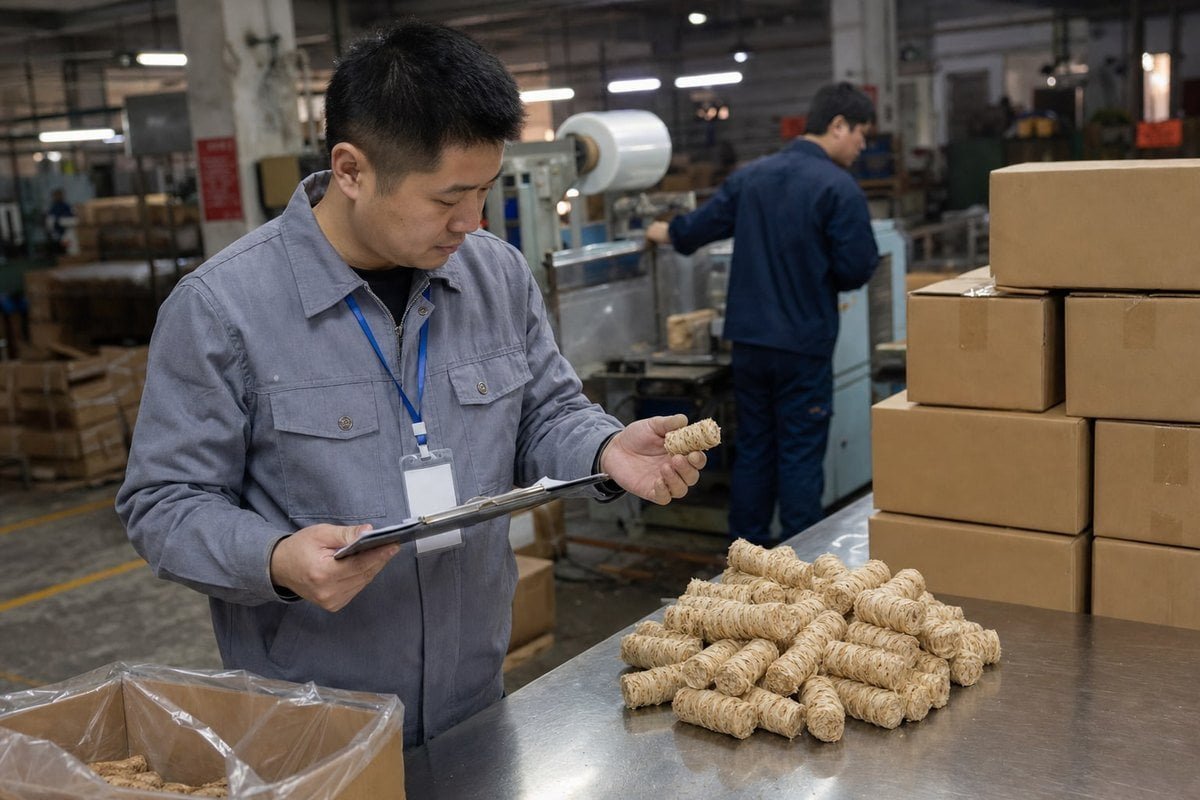
La conformité est un pool de coûts fixes réparti sur un volume variable. Cela signifie que plus vous commandez d'unités, plus la couche de conformité devient mince par pièce. Au cours de nos 17 années d'exportation de biens d'allumage vers les États-Unis, l'Allemagne, le Royaume-Uni et plus de 30 autres marchés, nous avons vu les acheteurs commettre la même erreur à plusieurs reprises : ils comparent les devis comme si la conformité était gratuite, puis découvrent que le fournisseur "bon marché" ne peut pas produire un marque CE 1 ou un ISO 9001 2 audit trail valide. Les retouches, les re-tests et les retards d'expédition coûtent bien plus cher que l'écart de prix initial.
Quels éléments de conformité affectent réellement votre prix unitaire ?
Divisez le pool en trois compartiments. Premièrement, les tests de produits — comportement à la combustion, vérifications de composition sur la fibre de bois et les cire de paraffine 3 cubes, et rapports de laboratoire tiers de SGS ou Intertek 4. Deuxièmement, la certification au niveau de l'usine — ISO 9001 et Audits BSCI 5, que l'usine sérieuse absorbe mais dont vous devriez vérifier l'existence. Troisièmement, la paperasserie d'entrée sur le marché — étiquettes d'avertissement, codes-barres et texte d'emballage spécifique à la langue.
| Article de conformité | Coût ponctuel typique | Réparti sur 100 000 unités |
|---|---|---|
| Rapport de test de laboratoire tiers | 800–2 000 $ | 0,008–0,02 $/unité |
| Révision des étiquettes et des emballages | 300–800 $ | 0,003–0,008 $/unité |
| Support d'audit spécifique au détaillant | 500–1 500 $ | 0,005–0,015 $/unité |
Voici la règle pratique que je donne aux responsables des achats : si la conformité ajoute 0,03 $ par unité et que votre plafond de prix unitaire maximum est de 0,60 $, cela représente 5 % du plafond. Intégrez-le explicitement dans votre prix unitaire cible. Ne le considérez jamais comme des frais généraux que vous "absorberez quelque part", car les détaillants de grande distribution ne vous permettront pas de le récupérer plus tard.
Quelle marge dois-je prévoir lorsque les détaillants à grande surface exigent des remises promotionnelles importantes ?
Le compromis que nous évaluons avec chaque devis de marque privée est le suivant : deviser serré et gagner la liste, ou deviser avec une marge de manœuvre promotionnelle et survivre au premier cycle de démarque. La marge de manœuvre gagne à long terme.
Construisez 15–25% de marge supplémentaire au-dessus de votre marge de gros normale lors de la vente dans des canaux de grande distribution. Les détaillants exigent généralement 20–40% de financement promotionnel une ou deux fois par an, de sorte qu'une offre de départ de feu au prix de la marge quotidienne seule sera sous l'eau lors de la première promotion.
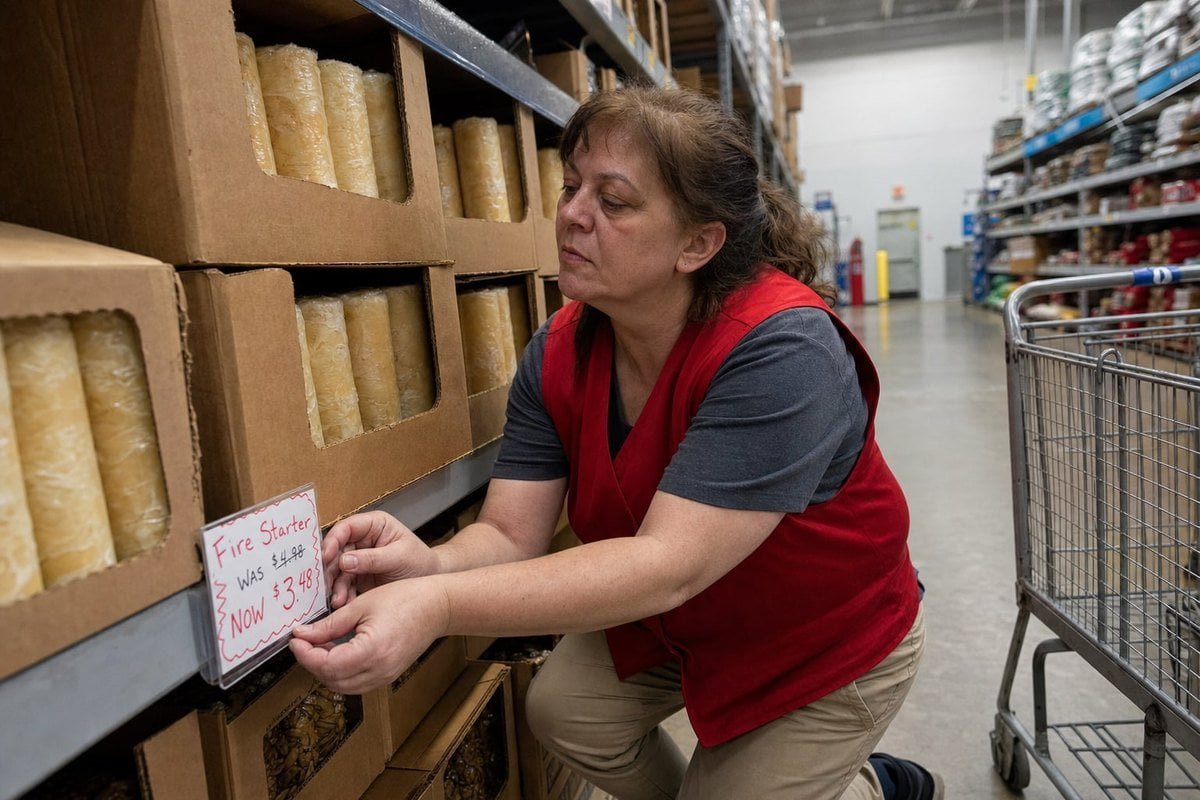
Les calculs promotionnels de la grande distribution fonctionnent à rebours à partir du rayon. Supposons qu'un pack de 24 allume-feu en bois se vende au détail 18,00 $. Une promotion saisonnière de 20 % le réduit à 14,40 $, soit 0,60 $ par allume-feu en rayon. Le détaillant veut toujours sa marge complète — souvent 40–50 % — sur le prix réduit, pas sur l'original. Votre prix de vente effectif pendant la promotion pourrait donc tomber à environ 0,30–0,36 $ par unité. Si votre coût débarqué est de 0,28 $ et que vous n'aviez prévu qu'une marge quotidienne de 0,05 $, un cycle promotionnel anéantit votre profit sur ce volume.
Une approche de marge mixte
Je recommande aux acheteurs de modéliser une année mixte, pas une seule commande. Supposez qu'une partie du volume annuel se vende à des conditions normales et qu'une partie se vende en promotion, puis définissez une marge pondérée unique qui survive aux deux.
| Scénario | Part du volume annuel | Votre prix net par unité | Marge à 0,28 $ de coût débarqué |
|---|---|---|---|
| Conditions normales | 65% | $0.45 | 38% |
| Promotion standard (20 % de réduction) | 25% | $0.36 | 22% |
| Soutien aux déstockages importants | 10% | $0.31 | 10% |
La marge mixte ici est d'environ 30 %, ce qui est durable. Les soldes saisonnières fin février et mars sont prévisibles, alors planifiez-les plutôt que d'y réagir. Un autre point tiré de notre expérience d'exportation : les détaillants respectent les fournisseurs qui présentent le financement promotionnel comme une ligne budgétaire planifiée. Cela montre que vous comprenez leur activité et que cela protège la qualité du produit — personne ne gagne lorsqu'un fournisseur réduit secrètement la teneur en paraffine ou passe à une fibre de bois humide pour sauver une marge qu'il n'a jamais intégrée.
Comment calculer le coût de revient par unité, y compris le fret, les droits de douane et l'emballage, auprès de mon fournisseur ?
Un distributeur britannique m'a un jour dit que notre devis FOB semblait 8 % plus élevé que celui d'un rival — jusqu'à ce que nous examinions ensemble sa feuille de coût débarqué complète et que notre densité de carton optimisée inverse le résultat.
Coût de revient par unité égal (prix FOB + fret intérieur + fret maritime + assurance + droits de douane + frais de port + coût de l'emballage de détail) divisé par le nombre total d'unités. Pour les allume-feu en bois, le fret et les droits de douane ajoutent couramment 20 à 35 % au prix FOB, alors ne comparez jamais les devis sur la seule base du FOB.
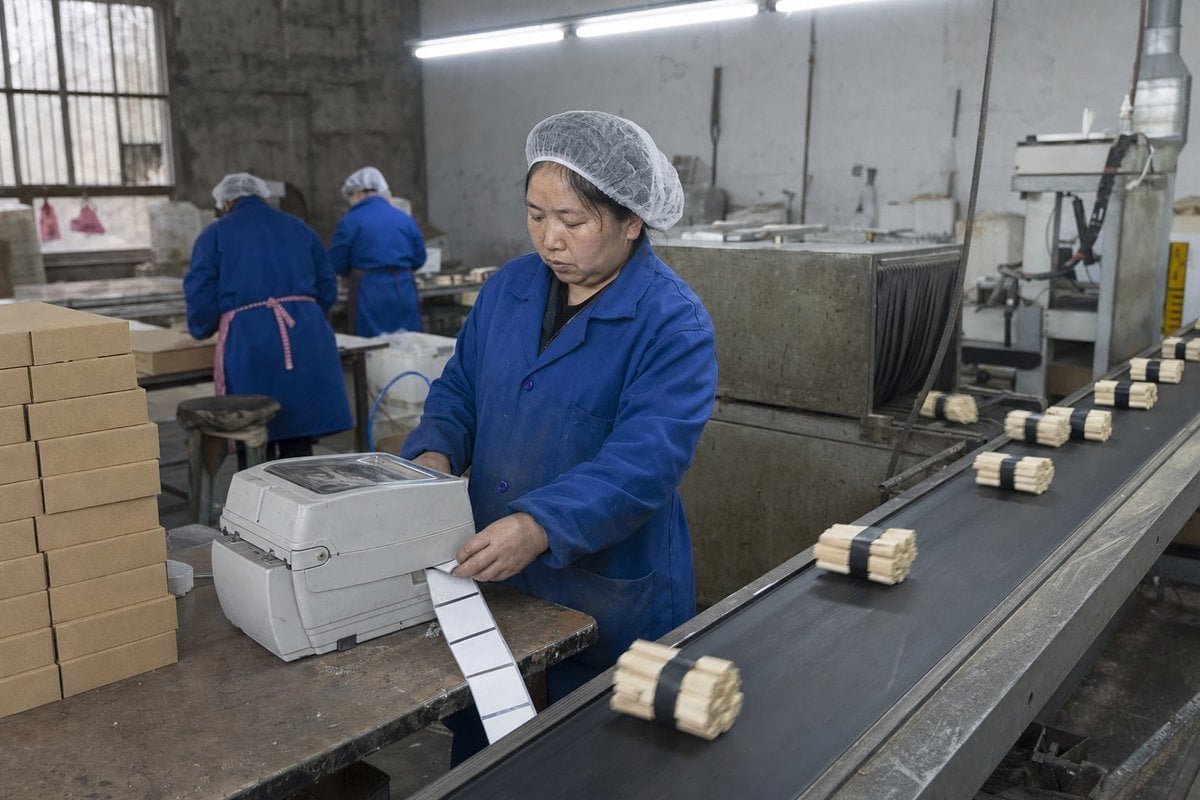
Le prix affiché n'est pas le vrai prix. Le chiffre qui compte est le coût par unité à la porte de votre entrepôt, car c'est ce que vous mesurez par rapport au plafond de prix unitaire maximum que vous avez calculé à partir de la remise de la grande distribution. Suivez cette séquence pour chaque devis que vous recevez.
Le calcul du coût débarqué en cinq étapes
- Commencez par le FOB. Disons qu'un fournisseur propose 0,18 $ par rouleau de bois trempé dans la cire, FOB Ningbo.
- Ajoutez le fret maritime par unité. Divisez le coût du conteneur par les unités qu'il contient. Les allume-feu sont légers mais volumineux, donc la densité du carton est extrêmement importante. Les allume-feu Tumbleweed et les faisceaux d'excelsior en vrac s'expédient moins bien que les pastilles compressées. Si un conteneur de 40 pieds coûte 4 500 $ et contient 150 000 unités, le fret ajoute 0,03 $.
- Ajoutez les droits de douane et les taxes. Vérifiez le code SH 6 pour votre marché. Si le taux de droit est de 5 % sur la valeur en douane, ajoutez environ 0,01 $.
- Ajoutez les frais d'assurance, de port et de livraison. Typically $0.01–$0.02 per unit at volume.
- Add retail packaging. A printed display box with warning labels and barcodes might add $0.03–$0.05 per unit if not already included.
That $0.18 quote becomes roughly $0.26–$0.29 landed. Now compare it to your ceiling. If your promo-adjusted max unit price is $0.36, you have room. If it is $0.30, you do not — and it is better to know before you commit. Also convert bulk fatwood kindling sticks to a price per pound when comparing across formats, since suppliers quote fatwood by weight but cubes by count. One consistent metric — cost per fire — keeps disparate products comparable.
Comment puis-je utiliser le MOQ et le volume de commande pour négocier un prix unitaire inférieur sans sacrifier la qualité ?
Early in my career on our production floor, I learned that volume discounts come from real efficiencies — longer machine runs, fewer changeovers — not from cutting natural resin content or wax weight.
Négociez des paliers de volume liés à des engagements annuels plutôt qu'à des commandes uniques, demandez aux fournisseurs de montrer quels coûts diminuent réellement à des quantités plus élevées, et intégrez les spécifications de qualité — poids de la cire, temps de combustion et matériaux — dans le contrat afin que la remise provienne de l'efficacité, et non de la dégradation.

Volume pricing is legitimate when it reflects real cost behavior. A factory running one continuous 200,000-unit batch of compressed wood-fiber starters spends less per unit on setup, material purchasing, and QC sampling than it does across four 50,000-unit runs. Your job as a buyer is to capture that efficiency while keeping the product identical. Here is how the tiers typically behave for wood fire starters, using illustrative wholesale benchmarks.
| Gamme de produits | Fourchette de prix unitaire typique | Where Volume Helps Most |
|---|---|---|
| Basic wax and sawdust cubes, very high volume | 0,05 $ - 0,08 $ | Material purchasing scale |
| Quality wood wool starters with natural wax | 0,10 $ - 0,20 $ | Longer production runs |
| Premium eco-friendly or certified starters | $0.25+ | Amortized compliance and tooling |
Three negotiation levers that protect quality
First, offer an annual volume commitment split into scheduled releases. We give better pricing for a 300,000-unit yearly agreement shipped quarterly than for one speculative 300,000-unit order, because it lets us plan lines and buy materials forward. Second, negotiate on packaging and logistics, not just the product — consolidating SKUs into one container or simplifying inner packaging often saves more than squeezing the piece price. Third, write burn time efficiency into your spec: a 10-minute minimum burn, a defined wax coating weight, and moisture limits. Damp wood is a moisture weight tax — you pay for water that fights ignition. A starter that burns 15 minutes often beats two cheap 5-minute units on cost per fire, which is why smart buyers of wood stove accessories track burn-to-cents ratios, not shelf prices. Bulk purchase savings only count when the sample you approved matches every batch that follows — which is exactly why factory depth and batch-to-batch QC matter more than the lowest opening quote.
Conclusion
Big-box discounts punish buyers who skip the math. Work backward from the promo shelf price, amortize compliance, calculate true landed cost, and negotiate volume with locked specs.
Get those four numbers right, and the max unit price for wood fire starters stops being a guess. It becomes a ceiling you can defend in every negotiation — and a filter that separates reliable manufacturing partners from suppliers who only look cheap on paper. When you are ready to run these numbers against a real quote, with full certification documents and consistent batch quality behind it, that is exactly the conversation our team has been having with importers and distributors for over 17 years.
Notes de bas de page
1. CE marking background helps readers understand this EU compliance requirement referenced. ↩︎
2. Replaced 403 link with stable Wikipedia reference for the quality standard. ↩︎
3. Paraffin wax is a key material component tested in fire starter compliance checks. ↩︎
4. Intertek is named as a third-party testing lab for fire starter compliance reports. ↩︎
5. Updated 404 link to the current official amfori BSCI solution page. ↩︎
6. WTO explains the Harmonized System codes used to determine import duty rates. ↩︎
7. Customs valuation explains how duty rates are calculated against declared shipment value. ↩︎



 English
  Spanish
  German
  French
  Arabic
  Portuguese
Rejoignez la conversation