







Asking suppliers for camping-style designs and manuals for wood fire starters sounds simple — until vague emails bring back wrong samples, missing safety documents, and wasted weeks BSCI 1. On our production line, we see this problem constantly.
To ask suppliers for camping-style designs and manuals for wood fire starters, send one detailed inquiry requesting a product spec sheet, SDS, burn-time data, physical samples, custom packaging options, and a consumer instruction insert with safety warnings — all before discussing volume pricing or minimum order quantities.
That single answer hides a lot of detail. Below, I break the process into four practical questions every buyer should ask, in the order that saves the most time and money.
What Design Details Should I Specify When Requesting Custom Wood Fire Starter Samples?
A buyer from Germany once emailed our factory asking only for "camping fire starters." We sent three options. None matched his vision. One clear brief would have saved us both two weeks Safety data sheets (SDS) 2.
Specify the product format (wood wool rolls, cubes, or fatwood kindling sticks), exact dimensions, wax-to-fiber ratio, target burn time, ignition speed, water resistance level, pieces per pack, and the intended use case — campfire, BBQ, fire pit, or fireplace — in your first message.
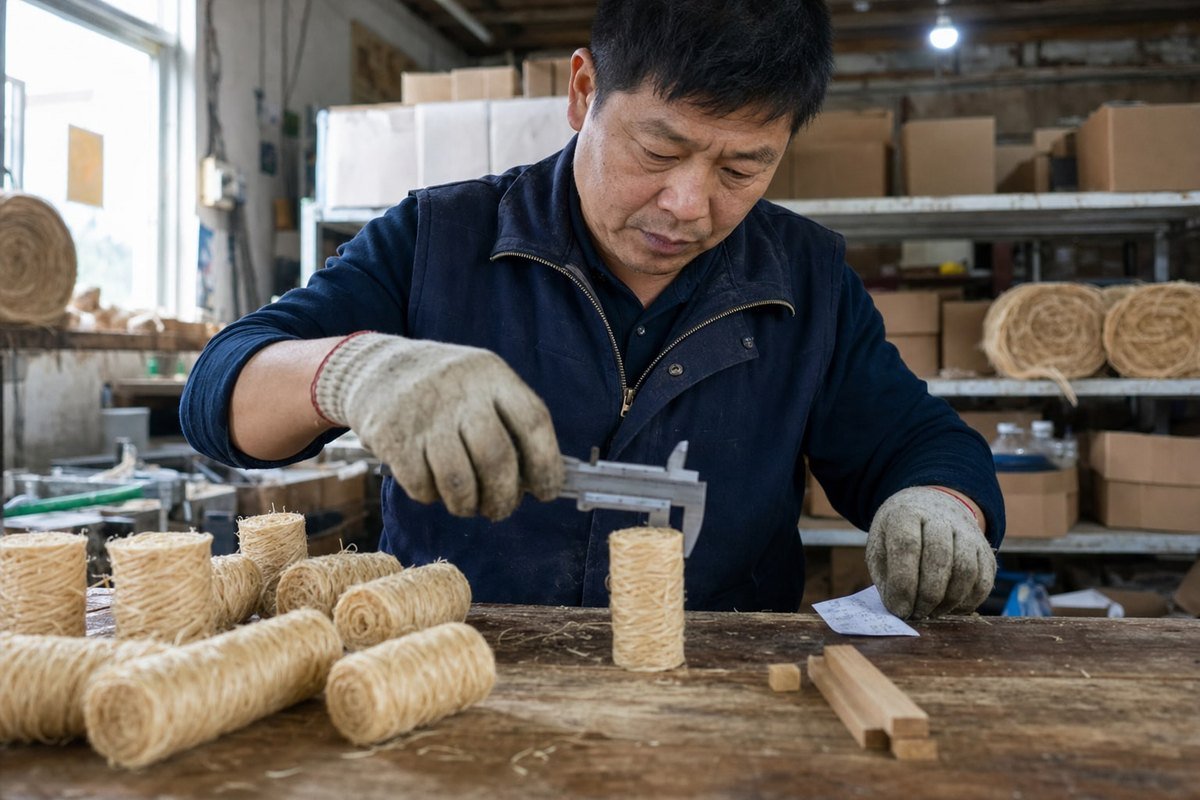
In our 17+ years making wax-dipped wood rolls and firelighting goods, the biggest lesson is this: "camping style" means different things to different buyers. So define it before you ask for samples. A vague request produces a generic sample. A precise brief produces a sample you can actually evaluate.
Start with a Simple Tech Pack
You do not need a full engineering document. A one-page brief works. Think of it as your OEM product specifications sheet. Cover these points:
| Design Element | What to Specify | Why It Matters |
|---|---|---|
| Product format | Wood wool bundles, rolls, cubes, or fatwood kindling sticks | Format drives ignition behavior and shelf appeal |
| Dimensions and weight | Length, diameter, grams per piece | Affects pack count, burn time, and shipping cost |
| Material ratio | E.g., 50% wood fiber, 50% paraffin | Determines burn duration and water resistance |
| Burn performance | Target minutes per piece (e.g., 8–10 min) | Lets you compare suppliers on data, not claims |
| Moisture content standards | Maximum allowed moisture in the wood fiber | Wet fiber ignites poorly and molds in transit |
| Use case | Campfire, BBQ, fire pit, fireplace, emergency kit | Guides material choice and instruction wording |
Camping Style Is Function, Not Just Looks
Camping-style design also means portability and reliability outdoors. Ask whether the supplier offers moisture-resistant wrap, compact camping packs, or bundle options for bushcraft survival kits — for example, pairing starters with kindling or a striker. Our clients selling into outdoor retail almost always want eco-friendly firelighting materials with no harmful chemical accelerants, because that claim sells on the shelf. State that requirement explicitly. Then ask for two or three physical samples so you can test ignition speed and burn time yourself before committing.
How Do I Confirm a Supplier Can Provide Compliant Safety Manuals and Warning Labels?
Compliance is the first thing our European buyers check, and the last thing many suppliers can actually deliver. When we prepare shipments to Germany or the UK, documentation ships before the goods do.
Ask the supplier to send the safety data sheet (SDS), third-party test reports from labs like SGS or Intertek, sample warning label artwork, and a draft consumer instruction insert. Never accept verbal certification claims — request the actual documents and verify certificate numbers.

Fire starters are combustible consumer goods. CPSC fire safety standards 3 That means most Western markets expect proper technical documentation, not just a nice product. In our experience exporting to 30+ countries, buyers who skip this step face customs delays, retailer rejections, or worse — liability exposure after a consumer incident. So put compliance questions in your very first inquiry, not after you have paid a deposit.
The Documents to Request in Writing
Ask for each of these by name:
- Safety data sheets (SDS) covering the wax, wood fiber, and any coatings.
- Third-party test reports — SGS or Intertek reports carry weight with retailers.
- Factory certifications such as ISO 9001 4 for quality management and BSCI for social compliance.
- CE or market-specific marks where applicable to your destination country.
- Eco-compliance documentation if you plan to market the product as natural or non-toxic.
At Sunrich, we keep current SGS and Intertek test reports 5 on file precisely because our US and EU buyers treat them as a hard requirement. A supplier who hesitates to share reports usually does not have them.
The Manual and Label Package
Then ask about the user-facing side. Request a draft of the back-of-pack instruction panel and confirm the supplier can print multi-language safety warnings. A good consumer insert covers intended use, step-by-step lighting instructions, recommended quantity per fire (typically two to three pieces under dry wood), storage guidance, disposal notes, and supervision warnings for children. Ask whether they can add visual-first diagrams — pictures work better than text when a customer is lighting a fire at dusk. Finally, confirm they can print your barcodes and legally required warning text directly on the packaging, so nothing is added by hand later.
What Questions Should I Ask to Verify Consistent Quality Across Production Batches?
Years ago, a distributor told me his previous supplier sent a beautiful sample, then shipped a container where half the wood wool rolls 6 burned out in three minutes. That story is why our factory runs batch-to-batch burn tests as standard procedure.
Ask how the supplier controls wax ratio, moisture content, and burn time between batches; whether they perform in-line burn testing; what their defect tolerance is; how long they have run the same production line; and whether the sample comes from actual mass-production tooling.
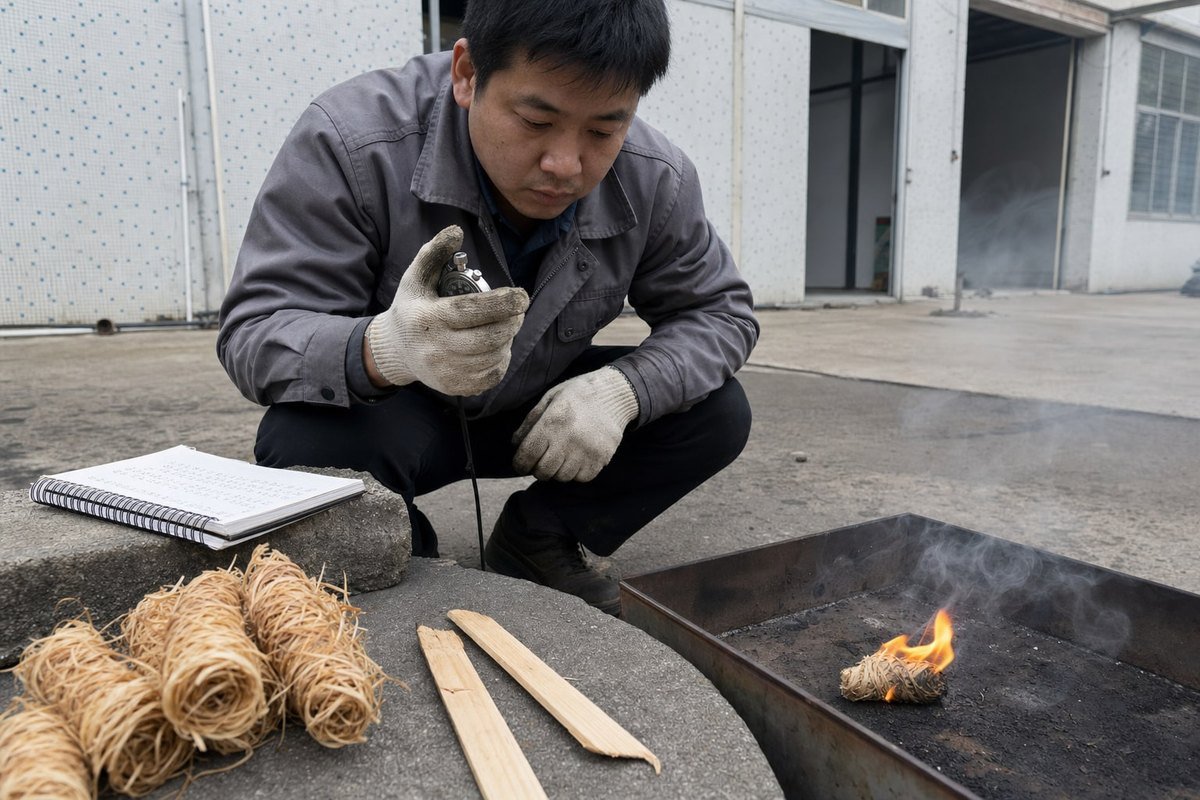
The gap between sample quality and mass-production quality is the single biggest risk in wholesale sourcing 7. Trading companies often send a hand-picked golden sample made by one factory, then place your order with a cheaper one. A real factory with complete production lines — like ours in Ningbo — can show you exactly where and how your goods will be made. So your questions should probe process control, not just product features.
Questions That Reveal Real Process Control
| Question to Ask | A Strong Answer Sounds Like | A Red Flag Sounds Like |
|---|---|---|
| How do you control the wax-to-fiber ratio? | Weighed dipping with tolerance checks per batch | "Our workers are experienced" |
| Do you test burn time per batch? | Yes, sampled units burn-tested and logged | "Quality is always the same" |
| What are your moisture content standards? | A specific maximum percentage, checked before waxing | No answer or a vague one |
| Is my sample from production tooling? | Yes, same line, same materials | "Samples are made in our sample room" |
| What is your defect and after-sales policy? | Written replacement or credit terms | "We will discuss if problems happen" |
| Are you a factory or a trading company? | Factory address, willing to do a video audit | Evasive or changes the subject |
Verify Beyond the Answers
Ask for a live video walkthrough of the production line. Request supplier performance metrics too — an on-time delivery rate above 95% and response times under a few hours are reasonable benchmarks on major sourcing platforms. Then run your own validation: test ignition speed, burn duration, wet-condition performance, and packaging durability on samples from two different production runs if possible. Consistency across two runs tells you far more than perfection in one.
How Can I Request Private-Label Packaging and Branding for My Wood Fire Starter Order?
One trade-off we walk buyers through every season: retail-ready color boxes cost more per unit than bulk poly bags, but they earn shelf placement that bulk packaging never will. The right choice depends on your channel.
Tell the supplier your sales channel, then request private label manufacturing options: logo printing, custom packaging design (box, tin, pouch, or kraft wrap), pack count, branded instruction inserts, barcodes, warning labels, and display-ready cartons. Ask for packaging artwork proofs and a printed pre-production sample.
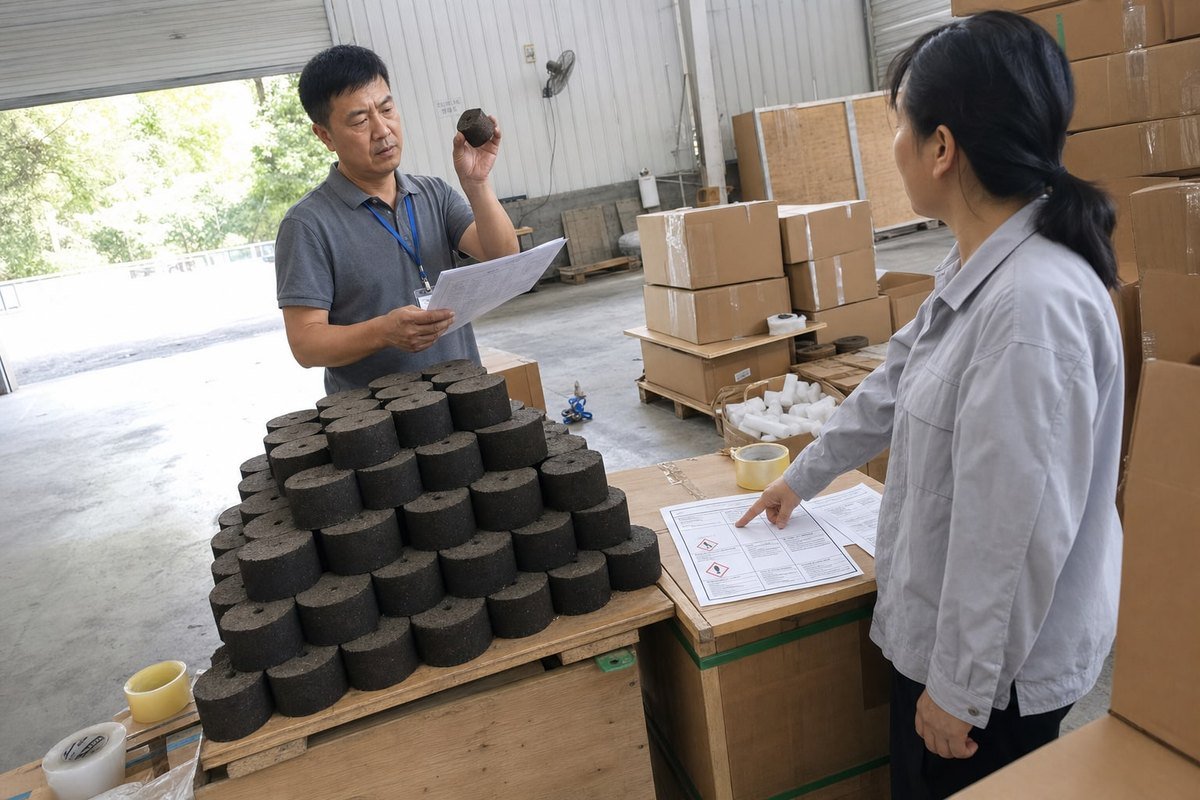
Our OEM/ODM work covers everything from a 100-piece retail flame-graphic box to rustic kraft wrapping for boutique outdoor gear branding. The key to a smooth private-label project is sequencing. Do not send artwork on day one. First confirm the product spec and compliance package. Then move to branding, so your packaging matches a product you have already approved.
A Practical Ordering Sequence
- Approve the physical product through samples and burn testing.
- Choose the packaging format based on your channel — see the table below.
- Send your brand assets: logo files, brand colors, and any required legal text.
- Review the artwork proof, including warning labels, barcodes, and instruction insert.
- Request one printed pre-production sample before mass printing.
- Confirm MOQ, lead time, and packaging specs in writing on the proforma invoice.
Match Packaging to Your Sales Channel
| Sales Channel | Recommended Packaging | Branding Notes |
|---|---|---|
| Big-box retail | Printed color box, 50–100 pcs, display carton | Bold graphics, barcode, multi-language warnings |
| Outdoor / bushcraft shops | Kraft box, canvas pouch, or tin | Heritage materials and natural texture sell here |
| E-commerce | Compact mailer-friendly box | Emphasize burn-time claims and eco messaging |
| Emergency / survival kits | Waterproof pouch or resealable bag | Consider modular packaging with secondary use |
| Gift and festival trade | Decorative box or jar formats | Seasonal artwork, giftable pack counts |
Also ask about flexible MOQs for a trial branded run. A supplier confident in their private-label workflow will usually accommodate a smaller first order, because they know consistent quality earns the reorder. That is exactly how most of our long-term distributor relationships began.
Conclusion
Vague inquiries produce wrong samples, missing SDS documents, and stalled launches. The fix is one structured request: specs, safety documentation, batch QC proof, and private-label details — confirmed in writing before you order.
Footnotes
1. Authoritative source on the amfori BSCI social compliance program mentioned for suppliers. ↩︎
2. OSHA's official hazard communication page defines SDS requirements referenced in the article. ↩︎
3. Official government source for the Federal Hazardous Substances Act, covering safety requirements for combustible goods. ↩︎
4. Authoritative Wikipedia entry providing a stable and comprehensive overview of the ISO 9001 quality management standard. ↩︎
5. Links to a major third-party testing lab named as a compliance verification source. ↩︎
6. Background on the wood fiber material used in fire starters aids reader understanding. ↩︎
7. Major B2B sourcing platform relevant to wholesale supplier evaluation discussed in the article. ↩︎



 English
  Spanish
  German
  French
  Arabic
  Portuguese
Join the Conversation